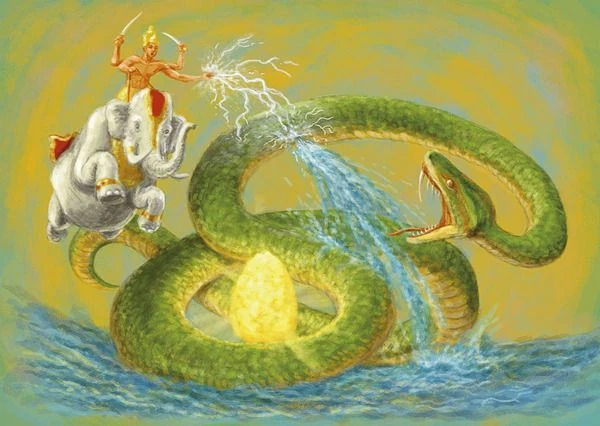
Today, we’re moving forward to the 32nd Sukta of the Rigveda’s first mandala (Rv 1.32). Neither a metered poem nor a hymn of praise, this ancient sacred teaching is erroneously described by Google AI as “a famous Vedic hymn dedicated to Indra and his legendary battle with the serpent Vritra. Composed by the sage Hiraṇyastūpa Āṅgirasa, it contains 15 stanzas detailing the slaying of the dragon and the liberation of the trapped waters.”
Like the dragon or “beast” in the Biblical Book of Revelations, Vritra has been vilified through the faulty interpretations of those ignorant of spiritual truth.
Is Vritra really a demonic dragon? Not according to the author of this Sukta, which, contrary to Google and popular belief, says nothing about Indra’s defeat of this mystical “dragon” or “serpent.” Today, with any luck, we’ll finally learn the truth about Vritra, what he actually represents in the Vedic canon, and why he was split into two parts (as Ketu and Rahu).
According to H. H. Wilson, the British (Oxford-Anglican) Indologist who first translated the Rigveda into English, the 32nd Sukta is structured as follows in transliterated Sanskrit:
indrasya nu vīryāṇi pra vocaṃ yāni cakāra prathamāni vajrī | ahann ahim anv apas tatarda pra vakṣaṇā abhinat parvatānām ||
ahann ahim parvate śiśriyāṇaṃ tvaṣṭāsmai vajraṃ svaryaṃ tatakṣa | vāśrā iva dhenavaḥ syandamānā añjaḥ samudram ava jagmur āpaḥ ||
vṛṣāyamāṇo ‘vṛṇīta somaṃ trikadrukeṣv apibat sutasya | ā sāyakam maghavādatta vajram ahann enam prathamajām ahīnām ||
yad indrāhan prathamajām ahīnām ān māyinām amināḥ prota māyāḥ | āt sūryaṃ janayan dyām uṣāsaṃ tādītnā śatruṃ na kilā vivitse ||
ahan vṛtraṃ vṛtrataraṃ vyaṃsam indro vajreṇa mahatā vadhena | skandhāṃsīva kuliśenā vivṛkṇāhiḥ śayata upapṛk pṛthivyāḥ ||
ayoddheva durmada ā hi juhve mahāvīraṃ tuvibādham ṛjīṣam | nātārīd asya samṛtiṃ vadhānāṃ saṃ rujānāḥ pipiṣa indraśatruḥ ||
apād ahasto apṛtanyad indram āsya vajram adhi sānau jaghāna | vṛṣṇo vadhriḥ pratimānam bubhūṣan purutrā vṛtro aśayad vyastaḥ ||
nadaṃ na bhinnam amuyā śayānam mano ruhāṇā ati yanty āpaḥ | yāś cid vṛtro mahinā paryatiṣṭhat tāsām ahiḥ patsutaḥśīr babhūva ||
nīcāvayā abhavad vṛtraputrendro asyā ava vadhar jabhāra | uttarā sūr adharaḥ putra āsīd dānuḥ śaye sahavatsā na dhenuḥ ||
atiṣṭhantīnām aniveśanānāṃ kāṣṭhānām madhye nihitaṃ śarīram | vṛtrasya niṇyaṃ vi caranty āpo dīrghaṃ tama āśayad indraśatruḥ ||
dāsapatnīr ahigopā atiṣṭhan niruddhā āpaḥ paṇineva gāvaḥ | apām bilam apihitaṃ yad āsīd vṛtraṃ jaghanvām̐ apa tad vavāra ||
aśvyo vāro abhavas tad indra sṛke yat tvā pratyahan deva ekaḥ | ajayo gā ajayaḥ śūra somam avāsṛjaḥ sartave sapta sindhūn ||
nāsmai vidyun na tanyatuḥ siṣedha na yām miham akirad dhrāduniṃ ca | indraś ca yad yuyudhāte ahiś cotāparībhyo maghavā vi jigye ||
aher yātāraṃ kam apaśya indra hṛdi yat te jaghnuṣo bhīr agacchat | nava ca yan navatiṃ ca sravantīḥ śyeno na bhīto ataro rajāṃsi ||
indro yāto ‘vasitasya rājā śamasya ca śṛṅgiṇo vajrabāhuḥ | sed u rājā kṣayati carṣaṇīnām arān na nemiḥ pari tā babhūva ||
Yes, it’s another long one. Let’s see how well Wilson’s structure holds up when this spiritual teaching is rightmindedly translated. My results and commentary follow.
The first line reads:
Belonging to Indra, the Holy Instant miracle-power advances the voices of all the kara circles to extend the stone of the Vajra-holder, the first ray of dawn from the serpent (or dragon) undivided.
indrasya (belonging to Indra) nu (the now moment/Holy Instant) vīryāṇi (miracle power) pra (brings forward) vocaṃ (the voices of) yāni (all) ca-kāra (the kara circles) pratha-māni (to extend the stone) vajrī (of the Vajra-holder) ahann (the first ray of dawn) ahim (from the serpent) an-v (undivided).
Notes:
The kara circles are the circles of the Trinity powers — i.e., the three “hands” of God Hindus call A, U, and M. The Vajra holder is Indra, the chief deva in the Vedic canon who is, in fact, the first ray of Ushas, the Hindu goddess of dawn (dawning enlightenment). The “father” of Indra, we learn herein, is Vritra, the undivided serpent or dragon representing God’s radiant splendor. Vritra is, therefore, the Vedic equivalent of the Great Dragon the Old Testament prophets called Paroh, and the New Testament prophets called “the Beast.”
Indra’s stone is the “royal” blue sapphire known as Indraneela (Indra’s neelam) or, sometimes, Syam-antaka (the dark blue death).
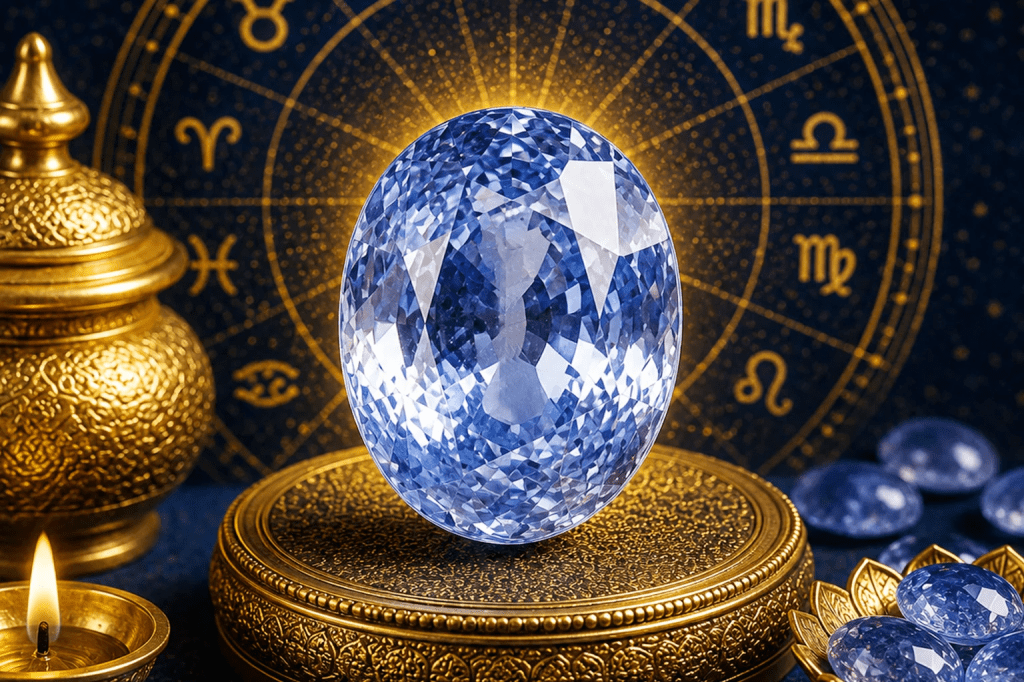
In Hinduism, the “dark blue death” refers to Kali or Mahakali, the fierce deity of time, doomsday, and destruction. Her name comes from Kala (Sanskrit for time, black, or the final end), and her dark blue or black skin is said to symbolize the infinite, formless void of the cosmos from which all creation emerged and into which it will dissolve.
As we learned in an earlier post, Kali is one of the ten Mahavidyas — the Hindu counterpart to the ten sefirot of the mystical Kabbalah. As we also learned, 1) sefirot means “fruits of the lamb” and 2) Kali guards or represents the sefirot of Keter (the Crown) at the top of the Tree of Life.
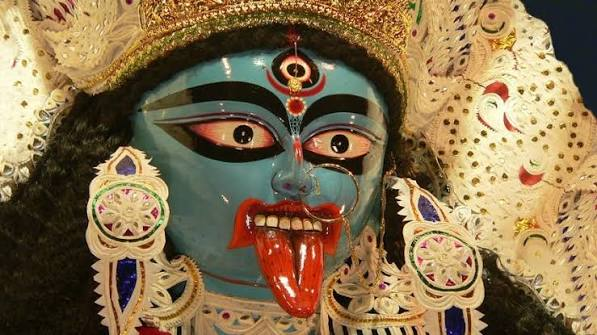
This begs a question: Is Kali the blue sapphire belonging to Indra?
If so, as we learn herein, the kara circles extend her energy in the Holy Instant much discussed in the Course. And what the Holy Spirit extends in the Holy Instant, according to Course-Jesus, is the illusion dissolving power of the Soul’s God-given holiness.
Or, as Jesus explains early in the Text:
The children of God are holy and the miracle honors their holiness, which can be hidden but never lost. I inspire all miracles, which are really intercessions. They intercede for your holiness and make your perceptions holy. By placing you beyond the physical laws they raise you into the sphere of celestial order. In this order you ARE perfect. (ACIM, T-1.I.31:3–32:4)
From all of this, we can surmise three things of significance. The first is that the Great Dragon produced Indra before being split into the two parts Vedic astrologers call Rahu and Ketu. The second is that Hinduism’s Indraneela and/or Syamantaka symbolizes the miraculous power of the holiness we access through the Holy Instant. And the third is that Kali, an important Hindu goddess, represents the holiness God extended to all His eternal Creations.
And it is indeed that holiness that a) vaporizes every problem we perceive in the dream-realm and b) safeguards our birthright Crown of Glory until we reclaim it through corrected perception the Atonement supplies.
In the Hindu lore, the identity of Indra’s father varies. In the later Puranas and epics, Indra’s father is Kashyapa, the world turtle. In the earlier Vedic texts like the Rigveda, his father is identified as Dyaus Pita (the sky or celestial father of Ushas, the goddess of dawn).
This appears to contradict Vritra, the red dragon, being the father of Indra, but that incongruence may be attributable to later ego corruption.
What’s more clear is that Indraneelam is NOT (as widely professed in error) a worldly gemstone with the power to “bring rapid career growth, financial stability, enhanced mental focus, and protection from negative energies,” as Google AI falsely reports (via Gemsmantra.com).
The Sukta’s second line reads:
The water of life split in half to bring forth the ancient voice broken into the knots of the loom.
ap-as (the water of life) tatarda (split in half) pra (to bring forth) vak-ṣaṇā (the ancient voice) abhinat (broken into) parva-tānām (the knots of the loom).
Notes:
The water of life is the Living Water. In the Bible, we find those “waters” in John 7:37-39, which reads:
On the last day, the climax of the festival, Jesus stood and shouted to the crowds, “Anyone who is thirsty may come to me! Anyone who believes in me may come and drink! For the Scriptures declare, ‘Rivers of living water will flow from his heart.’” (When he said “living water,” he was speaking of the Spirit, who would be given to everyone believing in him. But the Spirit had not yet been given, because Jesus had not yet entered into his glory.)
I don’t know how the parenthetical comment got added or by whom, so we can’t assume that part of the verse is truthful.
In Jeremiah 2:13, YHVH (the Great Rays, rather than God) describes themselves as “the spring of Living Water.” And from this we can ascertain that the Great Rays (Yah and Vah) are the two parts the originally undivided waters of life split into “to bring forth the ancient voice broken into the knots of the loom.”
The ancient voice is Om, the vibration of Divine Love sounded by God in Heaven. In the dream, Om is divided into three parts (AUM) — the “knots of the loom” referenced herein.
In Hinduism, “knots of the loom” is a metaphor for cosmic creation — the great tapestry we weave on the Cosmic Loom. This is correct in the sense that weaving together the three knots of AUM over time restores our memory of Om, the word God spoke “in the beginning.”
This begs another question: Are these three “knots” also the Granthis? Probably, since the Granthis do indeed represent the three big steps comprising the At-one-ment process.
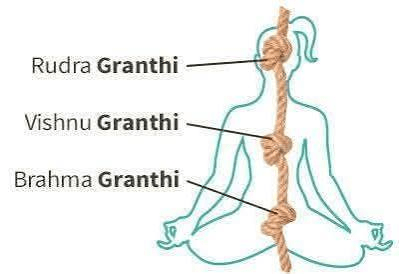
Viewed in this light, the Granthis represent “the gates” into the Trinity Circles represented by the three uppermost chakras. They also, therefore, represent the Atonement’s three step process (AUM) and the Hindu Trinity or Trimurti, although not in the order generally conceived. If the Granthis and Trimurti are synonymous, then the real trinity consists of Rudra, Vishnu, and Brahma, with Brahma at the bottom of the pecking order.
The third Rik reads:
The first ray of the serpent on the mountain, as a reminder, sings the name of the True Self standing firmly connected to the Vajra resounding the Father’s thoughts.
ahann (the first ray) ahim (of the serpent) parvate (on the mountain) śiś-riyāṇaṃ (as a reminder sings the name)) tva-ṣṭā-smai (of the True Self standing firmly connected) vajraṃ (to the Vajra) svaryaṃ (resounding) tata-kṣa (the father’s thoughts)
Notes:
The first ray of the serpent (the dragon) on the mountain is Yah and/or Rudra, the Red Ray. And that Great Ray “sings the name of the True Self standing firmly connected to the Vajra.” The True Self standing firmly connected to the Vajra is the Logos, whose name (in the dream) is Om (the Word of God).
In the Hindu lore, the Vajra is the indestructible weapon of Indra. The word Vajra is typically translated as “diamond” or “thunderbolt,” but can also mean “indestructible” and/or “strengthening inner radiance.” In Hinduism generally, this powerful diamond, heer, or hira, represents the all-seeing eye of God, unclouded by illusion. It’s also said to represent cosmic power, the firmness of spirit, and the triumph of order (Rita) over chaos.
And it is this “diamond,” we learn herein, that resounds the Father’s pure thoughts. So, the “diamond” sounds the A-kara, the right hand of God reaching into the dream to lift us back into pure Om-consciousness.
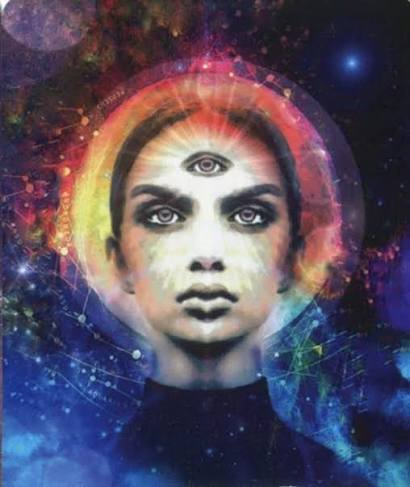
In order to hear the diamond singing, we have to untie the Rudra Granthi, which is blocks the Ajna Chakra of the Spiritual Eye. Untying the Rudra Granthi opens the single-eye of the Soul, which sees the equality and unity of all living beings.
The Sukta’s fourth line reads:
The abiding inner-radiance, in the manner of many cows, streams or flows the spiritual life-force to anoint the gathering together of the waters.
vāś-rā (the abiding inner-radiance) iva (in the manner of) dhenavaḥ (many cows) syanda-mānā (streams the spiritual life-force) añjaḥ (to anoint) samudram (the gathering together of the waters)
Notes:
We now know that to gather together the (living) waters is to reunite the Great Rays of Vah and Yah in what Gnostics call the “sacred marriage” or hieros gamos.
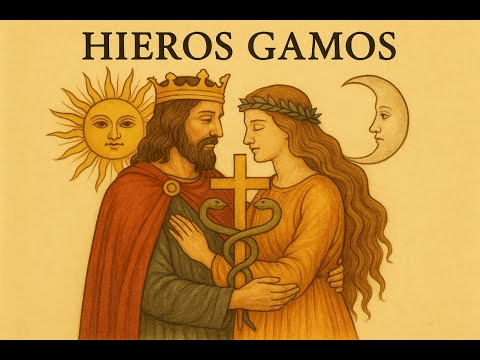
And this “sacred union” is indeed what Jesus alluded to in the Gospel of Thomas when he said:
When you make the two into one, and when you make the inner as the outer, and the upper as the lower, and when you make male and female into a single one, so that the male shall not be male, and the female shall not be female: . . . then you will enter [the kingdom].”
To marry the rays is to overcome the perception of opposites. In the True or Miraculous Perception of pure non-duality, there is no yin, there’s only yang; there is no time or space, there’s only the here and now of eternity. There is no male and female, no us and them, no up and down, no right and left, no in or out, no rich or poor; there’s only God, the ONE and only all-encompassing causal force of Perfect Love.
Rightmindedly perceived, God dwells in us as the Red Ray of Yah (the Living God); and we dwell in God as “the Christ” and/or “the Word.”
Or, as Jesus Christ tried to tell us in John 10:30:
I (the Christ) and the Father are One.
God and the Christ are, in other words, a single indivisible “being” working hand-in glove as Cause/Mind (God) and Effect/Thought (the Christ). And we can’t leave the dream until we KNOW or remember this Great Truth — a truth Course-Jesus drives home in Workbook Lesson 124: Let me remember I am one with God.
The lesson begins thusly:
Today we will again give thanks for our Identity in God. Our home is safe, protection guaranteed in all we do, power and strength available to us in all our undertakings. We can fail in nothing. Everything we touch takes on a shining light that blesses and that heals. At one with God and with the universe we go our way rejoicing, with the thought that God Himself goes everywhere with us. (ACIM, W-124.1:1-5)
The Sukta’s fifth Rik reads:
To protect the A-kara the universe-encircling Living Water showers down four thoughts to choose, guided by Soma’s three vessels for drinking.
av-a (to protect the A-kara) jag-mur (the universe encircling) āpaḥ (Living Water) vṛṣ-āya-māṇo (showers down four thoughts) ‘vṛ-ṇīta (to choose guided by) somaṃ (Soma’s) tri-kadrukeṣv (three vessels) apibat (for drinking)
Notes:
In Buddhism, we find “Four Thoughts That Turn the Mind from Samsara” or “Four Thoughts That Turn the Mind to the Dharma.” Those four thoughts, regarded as “foundational contemplations” for Buddhists, are these:
1) Precious Human Rebirth: earthly life is given to us for spiritual learning and practice, not for indulgence in worldly pursuits. To chase illusions is, therefore, a waste of our precious time on earth.
2) Death and Impermanence: Nothing that isn’t everlasting has either reality or value. To become attached to the impermanent is, therefore, to bind yourself to the ephemeral and valueless.
3) Karma (the Law of Cause and Effect): Every action reaps results; good actions reap happiness, while bad actions reap suffering.
4) The Defects of Samsara: The endless cycle of conditioned existence is filled with suffering. The wise man seeks not happiness in the world of suffering, but permanent escape.
Or, as Course-Jesus said in his original dictations to Helen Schucman:
A desert is a desert is a desert. You can do anything you want in it, but cannot change it from what it is. It still lacks water, which is why it is a desert. The thing to do with a desert is to leave.
(Sadly, this pertinent quote was among those cut from the Standard Edition by the FIP editors prior to publication.)
In Course terms, these same four thoughts are presented as the rightminded choices we must make consistently to overcome “the obstacles to peace.” The Peace of God, being our birthright, flows to us naturally, according to Jesus, unless our wrongminded thinking prevents it from coming into our minds. To encapsulate all he says on the subject, the four choices boil down to these:
–Choose God’s peace and joy over worldly conflict and pain.
–Choose to perceive the spiritual innocence in everyone over the ego-body’s guilty “shell.”
–Choose the eternal and valuable creations of God over the ephemeral and valueless produce of the Ego.
–Choose to perceive the immortal and uncorruptible body (the diamond body or Spiritual Body) as your perceived “home” or “headquarters” in the world over the mortal and corruptible physical body.
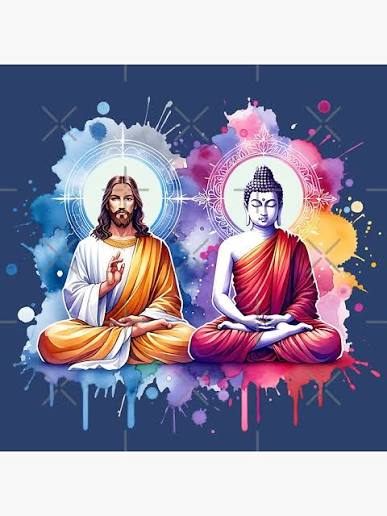
So, at the end of the day, the four thoughts we must choose are quite similar, if not identical, in the teachings of Course-Jesus and the Buddha.
The seventh Rik reads:
The offspring of God’s five arrows generates the strikes given by the Vajra of the first ray from the black antelope of the original and eternal serpent name striving to rule the Day.
sutasya (the offspring of) ā (God’s) sāyakam (five arrows) ma-ghavā-datta (generate the strikes given) vajram (from the Vajra = diamond or thunderbolt) ahann (of the first ray) enam (from the black antelope or deer) prathamajām (of the original and eternal) ahī-nām (serpent name or identity) yad (striving) indr-āhan (to rule the day)
Notes:
In Hinduism, God’s five arrows are represented by the five flowery arrows in Kamadeva’s quiver. That intel is lost, however, on anyone who buys the ego-promoted propaganda that Kamadeva represents human love and/or carnal lust. Similarly corrupted by the Ego Mind are what Kamadeva’s arrows truly symbolize. Being God’s five arrows, they do NOT signify the five stages of attraction (as is widely espoused by internet charlatans).
So let’s wipe the slate clean and begin anew. According to traditional translations of the lore, Kamadeva’s arrows are tipped with flowers, which he shoots from a bowstring in the form of a bee-line. His bowstring “buzzes,” in other words, in an established and efficient order.
The five so-called “flowers” forming the arrowheads are called Aravinda, Asoka, Cuta, Navamalika, and Nilotpala. None of these are, in fact, flower names, as I’m about to demonstrate.
Ara-vinda, which supposedly means “lotus,” actually means “the spokes for attaining” — a probable reference to the spokes of the Dharmachakra.
As-oka, which supposedly means “Ashoka flower” or “remover of grief,” actually means “to be in the refuge or resting place.”
Cuta, which supposedly means “mango blossom,” actually means “mango tree.” In Hinduism, the mango tree symbolizes love, fertility, prosperity, and divine grace. Its leaves and wood are staples in sacred rituals, representing life, auspiciousness, and the abodes of deities. So, the mango tree arrow signifies abiding in God’s love, grace, and abundance.
Navam-alika supposedly means “jasmine flower,” but actually means “the nine on the forehead” — a reference to the Tripunda, the mark of the Dragon or mark of the Beast on Shiva’s forehead. In Hinduism, “the nine on the forehead” specifically refers to the nine deities believed to preside in each of the three horizontal lines of the Tripunda (for a total of twenty-seven). About this, I can only speculate at this point in time. But I suspect these “nine on the forehead” have something to do with the lunar mansions of Vedic astrology, the nine gates of the city referenced elsewhere in the Vedas, the nine circles mentioned later in this Sukta, and (possibly) the Nine Eyes of Light discussed in the books of Padma Aon (with whom I was hitherto unfamiliar).me
Nilotpala supposedly means “blue lotus,” but actually translates as “the dark-blue fruit” — a probable reference to the jamun berry known as “the fruit of the gods” in Hinduism. Associated with Lord Rama, who is said to have lived on jamun berries during his 14-year exile, the dark-blue fruit also is considered a favorite of Lord Ganesha. Literally translated, ja-mun means “born from the vow.”
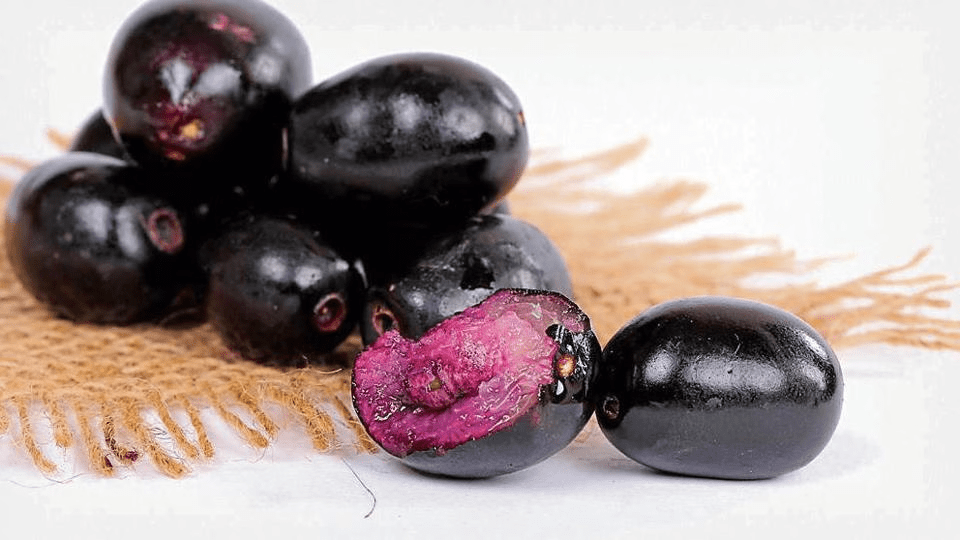
Simply stated, the vow is the covenant — the solemn promise we made to God (as the Christ) to return to our original function of cooperative co-creating when we finally tired of earthly self-creating (the true meaning of concupiescence). In the Bible, this is “the vow of consecration” or “the vow of the Nazarite” described in Numbers 6, but generally mistranslated (rather absurdly) as agreeing to 1) consume no grape products (wine, vinegar, raisins, grape juice, etc.), 2) leave the hair long and uncut, and 3) avoid contact with corpses. None of these so-called “promises” serve any rational purpose from a spiritual standpoint.
Shall we look at Numbers 6? — or will that pull us off-track? I’m torn, but also extremely curious.
For now, let’s move on to the Sukta’s eighth Rik, which reads:
The first and eternal serpent name is not of the trickster annulling the wholeness contained in the illusion of wandering from Surya (the Solar Logos) to produce the vision of the lamp of daybreak at the time when the true sound of Nara’s peg wishes to be known.
pratham-ajām (the first and eternal) ahīnām (serpent name) ān (is not) māyinām (of the trickster) ami-nāḥ (annulling the wholeness) prota (contained in) māyāḥ (the illusion) āt (of wandering) sūryaṃ (from Surya, the Solar Logos) ja-nayan (to produce the vision) dyām (of the lamp) uṣāsaṃ (of daybreak or dawn) tādītnā (at the time when) śat-ruṃ (the true sound of) na (Nara’s) kilā (peg or stake) vivitse (wishes to be known) ||
Notes:
Firstly, the author is telling us the original serpent name is not of the Ego Mind (the trickster annulling the wholeness of Creation that still exists in the dream-realm). So, Vritra is definitely a holy power, rather than a demon. Secondly, the Lamp of Daybreak referenced herein is the same “lamp” mentioned in 2 Peter 1:19:
We have also a more sure word of prophecy; whereunto ye do well that ye take heed, as unto a light that shineth in a dark place, until the day dawn, and the day star arise in your hearts:
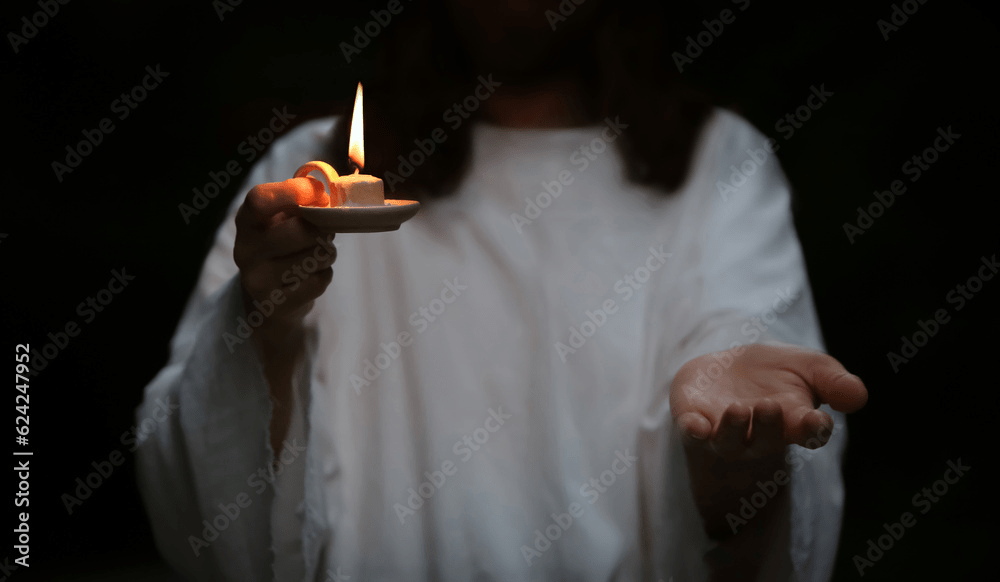
Course-Jesus also mentions this “lamp” in the Text.
My brother, you are part of God and part of me. When you have at last looked at the ego’s foundation without shrinking you will also have looked upon ours. I come to you from our Father to offer you everything again. Do not refuse it in order to keep a dark cornerstone hidden, for its protection will not save you. I give you the lamp and I will go with you. You will not take this journey alone. I will lead you to your true Father, Who hath need of you, as I have. Will you not answer the call of love with joy? (ACIM, T-11.in.4:1-8)
Based on the evidence, I believe the lamp to which Jesus refers is the Vah Ray — the stake or peg of Nara sounding the M-kara, which we hear at the appointed time. Rightly understood, we each agreed to do our part in the Atonement process at a particular time in the original dream, which the Holy Spirit ended in the original Holy Instant. What we’re experiencing now is merely a replay of that first dream. Replaying the dream allowed the Holy Spirit to jointly honor the Father’s irrevocable milta powers while also preserving the Son’s free-will.
If you’re confused, I urge you to go back and read my early posts on the nature of God and Creation.
The ninth Rik reads:
The first ray of Vritra enveloped Tara, the broad-shouldered Indra’s offering song, the great tail speaking to pour out the greater light of Shiva by means of the thunderbolt.
ahan (the first ray) vṛtraṃ (of Vritra) vṛtra-taraṃ (enveloped Tara) vyaṃsam (the broad-shouldered) indro (Indra’s) vaj-reṇa (offering song) maha-tā (the great tail or song) vadhena (to strike Ena, the black antelope) skand-hāṃ-sīva (to pour out the greater light of Shiva) kuliśenā (by means of the thunderbolt)
Notes:
This one’s a bit tricky, so let’s deconstruct the metaphors, starting with Tara, a goddess name meaning “star” in Sanskrit. Also known as Taraka (meaning “the savior” and/or “the tail of the full moon”) and Chandramsi (meaning “the Moon’s partner”), Tara is the wife of Brihaspati, the priest of the gods. Brihaspati means “the sacred speech of the Lord, Master, or Bridegroom,” making him the Voice for Christ, more or less. This, in turn, makes Tara the partner of the Master of the House, the Bridegroom or True Husband, and the Spiritual Moon — three symbolic forms of the Christ Ray of Vah.
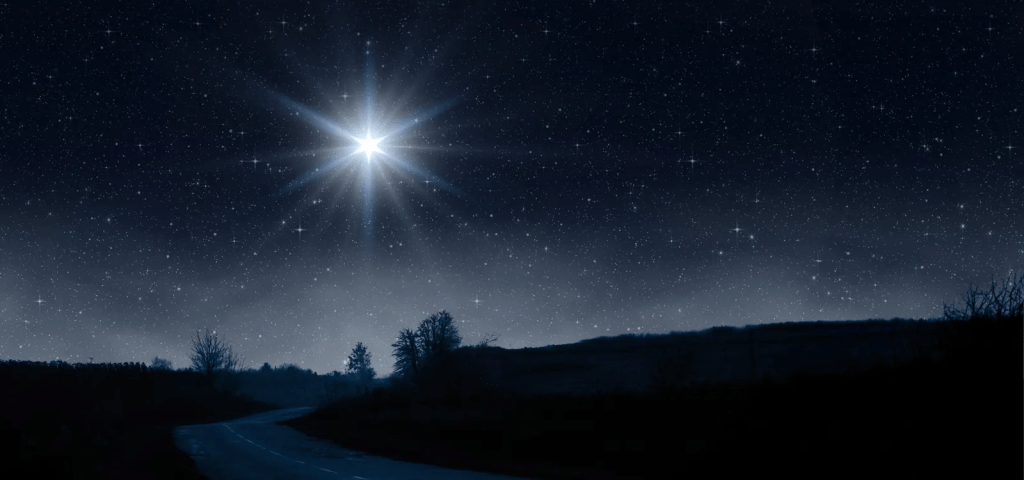
In both Hinduism and Buddhism, Tara is the goddess of compassion, mercy, and/or True Empathy. These characterizations suggest Tara represents the bright star in the east that leads us back to Christ Consciousness or “the rebirth of Christ” (i.e., the second coming). And that is indeed what the Star of Bethlehem represents in the Nativity Story.
In the Tarakamaya allegory, Tara, the wife of Brihaspati, is abducted by Chandra, the moon god also known as Soma. Some versions note Tara’s attraction to her abductor, with whom she consensually copulates while under his power. To reclaim his wife, Brihaspati declares war on Soma, who ultimately returns Tara to her husband — but not before making her pregnant. The child she bears by Soma is Budha, the Navagraha representing the planet Mercury (rather than the Buddha).
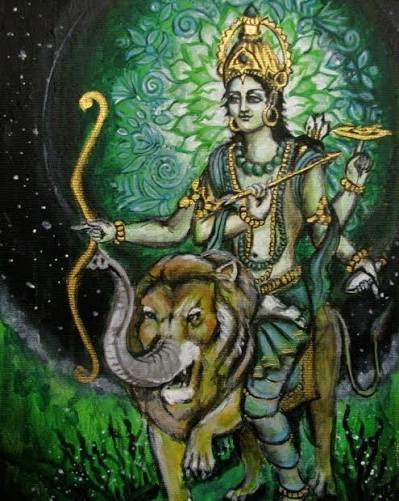
Based on Wikipedia’s summary, Tara’s story strongly echoes the one told in Revelations about the Bride giving birth while the Great Dragon stood by, ready to devour the child she bore.
And so, the Great Dragon (Vritra) eats Budha, the Navagraha representing Mercury. What does that signify? Let’s explore the possibilities. In Sanskrit, Budh-a means “to awaken the A-kara.” And the A-kara is indeed “the song speaking to pour out the greater light of Shiva by means of the thunderbolt.”
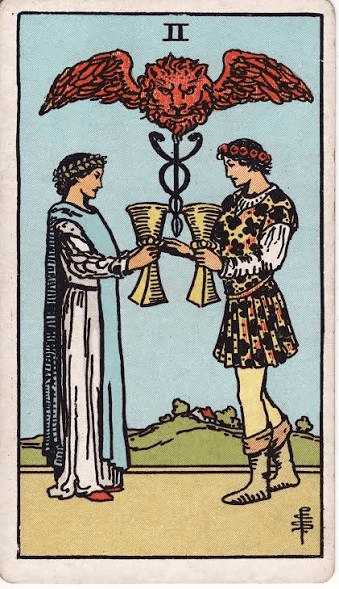
If we harken back to ancient Greece, we find Mercury as the god of communications; the “messenger of the gods,” as it were whose “staff” is (significantly) the winged caduceus — the emblem showing two intertwining snakes climbing a pole. Unbeknownst to the Greeks, the snakes represent the Ida and Pingala nadis, whilst the rod represents the Shushumna. As seen in the TWO OF CUPS tarot card, the two male and female energy channels “marry” at the top of the winged rod.

In Hinduism, the “greater light of Shiva” generally refers to the Jyotirlinga—the infinite, blazing pillar of cosmic light (Lingodbhava) representing Lord Shiva’s supreme and boundless nature. In Hindu philosophy and mysticism, it also symbolizes pure consciousness, self-realization, and the inner light of absolute reality that transcends darkness and illusion.
All of this suggests that the Greater Light of Shiva is Judaism’s Jachin, the pillar of light supporting the portico of Solomon’s Temple in the Old Testament accounts. And, herein we learn that the A-kara sings to pour out that pillar of light — the light of God’s saving grace — by means of the thunderbolt. Given the color, I suspect Jachin is the Vah Ray, the tail of the dragon shining down on earth from the Moon. And it is indeed the Vah Ray that awakens the A-kara (God’s direct communications) by means of the thunderbolt of “direct revelation.”
Or, as Course-Jesus similarly explains:
The Holy Spirit is the highest communication medium. Miracles do not involve this type of communication, because they are TEMPORARY communication devices. When you return to your original form of communication with God by direct revelation, the need for miracles is over. (ACIM, T-1.I.46:1-3)
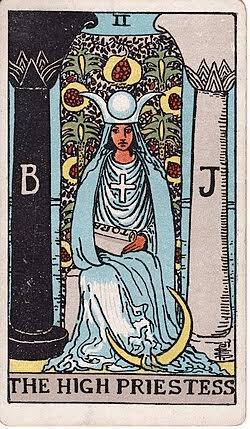
We see the two pillars flanking the central figure on THE HIGH PRIESTESS card in the RWS Tarot. Is the priestess Tara, the “star” of Higher Truth shining in our minds to light the way back to Heaven.
Let’s move on to the tenth Rik, which reads:
Severed to impel the sleeping tail within to touch the Vast One, Yah, the invincible celestial being free from madness, the dragon ladles the great hero the power of certainty to make straight the gatherings bowing down to the cosmic mouth; the gatherings of the righteous striking the name to gather together the broken whole thirsting for Isa, the supreme power from the sap sprouting the water given without hands or actions from Indra’s mouth.
vivṛkṇā-hiḥ (severed to impel) śaya-ta (the sleeping tail) upa-pṛk (within to touch) pṛthiv-yah (the Vast One, Yah) ayod-dheva (the invincible celestial being) durmada (free from madness) āhi (the serpent or dragon) juhve (ladles) mahāvīraṃ (the great hero) tuvi-bādham (the power of certainty) ṛjī-ṣam (to make straight the gatherings) nātā-rīd (bowing down to the cosmic) asya (mouth) sam-ṛtiṃ (the gatherings of the righteous) vadhā-nāṃ (striking the name) saṃ (to gather together) rujā-nāḥ (the broken whole) pip-iṣa (thirsting for Isa) ind-raśat-ruḥ (the supreme-power of the sap sprouting) apād (the water given) ahasto (without hands) apṛtanyad (or action) indram (from Indra’s) āsya (mouth).
Notes:
Firstly, wow. Secondly, this says nothing about Indra slaying the dragon, or about the dragon being demonic. Instead, it tells us the Great Dragon (of God’s Radiant Splendor) was severed (separated into a head and tail) to impel the sleeping tail (Vah, the Holy Spirit of Christ in us) to rise up and touch Yah, the invincible divine being beyond the reach of the Ego’s madness.
Yah, the ascending dragon’s head, offers the Great Hero (the hero of the dream, which is the Soul) the power of certainty in ladled portions to make straight the gatherings of the righteous bowing down to the Cosmic Mouth — the mouth of God referenced in Deuteronomy 8:3 and Matthew 4:4. It is from that metaphoric “mouth,” the Bible tells us, that we receive the daily bread (manna) that feeds and sustains our Souls. By striking the name (AUM, Amen, or Christ) with the staff of bread (or life), the gatherings of the righteous bring back together the broken whole of Creation, the individual Souls thirsting for Isa — “the supreme power of the sap sprouting the water given without hands or actions from Indra’s mouth.”
From the Rigveda’s Purusha Suktam, we learn that that Indra and Agni were born at the same time from the mouth of Purusha, the Greater Light of God shining underneath the illusion of material existence. As we already know, Indra represents the first Aspect Ray of God’s Will and Authority, while Agni represents the sacred fire of God’s presence burning eternally on the inner altar deep within out dreaming minds.
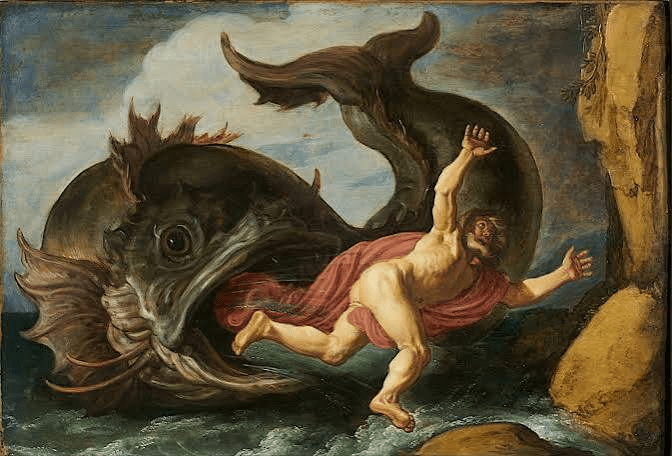
So, Agni and Indra came into being together in the dream-realm. In the Puranic lore, Indra is swallowed (along with Airavata) by Vritra, whose belly he later escapes, after which he beheads the dragon.
I don’t know about you, but to me that story sounds a lot like the Bible’s fable of Jonah and the Whale. The Hebrew words translated as Whale in the Book of jonah are dag gadol, which means not “whale” specifically, but “great fish” or “great sea creature.”
The Hebrew noun dag (דָּג) occurs nineteen times in the Old Testament and is always translated as “fish.” Not that this consistency proves that “fish” is the correct translation, given how egoically the Bible has been translated historically. The great dag that swallows Jonah might, in fact, be the mythological makara of Hinduism or Matsya, the “fish” avatar of Lord Vishnu.
This brings us to Isa. In Sanskrit, Isa means “the reigning lord,” but in Arabic (in the Qur’an), Isa specifically designates Jesus of Nazareth. In modern Hinduism, Isa also is the name used for Jesus. So, Isa is Christ — and Christ is indeed the supreme power in the sap sprouting the living water of grace — the alms we give mentally in meditation (without hands or actions) from Indra’s mouth — the source of the diamond (the subject of the next line).
The diamond is the A-kara vibration sounded by Indra, the Red Ray, as the next Rik affirms.
The eleventh Rik reads:
The diamond is the superior word of God, the vessel producing the rumbling tone of the bull castrated to advance the disgraceful desire to live in many ways (or places) enveloped in sleep as individuals.
vajram (the diamond of) adhi (the superior) sānau (word of God vessel) jaghāna (producing the rumbling tones) vṛṣṇo (of the bull) vadhriḥ (castrated) pratimānam (to advance the disgraceful) bubhūṣan (desire to live) purutrā (in many ways or places) vṛtro (enveloped) aśayad (in sleep) vyastaḥ (as individuals)
Notes:
Wow, again. This potent teaching confirms that the diamond (Indra’s Vajra) is the A-kara, whose thunderbolt is “revelation.” The bull we castrated by desiring the disgraceful existence of individual self-creating is the Bull of Heaven — the symbol of God’s Will found in The Epic of Gilgamesh — the world’s oldest surviving epic masterpiece, originating in ancient Mesopotamia around 2100 BCE. Written in cuneiform script on clay tablets, the poem follows Gilgamesh, the semi-mythic king of Uruk, on a profound psychological and philosophical quest to defeat death and find immortality.
That said, our desires for individuality, self-creating, and specialness (the original error or “sin”) caused the fall from grace, which “castrated” (rendered impotent) the Father’s Will on earth.
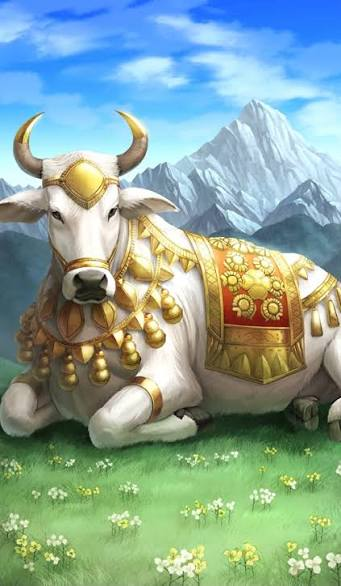
In Hinduism, the Bull of Heaven takes the form of Nandi, the vahana (vehicle) of Lord Shiva, the transcendent power of grace. This tells us that God’s Will is the divine force driving grace in the dream-realm. The experts say Nandi means “joy,” but it actually means the Mother Light (nan-di) — the guiding light of the Holy Spirit. And it is indeed the Holy Spirit (the Spirit of Joy) that advocates for God’s Will in the dream.
Or, as Course-Jesus explains:
You have one test, as sure as God, by which to recognize if what you learned is true. If you are wholly free of fear of any kind, and if all those who meet or even think of you share in your perfect peace, then you can be sure that you have learned God’s lesson, and not your own. Unless all this is true, there are dark lessons in your mind that hurt and hinder you, and everyone around you. The absence of perfect peace means but one thing: You think you do not will for God’s Son what his Father wills for him. Every dark lesson teaches this, in one form or another. And each bright lesson with which the Holy Spirit will replace the dark ones you do not accept, teaches you that you will with the Father and His Son. (ACIM, T-14.XI.5:1-6)
The twelfth Rik reads:
The musical tones of the waters pierce the valueless sleeping-identity mind, to grow and live and to overcome and discharge the Living Water abiding in the pure consciousness of Vritta’s Majesty, the thought standing to throw down the A-kara of the serpent at the feet blessing the divine soul in the Celestial Sphere.
nadaṃ (the musical tones of) na (Nara or the waters) bhinnam (pierced) amuyā (the valueless) śayānam (sleeping-identity) mano (mind) ruh-āṇā (to grow and live) ati (and to overcome) yanty (and discharge) āpaḥ (the Living Water) yāś (abiding in) cid (the pure consciousness) vṛtro (of Vritra’s) mahinā (majesty) paryatiṣṭhat (the thought standing) tās-ām (to throw down the A-kara of) ahiḥ (the serpent) patsu-taḥśīr (at the feet blessing) ba-bhūva (the divine soul in the Celestial Sphere or Middle Firmament)||
Notes:
Firstly, this strongly supports my assertion that Vritra has been unfairly characterized in the Hindu consciousness as a villain. In actuality, Vritra is the red dragon of God’s Radiant Majesty still shining underneath the ego-projected Samsara. As the illusion fades, Vritra’s light grows brighter in our perceiving minds until it burns away the dream altogether.
Secondly, the musical tones of the waters (the Great Rays, YHVH) are AUM, the song of salvation that pierced the ego’s dark veil (in our minds) to discharge the Living Waters of Grace for the purpose of gradually and gently waking us up.
Thirdly, the sacred feet that bless the Soul are known as Charan (feet) or Paduka (footprints) in Hindu philosophy. To pay homage to these sacred feet, devotees touch the feet of deities, gurus, parents, and elders to surrender their ego, receive divine grace, and experience spiritual upliftment.
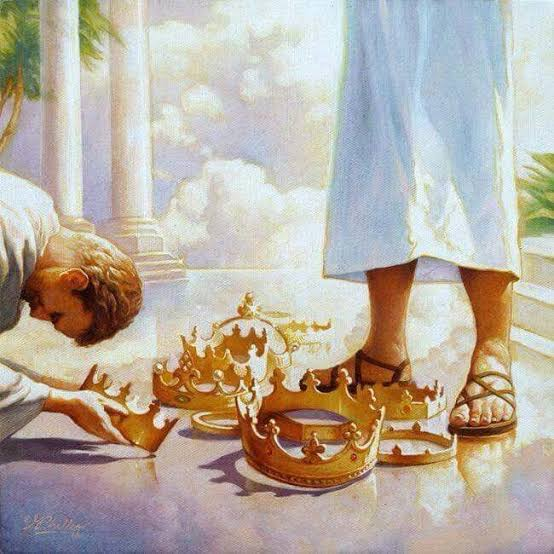
In Christianity, these are the divine feet (of Jesus Christ), to which devotees bow down in humble surrender. These sacred feet “rest” on God’s footstool in the dream-world, which is identified as “the meeting place” in 1 Chronicles 28:2 and Psalm 99:5. As I understand it, the meeting place also is the resting place (of green pastures and still waters) famously described in Psalm 23.
The thirteenth Rik reads:
Bow down to the splendor speaking to turn around the radiant (inner) son’s majesty, the mouth protecting the A-kara striking-weapon produced to support the answering melody underneath the solitary offspring of the sword and bow resting with the calf of Nara’s milch-cow.
nīcā-vayā (Bow down to) abha-vad (the splendor speaking) vṛt-raputrendro (to turn around the radiant son’s majesty) asyā (the mouth) av-a (protecting the A-kara) vadhar (striking weapon) jabhāra (produced to support) uttarā (the answering) sūr (melody) adha-raḥ (underneath the solitary) putra (offspring) āsīd (of the sword) dānuḥ (and bow) śaye (resting) sahavatsā (with the calf) na (of Nara’s) dhenuḥ (milch-cow) ||
Notes:
Lots of metaphors to explain in this one. Firstly, the splendor speaking to turn around the radiant son’s majesty is the Voice for God and/or the Holy Spirit, as Course-Jesus affirms below:
Yet you must learn to doubt their evidence will clear the way to recognize yourself, and let the Voice for God alone be Judge of what is worthy of your own belief. He will not tell you that your brother should be judged by what your eyes behold in him, nor what his body’s mouth says to your ears, nor what your fingers’ touch reports of him. He passes by such idle witnesses, which merely bear false witness to God’s Son. He recognizes only what God loves, and in the holy light of what He sees do all the ego’s dreams of what you are vanish before the splendor He beholds. (ACIM, W-151.7:1-4)
Secondly, the sword (khadga) and the bow (dhanush) are divine weapons (shastras) in Hinduism, which are said to represent the righteous path (dharma), spiritual wisdom, and the destruction of (ego) ignorance. The bow projects power over long distances to uphold righteousness, while the sword cuts through illusion, ego, and evil at close hand.
The solitary son of the sword is, therefore, the ONE son God created “in the beginning,” which is variously called “holy creation,” “the Christ,” or “the Son of God.” And that ONE Son is our true and only Self, Identity, or I Am-ness. Any other perception of “self” is, therefore, delusional.
Thirdly, the striking weapon produced to support the answering melody might be the Vajra, the Flaming Sword, or both. The vajra belongs to Indra, whereas the flaming sword belongs to the Bridegroom. That flaming sword IS Michael, the divine weapon seen girding the loins of the Bridegroom by the Biblical Daniel. And, as previously asserted, Indra and Michael represent the same Holy Power in two different forms.
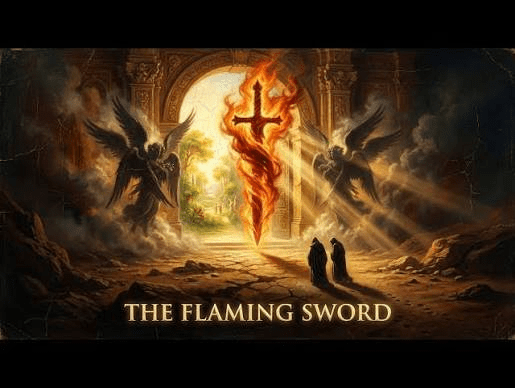
That means that Indra represents the Flaming Sword guarding the gate into Eden, which tracks with his status in Hinduism as the guardian or Lokapala of the eastern direction. That Indra and Agni are twins tell us the Eternal Flame and the Flaming Sword entered the dream-realm together at the same time.
From the Bhagavata Purana we learn that Indra and the celestial cow, Surabhi, bathed and consecrated Krishna, giving him the title Govinda, which means not “the protector of cows,” but “the light or ray of having and giving.”
And the Ray of Having and Giving is the Holy Spirit, as Course-Jesus explains below:
To spirit getting is meaningless and giving is all. Having everything, spirit holds everything by giving it, and thus creates as the Father created. While this kind of thinking is totally alien to having things, even to the lower mind it is quite comprehensible in connection with ideas. (ACIM, T-5.I.1:1-9)
Jesus also says the first lesson of the Holy Spirit is “to have all, give all to all.”
Factored together, all of these clues suggest that 1) Krishna represents the Holy Spirit and/or the Vah Ray of YHVH and 2) the Yah Ray (Indra) surrendered its authority to Vah (Krishna), which decontaminates our dream-bound Higher Minds (through perception-shifting miracles) in preparation for the revelations granted through Indra’s Vajra.
Makes sense, right?
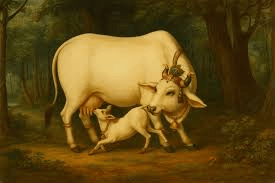
Let’s return to our Rik, which mentions the Meeting Place (my blog’s namesake). The meeting place described in Psalms and Chronicles as the footstool of God, also is the resting place (of green pastures and still waters) famously described in Psalm 23. And this is the dwelling place of Kamdhenu’s calf, which depends on her mother’s miracle-milk to grow and thrive. Sired by Nandi, the Bull of Heaven ridden by Shiva and cared for by Krishna, the calf represents the will we (as equal members of the Body of Christ) share with God when in our right minds.
The fourteenth Rik reads:
Beyond those standing in the resting place on the path of the name in the middle of the hidden body belonging to Vritra is the secret divide for walking in the presence away from the time of darkness to the shelter of the Lord without enemies (or opposites).
atiṣṭhantīnām (beyond those standing in) aniveśanānāṃ (the resting place) kāṣṭhānām (on the path of the name) madhye (in the middle of) nihitaṃ (the hidden) śarīram (body) vṛtrasya (belonging to Vritra) niṇyaṃ (is the secret) vi (division) car-anty (for walking in the presence) āpo (away from) dīrghaṃ (the time of) tama (darkness) āśayad (to the shelter of) indr-aśatruḥ (Indra without enemies, opposition, or opposites)||
Notes:
This is pretty high level stuff, but I’ll do my best to explain its meaning. Those standing in the resting place on the Path of AUM are our upright Souls, which never really left the enclosure. Beyond that enclosure, in the middle of the hidden body (the Spiritual Body), is “the secret division for walking in the presence away from the time of darkness.”
The secret division the rishis mean has to be what Course-Jesus calls “the Borderland” (and the Real World). So, above the Resting Place, with its verdant green pastures of sacred grass, is the Borderland — the secret place in-between Heaven and Earth. And it is here that we “walk in the presence” of the Great Rays.
Or, to quote Course-Jesus:
There is a borderland of thought that stands between this world and Heaven. It is not a place, and when you reach it is apart from time. Here is the meeting place where thoughts are brought together; where conflicting values meet and all illusions are laid down beside the truth, where they are judged to be untrue. This borderland is just beyond the gate of Heaven. Here is every thought made pure and wholly simple. Here is sin denied, and everything that IS received instead. (ACIM, T-26.III.2:1-6)
The fifteenth Rik reads:
The servant of the Master, the serpent (dragon) protects the cows moving beyond the place obstructing the sound of the Living Water.
dāsapatnīr (The servant of the Master or Bridegroom) ahi-gopā (the serpent protects the cows) atiṣṭhan (surpassing, transcending, or moving beyond the place) nirud-dhā (obstructing the sound) āpaḥ (of the Living Water)
Notes:
Simply stated, the dragon protects the miracle-workers in the Borderland. The place obstructing the sound of the Living Water would be the state of mind below the Resting Place, which could be called Tamas, the Circle of Earth, the Ring of Fear, Ego Consciousness, Brahmanda, Material Consciousness, or Spiritual Denial. Essentially, it’s the mental space we occupy before we hear God’s Voice whispering to us in the silence.
The 16th line reads:
The hand of certainty is the sacred-syllable conveying the waters of the well concealing that which the sword of Vritra’s hinder-part emits; the water that the fourth ray shines to scatter divine grace’s abiding majesty, which Indra’s lance unites.
paṇi-neva (the hand of certainty) gā-vaḥ (is the sacred syllable transporting) apām (the waters from) bilam (the pit or well) apihitaṃ (concealing) yad (that which) āsīd (the sword) vṛtraṃ (of Vritra’s) jaghanvām̐ (hinder part emits) apa (the water) tad (that) vavāra (the fourth ray) aś-vyo (shines to scatter) vāro (the divine grace’s) abha-vas (abiding majesty) tad (which) indra (Indra’s) sṛke (lance) yat (unites)
Notes:
Can’t swear I understand what all this means, but I’m pretty sure the hand of certainty is the righteous right hand of God. And the righteous right hand of God is the A-kara aspect of AUM. As we learn herein, the A-kara conveys the waters from the pit (Nisrok’s Well or Abyss in the Bible), which conceals “that which the sword of Vritra’s hinder-part emits.” Vritra’s hinder-part is the dragon’s tail, Ketu, the descending node of the Moon. And that tail, we now know, emits the vibrational tone of Christ’s Majesty inside our dream-bound minds. We also know (from the Bible) that what Nisrok’s well conceals is “the swarm from the pit” or Kundalini, which I’m pretty sure is the U-kara vibration, as well as the “golden girdle” that reconnects the dragon’s head (the A-kara) and tail (the M-kara) at the midpoint level of the Moon Circle.
That’s how I see it at present, anyway.
In the Hindu lore, Indra’s lance is known as Vasavi Shakti. An infallible spear of lightning gifted by Indra to the warrior Karna in the Mahabharata epic, this divine “weapon” could only be used once before returning to the heavens. Vasavi is either a compound of va (the wind) and savi (the solar rays), vas (the abiding) and avi (sheep or shepherd), or vasa (the dwelling-place) and vi (apart). Shakti is generally defined as “energy,” but I suspect it actually means “divine force.”
So, whatever Indra’s Vasavi Shakti represents, it’s the divine force or prime weapon of the Solar Logos — the chief shepherd in the dream-realm.
In Hinduism, the Solar Logos takes the form of Surya-dev. And Surya’s primary weapon is said to be the Suryastra—a celestial missile that channels concentrated solar energy to emit blinding light, generate extreme heat, and dry up water bodies.
In the Bible, the Solar Logos is Elohim, whose chief weapon (unbeknownst to most Bible-readers) is YHVH, the Great Rays. In Islam, the Logos is Allah, whose chief weapon is said to be dua — an Arabic word thought to mean “prayer,” but which actually means “to call upon, summon, or invoke.”
That doesn’t really help, I know; but that’s the way it goes sometimes.
This brings us to the Fourth Ray. We’ve discussed this ray-power previously, so rather than reinvent the wheel, let me share what I’ve already worked out:
The fourth ray is one of the “offspring rays” of the Vah Ray, which Theosophists call the four Attribute Rays. These four “lesser” rays are subordinate to the three Aspect Rays forming the Holy Trinity — the three ray-powers of Yah.
So, in a nutshell:
Yah, the Red or Blood Ray, begets the three Aspect Rays, whilst Vah, the Pale or Water Ray, begets the four Attribute Rays. I’m pretty sure the Attribute Rays are all of the following: the four living beings, the Four Swords, the four Cherubim, the Ḥamālat al-Arsh (the bearers of Allah’s throne in Islam), and the Hayyot ha-Qodesh, the animal-headed beings seen by the prophet Ezekiel. They might also be the four chief archangels, but the jury’s still out on that score.
Way back when, I said the fourth ray was a composite of the Aleph Ray (the first Aspect Ray of the Father’s Will and Authority) and the Lamed Ray (the second Aspect Ray of the Father’s Love and Wisdom), because that’s what Theosophy teaches. And this may be right — or it may be wrong. Again, the jury’s still out.
In the Theosophical teachings, the Fourth Ray is identified as the Attribute Ray of “Harmony through Conflict.” In Sanskrit, the fourth ray is called Viswa-traya-rchas, which translates not as “harmony,” but as “the cosmic triad sacred hymn.” And the cosmic triad sacred hymn, if I’m not mistaken, is AUM.
In Theosophy, the Fourth Ray acts as “the bridge” between human and divine consciousness. And, in the Course, Jesus identifies the Holy Spirit as “the bridge.” In Zoroastrianism, the fourth Amesha Spenta (divine emanation) mirrors, replicates, or (perhaps) extends (toward Earth) the reach of the Third Aspect Ray — the Hey Ray of the Father’s Abstract Thoughts and Divine Purpose (or “active intelligence” in Theosophical terms.)
Essentially, the Hey Ray is the “spirit” or “thought” God projected into the dream to change its purpose from creating nothingness in an empty void to restoring Holy Creation’s “at-one-ment.” The Hey Ray also helps us see through the illusion to recognize the true purpose of earthly life, which is the universal forgiveness of the upside-down ego thinking that turned Heaven into hell.
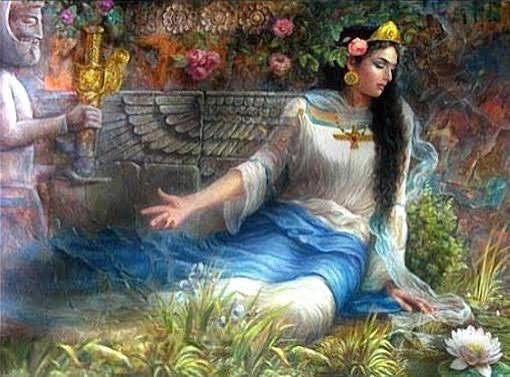
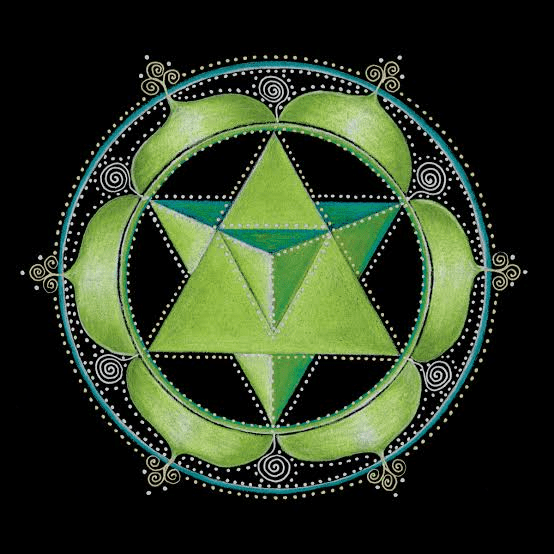
The fourth Amesha Spenta is Spenta Armaiti, the guardian of the earth and the only distinctly female energy among the seven emanations of Ahura Mazda. Armaiti supposedly translates as “rightmindedness” or “devotion,” but the word-name actually means “the spoke of loving kindness” (on the Wheel of Time). As the fourth ray, she presides over the Anahata or Heart Chakra. In Buddhism, loving kindness or metta is the first of the four divine abodes (circles).
And the first of the four divine abodes or circles is indeed the Heart Chakra.
The Seventeenth Rik reads:
The True Self comes forth to strike the divine oneness driving the iron-armed sacred syllable of the eternal Yah, the celestial Soma-nectar pouring out the quintessential majesty of the seven rivers Nara connects.
tvā (the True Self) pratya-han (advances to strike) deva (the divine) ekaḥ (oneness) ajayo (driving the iron-armed) gā (sacred syllable) aja-yaḥ (of the eternal Yah) śūr-a (the celestial god) somam (of the nectar) avāsṛjaḥ (pouring out) sar-tave (the quintessential majesty) sapta (of the seven) sindhūn (rivers) nā-smai (nara connects)
Notes:
If the Great Rays are the Everlasting Arms, then Yah is the iron arm, as well as the “iron rod” of God’s Supreme Will and Authority. And it is indeed Yah that sounds the A-kara, which pours out the “sweet nectar” that restores the Soul’s memory of its immortal reality. Herein we further learn that Amrita (the A-kara’s nectar) flows to us the quintessential majesty of the seven rivers connected by Nara, the Cosmic Ocean of Divine Light underneath the illusion. Rightly understood, the seven rivers are the tributaries of the Cosmic Ocean running through the Spiritual Body.
In Vedic and Hindu cosmogony, the seven rivers (Sapta Sindhavah) do indeed originate from the Cosmic Ocean (Salilam). Freed or set flowing by divine forces, these seven streams represent the fundamental energetic currents of creation and spiritual liberation. And now we know those seven rivers channel the seven streams of Vritra, the red dragon of God’s Radiant Majesty.
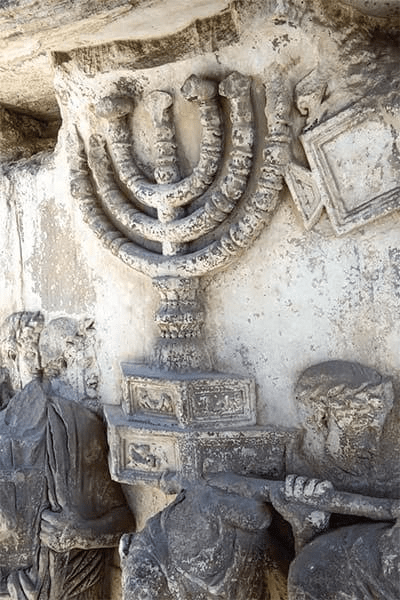
In Judaism, we find the seven rivers in the form of the channels fueling the seven lamps of the Temple Menorah.
The eighteenth Rik reads:
The lightning flashes of Nara extend the light of love to drive off the judgment fogging the snake split in two to support the streams from the circle, the ruling life circle that the horse maintains for the serpent guarding the stronghold of the murmuring lights distributing the wealth divided to conquer separation from the lights of the star of the Great Purusha.
vidyun (the lightning flashes) na (of Nara) tan-yat-uḥ (extend the light of love) siṣedha (to drive off) nayām (the judgment) miham (fogging) akirad (the snake split in two) dhrāduniṃ (to support the streams from) ca (the circle) ind-raś (the ruling life) ca (circle) yad (that) yuyu-dhāte (the horse maintains) ahiś (for the serpent) cotāparībhyo (guarding the stronghold of the murmuring lights) maghavā (distributing the wealth) vi (divided) ji-gye (to conquer or overcome) aher (separation) yā-tāraṃ (from the lights of the star) kam (of the Great Purusha or divine love)
Notes:
This post is getting long, so I’ll be brief. From underneath the illusion, Nara (the Great Purusha) sets off lightning flashes to extend the light of love to drive off the Ego’s wrong-minded judgments about the world’s purpose and events. These judgments fog or obscure the snake split in two as Rahu and Ketu or Yah and Vah. The ruling life circle the horse maintains for the serpent has to be the Golden Circle. The horse is Indra’s horse, Uchchaihshravas, which arises from the gathering of the waters (the water circle or moon circle). The stronghold of the murmuring lights is the walled city, polis, or fortress on the Sixth Plain of Consciousness — the location of the connected Moon and Water circles. If Uchchaihshravas arises from the Water circle, then he represents the U-kara vibration. And this makes perfect sense, given that Uchchaihshravas means “the sound of exalted glory” and the U-kara is, as already established, the “exalted hand of God.”
The nineteenth Rik reads:
Strive to thunder the hinder-part now-moment nectar to fulfill the immovable will the nine circles illuminate; the nine surpassing circles flowing the waters of the eagle or falcon from the center holy fire of Om ruling the whole.
yat (strive) te (to thunder) jagh-nu-ṣo (the hinder-part now-moment nectar) bhīr (to fulfill) agacchat (the immovable will)| nava (the nine) ca (circles) yan (illuminate) nav-atiṃ (the nine surpassing) ca (circles) sravantīḥ (flowing the waters) śyeno (of the eagle or falcon) nabhīto (from the center) atar-o (holy fire of Om) raj-āṃsi (ruling the whole)||
Notes:
The hinder-part now-moment nectar must be the U-kara. And that means the U-kara vibration — the Living Water Christ provides, as well as Kundalini, the swarm from the pit — must be the mysterious Soma-juice much discussed in the Vedas.
So, nothing to do with earthly plants or hallucinogenics, as the Ego and its deluded agents would have us believe in error.
The nine circles of the eagle mentioned herein might be the same nine circles (of Hell) described in Dante Alighieri’s 14th-century epic poem Inferno. If so, the nine circles represent a downward progression of increasing moral corruption, guilt, and suffering. As Dante tell it, sinners become more malicious and deliberate as they descend closer to the center of the earth, matched by punishments that symbolically reflect their earthly crimes (contrappasso).
As Jesus explains in the Course, we must climb back up the same way we came down. We must, that is to say, retrace our downward steps, correcting the thought-errors that triggered our descent as we re-ascend.
Or, in the Master’s own words:
Evolution is a process in which you seem to proceed from one degree to the next. You correct your previous missteps by stepping forward. This process is actually incomprehensible in temporal terms, because you return as you go forward. The Atonement is the device by which you can free yourself from the past as you go ahead. It undoes your past errors, thus making it unnecessary for you to keep retracing your steps without advancing to your return. In this sense the Atonement saves time, but like the miracle it serves, does not abolish it. As long as there is need for Atonement, there is need for time. But the Atonement as a completed plan has a unique relationship to time. Until the Atonement is complete, its various phases will proceed in time, but the whole Atonement stands at time’s end. At that point the bridge of return has been built. (ACIM, T-2.II.6:1-10)
In various schools of Buddhism, we similarly find the states of delusion and suffering divided into nine segments or levels. In Nichiren Buddhism, for example, there are nine Realms or Worlds truth-seekers must “climb back up” to achieve enlightenment or Moksha. Those nine realms, from lowest to highest, are hell, hungry spirits, animals, asuras, human beings, heavenly beings, voice-hearers, cause-awakened ones, and bodhisattvas.
The Nyingma school of Tibetan Buddhism likewise maps nine Yanas, levels, or stages of practice on the spiritual journey. And in Pure Land Buddhism, we find nine grades of rebirth in the Western Paradise based on a person’s faith, actions, and state of mind at death.
These nine levels may, of course, be the chakras— a Sanskrit word meaning “circle” or “wheel.” And we do find nine chakras (rather than seven) in the teachings of the Soham, Nath, and Tantric schools of yoga. If I’m right about the sacred syllables serving as the “gates” into these circles, then the nine Solfeggio frequencies — the spiritual frequencies hidden in the Book of Numbers — would serve as the “gates” into these nine circles.
None of this is mentioned in the Course, but we do find “the city of nine gates” in both the Rigveda and the Bhagavad Gita. Contrary to popular belief, “the city of nine gates” is NOT the human body; nor are the gates of that “city” the nine orifices residing therein.
The city they mean is what the Bible calls New Jerusalem, whose gates are mentioned several times, but never specifically denoted as being nine in number. Revelations 21:12-13 describes “the heavenly New Jerusalem” as having twelve gates (three on each side: east, north, south, and west) guarded by 12 angels and inscribed with the names of the 12 tribes of Israel.
The topic deserves deeper exploration, but let’s shelve that discussion until another time.
The 19th Rik reads:
Indra restores the Om, the power of love belonging to the song — the majestic song from the circle the Srngi vessel’s indestructible arms rest in.
indro (Indra) yāt-o (restores the Om) ‘vasi-tasy-a = savas-i-tasya (the power of divine love belonging to the song) rājā (the majestic) śamasya (song belonging to) ca (the circle) śṛṅgi-ṇo (the srngi vessel’s) vajra-bāhuḥ (indestructible arms) sed (rest in)
Notes:
Can’t swear I’ve got this 100 percent right, but I believe I’ve gotten pretty close, because Om is the sacred vibration sounded by Agape, the force of Divine Love God extends to create. And only by restoring our ego-infected minds to this perfect frequency again can we return to our God-given function of creating. This Song of Love is what Course-Jesus calls “the forgotten song,” among other monikers. About this “song,” he says:
Listen,—perhaps you catch a hint of an ancient state not quite forgotten; dim, perhaps, and yet not altogether unfamiliar, like a song whose name is long forgotten, and the circumstances in which you heard completely unremembered. Not the whole song has stayed with you, but just a little wisp of melody, attached not to a person or a place or anything particular. But you remember, from just this little part, how lovely was the song, how wonderful the setting where you heard it, and how you loved those who were there and listened with you.
The notes are nothing. Yet you have kept them with you, not for themselves, but as a soft reminder of what would make you weep if you remembered how dear it was to you. You could remember, yet you are afraid, believing you would lose the world you learned since then. And yet you know that nothing in the world you learned is half so dear as this. Listen, and see if you remember an ancient song you knew so long ago and held more dear than any melody you taught yourself to cherish since.
Beyond the body, beyond the sun and stars, past everything you see and yet somehow familiar, is an arc of golden light that stretches as you look into a great and shining circle. And all the circle fills with light before your eyes. The edges of the circle disappear, and what is in it is no longer contained at all. The light expands and covers everything, extending to infinity forever shining and with no break or limit anywhere. Within it everything is joined in perfect continuity. Nor is it possible to imagine that anything could be outside, for there is nowhere that this light is not.
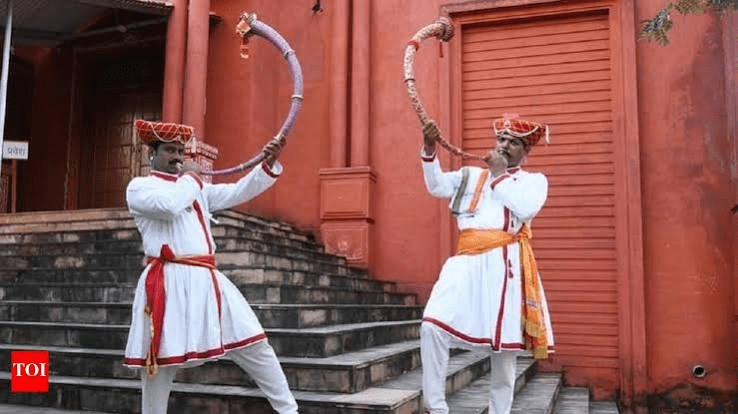
The circle Jesus mentions above is the same circle described in this Rik as “the circle the srnga vessel’s indestructible arms rest in.” In Hinduism, a Sringa (शृङ्ग) is an animal horn, a mountain peak, or a horn-shaped traditional musical instrument used like a bugle. So basically, it’s the Indian equivalent of the Jewish shofar (despite what Google AI says to the contrary). Both are ancient musical instruments made from ram’s horn and blown like a trumpet to wake people up spiritually, call for repentance, and mark special moments in the liturgical calendar. The real sringa or shofar isn’t, of course, a corporal instrument. Like everything else in scriptural texts, it’s a symbol.
What does it symbolize? The call to awaken, presumably. Herein we are told that the Golden Circle (the Circle of All Beings) is where the sringa/shofar originates. So, it’s from this circle that the Holy Spirit sounds the Call to Awaken. It’s also in this circle, then, that the indestructible arms sit down or rest. And from this we can glean that the Great Rays (the everlasting arms of Deuteronomy) call or sing to us from this same Golden Circle. And the Rays are indeed the horn-shaped beams shining into the world (through us) from that sacred circle at the top level of the dream-realm.
The images below illustrate the similarities between the Jewish shofar and the Hindu sringa. The minor difference in their forms can be attributed to human-egoic interpretation of what are, in fact, metaphorical horns.
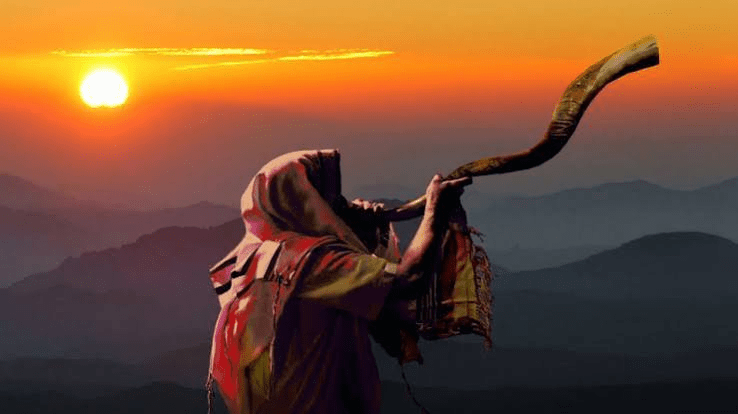
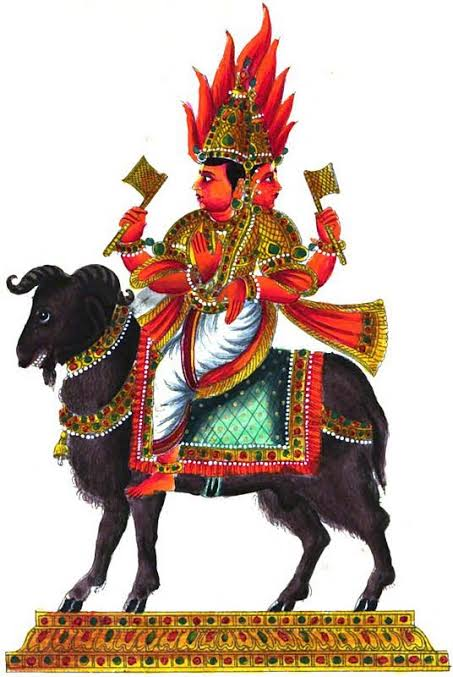
It’s no accident that Agni, the personified eternal flame, is depicted as having two faces — or that his vahana (vehicle) is a ram. I now understand that his two faces represent Yah and Vah, whilst the horns of his ram represent the Sringa or Shofar of the two Rays sounding together in the darkness.
The 32nd Sukta’s final Rik reads:
Shiva (the personified power of grace) rules the waning three shining circles of the forest refuge without the boundaries enclosing the song of becoming.
u (Shiva or the U-kara) rājā (rules) kṣaya-ti (the waning three) carṣaṇīnām (shining circles of) arān (the forest refuge) na (without) nemiḥ (the boundaries or borders) pari (enclosing) tā (the song) babhūva (of becoming)
Notes:
Hard to pin down what the waning three shining circles of the forest refuge are meant to signify. They might represent the three granthis, which grace does indeed dissolve; they might represent the three realms (terrestrial, atmospheric, and celestial) to be transcended; or they might represent the three cycles or rounds for the ritual pressing of the Soma-juice. Whatever they are, these circles exist in the Forest refuge “without the boundaries enclosing the song of becoming.”
Presumably, the boundaries enclosing the song of becoming refers to the enclosure, which Elohim built for Adam and Eve “east of Eden,” according to the Book of Genesis. This “enclosure” also is sometimes described as a cowpen, a walled garden, and a walled city or polis. This suggests that the Forest refuge is the realm, level, or place beyond the enclosure. Let’s assume for now that the three circles of the forest refuge correspond with the three uppermost charkas.
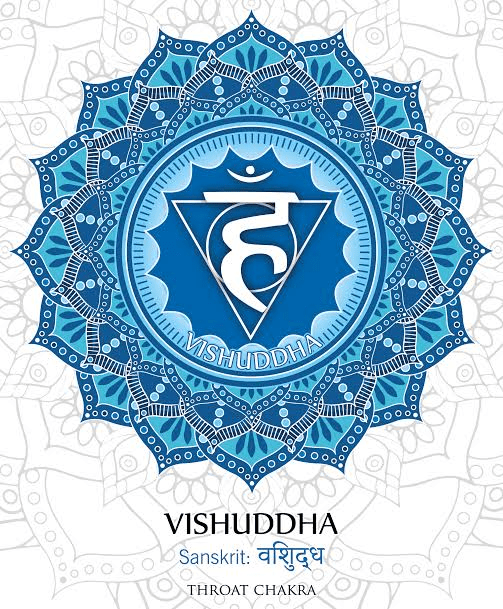
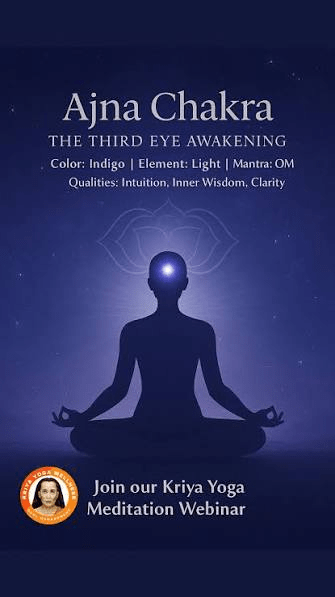
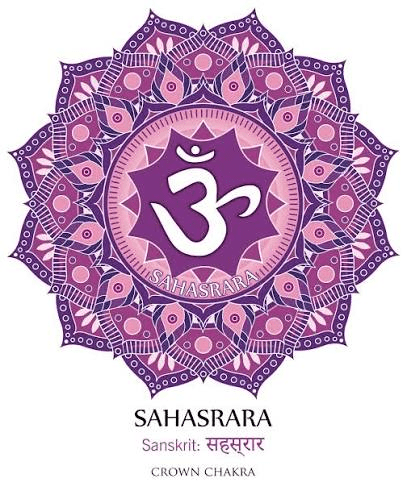
In Nath Yoga’s nine-chakra system, the three uppermost energy centers match those of the more common seven-chakra system. Those three centers, wheels, or circles are (in ascending order) the Vishuddha or Throat Chakra, the Ajna or Brow Chakra, and the Sahasrara or Crown Chakra.
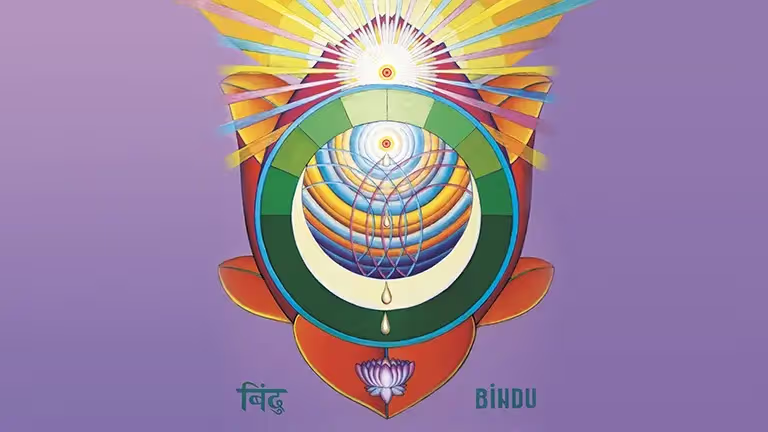
Interestingly, this system excludes the “secret” Bindu or Moon chakra, which is, in fact, the Soma-press of the Vedas, as well as the Biblical winepress. For it is here that we (with the Holy Spirit’s help) extract the “new wine” Jesus speaks of in Matthew 9:16-17, Mark 2:22, and Luke 5:37-39.
Mark’s version reads:
And no man putteth new wine into old bottles: else the new wine doth burst the bottles, and the wine is spilled, and the bottles will be marred: but new wine must be put into new bottles.
Rightly understood, the referenced “bottles” symbolize the thought systems through which we filter and store the new wine. The old bottle is the physical body’s sensory perception, which wrongly perceives the external world as real and meaningful through Satan’s dual lenses (the body’s eyes); whilst the new bottle is the Spiritual Body, which rightly perceives the internal world as real and meaningful through the single-eye or Spiritual Eye of Christ’s Vision or, in Hinduism, Shiva’s Vision.
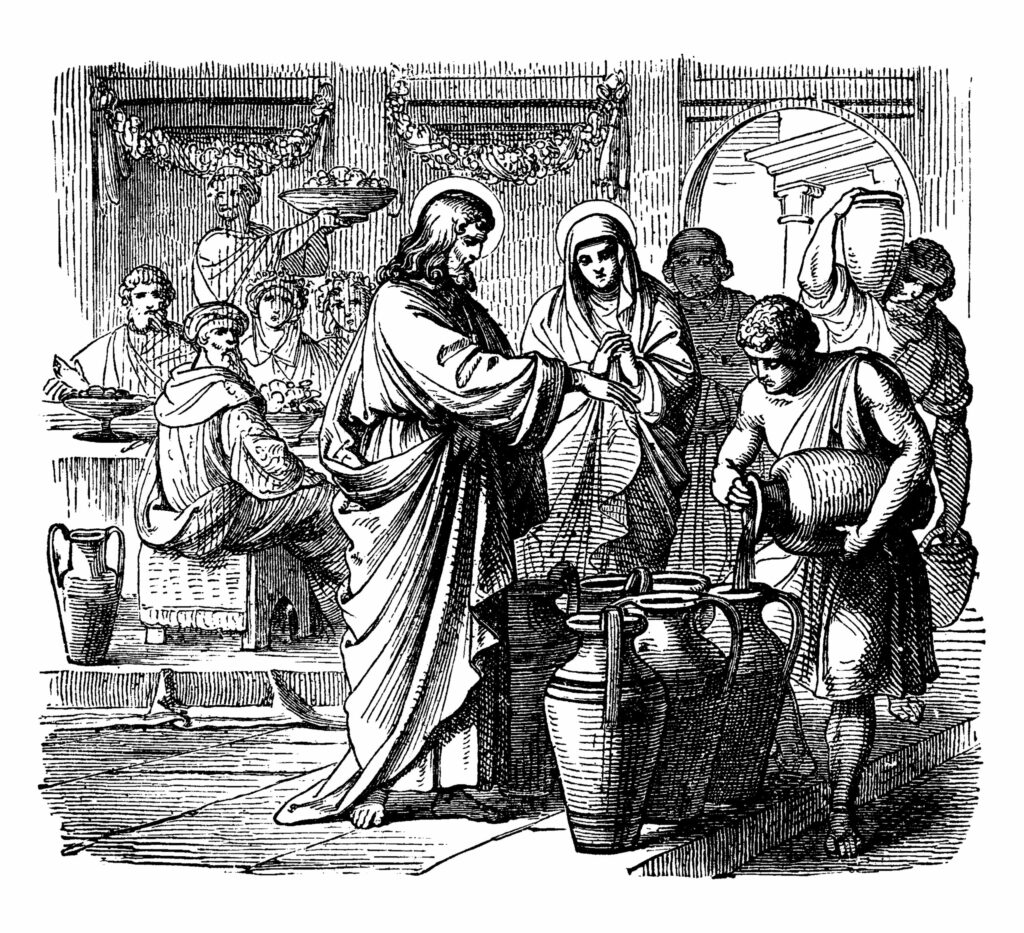
Since we now know that the Vedic Soma-juice is, in fact, the U-kara vibration, to extract that “juice” or “new wine” from the polluted waters of Ego thought would be to perform the miracle of “turning water into wine,” as Jesus famously demonstrated at the wedding in Canaan.
In the Hindu lore, Soma’s chariot has three wheels. Might these represent the three circles or chakras referenced in this Rik? Probably, though I could find no images of Soma or Chandra driving a three-wheeled chariot.
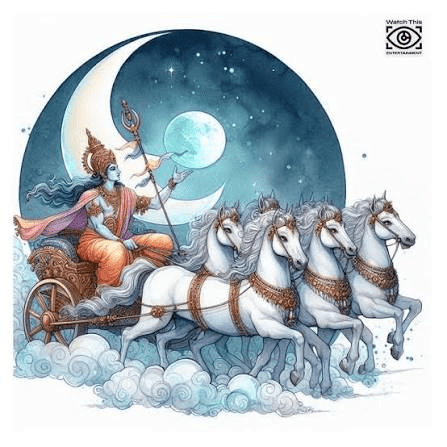
Again, these three wheels probably represent the three circles of AUM, whilst the chariot is the Merkabah of Soma, who personifies the Great I Am, AUM, and/or Amen. And these circles do indeed dovetail with the three uppermost chakras as follows:
–The Vishuddha Chakra houses the Wind Circle, where we begin to hear the M-kara vibration.
The Ajna Chakra houses the Water Circle, where we begin hearing the U-kara vibration after we break the Rudra granthi. The Bindu chakra houses the Moon Circle, which is indeed linked to the Water Circle. As some schools of yoga correctly teach, the Ajna and Bindu chakras are connected, but not in the physical body’s head, as the image below erroneously suggests. All the chakras are located in the Spiritual Body, which exists on a different plane of consciousness from the physical body. Since our mind is split between the two bodies, we might experience what feels like an overlapping of these two bodies — a consequence of what Course-Jesus calls “level confusion.”
The Sahasrara Chakra houses the Fire Circle, where we hear the A-kara vibration.
So, in conclusion, we’ve learned a lot from the correct translation of this Sukta, which contains 20 Riks (rather than Wilson’s presumed 15). Moreover, this foundational teaching says nothing about Indra defeating a demonic dragon named Vritra. The dragon represents God’s Radiant Splendor, whose first Ray is Yah or Rudra.
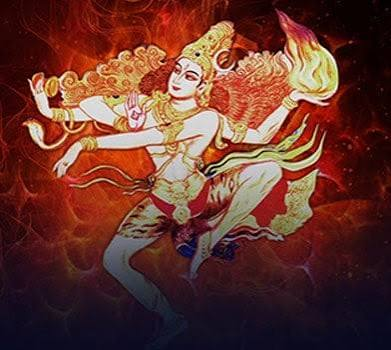
For Indra to destroy Vritra, his own father, makes no sense. Furthermore, Vritta doesn’t mean “the encloser in Sanskrit; it means “the protector of liberation” (Vrit-tra). We don’t find the specific phrase “protector of liberation” in either the Bible or the Course, but we do find hints to suggest that YHWH, Jesus/Joshua, God’s Word, and God Himself protect our freedom while we’re in the world.
Let me leave you with this from the Course:
Little child of God, you do not understand your Father. You believe in a world that takes, because you believe that you can get by taking. And by that perception you have lost sight of the real world. You are afraid of the world as you see it, but the real world is still yours for the asking. Do not deny it to yourself, for it can only free you. Nothing of God will enslave His Son whom He created free and whose freedom is protected by His Being. Blessed are you who are willing to ask the truth of God without fear, for only thus can you learn that His answer is the release from fear. (ACIM, T-11.VIII.7:1-7)
Thanks for dropping by. Until we meet again, Om Hari Om and Namaste.


Leave a Reply