Today we’ll attempt to solve the mystery of the City of Nine Gates — the nava dvara-pur mentioned in three sacred Hindu texts. According to Google AI, that nine-gated city isn’t mentioned in the Rigveda, but can be found in the Atharva Veda (10.2:31), the Shvetashvatara Upanishad (3:10), and the Bhagavad Gita (5:13). If, however, as I suspect, the nine circles referenced in RV 1.32 and the nine-gated city are related, then Google is mistaken about the Rigveda.
We also find the nine-gated city or fortress (nava-dvaram-puram) in the Atharva Veda 10.8:43, but traditionally mistranslated as “nine-gated lotus.” Puram doesn’t mean “lotus.” Puram means “city of.” Padma is the Sanskrit word for “lotus.” So, the nine-gated lotus and the nine-gated city are, in fact, the same “place” on the journey.
Before we go further, you should know that the dates these three ancients texts were composed is highly speculative. But it’s generally believed that the Atharva Veda dates to between 1200 BC and 1,000 BC, whilst both the Shvetashvatara Upanishad and the Bhagavad Gita are believed to have been scribed between 500 and 200 BCE. So, both are younger than the Rig and Atharva Vedas by about a millennium.
Let’s start our myth-busting adventure with Atharva Veda 10.2.31.
According to Google (via Wikisource.org):
Atharva Veda 10.2.31 describes the human body as an impregnable, divine city with eight centers (chakras) and nine gates (doors), housing a radiant, golden vessel of the soul. Found in Atharva-Veda Samhita Book X, Hymn 2, this verse uses architectural metaphors to explore the creation and nature of the primeval man (Purusha).
Can you spot the three colossal errors in that brief summary? The first is that the human body is the city of nine gates; the second is that the chakras are found in the physical body; and the third is that the Great Purusha represents “primeval man.”
Literally translated, Purusha means “fortress or stronghold of Usha” (the Hindu goddess of dawn). So Purusha is the Cosmic Ocean (of God’s thoughts) housing and protecting the Rays of God’s Greater Light that will eventually “dawn” in the world to dissolve the dream of separation. It is from this Cosmic Ocean or Great Purusha, therefore, that all the Atonement powers arise to bring about humanity’s deliverance.
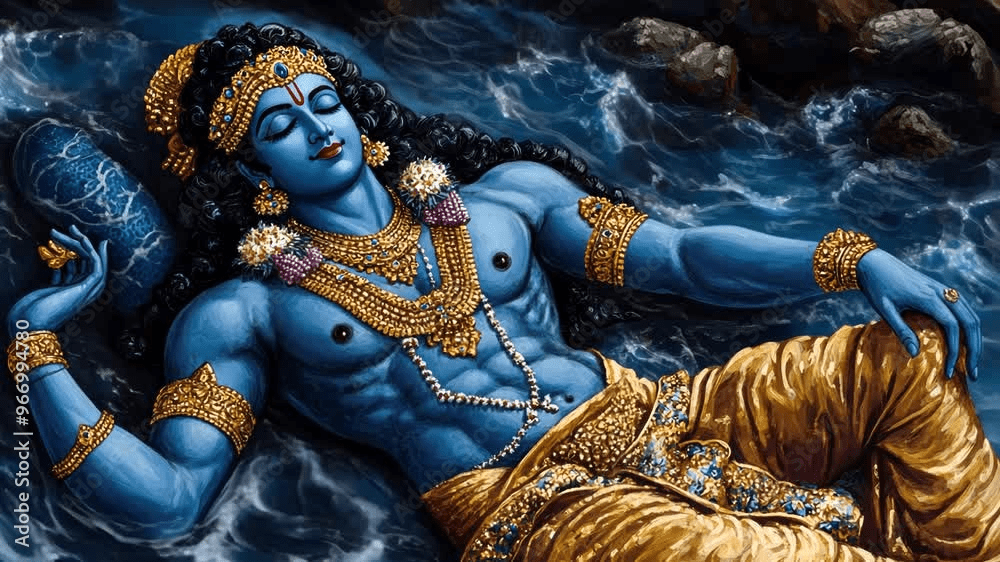
In Hinduism, Lord Vishnu drifts in this “ocean” aboard a palanquin formed by the multi-headed serpent Sheesha. Contrary to popular belief, Vishnu means “the divided two streams” rather than “the preserver,” making Vishnu the Hindu counterpart to the Biblical YHVH or Jehovah (the name of the Great Rays or two chief steams of Elohim, the Solar Logos).
The theoretical teachings of Theosophy, esoteric astrology and other “occult sciences” tell us Elohim is the umbrella term for the Seven Rays of God. And this is consistent with what Levi Dowling reports in The Aquarian Gospel. But I see the hierarchy differently.
As I see the pecking order, Elohim, the Solar Logos, radiates the two Great Rays of Yah and Vah, who together emanate the Seven Rays. Yah (the Ray of God’s presence) emanates the Trinity or Aspect Rays, whilst Vah (the Ray of Christ’s presence) sends forth the four Attribute Rays.
I can’t swear this order is correct, but I’ve always felt in my gut that the esoteric teachings about the Seven Rays miss the mark on more scores than this one.
But enough about all that. Because, honestly, I could go on and on. But I won’t (just yet), because I’m eager to learn what the Atharva Veda actually communicates about the enigmatic nine-gated city.
In transliterated Sanskrit, AV 10.2:31 reads: aṣṭacakrā navadvārā devānāṃ pūrayodhyā tasyāṃ hiraṇyayaḥ kośaḥ svargo jyotiṣāvṛtaḥ
Traditionally, those words are translated thusly:
Eight-wheeled, nine-doored, the gods’ invincible stronghold: within it is a golden casket, heavenly, wrapped round with light.
As it turns out, I’ve retranslated this Rik before — in my first post about the teachings of Hinduism (Dec. 8, 2025). At that time, I got the following result based on the accepted dictionary definitions of some of the Sanskrit words:
Eight circles with nine gates, the Holy Name is an unconquerable fortress within the heart, a golden Yah containing the celestial rays of the Higher Self, hidden from view.
I know more now than I did then. Asta, for example, doesn’t mean “eight,” as commonly presumed. Ashta means “eight,” while Asta means “the resting place.” I now also better understand what the Golden Yah refers to
My new-and-improved translation reads as follows:
The resting place chakra’s nine gates or doors protect the Forest’s invincible walled city casting the light of the Golden Yah containing the Celestial Rays of the inner light patiently enduring underneath.
aṣṭa-cakrā (the resting place circle’s) navadvārā (nine gates or doors) de-vānāṃ (protect the forest’s) pūra-yodhyā (invincible walled city) tas-yāṃ (casting the light of) hiraṇya-yaḥ (the Golden Yah) kośaḥ (containing) svar-go (the celestial Ray of) jyoti-ṣāv(i)ṛ-taḥ (the inner light patiently enduring underneath).
So, nothing close to the accepted translation. But even that flawed translation makes clear that the city referenced herein isn’t the human body. Does the human body, for example, have eight wheels, nine doors, and a golden casket surrounded by light at its core?
The answer is: Only to those suffering from “level confusion.”
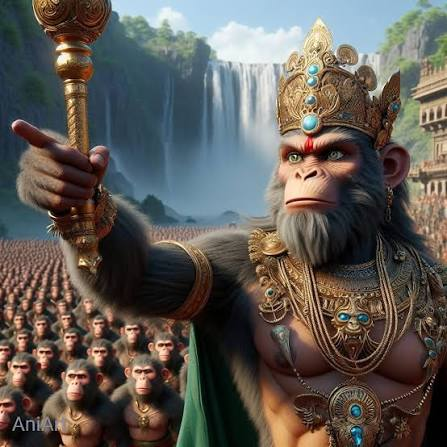
In the Ramayana epic, the walled fortress in the Forest is the capital of the kingdom of the Vanaras, the monkey-people ruled by Sugriva (the sacred throat) and assisted by Lord Hanuman (divine majesty personified). How they came to be perceived as monkey people is beyond me, given that Vanaras translates either as “the forest cry” (Van-aras) or “the forest sap, essence, or living water” (Vana-ras). Either way, it’s a reference to the sacred sound emanating from the Forest of All Beings (the Forest of Lebanon in the Bible).
Trust me when I tell you that the Ego Mind’s powers of deception know no bounds! Satan created a whole world, after all, and then convinced us not only that his fraud was “real,” but also that God created it for our pleasure. And, in so doing, he appointed himself our God, as well as the Lord of the World.
And this is why we MUST question everything we have been taught to believe by those still infected by ego-thinking, many of whom falsely claim to be enlightened.
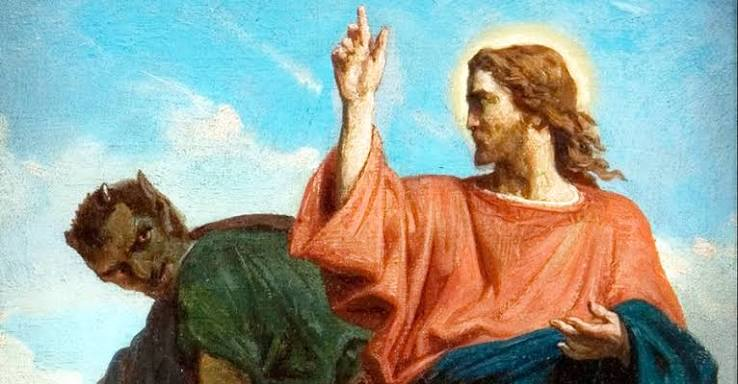
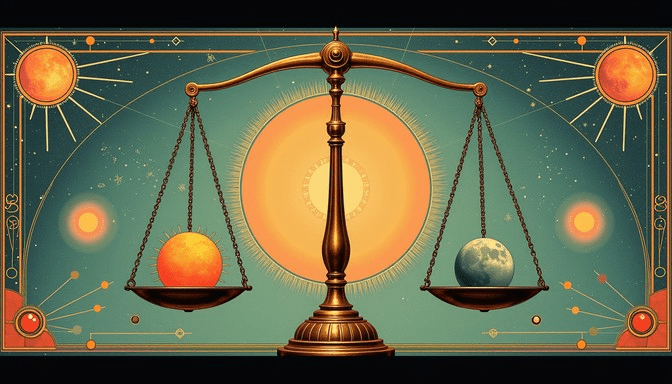
I couldn’t find a plausible definition for Kishkindha, but it’s probably a compound of ki (to know), sh(a)kin (the mighty), and dha (Dha). Who or what is Dha? A shorthand reference to Dhata or Dhatareya, perhaps — one of the Solar Deities (Aditya or sons of Aditi) in Hinduism. Dhata-reya means the balance scales of abundance or, possibly, the balance scales of the Solar Rays.
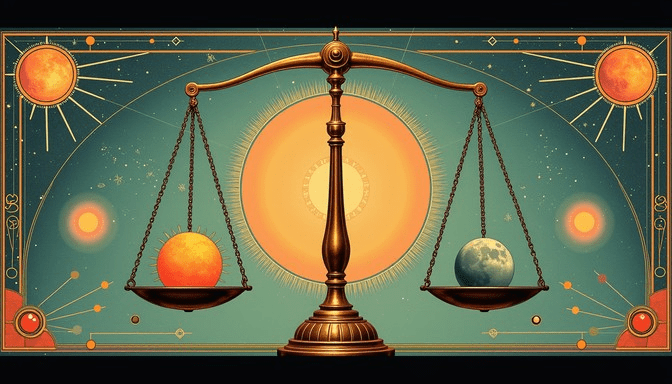
Knowing the correct definition of Kishkidha tells us that the City of Nine Gates is the balance point between the sun and moon powers. And the balance point between the solar and lunar powers of the Solar Logos is the Ajna Chakra — i.e., the Spiritual Eye, where the Ida and Pingala nadis are said to meet or “marry.”
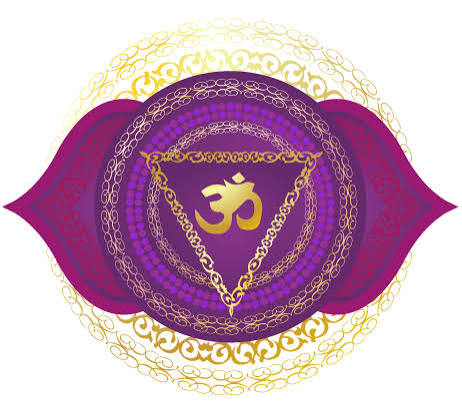
And the Spiritual Eye does indeed have what are called “auric gates.” And these gates are NOT the nine orifices of the human body.
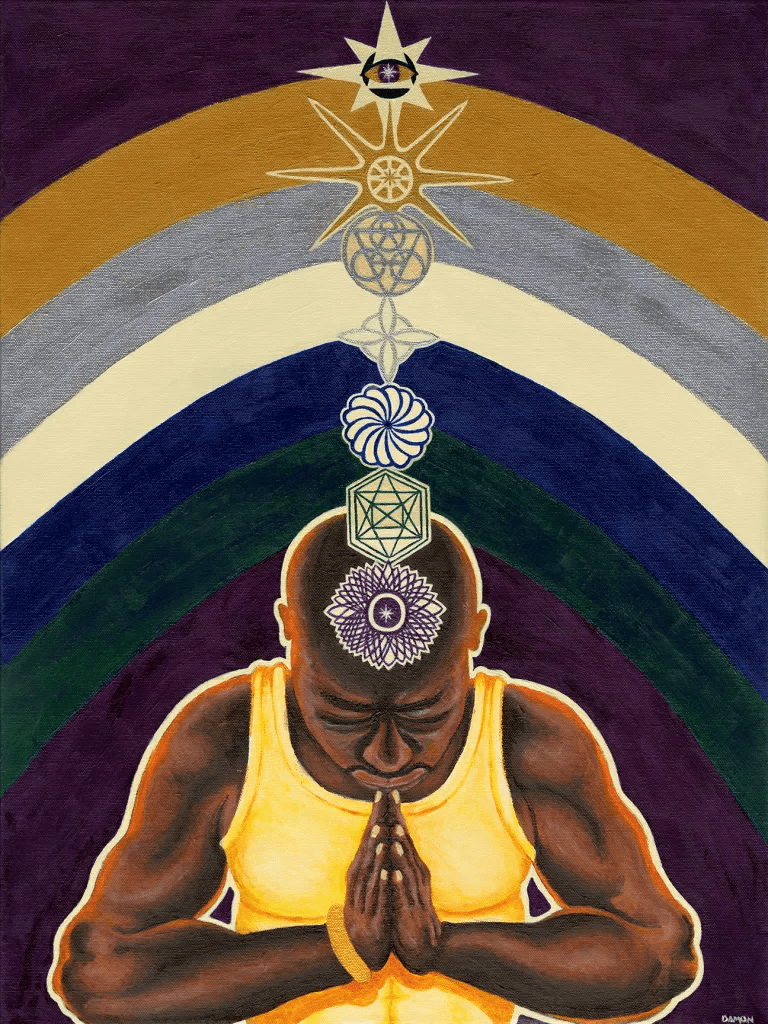
What are they then? That’s the question we’re asking today. Some spiritual teachings claim that the Auric Body houses seven vibrational layers, but I’m not convinced that’s true. So let’s see what the other Hindu texts say about this nine-gated city.
Let’s look next at Atharva Veda 10.8.43, wherein we again find mention of the nava-dvraram-puram.
In transliterated Sanskrit, the Rik reads:
puṇḍarī́kaṃ náva-dvāraṃ tribhír guṇébhir āvṛ́tam tasmín yád yákṣmā́tman-vát tád vái brahma-vidó viduḥ
The traditional translation reads as follows:
The lotus-flower of nine doors, covered with three strands (guṇá) — what soulful prodigy (yakṣá) is within it, that the bráhman-knowers know.
By my calculations, the verse should read more like this:
The mark of the heart-mind’s nine doors or gates through the three dark centers is veiled in that which diseased thinking likens to the truth in the madness Brahma perceives as intelligence.
My definitions:
puṇḍa-rī́kaṃ (the mark of the heart-mind’s) náva-dvāraṃ (nine doors or gates) tribhír (through the three) gu-ṇébhir (dark hubs) āvṛ́tam (is veiled) tasmín (in that) yád (which) yákṣmā́tman-vát (diseased-thinking likens to) tád (the truth) vái (in the madness) brahma-vidó (Brahma perceives) viduḥ (as intelligence)
Notes:
Traditionally, pundarika is translated as “white lotus,” but it’s actually a compound of punda (mark, sign, or symbol) and rikam (the heart-mind’s). The mark or emblem of the heart-mind is the Tripunda — the mark in the forehead also known as “Shiva’s eye.”
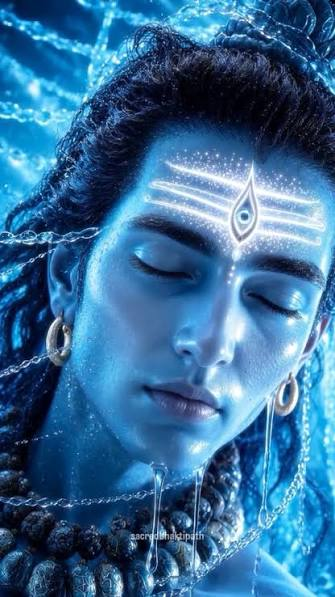
I’m pretty sure the three dark hubs to which this Vedic verse refers are the three “ethereal hubs” sometimes associated with the mark. The lowest line represents Karma (acting in the world), the middle line represents Maya (the illusion) and the upper line represents Anava (ego individuality). To open the Spiritual Eye, we must transcend these “dark hubs” via the Bindu or Moon in the middle.
Keep that in mind as we move on to the Shvetashvatara Upanishad, whose relevant verse (3:18) reads:
navadvare pure dehi hamso lelayate bahih vasi sarvasya lokasya sthavarasya carasya ca.
The traditional translation reads as follows:
The swan, the ruler of the whole world, of all that is moving and all that is motionless, becomes the embodied self and dwelling in the city of nine gates, flies outward.
What it actually says is closer to this:
The nine-gated city embodies the greater light of Soma to shake (off) the external master of everyone of the world established by the choice to wander from the circle.
My definitions:
nava-dare (the nine-gated) pure = pura (city or fortress) dehi (embodies) ham-so (the Greater Light of Soma) lelayate (to shake or vibrate) bahih (the external) vasi (master) sarvasya (of everyone) lokasya (of the world) stha-varasya (established by the choice) carasya (to wander from) ca (the circle).
Notes:
Hamso, the greater light of Soma is the Great Ray of Vah, not “the swan” (hamsa). Because no swan rules the whole world, as the traditional translation suggests. But the M-kara vibration of the Vah Ray does “shake off” or vibrationally dissolve the Ego Mind, the master of everyone of the world we formed in the void by choosing to wander away from the Golden Circle of All Beings.
The Vah Ray is the Holy Spirit (of Christ), and the Holy Spirit is generally believed to be the Golden Lampstand illuminating the Temple. So, let’s assume the Vah Ray is pale gold in color, like the Circle of All Beings. The nine-gated city reflects that golden light, therefore, to shake off the Ego Mind’s shackles.
All of these clues strongly suggest that the city of nine gates is the
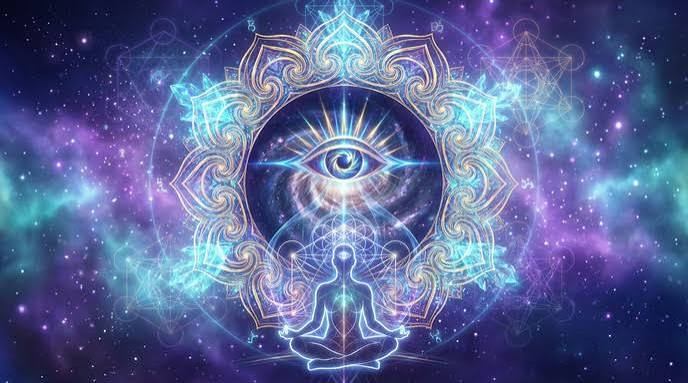
Ajna Chakra — the third eye or Spiritual Eye, which, when opened, restores the Soul’s Spiritual Vision (a.k.a., Christ’s Vision, Shiva’s Vision, Holy Sight, or True Perception).
Or, as Course-Jesus explains:
The acceptance of the Atonement by everyone is only a matter of time. This may appear to contradict free will because of the inevitability of the final decision, but this is not so. You can temporize and you are capable of enormous procrastination, but you cannot depart entirely from your Creator, Who set the limits on your ability to miscreate. An imprisoned will engenders a situation which, in the extreme, becomes altogether intolerable. Tolerance for pain may be high, but it is not without limit. Eventually everyone begins to recognize, however dimly, that there MUST be a better way. As this recognition becomes more firmly established, it becomes a turning point. This ultimately reawakens spiritual vision, simultaneously weakening the investment in physical sight. The alternating investment in the two levels of perception is usually experienced as conflict, which can become very acute. But the outcome is as certain as God.
Spiritual vision literally cannot see error, and merely looks for Atonement. All solutions the physical eye seeks dissolve. Spiritual vision looks within and recognizes immediately that the altar has been defiled and needs to be repaired and protected. Perfectly aware of the right defense it passes over all others, looking past error to truth. Because of the strength of its vision, it brings the mind into its service. This re-establishes the power of the mind and makes it increasingly unable to tolerate delay, realizing that it only adds unnecessary pain. As a result, the mind becomes increasingly sensitive to what it would once have regarded as very minor intrusions of discomfort.
Bearing these things in mind, let’s now see what the Bhagavad Gita has to say on the subject. BG 5:13 reads:
sarva-karmāṇi manasā sannyasyāste sukhaṁ vaśhī nava-dvāre pure dehī naiva kurvan na kārayan
According to holy-bhagavad-gita.org, those words translate thusly:
The embodied beings who are self-controlled and detached reside happily in the city of nine gates free from thoughts that they are the doers or the cause of anything.
While this statement is true enough in its way, it isn’t quite how I read the Sanskrit. By my calculations, the line should translate in this manner:
The whole acts within the spiritual mind to give up the world opposing the happiness of dwelling in the nine-gated city embodying the Ray of Light acting as Nara’s hand-vessel.
sarva-karmāṇi (the whole acts within) manasā (the spiritual mind) sannyasyāste (to give up the world opposing) sukhaṁ (the happiness of) vaśhī (dwelling in) nava-dvāre (the nine-gated) pure (city) dehī (embodying) naiva (the Ray of Light) kurvan (acting as) na (Nara’s) kāra-yan (hand-vessel)
Notes:
Here we are told that “the nine-gated city embodies the Ray of Light acting as Nara’s hand-vessel.”
In the Hindu lore, Nara (the Great Purusha) was entrusted by Indra to hold and safeguard the vessel containing Amrita (the celestial nectar of immortality) following the gathering of the waters (the true translation of Samudra Manthan). So, Nara’s “hand vessel” contains and preserves the vibrational frequencies of the Ray producing Amrita. Amrita is produced in the Bindu or Moon chakra, which sits behind the Spiritual Eye. So, the Ray the city embodies has to be the Christ Ray of Vah.
So the traditional interpretation of the story is confused. Nara is the Greater Light of God sounding the True Om, which takes the form of the AUM vibration as it rises from the Cosmic Ocean into our dreaming mind. So, Nara begat Indra, the Great Ray of Yah, which Nara then entrusted with God’s three hands (not the other way around). And, according to the lore, Indra later surrendered that power to Krishna (the Christ Ray dwelling in the Resting Place, watching over the miracle-working “cows”).
If we turn to the esoteric teachings of Theosophy, we learn that the ruling ray of the Ajna Chakra is the Fifth Ray — the Ray of Science and Concrete Knowledge. But that make no sense for a couple of reasons. The first is that “concrete knowledge” is an ego invention which blocks spiritual sight. The second is that the Fifth Ray is orange, while the Ajna chakra is indigo — the color of the Seventh Ray (the balance scales). So, once again, the esoteric teachings about the Rays are inaccurate.
They also ascribe to the Seventh Ray the core characteristics of “organization” and “building” — both of which are, again, egoic rather than divine attributes. More accurately, the Seventh Ray is the violet flame, which shepherds “transformation through forgiveness.”
And, as Course-Jesus explains, True Perception or Spiritual Sight is restored only after we forgive the world and everyone in it for what never occurred in divine reality.
There’s something else you should know — something I didn’t mention earlier: Dhatareya, the Solar Ray (Aditya) mentioned in the Ramayana was the seventh son born to Aditi, the Mother goddess, and Kashyapa, the cosmic turtle.
Let’s now open our Bibles. We don’t find a nine-gated city in the Judeo-Christian scriptures, but we do find the number itself in at least fifteen books of the Old Testament. In the New Testament, we also find nine “fruits” of the Holy Spirit.
In Ezekiel 48:30-35, we find a celestial “city” whose twelve pearl gates are named after the tribes of Israel (three on each side, north, south, east, and west. The city is called YHWH-shammah, which means “YHWH (the Great Rays) dwell here.” In Revelations 21, we are again told this “city” has twelve gates rather than nine.
But wait … because the Old City of Jerusalem in worldly Israel does have nine gates, only eight of which are open. The ninth gate (the Eastern Gate) is said to be blocked up and shut until the Messiah’s arrival.
If, therefore, the city of nine gates is the city of twelve gates, with the eastern gate still blocked, then the city of nine gates would be Old Jerusalem — the walled city as it existed prior to the opening of the final gate by Jesus Christ.
Being the eastern gate, the final gate leads from the enclosure into Eden. This is, therefore, the gateway through which we (as Souls) depart the desert for good. In Genesis, this is the gate where Elohim posted the Flaming Sword. In Hinduism, this is the gate guarded by Indra.
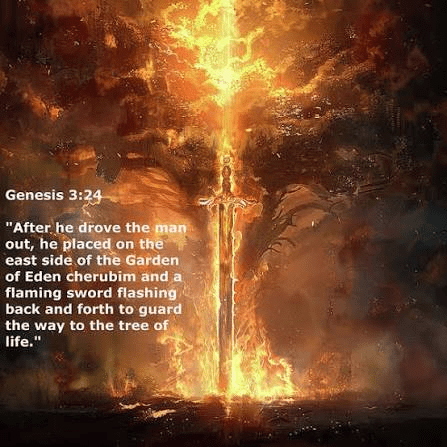
In a manner of speaking, the Flaming Sword marks the first gate of hell, which is the last gate we will pass through on our return journey to Paradise.
With this in mind, read what Course-Jesus says below:
The hope of specialness makes it seem possible God made the body as the prison house that keeps His Son from Him. For it demands a special place God cannot enter, and a hiding place where none is welcome but your tiny self. Nothing is sacred here but unto you, and you alone, apart and separate from all your brothers; safe from all intrusions of sanity upon illusions; safe from God and safe for conflict everlasting. Here are the gates of hell you closed upon yourself, to rule in madness and in loneliness your special kingdom, apart from God, away from truth and from salvation. (ACIM, T-24.II.13:1-4)
In this context, the nine gates belong to body-consciousness, rather than the physical body itself. So, the confusion is understandable. This also suggests that Dante’s Inferno may not wholly be a work of fiction.
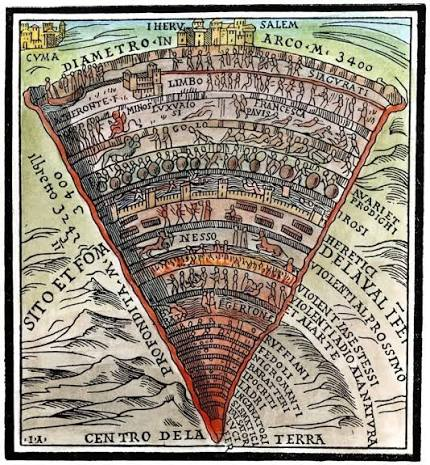
The nine gates, I suspect are the chakras. And, before you ask, yes, there are nine, rather than seven. In some traditions, there are twelve. Hence the twelve gates of New Jerusalem.
Before I say more, let’s look more closely at the two most significant Biblical passages about New Jerusalem. We’ll start with the section of Ezekiel that Strong’s Concordance sub-headed “the City Gates and Dimensions.” Some of what Ezekiel reports is confusing, because Hebrew words like elpeh and middah have multiple meanings.
Eleph (Aleph), for example, can mean “oxen,” “clans,” “first,” “a thousand,” or “chiefs.” I chose “chiefs” in this instance, because we find four chiefs in Genesis 36:17, (as the four chiefs who came from Esau’s son, Reuel). Reuel means “friend of God” or “shepherded by God,” so Reuel probably represents the Vah Ray, which is indeed the “son” of Esau, the Red brother of Jacob, the earthbound Soul. The four chiefs are Nahath (rest or quietness), Zarah (blooming dawn), Shammah (perceived by listening), and Mizzah (the place of sowing).
So, the four chiefs refer to celestial locations.
Middah, likewise, can mean “measure,” “size,” or even “tributes.” I chose “tributes,” because we also find “five hundred” and “tributes” linked together in Numbers 31:28.
A tribute is a gift or service offered in humble or dutiful gratitude, often by an individual to a larger body. So, this makes sense.
When rightmindedly translated, Ezekiel 48 reads:
Bordering the City on the north corner are four chiefs, five hundred tributes, and the gate of the city called the staff, rod, or scepter of Israel; three gates lie northward; one gate is Ruben; one gate is Judah, (and) one gate is Levi.
At the eastern corner (are) four chiefs, five hundred tributes, and three gates. One gate is Joseph, one gate is Benjamin, and one gate is Dan.
At the Southern corner, in the drought, (are) four chiefs, five hundred tributes, and three gates. One gate is Simeon, one gate is Issachar, (and) one gate is Zebulun.
At the western corner, (are) four chiefs, five hundred, (and) three (or triad) gates. One gate is Gad, one gate is Asher, an one gate is Naphtali.
A circle of eight-thousand tributes, the name of the city of the Rays (is) YHVH-Shammah. (Traditionally translated as “The Lord is there,” YHVH Shammah actually means “YHVH is perceived by listening.”)
Let’s start with shalosh, the Hebrew word translated as “three.” Shalosh can also mean “triad,” and, just recently, I’ve been getting intuitive messages about the triad nature of God’s holy powers working in the dream-realm.
When viewed as triads, the twelve gates become four, with each composed of three concentric levels or stages, which Ezekiel gives specific names. Clustered as triads, the North gate names of Ruben, Judah, and Levi translate respectively as “behold the son,” “give thanks,” and “join together.” The eastern gate names of Joseph, Benjamin, and Dan, translate as “God will increase,” “the son of the right hand,” and “judge.” The southern gate names of Simeon, Issachar (also Yissachar), and Zebulun (also Zevulun) are traditionally translated as “listening,” “brings the rewards,” and “(of) the glorious dwelling place.”
But are those definitions correct? I have my doubts, particularly about the meaning of Issachar. Most Hebrew scholars believe the name means “man of reward” or “hired man,” based on egoic interpretations of the Bible story of Issachar and Zebulun. But I suspect the name means something else, given that Issachar was the son (of Jacob and Leah) who stayed home to study the Torah, while his brother, Zebulun, went out to earn wages in the world. At the end of the day, the two brothers shared the rewards of each other’s efforts.
We find an interesting discussion justifying the traditional meaning of Issachar or Yissachar at chabad.org. I’m more inclined to believe Issachar is a compound of Issa and chara, meaning “Issa kindles.” This would make the three gates together “listening to Issa kindles the glorious dwelling place.” And that true statement is echoed in both the Bible and the Course.
In the Course, we find the following affirmation in Workbook Lesson 60 — a review of the previous five lessons.
As I listen to God’s Voice, I am sustained by His Love. As I open my eyes, His Love lights up the world for me to see. As I forgive, His Love reminds me that His Son is sinless. And as I look upon the world with the vision He has given me, I remember that I am His Son. (ACIM, W-60.5:2-5)
In Arabic, Issa is understood to mean Christ, Jesus Christ, or the Messiah, but it more likely refers to the Great Ray of Vah, which represents Christ’s presence in the dream-realm, and also sounds the Call to Awaken (the M-kara, I believe). And, as Jesus explains in the Course, the Call to Awaken is the Holy Spirit, as well as the Voice for God.
Concerning the Bible’s teachings on the subject, Google says, “Listening to God’s Voice or Word (Issa) calls the soul toward His holy presence, echoing passages like Psalm 26:8 (“Lord, I have loved the habitation of your house, and the place where your glory dwells”) and Psalm 84:1 (“How lovely is your dwelling place”).
And, finally, the names of the western gate are Gad, Asher, and Nephtali, whose traditional definitions we also must question. Why? Because Nephtali supposedly means “my struggles,” but actually means “the Living Breath or Soul” (neph) of the Lamb (tali). Traditionally, Gad is said to mean either “good fortune” or “the troop comes.” Let’s go with the second definition, since the “troop” they mean is the Army of Christ, which the scriptures also call “the multitudes. ” And that leaves only Asher, which can mean either “to be happy,” “to be fortunate or blessed,” or “to be guided to walk straight.” I chose the third definition, making the western gate triad something akin to “the troop comes to guide to the straight path the Soul of the Lamb.”

In mysticism and sacred geometry, the triad nature of God operates dynamically to dissolve the illusion of duality. In these teachings, the “gates of transcendence” refer to three progressive metaphysical stages or principles—often mapped as Body, Soul, and Spirit or Thesis, Antithesis, and Synthesis—that elevate consciousness from division to unified wholeness.
The triad-gate concept also makes more sense when viewed in this way:
–The first gate represents polarity, separation, and/or division (i.e., duality: the initial recognition of separation between the ego and the divine, or the split between internal (spiritual) reality and external (ego) unreality.
–The second gate represents mediation and harmony: the active or passive “bridging” force that reconciles opposing tensions, acting as the dynamic turning point of transformation.
–The third gate represents synthesis and unity: the dissolution of the boundary between the observer and the observed, yielding a return to the primordial (cosmic) source or non-dual awareness.
Or, expressed more succinctly:
The first gate = the M-kara vibration of the Holy Spirit’s Call to Awaken
The second gate = the U-kara of the Holy Spirit’s perception-shifting miracles of grace
The third gate (the A-kara) = the Holy Spirit’s power of Revelation
As I imagine the set-up, each gate into the city is a reflection or echo of the Great AUM (the Great Amen of Revelations). Ergo, each gate is a three-part concentric circle. The first or outer circle is the M-kara, the second or middle circle is the U-kara, and the third or innermost circle is the A-kara.
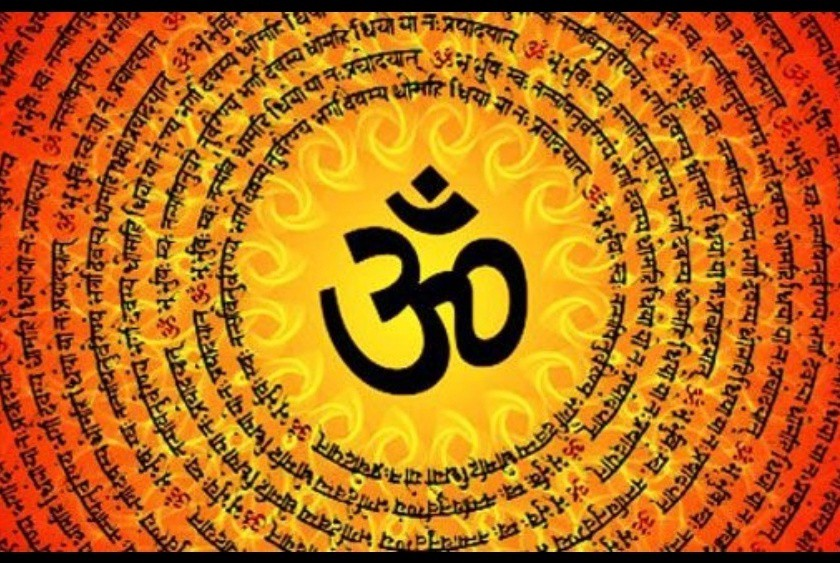
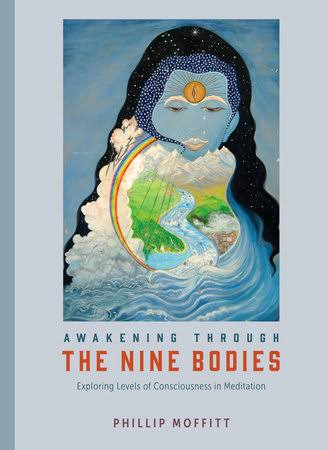
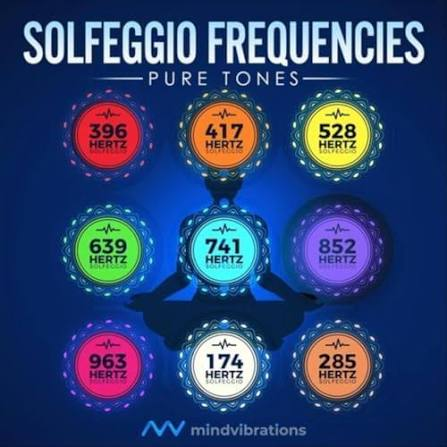
This is very interesting, actually. Because it suggests that the three tones of AUM work together at different calibrated frequencies to move our minds through the nine inward-leading gateways. And this is (I suspect) the general premise behind the ministry of Phillip Moffit, a Buddhist meditation teacher and writer based in the San Francisco Bay Area, as well as those who ascribe healing powers to the nine Solfeggio frequencies. Rightly understood, however, those nine frequencies are heard with the “ears” of the Soul in silent meditation, not with the ears of the body as audible sounds.
Let’s move on to Revelations 21. For greater context, I translated the 21st chapter from the beginning. My translation reads as follows:
And I perceived a new heaven and even a new earth. For the first heaven and earth had passed away but belonged not yet to the sea (the Cosmic Ocean).
And I, John, saw the holy city, New Jerusalem, descend from God, from out of Heaven to prepare for when the bride arranged for herself a husband.
And I heard a great voice out of Heaven saying, “Look and behold the tabernacle of the divine within humankind, and by pitching a tent amid this Self, the True Self becomes the “self” of all people, nations, or tribes.
And God himself shall come among the Self, the Self of God; and will wipe away all tears from your eyes, and there will be no more death, nor mourning, nor clamorous outcries; nor shall there anymore be pain. For the first has departed to be seated upon the throne to say, “Seeing makes everything new and fresh and tells me the recorded marks of the Word (the Tripunda) are true and fruitful and communicate to me that it is done. Being the Alpha and the Omega, the beginning and the end, I bestow on the thirsty away from the fountain the waters of life as a gift. To overcome, be the heir to all things that come from God, and you shall be my son. But to be fearful and unbelieving, and to detest even a murderer, a whoremonger, a sorcerer, an idolator, and every deception you share in the pond to kindle the fire and brimstone, that is the second death.
And there came toward me one of the seven angels that held one of the seven bowls to fulfill the seven last strikes (plege); and he spoke to me, saying, “Come here, (and I will) show you the bride, the lamb’s wife.”
And he carried me away by the pneuma (the holy breath or cosmic wind) to a great and lofty mountain, and showed me a great city (polis), holy Jerusalem, coming down from Heaven, away from God, having the glory of God and the Self’s luminous light resembling a precious stone, like a jasper stone, shining like crystal, and having a wall, great and high, possessing twelve gates. And upon the gates (were) twelve angels (messengers), and their names were written thereupon, which are the twelve tribes of the Sons of Israel. In the east, three gate; in the north, three gates; in the south, three gates; and in the west, three gates. And the wall of the city had (these) twelve substructures, and on them (were inscribed) the names of the twelve apostles of the Lamb.
And (he that) spoke with me held a golden rod to measure the city and the gates thereof, and the wall of the same. And the city lieth four-cornered, and the length thereof was as much as the breadth. And he measured the city with a rod twelve-thousand furlongs; the length, breadth, and height being equal. And he measured the wall one hundred and forty four cubits — the measure of the person that was the messenger. And the structure of the wall was jasper, and the city was pure and golden, like glass, pure and transparent.
And the substructures of the wall of the city (were) garnished with all manner of precious stones. The first substructure was jasper, the second was sapphire; the third was chalcedony; the fourth was emerald; the fifth was sardonyx; the sixth was sardius; the seventh was chrysolite; the eight was beryl; the ninth was topaz; the tenth was chrysoprase; the eleventh was jacinth; (and) the twelfth was amethyst.
And the twelve gates were pearls. Everyone a gateway holding out one pearl. And the streets of the city were pure and golden, in the manner of transparent glass.
And I saw no temple therein; for the Lord God Almighty and the Lamb comprise the Temple of the Self. And the city had no need of the Sun or Moon to bring light to the Self, for the glory of God gave light to the same; and the Lamb was the lamp of the same.
And the nations were made whole to walk in the light of the Self, as the kings of the world bringing forth the Self’s glory. And to value the nations within the Self, nevermore enter into any manner of defilement, and make abomination a falsehood, unless written in the Lamb’s Book of Life.
Worth pointing out is that the precious stones catalogued above are the same twelve stones ornamenting the breastplate or choshen of the High Priest described earlier, in Exodus 28:17-20. Those twelve stones, we are told in Exodus, were arranged in four rows of three.
As four hierarchical triads, that is to say.
Now, just for kicks, let’s compare an image of the Golden Breastplate with the one I shared earlier of the Solfeggio frequencies.
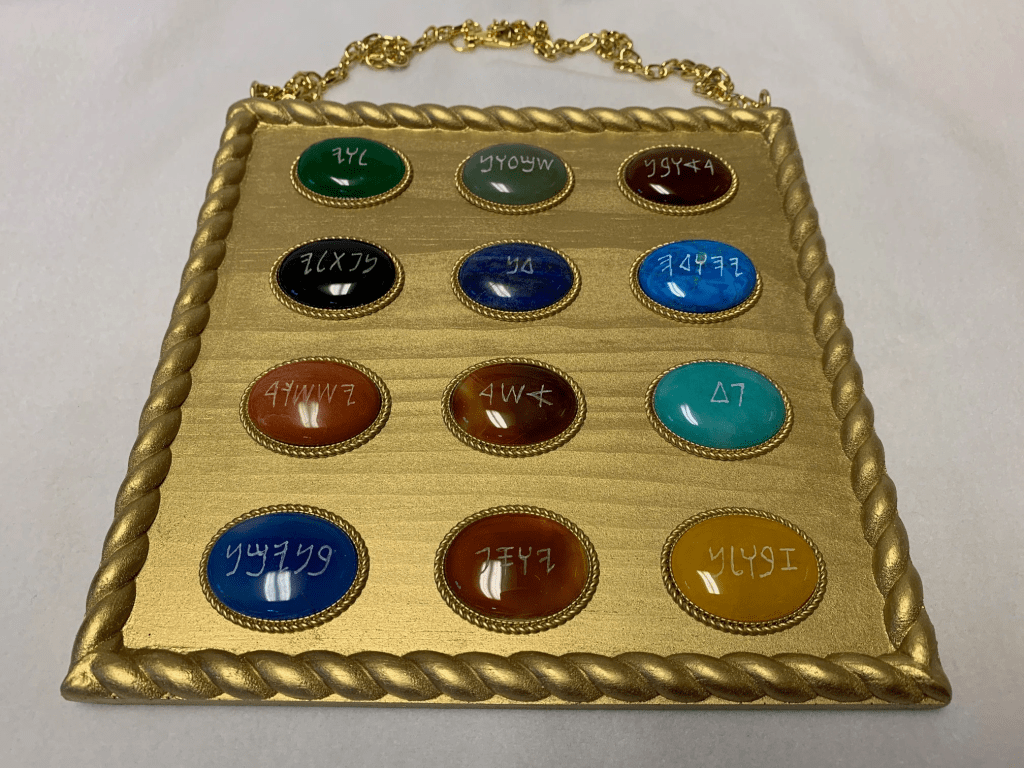
The chart of the Solfeggio frequencies is missing a row, but the resemblance is uncanny all the same.
And each of those stones was inscribed with the names of a “tribe of Israel,” which Ezekiel identifies as Ruben, Judah, Levi, Joseph, Benjamin, Dan, Simeon, Zebulun, Issachar, Gad, Asher, and Naphtali.
Now, let me toss another idea into the salad. What if these stones are the chakras?– i.e., the nine or twelve “eyes” of the journeying Soul (Israel or Rama), the Ego Mind veiled or blinkered when we entered the dream-realm with the goal of creating without God. And these nine “hubs” surround the Golden Circle that is New Jerusalem, Eden, or Paradise. Heaven on earth, essentially.
As truth-seekers, it behooves us to question EVERYTHING. And that includes the debatable (albeit ancient) teachings that the chakras are 1) seven in number, 2) located in the physical spine and brain; and 3) benefit the false self-concept when cleared of obstructions. All three of these ego-inspired notions are, in fact, utterly false.
The main reason I’m bringing this up now is this: I “saw” this in meditation yesterday — and it opened a door into a whole new set of teachings with which I was hitherto unfamiliar.
The image below maps the nine vibrational bodies, which are indeed concentric circles. They do NOT, however, radiate outward from the physical body as shown. Rather, they exist on different plains than does the physical body, because the physical body doesn’t actually exist — nor does the dense plain of inverted perception on which it appears to operate.
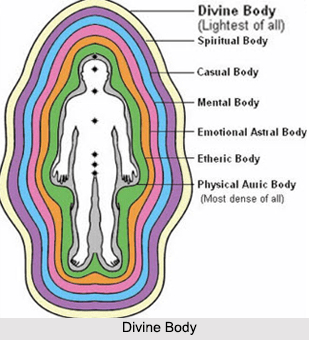
Now, picture this instead: the Ajna Chakra forms the center of the nine vibrational fields. These vibrational fields are the chakras.
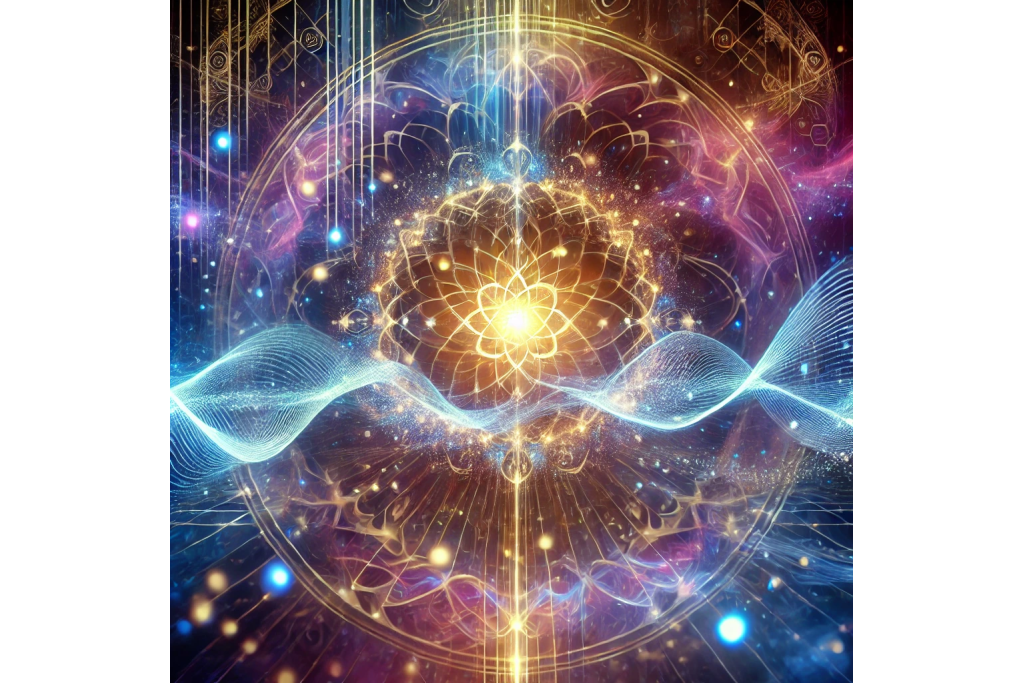
As we move outward from the Third Eye, our mind’s vibrational frequency grows steadily denser. This means that the densest or lowest level of vibration is experienced in the Muladhara Chakra (Circle) — the lowermost and outermost vibrational “body” of consciousness. This is the psychic level of living “rooted” wholly in the world of illusion, blind to earthly life’s spiritual purpose.
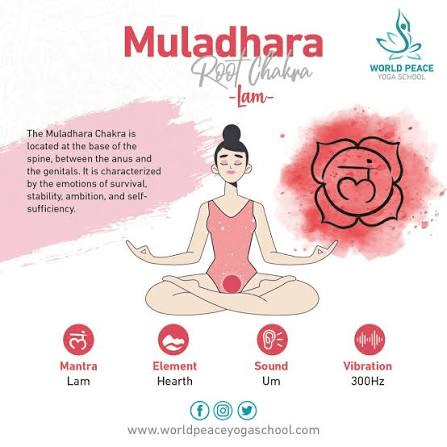
Should we “ground” ourselves in this chakra, then, as many spiritual teachers recommend? Of course not. Rather, we should pull up the shallow roots we’ve planted in Satan’s imaginary “soil” and move inward as soon as possible to the Swadhisthana Circle.
The ruling ray of the Muladhara chakra is the Fourth Ray — the first Attribute Ray of “harmony through conflict.” This ray is said to be white, but is probably red, like the chakra. If we consider the three stages of spiritual evolution, this odd designation makes more sense. As Jesus explained in an earlier citation from the Course, worldly suffering will eventually force our surrender to God’s way of “being” in the world. So, this is where God planted the “seed” of His Will in our minds. To sprout and grow, that seed requires water.
Muladhara is a compound of Mulad (from the root of) and Hara (the destroyer of the illusion of sin)
We enter the Muladhara circle (the Earth Circle) through the first gate of polarity, separation, and/or duality — the first rung on the ladder to the Moon. We exit this circle not by the triad gate of Gad-Asher-Nephthali, but by untying the Brahma Granthi — the psychic knot of spiritual denial.
Muladhara is the starting point on the Soul’s journey. Until we enter this circle, we’re floating in the dark void of the Tamas guna, going nowhere.
The next step on the journey is the Swadhisthana circle — the domain of the Fifth Ray, which is orange. Supposedly, the Fifth Ray governs concrete scientific knowledge, but higher reason tells us this can’t be right. Why? Because the Ego Mind governs concrete scientific thinking and knowledge — i.e., “the madness Brahma perceives as intelligence.”
Rightly understood, the Swadhisthana Chakra forms the “bridge” between the Muladhara and Manipura circles. And what is that “bridge,” spiritually speaking? The quick answer is: Using the human intellect to open or train the mind to hear God’s Voice.
In Hinduism, the study and recitation of sacred texts is called Svadhyaya — a Sanskrit word not dissimilar to Swadhisthana. In Islam, it’s called Tasfir. In Judaism, it’s typically called Talmud Torah. In Christianity, proper Bible study is called exegesis — the critical explanation, evaluation, or interpretation of a written text, rather than simply accepting the prevailing “wisdom” of charlatans as “gospel truth.” In Buddhism, the theoretical learning and study of the scriptures (like the Pali Canon) is called pariyatti.

For those doing the Course, this is the disciplined practice of reading the Text and faithfully doing the daily Workbook lessons. You might join a study group, but it isn’t required. And study groups led by qualified teachers are few and far between.
So this, my brother, is the Swadhisthana consciousness encouraged by the Fifth Ray of “concrete learning” (of the theoretical foundations of the salvation process), and NOT scientific knowledge — or our emotions, creativity, sexual energy, or capacity for pleasure, as is commonly taught in error.
So, to recap, the first step on the return circle-journey is uprooting the insane belief that the material world and its offerings are more real and valuable than the spiritual world and its offerings, and the second step is studying the sacred texts that illuminate the atonement process.
And these two steps bring us to the Western Gate of Gad-Asher-Nephthali, where “the troop comes to guide to the straight path the Soul of the Lamb.” So, this is the point in the journey Course-Jesus calls “the branching of the road” — the crossroads where we must choose to “seek but not find” in the world or turn our quest for truth inward.
Or, as Jesus explains:
When you come to the place where the branch in the road is quite apparent, you cannot go ahead. You must go either one way or the other. For now if you go straight ahead, the way you went before you reached the branch, you will go nowhere. The whole purpose of coming this far was to decide which branch you will take now. The way you came no longer matters. It can no longer serve. No one who reaches this far can make the wrong decision, although he can delay. And there is no part of the journey that seems more hopeless and futile than standing where the road branches, and not deciding on which way to go. (ACIM, T-22.IV.1:1-8).
His wording is a little confusing. When he says “to go straight,” he doesn’t mean taking the straight path (of listening in the silence). To go straight, in this instance, means to continue as before, with the insane Ego Mind (and its religions) as our spiritual masters and guides. And that path leads nowhere, as Jesus explains. The alternative leads inward to the Manipura chakra, the vibrational “body” ruled by the Sixth Ray.
Manipura means “gem of the temple” — a probable reference to Suryakanta, the fire-gem belonging to Surya, the Solar Logos. In Sanskrit, Suryakanta means “the Sun of the Bridegroom”– and the symbol representing the Manipura Chakra does indeed resemble the sun.
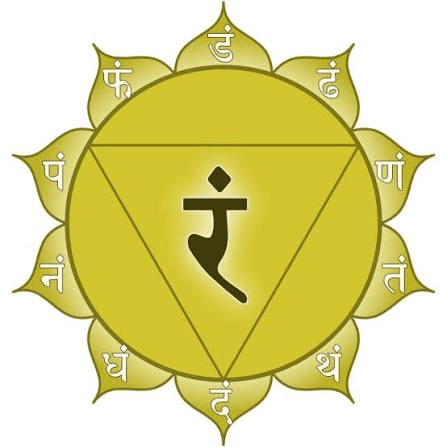
In the Hindu legends, the Suryakanta is a golden crystal that stays cool until warmed by the rays of the Sun. And the ruling Ray of this “circle” is the Sixth Ray, which we know to be in charge of the Atonement process. All of this suggests that Manipura is the true starting point of “the straight path.” As such, Manipura represents the Circle of Wind, where we first hear Vayu, the fire-wind or Cosmic Breath of Agni, the eternal flame, “speaking” to us in the silence of meditation. If we haven’t studied the theory, and don’t turn inward (meditate), we won’t hear the sound — nor will we know how to use it to heal the mind. Not only that, but we might actually find the sound troublesome, as was the case with Saint Teresa of Avila.
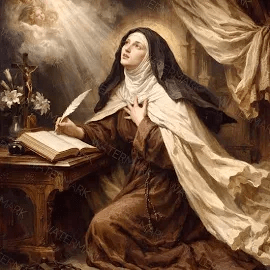
In her book on the lunar mansions, St. Teresa described the sound in her head as “a plague” and “a curse,” when it was, in fact, the ultimate gift of grace. Being a devoted Catholic who prized the Church’s authority over God’s, she never learned what the Holy Spirit’s “voice” actually is. And still, she had visions and remarkable spiritual insights.
So, God does indeed work in mysterious ways.
In the Manipura circle, we learn the Holy Spirit’s first lesson: To have all, give all to all. How do we learn this? I’m sure it’s different for everybody. But, in my case, I was shown the circle in meditation, and, from my studies of the Course, understood what to do. Especially helpful in this regard is Workbook Lesson 108 (giving and receiving are one in truth), wherein Jesus provides the structure for our prayerful almsgiving offerings (the true nature of the Vedic yajnas).
To graduate from the Manipura circle, we have to untie the Vishnu Granthi — the psychic knot of attachment to the Ego Mind’s foundational (insane) ideas that we lose by giving to others, and gain by taking from them.
This is a difficult lesson, so it may be a while before we’re ready to move inward and upward to the Anahata or Heart Chakra — the higher tier of the second quarter of Artha (Holy Purpose). Anahata translates as “unstruck” (sound), implying the sound produced without striking anything material in nature, such as a drum, cymbal, gong, musical instrument, or singing bowl. So, we continue meditating on the M-kara in this circle, but now focus on learning the Holy Spirit’s second lesson: to have peace, teach peace to learn it.
Course-Jesus explains what this lesson entails in the Text. Basically, we learn peace by abandoning the Ego Mind and the whole thought-system upon which the false world is constructed. Or, as he explains, in part:
The way out of conflict between two opposing thought systems is clearly to choose one and relinquish the other. If you identify with your thought system, and you cannot escape this, and if you accept two thought systems which are in complete disagreement, peace of mind is impossible. If you teach both, which you will surely do as long as you accept both, you are teaching conflict and learning it. Yet you do want peace, or you would not have called upon the Voice for peace to help you. Its lesson is not insane; the conflict is. (ACIM, T-6.V-B.5:1-5)
As I understand it, Anahata is the “bridge” between the Manipura “jewel” and the Northern gate. We’re still in the second quadrant of Artha (holy purpose) at this point, but we’re now using our meditations on the sound to “give up the world.”
Anahata might mean “unstruck,” because we haven’t yet acquired the striking rod or staff at this level. According to Ezekiel’s vision, we acquire this “staff, rod, or scepter of Israel,” at the northern gate — the triad gate of Ruben-Judah-Levi (“behold the Son, give thanks, and join together”).
The Sacred Heart of Jesus represents the Heart Circle, where we “teach peace to learn it.”
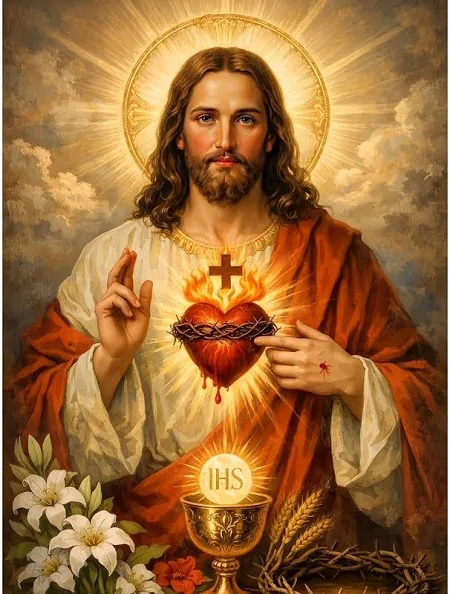
Or, as he says in the Course:
Blessed are you who teach with me. Our power comes not of us, but of our Father. In guiltlessness we know Him, as He knows us guiltless. I stand within the circle, calling you to peace. Teach peace with me, and stand with me on holy ground. Remember for everyone your Father’s power that He has given him. Believe not that you cannot teach His perfect peace. Stand not outside, but join with me within. Fail not the only purpose to which my teaching calls you. Restore to God His Son as He created him, by teaching him his innocence. (ACIM, T-14.V.9:1-10)
From the Anahata Circle, we pass through the Northern Gate into the first tier of the third quadrant of Kama.
According to BibleHub,com:
The North Gate holds significant importance in biblical texts, particularly in the context of the Temple in Jerusalem. It is mentioned in various passages, primarily in the books of Ezekiel and Jeremiah, and serves as a symbolic and literal point of entry into the sacred precincts of the Temple.
Rightly understood, the North Gate is where we “cross over” from the left-hand side of the wheel to the right-hand side. Our first right-hand circle is the Vishuddha Chakra, the communications center. Based on its appearance, the Vishuddha circle probably represents the blue sapphire in the Golden Breastplate.
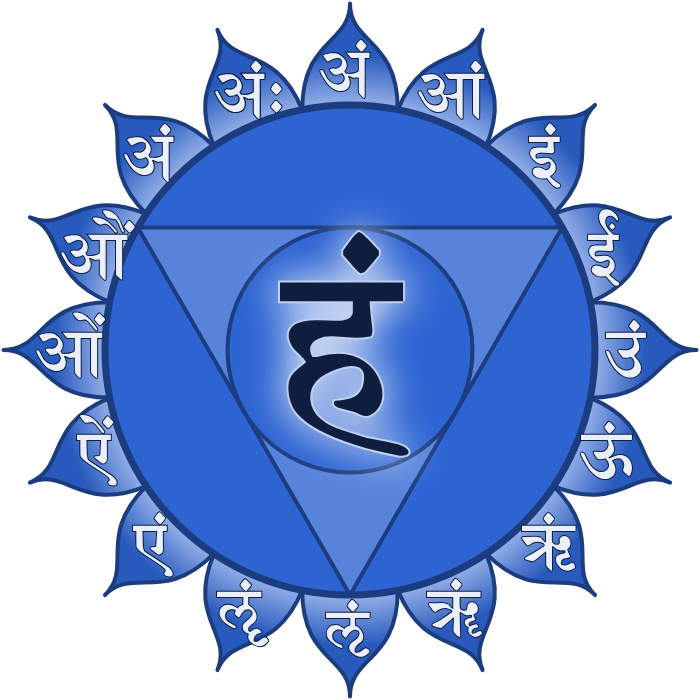
Vishuddha means “to enter the Zenith.” This is, therefore, our entry point into the Celestial Sphere — hence the chakra’s association with the of ether, space, or akasha. This is the sacred blue throat of Shiva, protectively encircled by Vasuki, the king of the Nagas. Rightmindedly translated, Vasuki means “the abiding presence of knowing or certainty.” As I read these symbolic clues, this circle is where we make the transition from True Perception to Knowledge or “certainty.”
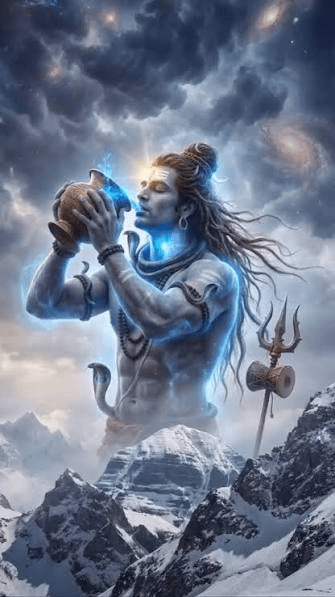
Or, to quote Jesus:
We have been emphasizing perception, and have said very little about knowledge as yet. This is because perception must be straightened out before you can know anything. To know is to be certain. Uncertainty means that you do not know. Knowledge is power because it is certain, and certainty is strength. Perception is temporary. As an attribute of the belief in space and time, it is subject to either fear or love. Misperceptions produce fear and true perceptions foster love, but neither brings certainty because all perception varies. That is why it is not knowledge. True perception is the basis for knowledge, but knowing is the affirmation of truth and beyond all perceptions. (ACIM, T-3.III.1:1-10)
Given the symbolism, Vishuddha must be the Circle of Water, where we begin to hear the U-kara vibration — the swarm from the pit that is both Kundalini, the sacred fire, and the Living Water supplied to us by Christ. The Ray typically associated with this chakra is the First Aspect Ray — the Blue Ray of God’s Will and Authority. I can’t say for certain, but based on my studies of various teachings, this is the tier of Self-Realization, Soul Realization, and/or Holy Spirit Realization.
To move to the second tier of Kama, we have to untie the Rudra Granthi, which binds the mind in the perception of individuality. We may be Soul-realized at this point on the journey, but we still perceive ourselves as individual beings (semi-non-dualism). To graduate to the next level (the Ajna Chakra), we have to recognize that we’re ONE SOUL encompassing everything belonging to Holy Creation or “the Christ.” This is what’s called Christ-Realization, Christ Consciousness, or Non-Dualism.
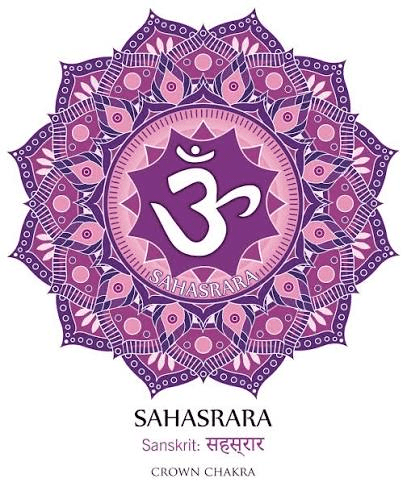
The final circle is called Sahasrara, which means NOT “thousand-petaled lotus,” but “that which ha 1,000 rays.” And that which has 1,000 rays is the Solar Logos. Sahasrara is, therefore, the Fire Circle, the Father’s Circle, the Holy of Holies, the Inner Altar, the Inner Sanctum, and the fiery eye of the miracle cow at the center of the wheel. And this is what John of Patmoss beheld and described in Revelations 19.
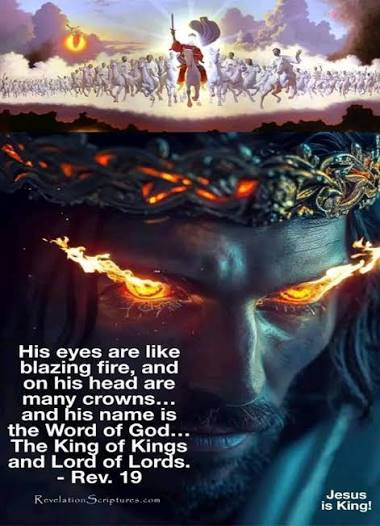
This circle is as high as we can go in the Realm of Perception. This is the dwelling place of Elohim, the Solar Logos and/or the fiery Word of God.
The A-kara frequency (pure grace) isn’t quite as high or pure as Om (Perfect Love), but it’s very close — and it’s the nearest we can come to Om/God in the dream-realm. It’s so near, in fact, that God can “reach across the tiny gap” between the fire circle and Om, to draw our retuned minds back to Agape’s perfect pitch.
To quote Course-Jesus:
What better way to close the little gap between illusions and reality than to allow the memory of God to flow across it, making it a bridge an instant will suffice to reach beyond? For God has closed it with Himself. His memory has not gone by, and left a stranded Son forever on a shore where he can glimpse another shore that he can never reach. His Father wills that he be lifted up and gently carried over. He has built the bridge, and it is He Who will transport His Son across it. Have no fear that He will fail in what He wills. Nor that you be excluded from the Will that is for you. (ACIM, T-28.I.15:1-9)
Based on this evidence, I strongly suspect that the Navagraha of Hinduism represent these nine vibrational “bodies,” all of which are indeed “celestial” or “ethereal.” And the planets we see through out telescopes are merely the outward ego-projected reflections of these inner “celestial bodies.” And that explains why Earth isn’t among the Navagraha. How so? Because Earth, being the dense plain of maya (material illusion), doesn’t exist in the Realm of Celestial Order. But Earth’s moon does, as the reflection of “the Lesser Light ruling the Night,” which is the Vah Ray of Christ’s luminous presence, watching over his earth-bound brethren. This is the Moon the Vedas call Soma and/or Chandra — the Navagraha of the Moon, whose “everlasting arms” reach out as the “nodes” of Ketu and Rahu.
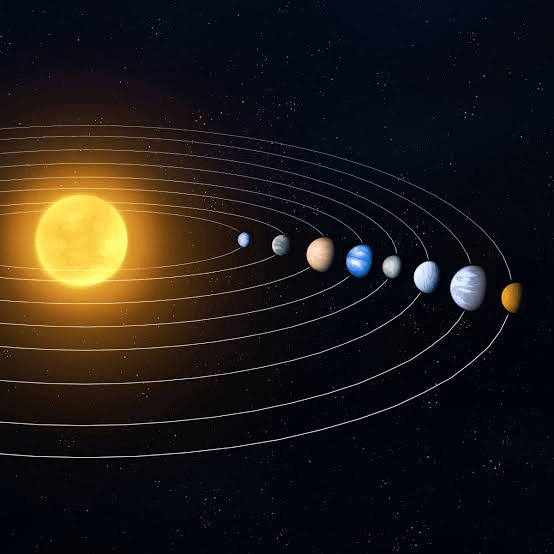
In the same way the planets in our Solar System orbit around the Sun, the nine celestial vibrational-bodies orbit the Logos — the Spiritual Sun on the highest plain — i.e., the Throne Room, which is the Crown or Sahasrara Chakra.
I know this because Sahasrara doesn’t mean “thousand-petaled lotus,” as long presumed; it means ‘that which has 1,000 Rays.” And that which has 1,000 Rays is the Spiritual Sun — the Greater Light that rules the Day (as per Genesis).
And, I’m pretty sure these also are the “planets” associated with the chakras in Vedic Astrology, as well as those those linked with the Seven Rays in the books by Alice A. Bailey and Master Dwal Kuhl.
In case you’re wondering, Venus is the planet associated with the Heart Chakra, the hub of the Fourth Ray (the attribute ray of Harmony through Conflict).
As I imagine the framework, the Great Rays dwell together in Holy Jerusalem or YHVH Shammah. From there, Vah reaches down to us to raise our vibration to Christ’s frequency (the U-kara). His helping hand or “left-hand” is the M-kara vibrational frequency, which works upon our deluded minds as the Holy Spirit. Once we’ve been retuned to Christ Consciousness, Vah reaches up with his “exalted hand” (the U-kara) to grasp God’s “righteous right hand” (the A-kara). And this is why Jesus famously says: “Nobody can come to the Father, except through me.”
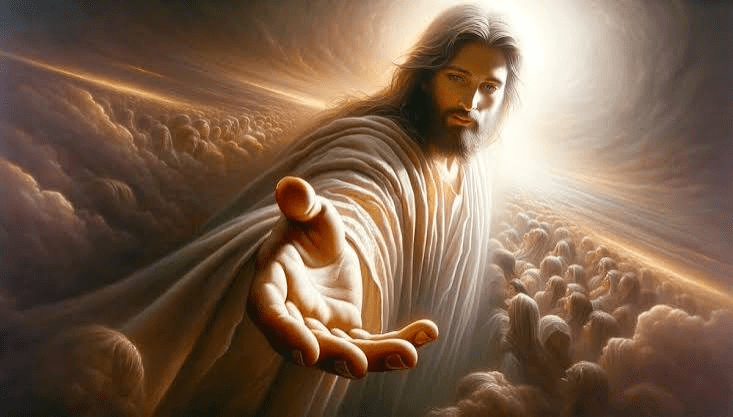
We return to the A-kara vibration of Pure Grace through the U-kara — the miracle frequency forming the golden middle, belt, or girdle. We are restored to the U-kara (Christ’s vibrational frequency) through the M-kara vibration of the Holy Spirit.
Or, to again quote Master Jesus:
Whenever you are tempted to undertake a useless journey that would lead away from light, remember what you really want, and say:
The Holy Spirit leads me unto Christ, and where else would I go? What need have I but to awake in Him?
Then follow Him in joy, with faith that He will lead you safely through all dangers to your peace of mind this world may set before you. Kneel not before the altars to sacrifice, and seek not what you will surely lose. Content yourself with what you will as surely keep, and be not restless, for you undertake a quiet journey to the peace of God, where He would have you be in quietness.
So, in essence, the M-kara is our metaphysical “ladder” from Earth’s nothingness to the Moon (the Christ Light ruling the Night), and from there, the U-kara forms the ladder to the Sun (the Greater Light ruling the Day). And from this point, the A-kara takes us back to Heaven, which is, in truth, more like a lightning bolt than a ladder or stairway.
In The Disappearance of the Universe by Gary R. Renard, the Ascended Masters who speak therein say the ladder back to Heaven has only four “rungs.” So, let’s assume those four “rungs” are the four rows of three stones each (the triads) on the Golden Breastplate.
Renard’s Masters tell us what the four rungs are, so we needn’t guess. The four rungs are, from bottom to top: dualism, semi-non-dualism, non-dualism, and pure non-dualism.
I could stop here, but I’m compelled to redefine the names of the chakras before signing off. Why? Because the true definitions are bound to alter our perception of what the chakras truly represent.
—Muladhara (the Root Chakra) is a compound of Mula (the root, base, or foundation) and dhara (support). So, Muladhara means “the root support.” In Colossians 2:7, St. Paul wrote: “Rooted and built up in him, and established in the faith, as ye have been taught, abounding therein with thanksgiving.” Based on this statement, together with the Bible’s other descriptions of this “base,” we can safely conclude that the Muladhara chakra represents the foundational base (basecamp?) of the Temple, which is both “the Body of Christ” and “the church of Christ.”
—Swadisthana is a three-way marriage of Swa (the true state) dhi (of mind) and sthana (standing firm)
—Manipura, as we know, is a compound of mani (jewel or gem) and pura (city or temple), making the Manipura chakra the Temple’s golden gem. In the Bible, this is the “topaz” in the Golden Breastplate. In Hinduism, it’s the golden crystal called Suryakanta, as well as the yellow sapphire known as Pukhraj, which means “the call of the kingdom.” So, as stated earlier, this is the circle where we begin to hear the M-kara of the Holy Spirit (i.e., the Call to Awaken). That the pukhraj is linked in Hinduism to Jupiter and Brihispati, the guru of the gods, supports this interpretation.
Concerning this “call,” Course-Jesus says:
I call upon you to remember that I have chosen you to teach the Kingdom TO the Kingdom. There are no exceptions to this lesson, because the lack of exceptions IS the lesson. Every Son who returns to the Kingdom with this lesson in his heart has healed the Sonship and given thanks to God. Everyone who learns this lesson has become the perfect teacher, because he has learned it of the Holy Spirit. (ACIM, T-7.XI.4:1-4)
—Anahata is most likely a compound of an (not) and ahata (struck), but could also be a marriage of ana (breathing) and hata (to strike) as in listening to the Holy Spirit (the Cosmic Breath) to “strike the waters.”
—Vishuddha, as we’ve established, means “entering the Zenith.”
—Ajna is a compound of a (God, God’s Name, or the A-kara) and jna (to know or knower) so Ajna essentially means “to know God.”
—Sahasrara is a marriage of sahasra (that which has one thousand) and ra (rays or radiance), so “that which has 1,000 rays,” rather than “petals.” And that which has 1,000 rays is the Solar Logos at the center of the (inner) spiritual solar system, as it were. This Logos or Divine Idea — the one Son God created “in the beginning” — is the Circle of All Beings, the Golden Circle, and the Golden City, as well as the Holy Relationship.
Or, as Course-Jesus explains:
This holy relationship, lovely in its innocence, mighty in strength, and blazing with a light far brighter than the sun that lights the sky you see, is chosen of your Father as a means for His Own plan. Be thankful that it serves yours not at all. Nothing entrusted to it can be misused, and nothing given it but will be used. This holy relationship has the power to heal all pain, regardless of its form. Neither you nor your brother alone can serve at all. Only in your joint will does healing lie. For here your healing is, and here will you accept Atonement. And in your healing is the Sonship healed because your will and your brother’s are joined. (ACIM, T-22.VI.4:1-8)
From this we can glean that the Logos, the radiant Word of God, is all of the following:
- The Solar Logos on the Throne of God (i.e., Surya, Elohim, and/or Allah)
- The holy relationship we restore with the Living God in each other through Christ
- The Golden Circle (of all Beings) in the Forest or Resting Place
- The Golden City with twelve gates — a.k.a. New Jerusalem and YHVH Shammah
- The Sahasrara Chakra (the gateway through which we simultaneously leave the dream-realm and return to God’s pure Om Consciousness).
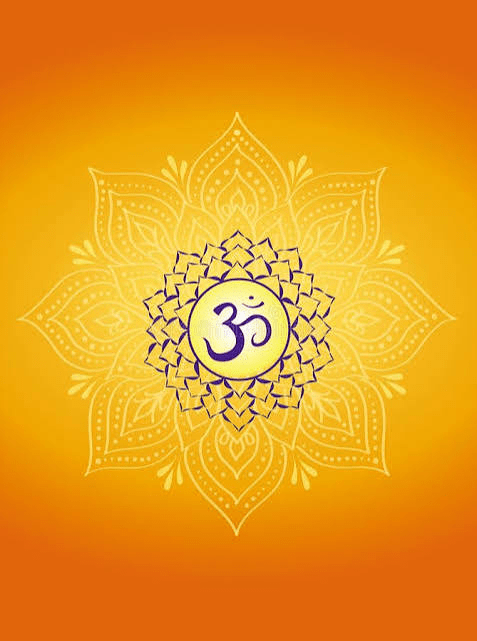
- The Golden Pericarp (the center of the lotus)
In modern teachings, the Sahasrara chakra is violet, but it was described as “golden” or “white” in foundational texts like the Shat-Chakra-Nirupana, Crucially, the pericarp (the very center/core of the lotus) is explicitly described as golden. Within this golden center sits a circular moon region containing a luminous triangle.


Leave a Reply