
In our last discussion, we learned that the Pandavas — the five brother-heroes of the Mahabharata epic — belong to the Vah Ray’s lineage or dynasty. As we’ve also ascertained from previous studies, the Vah Ray is the Christ Ray, whose “breath” is the Holy Spirit.
And that is the how and why of the symbolic gesture described in John 20:22, wherein Jesus Christ breathed on his disciples to give them the Holy Spirit.
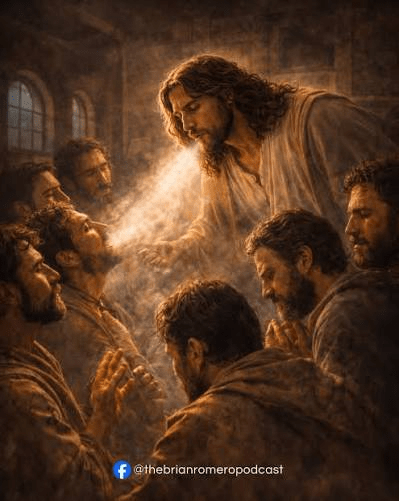
So, in a nutshell: Christ’s breath is a) the Holy Spirit, b) Christ’s Majesty, c) the spiritual “bread” given to us by Christ, d) the feast of Christ, and e) the M-kara — i.e., the third aspect of AUM.
In Luke 16, Jesus mentions these purely symbolic five brothers, but historic mistranslations have hidden this important teaching from us. Supposedly, Luke 16:28 is part of the parable Jesus tells of the rich man and Lazarus, the beggar. But it actually reads as follows:
For to have the five brothers is the way to affirm the True Self, so that you also come into the place of the Touchstone (where) Abraham speaks to you. To have Moses and the prophets, hear your True Self speaking not to Father Abraham, but to anyone on the journey towards the Self away from death. Change your mind and purpose now and bring word that if heard not, Moses and the prophets neither can persuade anyone to rise from the dead.
Admittedly, the phrasing is a little archaic and awkward, but it’s still pretty illuminating. It also suggests that Abraham represents the Father power of the Logos, which is the YH aspect of YHVH (the Great Rays). And Yah is, indeed, the source or “father” of all true life in the dream.
Or, as Course-Jesus explains in Workbook Lesson 167: There is one life. And that I share with God. In this foundational lesson, he says:
There are not different kinds of life, for life is like the truth. It does not have degrees. It is the one condition in which all that God created share. Like all His Thoughts, it has no opposite. There is no death because what God created shares His life. There is no death because an opposite to God does not exist. There is no death because the Father and the Son are one. (ACIM, W-167.1:1-7)
Let’s return to the five brothers. To “have” these metaphoric siblings, Jesus explains in Luke’s gospel, is the way to enter into “the place of the Touchstone” (not the place of torments).
We’ve discussed the Touchstone before, but have since gained even more clarity. We now understand, for example, that the Touchstone is the seven-eyed stone described in the Bible as “a witness” with the power to hear or to be heard and obeyed.
In 1 Samuel 7:12, we learn that Samuel took this stone, set it upright, and named it Ebenezer — a name meaning “the stone of deliverance,” “the stone of rescue,” and/or “the rock of salvation” (rather than “the stone of help,” as generally espoused in Judaism). To the Israelites (the dream-bound Souls seeking to escape the desert dreamscape), this upright stone served as a tangible reminder of the Lord’s power and faithfulness.
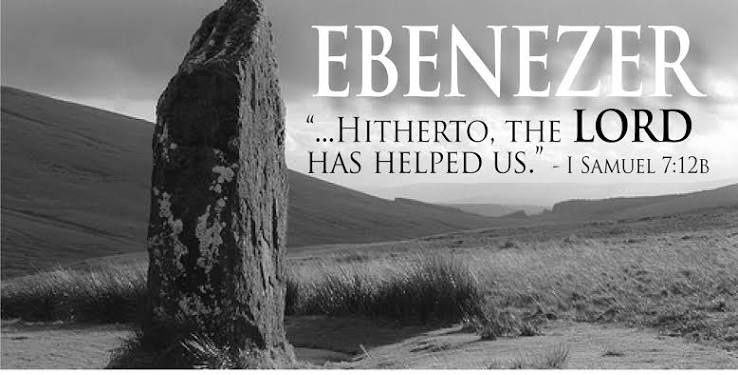
Samuel is described in the Bible as “the final judge.” He represents, therefore, the Final Judgment (of the Ego Mind), which frees the Soul from Satan’s enslavement. So, it’s the Holy Spirit’s correction of this last up-side down perception that sets the stone upright and calls it Ebenezer.
In Zechariah 3:9, we further learn that this “stone” a) has seven eyes; b) was set by “the Lord” (Elohim or YHWH) before the High Priest Joshua (Jesus Christ or Yeshua, the coming Messiah) to symbolize the Messiah.
In Luke 16, Jesus says that to enter the place of the Touchstone (the seven-eyed stone Samuel named Ebenezer), we must have or possess the five brothers. Let’s assume for now that those symbolic brothers mirror the heroic Pandava siblings of the Mahabharata epic.
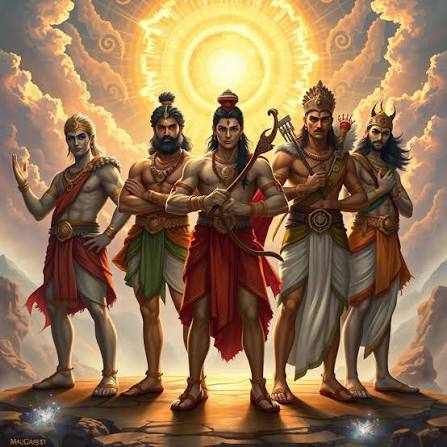
As discussed in an earlier post, the five Pandavas are called Yudhishthira, Bhima, Arjuna, Nakula, and Sahadeva. In that post, I shared the traditional (ego-interpreted) and, therefore, untrustworthy definitions of those five Sanskrit names. So, let’s revisit those definitions herein.
As I see it, Yushidhithira is a compound of Yu (yoking or joining), dhi (the mind or thought), and shthira, which supposedly means “firm, fixed, or immoveable,” but can also be divided further as shthi (sixth) and ra (inner-radiance). So, the literal translation of Yudhishthira is “joining the mind of the Sixth Ray.” And the Sixth Ray, as we know, is in charge of the universal atonement curriculum. So, to join the thought (or mind) of the Sixth Ray is to join together in the universally shared Mind of the Atonement.
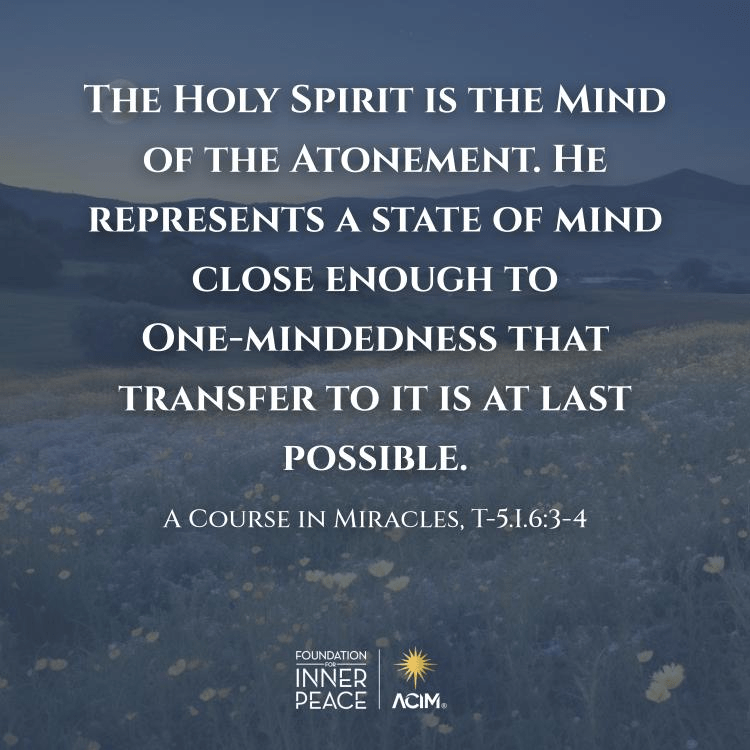
Bhima means “formidable strength.” So, first we join in the Holy Spirit’s purpose, and then we gain the “formidable strength” needed to escape the Ego Mind’s shackles.
The first step in the ego-undoing process is, therefore, “to accept the atonement for ourselves.” To better understand what this step entails, I suggest you read Workbook Lesson 139: I will accept Atonement for myself. (ACIM, W-139)
Ar-jun-a means “to want the peace of God” (above all else); Na-kula means either “the waters of the community” or “Nara’s community”; and Sahadeva means “together in celestial being.”
Or, as Course-Jesus similarly explains:
When you have seen your brothers as yourself you will be released to knowledge, having learned to free yourself through Him Who knows of freedom. Unite with me under the holy banner of His teaching, and as we grow in strength the power of God’s Son will move in us, and we will leave no one untouched and no one left alone. And suddenly time will be over, and we will all unite in the eternity of God the Father. The holy light you saw outside yourself, in every miracle you offered to your brothers, will be returned to you. And knowing that the light is in you, your creations will be there with you, as you are in your Father. (ACIM, T-13.VIII.8:1-5)
So, as suspected, the five brothers the Pandavas personify do indeed represent the five stages or phases of the Atonement process that come after our decision to commit to the Sixth Ray’s curriculum (as our sole purpose in life). And it was, in fact, after giving my life to God in this manner that I began hearing the Holy Spirit’s M-kara vibration (and remembered that I’d heard it as a child).
to recap in Course terms:
Yudhishthira, the first brother and step, is “to accept atonement” as our life’s sole purpose.
Bhima, the second brother and step is “to accept God’s strength” as our spiritual superpower, so to speak. (For more, see Lesson 42: God is my strength. Vision is His gift.)
Arjuna, the third brother and step is “to want God’s peace” above all else. (For more, see Lesson 185: I want the peace of God.)
Nakula, the fourth brother and step, is to join the Assembly (of the Faithful) and/or “the gathering of the waters.”
Or, as Jesus explains:
Faith is the gift of God, through Him Whom God has given you. Faithlessness looks upon the Son of God, and judges him unworthy of forgiveness. But through the eyes of faith, the Son of God is seen already forgiven, free of all the guilt he laid upon himself. Faith sees him only NOW because it looks not to the past to judge him, but would see in him only what it would see in you. It sees not through the body’s eyes, nor looks to bodies for its justification. It is the messenger of the new perception, sent forth to gather witnesses unto its coming, and to return their messages to you. (ACIM, T-19.I.11:1-6)
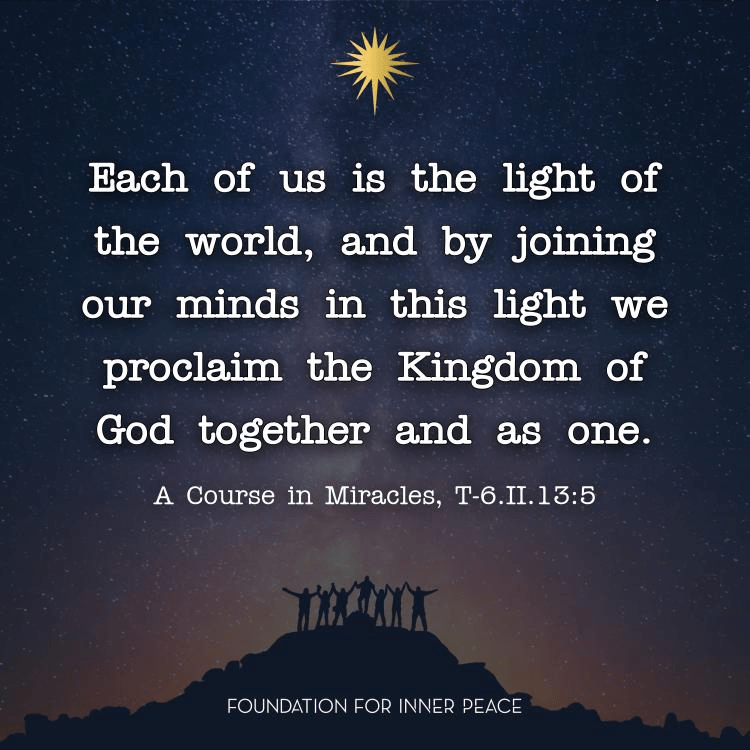
Sahadeva, the fifth brother and step, is to join as celestial beings in oneness (to proclaim the Kingdom of God together).
And from here, Christ tells us in Luke 16, we enter the place of the Touchstone.
We don’t find five brothers elsewhere in the Bible, but we do find five sorrows in Luke 12, five yokes (of oxen) in Luke 14, five minas and five cities (polis) in Luke 19, and five husbands in John 4:18.
What does this mean? I’m not sure, but I do know that mina was a unit of measure used in Biblical Greece. Supposedly, mina derives from the Hebrew word Maneh (meaning portion, part, or measure), In the KJV Bible, mina is poorly translated as “pound.”
In Luke 19, Jesus tells the Parable of the Mina, wherein he says: “Unto every one which hath shall be given; and from him that hath not, even that he hath shall be taken away from him.”
We’re a little off-topic, so let’s circle back to the five Pandavas.
Pandava supposedly means “son of Pandu,” but could also be a compound of Panda and va, changing the meaning to “wisdom winds” or “teaching winds.” They are, therefore, the “teaching winds” of the Vah Ray.
Noteworthily, Nakula and Sahadeva are twin brothers in the Mahabharata allegory. This suggest that to belong to Nara’s community is “to be together in celestial being.”
To join together in Creation’s Oneness, that is to say.
And Nara’s community is indeed the community, collective, or “body” (of Souls) to which we truly belong in universal brotherhood.
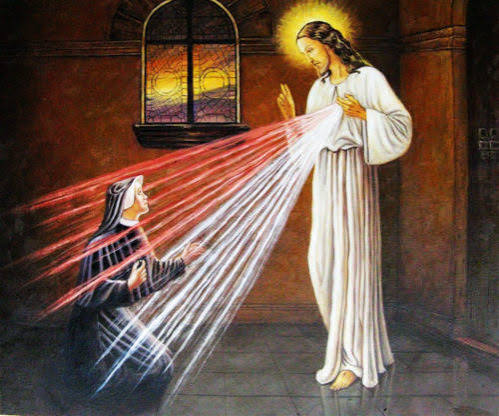
In the epic, the father of the brothers is Pandu, a Sanskrit word meaning “pale” or “pale-colored” — and Vah is indeed the Great Ray described as “pale” in the conversations Jesus had with Sister Faustina in the 1930s, when he appeared to her in a vision.
The Pandava brothers have one father between them, but two mothers, who are called Kunti and Madri. And, now that I think about it, these may be the “two mothers” (of the diamond-body) that came up in an earlier discussion. Based on a Google search of the phrase, I speculated that those two mothers were Krishna’s birth and foster mothers, but they may, in fact, be Kunti and Madri.
Kunti means “to sound or support the three,” while Madri translates as “the joy of the kingdom.” In the Hindu epic, Kunti is the mother of the eldest three brothers (Yudhisthira, Bhima, and Arjuna), whilst Madri bore the twins Nakula and Sahadeva.
In the Course, Jesus uses the specific expression “the joy of the Kingdom” more than once. Here’s what he says on the subject:
Every mind that is changed adds to this joy with its individual willingness to share in it. The truly helpful are God’s miracle workers, whom I direct until we are all united in the joy of the Kingdom. I will direct you to wherever you can be truly helpful, and to whoever can follow my guidance through you. (ACIM, T-4.VII.8:6-8)
The truly helpful are God’s miracle workers, whom I direct until we are all united in the joy of the Kingdom. I will direct you to wherever you can be truly helpful, and to whoever can follow my guidance through you. (ACIM, T-4.VII.8:7-8)
To think like God is to share His certainty of what you are, and to create like Him is to share the perfect Love He shares with you. To this the Holy Spirit leads you, that your joy may be complete because the Kingdom of God is whole. (ACIM, T-7.I.6:1-2)
Your divided mind is blocking the extension of the Kingdom; and its extension is your joy. If you do not extend the Kingdom, you are not thinking with your Creator and creating as He created. (ACIM, T-7.VI.12:4-5)
The Holy Spirit will always guide you truly, because your joy is His. This is His Will for everyone because He speaks for the Kingdom of God, which is joy. Following Him is therefore the easiest thing in the world, and the only thing that is easy, because it is not of the world. It is therefore natural. The world goes against your nature, being out of accord with God’s laws. The world perceives orders of difficulty in everything. This is because the ego perceives nothing as wholly desirable. By demonstrating to yourself there is no order of difficulty in miracles, you will convince yourself that, in your natural state, there is no difficulty at all because it is a state of grace. (ACIM, T-7.XI.1:1-8)
All of this tells us that the first three brothers are born (within our minds) through the union of the Pale Ray of Vah (Pandu) and Kunti (the sound promoting the trinity, which is AUM), while the younger two are born together when we join with the Vah Ray to extend the Joy of the Kingdom to all the Souls in the dream as Christ-realized miracle-workers.
Based on what Jesus says in Luke 16, we enter “the place of the Touchstone” after we become Christ-directed miracle-workers. As we’ve established, the Touchstone is the seven-eyed stone Samuel named Ebenezer. Based on all this, we can safely surmise that the Touchstone is the Logos — the Word of God, Divine Idea, or Perfect Thought occupying God’s Throne on the seventh plain of consciousness.
Jews call the Logos Elohim; Muslims call him Allah; and Christians call him “Jesus Christ.” In point of fact, the Logos is God’s perfect idea of extending himself as “the Christ.” So, the Logos (God’s Word) is both God’s thought or creative force of Perfect Love extending into the dream from Heaven and the flawless Sonship, Christ, or Creation that perfect thought begat “in the beginning.”
Or, as Google explains:
In this framework, Christ is the eternal, cosmic standard of ultimate reality, truth, and divinity. Just as a physical touchstone is used to test the purity of gold, the “Christ Spirit” or Logos is the unchanging spiritual baseline against which the purity, truth, and spiritual alignment of all human souls are measured.
Truthfully, all human souls are still as perfect as God’s original idea; they’ve just been deceived by Sat-an into thinking they’re something lesser.
And that eternal perfection is what the Touchstone represents in the dream.
Makes sense, right?


Leave a Reply