sanskrit
-
Namaste, my brother in Christ, and welcome (or welcome back) to my latest adhyayana posting. Today, we’re discussing the Rigveda’s 26th Sukta, which is blessedly shorter than the previous two. What’s it about? Miracle-working, more or less. Let’s dig right in with Rv 1.26:1, which reads: Abiding in spiritual perception sends forth the meditative offering clothing…
-
Namaste, my brother in Christ, and welcome (or welcome back) to my latest adhyayana posting. This time, we’re studying the 25th Sukta of the Rigveda’s first Mandala, which Google describes as a 21-verse hymn dedicated to Varuna, the guardian of cosmic order (Rta), composed by the sage Śunaḥśepa. Is this an accurate summary? Probably not,…
-
Namaste, my brother in Christ, and welcome (or welcome back) to my latest adhyayana posting. Today, we’re moving forward to the Rigveda’s 24th Sukta, which has long been described as a 15-verse hymn asking Varuna for release from bondage. Let’s dive in and see what we find. The first Rik (Rv 1.24:1) reads: The Golden…
-
Namaste, my brother in Christ, and welcome (or welcome back) to my latest adhyayana posting. Our subject today is the Rigveda’s 22nd Sukta, which, to be frank, proved to be a ball-busting behemoth. Blessedly, I got there in the end, through sheer tenacity. Supposedly a hymn to the Ashvins, the 22nd Sukta is, in truth, an advanced…
-

Namaste, my brother in Christ, and welcome (or welcome back) to my latest adhyayana posting. We’re studying the Rigveda, Hinduism’s oldest and most sacred scriptural text, which has never before (to my knowledge) been accurately translated. But then, neither have the Bible or the Quran, because the Ego Mind (Satan) weaves fear, guilt, divine wrath,…
-

Namaste, my brother, and welcome (or welcome back) to my latest adhyayana posting. We’ve reached the Rigveda’s 17th Sukta, a supposed hymn invoking Indra (the Red Ray of the Soul’s eternal life) and Varuna (the mind-healing water of oneness). Like the first sixteen Suktas, the 17th is, in fact, a prose wisdom teaching for Brahmins…
-

Google tells us the Rigveda’s 13th Sukta “consists of twelve verses in Gayatri meter, focusing on inviting deities to the sacrifice through Agni, often featuring phrases like samiddho adya manuṣvad agnir (1.13.1) and narāśaṃsam iha priyam (1.13.3). The verses are dedicated to various deities associated with the ritual, including Agni, Narāśamśa, and the Barhis (the sacred grass).” If you’ve…
-

Let’s continue our conversation about the Rigveda’s Sixth Sukta by reviewing the verse we ended on last time. That verse is Rv 1.6.5, rather than Rv 1.6.6, as per Max Muller, the 19th-century Oxford orientalist credited with restoring the Rigveda to its original metric form. In so doing, he divided Rv. 1.6.4 into two lines,…
-

At last, we reach the Fifth Sukta of the Rigveda, the most ancient and sacred of the Hindu scriptures. This one also concerns King Indra, but it’s neither a hymn nor a metered poem. Like the first four Riks, the fifth is a spiritual teaching aimed at “Brahmins.” Contrary to popular egoic belief, Brahmin is…
-
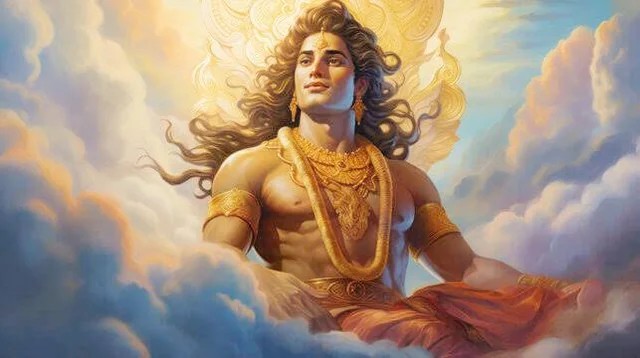
We now come to the Rig Veda’s fourth Sukta, the first of many presumably addressed to Indra, the king of the Hindu devas. As explained earlier, Indra personifies the Red Ray of the Father’s Will to make earth like Heaven. As such, Indra represents the most powerful force in the universe — the reason he…

