Namaste, my brother in Christ, and welcome (or welcome back) to my latest adhyayana posting. Today, we’re moving forward to the Rigveda’s 24th Sukta, which has long been described as a 15-verse hymn asking Varuna for release from bondage. Let’s dive in and see what we find.
The first Rik (Rv 1.24:1) reads:
The Golden now-moment name is the ring-in-the-mouth Immortal Name, the mind-in-majesty offering-cake of the divine name, the power of the whole Greater Light of Kamadeva, the first defense purifying the whole, the teeth of the father’s radiant circle making visible the mother’s circle.
Definitions and syllable breaks:
kasya (the Golden) nū-nam (the now-moment name) katam-asya (is the ring-in-the mouth) amṛtā-nām (Immortal Name of) manā-mahe (the mind in majesty) cāru (the offering cake) devasya (of the divine) nāma (name) saḥ (the power) naḥ (of the whole) mahyai (Greater Light of Kamadeva = God’s Love = Agape) adi-taye (the first defense) pu-naḥ (purifying the whole) dāt (teeth? Da’at?) pitaram (of the father’s radiant) ca (circle) dṛśeyam (to make visible) mātaram (the mother’s) ca (circle)
Notes:
This opening salvo was a beast to decipher, largely because few of the words found herein have been correctly defined by the Sanskrit “experts.” The experts tell us, for example, that nunam is one more of the many, many Sanskrit words meaning “certainly,” “surely,” or “indeed,” whilst the syllables nu (the now-moment) and nam (name) tell a different story.
Having said that, let me now say this: There is a lot here that needs explaining. So, let’s start at the top with the “Golden Now Moment.” In Hinduism, according to Google, the “golden now-moment” refers to the most sacred, auspicious, and spiritually charged present moment.
Hindus identify this “Golden Moment” as Brahma Muhurta (meaning, more or less, “the propitious instant of God’s Ultimate Reality”). So, Brahma Muhurta is without a doubt the Hindu equivalent of the Holy Instant. And, since Brahma represents the A-kara aspect of AUM, we can glean from all this that the now-moment name representing the ring-in-the-mouth is the Name invoking the A-kara vibration; the name we chant in the Circle of Fire to manifest miracles in the Holy Instant. What is that Name? Something revealed to us, I suspect, when we’re ready to perform miracles.
Let’s move on to the “ring in the mouth,” a Hindu phrase referring to the tongue’s true spiritual purpose, which is chanting the Name of God. In the Ramayana, Hanuman places this symbolic “ring” in Rama’s mouth to enable him to cross the ocean into Lanka, the island fortress of King Ravana.
So the secret name of the A-kara vibration is the ring in the mouth, as well as the sweet cake God bakes in the sacred-fire for the mother-cow so she can produce her miracle-milk in abundance.
From all this we can determine that whatever Hanuman represents is the spiritual power that bestows the ring in the mouth, the secret name used to invoke the A-kara vibration.
We know from our studies of the Bible that God’s Word has “teeth,” whichthose teeth act within our minds like a threshing machine to separate the wheat of spiritual reality from the chaff of material illusion. Herein, we learn those “teeth” belong to the Father’s Radiant Circle. They belong to the Father, but must be purified by “the first defense” to make visible the Mother’s Circle.
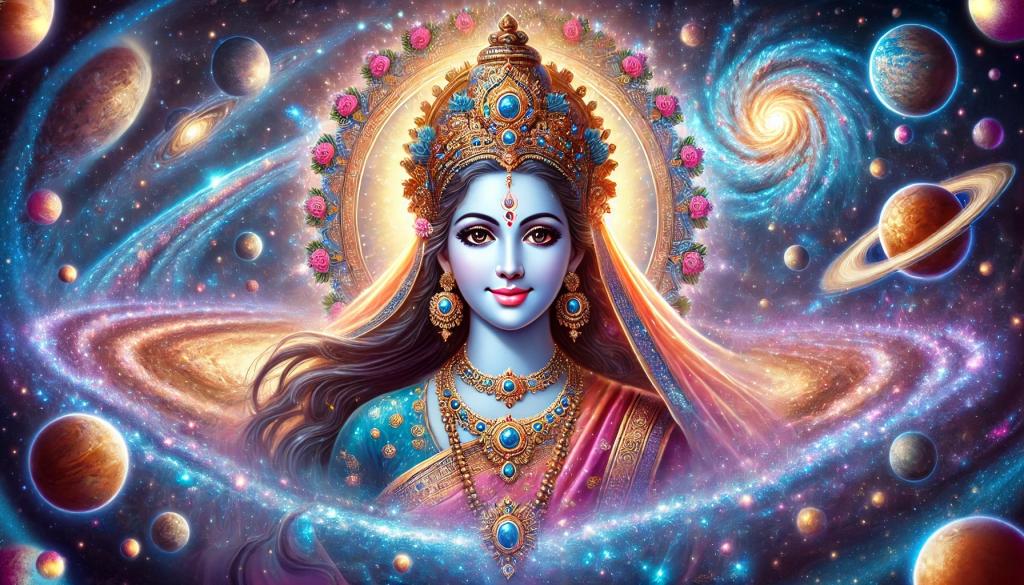
The word I translated as “first defense” is Aditaye, which could also be a reference to the Aditya, the sons of Aditi, or even to Aditi herself. In Hinduism, Aditi personifies the boundless, cosmic void. The mother of the solar gods, she is said to symbolize the eternal principle of infinite space, freedom, and sustenance. Later, she merges into the concept of Adi Parashakti, the omnipotent Divine Mother who creates, sustains, and withdraws the universe. Adi Parashakti means “the first Supreme Divine Energy.” So, as the rishis also state herein, she represents the creative force of Agape, doing business in the “cosmic void” as Divine Grace. Because Aditaye — the form of the name used in this rik — also means “the first defense,” we can easily ascertain that Aditi represents the Spirit of Grace, which did indeed “give birth” to all the atonement powers (the many devas of Hinduism).
If Jesus taught about these father and mother circles during his earthly ministry (as I believe he did) most of his references to them were either deliberately omitted from the New Testament canon or distorted beyond recognition. Fortunately, these two circles can still be found in the literature of Buddhism and Hinduism.

According to the Sri Aurobindo Society’s website, the Circle of the Mothers is the second inmost ring at the center of the Dharmachakra, the wheel shown above. The Circle of the Mothers is the ring containing four “petals,” “pillars,” or “spokes.” Those four “petals” represent the four attribute energies of Aditi, the Mahashakti, whose radiant energy is pure Divine Love, recalibrated by God to teach and heal in order to restore its original function of creating through omni-consensual extension.
Noteworthily, those four petals mirror to some extent the four Rays of Attribute from the Theosophical and esoteric literature. In Hindu theology, those four petals are Maheshwari (Wisdom), Mahalakshmi (Harmony), Mahakali (Strength), and Mahasaraswati (Perfection). In Theosophy and esoteric astrology, the four rays are conceived as “Harmony through Conflict,” “Concrete Knowledge/Science,” “Devotion/Idealism,” and “Ceremonial Order/Magic.”
Not the same, but close enough to suggest overlapping ideations.
As the above diagram shows, those four “petals” sprout out of the innermost circle representing the Mahashakti herself, the energy of Divine Love at full-strength.
From this, we can ascertain that these four shakti-petals represent the four cherubim or Living Beings. We can further deduce that those “beings” are indeed the gentle, nurturing female, “mother,” or shakti energies of their male counterparts–the three father-aspects rays forming the innermost/uppermost Father’s Circle, which is the Inner-Altar.
From this we can glean that the Trinity Rays are the three chief aspects of the Father Energy (parental authority), whilst the four subordinate Rays represent the four Attributes of the Mother Energy (nurturing and teaching to foster growth).
And this explains why the four cherubim are goddess-mother energies: the mother-lion, the mother-eagle, the mother-cow and the mother-human. That they are depicted as male in the Abrahamic religions is merely a patriarchal-minded distortion.
In the Hindu literature, we find these four shakti powers as the lion vahana of Durga (called Kesari or Soma-nandi) and Mahakali; Vinata, the mother of Garuda, Aruna, and all birds; Prithvi, the mother of earth or earthbound Souls; and Kamdhenu or Surabi, the mother-cow.
My gut tells me the Father’s Radiant Circle is, in fact, the Golden Triangle we see entwined with a Circle in the figure below from sacred geometry.
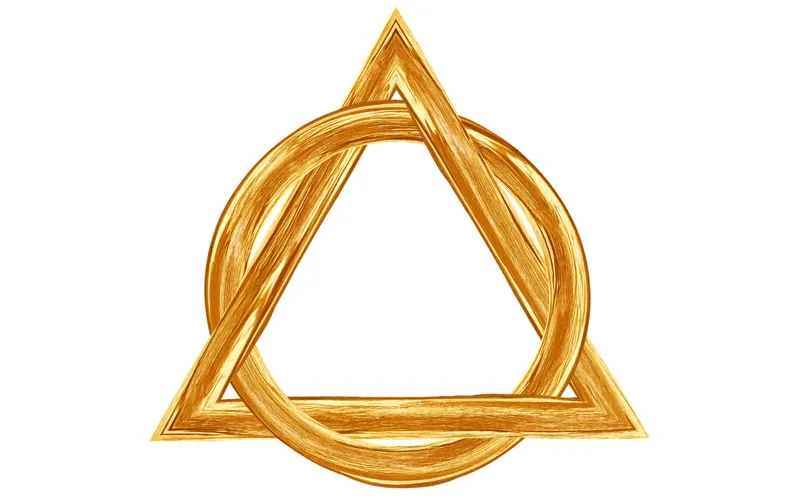
As I understand it, the Golden Triangle represents upright Purusha-consciousness, which hangs upside-down in the lower (primordial) waters of ego consciousness. Through the atonement process (of walking back through the Circles), our Souls, which also hang upside-down in ego consciousness, restore their “enlightened” consciousness to it’s original upright position.
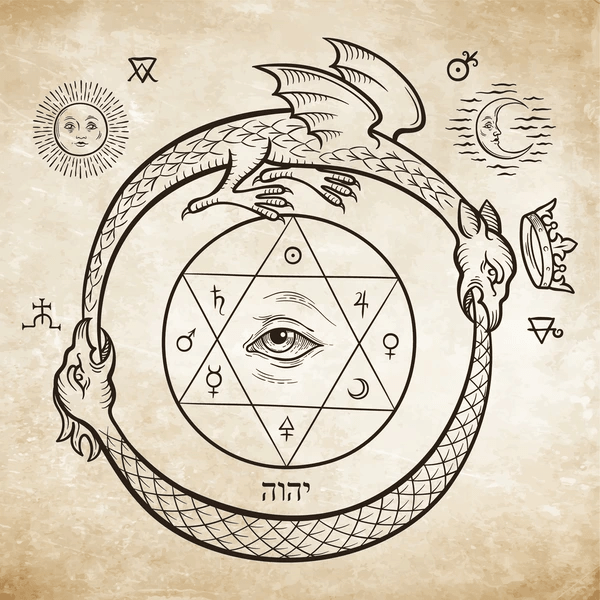
The process of turning our inverted consciousness around is illustrated in the diagram below of the Satkona, the six-pointed star also known as the Star of David and Solomon’s Seal. Note the solar and lunar designations, as well as the dragon and serpent forming an ouroboros of sorts around the central figure. This suggests that the atonement process requires the Great Dragon (God’s Radiant Word) at the top of the wheel to swallow his own tail, the wingless serpent underneath the wheel.
Let’s return to the ring in the mouth and King Ravana, a name supposedly meaning “the cause of the roaring,” or something to that effect. When divided as Ra-vana, the name means “the inner radiant forest,” suggesting that King Ravana’s fortress represents the walled city or stronghold of the Upright Soul within the Forest of All Beings. According to the Hindu lore, Hanuman, the faithful disciple of Rama, lives in that ethereal forest. And it is he who gives Rama “the ring in the mouth.”
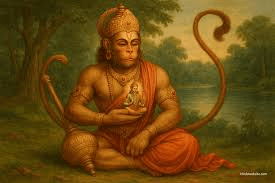
This begs a question: Does Hanuman, in fact, represent “the mind in majesty”? It’s possible, given that his name can be divided as ha (the greater light), nu (the now-moment) and man (of splendor or glory).
And this brings us at last to a quote from the Course mentioning “the mind in majesty,” which captures the gist of this Vedic teaching:
When a mind has only light, it knows only light. Its own radiance shines all around it, and extends out into the darkness of other minds, transforming them into majesty. The Majesty of God is there, for you to recognize and appreciate and know. Recognizing the Majesty of God as your brother is to accept your own inheritance. God gives only equally. If you recognize His gift in anyone, you have acknowledged what He has given you. Nothing is so easy to recognize as truth. This is the recognition that is immediate, clear and natural. You have trained yourself not to recognize it, and this has been very difficult for you. (ACIM, T-7.XI.5:1-9)
So, this Sukta isn’t a hymn to Lord Varuna; it’s a high-level teaching about the A-kara aspect of AUM. It’s also much longer than fifteen Riks. So prepare yourself for a lengthy discussion.
In the second Rik, we find some repetitions of the first. Rv 1.24:2 reads:
From the sacred-fire wind of the foremost mouth, the Immortal Name, the mind-in-majesty offering-cake of the Divine Name of God, the power of the whole Greater Light of Agape, the first defense purifies the teeth of the Father’s Radiant Circle to make visible the mother’s circle.
Definitions and breaks:
agneḥ (From the sacred fire) vayam (wind of) pratham-asya (the foremost mouth) amṛtā-nām (the Immortal Name) manāmahe (the mind-in-majesty) cāru (offering-cake) devasya (of the divine) nāma (Name) saḥ (the power) naḥ (of the whole) mah-ya-i (Greater Light of Divine Love) aditaye (the infinite mother) punaḥ (cleans) dāt (the teeth) pitaram (of the father’s radiant) ca (circle) dṛśeyam (to make visible) mātaram (the mother’s) ca (circle)
Notes:
This appears to affirm my suspicion that the rishis are talking about the A-kara aspect of AUM, the Exalted Hand of God in the mystical Kabbalah teachings of Judaism. In Hinduism, the A-kara (अकार) is the first sacred syllable of AUM (Om), representing the waking state of consciousness, the creation of the universe, and the Divine as Brahma. Allegedly, it originates in the throat and vibrates in the lower body/stomach, marking the beginning of all creation and sound.
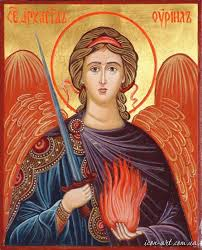
That definition, courtesy of Google, smacks to me of level confusion. As I understand it, the A-kara is the highest of the three sacred syllables — the vibrational tone of the mind restored to majesty. As we learn herein, the A-kara also represents: the teeth of God’s Word, the offering-cakes we give to the mother-cow, the vibration of Holy Creation’s wholeness, and the radiant power of pure Agape. So, we’re talking about the power through which we manifest miracles in the Circle of Fire. The Exalted Hand is, therefore, the hand cradling the “tongue of fire” or the “flaming pearl” the Vedic rishis call agnimagni. We find that flaming pearl in the Ramayana, in Christian Orthodox icons of the Archangel Uriel, and in most Chinese depictions of the Great Dragon.
In the Ramayana, Lord Hanuman (God’s splendor or glory) sets Lanka on fire, after King Ravana orders his tail to be wrapped in cloth, oiled, and lit. The flames don’t harm Hanuman; instead, he uses the fire to burn down the city, “showcasing his immense devotion and divine power.” So, in essence, Hanuman uses the fiery power of God’s Glory to burn down the stronghold of our Souls in the dream-realm, freeing them to return to Heaven.
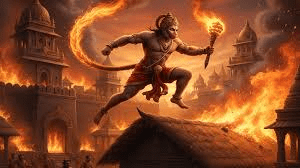
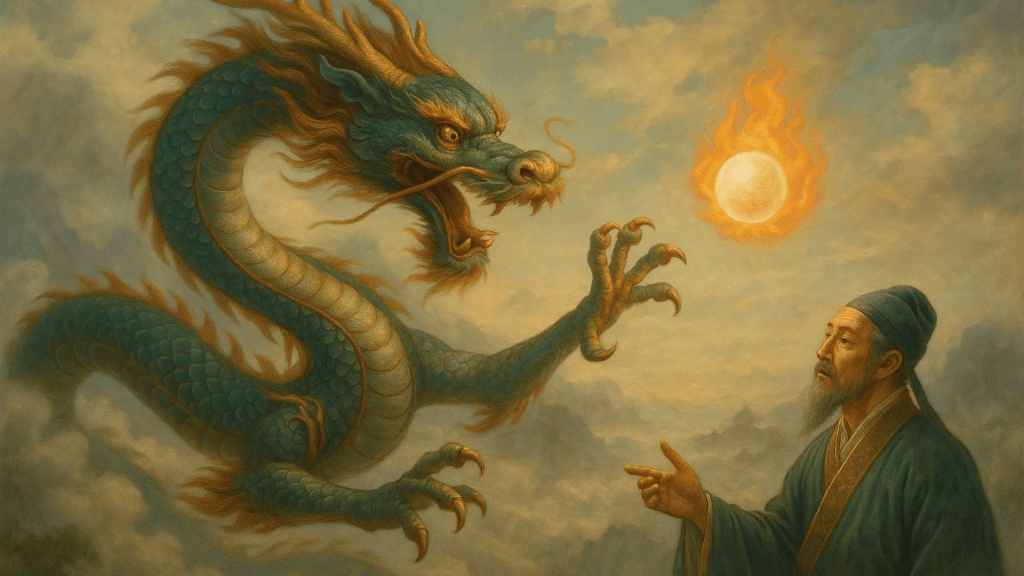
So, essentially, the story of Hanuman burning down King Ravana’s fortress is the Hindu version of the Bible story told in Joshua 6, wherein the walls of Jericho crumble and fall after the Israelites circle around them for seven days, while the priests blow their trumpets.
Read the symbols, brother. Because everything we perceive in this world is a symbol pointing the way — “a finger pointing toward the moon,” as they say in Buddhism.
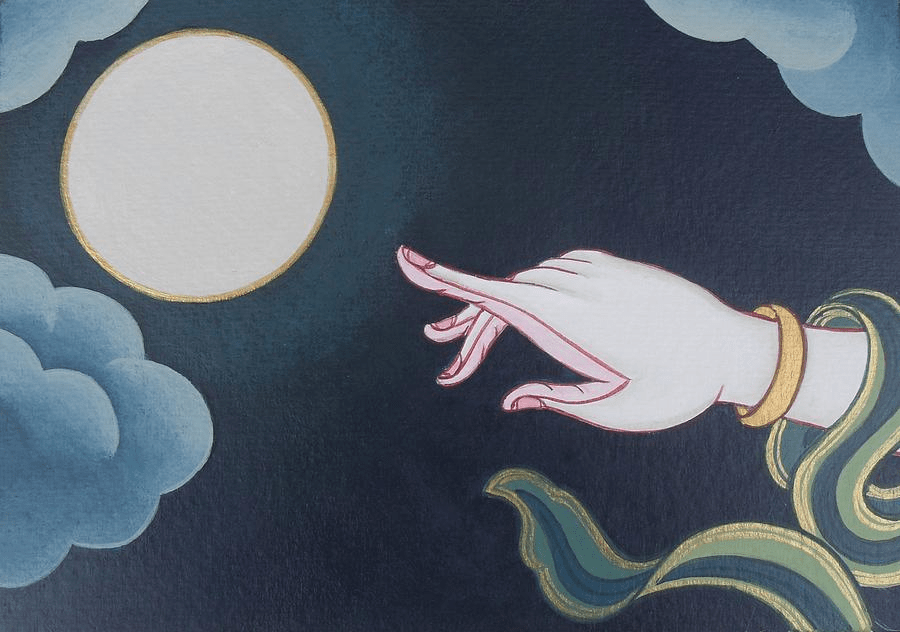
Or, as Course-Jesus says:
The miracle perceives everything as it is. If nothing but the truth exists right-minded seeing cannot see anything but perfection. I have said that only what God creates or what you create with the same Will has any real existence. This, then, is all the innocent can see. They do not suffer from distorted perception. (ACIM, T-3.II.3:4-8)
The Sukta’s third Rik reads:
The Red Ray is the true state of holy being, the light and life of Isana’s water-vessel forever protecting the wealth of Kamadeva’s majesty–the yah consciousness impelling the thunder bringing forth Bhagah, the moon-mind in the fortress of the Resting Place.
Definitions and breaks)
abhi (the red ray) tvā (the true state) deva (holy being) savitaḥ (the light and life of) īśānam (Isana’s ) vār-yāṇām (water vessel) sadā (always or forever) avan (protecting) bhāgam (the wealth of) ī-mahe (Kamadeva’s Majesty) yaḥ (the yah in YHVH) cit (consciousness) hi (impelling) te (the thunder) itthā (bringing forth) bhagaḥ (Bhagah) śaśa-mānaḥ (the moon-mind) purā (in the fortress or walled city of) nidaḥ (the resting place)
Notes:
Like I just said. The Great Rays are the two streams of YHVH (YH, the Soul, and VH, the hook). And herein we learn that the Red Ray is indeed the YH or Yah stream of YHVH, God’s Name in Israel. And it is that stream, the Red Ray or Father Ray, which brings forth Bhagah, who is herein described as “the moon-mind in the walled city of the Resting Place.”
In Hinduism, Bhagah is the Aditya of wealth and fortune. More specifically, Bhagah oversees the dispersal of inheritance — our Holy Inheritance, rather than material bequests. And that makes perfect sense, given all the rishis herein describe.
Course-Jesus speaks often of our Holy Inheritance. At one point in the Text, he says this:
Who assumes a power that he does not possess is deceiving himself. Yet to accept the power given him by God is but to acknowledge his Creator and accept His gifts. And His gifts have no limit. To ask the Holy Spirit to decide for you is simply to accept your true inheritance. Does this mean that you cannot say anything without consulting Him? No, indeed! That would hardly be practical, and it is the practical with which this course is most concerned. If you have made it a habit to ask for help when and where you can, you can be confident that wisdom will be given you when you need it. Prepare for this each morning, remember God when you can throughout the day, ask the Holy Spirit’s help when it is feasible to do so, and thank Him for His guidance at night. And your confidence will be well founded indeed. (ACIM, M-29.5:1-10)
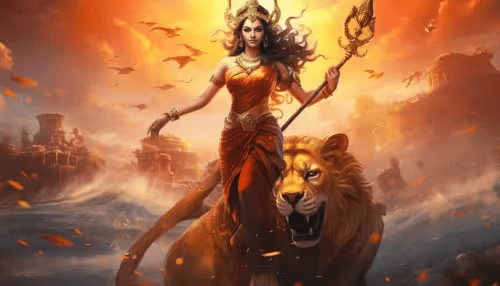
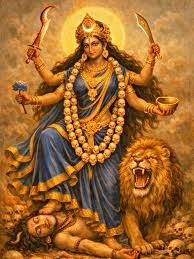
As we’ve also established, Ishana is the guardian of the northeast direction–i.e., the lioness watching over the third quadrant of Kama. Revered in Hinduism as an aspect of Shiva, Isana is, in fact, the lion-headed cherubim representing God’s Strength. making her the Mahakali petal or spoke in the Mother’s Circle. And Mahakali does indeed “ride” a lion, as the image below demonstrates.
According to Google,
Isana … is associated with a water vessel that symbolizes purity, wisdom, and the cosmic womb, often embodied as a Kamandalu. It represents his [her] power to cleanse the spirit and initiate spiritual renewal.
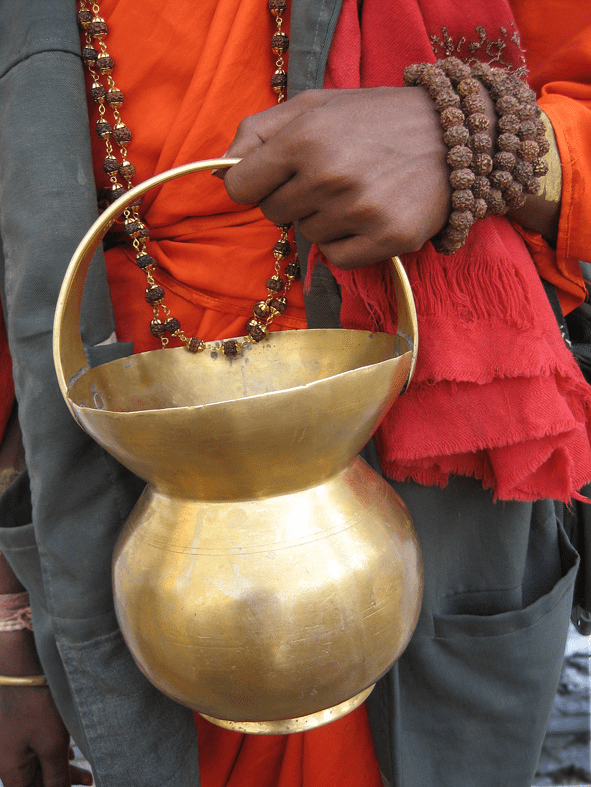
In Hindu culture, the Kamandalu is used to store water for devotional and purification purposes. The water stored is believed to represent Amrita.
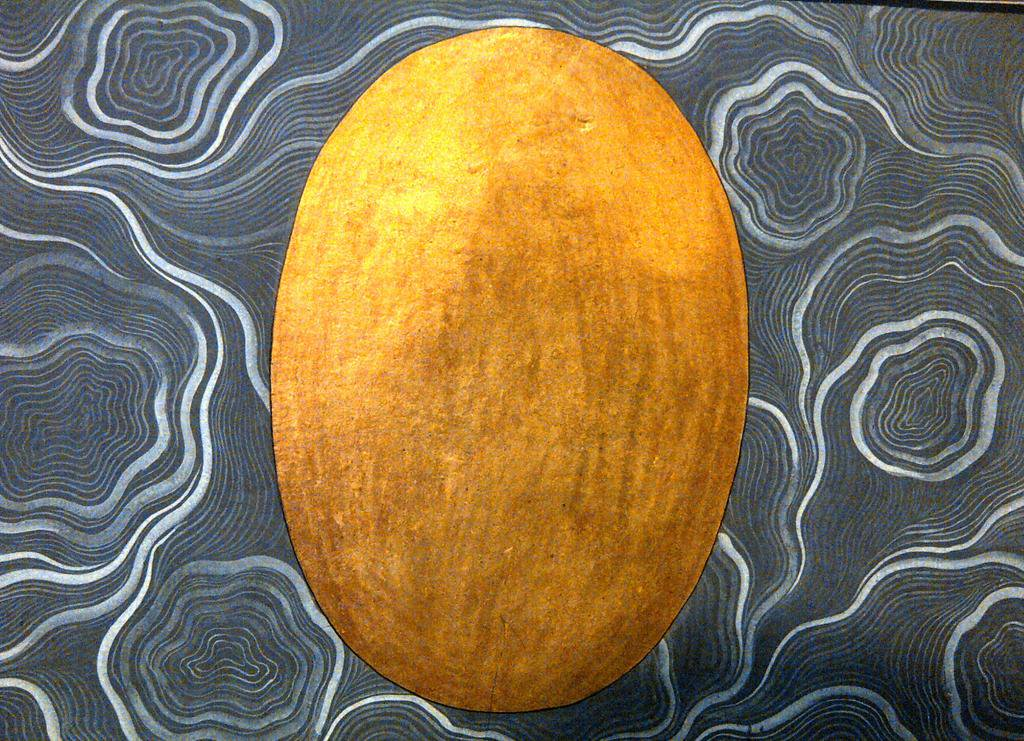
This symbolism is important, because it affirms that Ishana watches over the Circle of Water, also sometimes called the Circle of the Moon. Her water vessel is, therefore, what the Bible calls the “cistern of love.” and what Course-Jesus terms “the storehouse,” “the treasure house,” and “the golden treasury.” In Hinduism and Buddhism, this vessel is referred to as the Cosmic Egg, the Golden Womb, and/or the Golden Egg. In the Vedas, this cosmic egg or womb is called Hiranyagarbha. And it is here that the Holy Spirit holds in trust everything we learned when the dream first played out to completion (in the first and eternal Holy Instant).
Or, as Course-Jesus explains:
This is the Holy Spirit’s single gift; the treasure house to which you can appeal with perfect certainty for all the things that can contribute to your happiness. All are laid here already. All can be received but for the asking. Here the door is never locked, and no one is denied his least request or his most urgent need. There is no sickness not already healed, no lack unsatisfied, no need unmet within this golden treasury of Christ. (ACIM, W-159.6:1-5)
But wait. If the Water Circle, the Moon Circle, and the Golden Womb are different symbols of the same “vessel,” and the waters the Kamandalu holds represents Amrita, then the Moon Circle also must be the the Moon Chakra (a.ka., the Bindu Chakra) as well as the Winepress from which we “extract” the New Wine of Soma, the Great I Am.

Pretty interesting, right?
The Sukta’s fourth Rik reads:
In the absence of malice, the hands join in bestowing the majesty (or glory) retained by the Name of God. the thundering wind elevating the limitless splendor.
Definitions and breaks:
adveṣaḥ (In the absence of malice) hastayoḥ (the hands join) dadhe (in bestowing) bhaga-bhak-tasya (the majesty or glory retained by the Name of God) te (the thundering) vayam (winds) ut (elevating) aśema (the limitless) tava (splendor)
Notes:
The hands that join are the Hands of God, the A-kara, U-kara, and M-kara forces making up the AUM. So, Bhagabhaktasya (the majesty, glory, or splendor retained by the Name of God) is personified in Hinduism as Lord Hanuman, the devoted partner of Rama, the journeying Soul, who burns down the walled city enclosure imprisoning the Soul in the dream-realm.
Rather than say more on the subject, let me simply share this remarkably similar teaching from the Course:
Salvation is undoing in the sense that it does nothing, failing to support the world of dreams and malice. Thus it lets illusions go. By not supporting them, it merely lets them quietly go down to dust. And what they hid is now revealed; an altar to the holy Name of God whereon His Word is written, with the gifts of your forgiveness laid before it, and the memory of God not far behind. (ACIM, W-pII.2.3:1-4)
The fifth Rik reads:
Dwelling in the Mark of the Name, the streams of God take hold of the waters discharging the thundering sovereignty of Nara.
Definitions and breaks:
avasā-mūrdhā-nam (dwelling in the mark, seal, or signet ring of the name) rāyaḥ (the streams) ā-rabhe (of God take hold of) nahi (the waters discharging) te (the thundering) kṣatram (sovereignty of) na (Nara)
Notes:
As I just said, the streams of God are YH (the Holy Spirit’s spark) and VH (the Holy Spirit’s hook). Those two streams are, I believe, the Great Rays, the “They” of the Course, as well as the holy powers preserved by Vishnu.
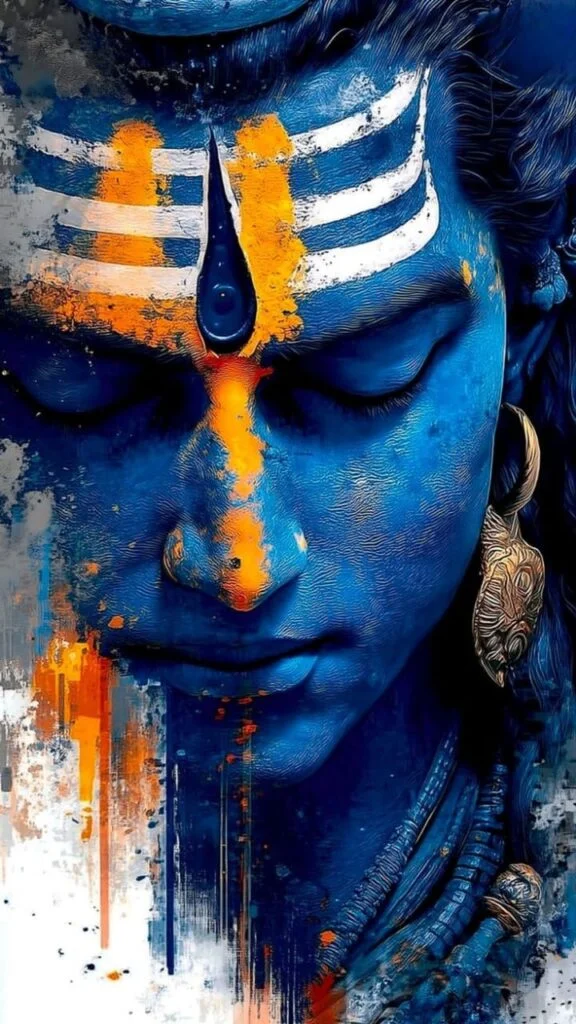
As we’ve discussed several times in earlier posts, the mark, seal, or signet-ring is the Mark of the Beast (the Red Dragon of God’s Radiant Splendor). In Hinduism, that “mark” takes the form of the triple-lined Tripunda seen on Lord Shiva’s forehead in the image above.
So, the two streams work through the three vessels or hands of God, which are the A, U, and M vibrations sounded by Nara, the Light of God’s Word underneath the material illusion, as we learn in the next Rik.
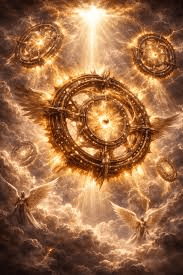
But wait, because I just had a mini-revelation. The YH is the Father Ray, whose subordinate emanations are the Trinity Rays or Aspect Rays, while the YV is the Mother Ray, whose subordinate emanations are the four Attribute Rays or Living Beings. So, the Trinity Rays form the Father’s Circle, while the Aspect Rays form the Mother’s Circle. And it is the Mother’s Circle that was seen and described by the prophets Ezekiel, Zechariah, John of Patmos, and Muhammad. The four beings stood on double wheels covered in eyes. Those wheels, I believe, represent the Circles over which each creature presides. Why are the wheels double? Because the journey our Souls take through the circles moves them forward and backward at the same time.
Rv 1.24:6 reads:
The greater light of God’s Word, Nara generates the AUM, the winds of God in Cana holding Kamadeva’s three striking thunderbolts of enlightenment.
sahaḥ (the greater light of God’s Word) na (Nara) ma-nyum (generates the Om) vay-aḥ (the winds of God) cana (in Cana) amī (holding) iti (Kamadeva’s three) patayantaḥ (striking thunderbolts) āpuḥ (of enlightenment).
The three striking thunderbolts of enlightenment are the A-kara, the U-kara, and the M-kara. That they are referred to herein as “striking thunderbolts” affirms my suspicion that these are the “rods” with which Aaron, the priestly elder brother of Moses, “strikes the waters” in the Bible.
This further suggests that Aaron represents the Red Ray or Father Ray, whilst Moses represents the Water Ray or Mother Ray in the allegories about the wandering Israelites in the Bible, the Torah, and the Quran.
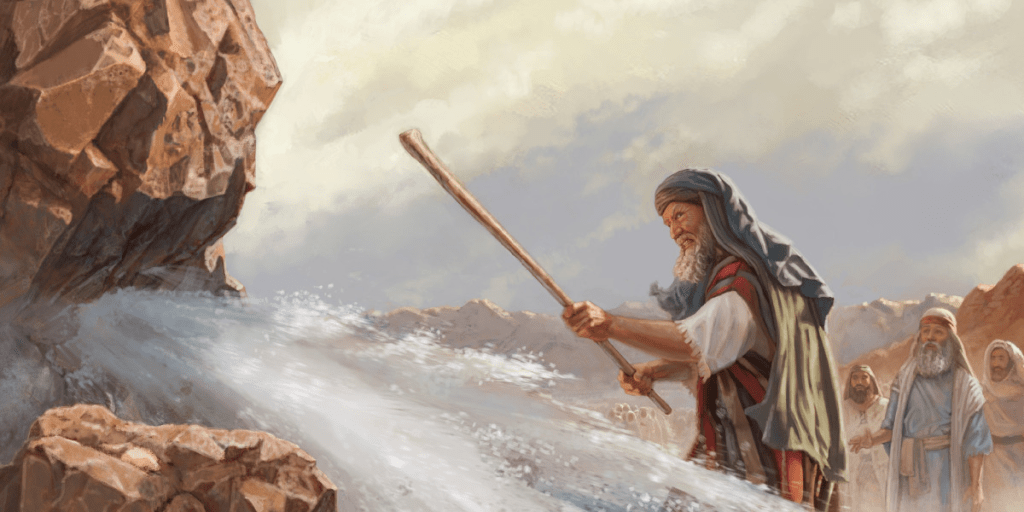
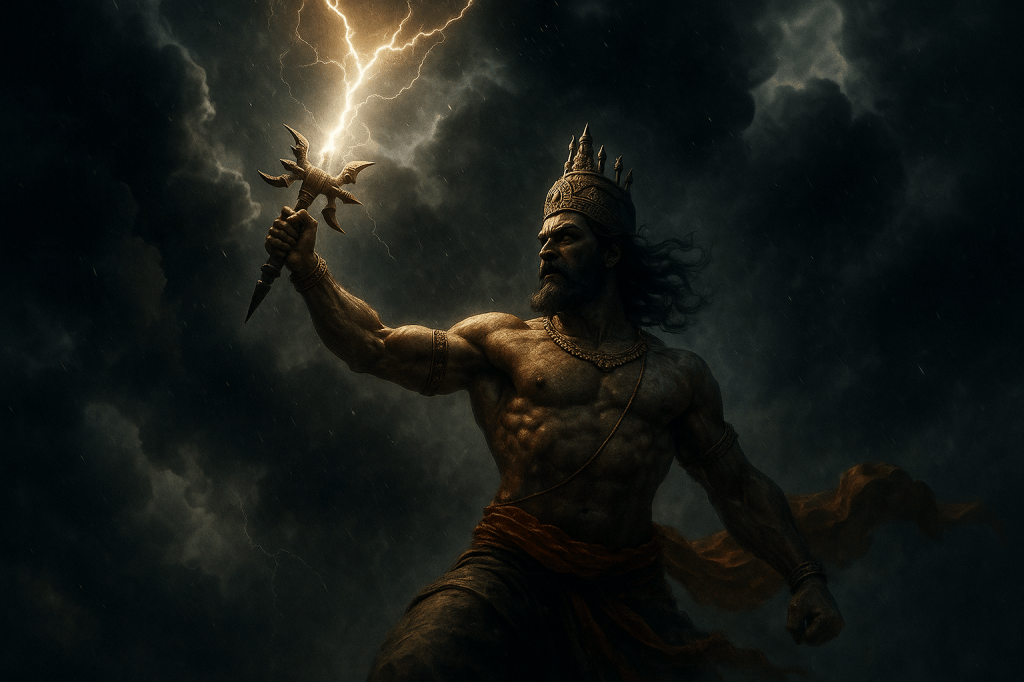
So, Aaron is the Biblical equivalent of Indra, who uses his Vajra (the Diamond in the breastplate) to wield the thunderbolts that destroy Vritra, the personified Ego Mind.
This brings us to “the winds of God in Cana,” a place-name found in the Bible and the world. In the New Testament, Cana is the place where Jesus performed his first public miracle, by turning water into wine at a wedding. In Hebrew, Cana means “reed” or “stalk.” In Sanskrit, it means Circle of Nara or Circle of Waters. And the Circle of Waters is, indeed, 1) where the sacred marriage takes place, 2) the location of the “storehouse” or “golden treasury” and, 3) the place where we extract “the new wine” of Amrita.
The seventh Rik reads:
Nara’s miracle waters watchfully walk in the presence managing the Banyan Tree to advance the flow toward the bottomless abyss of King Varuna belonging to the forest of the upper dome bestowing pure-mindedness.
Definitions and breaks:
na (Nara’s) imāḥ (miracle) āpaḥ (waters) animiṣam (watchfully) cara-ntīḥ (walk in the presence) naye (managing) vātasya (the Banyan Tree) pra-min-anti (advancing the flow toward) abhvam-abudhne (the bottomless abyss) rājā (King) varuṇaḥ (Varuna) vanasya (belonging to the forest) ūrdhvam (of the upper ) stūpam (mound or dome) dadate (bestowing) pūtadakṣaḥ (pure-mindedness)
Notes:
Firstly, Nara is the light of God’s Word underneath the illusion, the reason that God is in everything we see. He represents, therefore, the Cosmic Ocean still rippling into infinity underneath the material illusion. Nara is not, therefore, the primordial waters that gave rise to the maya (as Hindus generally believe).
Nara’s Cosmic Waters contain God’s unmanifested thoughts, while the Primordial Waters contain the Ego Mind’s thought-energy. The distinction is subtle, yet exceedingly important for anyone seeking to escape the illusion.
The cosmic waters exist outside of time to manifest God’s will to make earth like heaven. The primordial waters, on the other hand, exist within time and space to manifest the ephemeral and valueless things of the world. Every thought we have contributes to one or the other, as Course-Jesus explains in Workbook Lesson 16: I have no neutral thoughts.
Got it? Good. Because it matters. A lot.
Nara’s twin is Narayana, the form of Vishnu we see floating on Shesha, his serpent-like water-palanquin in the Cosmic Waters (not the primordial waters). According to the Manusmriti and Mahabharata, these waters were created by the first being (Nara/Narayana) to serve as his/their home (ayana), hence the name Narayana, which means “one who rests on the waters of creation.”
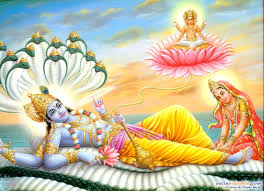
Based on what Jesus says in the Course, our first home was the Real World, which also constitutes “the resting place” of Narayana. These distinctions get garbled by the ego-generated deception that God created the world, which HE DID NOT. Anyone who still believes this colossal falsehood need only ask themselves one simple question: Why would God create a world he then needed to save us from? He wouldn’t, obviously, unless he was either completely insane or totally inept as a parent. And, being perfect, God is neither insane nor incompetent.
In truth, God is trying to save us from the hellish dream WE stupidly created without His consent. Not out of anger, but out of love for his creations. As God’s creations, we still dwell in his mind. To condemn and punish us, therefore, God would have to punish himself for thinking us into being and, essentially, attack his own mind. Which is sheer self-destructive madness.
So, the next time you’re tempted to ask the upside-down question: How could God allow this terrible thing to happen? Ask this upright question instead: Why do I keep choosing to live in a place where terrible things appear to happen, when I could just as easily chose to live in Heaven instead?
This brings us to the Banyan Tree, which is the Tree of Life — the Path of the Flaming Sword or the Path of the Return (to Eden, the Promised Land, or Heaven).
As we learned from our Bible studies, the bottomless abyss is the Well of Nisrok, the eagle-headed cherubim. That well is the symbolic fountain and wellspring mentioned umpteen times in the Bible. From that well, we draw up the cosmic waters underneath. As the rishis explain herein, the whole atonement mechanism is designed to direct us toward Nisrok’s “well” — i.e., the Circle of Waters that is Soma, the Lesser Light of Christ shining in the darkness.

This is what Jesus means in John 4:14 when he says:
But whosoever drinketh of the water that I shall give him shall never thirst; but the water that I shall give him shall be in him a well of water springing up into everlasting life.
In this Rik, we find raja varunah, a word-pairing the rishis repeat in future Riks. Raja Varuna can translate as King Varuna or as “the ruling waters of oneness.” This time, I went with King Varuna, the Lord of the Waters. If I’m right, Varuna is the Vedic equivalent of Nisrok, the eagle-headed guardian of the bottomless well. Both of these ancient “gods,” despite being mentioned in the Bible and the Vedas, have either been erased or demonized over time by the Ego.
When artistically depicted, Varuna rides a creature with the tail of a fish or a serpent. The creature is called a makara, a name meaning “generating the Kara” or “generating the hands.” His makara vahana probably represents, therefore, Ketu, the tail of the red dragon, which shakes in the dream-realm to generate the A-U-M. And that Kara-generating “creature” is Varuna’s vehicle in the dream.
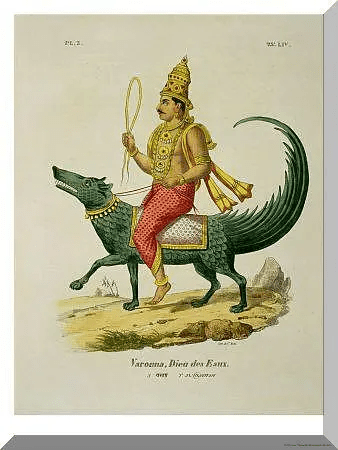
Before we proceed, I want you to take note of the garments adorning Varuna in the image above, most notably the golden helmet, bejeweled breastplate, and golden sash. These all communicate something about him, as do the pasa and reins he holds in his hands.
Let’s move on to Rv 1.24:8, which reads:
From underneath the solidity on the surface, to awaken the wholeness of Esa, the I Am, Kamadeva’s Three (the Trinity Rays) deep within deposited the mark conveying the hearing of what becomes heard.
nīcīnāḥ (from underneath) sthuḥ (the solidity) upari (on the surface) budh-naḥ (to awaken the wholeness) eṣām (of Esa) asme (the I Am of) iti (Kamadeva’s three = the Trinity Rays) antaḥ (deep within) nihitāḥ (deposited) keta-vaḥ (the mark conveying) syuriti (the hearing) syuḥ (of what becomes heard)
Notes:
The lack of viable definitions made this tricky to figure out, but we got there in the end. The solidity on the surface is, of course, the illusion of form, the density of thought-matter hiding the spiritual reality dwelling underneath. Esa is the Red Ray, who is allegorically represented as Esau, the twin elder brother of Jacob, in the Old Testament. Kamadeva’s Three are the Trinity Rays of A-U-M, which Theosophists call the Rays of Aspect and Hindus call the Trimurti.
More generally, this affirms my long-held suspicion that the Mark of God, which is sometimes called the signet-ring, is the mechanism that enables us to hear the inner vibrations of A-U-M.
The ninth Rik reads:
Shiva’s roar sens forth King Varuna (the waters of oneness) in the circle of the Kara Surya lights on the path of Anu in the forests of grace.
Definitions and breaks:
urum (Shiva’s roar or the upper leg) hi (sends forth) rājā (King) var-uṇaḥ (Varuna) ca-kāra (the kara circle) sūryā-ya (Surya lights) panthām (on the path or course of) anu-etavai (Anu, in the forest) um (of grace or om)
Notes:
Urum is typically defined as “thighs,” but what are thighs but upper legs? And the upper leg the rishis mean is the third quadrant of the Circle Journey on the right-hand side of the wheel.
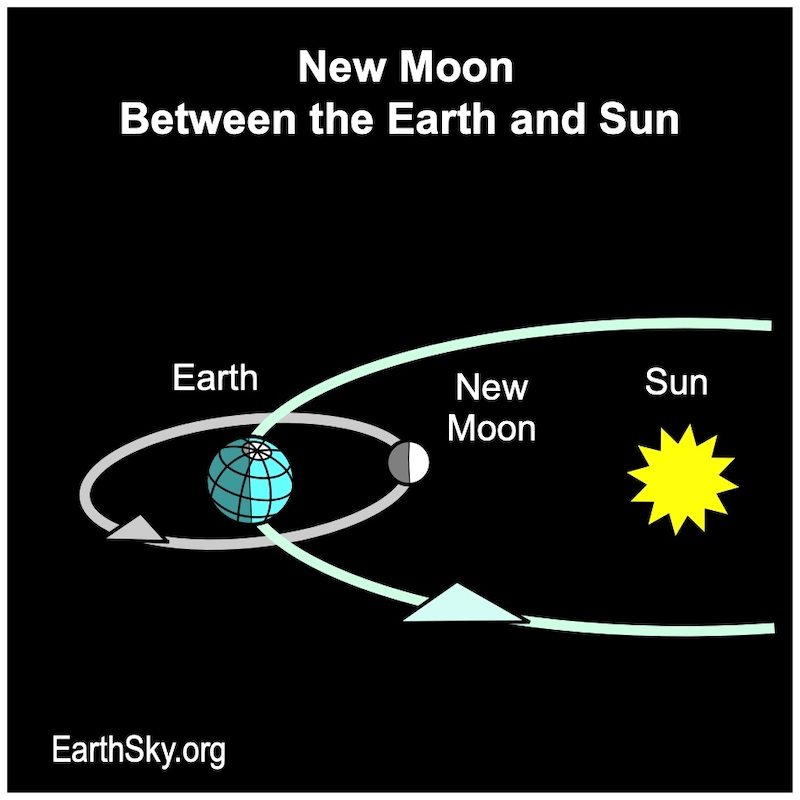
Urum could also be interpreted as a compound of U and ru or rum, meaning “Shiva’s roar.” And Shiva, a form of both Ishana (the lioness) and Rudra (the howler), does indeed “roar” in the Hindu literature. What Shiva roars is the U-kara vibration — the middle tone we hear and share in the Circle of Waters, which also is the Moon Circle. And the moon does indeed reflect the Sun’s light as it orbits around the earth.
In Hindu theology we find both the forests of grace and the Forest of Om. And etavai um could go either way. We also find “the path of grace.” And, as the Bible tells us, we are saved by grace alone, not by anything we do in the world. Course-Jesus also says, “You need do nothing” to awaken. We only need to sit and listen to the still, small voice speaking to us in the silence.
Google tells us:
The “Forest of Om” in Hinduism is most commonly identified as Darukavana (or Darukavana), an ancient, holy forest in India mentioned in the Shiva Purana as the location of the Nageshvara Jyotirlinga [the temple shown below]. It is considered one of the most sacred forest sites, often associated with intense spiritual practice, the dispelling of evil, and divine appearances of Lord Shiva.
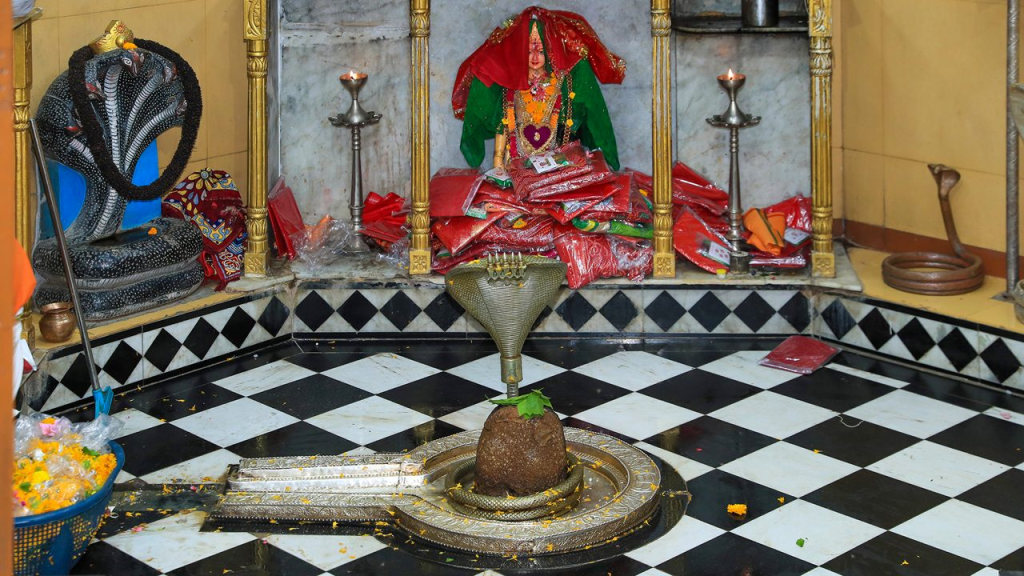
The Forest of Om is, of course, a non-physical location we find deep within our heart-minds. Not unlike the Kingdom of Heaven. As Jesus Christ explained in Luke 17:21:
Neither shall they say, Lo here! or, lo there! for, behold, the kingdom of God is within you.
The 10th Rik reads:
Kamadeva’s three footless steps toward the Creator are the celestial waters; the waters speaking for the spiritual heart-nature perceiving the one-hundred thundering royal healers of the one-thousand earthly gemstone rays of holy thought thundering “so be it” (i.e., the Great Amen or Great AUM).
iti (Kamadeva’s three) apade (footless) pādā (steps) prati-dhātave (toward the Creator) akaḥ (are the celestial) uta = uda (waters) apa-vaktā (the waters speaking for) hṛdaya-vidhaḥ (the spiritual-heart nature) cit (perceiving) śatam (the one hundred) te (thundering) rājan (royal) bhiṣajaḥ (healers or physicians) sahasram (of the one-thousand) urvī (earthly) gab-hīrā (gemstone rays) su-matiḥ (holy thought) te (thundering) astu (“so be it” = the Great Amen/AUM)
Notes:
In Hinduism, the three footless footsteps are more commonly associated with Lord Vishnu then with Kamadeva. But we learn herein that those three footless strides, by which we mentally “step” across the universe to conquer the three worlds, represent A-U-M, the three open hands of God). These are, btw, the very same open hands of God referenced multiple times in the Bible. An open hand is an ever-giving hand, and AUM represents the three progressive ego-undoing powers of His Love and Grace always available to us in the dream.
This is the idea Course-Jesus attempts to explain in Workbook Lesson 168: Your grace is given me. I claim it now. The lesson’s narrative begins thusly:
God speaks to us. Shall we not speak to Him? He is not distant. He makes no attempt to hide from us. We try to hide from Him, and suffer from deception. He remains entirely accessible. He loves His Son. There is no certainty but this, yet this suffices. He will love His Son forever. When his mind remains asleep, He loves him still. And when his mind awakes, He loves him with a never-changing Love. (ACIM, W-168.1:1-11)
In Hinduism, the “gemstone rays” are associated with the Navaratna (the nine gems), which store and emanate cosmic energy corresponding to the nine celestial bodies known as the Navagraha in Hindu theology and Jyotisha in Vedic astrology. According to Google, “Each gem radiates specific colored light to balance planetary influences, improve health, and enhance destiny by affecting the wearer’s chakras.” These aren’t actual gemstones, of course. Like everything in scriptural texts, they’re symbols. What do they symbolize? I don’t yet know with any certainty, but I suspect they do represent the chakras.
In the Bible, we find these nine gemstones adorning “the covering” of the King of Tyre in Ezekiel 28:13. Tyre is an anglicization of the Hebrew word Tsor, meaning “rock” or “rocky fortress.”
So, do the math.
I also know those nine gems don’t “symbolize Satan’s beauty in Eden,” as is generally believed. I’m pretty sure these stones also correspond to the gems on the High Priest’s breastplate worn by Aaron (and by Varuna in the image I shared earlier). Elsewhere in Exodus, the gems on the High Priest’s breastplate are said to be twelve in number, giving rise to the presumption that these symbolic “gems” represent the twelve tribes of Israel. I’m more inclined to believe these gems represent the nine or twelve pure streams of holy thought our minds must emanate or radiate in order to escape the illusion of earthly existence. That light streams through the chakras, once they’re unblocked.
And we do indeed find “nine holy thoughts” in Christian theology, as the nine “fruits” of the Holy Spirit—the godly character traits developed through the presence of the Holy Spirit. These attributes are outlined by St. Paul in Galatians 5:22-23, which reads as follows:
But the fruit of the Spirit is love, joy, peace, longsuffering (patience), gentleness, goodness, faith, meekness, and temperance: against such there is no law.
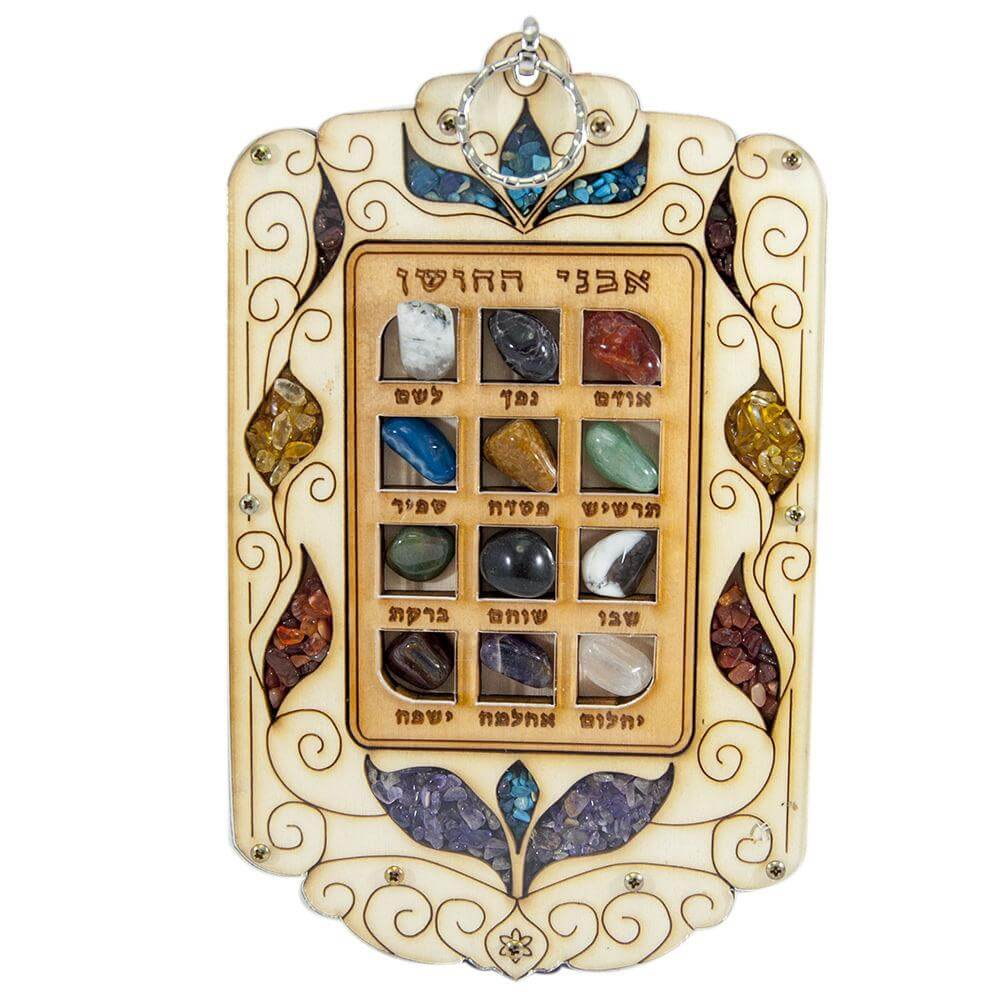
And that is why the High Priest’s breastplate is choshen mishpat in Hebrew, the Breastplate of (rightminded or upright) Judgment or Discernment. Exodus 28 allegedly describes the breastplate as holding twelve precious stones, each engraved with a tribe’s name, set in four rows (as pictured above). It served as a memorial (a way of remembering), covering the tribes and facilitating divine judgment via the Urim and Thummim (two rather mysterious objects or substances kept in the first temple’s Holy of Holies). Elsewhere in Exodus, we learn that the nine stones under discussion are a sardius, a topaz, a diamond, a beryl, an onyx, a jasper, a sapphire, an emerald, and a carbuncle.
With three more added (the trinity gems?), they become the twelve stones of the breastplate of Aaron’s priests, the Teachers of God, as well as the twelve stones of the apocalypse found in Revelations. Apocalypse means “revelation.” So, essentially, these twelve stones show us God’s Face, reflected in the cosmic waters of thought.
Let’s now explore what Exodus 28 actually reports about the breastplate. Starting at the top, the chapter’s first few lines read thusly:
To approach Aaron, the brother and son in the center, the Anointed Son of Israel, act as a minister for Aaron, Nadeb, Abihu, Eleazer, and Ithamal, Aaron’s sons advancing the sanctuary raiment (or robes) of Aaron’s brother. In glory and majesty, the Word of God speaks to the wise-hearted. To fulfill Ruach’s wisdom bestowing the garments making holy the covering, act as a minister, wear the garment bestowing the breastplate tying the robe embroidered to cover the diadem, the belt of that which remains.
Pretty interesting, actually. Firstly, it paints Aaron and his sons in a very different light than the traditional “literal” translations. If Aaron represents the Father Ray, as I suspect, then his three sons are the Red Ray’s offspring, as well as its top lieutenants. Simply stated: Aaron represents the Father Ray, whose three sons are the Trinity Rays comprising the Father’s Circle.
Moses, a name aptly meaning “drawn from the waters,” is, therefore, the Biblical personification of the Mother Ray. In Exodus and Chronicles, we learn that Moses begat two sons, Gershom and Eliezer. Gershom means “a stranger here,” while Eliezer means “God’s help.”
In the Course, Jesus says WE are the strangers here, having estranged ourselves from God and our brothers in Christ by freely choosing deceptive earthly existence over Divine Reality.
He also says:
Come home. You have not found your happiness in foreign places and in alien forms that have no meaning to you, though you sought to make them meaningful. This world is not where you belong. You are a stranger here. But it is given you to find the means whereby the world no longer seems to be a prison house or jail for anyone. (ACIM, W-200.4:1-5)
So Moses, the Mother Ray, produced our Souls and the Waters of Salvation to wash clean our Souls. Ergo, the Mother Ray produced the Yod and Mem powers of the Holy Name, Elohim.
This important “clue” further tells us that the five powers of Elohim (the five faces of Sadashiva in Hinduism) incorporate Aaron’s three sons, together with their first-cousins, Gershom and Eliezer. The Bible also says Gershom and Eliezer begat only one son apiece. Gershom fathered Shebeul, while Eliezer fathered Rebabiah. In Hebrew, Shebeul means “the ruler of God’s treasure house,” while Rebabiah translates as “the shining entrance.”
So Shebeul, the grandson of Moses, guards the golden treasury, while his cousin, Rebabiah, embodies the “the shining entrance.”
What is the shining entrance? Google answers thusly:
The “shining entrance” in Scripture primarily refers to the entrance of God’s Word into a person’s heart, bringing illumination and understanding. Psalm 119:130 states, “The entrance of Your words gives light; it gives understanding to the simple” (NKJV), often interpreted as the Bible illuminating the spirit, displacing darkness, and bringing divine insight.
But wait. Because the Bible is NOT the Word of God, and neither is the Quran. Sorry, my deluded friend, but the Word of God is AUM. And AUM is, therefore, the shining entrance begotten by the Mother Ray’s offspring, Eliezer (God’s help),
Makes sense, right?
Let’s return now to the breastplate and the other priestly garments allegedly catalogued in the aforementioned verse from Exodus. in In the KJV Bible (and in Jewish tradition), these priestly garments are the breastplate, the Ephod, the robe, the embroidered coat, the mitre (a turban or headdress), and the girdle, sash, or belt. But, as I interpret the Hebrew, the breastplate is the belt which ties or fastens (the real meaning of ephod) the embroidered robe covering the diadem (the crown of glory we threw away when we “fell from grace”). There is, therefore, no coat, no turban, and no ephod.
The last word in this section of Exodus is shesh, a Hebrew word typically translated as “fine linen.” In Persian, the same word means “six,” while in Sanskrit it means “that which remains.” Shesh is remarkably similar to Shesha, the name of the Great Naga upon which Vishnu/Narayana rides on the Cosmic Ocean. Because Hebrew, Sanskrit, and Persian are related languages, this warrants serious consideration.
As I read these verses, the breastplate is “the belt of that which remains” to fasten the shining “white robe” of our innate holiness, which we recover in the upper echelons of the celestial sphere, by shedding the heavy covering of body-consciousness. Symbolically, we find that same Holy Belt venerated in Eastern Orthodoxy and its iconography as the Cincture of the Theotokos, the sash-belt in the hands of the Blessed Virgin in the image below.
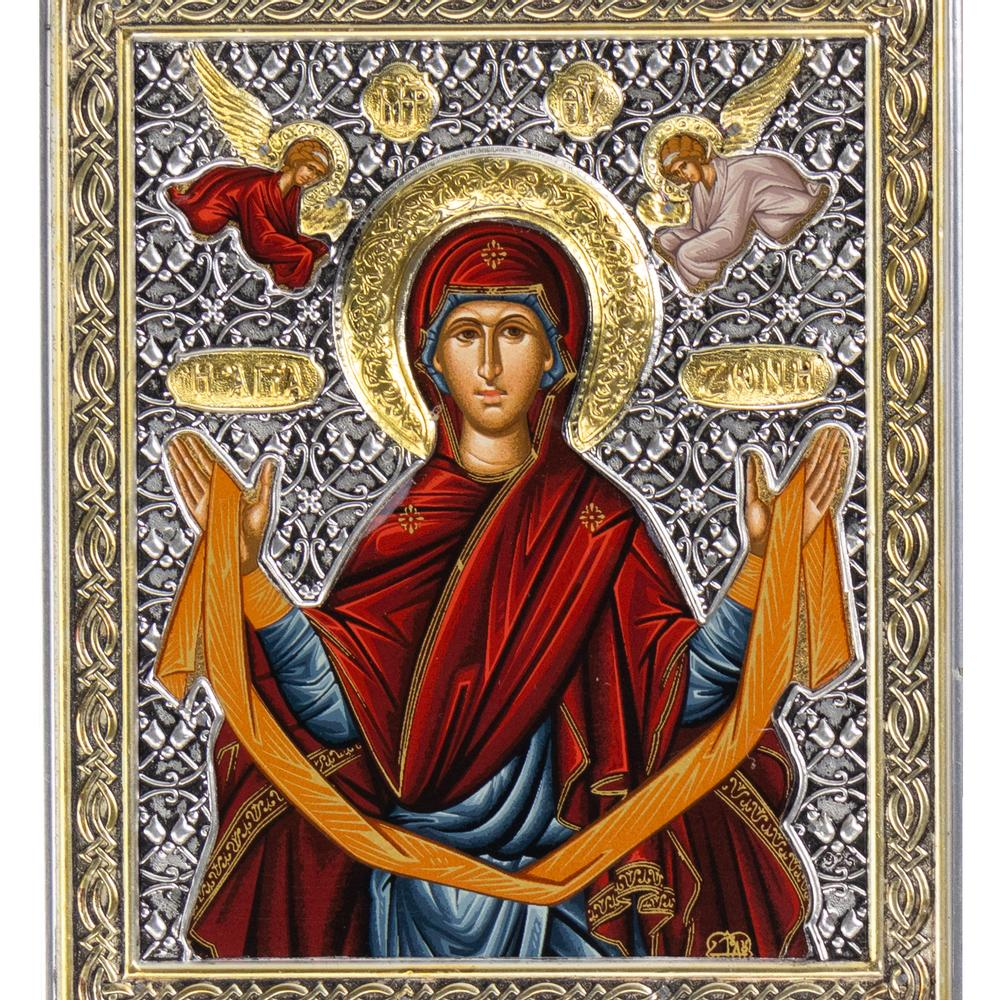
Preserved at Vatopedi Monastery on Mount Athos, this sacred relic, which reportedly represents Mary’s ascension into Heaven, is believed to be the only surviving artifact of her earthly life.
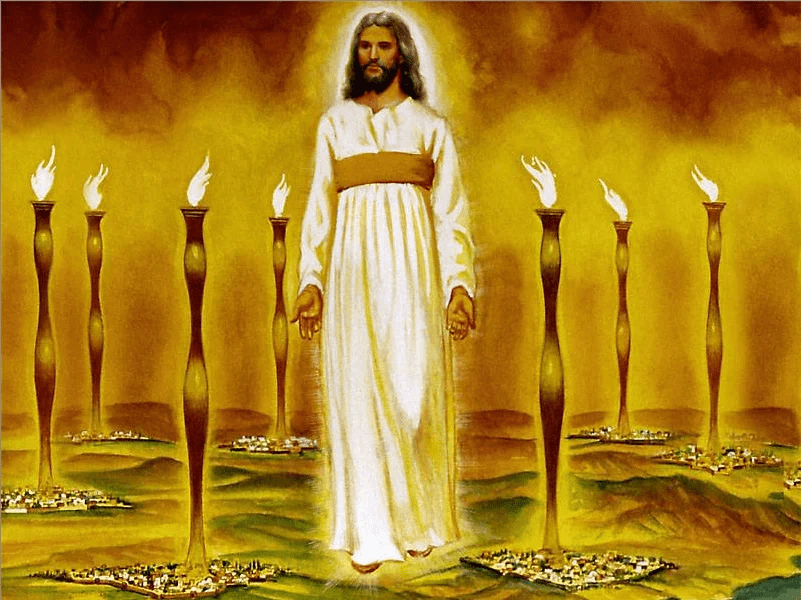
In Revelation 1:13, John of Patmos describes the Great Amen (in the form of Jesus Christ) wearing a similar “golden sash” (or girdle-belt) across his chest, in the manner illustrated below.
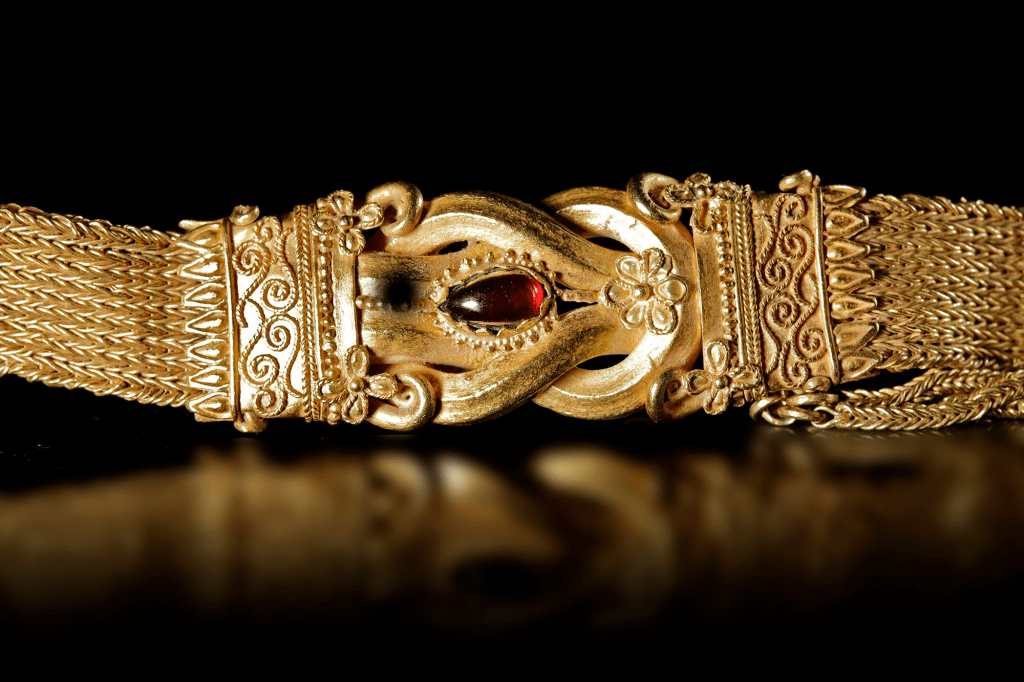
If I’m right about the sash/girdle/belt and the breastplate being one and the same, then this “golden girdle” is the garment studded with the nine or twelve gems mentioned in both Exodus 28 and Rv 1.24. And, in ancient times, girdle-belts were indeed studded with gems, as we see in the 4th-century Hellenistic example shown below.
Rv 1.24:11 reads:
To drive away misfortune from afar in the proper way, direct outward the inherited consciousness of the black antelope advancing the closure (or fastener) of the innocence belonging to us.
bādhasva (to drive away misfortune) dūre (from afar) niḥṛtim (in the proper way) parācaiḥ (direct outward) kṛtam (the inherited) cit (consciousness) enaḥ (of the Black Antelope) pra (advancing) mu-mugdhi (the closure or fastener of the innocence) asmat (belonging to us)ǁ
Notes:
Looks like my retranslation of Exodus 28 was well-timed (as always), because the golden girdle just discussed has to be the mu-mugdhi mentioned herein.
And we do indeed find the “golden girdle” in Hindu culture, as a symbol of divine strength and majesty. Associated with Airavata, the Great White elephant belonging to King Indra, the golden belt is used ornamentally in India to adorn elephants, adding to their grandeur.
From this, we can ascertain that the “golden girdle” symbolically represents “the mind in majesty”–the mind that has recovered the nine or twelve gemstones or “fruits” characterizing the true Teachers or Ministers of God.
Contrary to some of those listed by St. Paul in Galatians, those “fruits” are (according to Course-Jesus): trust (in God’s Plan and Spirit), tolerance, honesty, gentleness, generosity, joy, defenselessness, faithfulness, patience, and open-mindedness.
The inherited consciousness is, according to Carl Jung, the collective or shared psyche we all possess and share underneath the individual consciousness developed fragmentally through personal experience.
This inherited consciousness, the rishis tell us in this Rik, is the black antelope consciousness, which brings forward the girdle/breastplate. A concept unknown to me hitherto, the black antelope (kṛṣṇamṛga) symbolizes in Hinduism the purity, sacredness, and high spiritual authority exercised in the yajna offerings. Black Antelope consciousness is synonymous with Vedic consciousness — the mindset of God’s True Teachers or Gurus. Associated with Soma/Chandra, the black antelope is said to act as a vehicle for consciousness, specifically linked to the Ajna (third eye) chakra and the “mind” of humans.

So, the Black Antelope consciousness is the consciousness of divine wisdom or “knowing,” which tracks with all we’ve learned so far. And this may indeed be the true meaning of the mysterious re’em referenced seven times in the Bible.
The 12th Rik reads:
The nectar of Kamadeva’s three shining guardians established in exaltation in the night to make visible the imposter consciousness. In the day, Kamadeva yokes or unites the Supreme Spirit in the true mode of being.
Definitions and breaks:
amī (The nectar) iti (Kamadeva’s three) ye (shining) ṛkṣāḥ (guardians) nihitāsaḥ (established) uccā (in exaltation) naktam (in the night) dadṛśre ( to make visible) kuha (the imposter) cit (consciousness). divā (in the day) īyuḥe = iyuje (Kamadeva yokes or unites) tat (the Supreme Spirit) tvā (in the true mode of being)
Notes:
We’ve discussed this, but most of my traffic appears to be drop-in, so let me recap: In the scriptures (of most faiths), Night represents inverted dream- Consciousness, while Day represents upright Spirit Consciousness. The Lesser Light ruling the Night is the Moon-father, the Great I Am or Great Amen. In Hinduism, that moon-god is personified as Soma or Chandra. The divine power ruling the Day is the Solar Logos, the radiant Word of God shining into the dream-realm from the east. In Hinduism, that Greater Light is personified as Surya. In Judaism, it’s Elohim. And in Islam, it’s Allah.
As I’ve also explained repeatedly, Kamadeva represents the power of Divine Love working in the dream-realm. Kamadeva is NOT, therefore, the “Indian cupid,” as commonly espoused. His three powers are the Trinity Rays — the three chief aspects of Divine Love, which are divided in the dream as A-U-M, the three vessels and/or the three hands of God. In the Bible, they are allegorically represented as Aaron’s three sons, Eleazer, Nadab, and Ithamar.
Got it? Good.
Let’s move on to the 13th Rik, which reads:
Yami expands the heart-mind, the mind praising the Supreme Spirit of God’s auspicious almsgiving consciousness giving to receive wholly free from anger.
Definitions and breaks:
yāmi (Yami)) brah-maṇā (expands the heart-mind) vandamānaḥ (the mind praising) tat (the supreme spirit) ā (of God’s) śāste (auspicious) yajamānaḥ (almsgiving-consciousness) haviḥ-bhiḥ (giving to receive) aheḷamānaḥ (wholly free from anger)
Notes:
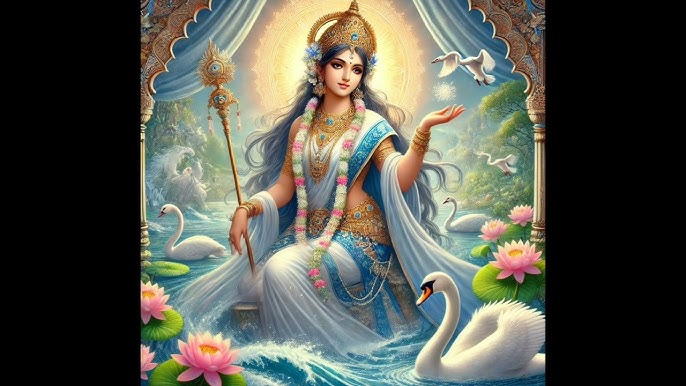
In Hinduism, Yami is the twin sister of Yama and the goddess of the sacred river Yamuna. In the iconography, she is usually depicted as black-skinned, riding on a tortoise. This suggests to me that her vahana is Kashyapa, who represents the World Turtle in Hinduism and the Black Dragon of the North in Chinese philosophy. Her name supposedly means “night,” but the syllable meanings don’t support that definition. I’m more inclined to believe that Yami is the “embryonic” form of the Moon Ray, whilst Yama is the “fetal” form of the Blood Ray. These two gestating twin energies sleep together in the Muladhara Chakra until the appointed time for them to awaken and arise.
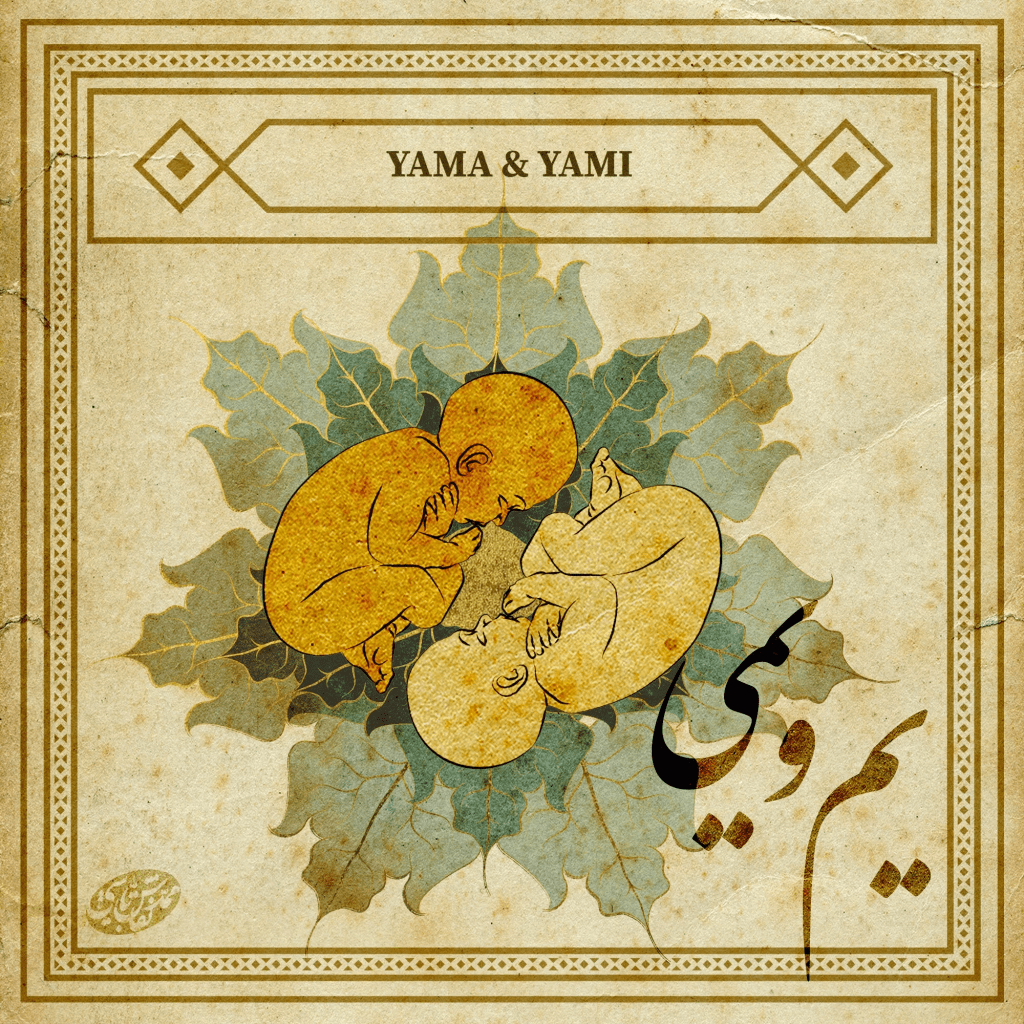
According to ancient Hindu beliefs, Yama and Yami were the first humans. Unlike Adam and Eve, their Abrahamic counter-parts, Yama and Yami were siblings who enjoyed a special connection with the gods. Yama and Yami are also found in Chinese mythology as Yameh and Yami, as well as in Iranian lore as Yimeh and Yami. In the Zoroastrian Avesta, they are called Jam or Jamshid.
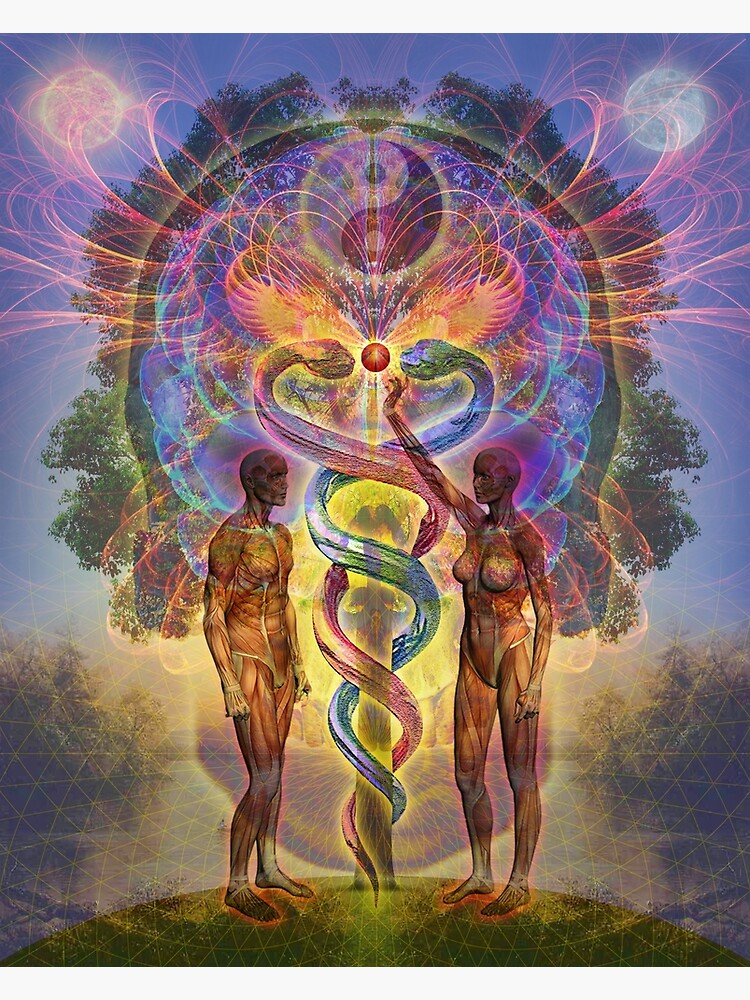
Rightmindedly understood, Yama and Yami were not the first man and woman, they are the spiritual forces God “breathed into” our ego-created human bodies. And it is these indwelling forces that makes our salvation possible. When they awaken, they rise up the Shushumna via the Ida and Pingala nadis, the incubating mechanism by which they mature. When they reach the Ajna chakra, they “marry,” becoming one with each other in the Moon Circle energy of the U-kara vibration. And this is, in fact, the “sacred marriage” much-discussed in the gnostic gospels, among other spiritual teachings.
Rv 1.24:14 reads:
The waters of oneness (Varuna) in the place of enlightenment, the upper-leg for gathering together in the Word, generates the whole body advancing the Messiah, the Supreme Spirit disappearing the Night.
Definitions and breaks:
varuṇa (the waters of oneness) iha (in the place) bodhi (of enlightenment) uruśaṃsa (the upper-leg for gathering together in the Word) mā (to generate) naḥ (in whole) āyuḥ (body) pra (advancing) moṣīḥ = masih (the Messiah) tat (the supreme spirt) it (disappearing) naktam (the night)
Notes:
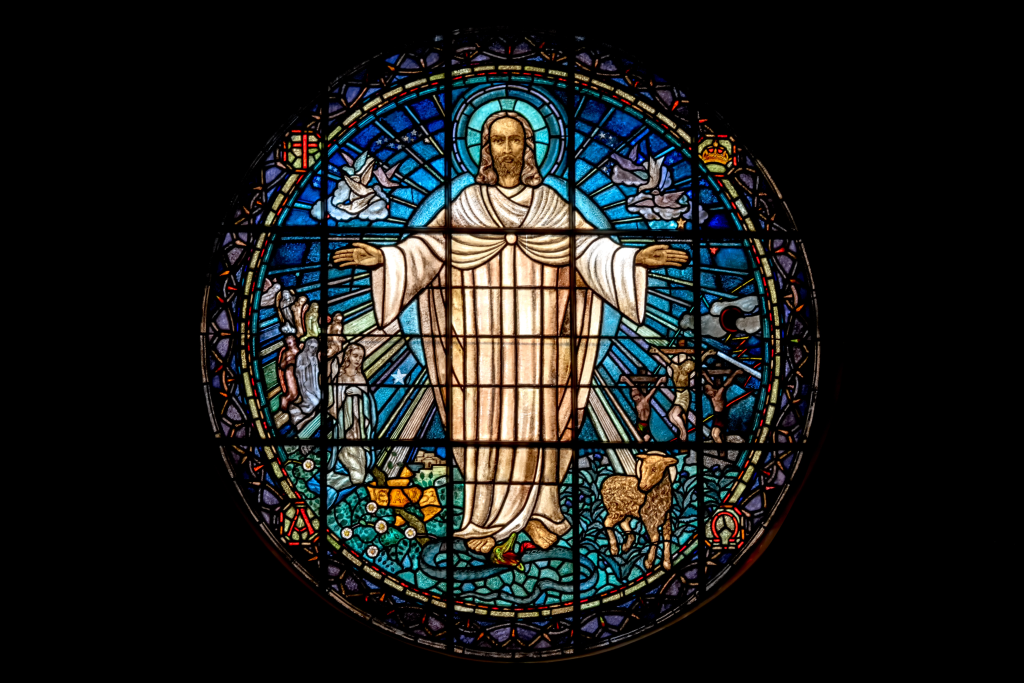
The place of enlightenment, the upper-leg for gathering together in the Word, is the fourth quadrant of Moksha, the circle of fire, the Circle of Peace, and the fiery eye of the miracle-cow. And this is indeed what Jesus meant in Matthew 18:20, when he famously said, “Where two or three are gathered together in my name, there am I in the midst of them.” Because it is there he stands at the circle’s center, as the Risen Christ, calling all his brothers to return to the enlightened “daylight” consciousness of Miraculous Perception.
Or, as he says in the Course:
Peace, then, be unto everyone who becomes a teacher of peace. For peace is the acknowledgment of perfect purity, from which no one is excluded. Within its holy circle is everyone whom God created as His Son. Joy is its unifying attribute, with no one left outside to suffer guilt alone. The power of God draws everyone to its safe embrace of love and union. Stand quietly within this circle, and attract all tortured minds to join with you in the safety of its peace and holiness. Abide with me within it, as a teacher of Atonement, not of guilt. (ACIM, T-14.V.8:1-7)
Okay wait. Because Google said this Sukta contains only fifteen Riks. And if true, the next line should be the last. But it’s not. So Google and all the sources it draws upon must be mistaken.
The 15th Rik reads:
The day, generates the life calling the Supreme Spirit to approach the Resting Place, the heart-seat of God’s divided lineage.
divā (The Day) ma-hyam (generates the life) āhuḥ (calling) tat (the supreme spirit) ayam (to approach) ketaḥ (the resting place) hṛdaḥ (the heart-seat) ā (of God’s) vi (divided) caṣṭe = casta (lineage).
Notes:
As explained innumerous times, Day is scriptural “code” for the Greater Light, the Spiritual Sun, or the Solar Logos — the supreme holy power seated upon the “Throne” at the top of the dream-realm. The heart-seat of God’s divided lineage is the Inner-Altar. Ergo, the oft-mentioned Resting Place also represents the Inner-Altar, as well as the throne-room.
Rv 1.24:16 reads:
In holy wholeness, the Army of Forbearance calls the name bearing the fruit underneath, the powers of the Rock ruling the waters of oneness fastening to liberate Kama.
śu-naḥ-śepaḥ (in holy wholeness, the army) yam (of forbearance) ahvat (calls the name) gṛbhītaḥ (bearing the fruit underneath) saḥ (the powers of) ǀ asmān (Asman, the Rock) rājā (ruling) var-uṇaḥ (waters of oneness) mu-mok-tu (fastening to liberate Kama)
Notes:
Let’s start with the Army of Forbearance, a designation also found in Christian theology. Characterized by Google as “the collective, spiritual requirement for believers to exercise patience, restraint, and tolerance toward others, mimicking God’s own long-suffering nature,” the Army of Forbearance is said to be one of the “fruits of the spirit” in Galatians 5:22.
This metaphoric “army” is right-mindedly believed by Christians to be a “proactive, redemptive, and quiet strength that endures provocation without retaliation, and is crucial for maintaining unity in love.” Christians wrongmindedly believe that “army” acts directly in the world in a charitable or missionary capacity. The true Army of Forbearance is a purely mental force made up of the Souls who’ve abandoned the wrongminded ideas of judgment, sin, self-willing, inequality, separation, and guilt. The miracle-working Souls forming the Assembly, in other words.
In Hinduism, Aśman (अश्मन्) typically refers to a stone, rock, or a thunderbolt. In the Puranic literature, Asman is characterized as a warrior or weapon rooted in something solid or hard, such as a sun-stone. Hindu philosophy also defines Asman as the collective or community consciousness, which is stronger than individual consciousness.
In the Zoroastrian Avesta, Asman also signifies the celestial “rock” at the highest level of the celestial sphere, and the first thing created. Asman probably is, therefore, the Rock, the Real World, the Cornerstone of the Temple, and the Stone Circle, where our Souls “stand upright” just under Heaven in the Holy Relationship much-discussed in the Course.
Or, to quote Jesus:
A holy relationship starts from a different premise. Each one has looked within and seen no lack. Accepting his completion, he would extend it by joining with another, whole as himself. He sees no difference between these selves, for differences are only of the body. Therefore, he looks on nothing he would take. He denies not his own reality BECAUSE it is the truth. Just under Heaven does he stand, but close enough not to return to earth. For this relationship has Heaven’s Holiness. How far from home can a relationship so like to Heaven be? (ACIM, T-22.in.3:1-9)
When Jesus said, “I am the rock,” Asman is the Rock he meant. This also is the Rock described in Psalm 84:3, the Rock upon which Christ will build his church or temple, and the steadfast foundation upon which we must build our “house” or temple in the world.
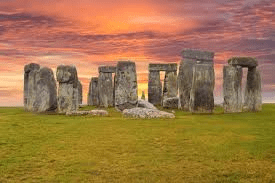
I’ve said it before and I’ll say it again. This is the conceptual Stone Circle the megaliths like Stonehenge were built to emulate, suggesting that this “stone circle” (projected outward) played a role in Iron-Age spiritual practices in various parts of the world.
Rv 1.24:17 reads:
In holy wholeness, the army sends forth the call containing Them, the three holy original standing pillars Vishnu hooked together, the Glorious Holy Name ruling the waters of oneness the Word of God emits.
Definitions and breaks:
śunaḥśepaḥ (in holy wholeness, the army) hi (sends forth)ǀ ahvat (the call) gṛbhī-taḥ (containing Them) triṣu (the three holy) ādityam (original standing) drupad-eṣu (pillars Vishnu) baddha (hooked together) ava (the Glorious) e-nam (Holy Name) rājā (ruling) varuṇaḥ (the waters of oneness) sa-sṛjyāt (the Word of God emits)
Notes:
A bit esoteric, so let’s explore the individual elements to gain a clearer understanding of the meaning. We’ve talked about the Army, and herein we learn that the Army of Forbearance (a.k.a., the Army of Nisrok) sends forth the Call to Awaken, which is AUM, the three standing “pillars” of the Glorious Name YHVH, which Vishnu hooked together as YH and VH. So, like I said, Vishnu represents the base of the Golden Triangle, where Ray 1 (YH) and Ray 2 (YV) meet to form Ray 3 (YHVH). And that Glorious Name rules the waters of oneness emitted by the Word of God (the Solar Logos and/or “the Christ”).
The Sukta’s 18th line reads:
In the sacred knowledge of the splendor lighting the face, the two parts join to liberate Kama, the stone or rock, the glorious thundering pipes of the waters of oneness. Bow down in awe to the Glory sanctifying the mouth invoking the sacred-fire offerings.
vidvān (in the sacred knowledge of) adabdhaḥ (the splendor lighting the face) vi (the two parts) mu-mok-tu (join to liberate Kama) pāśān (the stone or rock) ava (the Glorious) te (thundering) heḷaḥ = halah (pipes) varuṇa of (the waters of oneness) namaḥ-bhiḥ (bow down in awe) ava (to the Glory) yaj-ñebhiḥ (sanctifying the mouth) īmahe (invoking) haviḥbhiḥ (the sacred-fire offerings)
Notes:
This might be two Riks instead of one, but so be it. Helah proved to be a real bugger to work out. There appears to be no such word in Sanskrit, although we do find halah, with the meaning of “plough.” So helah may refer to the same plow referenced many times in the Bible. In Hebrew, however, helah is a musical instrument similar to a pipe or a flute. And thundering pipes make more sense to me than a thundering plow, so I went with the Hebrew definition. I’m also pretty sure Lord Krishna’s flute represents the “thundering pipes” the rishis refer to herein.
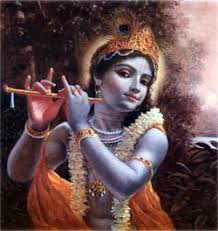
In this Rik, the rishis advise us to “bow down in awe to the Glory sanctifying the mouth”– a turn-of-phrase with Biblical resonance. According to Google, the phrase serves in Christianity as “a call to worship, often associated with acknowledging holy presence, divine majesty, and the sanctification of speech through adoration.”
The mouth they mean is, of course, God’s Mouth, the mouth speaking the Word. The same mouth Jesus famously references in Matthew 4:4:
It is written, Man shall not live by bread alone, but by every word that proceedeth out of the mouth of God.
Before we move on, let me add that Kama is identified herein as “the Rock.” So kama can’t mean “desire” in Sanskrit, as is commonly supposed. As I’ve explained repeatedly, Kama is the Sanskrit word for Divine Love, making Kamadeva, the personified form of Agape in the Hindu pantheon. So, Divine Love is the Rock; and Jesus Christ is, indeed, the personification of Divine Love, the Rock, in Christian theology.
As he explains in the Course as follows:
The name of Jesus Christ as such is but a symbol. But it stands for love that is not of this world. It is a symbol that is safely used as a replacement for the many names of all the gods to which you pray. It becomes the shining symbol for the Word of God, so close to what it stands for that the little space between the two is lost, the moment that the name is called to mind. Remembering the name of Jesus Christ is to give thanks for all the gifts that God has given you. And gratitude to God becomes the way in which He is remembered, for love cannot be far behind a grateful heart and thankful mind. God enters easily, for these are the true conditions for your homecoming. (ACIM, M-23.4:1-7)
Even with my potential conflation, we have at least two more Riks to go. If I’ve broken the last two lines correctly, Rv 1.24:19 reads:
From the dwelling place of still waters, the Rock shines in Yama, God’s divine radiance advancing the consciousness of Kamadeva’s three, the eastern variegated Lords of holiness and grace, the dew of the moon (Amrita) acting in all things.
kṣayan (From the dwelling place of still waters) asma-bh-yam (the rock shines in Yama) a-su-ra (God’s divine radiance) pra-ceta (advancing the consciousness) iti (of kamadeva’s three) prac-etaḥ (the eastern variegated) rājan (Lords) e-nāṃsi (of holiness, purity, and grace) śiśra-thaḥ (the dew of the moon) kṛtāni (acting in all things).
Notes:
A couple of comments. Firstly, enamsi can not mean “sin,” as is commonly presumed, because namsi means “pure grace” and the e at the start denotes holiness rather than negation. So, the enamsi are the three graces, the three eastern kings, and the three variegated rays acting in all things as the “dew of the moon,” a phrase used in Hinduism to denote Amrita.
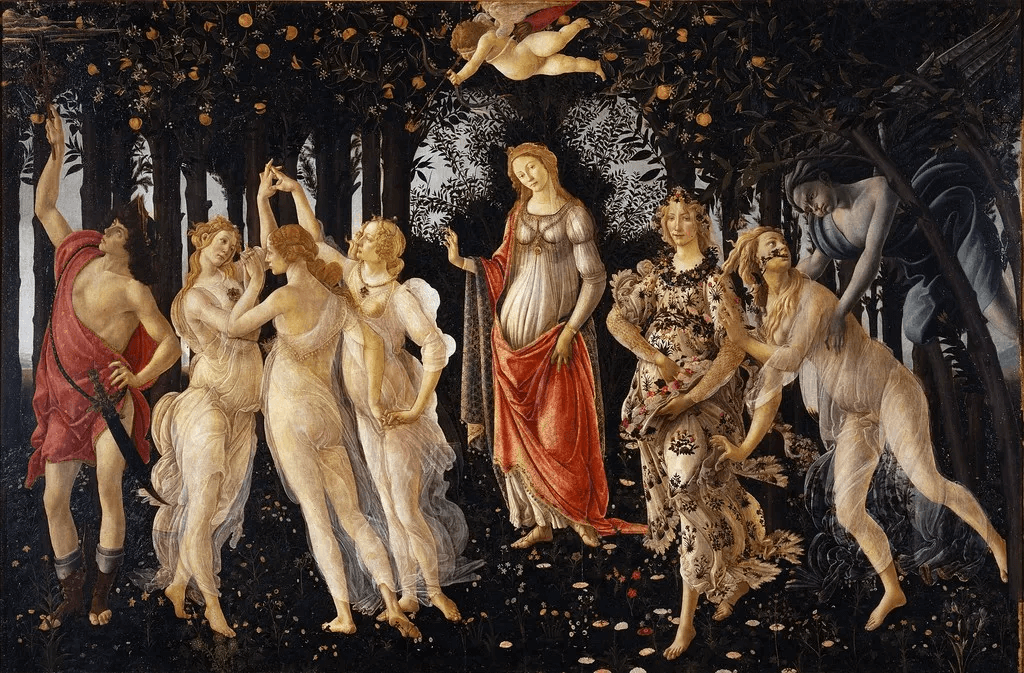
In Greek mythology, the Three Graces or Charites took the female forms of Aglaia (Splendor/Beauty), Euphrosyne (Mirth/Joy) and Thalia (Blossoming/Flourishing). As attendants to Aphrodite, the Goddess of Love, these triune “graces” were believed to represent the joy of life, fostering youth, fertility, and artistic inspiration, while symbolizing the beauty of unity and friendship.
There’s some truth in these descriptions, but not as much as there might be, without the Ego Mind’s stilting influence. If Aphrodite’s three graces and Kamadeva’s three powers are, in fact, different symbolic forms of the Trinity Rays of Aspect, we have some pretty old dust to blow off the traditional interpretations of these ancient “myths.”
As I see it, Agalia is the Ray of Splendor, Euphrosyne is the Ray of Joy, and Thalis is the Ray responsible for blossoming or flourishing God’s Will to make earth like Heaven (where we create by extending Agape in oneness). Being the Ray of God’s Radiant Splendor, the ray of the Red Dragon underneath, Agalia definitely represents the first Ray, which is Red, like the Father Ray.
The colors and numbers assigned to the other two vary radically among the teachings about these emanations, but let’s presume Euphrosyne, the Joy Ray, is pink in color. Why? Because the Joy Ray is a combination of the first and second rays. And that means Thalis has to be the second ray, which must be white, since red and white merge to make pink.
Some teachings equate the Joy Ray with the ninth ray, but that doesn’t track with everything we know about the Joy Ray. As Course-Jesus explains, the Joy Ray is the healing light within us.
The light that belongs to you is the light of joy. Radiance is not associated with sorrow. ⁶oy calls forth an integrated willingness to share it, and promotes the mind’s natural impulse to respond as one. Those who attempt to heal without being wholly joyous themselves call forth different kinds of responses at the same time, and thus deprive others of the joy of responding wholeheartedly. (ACIM, T-5.in.1:4-7)
I’m inclined to believe that the Joy Ray is pink, making the Second Ray white–and, therefore, the diamond in the breastplate, the pure-crystal seen surrounding the Throne of Elohim, and the radiant white robe worn by the elevated Souls in the Assembly. In the theosophical and esoteric teachings about the Rays, ,the pink ray represents the energy of divine love, compassion, adoration, and selfless devotion. “Often linked to the 3rd Ray or specifically associated with Archangel Chamuel,” Google says, “this ray symbolizes the cultivation of loving-kindness and the transmutation of selfish desires into higher spiritual devotion.”
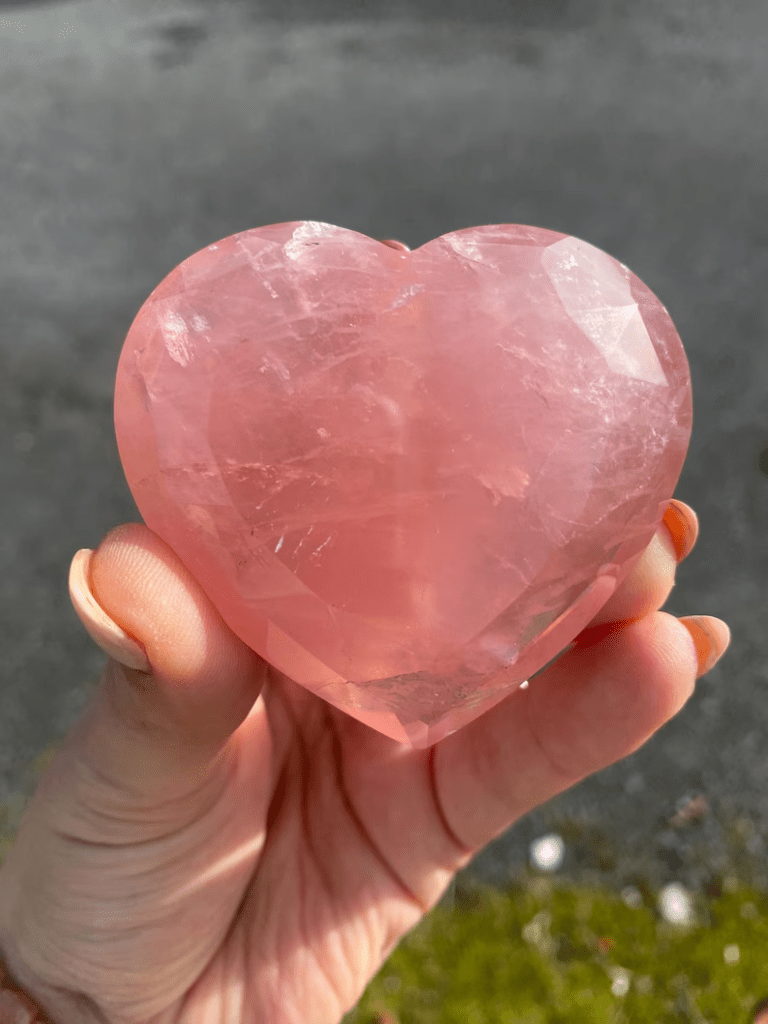
When we understand that the three Aspect Rays represent Divine Love divided into three equal yet inseparable parts, then their combined color should reflect Divine Love, which is pink (like rose quartz). Sapphires, rubies, diamonds, jaspar, and topazes can also be pink, however. So any of those stones could represent the Joy Ray. Or the Trinity Stones might not be among the nine mentioned in the Vedas.
The Sukta’s next and final line reads:
To elevate these uppermost waters of oneness, bind or tie what belongs to us in glory to the lowest division. In the middle, loosen the now-moment sense of unity of the Adityas, the multitudes thundering the majesty of innocence Aditi shines in the darkness.
ut (to elevate) uttamam (the uppermost) varuṇa (waters of oneness) pāśam (bind or tie) asmat (what belongs to us) ava (in glory) adhamam (to the lowest) vi (division) madhyamam (in the middle) śrathaya (loosen or untie) atha (the now-moment) vayam (winds or sense of unity of) āditya (Aditya, the first light) vra-te (the troop or assemblage thundering) tava (the majesty) anāgasaḥ (of innocence) aditaye (Aditi shines) syāma (in the darkness)
Notes:
The lowest division isn’t Patala, because Patala isn’t the “underworld” the ego perceives as Hades; it’s the Real World underneath and covered up by the Ego Mind’s projected illusion, where the Purusha still dwells and the Assembly meets. The lowest division is probably, therefore, the Circle of Earth, where we stand in the first quadrant of the Wheel, perceiving reality completely upside-down. It might also represent the M-kara or the Tamas Guna. By these measures, the middle might be the Circle of Wind, the U-kara, or the Rajas Guna.
This is, I believe, the same idea Course-Jesus tries to get across in the excerpt below:
As you can hear two voices, so you can see in two ways. One way shows you an image, or an idol that you may worship out of fear, but will never love. The other shows you only truth, which you will love because you will understand it. Understanding is appreciation, because what you understand you can identify with, and by making it part of you, you have accepted it with love. That is how God Himself created you; in understanding, in appreciation and in love. The ego is totally unable to understand this, because it does not understand what it makes, does not appreciate it and does not love it. It incorporates to take away. It literally believes that every time it deprives someone of something, it has increased. I have spoken often of the increase of the Kingdom by your creations, which can only be created as you were. The whole glory and perfect joy that IS the Kingdom lies in you to give. Do you not want to give it? (ACIM, T-7.V.9:1-11)
In Hinduism, Aditya is another name for Surya, the personified Solar Logos and/or Word of God. Aditya means “the first light,” but the name also is assigned in the Indian lore to a group of “solar gods” ranging in number from eight to twelve. The Adityas are said to be the sons of the goddess Aditi and Kashyapa, the world turtle. Since Aditi herself represents “innocence,” I went with her name over the other options.
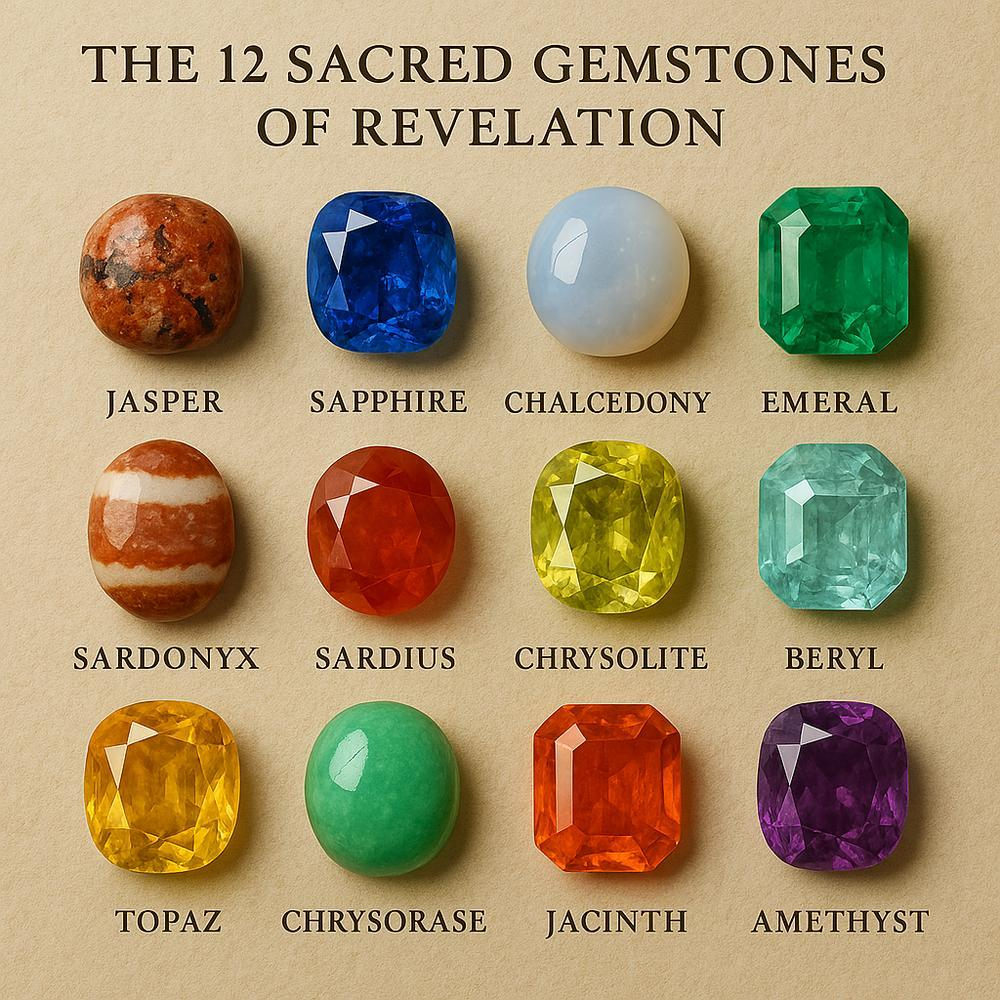
But wait. Because another thought just popped into my head — a thought pertaining to the order of the stones on the golden breastplate or girdle. Why were they arranged in three rows of four? There must be a reason, right? Well, what if the three rows represent the three divisions of AUM and the four stones across represent the changing/evolving colors of the four rays of attribute as we ascend the levels? The image below supposedly represents the twelve stones in order, but I don’t see the diamond or anything pink. So the picture isn’t trustworthy. Still, it helps us visualize the sequence.
That’s it for the 24th Sukta. Thanks for visiting and I hope you learned as much as I did from our study of this sacred Vedic teaching. This might be a good time to mention that I have read several texts about the Seven Rays, all of which reek with level-confusion, including those written by Alice A. Bailey and Helena Blavatsky, with the help of their channeled “masters.” Despite my doubts, I promised the Holy Spirit I would keep an open mind about the Rays, so he could teach me the truth, when I am ready to receive it.
What he has shown me so far is this:
–The Father Ray begat the Trinity Rays vibrating the AUM. Those three rays form the Father’s Circle at the center of the Wheel, which is the fiery eye.
The Mother Ray begat the four Living Beings, the shakti energies, lotus-petals, or spokes guarding the quadrants of the four circles (represented in Ezekiel’s vision as the Orphanim). Those four rays make up the Mother’s Circle, the ring surrounding the Father’s Circle.
Together, the seven offspring of the two Great Rays make up the Seven Rays of the esoteric teachings. What those seven rays are presumed to represent is, however, remains a question-mark in my open mind.
Until we meet again, Om Hari Om and Namaste.


Leave a Reply