Namaste, my brother in Christ, and welcome (or welcome back) to my latest adhyayana posting. Our subject today is the Rigveda’s 22nd Sukta, which, to be frank, proved to be a ball-busting behemoth. Blessedly, I got there in the end, through sheer tenacity.
Supposedly a hymn to the Ashvins, the 22nd Sukta is, in truth, an advanced wisdom-teaching concerning Soma, the Circle of the Moon, the Lotus Feet, and the tail of the divine horse, among many other things.
The first verse (Rv. 1.22:1) is rather long and awkward, reading as follows:
The Breaking Dawn yokes in two parts the blossoming awareness of the glorious name, Eha, bringing forward the Supreme Lord’s face belonging to Soma, the father who lights the radiant moon, the chariot driving in delusion the holy beings in the celestial sphere touching the divine horse’s tail to call forth the joy, majesty, or sweetness.
My definitions and syllable breaks:
prātar-yujā (the breaking dawn yokes) vi (in two parts) bodha-yāśvināv (the blossoming awareness of the glorious name) e-ha (Eha) gaccha-tām (moving forward the Supreme Lord’s) asya (face or mouth) somasya (belonging to Soma) pītaye (the father who) yā (lights) sura-thā (the radiant moon) rathīta-mobhā (the chariot driving in delusion) devā (the holy being) divi-spṛśā (in the celestial sphere touching) aśvinā (the divine horse’s ) tā (tail) havāmahe (to call forth the joy, majesty, or sweetness) ||
Notes:
To better understand this teaching, let’s deconstruct the symbolic elements. A phrase also found in the Bible “breaking dawn” signifies the coming of enlightenment, which we attain by remembering the Great Rays — the two streams of Lord Vishnu. Closely associated with Surya (the Solar Logos, the Greater Light ruling the Day in Genesis) in the Hindu literature, Vishnu is, I believe, the Hindu equivalent of the Christian Holy Spirit.
That the rishis identify Eha as “the glorious name” is exceedingly interesting. Why? Because the Burning Bush told Moses that Ehyeh is the Name of God, and, in the Kabbalah, Ehyeh is the profound, hidden name of God.
In Hinduism, Eha represents Lord Vishnu, whilst the related Hebrew name Ehyeh is said to mean “I Am.”
Oddly, the word-name Ehyeh appears in only one place in the Bible — in Exodus 3:14, where it is repeated three times. In the KJV Bible, the verse reads thusly:
And God said unto Moses, I Am thqt I Am (Ehyeh Asher Ehyeh): and he said, Thus shalt thou say unto the children of Israel, “Ehyeh hath sent me unto you.”
Because Ehyeh is said to mean “I Am,” Ehyeh Asher Ehyeh has traditionally been translated as “I Am that I Am,” which really makes no sense, given that Asher (allegedly) means “happiness” or “blessed” in Hebrew, rather than “that.”
Moreover, there’s much ongoing speculation among clerics and scholars about the real meaning of Ehyeh Asher Ehyeh. Some say it means “I am what I am,” while others believe it means, “I am what is, what was, and what will be again.”
But wait, because Strong’s Concordance, transcribes the Hebrew as hayah-hayah rather than Ehyeh Asher Ehyeh, although that might merely be a transliteration anomaly. Even so, let’s explore the word hayah. According to the “experts,” hayah means “to become,” “to be,” or “to exist.” So, hayah-hayah might translate as “to be is to be” or “being is being” (as opposed to doing). Hayah might also be read either as ha-yah (the Name of God in Israel) or Hay-ah (the Breath or Spirit of God).
I won’t belabor the issue. Instead, I’ll simply rephrase what the rishis said: that awareness of Eha (the glorious name) brings forward (in our consciousness) the face of Soma, the shining “face of Christ” frequently mentioned by Course-Jesus.
In one place, for example, he says:
The fourth obstacle to be surmounted (the fear of God) hangs like a heavy veil before the face of Christ. Yet as His face rises beyond it, shining with joy because He is in His Father’s Love, peace will lightly brush the veil aside and run to meet Him, and to join with Him at last. For this dark veil, which seems to make the face of Christ Himself like to a leper’s, and the bright Rays of His Father’s Love that light His face with glory appear as streams of blood, fades in the blazing light beyond it when the fear of death is gone. (ACIM, T-19.IV-D.2:1-3)
To paraphrase, we see the face of Christ after surmounting the obstacle or heavy veil of fearing God –the “original error” and/or “mad idea” that gave rise to the Great Projection.
Religions that promote the fear of God make it impossible, therefore, to behold the Face of Christ.
In Hinduism, the Great I Am, the shining face of Christ, is Soma, the celestial moon (the Lesser Light ruling the Night in Genesis), rather than Vishnu. So, Eha might be Soma’s name, rather than Vishnu’s. In the Vedic literature, Vishnu is described as a partaker and generator of Soma, while Soma is described as the generator of Vishnu. These presumptions may be based on mistranslations, so we’ll have to wait (or jump ahead) to see what the rishis actually say about these two Holy Powers (assuming we get as far as the 96th Sukta of the 9th mandala).
For now let’s stick with the 22nd Sukta of the First Mandala, which says the glorious name, Eha, brings forward (in conscious-awareness) the face of Soma, the shining “face of Christ.” That awareness “blossoms” in our minds in two parts yoked by the Breaking Dawn. Those two parts, I’m pretty sure, are the Great Rays mentioned a handful of times by Course-Jesus.
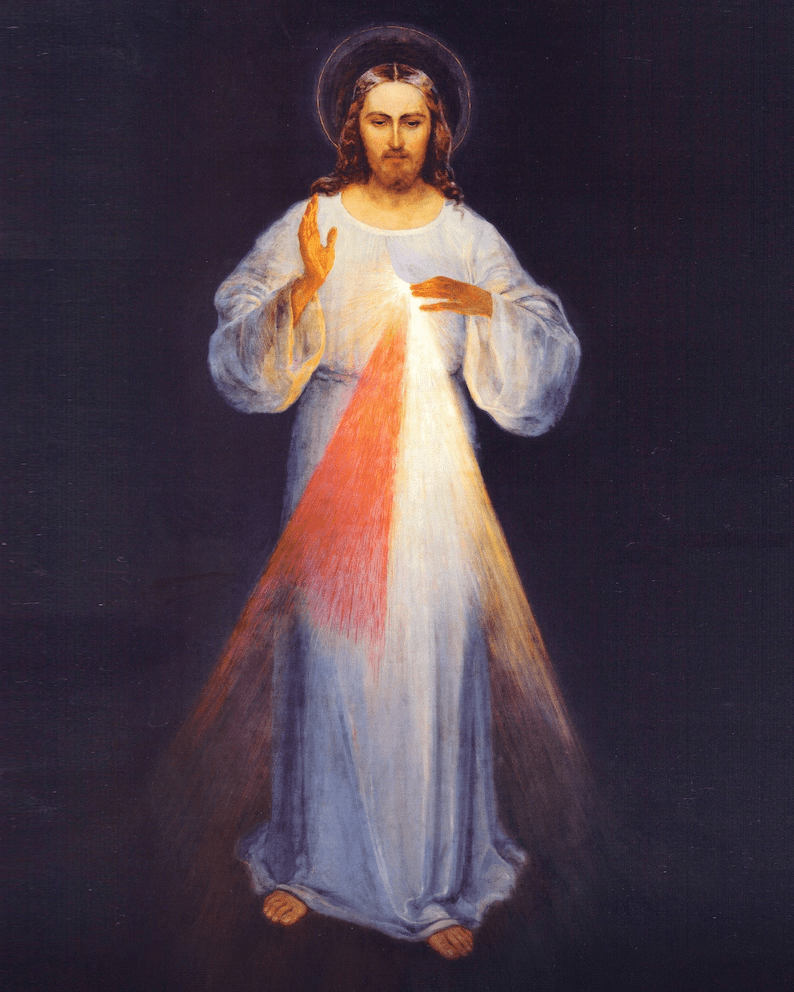
Those two rays or streams are the two olive trees in Zechariah’s vision of the lampstand, as well as the red and pale beams shining out of Christ’s chest in the Divine Mercy image (shown above). Those rays, we learn herein, light the moon-chariot illuminating the path of the Soul’s journey.
From this, we can ascertain that the moon-face (Soma, the Great I Am) serves as the chariot carrying the Divine Being “touching the tail of the divine horse” to call forth the sweet nectar of eternal life Hindus call Amrita, Christians call the Blood of Christ, and Jews call the blood of the Passover lamb. If there’s an equivalent in Islam, I couldn’t find it.
The divine horse isn’t the twin horse-faced physicians known as the Ashvins, as is generally presumed, it’s Uchchaihshravas, the seven-headed white horse that emerged from the Samudra Manthana (meaning “gathering of the waters,” rather than “churning of the Ocean of Milk”). In Sanskrit, as we’ve discussed, Ucchaisravas means “the exalted sound of glory.” So, the horse represents the thunderous roaring of the Great Dragon, God’s radiant Word and Splendor underneath the illusion.
In the Hebrew Bible, the dragon is called Paroh, which was mistranslated throughout as Pharoah.
In the Mahabharata epic, we learn that, Indra seized Uchchaihshravas as he rose from “the gathering of the waters,” claiming the stallion as his vahana (vehicle). Also rising from the gathering of the Waters (the Assembly,) were various other Atonement tools, including the Amrita and Lakshmi, the Bride, who chose Vishnu as her Bridegroom. The legend of Uchchaihshravas rising from the waters also appears in the Vishnu, Matsya, and Vayu puranas, as well as the Ramayana, so the horse is an important emblem in the Hindu literature.
The Mahabharata also tells of a wager between Vinata and Kadru, the wife and sister of Kashyapa (the World Turtle), concerning the color of the horse’s tail — the tail referenced in Rv. 1.22:1. Vinata, the mother of Aruna and Garuda, said the tail was white, while Kadru, the mother of the Nagas, insisted it was black. The terms of their wager dictated that the loser would become the servant of the winner. To ensure her victory, Kadru cheated by instructing her sons to cover the tail of the horse to make it look black.
Allegorically, this tells us the horse’s tail is really white, but only appears to be black through a sleight of hand that tricked Vinata (the two dancers) into agreeing to be enslaved to Kadru (confused in fear).

Uchchaihshravas also is mentioned by Krishna in the Bhagavad Gita. Declaring himself to be the source of the universe, Lord Krishna compares himself to Uchchaihshravas — he who is born from the gathering of the waters.
So the divine beings riding in Soma’s moon-chariot touch the tail of Ucchaisravas, which is actually white, but seen, through deception, as black. So, the moon-chariot’s Soul-passengers touch the true, pure-white tail (the eternal Yin or Sat), which we wrongly perceive (as the yielding Yang or Sat-an) in the dream, thereby enslaving ourselves in ego consciousness.
Makes sense, right?
Additionally, I’m beginning to “see” that the moon-chariot is the Circle of Atonement–the circle at whose center Christ stands, calling us to peace. And it is only within that circle that we touch the divine horse’s pure-white tail, as Jesus explains in slightly less metaphorical language in the following from the Course:
I stand within the circle, calling you to peace. Teach peace with me, and stand with me on holy ground. Remember for everyone your Father’s power that He has given him. Believe not that you cannot teach His perfect peace. Stand not outside, but join with me within. Fail not the only purpose to which my teaching calls you. Restore to God His Son as He created him, by teaching him his innocence. (ACIM, T-14.V.9:4-10)
The Sukta’s second verse reads:
The light discharging the touchstone, Madhu-consciousness, the divine horse is the truth-speaking wind or vessel protecting the yajna.
My definitions and breaks:
yā (the light) vāṃ (discharging) kaśā (the touchstone) madhu-maty (Madhu-consciousness) aśvinā (the divine horse is) sūnṛtā-vatī (the truth-speaking wind or vessel) tayā (protecting) yajñam (the yajna).
My notes:
In Hindu philosophy, Madhu (often paired with Kaitabha) represents the symbolic “touchstone” or manifestation of the Rāja Guna — the “mode of being” of those walking the Royal Path.
According to the lore, Madhu and Kaitabha were two asuras (demons, allegedly) born from Vishnu’s earwax while he slept upon the cosmic serpent, Shesha, upon the primeval ocean. The duo then sought to kill Lord Brahma, who was floating on a lotus attached to Vishnu’s navel by an umbilical cord. They also allegedly stole the Vedas from Brahma to hinder (mis)creation. Together, Madhu and Kaitabha are said to represent darkness, chaos, and inertia, necessitating their defeat by Vishnu, often aided by Mahamaya, a devi representing the Great Illusion.
IMHO, this interpretation of the allegory is completely upside-down. If Madhu is the touchstone “wine of truth” born from Vishnu’s earwax, how can she be anything but helpful? Furthermore, asuras aren’t demons, as commonly supposed. How can they be when a-sura translates as “God’s celestial beings”?
That the touchstone of Madhu-consciousness manifests the Rajas mode of being suggest to me that Madhu is the sound of the M-kara. And this explains both her earwax birth and her description by the rishis as “the truth-speaking wind of those walking the Royal Path.” Because, as I’ve said before (based on the Course’s teachings) the atonement process begins and ends with hearing the AUM.
Madhu does NOT, therefore, symbolize the ego-driven ignorance that arises when conscious awareness is “sleeping.” Madhu means “honey-wine” or “mead” in reference to the sweet Wine of Truth that arises from the Gathering of the Waters in the form of Varuni, the consort of Varuna, the lord of the waters of wholeness. So, Madhu, the touchstone, is the “new wine” (in Biblical terms) we extract from the wine-press.
Jesus mentions this “new wine” in three of the four gospels (Matthew 9:17, Mark 2:22, and Luke 5:37-38). What he says is this:
And no man putteth new wine into old bottles (or skins): else the new wine doth burst the bottles, and the wine is spilled, and the bottles will be marred: but new wine must be put into new bottles.
What he means, in short, is that we can’t hold the “new wine” of higher understanding in the old bottle or tainted wineskin of ego-body consciousness. To savor the new wine, we have to adopt a new perception-container.
We talked about the three Gunas several posts back. To recap, the Gunas represent the only three modes of being our Souls can adopt in the dream. From lowest to highest, the three Gunas are (as I understand them);
- Tamas = walking in the darkness and ignorance of material reality, either in spiritual denial or path-seeking mode.
- Raja = walking the Royal Path or Lotus Path toward enlightenment
- Sattva = walking in the light of material denial and spiritual reality
Vati is another one of those Sanskrit words with multitudinous definitions. Presumably, it can mean wind, winds, vessel, house, or speech. Given that sunrita means “truth-speaking,” I went with wind. And the M-kara of Vishnu is, indeed, the cosmic wind or breath we hear in the second quadrant of Artha.
Rv 1.22:3 reads:
In the bitter sea of suffering, the Resting Place discharges the Living Beings, the door guardians on the journey to purify the Soul.
mimi-kṣatam (in the bitter sea of suffering) nahi (the resting place) vām (discharges) asti (the living beings) dūr-ake (the door guardians) yatrā (on the journey to purify the Soul).
Notes:
Figuring out the definition of nahi was a real bugger. According to the Sanskrit “experts,” nahi means “by no means” or “non-existence,” which by no means fit the frame. Lol. In Hebrew, however, the same word means “the resting place,” which did fit the frame. And Sanskrit and Hebrew are indeed related languages, as I stated in a much-earlier post.
The Resting Place is where the Assembly meets. And the Assembly is where “the gathering of the waters” (the true meaning of Samudra Manthan) takes place. Ergo, all the atonement powers arise from the almsgiving offerings of the Assembly in the Resting Place. And that includes the Amrita, the wine of truth, and the divine horse, Uchchaihshravas.
You get that, right? I hope so, because I’ve already explained it ad nauseum.
It took considerable time and effort to work out that mimiksatam means “the bitter sea of suffering.” Mimiksatam, which appears twice in this Sukta (and only four times in the whole Rigveda), was a previously undefined Sanskrit word.
If my translation holds water, the Living Beings are the door guardians, which come down from the Resting Place. As I envision the Wheel, the doors are the cardinal compass points, making the direction guardians the door guardians. In Hinduism, the four direction-guardians are Yama (south), Varuna (west), Kubera (North), and Indra (east).
Let’s move on to the Sukta’s fourth line, which reads:
Seated on the chariot moving forward the moon, the divine horse of Lord Soma, the graha of the golden hand, manifests the sun’s radiant energy within YHWH, the word of god in the heart-mind illuminating the Lotus Path.
My definitions and breaks:
rathena (seated on the chariot) gaccha-thaḥ (moving forward the moon) aśvinā (the divine horse) som-ino (of Lord Soma) gṛham (the graha of ) hiraṇyapāṇim (the golden hand) ūtaye (manifesting) savitāram (the sun’s radiant energy) upa (within) hvaye (YHWH) sa (the Word of God) cettā (the heart-mind) devatā (illuminating) padam (the sacred path or lotus path) ||
Notes:
It may sound odd that Soma’s horse or horses sit in the chariot moving forward the moon, but the Hebrew prophet Zechariah also described the horses he saw as sitting in chariots (rather than drawing them). In the Hindu lore, Soma’s chariot is sometime pulled by antelopes and sometimes pulled by pure-white horses ranging in number from three to ten.
So, let’s connect the dots and presume Soma’s horse is the white horse in the chariot seen by Zechariah. The angel supposedly tells the prophet these horses are “the four spirits of the celestial sphere, which go forth from standing before the Lord of the Earth.” What he actually says is that the four horses are “the four breaths of the Celestial Sphere, which come out of the Standing Place of Adonay (the Lord and Master) in the Land of the Living.”
Just so there’s no confusion, the Standing Place of Adonay is the Assembly.
The Angel then says to Zechariah: “The black horse comes forth from the northern quarter, while the white horse comes forth from the hinder-part.”
As we know from our previous studies, the hinder-part refers to the inner-chamber, where Christ sleeps in the boat (the wooden vessel of Ark). So, the white horse comes out of the hinder-part when Christ awakens and rides forth, as the Bridegroom.
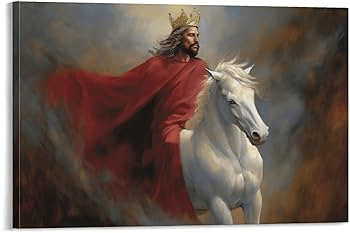
His Hindu counterpart is Kalki, the tenth avatar of Vishnu, the bridegroom of Lakshmi, who also rides a white horse.
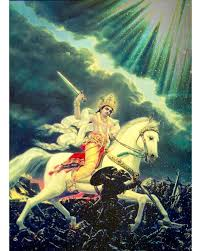
The rishis also say herein that Lord Soma, the Great I Am, is the graha (the celestial body) of the golden hand. I researched the phrase “golden hand,” but found no satisfying answer.
I did, however, uncover a significant clue. In Hinduism, the golden hand(s) belongs to Savitar (Savitr), a solar deva said to stimulate the universe, waking the world and guiding action. Since Savitar means “the word of god for passing over,” I’m pretty sure the Golden Hand refers to the Exalted Hand of God, the A-kara aspect of A-U-M, which awakens the sleeping Christ in the hinder-part of the Ark.
The Sukta’s fifth verse reads:
The Living Water of Nara descends to protect the guiding light of the I Am within, singing the praises of God’s Name.
Definitions and breaks:
apāṃ (the living water of) na-pātam (Nara descends) avase (to protect) savitār-am (the guiding light of the I Am) upa (within) stuhi (singing the praises of) tasy-a (God’s Name)
Notes:
Firstly, this is pretty much the same thing Exodus 3:14 says, when translated more accurately than traditionally. In Hinduism, Savitar is known as “the vivifier.” Here, we find a form of the name with “am” tacked on, suggesting that Savitar should be translated as a word, rather than a name. Depending on how it’s divided, Savitaram can mean the “Word of God generously bestowing or delivering the I Am” (Sa-vitar-am), “the shining star or celestial body” (savi-taram), “the sunbeam of Tara, the goddess of mercy” (also Savi-taram), “the sunlight in Rama,” (savita-ram), or even “the guiding light of the I Am) (Savitar-am).
So, which is it? Based on the word’s use in the next verse, I went with “the guiding light of the I Am.” We also find “the guiding light of the I Am” in Christian theology, as a divine, spiritual, or internal beacon providing direction, hope, and truth. Often identified with Jesus Christ, this inner light exists within all of us to illuminate the darkness, acts as a moral compass, and to lead us out of spiritual confusion or hardship. And this definition is perfectly reflected in the Sukta’s sixth verse, which reads:
On the path of vapor and sleep, the radiance teaches Rama to invoke the joy clothing the illuminating Lord of Radha (Krishna), the guiding light of the I Am.
Definitions and breaks:
vratāny (on the path) uśmasi (of vapor and sleep) vibha-ktā-raṃ (the radiance teaches Rama) havāmahe (to invoke the joy) vasoś (clothing) citrasya (the illuminating) rādha-saḥ (Lord of Radha = Krishna) savitār-aṃ (the guiding light of the I Am)
Notes:
Also found in the Bible, “the path of vapor and sleep” is a metaphor for the brevity of human life, its lack of substance, and the temporary nature of death before resurrection. In James 4:14, for example, we are told that human existence is “a mist that appears for a little while and then vanishes.”
If Krishna is the guiding light of the I Am in Rama, then Krishna is the Light of Soma within Rama, the traveling Soul. And that explains why the Ramayana identifies Krishna as belonging to the Lunar Dynasty, whilst Rama belongs to the Solar Dynasty. These designations tell us Krishna is a temporary atonement power descending from Soma, whilst Rama is an eternal being descending from the Solar Logos.
Stated another way:
Krishna is a Lesser-Light being existing for our salvation, whilst Rama is a Greater Light power descending from God’s Word.
The Sukta’s seventh line reads:
The eternal spirit sees the unequalled fraternity of God’s innermost perfect hereafter in the rays of the sun. Assemble in the light of the now-moment in wholeness to reap their bounty.
Definitions and breaks:
n(a)ṛ-cakṣ-asam (the eternal spirit sees the unequalled) sakhāya (fraternity) ā (of God’s) ni (innermost) ṣīd-ata (perfect hereafter) savitā (the rays of the sun) stom-yo (assembled in the light of) nu (the now-moment) naḥ (in wholeness) dātā (to reap) rādhāṃsi (their bounty).
Notes:
The solar rays mentioned herein are the Seven Rays much-discussed in Theosophy and esoteric astrology. Those seven Rays emanate from the Solar Logos. In Hinduism, those rays are depicted as the horses pulling Surya’s chariot-throne, the “throne of God” on the seventh plain of consciousness.
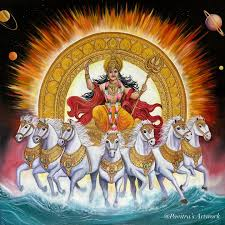
To reap their bounty, we must assemble in the Holy Instant, as Course-Jesus also says below:
As the ego would limit your perception of your brothers to the body, so would the Holy Spirit release your vision and let you see the Great Rays shining from them, so unlimited that they reach to God. It is this shift to vision that is accomplished in the holy instant. (ACIM, T-15.IX.1:1-2)
This brings us to the phrase “God’s perfect hereafter,” about which Google says:
God’s perfect hereafter is depicted as a restored, sin-free creation featuring a new heaven and a redeemed earth, offering complete joy, peace, and eternal life. It is characterized by the absence of pain, death, and mourning, where believers live in resurrected bodies, experiencing active, purposeful existence rather than idle rest.
Based on this description, we can surmise that “God’s perfect hereafter” describes the Real World.
Let’s move on to Rv. 1.22:8, which reads:
Strike the kindling falling free from the Great Rays conveying the divine name shining within the True Self in the Resting Place. Soma, the father whose fiery eye, the Ajna, the Great Rays control in the sacred fire-offerings.
Definitions and breaks:
śumbhati (Strike) agne (the kindling) patnīr (falling free from) ihā (the Great Rays) vaha (conveying) devānām (the divine name) uśatīr (shining) upa (within) tva-ṣṭāraṃ (the True Self in the Resting Place of) soma-pīta-ye (Soma, the father whose) āgnā (fiery eye) agna = Ajna (Ajna, the brow chakra) ihā-vase (the Great Rays control) hotrāṃ (in the sacred-fire offerings)
Notes:
The rishis are telling us herein what the Bible also explains when translated rightmindedly, which is this: In the Circle of Fire, we strike the kindling (the fruitless branches of ego-thinking the Holy Spirit prunes through perception-shifting miracles). Shedding those branches frees the Great Rays–the two rays controlling the third-eye in our sacred-fire offerings in the Resting Place. As Leviticus explains, lighting the gathered kindling fuels the oven God uses to bake the sweet cakes we offer to Moket, Hathor, or Kamdhenu, the miracle-cow whose “milk” strengthens God’s will to “make earth like Heaven.”
The Resting Place is the sanctuary, the holy of holies where Christ stands in the midst of the Circle, calling us to return to spiritual sanity. The offerings made therein aren’t sacrifices, as the ego and its worldly religions would have us believe (to our detriment); they’re the fragrant smoke rising from the Incense Altar — the Mizbach HaKetoret or Golden Altar within the Tabernacle of the Temple. Located in the Holy Place before the Veil, this Incense Altar is used twice daily in Jewish Temples to make fragrant offerings to God. Like the Ark of the Covenant, the Biblical Mizbach HaKetoret was constructed of acacia wood covered in gold.
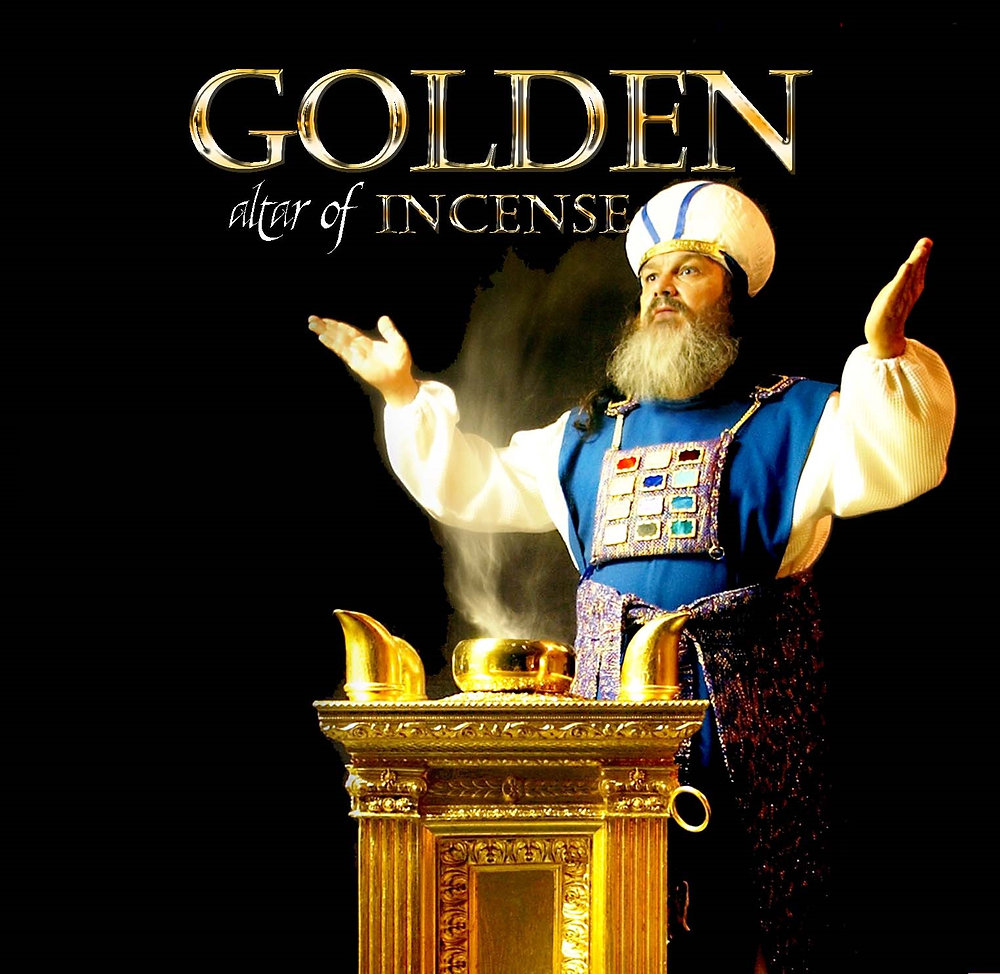
Metaphorically, the fragrant smoke represents the beneficent blessings we offer “in the name of Jesus Christ” within the Circle of the Sacred Fire we join in the fourth quadrant of Moksha — the sector governed by Agni and Kamadeva. This is, I believe, the circle for miracle-working, one step above the Circle of Water.
The Sukta’s ninth line reads:
The younger brothers of the Moon illuminate Varuna’s three Dhisanas (recepticals of wisdom and abundance) transporting the Red Ray vessel (or boat) in the Celestial Sphere‘s Resting Place.
Definitions and breaks:
yaviṣ-ṭha (the younger brothers of the moon) bhāratīm (illuminate) varū-trīṃ (Varuna’s three) dhiṣaṇāṃ (Dhisanas or receptacles of abundance) vaha (bearing, conveying, or supporting) abhi (the red ray) no = nau (vessel) devīr (of the celestial sphere’s) avasā (resting place).
Notes:
In the Hindu lore, Soma/Chandra, the moon-god, is the son of the sage, Atri, and his wife, Anasuya. Atri is one of the Saptarishi (the seven great sages) and a mind-born son of Brahma. The name supposedly means “one who is free from the three impurities,” in reference to the three Gunas: Sattva, Rajas, and Tamas. To escape the dream is to remember our Divine nature; and to remember our Divine nature means to “walk” no more around the Wheel as a traveling Soul, even in the light. To pass through the Gates of Heaven, therefore, we must transcend the Sattva Guna, through direct revelation of God or “reaching God directly” — the final and only step in the redemption process taken by God Himself.
In the puranas, Soma’s brothers are identified as Dattareya and Durvasa. Dattareya means “given to stream the sacred melody,” whilst Durvasa means “the difficult or sinful dwelling place.” Symbolically, these two brothers represent those of us ignoring God’s Will by walking in darkness (Durvasa= Tamas) and those of us doing God’s Will by streaming the sacred melody (Dattareya = Rajas).
As Course-Jesus explains, all of us will eventually stream the melody, as the younger brothers of Christ. In the passage below from the Course, Jesus identifies himself as our “elder brother,” and also discusses the function of miracles and revelation:
“No man cometh unto the Father but by me” does not mean that I am in any way separate or different from you except in time, and time does not really exist. The statement is more meaningful in terms of a vertical rather than a horizontal axis. You stand below me and I stand below God. In the process of “rising up,” I am higher because without me the distance between God and man would be too great for you to encompass. I bridge the distance as an elder brother to you on the one hand, and as a Son of God on the other. My devotion to my brothers has placed me in charge of the Sonship, which I render complete because I share it. This may appear to contradict the statement “I and my Father are one,” but there are two parts to the statement in recognition that the Father is greater.
Revelations are indirectly inspired by me because I am close to the Holy Spirit, and alert to the revelation-readiness of my brothers. I can thus bring down to them more than they can draw down to themselves. The Holy Spirit mediates higher to lower communication, keeping the direct channel from God to you open for revelation. Revelation is not reciprocal. It proceeds from God to you, but not from you to God.
The miracle minimizes the need for time. In the longitudinal or horizontal plane the recognition of the equality of the members of the Sonship appears to involve almost endless time. However, the miracle entails a sudden shift from horizontal to vertical perception. This introduces an interval from which the giver and receiver both emerge farther along in time than they would otherwise have been. The miracle thus has the unique property of abolishing time to the extent that it renders the interval of time it spans unnecessary. There is no relationship between the time a miracle takes and the time it covers. The miracle substitutes for learning that might have taken thousands of years. It does so by the underlying recognition of perfect equality of giver and receiver on which the miracle rests. The miracle shortens time by collapsing it, thus eliminating certain intervals within it. It does this, however, within the larger temporal sequence. (ACIM, T-1.II.4:1–6:10)
Rv 1.22:10 reads:
The Mighty Shelter of God, Nara protects from underneath (the illusion) the unbroken vessel serving the Supreme Lord’s Great Rays of Splendor within YHVH.
mahaḥ (the mighty) śarmaṇā (shelter of God) nṛpatnīḥ (Nara protects from underneath) acchinna-patrāḥ (the unbroken vessel) sacan-tām (serving or honoring the Supreme Lord’s) ih(a)endrāṇīm (Great Rays of Splendor) upa (within) hvaye (YHVH)
Notes:
I’ve said this before, but it bears repeating. Nara does not mean “man” or “human” in Sanskrit; it’s the name of the inseparable twin brother “sage” of Narayana and a partial avatar of Lord Vishnu. Nara is a partial avatar of Vishnu because he and his brother represent the two streams channeled by Vishnu. Nara is the Great Purusha, the Light of God’s Love extending into the dream-realm from Heaven. In the lore, Nara engages in intense, long-term meditation at Badrinath (the fruits of the tree) to maintain world balance.
The unbroken vessel refers either to the Golden Circle, the Ark of the Covenant, the Circle of Fire, the Holy Instant, or all of the above.
In the Bible we find the Great Rays of Splendor referenced in a round-about way in Habakkuk 3:4, which reads:
And his brightness was as the light; he had horns (horn-shaped beams) coming out of his hand: and there was the hiding of his power.
Here’s what I see at present: The Great Rays of Splendor are hidden in YHVH, as YH (Yod-Hey, the divine spark of the Red Ray in all living beings) and VH (Vav-Hey, the Holy Spirit’s “Hook”).
According to Google,
The Holy Spirit’s “hook” is the divine, irresistible pull drawing believers toward Christ. It acts as an internal, gentle nudge that reveals truth and guarantees a believer’s salvation as a “deposit” or “seal.”
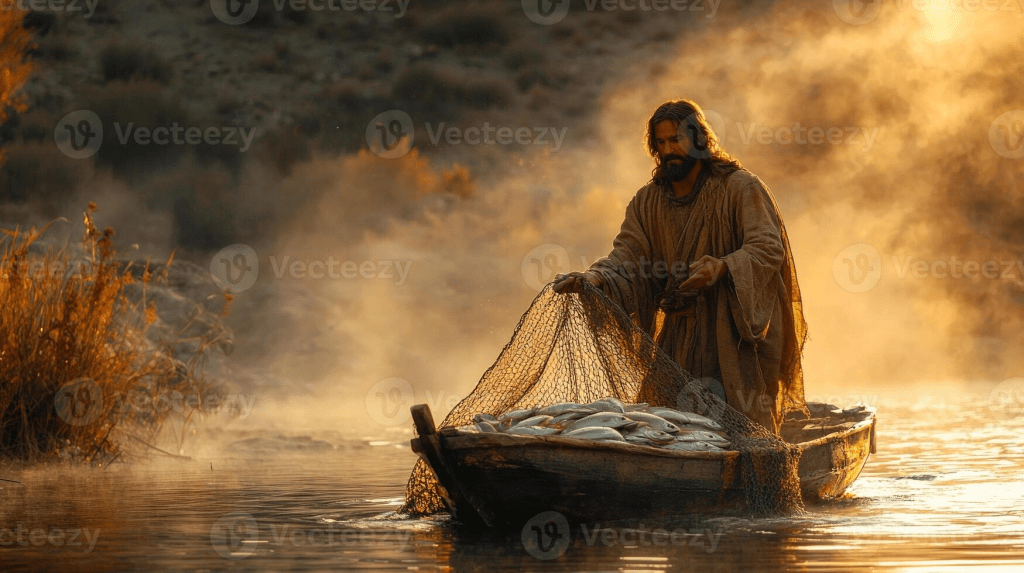
From this we can surmise that the “hook” is the seal or mark (of the Beast). And that “hook” pulls us toward our Source, in the manner of a fish-hook.
Or, to quote Course-Jesus:
What God did not give you has no power over you, and the attraction of love for love remains irresistible. For it is the function of love to unite all things unto itself, and to hold all things together by extending its wholeness. (ACIM, T-12.VIII.7:10-11)
The Sukta’s next line, Rv. 1.22:11, reads:
The water of oneness within breathes to protect the divine wisdom of Soma, the father whose moon shines the love setting apart the circle of waters Kamadeva generates from the yajnas. In the bitter sea of suffering, the wooden bowl of the cosmic order is the vessel bearing the weight of the Red Ray.
Definitions and breaks:
varuṇānīṃ (The water of oneness within) svastaye (breathes to protect) a-gnāyīṃ (the divine wisdom of) somapītaye (Soma, the father whose) mahī (moon) dyauḥ (shines) pṛth-ivī (the love setting apart) ca (the circle) na (of waters) i-maṃ (Kamadeva generates from) yajñam (the yajnas). mimi-kṣatām (in the bitter sea of suffering) pip(a)-ṛtāṃ (the wooden bowl of cosmic order ) no= nau (is the vessel or boat) bharīm-abhiḥ (bearing the weight of the Red Ray).
Notes:
In Hinduism, Mahi is the goddess of wisdom whose name supposedly means “the great earth” or “land,” which makes no sense in this Rik’s context. In the lore Mahi’s father is the Seven Mountains, rather than Soma. She might, therefore, personify the Land of the Living, given that the Hebrew name for that inner-place (erets) is similarly mistranslated as “earth” or “land” throughout the Old Testament. In Persian, mahi means Moon or moon-face, which makes much more sense in this verse, given that Soma represents the spiritual moon.
And Sanskrit and Persian are indeed closely related languages.
That moon, we are told herein, shines the love setting apart the Circle of Water also mentioned in the Hindu puranas and the Buddhist Mahayana. And didn’t I suggest above that the Spiritual Moon is the Circle of Atonement? I did, indeed. And, unless I’ve crossed my wires, what Course-Jesus calls the Circle of Atonement must be what Buddhists and Hindus call the Circle of Waters.
In the puranas, that Lunar Circle is symbolically depicted as a semi-moon and two lotuses, while the Mahayana describes the circle as the layer above the Circle of Wind. Known as apam mandalam, the Circle of Waters is said to signify the emergence of rainfall from cloud masses, as well as to support the Circle of Gold (the Golden Circle or Golden Bowl?).
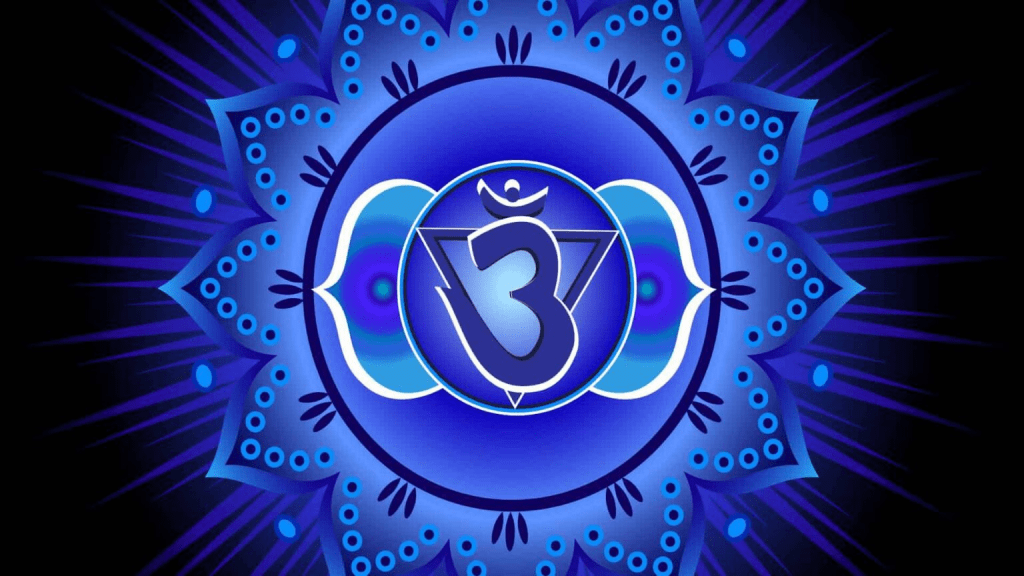
These descriptions suggest to me that the Circle of Wind represents the sacred circle of the second quadrant of Holy Purpose (Artha), wherein we join together to listen to the Cosmic Wind (Vayu/Ruach) breathing the M-kara to heal our own minds of ego-thinking, while the Circle of Water represents the sacred circle of the third quadrant of Kama, wherein we join to share Christ’s Living Water (the U-kara) in universal brotherhood to heal others. The Circle of Gold supported by the Circle of Water is probably, therefore the sacred circle of the fourth quadrant of Moksha–the Circle of Fire and/or the fiery eye of the miracle-cow, breathing forth the A-kara.
And that explains why the Circle of Water is semi-accurately characterized in Buddhism as “a transformative cosmological layer, rooted in collective actions that lead to rainfall.”
As we’ve established, the wooden bowl of the cosmic order is the Ark of the Covenant, which we learn herein “bears the weight of the Red Ray.” This reference to weight suggests that the Red Ray may be Ketu, which is both the tail of the dragon and the descending node of Soma. The descending node of Soma may be, therefore, that which comes down from the Circle of Water (the Circle of Atonement that is the Spiritual Moon). And what descends from the Circle of Atonement is the Blood of the Lamb — the living water of innocence washing our Souls clean of the ego-engendered “stain” of guilt, which manifests “sin.” This Living Water or Amrita is given and received by our Souls in the Moon-Circle through Jesus Christ, the symbol of God’s Perfect Love, who stands in the circle’s center, radiating outward to draw us to him.
And, as Course-Jesus just explained:
… The attraction of love for love remains irresistible. For it is the function of love to unite all things unto itself, and to hold all things together by extending its wholeness.
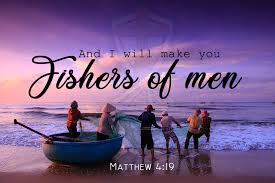
Viewed from this perspective, Jesus Christ represents the hook-aspect of YHVH. And this is probably what he was getting at in Matthew 4:19, when he said to his disciples, “Follow me, and I will make you fishers of men.”
Let’s move on to the next verse (1.22:12), which reads:
These two uniting bells of the cosmic order possess the milk, water, or nectar the Vipra (illumined sages) taste in the clear understanding the Assembly supports, dwelling in the light of the pole-star of the lotus feet.
Definitions and breaks:
tayoh (these two) id (uniting) ghṛta-vat (bells of the cosmic order possess) payo (the milk, water, or nectar) viprā (the Vipra) rihanti (taste) dhītibhiḥ (in the clear understanding) gan(a)-dhar-vas-ya (the Assembly supports, dwelling in the light) dhruve (of the pole-star) pade (of the lotus feet) ||
Notes:
The two uniting bells of the cosmic order probably refers to the two bowls singing the song of glorification. Those two bowls are probably, therefore, the A-kara and U-kara or the wooden bowl and the golden bowl.
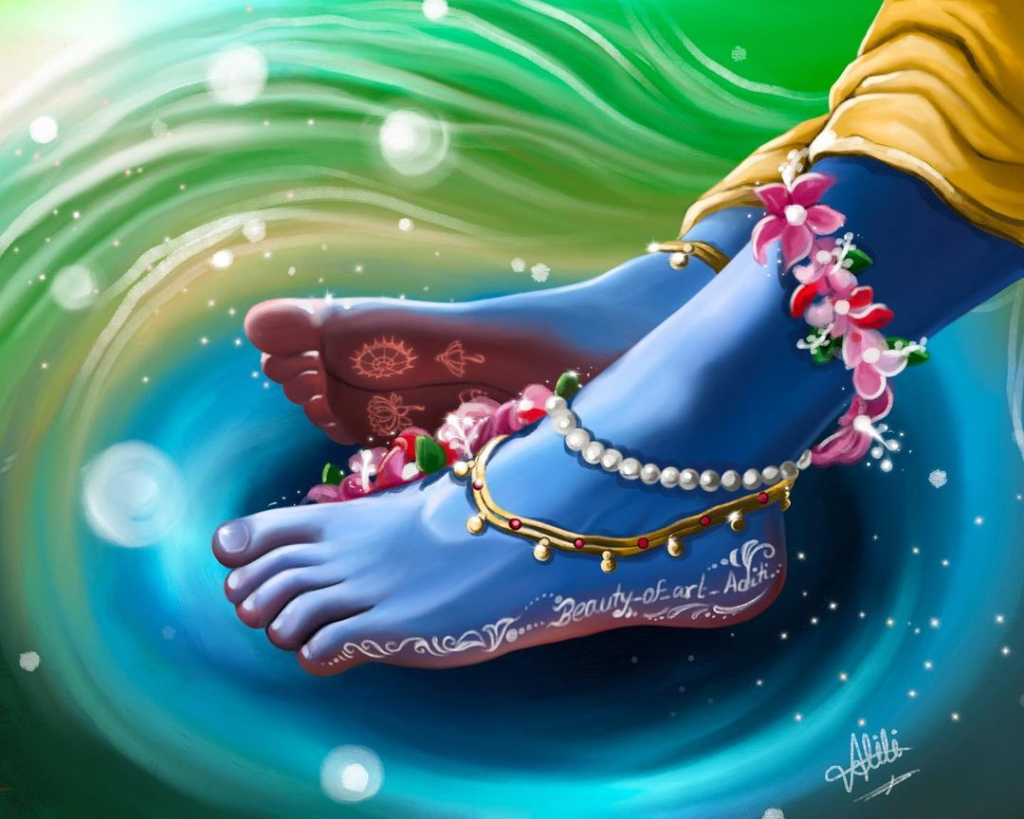
In Hindu philosophy, “lotus feet” (charan kamal) is a profound metaphor for the divine feet of the devas and gurus, symbolizing purity, supreme beauty, and spiritual refuge. “They represent the ultimate refuge from material existence,” says Google, “encouraging devotees to surrender their ego, cultivate humility, and seek liberation.”
In Hinduism, the Pole Star (Dhruva Tara in the lore) symbolizes immovability, steadfast devotion, and divine guidance. According to the Vishnu Purana, Dhruva was a young prince who performed intense penance to Lord Vishnu, who consequently granted him a permanent, central position in the sky around which all other stars revolve. In my view, the pole-star represents the pure Thought of God, Logos, or Word of God at the top of the dream-realm. That bright star was seen over Bethlehem on the night of Christ’s birth, as Course-Jesus explains below:
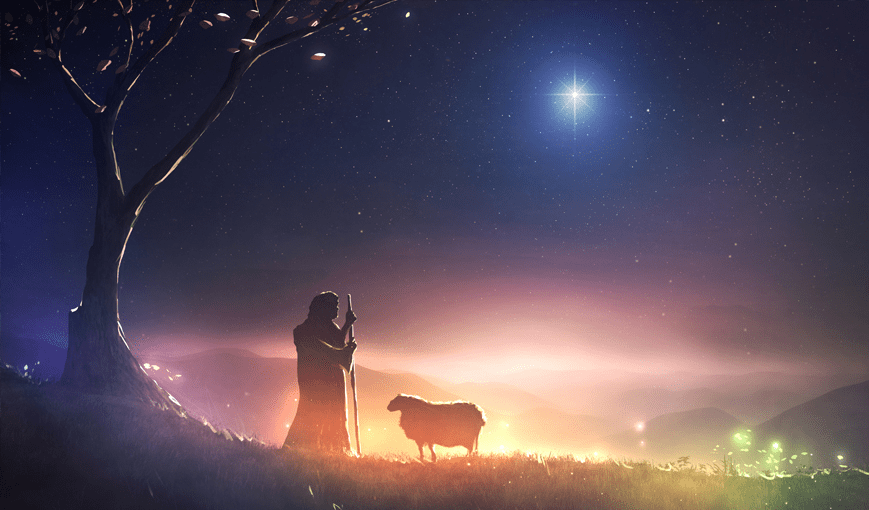
The sign of Christmas is a star, a light in darkness. See it not outside yourself, but shining in the Heaven within, and accept it as the sign the time of Christ has come. He comes demanding nothing. No sacrifice of any kind, of anyone, is asked by Him. In His Presence the whole idea of sacrifice loses all meaning. For He is Host to God. And you need but invite Him in Who is there already, by recognizing that His Host is One, and no thought alien to His Oneness can abide with Him there. Love must be total to give Him welcome, for the Presence of Holiness creates the holiness that surrounds it. (ACIM, T-15.XI.2:1-8)
The Sukta’s thirteenth line reads:
The Star of Love sets apart the Temple’s thornless encampment to uphold in wholeness the joyfulness breathing the moon-circle.
syonā (the Star) pṛthi-vi (of love sets apart) bhavān-ṛkṣarā (the Temple’s thornless) niveśanī (encampment) yacchā (to uphold) naḥ (in wholeness) śarma (the joyfulness) sapra-thaḥ (breathing the moon-circle).
Notes:
The Star of Love, as we now know, is the Pole-Star and the Star of Bethlehem.
From the Bible, we know the encampment is the Tabernacle, the tent God erected for worship for the wandering Israelites. That encampment is “thornless,” because thorns represent our grievances, and “Love holds no grievances” (as per Workbook Lesson 68).
In this critical lesson, Jesus importantly explains:
You who were created by love like itself can hold no grievances and know your Self. To hold a grievance is to forget who you are. To hold a grievance is to see yourself as a body. To hold a grievance is to let the ego rule your mind and to condemn the body to death. Perhaps you do not yet fully realize just what holding grievances does to your mind. It seems to split you off from your Source and make you unlike Him. It makes you believe that He is like what you think you have become, for no one can conceive of his Creator as unlike himself. (ACIM, W-68.1:1-7).
If “the joyfulness breathing the moon-circle” sounds strange to your ear, consider that Psalm 33:6 also describes the moon as created by “the breath of His Mouth,” whilst Psalm 8:3 tells us the Moon was set in place by God’s “fingers.” The Moon the psalmist means is, of course, the Spiritual Moon or Moon of God, the Lesser Light of the Mind of the Atonement the Vedic rishis call Soma or Chandra.
Knowing all this — coupled with what I “saw” in meditation last night — God’s breath, in the Circle of Wind, blows away the “dust” covering the Moon-Circle, the Circle of Water that is the Ajna Chakra and/or Spiritual Eye. Meditating on the M-kara (Vishnu’s mantra), in other words, eventually reveals the Circle of the U-kara. And, likewise, meditating on the the U-kara (Shiva’s mantra) eventually reveals the A-kara’s Circle of Fire.
In shorthand:
M-kara = the Circle of Wind, the “meeting place” in the second quadrant of Artha
U-kara = the Circle of Water, the “meeting place” in the third quadrant of Kama
A-kara = the Circle of Fire, the “meeting place” in the fourth quadrant of Moksha
Make sense, right?
The fourteenth verse reads:
In this manner, the Shining Ones preserve Antu (God’s grace) in the wholeness from which Lord Vishnu divides the wheel of earthly life into seven abodes of the red ray.
Definitions and breaks:
ataḥ (in this manner) devāḥ (the divine being) av-antu (Temple of Kama) naḥ (in wholeness) yataḥ (from which) viṣṇuḥ (Lord Vishnu) vi-cakrame (divided the wheel) pṛth-ivyāḥ (of earthly life) sapta (into seven) dhām-abhiḥ (abodes of the Red Ray)
Notes:
What are the seven abodes of the Red Ray? Hard to say; they might be the seven upper Lokapalas, the seven plains of consciousness, the seven chakras, the seven sacred rivers, or the seven sacred mountains. They might also be the lunar mansions, which are said to be twenty-eight in number, grouped as four sets of seven. My gut tells me these seven abodes are the seven rays or graces, which are indeed the atonement devas (within our minds) descending from and subservient to Indra, the “king” of the devas.
Rv 1.22:15 reads:
Ida’s pervading radiance divides the wheel in three parts inwardly to fix the mind of the lotus feet standing together in the moon-face covered in dust.
Definitions and breaks:
idaṃ (Ida’s) viṣ-ṇur (pervading radiance) vi (divides) cakrame (the wheel) tredhā (in three parts) ni (inwardly) dadhe (to fix the mind) padam (of the lotus feet) samuḻham (standing together in the moon) asya (face) pāṃsure (covered in dust).
Notes:
The moon-face covered in dust is Soma’s face, the Face of Christ. In the dream of earthly existence, that face is covered in dust–the dust we wash away or shake off, metaphorically speaking, by progressively meditating on the three aspects of A-U-M.
In the Hindu lore, the moon took refuge in Shiva’s hair to escape a curse, thereby taming his “destructive” energy. The Moon tempered the dream-destroying solar power of Agape, that is to say, through the mitigating gentleness of Grace. And Ida, who is mentioned herein, is the Nadi or “spiritual channel” transporting that lunar energy within the Spiritual Body.
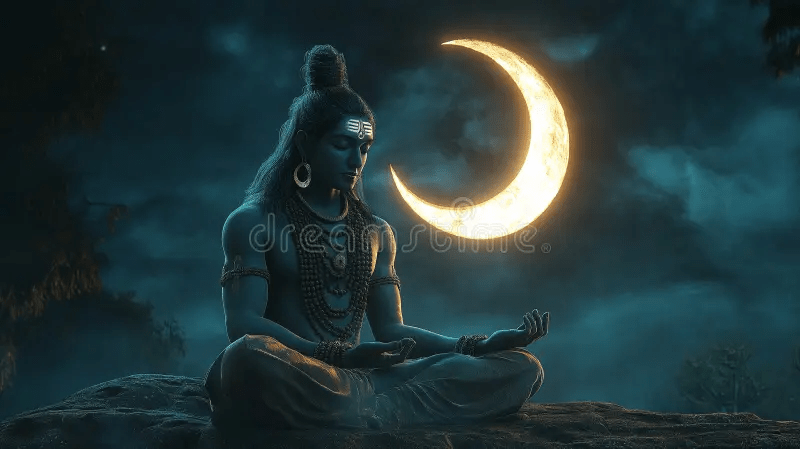
Or, as Google further explains:
“The crescent moon (Chandra) adorning Lord Shiva’s head highlights his mastery over the mind and emotions, signifying that he is Chandrashekhara—the master of the moon.”
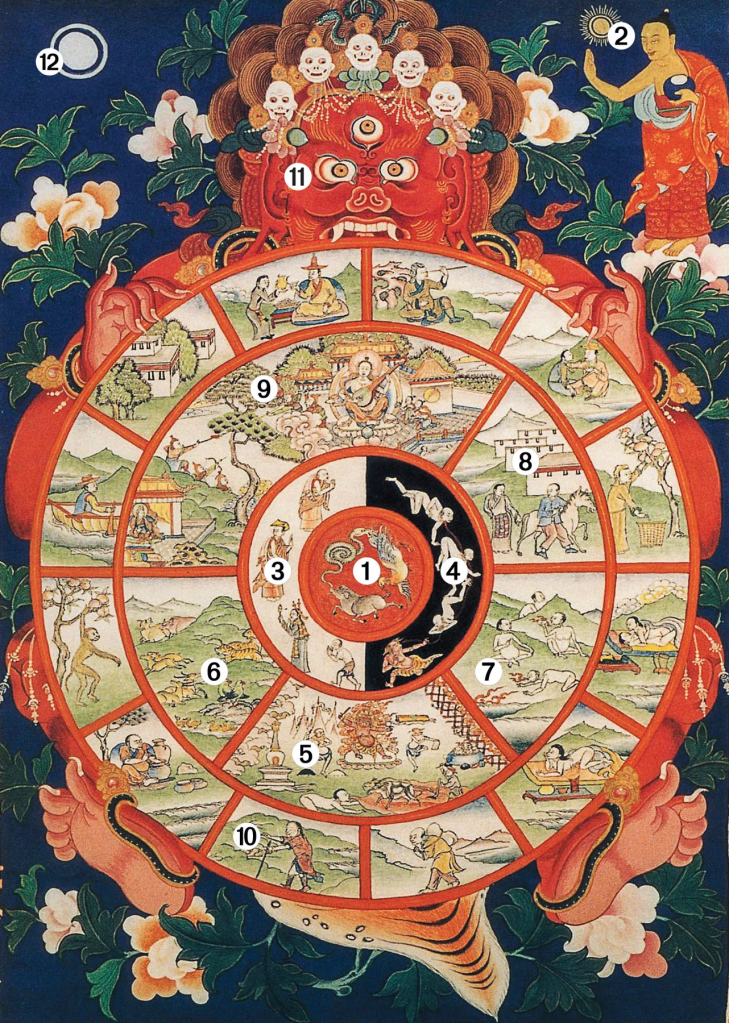
The REAL moon-circle in which we gather together to honor Shiva (the power of grace) is the Circle of Water in our minds. Ida is the channel for the water coming down from that Lunar Circle. That energy, we learn herein, divides the Wheel in three parts inwardly. We see these three parts on the inward-proceeding circles on the Buddhist Bhavacakra. The outermost wheel is, I believe, the Circle of the Earth.
Is this the same “circle of the earth” mentioned in Isaiah 40:22? No, because that circle exists in ‘eretz, the Land of the Living. Correctly translated, that section of Isaiah 40 reads as follows:
To dwell in the Circle of the Land of the Living is to dwell in the locusts thinning out the celestial sphere’s curtain to expand the tent (the Tabernacle) of the Living Souls giving the commands and acting as the Judges in the Land of the Living in formlessness. To plant and scatter seeds to stem and take root in the Land of the Living, blow upon the withered a tempest to carry away the chaff and to be alike in resemblance to the call of the Holy Ones.
To be alike in resemblance to the call of the Holy Ones is to dwell in the formless consciousness of the A-U-M, the three-part vibration of Creation’s Wholeness or Oneness, which is the true Holy Trinity in the dream-realm.
As I see it, the lotus feet represent the walking journey of the Soul. To fix the mind on the lotus feet is, therefore, to fix the mind on the walking journey, which is the only purpose God gave the world. If, therefore, we are not wholly focused on the Circle-Journey, we are NOT doing God’s Will or “abiding in the Word of God.”
The face or mouth covered in dust is the Face of Christ (our true face), covered by the veils of ego-manifested illusion. To see that face or hear that mouth speaking the word, we have to progress step-by-step through the three circles Ida drew on the Wheel. We see those circles on the Buddhist Bhavacakra. The outermost “ring” is the Circle of Earth, while the innermost– the red center labeled “1”– is the Circle of Fire.
The sixteenth verse reads:
The three steps divide the wheel of Vishnu’s cowherds, the faithful and willing supporters of the gems supporting Vishnu’s hand-jewels to look upon the light casting down the solemn vow to perceive the pasa belonging to Indra’s united champions.
Definitions and breaks:
trīṇi (the three) padā (steps) vi (dividing) cakrame (the wheel) viṣṇur (of Vishnu’s) gopā (cowherd) adābhyaḥ (the faithful) | ato (and willing) dhar-māṇi (supporter of the gems) dhārayan (holding) viṣṇoḥ (Vishnu’s) kar-māṇi (hand-jewels) paśyata (to look upon) yato (the light casting down) vratāni (the solemn vow) pas-paśe (to perceive the pasa) indrasya (belonging to Indra’s) yujyaḥ (united) sakhā (companions)
Notes:
We find a string of metaphors in this line. Let me see if I can explain them all fairly quickly.
–The three steps dividing the Wheel are represented in the Hindu lore as three giant strides taken by Vishnu. These three strides, I suspect, represent the A-U-M, as well as the three lessons of the Holy Spirit described in the Course 1) to have all give all to all; 2) to have peace teach peace to learn it; and 3) be vigilant only for the Kingdom of God).
–Vishnu’s cowherd is generally said to be Lord Krishna, the protector of the cows in the enclosure. But here, we learn that Vishnu’s cowherds are the Souls fulfilling their purpose in the three inward-leading circles of AUM.
–the gems supporting Vishnu’s hand-jewels are the Triple Gems of Buddhism we talked about last time. Those three gems, as explained, are the three hands of God or foot-washing basins, whilst Vishnu’s hand-jewels are the atonement instruments he’s shown holding in Hindu iconography.
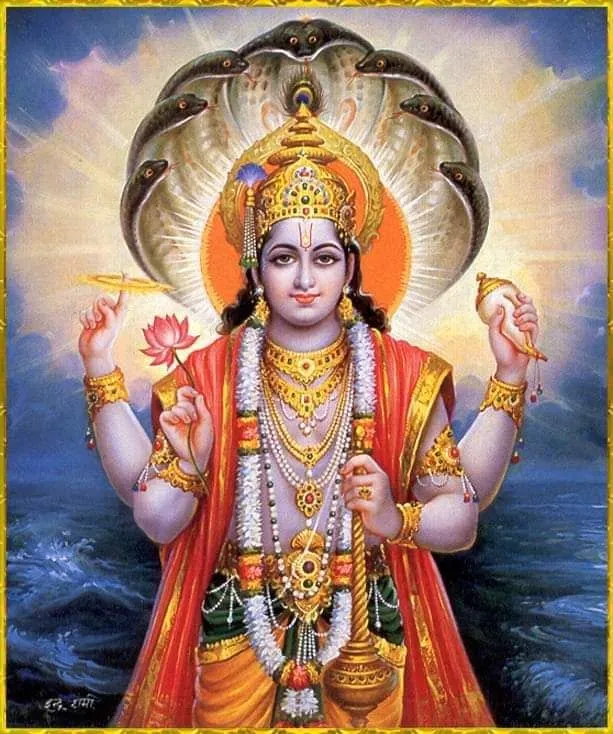
In case we haven’t covered this, the four objects Vishnu grasps are 1) the Conch Shell called Panchajanya), through which he sounds the Call to Awaken; 2) the Discus or Chakra called Sudarshana, which represents the Spiritual Eye; 3) the Mace called Kaumodaki Gada, representing the deception-bludgeoning strength of God we must call upon to escape the illusion; and 4) the Lotus flower signifying the purity and liberation blooming in the waters of the world.
In which hand Vishnu holds these object isn’t random. His hands represent the four quadrants or circles within his reach, while the tools represent the help he offers in each sector of the journey. He holds the conch, for example, in his upper left hand, signifying that the Call to Awaken is sounded and heard in the second quadrant of Artha, while the discus in his upper right hand rightly tells us that Spiritual Sight (Christ’s Vision of Shiva’s Vision) is the tool supplied in the third quadrant of Kama.
The four tools and their corresponding positions are as follows:
–Circle of Earth = the first quadrant of Dharma, served by the cudgel in Vishnu’s lower left hand.
–Circle of Wind = the second quadrant of Artha, aided by the conch in Vishnu’s upper left hand.
–The Circle of Water = the third quadrant of Kama, served by the Disc or Chakra in Vishnu’s upper right hand.
The Circle of Fire = the fourth quadrant of Moksha, aided by the lotus in Vishnu’s lower right hand.
This should make sense.
The other metaphors in this verse are as follows, briefly:
–the solemn vow is the second covenant — our agreement with God to wake up at the appointed time in His Divine Plan.
–the pasa or noose is the hook magnetically drawing our Souls back to their Source (Indra, the Red Ray)
–Indra’s united companions are the Mighty Companions spoken of in the Course and the Bible — the inseparable presences of God and Christ striving within us to free us from the Wheel. Those companions are, therefore, the Great Rays.
Rv 1.22:17 reads:
The Supreme Spirit of Lord Vishnu, in the ultimate abode of the lotus feet, assembles the inwardly perceived shining miracle, the splendor animating the inner-eye of the walking spirit. The Supreme Spirit inspires the sound of Om trembling the blameless world of the solar dynasty.
Definitions and breaks:
tad = tat (the supreme spirit) viṣṇoḥ (of Lord Vishnu) paramam (in the ultimate abode) padaṃ (of the lotus feet) sadā (assembles) paśyanti (the inwardly perceived) sūr-ayaḥ (shining miracle) di-vīva (the splendor animating) cakṣur (the inner-eye) ātatam (of the walking spirit) tad (the Supreme spirit) vip-rās-o (inspiring the sound of Om) vip-anyavo (trembling the faultless or blameless) jāg-ṛ(a)vāṃsaḥ (world of the solar dynasty).
Notes:
Remember that this was written 4,000 years ago, so the language is somewhat archaic. The Supreme Spirit of Lord Vishnu is the Trinity, acting together as a unified whole. Rightly understood, Vishnu, the Holy Spirit, is the sum of the two rays.
As a mathematical equation; Ray 1 + Ray 2 = Ray 3 (Vishnu).
Depictions of the Trinity as a triangle sort of get the idea, but mess it up through ego-thinking.
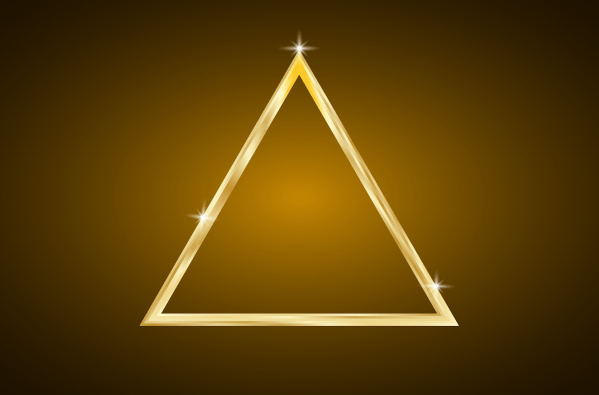
To see it rightly, imagine that the point at the top is the Pole-Star of Love, which is the Greater Light. And from that Star beam down the Great Rays — the two sides of the triangle. Those two rays meet or join to form the base, which is the Holy Spirit. And from that base comes down the seven rays of the Holy Spirit, kinda-sorta in the manner depicted below.
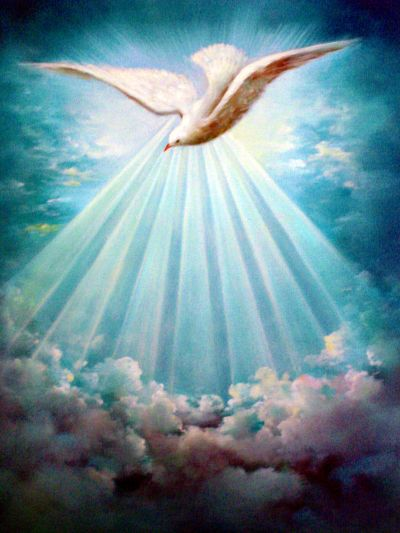
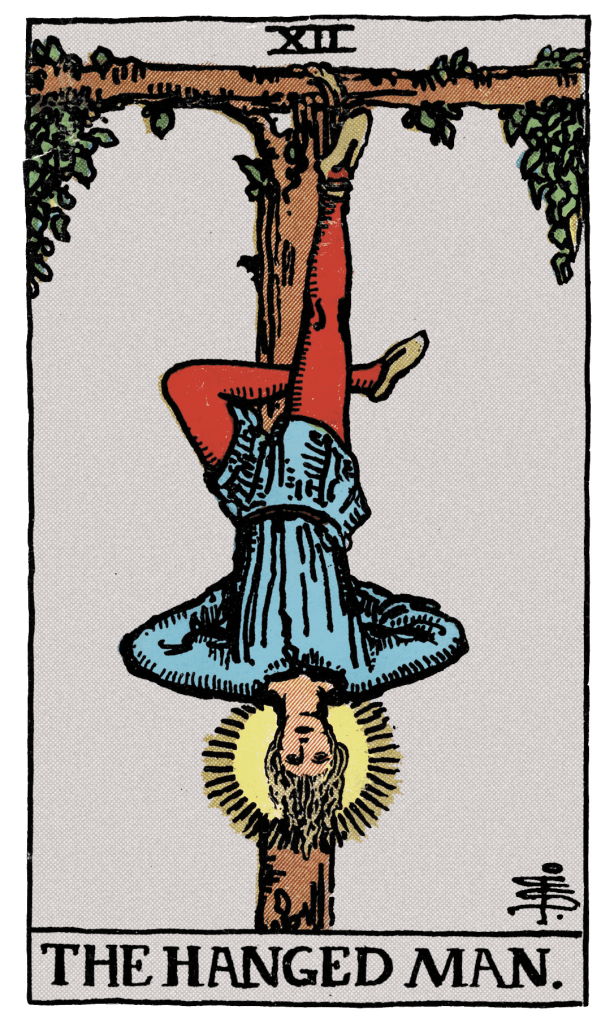
The ultimate abode of the lotus feet is the Real World, which exists on the sixth plain of consciousness — the same plain as the Ajna Chakra, the seat of the Spiritual Eye. And this is where “miracles are seen in light” (as per Workbook Lesson 91). Remember that Rama, the journeying Soul, belongs to the Solar Dynasty; so the world of the Solar Dynasty is the world inhabited by our upright Souls (i.e., the Real World). In the illusory world, our Souls hang upside-down, like THE HANGED MAN.
In the Course, Jesus uses the word “blameless” no fewer than eight times. The first time he uses the word, he says:
At God’s altar Christ waits for the restoration of Himself in you. God knows His Son as wholly blameless as Himself, and He is approached through the appreciation of His Son. Christ waits for your acceptance of Him as yourself, and of His Wholeness as yours. For Christ is the Son of God, Who lives in His Creator and shines with His glory. Christ is the extension of the Love and the loveliness of God, as perfect as His Creator and at peace with Him. (ACIM, T-11.IV.7:1-5)
The second time, he says;
Earlier, I said that the Holy Spirit shares the goal of all good teachers, whose ultimate aim is to make themselves unnecessary by teaching their pupils all they know. The Holy Spirit wants only this, for sharing the Father’s Love for His Son, He seeks to remove all guilt from his mind that he may remember his Father in peace. Peace and guilt are antithetical, and the Father can be remembered only in peace. Love and guilt cannot coexist, and to accept one is to deny the other. Guilt hides Christ from your sight, for it is the denial of the blamelessness of God’s Son. (ACIM, T-13.I.1:1-5)
Are you getting the picture? Are you also starting to grasp just how contrary the insane ideas of “sin” and “guilt” are to God’s Plan for our salvation? I hope that you are, because no less than EVERYTHING depends on your complete rejection of these wrongminded ideas.
The Sukta’s next and final line (Rv 1.22:18) reads:
Gather together to kindle the fire of Lord Vishnu’s lotus hand in the ultimate abode of the Lotus Feet.
sam (gather together) indhate (to kindle the fire) viṣṇor (of Lord Vishnu’s) yat (lotus hand) paramam (in the ultimate abode) padam (of the Lotus Feet).
Notes:
Firstly, working out that yat means “lotus hand” was no small feat. It took days of searching. But once I had that final piece of the puzzle this quirky line made sense. Lord Vishnu’s lotus hand is his lower-right one — the hand signifying the fourth quadrant of Moksha, where we do indeed “kindle the sacred fire” yielding Kamadeva’s milk–the final step on the journey back to Heaven.
This teaching affirms my supposition that the fourth quadrant of Moksha is the Circle of Fire. That circle also is “the fiery eye of the Miracle Cow” — the same fiery eye the Biblical prophets saw at the center of the wheel occupied by the four Living Beings. Somewhere, I posted a retranslation of those prophecies, but I can’t seem to find it at present. So, you’ll have to trust me that the prophets did indeed see a fiery eye in the center of the circle.
We find the Sanskrit phrase Visnor yat paramam padam elsewhere in the Vedas. Supposedly, the phrase translates as “the highest abode of Vishnu,” which is said to be Vaikuntha, a transcendent, eternal spiritual realm beyond the material universe, characterized by absolute bliss, divine splendor, and liberation from rebirth. Hindus regard this place as the ultimate destination for devotees, where Vishnu (the Bridegroom) resides with Lakshmi (the Bride), above all material worlds.
Based on this description, Vaikuntha is “the Real World.” Presumed to be a compound of vai and kuntha, the word is generally translated as “without frustration.” BUT, vai doesn’t mean “without.” It means “true.” And the ultimate abode of absolute bliss can’t be called “True Frustration,” now can it?
Certainly not.
By my reckoning, Vaikuntha is, in fact, a three-part compound of Vai, ku, and n(a)tha, which means “the True Land of the Lord and Master.” Ergo, the Real World. Like I said earlier.
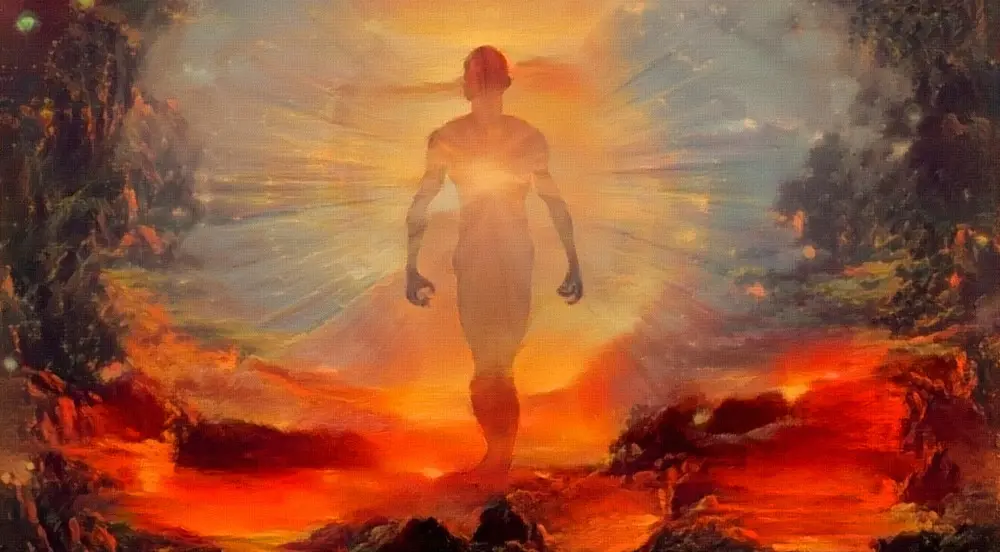
Jesus says quite a lot about the Real World in the Course, including this:
To believe that you can perceive the Real World is to believe that you can know yourself. You can know God because it is His Will to be known. The Real World is all that the Holy Spirit has saved for you out of what you have made, and to perceive only this is salvation, because it is the recognition that reality is only what is true. (ACIM, T-11.VII.4:7-9)
So that’s it. Let’s now compile the Sukta’s 18 lines and see what we get.
The Breaking Dawn yokes in two parts the blossoming awareness of the glorious name, Eha, bringing forward the Supreme Lord’s face belonging to Soma, the father who lights the radiant moon, the chariot driving in delusion the holy beings in the celestial sphere touching the divine horse’s tail to call forth the joy, majesty, or sweetness.
The light discharging the touchstone, Madhu-consciousness, the divine horse is the truth-speaking wind or vessel protecting the yajna.
In the bitter sea of suffering, the Resting Place discharges the Living Beings, the door guardians on the journey to purify the Soul.
Seated on the chariot moving forward the moon, the divine horse of Lord Soma, the graha of the golden hand, manifests the sun’s radiant energy within YHWH, the word of god in the heart-mind illuminating the Lotus Path.
The Living Water of Nara descends to protect the guiding light of the I Am within, singing the praises of God’s Name.
On the path of vapor and sleep, the radiance teaches Rama to invoke the joy clothing the illuminating Lord of Radha (Krishna), the guiding light of the I Am.
The eternal spirit sees the unequalled fraternity of God’s innermost perfect hereafter in the rays of the sun. Assemble in the light of the now-moment in wholeness to reap their bounty.
Strike the kindling falling free from the Great Rays conveying the divine name shining within the True Self in the Resting Place. Soma, the father whose fiery eye, the Ajna, the Great Rays control in the sacred fire-offerings.
The younger brothers of the Moon illuminate Varuna’s three Dhisanas (recepticals of wisdom and abundance) transporting the Red Ray vessel (or boat) in the Celestial Sphere‘s Resting Place.
The Mighty Shelter of God, Nara protects from underneath (the illusion) the unbroken vessel serving the Supreme Lord’s Great Rays of Splendor within YHVH.
The water of oneness within breathes to protect the divine wisdom of Soma, the father whose moon shines the love setting apart the circle of waters Kamadeva generates from the yajnas. In the bitter sea of suffering, the wooden bowl of the cosmic order is the vessel bearing the weight of the Red Ray.
These two uniting bells of the cosmic order possess the milk, water, or nectar the Vipra (illumined sages) taste in the clear understanding the Assembly supports, dwelling in the light of the pole-star of the lotus feet.
The Star of Love sets apart the Temple’s thornless encampment to uphold in wholeness the joyfulness breathing the moon-circle.
In this manner, the Shining Ones preserve Antu (God’s grace) in the wholeness from which Lord Vishnu divides the wheel of earthly life into seven abodes of the red ray.
Ida’s pervading radiance divides the wheel in three parts inwardly to fix the mind of the lotus feet standing together in the moon-face covered in dust.
The three steps divide the wheel of Vishnu’s cowherds, the faithful and willing supporters of the gems supporting Vishnu’s hand-jewels to look upon the light casting down the solemn vow to perceive the pasa belonging to Indra’s united champions.
The Supreme Spirit of Lord Vishnu, in the ultimate abode of the lotus feet, assembles the inwardly perceived shining miracle, the splendor animating the inner-eye of the walking spirit. The Supreme Spirit inspires the sound of Om trembling the blameless world of the solar dynasty.
Gather together to kindle the fire of Lord Vishnu’s lotus hand in the ultimate abode of the Lotus Feet.
Thanks for visiting the online Meeting Place. I hope you learned as much as I did from this lesson. Until we meet again, Om Hari Om, and Namaste.


Leave a Reply