Welcome or welcome back to The Holy Meeting Place. Today we’re moving ahead to the Rigveda’s 30th Sukta, which Google describes as a hymn primarily addressed to Indra, the “king” of the devas, with verses dedicated to the twin horse-headed physicians known as the Asvins, in addition to Usha, the Hindu goddess of dawn.
How much of that is accurate? Let’s dig in and find out.
In transliterated Sanskrit, the first Rik reads: āva indraṃ kriviṃ yathā vājayantaḥ śatakratum maṃhiṣṭhaṃ siñca indubhiḥ ||
My translation:
Descending from Indra’s cistern, the Light of the Moon nourishes the millwheel of the one-hundred working on behalf of Atum (Adam, the first Red Ray), the one who grants most abundantly the water-sprinkling by the rays of the moon.
āva (Descending) indraṃ (from Indra’s) kriviṃ (cistern) ya-thā (the Light of the Moon) vāja-yantaḥ (nourishes the millwheel) śata-kr-atum (of the one-hundred working on behalf or Atum = Adam) maṃhiṣṭhaṃ (the one who grants most abundantly) siñca (the water-sprinkling) indubhiḥ (by the rays of the moon) ||
Notes:
I checked, and found no cistern associated with Indra in the Hindu lore. From our previous studies of the Bible and the Course, however, we know that the “cistern” is the Golden Storehouse or Golden Treasury, where the Holy Spirit safely holds our Holy Inheritance in trust, until we choose to reclaim it.
Herein, we learn not only that the cistern belongs to Indra, but also that the Light of the Moon comes down from that cistern to nourish the Assembly’s millwheel on behalf of Atum, the ancient Egyptian equivalent of Adam (a Hebrew word originally meaning “red” rather than “man”). We further learn that Atum/Adam is the chief supplier of the Living Waters the Moon Rays sprinkle down on the world as raindrops, dewdrops, or water-pearls.
As previously established, the Rays of the Moon are the four Rays of Attribute, which the Jewish, Christian, and Muslim prophets called Living Beings, Cherubim, and/or Throne-Bearers. And it is these four “beings” or “holy powers” that “hold up” the Throne of God — the fixed seat of the Logos, Word of God, and/or Spiritual Sun in the dream-realm’s celestial sphere.
As a reminder, that “throne” is found on the seventh and highest plain of consciousness, while the cistern is found on the sixth plain, in the Resting Place.
Let’s move on to Rv 1.30:2, which reads: śataṃ vā yaḥ śucīnāṃ sahasraṃ vā samāśirām ed u nimnaṃ na rīyate
My Traanslation:
The one hundred blowing Yah’s sacred powder from the hidden dwelling place convey the equanimous vessel(s) for joining together to sink into Nara’s melodious thundering.
śataṃ (The one hundred) vā (blowing) yaḥ (Yah’s) śu-cīnāṃ (sacred powder from) sahasraṃ (the hidden dwelling place) vā (convey) samā-śirām (the equanimous vessel) edu (for joining together) nimnaṃ (to sink into) na (Nara’s) riya-te (thundering melody).
Notes:
The one-hundred referenced herein are the enlightened Souls serving the Great Rays of Yah (God) and Vah (Christ) through the Assembly or Congregation — “gathering the waters” bringing forth the atonement powers.
Yah is the Red Ray of God’s presence. the source of the divine spark and the Amrita. The sacred powder is the metaphoric “flour” the “millstone” (of Christ’s Presence, the Vah Ray) grinds from the “seeds” of our holy-minded almsgiving offerings through our circle-meetings or yajnas; the equanimous vessel for joining together is probably the Ark of the Covenant, the Ark or Peace, and/or the Ark of Safety. Rightmindedly perceived, that Ark represents the Holy Relationship we share (with God, Christ, and each other) through the Holy Spirit’s hook, yoke, or net (also the Vah Ray).
Nara is the Great Purusha, the Greater Light of God in the Cosmic Ocean underneath the maya of worldly existence. And Nara’s melodious thundering is the Om vibration of Perfect Love or Agape, which we hear in the dream as the three tones of AUM.
The third Rik reads: sam yan madaya susmina ena hy asyodare samudro na vyaco dadhe ayam vyacos.
My translation:
Gather together to generate the intoxicating gentle laughter the antelope sends forth from the heart (or core) — the gathering of the waters of Nara’s pervading Om.
saṃ (Gather together) yan = jan (to generate) madāya (the intoxicating) śuṣmiṇa (gentle laughter) enā (the antelope) hy (sends forth) asyodare (from the center, heart, or core) samudro (the gathering of the waters) na (of Nara’s) vyac-o (pervading Om).
Notes:
In Hinduism, the antelope represents a purified state of consciousness. So, the gentle laughter returns to us from the almsgiving rituals we perform free from resentment or egoic motivation. And this is what Jesus meant when he famously said (in Matthew 6:3): “But when you give to the needy, do not let your left hand know what your right hand is doing.” Metaphorically speaking, the left hand acts for the ego-self, whilst the Right hand works for the Soul.
What is this “gentle laughter” the antelope sends forth? How the Holy Spirit perceives our projected nonsense, essentially. Or, to quote Course-Jesus:
In gentle laughter does the Holy Spirit perceive the cause [our own guilt projected outward onto others] , and looks not to effects. How else could He correct your error, who have overlooked the cause entirely? He bids you bring each terrible effect to Him that you may look together on its foolish cause and laugh with Him a while. YOU judge effects, but HE has judged their cause. And by His judgment are effects removed. Perhaps you come in tears. But hear Him say, “My brother, holy Son of God, behold your idle dream, in which this could occur.” And you will leave the holy instant with your laughter and your brother’s joined with His. (ACIM, T-27.VIII.8:1–9:8)
The Sukta’s fourth Rik reads: dadhe ayam ute sam atasi kapota iva garbhadhim vacas tac cin na ohase.
My translation:
Established in the Holy Instant, the U-kara thunder gathers together the dark-blue pigeon, the all-pervading A-kara, the original song of Tat, the pure-consciousness of Nara’s laughter.
dadhe (established in) ayam (the Holy Instant) u-te (the u-kara thunder) sam (gathers together) atasi (the dark-blue) kapota (pigeon or dove) iv-a (the all-pervading A-kara) garbhadhim (the original) vacas (song) tac (of Tat) cin (the pure-consciousness) na (of Nara’s) ohase (laughter) ||
Notes:
Here we get another chance to test my new definition of iva as “the all-pervading A-kara.” And it passes with flying colors.
According to the Sanskrit “experts” online, ayam has a wide range of meanings, only one of which is “present-moment.” In Arabic, the word means “miracle.” So, based on what Course-Jesus just explained about the gentle laughter, we can rightly ascertain that ayam means “Holy Instant” or “miracle” in this case.
And miracles do indeed occur in the Holy Instant, as Course-Jesus repeatedly explains.
Kapota means “pigeon” or “dove” in Sanskrit, while asati means “dark-blue.” In Hinduism, the kapota is the vahana of Rati, the consort of Kamadeva. Long mis-characterized as a seductress, Rati-deva actually represents the radiant fullness of God’s Glory, which is indeed instilled by the A-kara vibration (her dark-blue pigeon vahana).
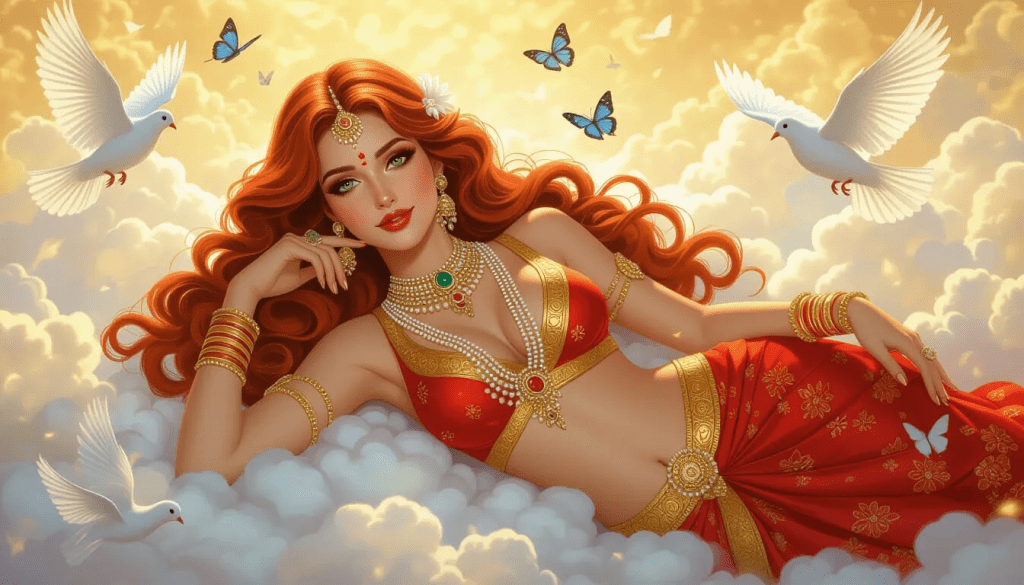
And this explains why the Theosophical teachings sometimes identify the first ray or God’s Will and Power as dark blue, cyan, or indigo, and sometimes as Red. How so? Because the Red Ray of Yah is the true Father Ray, which emits the Trinity Rays of AUM. So, the Red Father Ray is the Father of the Blue Father Ray, as well as the gold (or yellow) Christ Ray emitting the U-kara), and the green Holy Spirit Ray broadcasting the M-kara.
Does that make sense? I hope so, because I’m still trying to get all the ducks in a row with regards to the Rays. At this point, I’m pretty sure there are nine in total. The two parent rays (the Great Rays) and the seven lesser rays produced by the two parent rays of Yah and Vah.
In Christian theology, the radiant fullness of God’s Glory is called pleroma. According to Google, pleroma is generally understood to mean “fullness” or “completion.” In the New Testament, the word mainly appears in the Pauline epistles. Importantly, the word also appeared in the Gospel of Philip, which was not only excluded from the New Testament canon, but falsely condemned as “gnostic,” to boot.
In Truth, Philip (whose birth-name was Nadir) was a lifelong friend of Jesus’. According to the Ascended Masters who communicated with Gary R. Renard, Jesus and Nadir grew up together in Egypt. In the most recent past life of both Souls, Nadir was the Buddha, while Jesus was his son. And it was in his next life as Nadir/Philip that Siddhartha-Buddha achieved the final stage of enlightenment.
In his gospel, Philip characterizes pleroma (the Fullness of God’s glory) as “the perfect, divine realm of light, as opposed to the imperfect material world.” In this first-hand account of his teachings, Jesus encouraged his disciples to seek this divine essence within themselves to return to the source of Truth. Through controversial practices like the “ritual of the bridal chamber” seekers of enlightenment, he said, should aim to reunite with their divine counterparts and return to that spiritual perfection.
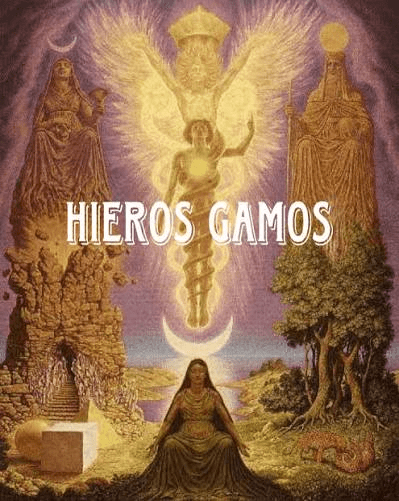
Rightly understood, the “ritual of the bridal chamber,” is a way of preparing for the sacred marriage (Hieros Gamos in Greek) of the Bride in the Resting Place and the Bridegroom, rather than any sort of deviant sexual practice (as Bishop Irenaeus and his anti-gnosis pals narrow-mindedly presumed).
As you ponder these eye-opening ideas, let’s move on to the next Rik, which reads: stotram radhanam pate girvaho vira yasya te vibhutir astu sunrta.
My translation:
The standing three of the radiant Name, the flying insects or lords singing the Om, are the inner powers belonging to the light thundering the splendor of Astu’s true speech.
sto-traṃ (the standing three of) rādhā-nām (the radiant Name) pate (the flying insects or lords) girvāho (singing the Om) [are] vīra (the inner powers) yas-ya (belonging to the light) te (thundering) vibhūtir (the splendor) astu (of Astu’s) sūnṛtā (true speech)
Notes:
Here again, we find the nebulous word pate. In an earlier post, I defined the word as “flying insects,” but it might also mean “lords.” Ergo, the standing three of the Radiant Name (Yah) are either the flying insects singing the Om or the lords sounding the Om. Either way, they are the inner Trinity powers of the Great Ray of Yah thundering the splendor of Astu’s true speech. Astu is the Great Amen. In Sanskrit, the word-name supposedly means “so be it” (like Amen in Hebrew). But As-tu actually means “to exist or abide in God’s Love.”
In Hebrews 1:3, we read: “The Son is the radiance of God’s glory and the exact representation of his being.”
And just so we’re clear, the Son of God is the Christ; not just Jesus Christ, but all of Holy Creation. So, God’s Radiant Name is Christ, or some variation thereof, such as Amen, I Am, Jesus, AUM, or Krishna.
The rishis tell us herein that the Vedic god Astu represents the Great Amen of God’s abiding Love. And so does Jesus Christ.
Having said all that, let me explain more simply that the three standing lords of the Radiant Name are the Trinity Rays and/or Aspect Rays — the three rays of Yah sounding the AUM. And they also are, therefore, the flying insects visited upon us (in a good way) when the staff of Aaron strikes the rivers of Living Water in our dreaming minds.
And, in case I’ve failed to explain this previously, AUM is the teaching form of Om. Technically speaking, they are not synonymous terms. Sort of, but not really, that is to say.
Om is the pure vibration of Perfect Love, the song God sings to us in Heaven, whereas AUM is the dialed-down teaching version of Om — the song we hear in the dream in three progressively purified tones to gradually restore us to Om consciousness: the omniscient Superconsciousness of the awake Christ Mind in Heaven.
Pleroma (fullness or completion) is, therefore, the highest spiritual state we can achieve in the dream; it’s the state of mind we experience in the fiery eye of the miracle-cow at the center of the innermost circle, the Father’s Circle, where the three powers of AUM reunite in oneness. And this is the perfected state of being we must achieve before God can airlift us out of the dream-realm.
So, in brief: AUM, when reunited in our minds, is Pure Grace consciousness, which closely approximates Om-consciousness.
Does that make sense? if not, maybe this will help:
Om is the pure vibration of Agape, the Song of God heard in Heaven.
AUM is the three-part vibration of Pure Grace we hear in the dream, to restore us to “fullness,” pleroma, or True Perception (miracle-consciousness). Miracle-consciousness is the highest state we can achieve in the dream-realm, but it’s so close to Om-consciousness that God can reach across the “tiny gap” in between to absorb us back into the God-Mind Bubble.
Hope that helps.
Google may say (via someone on Facebook) “that Spiritually and vibrationally, Aum and Om are the exact same sacred sound,” but Google only compiles and summarizes what’s “out there” on the Internet. And what’s “out there” on the Internet isn’t always true.
You know that, right?
Let’s move on to the next Rik, which reads: urdhva stistha na utaye ‘smin vaje satakrato sam anyesu bravavahai yoge-yoge tavastaram vaje-vaje havamahe sakhaya indram utaye
My translation:
The upward standing abode of Nara protects the I Am vibration through the one hundred acting purposefully to gather together in the spirit of expanding the winds carrying the yoke to unite the Great Star’s vibrating vibration — the vibration summoning the Mighty Companion(s) of Indra to awaken.
ūrdhva (The upward) stiṣṭhā (standing abode) na (of Nara) ūtaye (protects) ‘smin (the I Am) vāje (vibration) śatakrato (in or through the one hundred acting purposefully) sam (to gather together) any-eṣu (in the spirit) bra-vā-vahai (expanding the winds carrying) yoge-yoge (the yoke to unite) tavas-taraṃ (the power of the star) vāje-vāje (vibratation — the vibration) havāmahe (calling the Mighty) sakhāya (Companion) indram (of Indra) ūtaye (to awaken) ||
Notes:
In Hinduism, the standing abode of Nara (and his eternal counterpart, Narayana) is the sacred Himalayan shrine of Badrinath (Badarikashram) in Uttarakhand, India. The twin sages are worshipped together there, and their surrounding peaks are known as the Nar and Narayan Parvat.
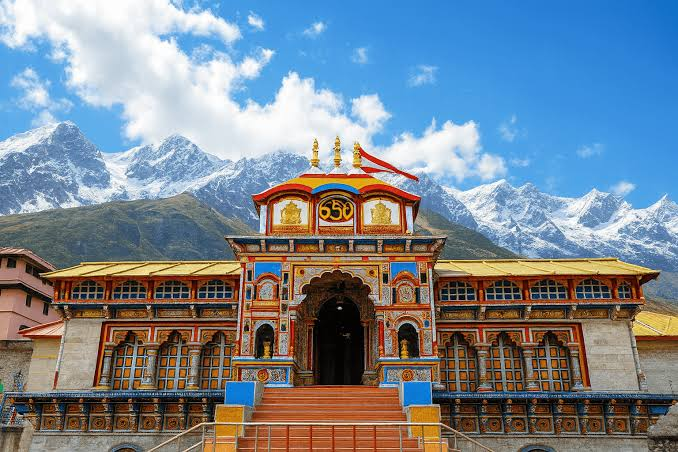
Badri-nath means either “Badri Master” or “Master of the Badri.” Badri is the Sanskrit word for the Jujube tree, which produces an edible berry-like fruit. Pictured below, the Jujube berry looks and tastes like a tiny apple. In traditional Hinduism, Badrinath is regarded as the highest form of Vishnu.
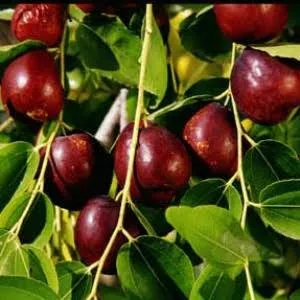
If I’m reading the symbols right, the standing place of Nara is the gathering place of those who hear the A-kara vibration — the Circle of Standing Stones in our minds. Ergo, the Badri “berry” represents the A-kara vibration, which is Amrita, the elixir of immortality. The winds carrying the yoke are the four winds of the Vah Ray — the winds produced by the Rays of the Moon. The Great Star is the pure Thought of God or Logos on the Throne of God, and the Mighty Companion(s) of Indra are generally said to be the Maruts.
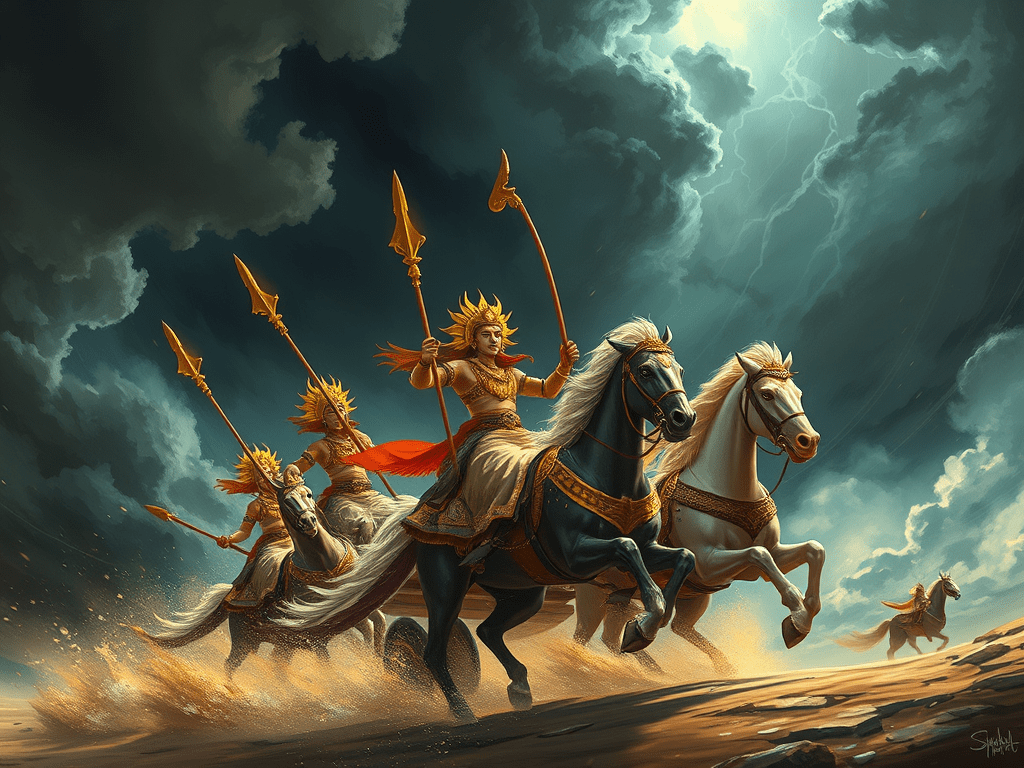
Presumed to be pagan storm gods of an unspecified number, the Maruts are, I suspect, the metaphoric “winds” or “waters” generated by the Christ Ray. When divided as mar and ut, the word translates as “forgotten fountain.” And Christ’s vibrations are indeed the Living Waters of “the forgotten fountain” referenced in Jeremiah 2:13. This is the verse in which the Holy Spirit tells the wandering Israelites (all of us) we made two great errors. The first was abandoning his fountain of living water; the second was carving out our own “broken cisterns” that cannot hold the healing waters provided to us by God.
Our broken cisterns are the Ego’s subconscious, where all our past world-based learning and fear-conditioning is stored. Simply stated, anything we keep in those cisterns blocks our access to the Golden Treasury or Golden Cistern. To empty those broken cisterns, we have to surrender everything we believe to be true (but isn’t) to the Holy Spirit for “undoing.”
That I’m right about the Maruts is supported by the fact that they are sometimes called Rudras, which means “the juices or roarers of Rudra (the Red Ray).”
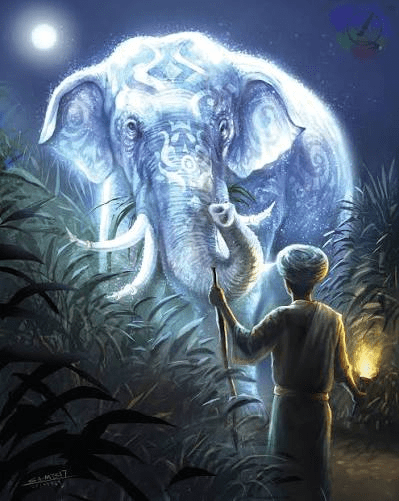
Airavata, the great white elephant vahana of Lord Indra, also represents the forgotten fountain. When correctly depicted, he has three heads and seven trunks. His three heads represent the lords of AUM, while his seven trunks represent the seven rays serving as the founts or spouts of the greater two. When correctly translated, the name Aira-vata means “the waters of the Cosmic Breath” or “the waters of the celestial winds.”
The seventh Rik reads: agha gamad yadi srayat sahasrinibhir utibhih vajebhir upa no havam anu pratnasyaukaso
My translation:
In material consciousness, the guru-word (AUM) exhilarates the light coming through the streams, along with the intense splendor, to intervene and strengthen the cowherd within the vessel for calling upon Anu, the original being dwelling in the ancient home.
āghā (in material consciousness) ga-mad (the guru-word exhilarates) ya-di (the light coming through) śravat (the streams) saha-sri-ṇībhir (along with the intense splendor) ūtibhiḥ (to intervene) vāj-ebhir (and strengthen the cowherd) upa (within) no (the vessel) havam (for calling upon) anu (Anu) pratnasyaukaso (the being dwelling in the ancient home).
Notes:
We’ve talked about both the cowherd (Krishna) and Anu, the father-god in ancient Mesopotamia. As I understand it, Anu is the Sanskrit name for the Great Ray of Vah, which God projected into the dream-realm (through the awake part of the Christ Mind) to bring us home.
In this Rik, we learn that AUM exhilarates and lifts up the rays, accompanied by the splendor underneath (in the Cosmic Ocean), to strengthen the Cowherd. And those seven streams or graces rise up from the fountain or wellspring in the dwelling place of the cowherd — the form of Krishna living in the Resting Place.
Stated less metaphorically, the Trinity Powers of AUM activate the lesser rays of Vah to rise up the fountain in the Resting Place, bringing the splendor from underneath up to the Resting Place, where they water the sacred grass of the enclosure. Those waters cause the sacred-grass to grow and feed the herd or flock yielding miracle-milk for the betterment of the Body of Christ (i.e., all of Holy Creation together).
It’s all metaphorical, my brother. And we don’t get it until we get it — or learn it from a teacher who gets it, which is harder than it sounds (because charlatanism predominates the godless world). I, for example, studied the Course for more than twenty years before I understood what Jesus meant by “the Voice for God.” Only when I started hearing the AUM vibration again, did most things Course-Jesus says suddenly make sense. And some things still don’t.
I’m just saying, as Bible-Jesus does in Matthew 24:4-5:
“See that no one leads you astray. For many will come in my name, saying, ‘I am the Christ,’ and they will lead many astray.”
The Sukta’s rather eighth Rik reads: huve tuvipratim naram yam te purvam pita huve tam tva
My translation:
to call upon this mighty reflection in the waters, Yama’s thunder from the ancient Father summons the Supreme Lord of the True Self.
huve (to call upon) tuvi-pratiṃ (the mighty reflection) naram (of Nara or in the waters) yaṃ (support) te (the thundering) pūrvam (from the eastern) pitā (Father).
Notes:
Firstly, the eastern Father in Hinduism is Indra. So, to call upon God’s reflection in the Waters (Nara), we must support the thundering of Indra’s Vajra calling to us from the east — the enclosure Elohim built “east of Eden” — to return to the Resting Place.
In my much-earlier post on Genesis, we learned about this “reflection in the waters.” Assuming you haven’t read that post, let me recap. The First line of Genesis, which has been grossly mistranslated historically, says nothing about God creating the material world or universe (because He didn’t). What the opening line of the Old Testament actually says is this:
The Chief Shepherd, Elohim produces the waters of salvation within the Land of the Living God — the Land of the Living God existing in the desert of unreality obscuring the presence of the Primordial Ocean the Breath of Elohim hovers over nurturingly as God’s Face in the water.
If, therefore, Indra is Nara’s reflection in the waters of the dream, then Nara is the Living God, while Indra is the Supreme Cosmic Breath of the Logos, which hovers over those waters as God’s reflections. This suggests that Indra is the Vedic and Mesopotamian equivalent of Ruach, the Breath of God. He’s also, therefore, the A-kara, which Kabbalists call the Right Hand of God.
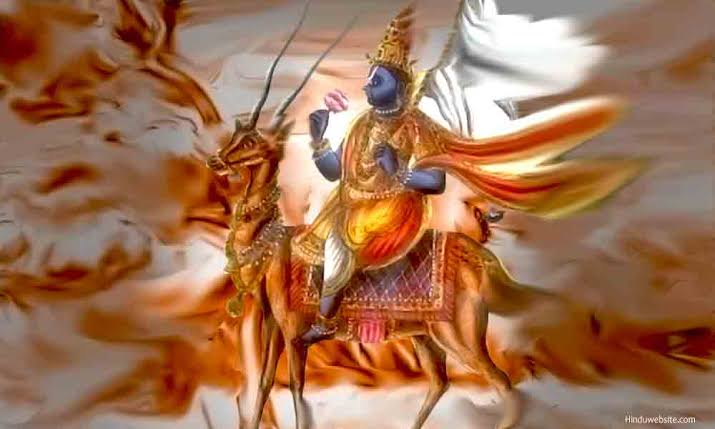
Am I confusing you?
I hope not, but all these different forms of the same spiritual powers can be quite perplexing.
The next Rik reads:
huve tam tva vayam visvavara sasmahe puruhuta sakhe vaso jaritrbhyah asmakam siprinindam somapavnam sakhe vajrin sakhinam tatha tad astu somapah sakhe vajrin tatha.
To call upon the Supreme Lord’s true mode of Being — God’s Breath from the universal Bridegroom resting in Majesty, the pure spirit of the (dragon’s) tail, the companion winds of Soma, the tree roots of the three stones of the handsome-jawed identity — Soma purifies Nara’s friend, the Vajra-holding companion to the tail of the moon, the transcedent and unknowable Amen (AUM).
huve (To call upon) tam (the Supreme Lord’s) tva (true mode of being) vayaṃ (the Life-breath of God from) viśvavārā (the universal Bridegroom) śās-mahe (sleeps in majesty) pu-ruhū-ta (the pure spirit of the tail) sakhe (the companion) va-so (winds of Soma) jari-tṛbhyaḥ (the tree-roots of the three) asmākaṃ (stones of) śipriṇī-nāṃ (the handsome-jawed name or identity) soma-pāv-nām (Soma purifies Nara’s) sakhe (friend) vajrin (the Vajra-holding) sakhīnām (companion of) ta-thā (the tail of the moon) tad = Tat (the transcendent and unknowable) astu (Amen/AUM).
Notes:
In Hinduism, King Indra is the deva described as “handsome-jawed.” And, as we now know, Indra is another form of Ketu, the dragon’s tail and descending node of the Moon. As we also now apprehend, the Dragon’s Tail represents the “everlasting” arm of Christ’s Majesty reaching down from the Moon Circle to earth, to lead us back to the sphere where we share the Feast of Christ’s Majesty.
The tree-roots –a frequent metaphor in the Bible — represent (I believe) the sound of the AUM powers reaching down into our minds from their dwelling-place in the Celestial Realm.
Bible Jesus discusses these same “roots” in Matthew 13. Read what he says with new eyes, because he is indeed speaking of hearing the AUM (God’s Word). I made a few corrections to the faulty and confusing KJV translation. What Jesus actually says in this section of Matthew 13 is closer to this:
Now, to sow the seed upon the stone thusly is to hear the Logos (the Word), and to instantly and joyfully receive it. But to have no root in your own Self, on the other hand, is only temporary; and tribulations and persecutions happen because the Logos instantly causes to stumble he who sows among the thorns.
But to hear the Logos and to care about this world of delusive riches is to choke the Logos, and to become unfruitful.
But to sow upon the good land calls they who hear the Word and perceive that which truly bears the fruit yielding the hundredfold whom threefold and thirty other parables set before you to say, “The Kingdom of Heaven is like mankind sowing good seed in the field. But while mankind slept, his hatred (enmity) came and sowed tares among the grains and spread; so that when the grass sprouted it brought forth fruit that appeared to be tares.”
And then the servants of the Master of the House came and said to him, “Master, did not you sow good seeds in the field? From where, therefore, came these tares?”
And he (the Master) said unto them, “Hatred has done this.”
The servants then said to him: “Do you will, then, that we go out and gather them up?”
But he said, “No, lest by collecting the tares, you uproot the wheat along with them. Let both grow together until harvest time; and in the harvest season, I will say to the reapers, ‘Gather together first the tares and tie them into bundles to burn them; then gather the wheat into my storehouse.’”
Pretty insightful, right?
The three stones of the handsome-jawed identity are the three stones of Christ’s Majesty — the cornerstone, the touchstone/millstone, and the capstone. And it is that “stone” upon which we must sow the seeds of brotherly love and goodwill, as Jesus explains in Matthew 13.
Because sowing the seeds of hatred only spreads tares among the wheat Christ grind to produce our daily supply of epiosious bread.
What are tares? Weeds that resemble wheat in the early stages of growth. Unlike wheat, however, tares produce bitter and poisonous seeds. So, they’re a solid symbol for hateful thoughts.
Before we move on, let me add that in Vedic Hinduism, Soma is associated with three stones called either gravan or ardi. These three stones are said to be the sacred grinding stones used to crush the sacred and enigmatic Soma plant to extract its transcendent “juice.” Allegedly, this extraction takes place across three distinct pressing sessions throughout the ritual day to make oblations to the gods.
BUT Soma isn’t a plant, nor is Soma’s “juice” extracted by human priests as described. All of these erroneous suppositions are based on egoic obfuscation of the Rigveda’s true teachings. Soma is the Christ presence in the dream-realm, whose “juice” — the Bible’s New Wine — is extracted by the Souls gathered in the Moon Circle (the Bindu Chakra on the sixth plain of consciousness) to send down to all their brethren the spiritual nourishment needed to overcome the Ego Mind.
Supposedly, grava and/or gravan mean “rock” or “stone,” especially in the context of the grinding-stone used for Soma-extraction. So, gravan is the grinding-stone by which we, in partnership with Christ, mill the seeds of our right-minded alms into flour or powder for universal distribution via Indra’s Net. I’m also pretty sure gra-van actually means “the forest grace(s).”
Soma is the subject of the next two Riks, so let’s see what more we can learn. The next line reads: Somapah sakhe vajrin tatha krnu yatha ta usmasistaye
My translation:
Soma protects the companion of the Vajra-wielding tail of the moon acting in the now-moment to light the moon’s tail.
soma-pāḥ (Soma protects) sakhe (his friend) vajrin (the Vajra-wielding) tatha (tail of the moon) kṛṇu (by acting in the now-moment) yathā (to light the moon’s) ta (tail)
Notes:
Can’t be certain all these words are right, because their definitions are rather nebulous, but I did my best. In Hinduism, the Vajra-holder is undeniably Indra, and Indra and Nara do enjoy a deeply symbiotic relationship. Herein we learn that Soma purifies Indra, the tail of the moon, which is the transcendent and unknowable Amen or AUM — the Name we share with God in the dream-realm.
In the Hindu lore, Soma is the source of Indra’s power — his strength-sustaining energy-drink, as it were. The Red Bull of God’s Will, you might say. Traditional translations suggest that Indra drinks copious amounts of Soma before doing battle with Vritra, the demon personifying the Ego Mind. But Soma isn’t a drink per se. He’s the Christ presence in the dream-realm; the spiritual moon shining in the dark kingdom the Ego Mind made inside our once-pure holy minds.
Additionally, the rishis seem to be saying that Indra, the vajra-wielder, is the Great Amen (the AUM). But they could very well mean that Soma is the Great Amen. And the Great Amen and the Great I Am are one and the same.
So, this affirms my supposition that Soma represents the Great I Am or Amen, who protects “the companions of the Vajra-wielding tail of the moon.” The vajra-wielder is Indra, while the tail of the moon is Ketu. The companions of the vajra-wielder are the Maruts — i.e., the winds of Rudra, the Red Ray. So, Indra and Ketu seem to be two different forms of the red dragon’s tail in the sacred Hindu literature.
The next Rik reads: usmasistaye revatir nah sadhamada indre.
Heated for teaching purposes, the flowing waters pass through the whole joyful feast of Indra.
uśma-sīṣṭaye (Heated for teaching purposes) reva-tīr (the flowing waters complete) naḥ (the whole) sadhamāda (joyful feast) indre (of Indra).
Notes:
Can’t say too much about the overall meaning of this teaching, but I can tell you that the Joyful Feast of Indra referenced herein is the same celebratory “meal” the New Testament calls “the Feast of Christ’s Majesty.”
Hold that thought, because the next two Riks tell us more about this ethereal “Feast” or “Banquet.”
The next Rik reads: santu tuvivajah ksumanto yabhir madema a gha tvavan tmanaptah stotrbhy dhrsnav iyanah rnor aksam na cakryoh.
My Translation:
To complete the powerful spirit reigning within, join the mystical union generating the grains of the A-kara; the song of the Self in the Forest, the greatest and most trusted of the fixed trio sustaining the trickling for making whole the original eye of Nara, the chakra of majesty.
santu (to complete) tuvi-vājāḥ (the powerful spirit) kṣum-anto (reigning within) yābhir (join the mystical union) ma-dema (generating the grains) ā (of the a-kara) gha (the song of) tvāvān (the Self in the Forest) tmanāptaḥ (the greatest and most trusted) sto-tṛbhy (of the three hymns) dhṛṣṇav (sustaining the dripping or trickling) iyānaḥ (for making whole)| ṛṇor (the original) akṣaṃ (eye of) na (Nara or Narasimha?) cakr-yoḥ (the chakra of yash = majesty) ||
Notes:
In Vedic Sanskrit, the letter o is sometimes used as a shorthand substitute for as. So, in the case of cakryoh, yoh becomes yash — a word meaning “majesty, splendor, or glory.” And the Chakra of Majesty is generally identified as the Crown Chakra — the throne room on the seventh plane of consciousness. It is in this uppermost/innermost chamber of the holy mind that we reclaim our rightful place on the Throne of God, and also receive the coveted Crown of Glory.
Presumably, this sanctum sanctorum or “holy of holies” is the fiery eye at the center of the Dharmacakra — the original eye of Nara, the Great Purusha underneath the illusion. Because Nara is wrongly presumed to mean “man” or “human” (like Adam), there is no association between Nara, the twin of Narayana, and a fiery eye. We do, however, find a fiery eye attached to Narasimha, the fourth avatar or incarnation of Lord Vishnu.
Narasimha does not, therefore, mean lion-man or man-lion, as generally presumed. More accurately, Narasimha translates as “Nara’s lion.”
And Nara’s lion is the strength of God. So, Narasimha represents the strength of God abiding within each of us.
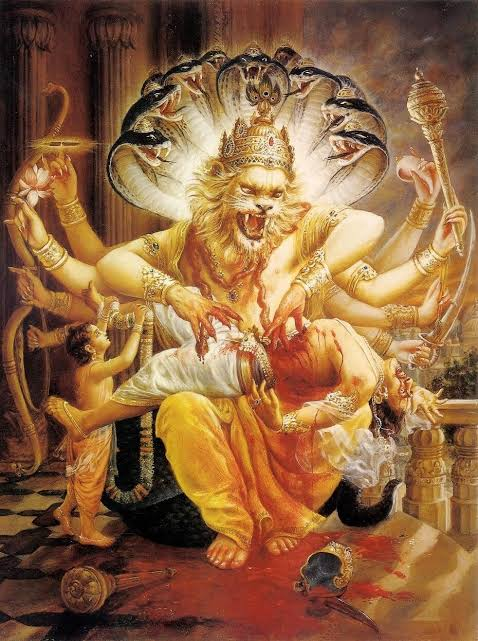
In the Hindu lore, Narasimha is best known for slaying Hiranyakashipu, an alleged demon-king blessed with invincibility. He could not, therefore, be killed by any weapon known in the human world, nor by any earthly beast. To defeat him, therefore, Lord Vishnu assumed the form of Narasimha, who is generally depicted as a multi-armed deva-lion hybrid.
In this form, Vishnu emerged from a pillar at twilight on the threshold of the palace, completely circumventing all of Hiranyakashipu’s boons. He then pounced on the king and proceeded to eviserate him.
But wait, because Hiranyakashipu means “golden pillow” or “golden bed,” rather than “clothed in gold” (as generally presumed). And I can’t help but wonder why Lord Vishnu had to transform himself into a lion hybrid to tear up a golden pillow or bed that had been blessed with invincibility. This simply makes no sense. Supposedly, Hiranyakashipu represents material wealth and comforts, which must be given up before enlightenment becomes possible.
But is that, in fact, the case?
Let’s investigate.
We don’t find any golden pillows in the Bible, but we do find “beds of gold” in the Book of Esther (1:6), as well as in the Song of Solomon (3:9-10).
As traditionally translated, Esther 1:6 seems to rather pointlessly describe the lavish banquet pavilion of King Ahasuerus, which is festooned with marble pillars, beds (or couches) of gold, elaborate wall-hangings and a colorful mosaic floor. Notice the similarities between this story and the one about Narasimha. In both there’s a king, an opulent palace, and a pillar or pillars. Note as well that Esther’s story takes place in a banquet hall.
Why? Because the banquet that takes place in that opulent hall is nothing less than the “feast” we share through Christ’s Majesty.
Or as Course-Jesus explains:
The images you make cannot prevail against what God Himself would have you be. Be never fearful of temptation, then, but see it as it is; another chance to choose again, and let Christ’s strength prevail in every circumstance and every place you raised an image of yourself before. For what appears to hide the face of Christ is powerless before His majesty, and disappears before His holy sight. The saviors of the world, who see like Him, are merely those who choose His strength instead of their own weakness, seen apart from Him. They will redeem the world, for they are joined in all the power of the Will of God. And what they will is only what He wills. (ACIM, T-31.VIII.4:1-6)
Note his references to Christ’s strength (Narasimha?) and Christ’s vision (Narasimha’s fiery eye?).
In the story of Narashima, might King Hiranyakashipu represent the temptations Jesus speaks of above?
Maybe, and maybe not. In the parallel story in the Book of Esther, the king’s name is Ahasuerus, which means “king of kings” in Hebrew. Elsewhere in the Bible, Christ is similarly identified as the King of Kings. So, based on the rules of allegory, Ahasuerus has to represent Christ in the story — or, more specifically, the Great Ray of Christ’s Majesty, which is the Vah Ray of YHVH. And that is indeed the pillar from which Narasimha emerges to tear open and feast on the entrails of King Hiranyakashipu.
Pretty gruesome, I’ll grant you. But Jesus used similar cannibalistic metaphors in the New Testament. In case you’re confused, I am referring to the curious statement he makes in John 6:53: “Unless you eat the flesh of the Son of Man and drink his blood, you have no life in you.”
I suspect he said “Son of God,” rather than “Son of Man.” The two terms are often confused in the gospels, because their ;atter-day scribes did not understand the difference. When Jesus said “Son of Man,” he meant the ego-body self-concept born of human copulation; when he said “Son of God,” on the other hand, he meant the Christ Self-concept re-born through the Holy Spirit.
To demonstrate how greatly we’ve all been deceived down the ages by charlatan translators and interpreters, let’s look with new eyes at Esther 1:1-7. In the KJV Bible, the seven-verse section reads as follows:
Now it came to pass in the days of Ahasuerus, (this is Ahasuerus which reigned, from India even unto Ethiopia, over an hundred and seven and twenty provinces: That in those days, when the king Ahasuerus sat on the throne of his kingdom, which was in Shushan the palace. In the third year of his reign, he made a feast unto all his princes and his servants; the power of Persia and Media, the nobles and princes of the provinces, being before him:
When he shewed the riches of his glorious kingdom and the honour of his excellent majesty many days, even an hundred and fourscore days. And when these days were expired, the king made a feast unto all the people that were present in Shushan the palace, both unto great and small, seven days, in the court of the garden of the king’s palace; Where (there) were white, green, and blue, hangings, fastened with cords of fine linen and purple to silver rings and pillars of marble: the beds were of gold and silver, upon a pavement of red, and blue, and white, and black, marble.
And they gave them drink in vessels of gold, (the vessels being diverse one from another,) and royal wine in abundance, according to the state of the king.
According to Strong’s Concordance, Esther 1:1-7 should more accurately translate along these lines:
The Ray of the King of Kings (the Christ Ray of Yav) is the chief king ruling over those giving thanks to the Lord in the darkness. In the 127 realms. the Ray of Majesty is the King of Kings on the Throne of the Kingdom of Susa (the Kingdom of Lilies). In the palace, the Trinity Rays reign to make the feast for the master’s servants, the army spreading out the middle part, the noble princes ruling the realms in the presence perceiving the wealth and splendor of the kingdom, the precious glory and majesty abundant in the rays completing the twin rays — the rays completing the King’s Feast — the feast the King made, the banquet for the flock found in Susa, the palace of the greater and lesser seven rays.
In the courtyard garden of the King’s Palace; the white, green, and blue-violet bands bleach the fine linen garments (of the Bridegroom); the purple and silver rings and cords of the pillars (bleach or purify) the six beds of gold and silver; the hot stones of red and blue-violet (bleach or purify) the pearls and precious stones of the six water vessels of gold making the vessel of royal wine abundant in the hand of the King for drinking. The laws (of the kingdom) compelled the king to establish in abundance the house furnished according to the spirit’s will. Vashti, the queen, makes the feast for the spirit in the royal house belonging to the King of Kings.
What does it all mean? I’m not sure, but I do know this much: it isn’t about any worldly palace, kingdom, or ruler. From what this says, we can ascertain that the Ray of Christ’s Majesty occupies the Throne of God, as the chief divine authority over 127 realms made by the Ego Mind — not the 127 provinces of ancient India.
There’s some speculation “out there” that 127 is a code used in the Bible, which may be true. But I suspect it’s a reference to the many dimensions of time and space still unknown to human beings.
Christ’s Throne, we are told, can be found in the Kingdom of Lilies — not the Medieval French Capetian dynasty of that name, but the place where the lilies of forgiveness are freely given and received (as we see on the SIX OF CUPS card in the RWS Tarot deck).
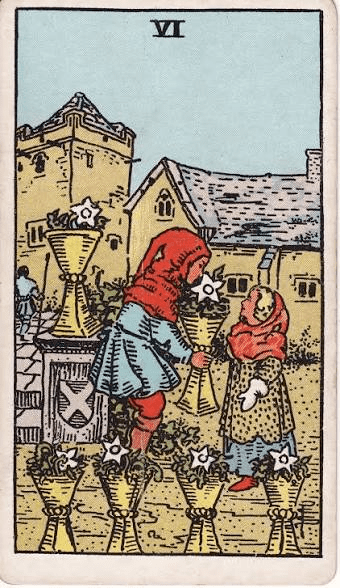
In the Kingdom of Lilies stands the Palace of the Trinity Rays, who reign there primarily to prepare the feast for the Master’s servants — the good and loyal servants who faithfully served the Master in his absence. Jesus mentioned these servants and their Master in several of his teaching parables.
Rightly understood, these good and devoted Souls are the Teachers of God doing God’s Will as the Atonement crusaders, the Army of Christ (Nisrok’s Army), and/or the miracle-workers spreading out the middle part (the U-kara miracle vibration that is the Golden Belt or Girdle), through the agency of the seven rays, the courtiers to the Great Twin Rays of YaH and VaH. And it is they who prepare the Banquet for the flock, the banquet of Christ’s Majesty.
In the Vedic Rik under discussion, that same ethereal banquet is the Banquet of Indra, the Vajra-wielder. The tail of the moon also is described as the vajra-wielder and, therefore, Indra must be another form of Ketu (as I just said). In the Hindu pantheon, therefore, the king of the gods represents the Majesty of Christ, rather than the Red Ray of Vah (as I formerly speculated). And this is consistent with the Book of Esther identifying the Ray of Christ’s Majesty as the King of Kings on the throne in the Kingdom of Susa (the Kingdom of Forgiveness the world actually is).
And that is why Indra (the Ray of Christ’s Majesty) is said to be the king of the devas, who delegated his authority to Krishna, the cowherd in the Resting Place.
There’s a great deal of speculation about the meaning of the name “Krishna,” but I believe it’s a compound of Kri and shna, meaning “acting as the touchstone.”
Cutting to the crux of the matter, the Banquet of Indra and the “feast” referenced in Esther are both the Feast of Christ’s Majesty. In the Old Testament, this purely spiritual “feast” is called Sukkot, the Feast of Tabernacles, and/or the Feast of Booths (a reference to the tents the Israelites erected in the desert) — the seventh and last feast that YHVH commanded Israel (the Soul) to observe, and one of the three feasts that Jews were presumably commanded to observe each year by going to “appear before the Lord your God in the place which He shall choose” (Deuteronomy 16:16).
The importance of this “Feast of Tabernacles” can be seen in how many times it is mentioned in the Bible — as well as how many important events took place at the time of this Feast. It was at this time, for example, that Solomon’s Temple was dedicated to the Lord (1 Kings 8:2). It was also at this Feast of Tabernacles that Jesus famously declared himself the Light of the World and further said, “If anyone thirsts, let him come to me and drink.”
Rightmindedly perceived, none of this refers to an actual “feast.” The true “Feast of Christ’s Majesty” takes place in our minds, in the fellowship of Souls we experience in the circles of AUM — the true “tents” or “tabernacles” we erect in the desert for God’s worship and protection. And that is why the Great Amen says (in Revelations 3:20):
Behold, I stand at the door, and knock: if any man hears my voice, and opens the door, I will come in to him, and will sup with him, and he with me.”
I can’t guarantee that’s an accurate translation, but it’s good enough to prove that the Feast of Christ takes place in out minds — and not anywhere in the physical world.
Before we move on, let’s talk briefly about Vahti, the queen who makes the feast for the Souls in the Royal House belonging to the King of Kings. Who is Vahti? The short answer is: Not the wife of an ancient Persian king. Vashti is, however, believed to be a Persian word meaning either “beautiful one” or “to drink.” But, as we know, Persian and Sanskrit are closely related languages. And in Sanskrit, Vasti means “the abiding three.” So, what Esther 1:7 actually says is this: The abiding three queens make the feast for the Spirit in the Royal House of the King of Kings.
Who are these three queens? That depends on whom you ask. If you ask me, they’re the shakti energies of the AUM powers. In Hinduism, they’re the Tridevi. In the Old Testament, they are symbolically represented by Mary, Elizabeth, and Anna — the three wise women who prepared the way for the birth of Christ in Bethlehem. In the New Testament, they are the three Marys who wept at the foot of the cross and later went to the tomb to anoint the body of Jesus.
In the Hindu Ramayana, these shakti powers are captured in the character of Shabari, the wise woman who faithfully waited at her hermitage (located near the Pampa River) for Rama’s arrival. When he finally visited, she devotedly washed his feet in her tears, while feeding him wild berries she personally pre-tasted to verify their sweetness.
A compound of Sha (sa) and bari, Shabari translates as “the Word of God in the courtyard garden.” And the rays in the Courtyard Garden, as we learn in Esther, are the red, green, and violet rays that bleach (whiten or purify) the fine linen garments of the Bridegroom.
If I had to guess, I’d say the red, green, and violet rays “that bleach the find linen garments of the Bridegroom” are the Trinity Rays of AUM, whilst the purple and silver rings and chords have something to do with the Moon Circle and/or the Bindu chakra, which is the Soma-extractor of the Vedas, as well as the wine-press of the New Testament.
Beyond that, I daren’t speculate.
The next Rik reads: a yad duvah satakratav a kamam jaritrnam
My translation:
The A-kara restores the offerings of the one-hundred rays of God’s Divine Love, the singers of the Name.
ā (the a-kara) yad (restores) duvaḥ (the offerings of) śata-kratav (the one-hundred rays) ā (of God’s) kāmaṃ (Divine Love) jaritṝ-ṇām (the singers of the Name)
Notes:
What are the one-hundred rays of God’s Divine Love? I can only speculate at this point in my journey. In Tibetan Buddhist texts, it is said that “one hundred rays of the moon” dissolve into the mother of a realized being before their birth. In the Digital Pali Dictionary, the Sanskrit term Sataramsi (one hundred rays) is defined as “an ancient honorific title often used to describe a completely enlightened being, the sun, or a radiating divinity.” These 100 singers of the name are, I suspect, what Course Jesus terms “the Mighty Chorus to the Love of the God.”
About this Mighty Chorus, he says:
Where sin once was perceived will rise a world that will become an altar to the truth, and you will join the lights of Heaven there, and sing their song of gratitude and praise. And as they come to you to be complete, so will you go with them. For no one hears the song of Heaven and remains without a voice that adds its power to the song, and makes it sweeter still. And each one joins the singing at the altar that was raised within the tiny spot that sin proclaimed to be its own. And what was tiny then has soared into a magnitude of song in which the universe has joined with but a single voice.
This tiny spot of sin that stands between you and your brother still is holding back the happy opening of Heaven’s gate. How little is the hindrance that withholds the wealth of Heaven from you. And how great will be the joy in Heaven when you join the mighty chorus to the Love of God! (ACIM, T-26.IV.5:1–6:3)
This Chorus is, I suspect, the Assembly, as well as the Cosmic Choir (of God’s 100 Rays of Agape — the lights of heaven singing the Song of Heaven). And this is surely the one-hundred-fold reward Jesus speaks of in Matthew 19:29. to refresh your memory, he says:
And every one that hath forsaken houses, or brethren, or sisters, or father, or mother, or wife, or children, or lands, for my name’s sake, shall receive the one-hundredfold [singing rays of God’s Love], and shall inherit everlasting life.
Tempted as I am to make another speech about how antithetical “family values” are to Christ’s teachings, I shall hold my tongue and let you draw your own conclusions from the overwhelming scriptural evidence.
The next Rik reads: rnor aksam sacibhih sasvad indrah popruthadvhir jigaya nanadadbhih sasva sadbhir dhanani sa no hiranyaratham
My Translation:
The original eye of Nara unites the Majesty living evermore in Indra, the pure spark of the Red Ray living in the household with the sisters of the Bridegroom to teach those seated in fear to treasure the Word of God, the vessel of the Golden Chariot.
ṛṇor (the original) akṣaṃ (eye of) na (Nara) śac-ībhiḥ (unites the Majesty) śaśvad (living evermore) indraḥ (in indra) po-pruth-adbhir (the pure spark or drop of the Red Ray) ji-gāya (living in the household) nānadadbhiḥ (with the sisters of the Bridegroom) śāśva-sadbhir (to teach those seated in fear) dhanāni (to treasure) sa (the Word of God) no (the vessel) hiraṇya-rathaṃ (of the Golden chariot)
Notes:
Firstly, the original eye of Nara is the fiery eye of the miracle-cow at the center of the Wheel around which the Soul undertakes the walking-journey. That fiery eye also is the Circle of Fire — our final stop on the journey back to Heaven-proper. Secondly, this affirms that Indra does indeed embody Christ’s Majesty. It also seems to suggest that Indra represents the pure spark or drop of the Red Ray in all of us, which keeps Christ’s Majesty alive in the dream-realm. That spark (yod in Hebrew) lives “in the household with the sisters of the Bridegroom to teach us to treasure the Word of God.”
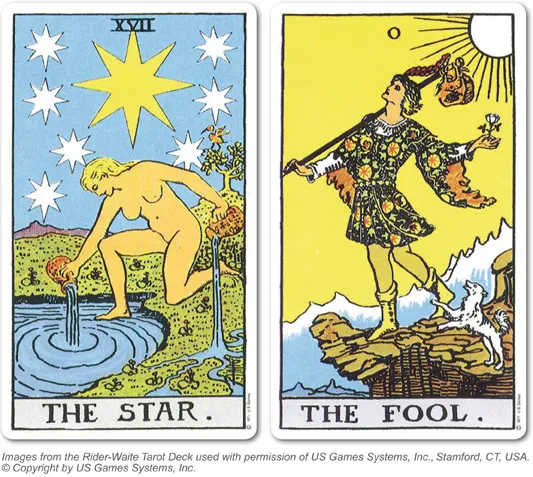
Who are the sisters of the Bridegroom? The most obvious answer is: the seven divine inner-beings we projected outward as the Pleiades constellation. In the Hebrew Bible, these seven stars are called Kimah–a Hebrew word meaning “gathering.” Believed to be an ancient word for the Pleiades, Kimah is frequently mentioned in partnership with Kesil, a word meaning “fool.” Like Kimah, Kesil is wrongmindedly presumed to refer to a visible star cluster; in this case, Orion’s Belt. In actuality, the seven star-sisters” and “the fool” are as closely linked in the Torah as they are in the Tarot.
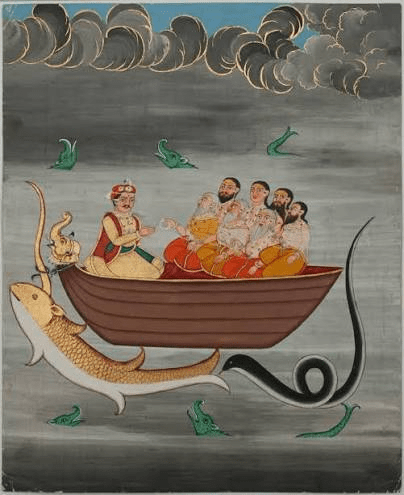
In Hinduism, the “seven stars” are the Saptarishi — the seven celestial sages who enter the Ark with Manu in the ancient allegory of Matsya (the fish-tailed avatar of Vishnu).
Since seven daughters of the same father are sisters, we can safely presume that the Bible’s most obvious portrayal of these seven cosmic “sisters” are the Seven Daughters of Jethro, the high priest of Midian (Medina), the Arabic name for the Resting Place.
Found in Exodus 2, these seven personified sisters were watering their father’s flock at a well (the wellspring/fountain) when they were harassed by local shepherds. Moses (the M-kara vibration), having recently fled from Egypt, defended the women, watered their animals, and was invited to their home as a result.
By now, the symbols in that story should be obvious, but I threw in a few helpful hints for those who haven’t been paying attention.
The Rik’s next line reads: damsanavan sa nah sanita sanaye sa no ‘dat asvinav asvav dasrav amartyahvam rathoyojanoatyesa yatam saviraya gomad dasra hiranyavat samanayo hi vam ratho dasrav amartyah
My translation:
The stinging insects of the new Word of God in wholeness bestows the ancient Word of God, the vessel with teeth, the horse of God’s Love.
smandaṃsa-nāvān (The stinging insects of the new) sa (Word of God) naḥ (in wholeness) sanitā = samita (bestow) sanaye (the ancient) sa (Word of God) no (the vessel) ‘dāt (with teeth) āśvināv (the horse of God’s love)
Note:
The stinging insects of the new Word of God are the Triune vibrations of AUM. When these powers join in wholeness ( as I explained earlier) they reflect the ancient word of God (Om), the vessel with God’s teeth (the Great Rays of Yah and Vah), which marry in the Assembly (the gathering of the waters) to release “the horse of God’s Love.” In Hinduism, the horse of God’s Love is Uchchaihshravas, the seven-headed white horse Indra seized as the beast arose from the gathering of the waters.
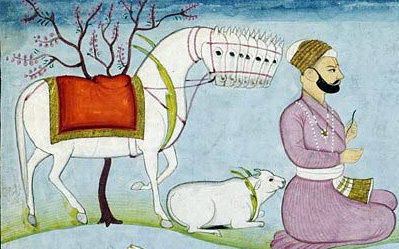
We’ve talked about this symbolic “horse” many times in the past. If you missed those discussions, you should know that Uchchaihshravas means “the exalted sound of glory.” rather than “long ears.” And, as we now better understand, the exalted sound of glory is God’s exalted hand: the U-kara vibration?–which is what the Bible supposedly calls “the swarm from the pit” and “the plague of locusts that sting like scorpions.” Rightly understood, the U-kara vibration is what yogis call Kundalini.
In Course terms, the horse of Divine Love is the “star” or Thought of God at the top of the dream-realm — the star signifying the coming of Christ (into our consciousness), as Jesus explains below:
The sign of Christmas is a star, a light in darkness. See it not outside yourself, but shining in the Heaven within, and accept it as the sign the time of Christ has come. He comes demanding nothing. No sacrifice of any kind, of anyone, is asked by Him. In His Presence the whole idea of sacrifice loses all meaning. For He is Host to God. And you need but invite Him in Who is there already, by recognizing that His Host is One, and no thought alien to His Oneness can abide with Him there. Love must be total to give Him welcome, for the Presence of Holiness creates the holiness that surrounds it. No fear can touch the Host Who cradles God in the time of Christ, for the Host is as holy as the perfect Innocence which He protects, and Whose power protects Him. (ACIM, T-15.XI.2:1-9)
The next Rik reads: asvavatyesa yatam saviraya gomad dasra hiranyavat samanayojano hi vam ratho dasrav smartyah
My translation:
The horses of the three winds of Esa depart from the mighty river of fire consuming the miracle-workers in the Golden enclosure yoked together in likeness to impel the winds of the chariot to bestow the blood of the immortal Yah.
aśvāvatyeṣā (the horses of the three winds of Esa) yātaṃ (departing from) śavīrayā (the mighty river) gom-ad (of fire consuming) dasrā (the miracle-workers) hiraṇyavat (in the Golden Enclosure) samānayojano (yoked together in likeness) hi (to impel) vāṃ (the winds of) ratho (the chariot) da-srāv (to bestow the blood) amart-yaḥ (of the immortal Yah)
Notes;
As stated previously, Esa is one of the names used for the Red Ray of Yah in the Rigveda. In the Bible, he’s Esau, the hairy red brother of Jacob, the journeying Soul. The three winds of Esa are, therefore, the winds of AUM, which depart from the river of fire. In the Bible, we find this same “river of fire” in Daniel 7:10 and also as a “lake of fire” in Revelations 20:10-15.
What is this lake of fire? I can’t really say, but I’m certain it’s nothing we need fear, because fear is an invention of the Ego Mind, having nothing whatsoever to do with God or anything “of God”.
Or, to quote Course-Jesus:
Where does the totally insane belief in gods of vengeance come from? Love has not confused its attributes with those of fear. Yet must the worshippers of fear perceive their own confusion in fear’s “enemy”; its cruelty as now a part of love. And what becomes more fearful than the Heart of Love Itself? The blood appears to be upon His Lips; the fire comes from Him. And He is terrible above all else, cruel beyond conception, striking down all who acknowledge Him to be their God. (ACIM, W-170.10:1-6)
From what he says, I get the feeling the Lake of Fire or River of Fire in the Bible and the Rigveda are “the Heart of Love itself” — and that “heart” is the Inner Altar, where the eternal flame of God’s presence still burns within our holy minds. And from this Circle of Fire, that sacred flame goes out from us to inflame the whole Christ Mind.
Jesus explains this myriad times in the Course. What follows is but one example:
There is another vision and another Voice in which your freedom lies, awaiting but your choice. And if you place your faith in Them, you will perceive another self in you. This other self sees miracles as natural. They are as simple and as natural to it as breathing to the body. They are the obvious response to calls for help, the only one it makes. Miracles seem unnatural to the ego because it does not understand how separate minds can influence each other. Nor COULD they do so. But minds cannot be separate. This other self is perfectly aware of this. And thus it recognizes that miracles do not affect another’s mind, only its own. They always change YOUR mind. There IS no other. (ACIM, T-21.V.3:1-12)
Three more Riks to go, the first of which reads: samudre asvineyate kas ta usah kadhapriye bhuje marto amartye kam naksase vibhavari vayam hi te amanmahy antad a parakat asve na
My translation:
Gather together in the womb of the horse to approach the shining tail breaking the dawn of the lesser Great Ray of the Beloved, the arm in the mortal world of immortal Love.
sam-udre (gather together in the womb) aśvin-eyate (of the horse to approach) kas (the radiant) ta (tail) uṣaḥ (breaking the dawn) kad-ha-priye (of the lesser Great Ray of the Beloved) bhuje (the arm) marto (in the mortal world) amartye (of immortal) kaṃ (Love)
Notes:
In Hindu lore, the “womb of the horse” has two primary meanings: the first is the Cosmic Ocean (the birthplace of divine horses [divine thoughts]). And the second is the Mare of Fire (the subterranean force that drinks the world’s oceans [ego thoughts]). Both concepts trace back to Vedic and Puranic traditions.
The radiant tail breaking the dawn of the lesser great Ray of the Beloved — the Yah Ray of the Christ Self or Universal Mind is the dragon’s tail of Christ’s Majesty, which is Ketu, the descending node of the Moon and Indra, the King of the dream-dissolving Atonement powers. The Great Ray of Christ’s Majesty is, therefore, the arm in the mortal world of God’s immortal Love.
Let’s presume the “arm” mentioned herein is one of the Everlasting Arms mentioned in Deuteronomy 33:27-28. We now know those arms are the celestial powers or forces Vedic astrologers call Rahu and Ketu.
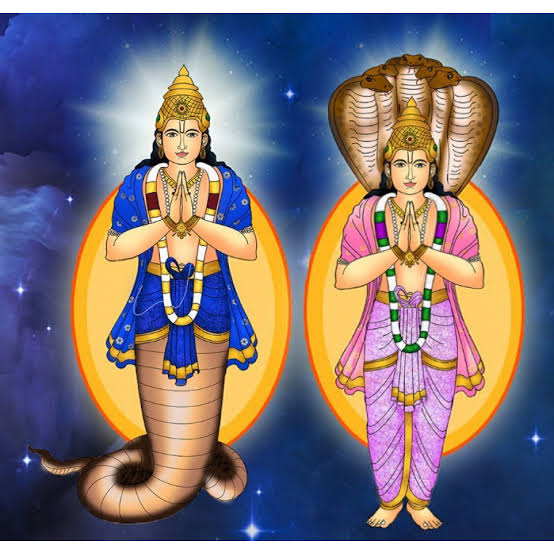
Allow me to explain: Rahu, the dragon’s head is the “arm” of God’s Majesty reaching upward (from the Moon Circle) toward Heaven; whereas Ketu, the dragon’s tail and descending node of the Moon (Soma) is the “arm” of Christ’s Majesty reaching down (from the Moon Circle) to earth.
In the image above of Ketu and Rahu, we see the five heads of Shesha, the king of the Nagas, behind Rahu’s head. Knowing what we now know, we can surmise that Shesha represents the Great Dragon of God’s Radiant Splendor — the Great Beast of Revelations, whose infamous “mark” is 666.
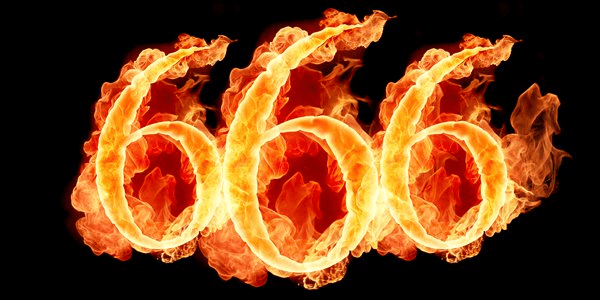
The Ego Mind has interpreted this invisible spiritual “mark” or “sign” fearfully; when it’s actually the unseen imprint made in our foreheads (the Ajna Chakra) by the Holy Spirit’s signet ring.
Let’s now compare our new understanding of the Everlasting Arms with what Deuteronomy reports about these symbols. When illuminated, Deuteronomy 33:27-28 reads as follows:
In the east, Elohim shelters the Everlasting Arms to drive out hating or adversity, the presence speaking for destruction.
Israel (the journeying Soul) dwells securely in separation at the fountain of Jacob. In the Land of the Living, the abundant harvest of the new wine of Shamayim (the celestial sphere) drips down like dew.
We covered the Everlasting Arms in our discussion of the Second Sukta, the first Rik of which also mentions the divine horses and the Everlasting Arms. To save you the trouble of looking back, Rv 1.2:1 reads:
The Horses of God strengthen the giving cloud of the Holy Spirit’s swift-flowing drinking water, the holy rays of the Bridegroom, the everlasting arms delight in the offerings of surpassing joy.
If Elohim shelters the Everlasting Arms in the East, then Elohim (the Solar Logos) shelters the Everlasting Arms in the enclosure, walled garden, or walled city “east of Eden.” And that “enclosure” is the mental space the Course calls the Resting Place and the Meeting Place, the Bible calls the Land of the Living and New Jerusalem, the Hindu literature calls Goloka, and the Quran calls Medina.
And just so we’re crystal-clear; these names all refer to the SAME place in the mind; there are NOT different sanctuaries for Christians, Jews, Hindus, and Muslims. To reach this ONE holy place of God’s restful inner-peace, we first must overcome the whole insane notion of sectarianism.
The next Rik reads:
The mark to assemble the rays flowing God’s breath (or lifeforce) impels the thundering peace of the Great Borderland, the A-kara for crossing over to the mare of Nara.
nakṣa-se (the mark or sign to assemble) vibhā-vari (the rays flowing) vayaṃ (God’s breath or life force) hi (impels) te (the thundering) aman-mahy (peace of the Great) āntād (Borderland) ā (a-kara) parākāt (for crossing over to) aśve (the mare) na (of Nara)
Notes:
The wording is a bit confusing, so let’s break down the elements. The mark is the mark of the Beast (666), which plays a pivotal role in joining the Great Rays. And their sacred marriage impels the A-kara to sound. The A-kara is God’s Right Hand, so it’s the hand belonging to the upward reaching arm of God’s Majesty. We begin to hear the A-kara in the Resting Place. And the hearing of it enables us to cross over (the Great River) into the womb of Nara’s mare.
Although we find no horse associated with Nara (the great Purusha) in the Hindu lore, we do find a cosmic cloud goddess called Saranyu, who takes the form of a mare. We also find Vadavagni, a horse-headed fire that burns beneath the cosmic ocean.
Also sometimes called Samjni (the gathering of the wisdom-mothers), Saranyu means “the Word of God in joyfulness.” In the Hindu lore, she is the wife of Surya (the Solar Logos) and the mother of the Asvins (the twin divine-horses of healing), as well as Yama and Yami.
All of this evidence suggests that Saranyu is the personified “mother” of the Great Rays in Hinduism whose husband is the Solar Logos — the Radiant Word of God burning evermore in the depths of our shared Holy Mind. And the “mother” of the Great Rays has to be what Course-Jesus calls the Mind of the Atonement. And the Mind of the Atonement (as he plainly states) is the Holy Spirit. So Saranyu, the wife of Surya, represents the Holy Spirit. And the Holy Spirit is indeed the “mother” of the Great Rays and their “seeds” or “sparks” within us.
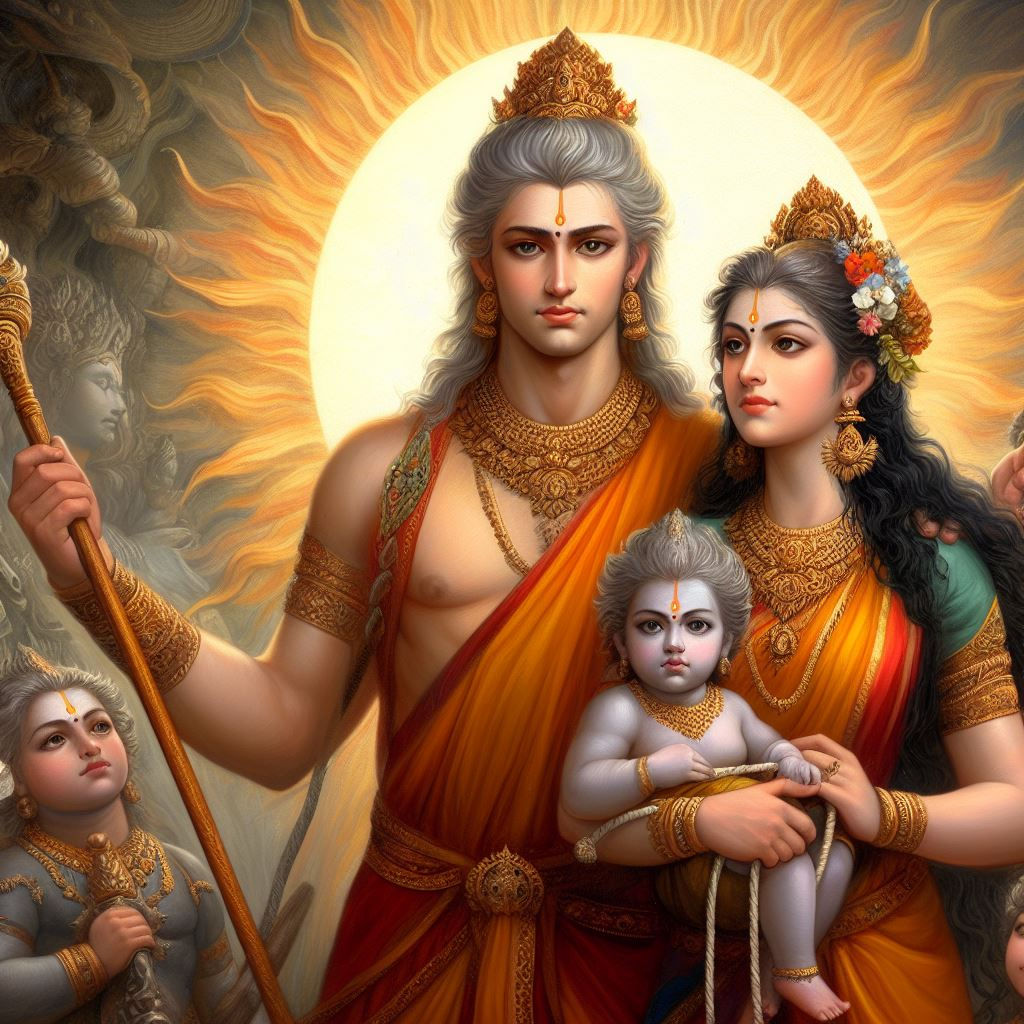
The next and final Rik reads: citre arusi tvam tyebhir a gahi vajebhir duhitar divah asme rayim ni dharaya
My Translation:
The brightest star of the red ray dawning the True Self to those in fear, the A-Kara of the holy name strengthens the cowherd milking the cow of the divine stones, the treasures within supporting the flow.
citre (the brightest star) aruṣi (of the red ray dawning) tvaṃ (of the true self) tyebhir (to those in fear) ā (the A-kara of) gahi (the holy name) vāj-ebhir (strengthens the cowherd) duhitar (milking the cow) divaḥ (of the divine) asme (stones) rayiṃ (the treasures) ni (within) dhāraya (supporting the flow)|
Notes:
In metaphysical circles, the brightest star of the red ray is said to be Antares, a massive red supergiant located 550 light-years away in the Scorpius constellation. Owing to its association with Scorpius, Antares is sometimes called “the heart of the scorpion.”
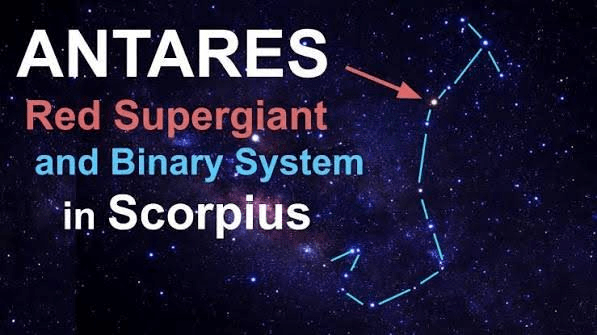
In Vedic astrology, Antares is identified as the central star of Jyeshtha (the eldest or most senior), the 18th Nakshatra (lunar mansion). Also known in Vedic circles as the “Heart of the Scorpion,” Antares is associated with seniority, power, and protective leadership. Not surprisingly, Indra is the presiding deity of this massive red star.
From the more scientific (egoic) astronomical perspective, Antares is a “dying” massive red supergiant hundreds of times larger and thousands of times more luminous than the Sun.
In Truth, Antares has to be the outward material projection of the A-kara vibration, which the Bible describes metaphorically as “a locust swarm with the stinging power of the scorpion.” The scorpion they mean is Scorpius, the constellation — or what the constellation represents in the celestial realm. In Sanskrit, Scorpius is Vṛścika, which means “the one who pierces.”
Fascinating, isn’t it?
The cow of the divine stones is Kamdhenu, the miracle cow whose “milkers” are the Gopi, the celestial milkmaids devotedly serving Lord Krishna, the cowherd in Goloka (the Resting Place). In Truth, the Gopi (they who glorify the nectar of Krishna and Radha) represent the miracle-workers serving Christ in the Resting Place.
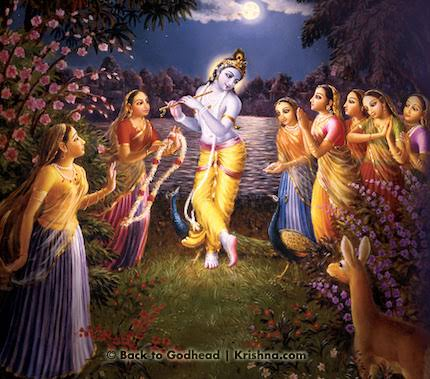
And that’s it. Whew. This one was a beast to unscramble, so I hope you learned something useful from my efforts.
Until next time, Om Hari Om and Namaste.


Leave a Reply