
Today, rather than tackle the Rigveda’s next Sukta (Rv 1.28), I want to investigate three seemingly related symbols found in the Bible, as well as the Rigveda. Those three symbols are the Cornerstone, the Touchstone, and the Capstone. What might these three “stones” represent?
Let’s begin our investigation into their symbolic meaning by scrutinizing the passages in the Bible referencing these three metaphoric “stones.”
We’ll start with the Cornerstone, a recurring theme in the Bible. According to Baker’s Evangelical Dictionary of Biblical Theology, the Cornerstone is:
(an) architectural term used twice in the New Testament (Eph 2:20 ; 1 Peter 2:6 ) to speak of the exalted Jesus as the chief foundation stone of the church, the cornerstone on which all the building depends. The New Testament draws on two Old Testament passages about the coming Messiah (Isa 28:16 ; Zech 10:4). In Isaiah 28:16 the prophet speaks God’s words directly to the rulers in Jerusalem who boasted that they were immune to the scourges of life because they were secure in themselves. God said their security was false because he would lay a stone in Zion, a precious cornerstone, which really was secure — and it was not those present rulers. Zechariah expands this promise by saying that the Cornerstone will come from the tribe of Judah (10:4). Paul builds on this concept in Ephesians 2:20 by saying that Jesus Christ is the chief Cornerstone, the apostles and prophets are foundation stones, and the whole building (the church) is a holy temple in the Lord. Peter’s use of the idea is more complex, stringing three prophetic verses together (Psalm 118:22 ; Isa 8:4 ; 28:16). The stone laid in Zion (Isa 28:16 ) is precious to the believer, but as the stone placed at the “head of the corner” (eis kephalen gonias), that is, exalted (Psalm 118:22), he is a stone of offense and stumbling (Isa 8:4) to those who refuse to believe. The metaphor seems obvious: the Cornerstone is either a source of blessing or judgment, depending on a person’s attitude toward it. Some modern interpreters, beginning with J. Jeremias in 1925, take a different tack, separating the two stones and making the cornerstone one thing and the stone at the “head of the corner” another, that is, a Capstone or Keystone. It is hard to visualize one stumbling over a Capstone, but metaphors can be stretched. In any case, the point is that the very foundation of the church is Jesus Christ. This was prophesied by the prophets of old and those who stumble over that rock chosen by God are condemned.
An interesting summary, but tainted by the wrongminded belief that God would ever condemn His own beloved creations. As Course-Jesus tells us, we will all submit to God’s Will in the end; it’s just a matter of time. And, in the meantime, we will stumble on the journey. We all will stumble and must, therefore, forgive the missteps we all are destined to make under the Ego’s corrupting influence.
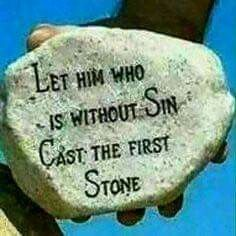
When Jesus famously said, “Let he who is without sin cast the first stone,” he meant a lot more than most of us realize. When we “cast the stone” of blame at others, we do more than injure the other party. As we will learn today, we also throw away our own ticket back to Heaven, which takes the form of the Cornerstone, the Capstone, the Touchstone, and the Millstone referenced in the Holy Bible.
Let’s revisit some of the Bible verses cited, to find out for ourselves what was recorded about the Cornerstone and the Capstone.
Are these two metaphoric stones the same? And do they both represent Jesus Christ, as many Christians insist?
Let’s start with Ephesians 2:19-21, which reads as follows in the KJV Bible:
Now therefore ye are no more strangers and foreigners, but fellow citizens with the saints, and of the household of God; And are built upon the foundation of the apostles and prophets, Jesus Christ himself being the chief corner-stone; In whom all the building fitly framed together groweth unto an holy temple in the Lord:
Not too terrible, but not great either. This section of Ephesians actually reads as follows:
Consequently, therefore, belong no more to strangers and foreigners, but to fellow citizens of the sanctuary, and the one family of God to build upon the foundation, as apostles and prophets of Jesus Christ–the True Self being the akrogonlaikos, in which the structure unites or joins together to grow into the Holy Temple of the Master, whom you also build together into the habitation of God’s pneuma.
Not quite the same, is it? Nor does it specifically state that Jesus Christ is the cornerstone. I left the Greek words akrogonlaikos and pneuma intact, because their definitions are key. Akrogonlaikos can mean either “cornerstone” or “capstone,” so it isn’t clear which stone St. Paul means in this instance. Pneuma, meanwhile, means “spirit, winds, or breath,” so it’s the Greek equivalent of Ruach (in Hebrew) and Vayu (in Sanskrit.)
All three terms refer to the Cosmic Wind or Breath generated by the sacred-fire of the Father’s presence on the Inner Altar. So, pneuma is AUM, the Holy Spirit, as well as the Master of the House — the house being “the Temple of the Holy Spirit” (as per Course-Jesus). Rightmindedly understood, that Temple is the Spiritual Body (of Christ) deep in our minds (rather than our physical bodies).
It’s important that you apprehend that what the Bible terms the Temple of Solomon (the Holy Spirit) and the Church of Christ isn’t any temple or church human hands have erected in the world. Nothing we build in the world (with our bodies or intellects) is real; it’s all part of the upside-down illusion of reality the Ego Mind constructed to deceive humankind.
The passage under discussion begins with “consequently, therefore,” meaning it refers back to what was said in the previous verse or verses. So, let’s hop back to Ephesians 2:11-18, to ascertain what St. Paul was truly attempting to teach the Ephesians herein. The preceding passages read as follows:
Wherefore remember that you were once ethnos (living together collectively) in the body that gathers in akrobystia (the innermost covering) underneath, the gathering of the peritome (surrounding divisions), the bodies cheiropoiétos (not made by human hands). For, at one time, you were separate from Christ, estranged citizens of Israel, and strangers to the covenant promise to have no faith in the godlessness of the world. But, now, with Christ Jesus in you, the one ever-existing far away comes into being nearby in the Blood of Christ.
For indeed, the True Self is our peace, the one making both sides one to dissolve the middle-wall fencing and to end the self of the body of external hostility. The law instructs by dogma to make him dual in purpose. In order to build the two selves into a new being to make peace and also to reconcile completely both sides of God in one body (as a sound whole), upright in the at-one-ment (of the Christ) to destroy enmity within. And to go out and announce the good news that peace for all of you is faraway and near because, through Him (Christ, the True Self) having both sides leads to the one pneuma (spirit, wind, or breath) facing the Father.
I mean no offense, but I must be truthful. Ethnos does not mean “gentile” or “foreigner”; it means “living together as a collective,” which is the true meaning of “tribe” or “nation.” Furthermore, akrobystia does NOT mean “un-circumcized penis”; it means “innermost covering.” By the same token, peritome does NOT mean “circumcized penis,” it means “bordering divisions” or “surrounding divisions.” It’s a reference to the concentric circles of AUM, therefore.
Only the Ego Mind would promote the insane idea that God would, in complete contradiction, both make the human penis and then ask that it be surgically altered in order to be “clean.” Ditto for the insane idea that God has a penis, perfect or otherwise.
God, being creative mind and perfect love, is genderless or agender. God is neither man nor woman, that is to say. So “he” is a misleading pronoun, when used in reference to God. We need to come up with something better. They and Them? S/he? That?
I’m just saying: If God did make the penis, it would be both perfect and eternal, which is far from the case. So, get over the crazy egoic notion that God is a man.
Moving on … cheiropoiétos means “not made by human hands” rather than “handmade” or “made by hand.” The Greek word for hand is cheir, not cheiro, making the word a compound of cheir (hand) and opoietos (not made). I double-checked, in case cheir could refer to the hands of God. But no dice; the word specifically refers to human hands.

The one ever-existing far away but coming near in the Blood of Christ, is the Soul and/or the True Self that is the Christ Self or its fragment in us.
While I’ve improved the translation, I haven’t solved the mystery of the Capstone vs. the Cornerstone, so let’s move on to 1 Peter 2:6. Herein, we find both the foundation Cornerstone and the Capstone, so maybe we’ll also find our answer. Earlier in the chapter, “Peter” also makes reference to a “Living Stone.” So let’s start with 1 Peter 2:4. I’ve added notes along the way to clarify the meaning of the metaphors.
The place for drawing near the Living Stone is rejected surely by men, but chosen by God as precious. The True Self is like a Living Stone to build up the Spiritual House of the holy priestly fraternity offering up spiritual offerings acceptable to God through Jesus Christ.
The place for drawing near the Living Stone is the Land of the Living, the place in our minds where our Souls stand upright in the Celestial Sphere. That “place” is the Resting Place and the Borderland. The True Self is that Living Stone, which serves as our foundation for rebuilding the Temple, the Spiritual House or Spiritual Body where we work together in “holy priestly fraternity” to make our almsgiving offerings to God, through the Christ Self. And the Christ Self or True Self is indeed the stone we rejected, which becomes the Capstone.
So, in a sense, the Capstone and the Living Stone are Jesus Christ — or, more accurately, symbols of what Jesus Christ also symbolizes, which is the Love of God within us.
The next section reads:
Wherefore also to encompass the graphe, “Behold, I lay in Zion a corner-stone to be chosen and highly regarded, and even to be entrusted, upon the Self in confusion, but by no means disgraced, within you.”
Graphe means “written word” or “the word carved in stone.” That it refers to the “holy scriptures” is an interpretation imposed all 51 times the word appears in the New Testament. Graphe may, in fact, refer to “the Name” God “wrote across our hearts” (the Inner-Altar).
That said, the Bible does say that God (or his agents) laid a corner-stone in Zion — the Promised Land at the top of the Celestial Sphere, NOT a place found in the godless world. The cornerstone, as we are told herein by “Peter,” is the True Self, still standing upright in that higher place (within our minds). The Ego has confused that Self, “Peter” tells us, but has not “disgraced it.” Because that ” True Self” or “True I Am-ness” was created by God in a state of grace, which nothing can change, especially the Ego’s unreal, insane and completely upside-down perceptions of reality.
Or, as Course-Jesus says:
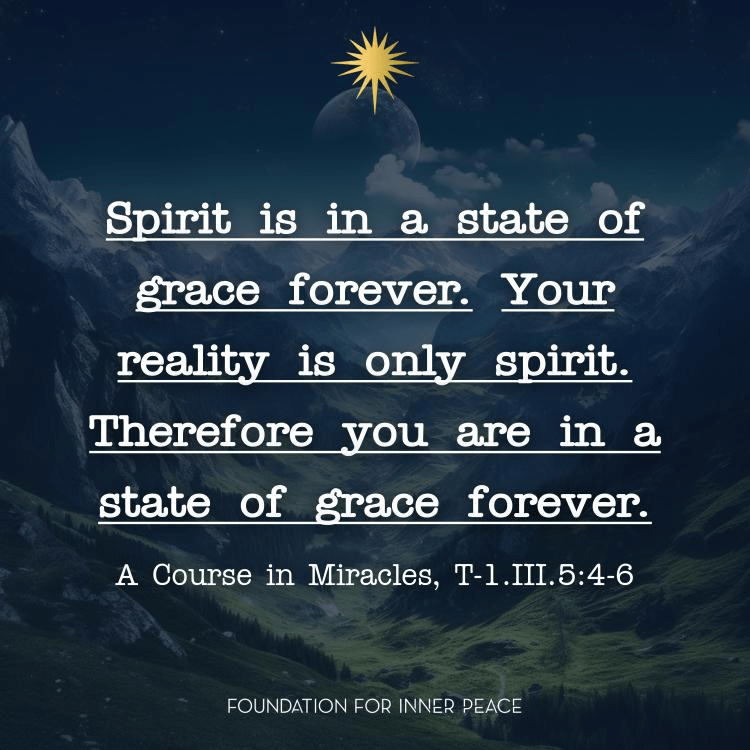
Peter also says herein that the cornerstone was placed in Zion “upon” the Self in confusion — the seemingly separated Self wandering in the desert-wilderness.
The next verse reads:
Therefore, believe in this estimate of your worth; to refuse to believe in the stone which edifies is to reject the coming into being of the head-corner.
In the Course, Jesus says pretty much the same thing. So, don’t tell me the Course challenges the Bible. The Course only challenges the mistranslated Bible, which is the point.
Presumably, the head-corner is the Capstone or Headstone, rather than the foundational cornerstone. In Biblical phraseology, one becomes the other. Not so, however, in building and masonry, where the cornerstone is the first stone laid, whilst the capstone is the last.
The Greek words translated as “head of the corner” in the KJV Bible are kephale and gonia. Kephale means “head,” as in the body’s head, but can also describe the highest place or chief commander. Gonia, meanwhile, can mean “corner,” “angle,” or “quarter.” So, kephale-gonia can mean “highest quarter” or even the “head-quarter.” It may, therefore, be a reference to the fourth quarter of Moksha presided over by Agni, the sacred-fire. Alternatively, it may refer to God’s headquarters in the dream-realm, which, by all accounts, is the Throne Room (of the Logos) on the seventh plain. Let me just say that the fourth quarter of Moksha and the Throne Room might actually be two different names for the Inner Altar.
The verse from 1 Peter continues thusly:
Also, the stone, on the occasions of stumbling, is a rock. One of the occasions of stumbling that strikes against the Logos is refusing to believe in the established place. Therefore, you must choose the family of the Royal Priesthood, the holy nation in the gathering place is how you broadcast the goodness calling you out of the darkness into the True Self’s awe-invoking light.
Presumably, the occasions of stumbling are the missteps or errors we make along the walking journey, all of which are lessons God would have us learn to facilitate our awakening (as per Workbook Lesson 193. And it is these we must forgive in ourselves and others in the Circle of Atonement, where we perceive and “judge” as upright Souls in brotherhood and grace, rather than as egos in separate bodies.
“Peter” never says the Living Stone is “a stumbling block.” He says the stone is a rock, even when we stumble. And a Capstone certainly can be a rock even when we stumble, so the metaphor isn’t stretched, as the Baker’s editor suggests,
Let’s move on to the Old Testament verses referencing the Cornerstone, which are Psalm 118:22, Isaiah 28:16, and Zechariah 10:4.
Let’s start with Psalm 118:22 and 23, which read as follows in the KJV Bible:
The stone which the builders refused is become the head-stone of the corner. This is the Lord’s doing; it is marvelous in our eyes.
What the psalmist actually wrote is more along these lines:
The stone to build ma’ac heads the corner (of) YHVH’s miracle-eye. The Rays of YHVH act to rejoice and be joyful.
The big question here is: What does ma’ac mean? Most sources say it means “to reject,” but the preceding word is banah, which means “to build, rebuild, construct, or establish.” It does not mean “builder.” Ma’ac has to be, therefore, the thing we build upon the Cornerstone or Living Stone of the True Self — the proverbial Rock.
The key to solving the mystery is the apostrophe in the middle. What is the missing letter? My guess is that ma’ac is a shortened form of malac, a word derived from mal’akh (מַלְאָךְ), which means “messenger” or “angel.” In ancient Hebrew (according to the Wisdom Library), “this term was used broadly to refer to any divine messenger, including prophets and even human envoys, but it is most commonly associated with celestial beings.” The etymology traces back to the root l’akh, meaning “to send” or “to dispatch.” As a given name, Malac carries connotations of divine guidance, spiritual connection, and a role as a bearer of important news or messages.
Might that prophesied “messenger” be AUM, the ego-dissolving cosmic winds of the Holy Spirit?
I’m guessing it does, given all that Course-Jesus explains below:
Never attempt to overlook your guilt before you ask the Holy Spirit’s help. That is HIS function. Your part is only to offer Him a little willingness to let Him remove all fear and hatred, and to be forgiven. On your little faith, joined with His understanding, He will build your part in the Atonement and make sure that you fulfill it easily. And with Him, you will build a ladder planted in the solid rock of faith, and rising even to Heaven. Nor will you use it to ascend to Heaven alone. (ACIM, T-18.V.2:1-8)
We build our part in the Atonement in the manner of a ladder, planted in the solid rock of faith (in our Christ-like I-Am-ness), and rising even to Heaven. Our faith in the underlying Truth of our Being is, therefore, the solid rock upon which we build the four-rung ladder of AUM.
Let’s now see what additional light Zechariah might shed on the subject. In the KJV Bible, Zechariah 10:4 reads thusly:
Out of him came forth the corner, out of him the nail, out of him the battle bow, out of him every oppressor together.
What the verse actually says is closer to this:
To bring out the cornerstone, the tent peg and the battle bow press together.
The cornerstone, as we now know, is the Christ Self or Christ’s “presence” on the Inner Altar; the tent peg is the Holy Spirit’s hook — the Vah Ray producing the Cherubim; and the battle bow is the spiritual weapon gifted to our Souls by the Red Ray of Yah. That weapon is the Atonement or AUM, the three hands of God comprising the Salvation Trinity. To come out of the Christ Self’s heart, therefore, the Great Rays press together or “marry” to again become YHVH.
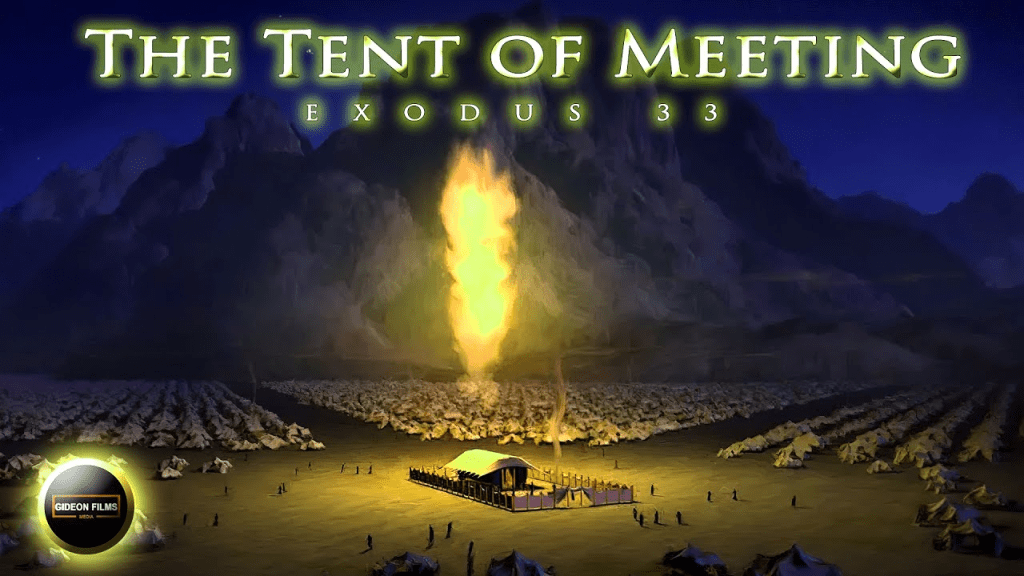
Let’s step back a few paces, so we can look at the bigger picture. In Biblical metaphor, the tent in the desert is the Tabernacle, the place of worship for the wandering Israelites (our Souls, not a bunch of ancient Jews). It’s also called the Tent of Meeting, so it represents the Meeting Place, where “They” meet with us and converge in the dream-realm. “They” are the presence of God (Yah) and the presence of Christ (Vah). When They meet, they form YHVH, which might, in fact, be “the Capstone.”
Importantly, this is the “They” Course-Jesus references in the Text, under the heading For They Have Come. Click through and read this section and you’ll gain understanding.
To summarize his meaning, “They” are the Great Rays of Yah and Vah. And when “They” reunite in our heart-minds, the Holy Spirit’s job is done. AUM has, that is to say, completed the Atonement — the Temple rebuilding and/or ladder-building process.
Let us now move on to the Touchstone. We don’t actually find a Touchstone in the Bible — or do we? We don’t find it in the standard translations, because the Greek word for touchstone (basanos) has been mistranslated historically as “torture” or “torment.”
According to Strong’s Concordance, the word Basanos (Touchstone) appears only three times in the New Testament, but eleven times in the Septuagint, the 3rd-century Greek translation of the Old Testament. In the KJV translation, the word appears in Matthew 4:24, Luke 16:23 and Luke 16:28.
So. let’s look more closely at these three verses, starting with Matthew. In the KJV Bible, the verse in question reads as follows:
And his fame went throughout all Syria: and they brought unto him all sick people that were taken with diverse diseases and torments (basanos), and those which were possessed with devils, and those which were lunatick, and those that had the palsy; and he healed them.
In Truth, Matthew 4:24 says something very different. The verse should read:
The True Self’s hearing goes out to all of Syria, and also offers the True Self all sickness by sounding the unified echo, the varied-disease touchstone demonized by the moon-struck (the insane) as paralytic, to serve and heal the True Self. And follow the True Self of the great multitudes away from Galilee, Dekapolis, Jerusalem, and even Judea, to the other side, across the Jordan.
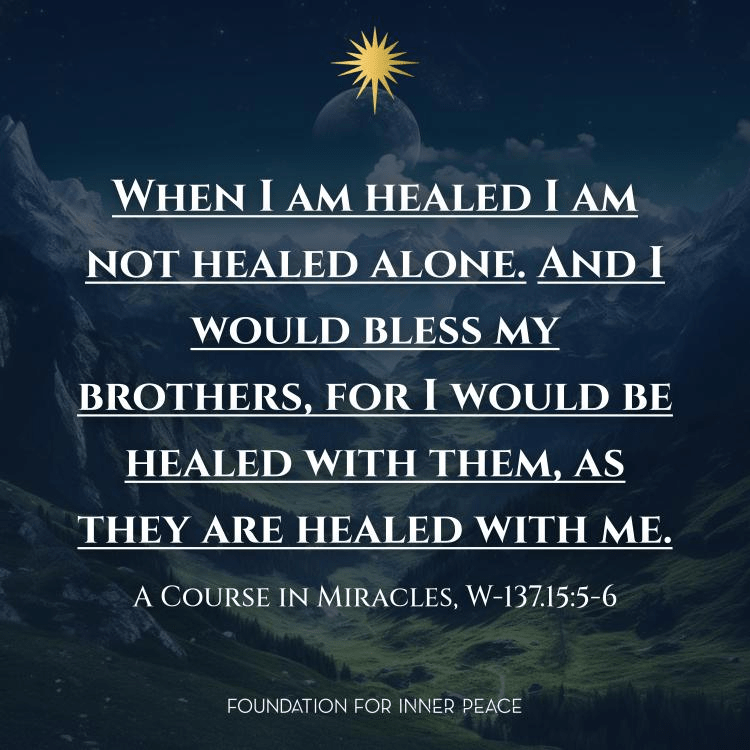
As the above meme indicates, Jesus says essentially the same thing in the Course. And I use this particular prayer everyday when calling my meditative almsgiving “meetings.” Except that I substitute “we” for “I.”
Not surprisingly, this part of Matthew was reworked to glorify Jesus’ physical miracle-working crusade by the men who “demonized” gnosticism — the direct “knowing” of God, which is only achieved by meditating on God’s Voice (the AUM constituting Pneuma, Ruach, and Vayu).
Interestingly, this verse alludes to the demonization of the Touchstone by “the moon-struck.” In Biblical times, “moon-struck” meant “mad” or “mentally deranged.” And in ancient Judea, particularly after the Babylonian exile, Jews began to perceive foreign gods as demonic entities (shedim), rather than mere ideological variations.
At the time Jesus walked the earth, therefore, Jews would have indeed perceived the eastern teachings about AUM as “demonic,” and perhaps also “paralytic.” Listening in deep silence is, after all, an “ego-paralyzing” exercise for those who seek salvation by doing “good works” in the world.
Or, as the minister of my former church used to say, “Those who meditate all the time are of no earthly good.”
Au contriare, mon frere.
To meditate on AUM, as all the Great Masters know and teach, is the ONLY way we can truly heal or “save” anyone and the world.

That said, Syria is a shortened form of Assyria, the fire-wall we discussed in our study of the Rigveda’s 25th Sukta. In that Sukta, the rishi-authors said the M-kara protects Assyria, the fire-wall within our minds, surrounding the Inner-Altar (the Sacred Heart of Christ seen below).
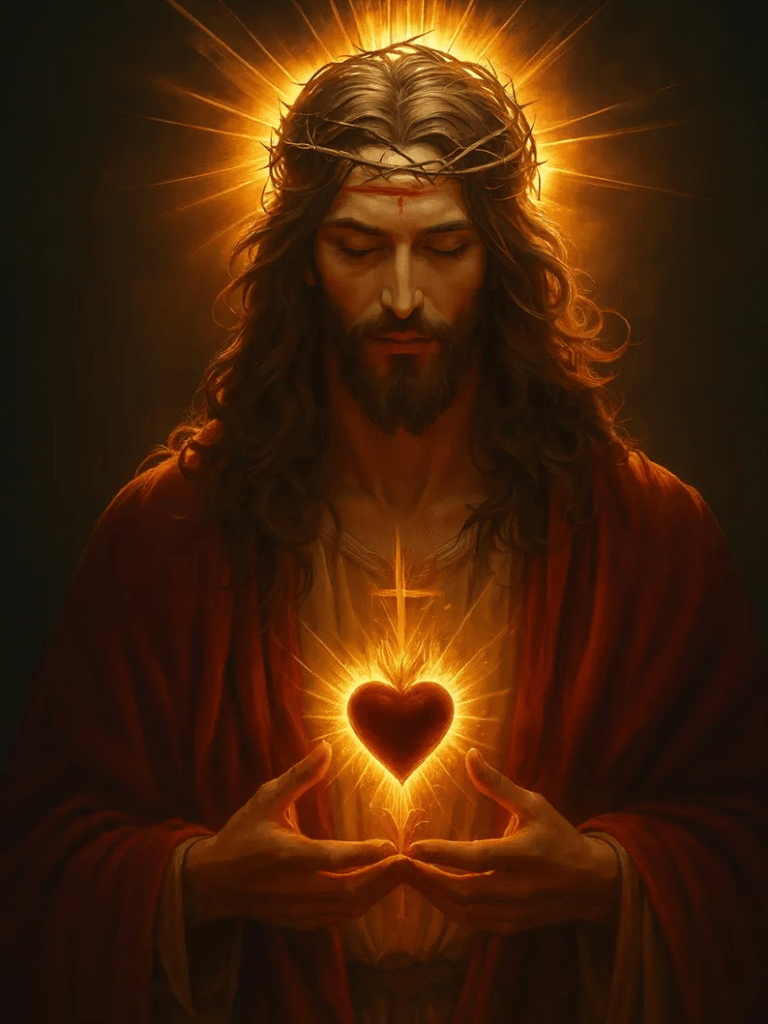
Matthew tells us to follow the True Self away from Galilee, Dekapolis, Jerusalem, and even Judea, to the other side of the Jordan River. Follow Christ to the Borderland, in other words, by listening to God’s Voice with our inner-ears.
These place-names all have deeper meanings. Galilee means “circle-district”; Decapolis means “ten cities” or “the city of ten”; Jerusalem means “place of peace”; Judah means “praise and gratitude”; and Jordan means “to descend.” So, the Jordan takes us underneath the Ego’s illusion, to the Resting Place of our Souls on “the other side.’
When we understand that EVERYTHING in the Bible is meant as an instructive symbol, we can use the events of Jesus’s earthly life to draw a map of the Spiritual Path he wants us to follow.
Let’s return to the Touchstone. Despite the historic mistranslation of Basanos, there is much discussion concerning “the Touchstone of Truth” on the Internet. Some say it’s Jesus Christ, while others believe it’s the Word of God. And they’re both right, of course, although mistaken about what Jesus Christ and the Word of God actually signify. Both are symbols of Perfect Love, which we hear in three refining stages as AUM.
I’m pretty sure “the touchstone” refers to the AUM vibration, given all that St. Paul describes in 1 Corinthians 14, the verse widely believed to describe “the touchstone.” Here’s a small sample of what St. Paul imparts:
For if I pray in an unknown tongue, my spirit prayeth, but my understanding is unfruitful. What is it then? I will pray with the spirit, and I will pray with the understanding also: I will sing with the spirit, and I will sing with the understanding also.
Else when thou shalt bless with the spirit, how shall he that occupies the room of the unlearned say Amen (AUM) at thy giving of thanks, seeing he understandeth not what thou sayest?
For thou, Amen, givest thanks well, but the other is not edified.
Here’s what I think he means: When we listen to the AUM, we don’t understand what God is saying. So, the Ego isn’t satisfied. But the Spirit (our Soul), which does understand, is both edified and grateful.
In the Course, Jesus says we will understand God’s words eventually. At the start, he says, the sound is akin to the native language heard by a baby. The baby doesn’t understand what it hears at first, but will come to know and understand the language of its parents by and by.

Course-Jesus uses the word “touchstone” only once, in Workbook Lesson 157: Into His presence would I enter now.
Here’s what he says on the subject of the Touchstone:
From this day forth, your ministry takes on a genuine devotion, and a glow that travels from your fingertips to those you touch, and blesses those you look upon. A vision reaches everyone you meet, and everyone you think of, or who thinks of you. For your experience today will so transform your mind that it becomes the touchstone for the holy Thoughts of God. (ACIM, W-157.5:1-3)
The holy Thoughts of God are AUM, the three tones of Perfect Love emanating from the Red Ray of Yah. And touchstones do indeed test the purity of precious metals. So the touchstone tests the purity of our thoughts, while also helping to make them like God’s again. And that is indeed the function of AUM.
But wait, because it’s also the function of the miracle and the Holy Instant. So, the miracle and/or Holy Instant may, in fact, be the Touchstone.
Let’s now see what Luke has to say about the Touchstone. For context, I translated most of Chapter 16, even though it’s a bit bumpy.
And in hell, to lift up the True Self’s eye possessing the Touchstone is to perceive Abraham from afar and Lazarus in the True Self’s bosom, and to call out and say “Father Abraham, have mercy on me, and also send Lazarus to dip his finger in the waters and cool my tongue, because I am grieving for this inner flame.”
But Abraham says, “Son, remember that you are in this life to receive good things and likewise, Lazarus, evil things. But now you call for comfort and you suffer. And above all this, between what the ego established, a great chasm is fixed so that to will to step across from here toward the place you are not, nor can pass through to Ego from there.
But now call to entreat, wherefore the Father, to send the True Self to my Father’s House. For to have the five brothers is how to affirm that the Self also goes into them. In the place of the Touchstone, Abraham speaks to the Self, echoing Moses. And the prophets hear and listen and say, ‘Not the father is Abraham; But one journeys unto the True Self away from death by thinking differently and speaking to the True Self. To hear not Moses and the prophets, nothing will persuade anyone to rise from the dead.
Interesting, right?
This is, in fact, the tail-end of the Parable of the Rich Man and Lazarus. Or, is it? To have the five brothers, Jesus says, is the way to affirm that the Self also goes into “them” or “Them.” Okay. But what or whom are the five brothers?
He doesn’t say, so let’s look for the answer elsewhere. In Hinduism, we find five brothers in the Mahabharata epic, in the starring role of the five Pandavas: Yudhishthira, Bhima, Arjuna, Nakula, and Sahadeva.
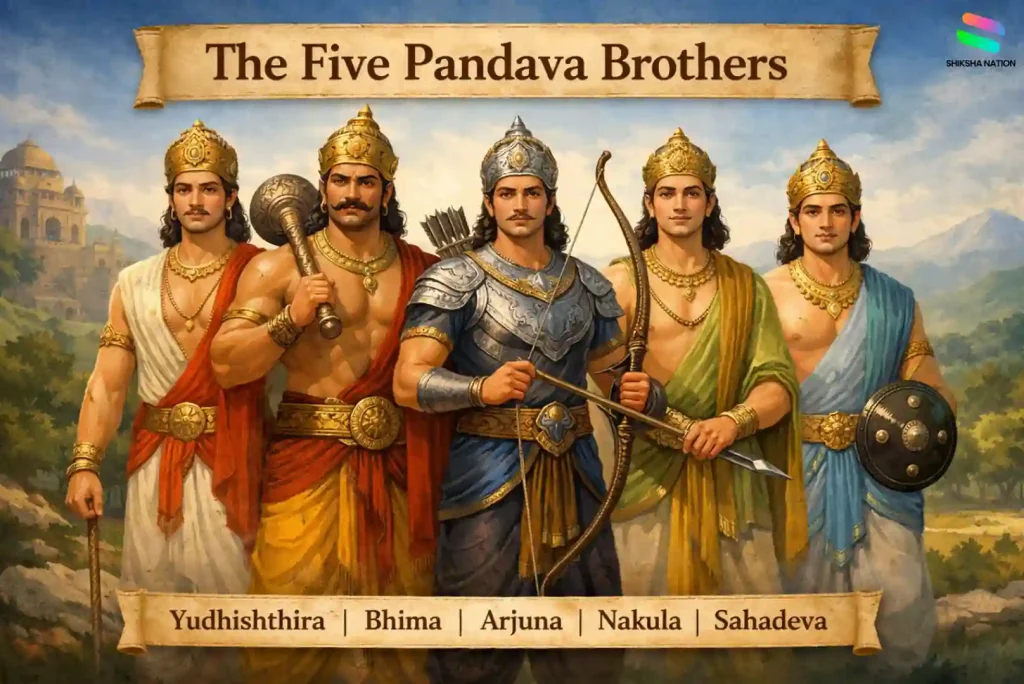
Pandava supposedly means “son of Pandu,” but could also be a compound of Panda and va, changing the meaning to “wisdom winds” or “teaching winds.” The Pandavas may be, therefore, the Hindu equivalents of the five brothers referenced in Luke 16. So, let’s look at their Sanskrit names. Yudhishthira means “steady in the righteous battle”; Bhima means “formidable strength”; Arjuna means “the shining waters”; Nakula means “the waters of community”; and Sahadeva means “together in celestial being.”
Noteworthily, Nakula and Sahadeva are twin brothers in the allegory. The name definitions suggest that the five brothers represent steps on the Soul’s journey.
Hold that thought, because we will encounter the five brothers again before we’re through.
In Hebrew, Lazarus means “God has helped.” So, Lazarus might symbolize God’s answer to the separation, which is the Holy Spirit. Lazarus also seems to represent “the resurrection,” obviously, because Jesus raises his friend Lazarus from the dead in the New Testament. Why Lazarus is in this life to receive “evil things” is beyond me at present.
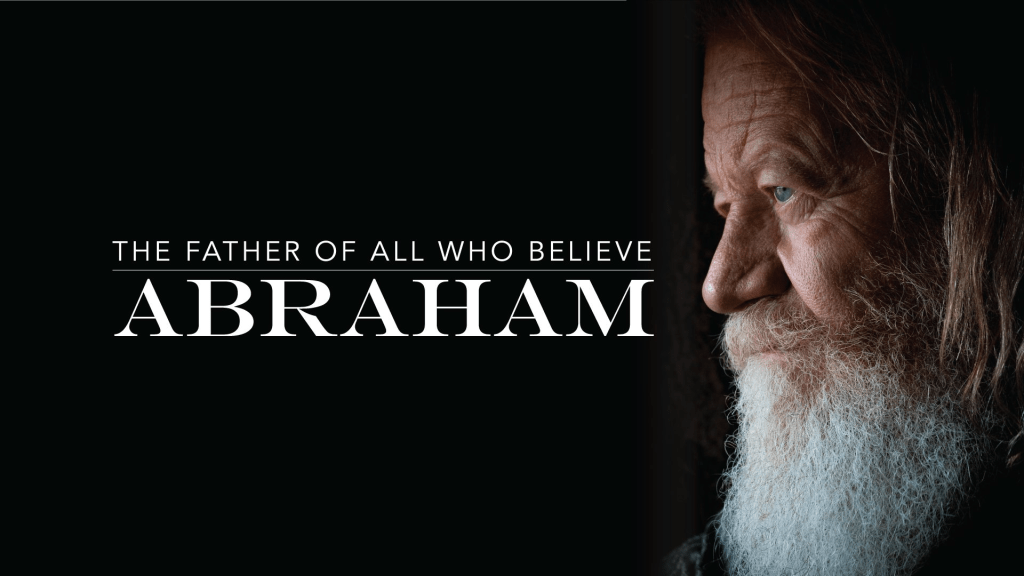
Abraham means “the father of the multitudes” or “the exalted Father.” In Genesis 17:5, God changes his name to Abraham, so the name-change represents the delegation of God’s power and authority to the Red Ray of Yah — the father of our Souls, but not the father of the One Son in wholeness, which is “the Christ.” And the Red Ray of Yah is indeed the father of our Souls, as well as the Holy Spirit (AUM), to whom Yah delegated the power given to him by God.
And, again, this is why King Indra delegates his power to Lord Krishna in the Hindu lore.
As Jesus explains in the Course, God created only One Son. That “son” incorporates the whole of Holy Creation (the Christ). And that’s all God recognizes: His ONE eternal creation, the Son of God or Christ. Not just Jesus, but everything that everlastingly exists in oneness with God, who knows us only as that ONE spiritual being or LOGOS, not as many beings. Individual Souls, like bodies, are atonement learning-devices. Our Souls are, quite literally, “chips off the old block”; the old block being the Cornerstone (the presence of the Christ in us).
This brings us again to the Capstone. Excluding those already discussed, the Bible verses referencing the Capstone are Zechariah 4:7, Acts 4:11, Matthew 21:42, Luke 20:17, and 1 Peter 2:7.
Let’s start with Zechariah, which I retranslated in an earlier post. Based on what I know now, the verse says nothing about a man named Zerubbabel — a Hebrew word-name said to mean “begotten in Babylon.” Babylon means “the gates of God,” so Zerubbabel may, in fact, mean “begotten in the gates of God.”
The Zechariah verse reads as follows:
Great Har, the face or presence begotten in the gates of God to upright and bring out the Stone (eben) sounding the gracious and merciful Word of God YHVH speaks, says, “The hands begotten in the gates of God fixed the foundation of the Temple; the hands cut off to make known YHVH’s gathering place, by sending away contempt. The lesser rays make the joyful see the stone in the hands begotten in the gates of God; the seven eyes of YHVH, roaming (patrolling?) the Land of the Living.
Nothing specifically about the Capstone, as it turns out, since eben is the word traditionally translated as “Capstone” in this section of Zechariah. Eben can mean “stone,” “rock,” or “son.” So, eben is the Living Stone and/or the Touchstone, which may or may not be the Capstone.
Note that this verse from Zechariah mentions the seven eyes of God. Why does this matter? Because it tells us the stone mentioned herein is the same seven-eyed stone Samuel erected (stood upright) and named Ebenezer.
In Hebrew, Eben-ezer means “the stone of deliverance.”
In my translation of Zechariah, I left intact the Hebrew word Har–a word that appears 545 times in the Hebrew Bible/Old Testament. Typically, it’s translated as “mountain” or “hill.” But is that, in fact, what it means? I ask because, in Hinduism, Har is Shiva, the transcendent or maya-destroying force of God’s Grace. And Shiva does live on a mountain in the Hindu lore. Mount Kailash, to be precise.

So, might Lord Shiva be the Great Har whose “face or presence is begotten in the gates of God to upright and bring out the Stone sounding the gracious and merciful Word of God YHVH speaks’? Who says he isn’t? –or that he isn’t, in fact, the Har mentioned 545 times in the Bible?
In Sanskrit Shi means “rest,” “sleep,” “stillness,” or “that in which all things rest.” And that in which all things rest is the Peace of God. So, Shiva literally translates as “the winds of God’s Peace.”
When we chant Om Namah Shivaya, therefore, we are saying, “Om, I submit to or bow down to the Peace of God’s Breath. God’s Breath is the Holy Spirit, so Om Namah Shivaya is the Sanskrit equivalent to the final workbook lesson’s prayer:
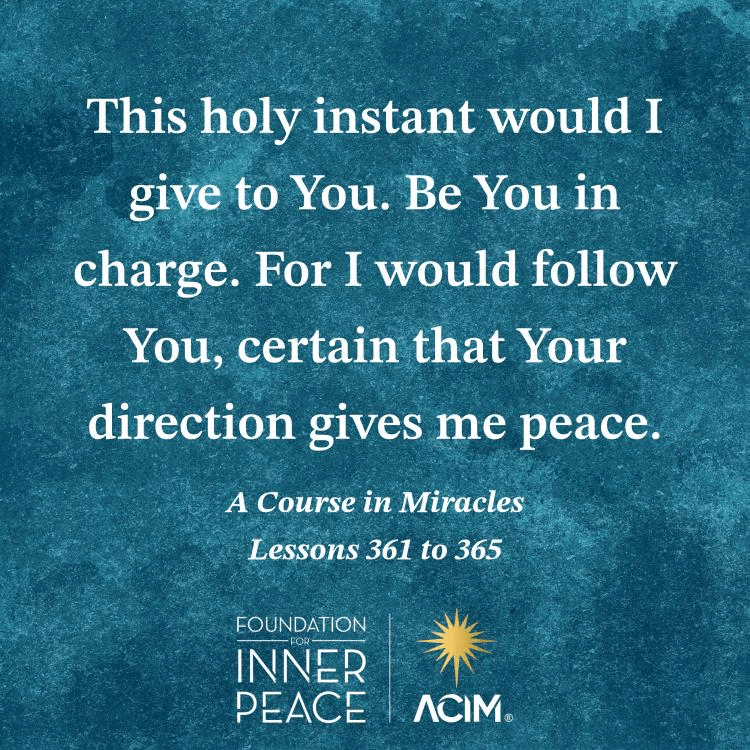
Or, as Course-Jesus explains in Workbook Lesson 109: I rest in God, you can achieve the same results simply by saying to yourself, “I Rest in God”:
“I rest in God.” This thought will bring to you the rest and quiet, peace and stillness, and the safety and the happiness you seek. “I rest in God.” This thought has power to wake the sleeping truth in you, whose vision sees beyond appearances to that same truth in everyone and everything there is. Here is the end of suffering for all the world, and everyone who ever came and yet will come to linger for a while. Here is the thought in which the Son of God is born again, to recognize himself. (ACIM, W-109.2:1-6)
Only the moonstruck “demonize” the spiritual beliefs of other cultures, which may, in fact, be closer to God’s Truth than their own beliefs.
Again, I’m just saying. Open your mind to all possibilities, knowing that everything you’ve learned in this world is a LIE.
As conjectured in an early post, AUM forms the gates leading into the circles of wind, water, and fire, which this verse appears to confirm. This verse also affirms my earlier assertion that the Lesser Rays of YHVH are the Seven Rays of Aspect and Attribute produced by the two Great Rays of Yah and Vah. And those “lesser” rays, we learn here, act as “the seven eyes of God.” Those eyes roam not “through the earth,” as we’ve long been told, but throughout Eretz, the Land of the Living (Stones).
As fascinating and affirming as this is, it doesn’t tell us much about the Capstone, so let’s move on to Acts 4:11. For context, I backed up one verse to 4:10:
The result reads as follows:
Let it be known to you all, and to all the people of Israel, that, in the name of Jesus Christ of Nazareth, whom you crucified (and) whom God raised from among the dead; (that) by this presence appears the face of your whole (Self), which comes from the stone rejected by the builders that becomes the head of the corner, as well as the call of deliverance by no other. For, there is no other name under Heaven given to humankind, the state of us needful of saving.
Here, we do find the stone rejected by the builders that becomes the head of the corner. So, the stone rejected by the builders (those who built the world in league with Satan?) is the Christ Self, the Living Stone and the Cornerstone forming the Inner Altar and/or the Altar Stone. As we’ve established, the head of the corner is the Capstone, which Luke the Evangelist seems to be saying is the Face of Christ.
Or, to again quote the Course:
This is the purpose given you. Think not that your forgiveness of your brother serves but you two alone. For the whole new world rests in the hands of every two who enter here to rest. And as they rest, the face of Christ shines on them and they remember the laws of God, forgetting all the rest and yearning only to have His laws perfectly fulfilled in them and all their brothers. Think you when this has been achieved that you will rest without them? You could no more leave one of them outside than I could leave you, and forget part of myself. (ACIM, T-20.IV.7:1-6)
Elsewhere in the Course, Jesus explains that we see the Face of Christ after the final veil (of Ego deception) is lifted. That final veil is the Fear of God — the original error that started the dream.
Let’s move on to Matthew 21:42. A quick glance at the verse compels me to include 21:43.
For context, this is what Jesus says to his audience immediately after sharing the parable of the tenants who cheat the landowner out of his rightful percentage of their harvest-profits. Not only do the tenants refuse to honor their agreement with the landlord, they also murder the son he sends to collect the debt.
The first part reads thusly:
Jesus, speaking as the True Self, said: “To know again, never read the graphe (scripture? written word?), for the stone which the builders rejected, the stone that became the head-quarter (the Capstone); this the Master brings into being, and it is amazing in our eyes.”
“Because of this, say to yourselves, ‘The Kingdom of God arises from you and is given together collectively to make the fruits fall down on the stone to crush together and disburse that which falls, to scatter the Self’s powder (or dust).”
Wait. Did Jesus just tell us not to read the scriptures? He did indeed. But what he means, I believe, is that reading the scriptures won’t produce or “bring out” the Cornerstone or the Capstone, because only the Master can do that; the Master he means is the Master of the House, which is the Lord of the Temple. And the Lord of the Temple is Solomon, the Holy Spirit.
What is the Self’s “powder” or “dust”? Firstly, he’s using a millstone analogy. The powder or dust would be, therefore, akin to the flour ground by the miller from the grains or seeds reaped from the harvest. The alms we give in our “circle-meetings” are thusly ground into powder by the True Self, and then distributed throughout the kingdom by the Holy Spirit.
In the Bible, “powder” and the process of grinding materials into dust are used symbolically to represent (rightminded) judgment, utter destruction (of the ego), humility (of the ego), and purification (of the ego-infected higher mind). It appears in several famous historical and metaphorical accounts across both the Old and New Testaments.
Okay, so … we now have a clearer picture of what the cornerstone, touchstone, and capstone represent in the Bible. The cornerstone is the inner-altar or “rock” upon which we build the Temple. And that cornerstone is our faith in the Christ Self’s reality and power, alive within us and all living beings. The Touchstone is the seven-eyed stone of deliverance (Ebenezer). And the Capstone is the Face of Christ, which we see upon clearing the Inner-Altar of any unloving or unforgiving thoughts we may harbor toward our brothers in Christ.
Or, as Course-Jesus importantly explains in Workbook Lesson 68: Love holds no grievances:
You who were created by love like itself can hold no grievances and know your Self. To hold a grievance is to forget who you are. To hold a grievance is to see yourself as a body. To hold a grievance is to let the ego rule your mind and to condemn the body to death. Perhaps you do not yet fully realize just what holding grievances does to your mind. It seems to split you off from your Source and make you unlike Him. It makes you believe that He is like what you think you have become, for no one can conceive of his Creator as unlike himself. (ACIM, W-68.1:1-7)
With all that in mind, let’s move on to Luke 20:17. Here, we again find Jesus addressing his audience after sharing the parable of the wicked tenants.
And he looked at them and said, “What is it, then, that is written? The stone with which to build the house; the stone that was rejected. The same becomes the head-corner?
All that falls upon that stone shall be crushed together. And that which falls shall be ground to power (for) the True Self to scatter like dust.
Here again, Jesus compares the Capstone to a Miller’s grinding-stone. And the millstone is indeed a recurring symbol in both the Old and New Testaments. In Biblical times, the millstone was used by families to grind their “daily bread.” Because this stone was vital for sustaining life, Biblical law strictly forbade the seizing of a family’s millstone as a pledge for a debt.
From this we can glean that the spiritual millstone is the inner-instrument for grinding the daily “bread” we request from “the father of the inward Heaven” in the Lord’s Prayer. That daily ration of what Jesus called epiosious bread is what the Jews call manna. This “hidden manna” is discussed in Exodus 16:4 and 16:14-15, Deuteronomy 8:3, John 6:32-35, and Revelations 2:7. Before we explore what those verses truly communicate, let’s finish up with the Capstone, which we now know to be the Millstone for grinding our daily manna (from Heaven). Our final Capstone verse is 1 Peter 2:7-10. Echoing what we read before in Peter, the relevant verses read:
You, therefore, who have faith, value, and do not be dissuaded from believing, that the stone with which to build the house was rejected; and the same becomes the head-quarter.
A stone on the occasions of stumbling, also is a rock of offense, a stumbling block. To strike against the Logos (is) to disobey the purpose established for you as the chosen offspring of the Royal Priesthood, the holy nation among the populace that proclaims the goodness calling you out of the darkness into the Self’s amazing light. In former times, there were no people, but now the people of God show mercy to obtain mercy, and have obtained mercy.
Before I climb back on my soapbox, let’s look at the Biblical passages concerning the millstone and the manna.
The primary manna verses are Exodus 16:4 and 16:14-15, Deuteronomy 8:3, John 6:32-35, and Revelations 2:7.
Let’s start with Exodus 16:4, but go bigger (to include 16:2-8). The relevant section reads:
The Assembly of the Son of Israel abides in Moses and Aaron in the wilderness. And the Son of Israel speaks to whomever dies by the hands of YHVH in the Land of the Living. In Egypt, we sit in flesh pots and eat bread to be filled (and) to depart the desert is to die.
The Assembly hungers to say, “Moses, rain down bread from Shamayin (the Celestial Sphere) for the flock to come out and gather the Word of God everyday, to prove and walk in the law (Torah) the Sixth Ray established, that to enter in second place is to gather daily Moses and Aaron speaking to the Son of Israel.
At eventide, then, know YHVH breaking free from the Land of the Living in Egypt. In the morning, see that the glorious YHVH hears your murmurings. YHVH, who abides in Moses, saying: YHVH gives in the evening flesh to eat; and in the morning, bread to be sated; for YHVH hears the murmurings which abide in us; the murmurings of YHVH.
Like I’ve been saying, YHVH is the united form of the two Great Rays of YH and VH; Moses is the biblical representation of the M-kara, and Aaron represents the A-kara. And, as we learn herein, it is the M-kara and the A-kara through which the Assembly speaks to us on YHVH’s behalf in the desert-wilderness (the world the Ego Mind “made” that is the Biblical Egypt).
Course-Jesus also tells us to spend time communing with the Holy Spirt in the morning, soon after waking, and in the evening, before going to sleep. We can’t commune, of course, until we train our minds to hear the AUM, which is the goal and purpose of the Workbook exercises.
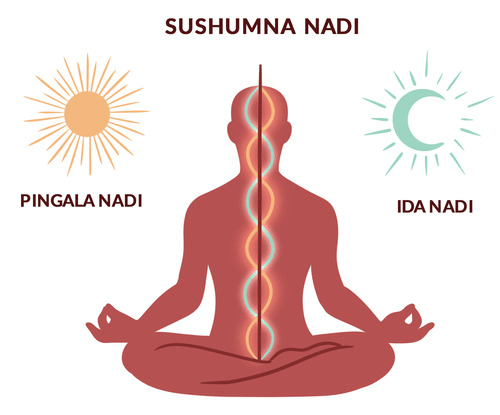
As I read these teachings, we hear the M-kara (the Vah Ray’s lunar energy or “bread”) in the morning, and the A-kara (the Yah Ray’s solar energy or “flesh”) in the evening. Not sure it’s that simple, but I do believe the M-kara moves through the Ida nadi, while the Pingala nadi transports the A-kara energy. Together, they raise Kundalini (the U-kara) up the central channel (the Shushumna nadi). This would suggest that the A-kara and M-kara, working together, “weave” the U-kara energy Hindus, Buddhists, and Yogis call Kundalini (the swarm from the pit).
And this is indeed what Jesus means in Matthew 4:4, when he says: “Man shall not live by bread alone, but by every word that proceedeth out of the mouth of God.”
The mouth of God is the bottomless pit or abyss — the Ego’s misleading synonyms for the “well” or “spring” watering the pastures of the Resting Place.

As an interesting aside, this verse says the Sixth Ray established the Torah. Does the author mean the first five books of the Jewish Bible? — or does he mean God’s instructions for our Souls? I suspect he means the latter. If I’m right, then the Sixth Ray established the universal curriculum.
The Course is one form of that curriculum, which is required of all journeying Souls. As Jesus explains in the introduction, we can choose what to learn in each incarnation, but learning the curriculum is non-negotiable. He says two other things well worth keeping in mind: the first is that there are thousands of forms of the curriculum, as well as many different “saviors.” The second is that the curriculum is highly individualized. Any attempt to standardize, formalize, or ritualize the atonement process is, therefore, futile, if not patently absurd.
Jesus is my Waheguru, but he may not be yours. And that’s okay.
Reading the scriptures won’t save our Souls, but daily study does help keep us focused on God. Fearfully interpreted scriptures, on the other hand, might do more harm than good. Not that you’ll probably heed the warning, even if you hear it straight from the Messiah’s mouth:
The ego speaks in judgment, and the Holy Spirit reverses its decision, much as a higher court has the power to reverse a lower court’s decisions in this world. The ego’s decisions are always wrong, because they are based on the error they were made to uphold. Nothing the ego perceives is interpreted correctly. Not only does the ego cite Scripture for its purpose, but it even interprets Scripture as a witness for itself. The Bible is a fearful thing in the ego’s judgment. Perceiving it as frightening, it interprets it fearfully. Being afraid, you do not appeal to the Higher Court because you believe its judgment would also be against you. (ACIM, T-5.VI.4:1-7)
A word to the wise: Be wary of whom you’re entrusting with your Soul’s salvation. As a general rule, inner guidance is more reliable than the alternative.

Let’s move ahead to the next obvious question: What is the Sixth Ray? In the theosophical teachings, the Sixth Ray is the ray of devotion to higher ideals and noble causes, including religious ideals, for lack of a better explanation. If this is true, the Sixth Ray guides our transition from ego-perceived egalitarianism to rightminded egalitarianism. And this is indeed how we untie the Rudra Granthi–the final knot on the Holy Spirit’s measuring rope or pasa.
In the ancient Persian religion of Zoroastrianism, the sixth Amesha Spenta (divine entity or Bounteous Immortal) is Amertat, which, like Amrita, means “immortality” or “deathlessness.” If the Amesha Spenta are a form of the Seven Rays of YHVH, as I suspect they are, then the Sixth Ray either is or energizes the inner “sap” Hindus call Amrita and Christians call the Blood of Christ.

Amertat also established the universal curriculum and leads us from egoic ideals and noble causes to the only worthwhile pursuit in the universe: seeking the Truth of our Being through the Holy Spirit’s universal curriculum.
The Sixth Ray is said to be ruby in color, which make sense. In Zoroastrianism, Amertat has a twin-sister called Havertat (wholeness). This suggests that the Amesha Spenta or Rays of immortality and wholeness are not just alike, but twins (like Yama and Yami). In Theosophy, “wholeness” is achieved through the synthesis of all seven rays.
True enough, but Theosophy also teaches that “spiritual transformation” is achieved through the Seventh Ray of ceremonial magic. Since magic is egoic hokum, this has to be a misguided interpretation of miracle-working. So, let’s presume the Seventh Ray restores the Soul’s miracle-working abilities through the agency of the six preceding ray powers, guiding and working through our almsgiving rituals in the four circles.
That should make sense. The Seventh Ray is said to be violet in color — the violet flame, in fact — the same color associated with the Seventh, Crown, or Sahasrara Chakra in Hinduism, and the resurrection of Christ on Easter Sunday in Christianity.
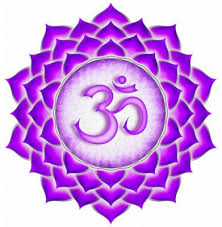
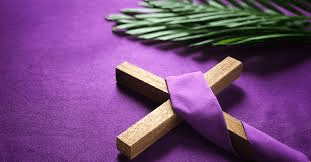
So, again. Different symbols, same idea.
Let’s proceed to Deuteronomy 8:3. Again, we’re going bigger (2-9). The section reads:
Remember the journey to YHVH-Elohim is walked forty years in the desert to humble and test your perception of the heart-mind’s will to heed the commandments. To defile the Self is to hunger to eat manna. To know the Father is to know Adam is restored to life not by bread alone; but by what proceedeth out of the mouth of YHVH is Adam revived.
The robe (of righteousness) wastes away and the feet swell these forty years to learn the inner-heart spirit instructs and corrects the Son. YHVH-Elohim corrects and instructs to safeguard the commandments of YHVH-Elohim. Walk in fear to YHVH-Elohim, then enter into the beautiful Land of the Living; the Land of living streams of the waters springing up from the eye of the Cosmic Ocean to bring forth the valleys of Har, the land of the living wheat and barley, of the Vine, the fig tree, and the pomegranate; the land of the living olive oil and honey; the land to eat bread, without scarcity or lack. The land of the living stone is the iron ax-head of Harar to hew the bronze fetters. To eat and be satisfied, bow down to YHVH-Elohim, in the beautiful Land of the Living given to you.
The iron axe-head of Harar is Shiva’s battle-axe, Parashu. When given this axe by Shiva, Rama, the journeying Soul, evolves into Parashurama (Rama with an axe).
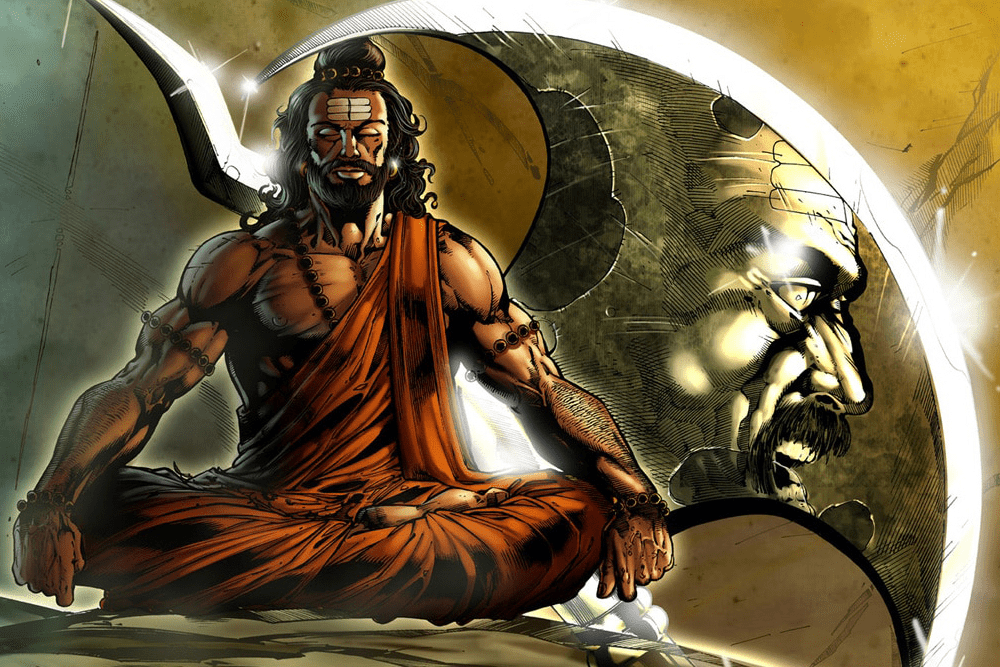
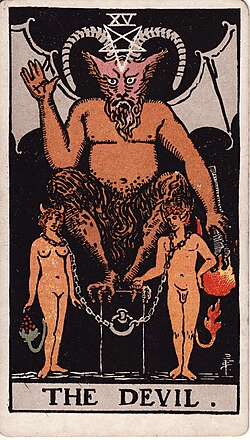
This iron axe-head, we are told in Exodus, “hews the bronze fetters.” It cuts through the chains and shackles, that is to say, the Ego Mind uses to imprison the Soul in the dream-realm. We see these shackles binding Adam and Eve to Satan’s throne on the Tarot card of THE DEVIL.
We also find the valleys of Har in Hinduism, in the form of Har Ki Dun, a cradle-shaped hanging valley in the Garhwal Himalayas of Uttarakhand, India. The name translates to the Valley of Lord Shiva (Har meaning Shiva and Dun meaning valley) and is colloquially known as the Valley of Gods.

This valley is, of course, an outward projection of an inner state of mind. Hence, the valley’s association with the Mahabharata epic and the journey of the Pandavas (the five brothers). According to legend, this valley was the sacred route taken by the Pandavas on their final pilgrimage to heaven (Swargarohini).
Since Shiva means, the winds of Peace, and the Valley of Har is the Valley of Shiva, then might the Pandavas represent the five winds of Shiva?
The answer has to be “yes.” In Yogic and Hindu philosophy, these “five winds” are called the Pancha Vayus or Five Cosmic Breaths. Being Cosmic forces, they are not (as commonly presumed) the five vital energies or pranas that govern the physical body, breath, and mind. Rightmindedly understood, these five “winds” or “brothers” represent the internal, microcosmic flow of Shiva within each individual Soul.
And this supports my earlier assertion that the five brothers and/or Pandavas represent steps, benchmarks, or initiations along the Spiritual Path.
What do the forty years signify? I wish I knew, because we find these same forty years elsewhere in the Judeo-Christian scriptures.
The next set of manna-verses on our list is John 6:32-35. In the King James Bible, these verses read thusly:
Then Jesus said unto them, “Verily, verily, I say unto you, Moses gave you not that bread from heaven; but my Father giveth you the true bread from heaven. For the bread of God is he which cometh down from heaven, and giveth life unto the world.”
Then said they unto him, “Lord, evermore give us this bread.”
And Jesus said unto them, “I am the bread of life: he that cometh to me shall never hunger; and he that believeth on me shall never thirst.”
These verses actually translate as follows (starting with John 6:31):
Our Fathers ate manna in the desert, just as it is written, to give the True Self bread from Heaven to eat. Then, Jesus said unto them: “Amen-Amen calls to Moses to give you not bread from out of Heaven, but of me. The Father gives you the True bread from Heaven. For the bread of God is called down from Heaven to give life to the Cosmos. Therefore, answer with: “Lord, at all times, give us this bread.”
Jesus then said, “The True Self I Am is the Bread of Life, coming to me. To never be hungry, entrust in me. To never thirst, on the other hand, bring the Word into you. Because to perceive as I perceive is to believe not that all that the Father gave me has come to me or comes to me not to be sent out. Because it comes down from the Celestial Sphere not to do my own will, but the will of he who sent me. And this is the Father’s Will, he who sent me: That everyone who gives to me, perishes not, but will raise up the True Self on the final day. And this is the will sent to me: that everyone who sees the Son and believes in the True Self has everlasting life, and will raise up the True Self on the final day.
Much more instructive than the flawed KJV version. The True Bread, given by the Father in Heaven is the A-kara vibration of Perfect Love. And, as Jesus explains, this “bread” is the source of all life. The “bread” we receive from the Christ Self, on the other hand, is meant to be shared. And to share that “bread” with all our brothers in Christ is the Father’s Will for his earth-bound Souls. For it is by sharing this “bread” that the Christ Self is restored to the everlasting Life.
What we give to the True Self falls down on the millstone, to be ground into the flour that makes the “daily bread” our Souls require to both thrive and rise above the realm of perception. And this is the process by which we “raise up” the Stone of Deliverance (the seven-eyed Touchstone, Ebenezer).
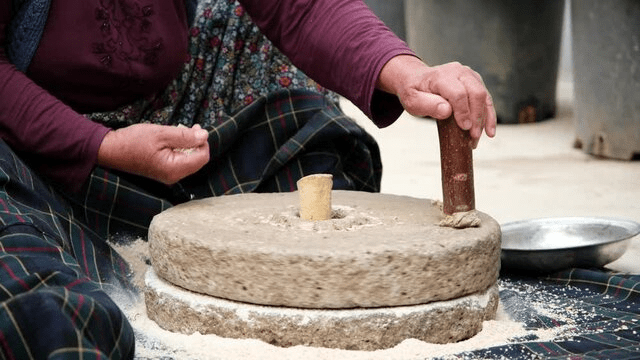
Let’s now look at the Millstone verses. There are quite a few, as it turns out. In the New Testament, the millstone crops up in Matthew 18:6, Mark 9:42, Luke 17:2, and Revelations 18:21-22. In the Old Testament, we find the millstone symbol in Deuteronomy 24:6, Judges 9:53 and 16:21, in 2 Samuel 11:21, Job 41:24, and Numbers 16:21. So, it’s obviously an important symbol. And, as we now know, the Millstone is the Capstone and the head-stone of the corner (the head-quarter).
Let’s start with Matthew 18:6, wherein Jesus speaks as follows in the King James Bible:
If anyone causes one of these little ones—those who believe in me—to stumble, it would be better for them to have a large millstone hung around their neck and to be drowned in the depths of the sea. Woe to the world because of the things that cause people to stumble! Such things must come, but woe to the person through whom they come! If your hand or your foot causes you to stumble, cut it off and throw it away. It is better for you to enter life maimed or crippled than to have two hands or two feet and be thrown into eternal fire. And if your eye causes you to stumble, gouge it out and throw it away. It is better for you to enter life with one eye than to have two eyes and be thrown into the fire of hell.
This doesn’t sound like the Jesus I know, nor does it frame the millstone/capstone in a positive light. So, what does it really say? Something more like this:
But causing to stumble one of the least who believe in me brings together the Self, so that a millstone hangs about their neck, to sink into the depths of the sea. Woa to the world or cosmos away from the stumbling block, for it’s hardships come as a stumbling block comes. Yet, woe to the human that the stumbling block comes to.
But now, if your hand or your foot is a stumbling block cut off from the Self, remove and cast them away from you. For it is more virtuous to enter into (eternal) life lame or crippled than to have two hands or two feet to cast eternal fire. And if your eye is a stumbling block to your deliverance, cast it away from you. For it is more virtuous for you to enter into life having one eye than having two eyes to cast Ghenna’s fire.
From what he says, the millstone sounds to me like the leaden weight of Ketu mentioned in the Rigveda. In Vedic astrology, Ketu is the descending node of the Moon. In actuality, he’s the tail of the red dragon (God’s Radiant Splendor) coming down (into our dreaming minds) from Soma, the Great I Am.
Ketu’s weight– the oft-mentioned millstone — pushes us inward into the “secret chamber” of the heart-mind or inner-altar, the cornerstone we rejected at the start of the dream. And this solves the earlier question of why the cornerstone was placed upon the Self in confusion.
Speaking of confusion, Course-Jesus tells us repeatedly to “sink down” below the world the ego made to deceive us. The only “weight” he mentions is, however, something akin to “the weight of the world.”
He says, for example:
If you have been practicing thus far in willingness and honesty, you will begin to sense a lifting up, a lightening of weight across your chest, a deep and certain feeling of relief. The time remaining should be given to experiencing the escape from all the heavy chains you sought to lay upon your brother, but were laid upon yourself. (ACIM, W-134.16:3-4)
The world away from the millstone is, therefore, the Real World. If we read the wording carefully, Matthew says we cast the fire; not that we’re cast into the fire. Big difference, since casting the fire is, in effect, miracle-working. The fire he’s talking about is the eternal fire of God’s presence, not the everlasting fires of hell. We’re in the dream of hell now, so he can’t mean the fires of hell, which don’t exist.
In the second reference to the fire, he uses the term Ghenna, which the Ego interprets as “hell.” By all accounts, Ghenna refers to the Valley of Hinnom, which is likely another name for the Valley of Har. The experts tell us the meaning of Hinnom was lost to time, but I see Hinnom as a compound of hin (place of offering) and nom (the nations). So, the Valley of Hinnom is the place where we make our offerings “together, as a collective.”
The ego-influenced eschatology of all three Abrahamic religions have turned Ghenna into hell, when it’s anything but.
According to Google:
Hinnom is a deep, narrow ravine separating Mount Zion from the so-called “Hill of Evil Counsel.” It took its name from “some ancient hero, the son of Hinnom.” It is first mentioned in Joshua 15:8 . It had been the place where the idolatrous Jews burned their children alive to Moloch and Baal.
As we’ve learned, Moloch is Molek, the cow-headed cherubim; the miracle-cow with the fiery eye at the center of the Circle of Fire; so it’s the final stop on the Soul’s journey — the place Course-Jesus refers to as “the gap.” And it is there we do our miracle-working — i.e., send out the sacred-fire psychically to other receptive minds.
About this “gap” or “valley” Course-Jesus says:
In learning to escape from illusions, your debt to your brother is something you must never forget. It is the same debt that you owe to me. Whenever you act egotistically towards another, you are throwing away the graciousness of your indebtedness and the holy perception it would produce. The term “holy” can be used here because, as you learn how much you are indebted to the whole Sonship, which includes me, you come as close to knowledge as perception can. The gap is then so small that knowledge can easily flow across it and obliterate it forever. (ACIM, T-4.VI.2:1-5)
Since Mark 9:42 and Luke 17:2 merely parrot Matthew, let’s look next at Revelations 18:21-22. What does it say about the Millstone?
And one mighty angel lifted a stone, like a great millstone, and cast it into the sea, saying: ‘In this way, attack causes the great city of Babylon to be thrown down and found no more; and for the sounds of the harpers, the musical flute players, and the trumpeters to be heard no more. And so, you’re no builder of the whole to be obtained. And yet, you and the sound — the millstone heard no more in you — light the candle, bringing light no more to you. And the voice of the Bridegroom and the Bride shall be heard no more in you. Because you traded your charge from the Lord of the World for the sorceries leading astray all the nations deceived. In truth, the True Self is found in the blood of the prophets set apart from all who slaughter upon the earth.
It says, in point of fact, pretty much what Course-Jesus says in the quote I just shared about the gap. Attack thoughts deafen us to the Cosmic Chorus, cast Babylon (the gates of God) into the sea, silence the Bridegroom and Bride, and snuff out the candle bringing light to the world. And for what? So we can hate, blame, punish, and create a whole lot of nothing?
So, yes. The millstone plays two parts, depending on our mindset. In the spirit of forgiveness, it grinds the flour for our daily bread; in the spirit of blame and resentment, however, it weighs us down in the lower levels of perception.
Or, as Course-Jesus similarly explains:
Eating of the fruit of the tree of knowledge is a symbolic expression for usurping the ability for self-creating. This is the only sense in which God and His creations are not co-creators. The belief that they are is implicit in the “self-concept,” or the tendency of the self to make an image of itself. Images are perceived, not known. Knowledge cannot deceive, but perception can. You can perceive yourself as self-creating, but you cannot do more than believe it. You cannot make it true. And, as I said before, when you finally perceive correctly you can only be glad that you cannot. Until then, however, the belief that you can is the foundation stone in your thought system, and all your defenses are used to attack ideas that might bring it to light. You still believe you are an image of your own making. Your mind is split with the Holy Spirit on this point, and there is no resolution while you believe the one thing that is literally inconceivable. That is why you cannot create and are filled with fear about what you make. (ACIM, T-3.VII.4:1-12)
This section of Revelations seems to say that the Millstone is the sound of the AUM — or maybe just the M-kara. If I’m right, the Holy Spirit is both the dragon’s tail and the Millstone, sent down to us from the Christ Self (the Moon, Soma/Chandra). And, as Jesus affirms in the Course, it is the Holy Spirit that leads us unto Christ — the only worthwhile destination in the dream-realm.
And from there, the Dragon’s head
, takes us the rest of the way (from the Moon of Christ’s Face to the Sun of God’s Word). In Vedic astrology, the head of the dragon is called Rahu, which means something along the lines of “offering the inner-radiance” (of God’s Word or Radiant Splendor). So, Rahu plays his part, presumably, in the Circle of Fire.

Here’s another way to look at it:
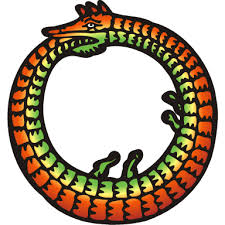
Rahu, the head of the dragon, is the Red Ray, which connects our Souls to God, through the Christ Mind (the Vah Ray). Ketu, the tail of the dragon, is the M-kara, the “bread” we receive from Christ. Listening to the Holy Spirit brings us back to the Christ Light, and from there, the Rahu carries us upward to Heaven, And that dynamic is what the ancient Ouroboros symbol attempts to illustrate.
Have we achieved our goal? Maybe not, but we have determined a few important things. We now know the Cornerstone is our inner True Self (the Christ Self), which we rejected initially when building the world, and now must “feed” collectively to rebuild the Temple and restore the Capstone.
From today’s studies, we also learned that the Cornerstone serves two functions. Firstly, it’s the foundational “rock” for rebuilding the Christ Self’s shattered wholeness. On this “rock” we must “build our house,” as well as Christ’s “church.”
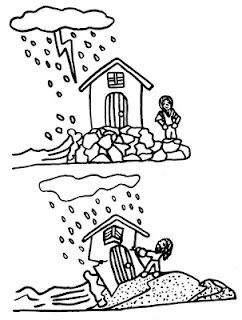
To build our house on rock is to use the Cornerstone (faith in the Christ Self within) as the foundational cornerstone for building our lives; to build our house on sand is to build our lives on unstable ego goals. It does not mean to live as Jesus teaches in the Bible because a) Jesus’s teachings, as contained in the Bible, were first redacted and then mistranslated by Ego-deceived humans, and b) Jesus says (in the Bible) to give up the world. So, to live in the world at any level is still building on sand.
Secondly, the Cornerstone acts as the Millstone, where we grind the flour to make our “daily bread”–the bread Christ provides to our Souls. When we condemn, the millstone acts as a leaden-weight, pulling us down into the bowels of material existence. If we fall prey to the Ego’s separation-minded attack thoughts, we throw the Stone of deliverance into the sea, silencing God’s Voice within us, and depriving our own Soul of its daily supply of spiritual bread.
Or, as Course-Jesus explains:
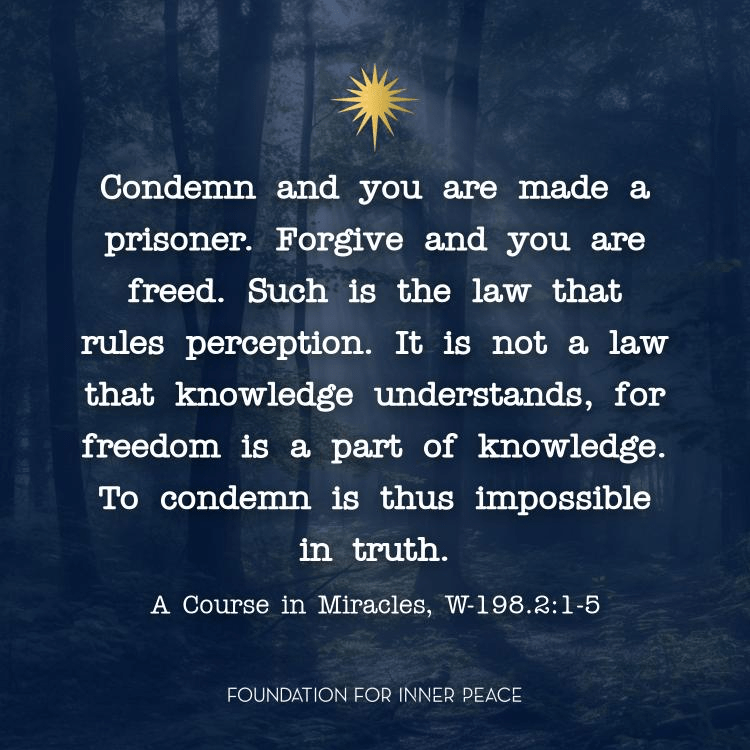
To stretch the metaphor, when we cast a stone at somebody else, we are casting away our own salvation by cutting ourselves off from the bread and water of God’s grace we need to thrive as the spiritual beings we truly are.
I hope you enjoyed today’s discussion. Thanks for visiting the Holy Meeting Place dot com. Until we meet again, Om Hari Om and Namaste.


Leave a Reply