Namaste, my brother, and welcome (or welcome back) to my latest adhyayana posting. We’ve reached the Rigveda’s 17th Sukta, a supposed hymn invoking Indra (the Red Ray of the Soul’s eternal life) and Varuna (the mind-healing water of oneness). Like the first sixteen Suktas, the 17th is, in fact, a prose wisdom teaching for Brahmins (those who can hear the Om). I’m eager to share what it communicates, so let’s dig in.
Using H. H. Wilson’s structure as a very loose guide, Rv 1.17:1 translates as follows:
Indra and Varuna are both the I Am, the sovereign ruler in two divisions of God, blessing those in non-existence showing mercy and compassion.
My definitions and syllable-breaks:
indrāvaruṇa-yor (Indra and Varuna are both) ahaṃ (the I Am) samrājor (the sovereign ruler in two) ava (divisions) ā (of God) vṛṇe (blessing) tā (those) na (in non-existence) mṛḻ-āta (showing mercy and compassion).
Notes:
Indra and Varuna, the Blood and Water Rays, are two divisions of the Great I Am, which the Vedas call Soma or Chandra, the moon-god representing the Lesser Light of God in the dream-realm. Indra, the guardian of the east, and Varuna, the guardian of the west, are, therefore, both lunar powers working through Soma, the Christ presence within us.
My translation of Rv. 1.16:2 reads:
In this manner, the Word of God (Indra, the Blood Ray) and the Spirit of Grace (Varuna, the water ray) exude the Greater Light, the foremost light in the illusion bestowing the Glory of God, the radiant inner-power fixing the heart-mind on the Majesty of God’s Name.
My definitions and breaks:
īdṛśe (in this manner), sa (the word of god) [and] bhūtu (the spirit of grace) yo = yas (glorify) ha (the Greater Light) prathamāya (the foremost light, in the illusion) dhāyasa (bestowing the glory of God) ojo (the radiant inner power) mimāno (fixing the heart-mind) mahim-ā-nam (on the Majesty of God’s Name).
My notes:
Working through the Christ Mind, the Blood and Water Rays in tandem equivocate the Greater Light of God (God’s radiant glory). Ergo, the Greater Light of Glory shines within us as these two rays of Divine Mercy. And it is these two Rays that focus the heart-mind on the Majesty of God’s Name.

My translation of Rv 1.17:3:
To walk and shake the sacred sap, glorify the assembled body of the Son (Christ), the circle enclosing the upper Resting Place in the celestial dominion to turn toward and not give up what was created in the beginning in strength and abundance; that which in the beginning of Brahmana, the sacred sun nourished.
Definitions and breaks:
āt-irat (to walk and shake) śū-ro (the sacred sap) yo (glorify) yutsu (the assembled) tanvam (body of the Son) pari (the circle) vyata (enclosing) śīrṣaṇi (the upper resting place) dyām (in the celestial) mahinā (dominion) praty (to turn toward) amuñcata (and not give up) adhākṛṇoḥ (what was created) prathamaṃ (at the beginning) vīryam (in strength) mahad (and abundance) yad (that which) prathamaṃ (in the beginning) brahmaṇā (Brahmana) śuṣmam (the sacred sun) airayaḥ (nourished)
My Notes:
We’ve talked about the sacred sap and the Assembly (and will again, in this post). But hitherto, I only suspected what the rishis confirm herein: that the circle of forgiveness is indeed the Biblical “assembly,” “congregation,” or “council” (and vice-versa)–the “body” we join in the celestial Resting Place.
As used herein, Brahmana means “expanding the heart-mind,” which perfectly describes God’s first act of Creation. And when God first created “the Christ” (in the beginning), the sacred sun or Greater Light nourished Creation. In the dream, to preserve free will, we receive that same nourishment through the twin Christ Rays, by choice or invitation.
My translation of Rv 1.17:4:
Standing in the chariot, the sons of Daksha (the Lord of Creatures) — apart yet connected — advance the auspicious streams moving swiftly in unison, while distinct from each other.
Definitions and breaks:
ratheṣṭhena (Standing in the chariot) haryaśvena (the sons of Daksha, the Lord of Creatures) vic-yutāḥ (separate-yet-connected) pra (advance) jī-rayaḥ (the auspicious streams) sisrate (moving swiftly) sadhryak (together or in unison) pṛthak (while distinct from each other)
My Notes:
A significant figure in Hindu mythology, Daksa is the mind-born son of Brahma and the father of Sati, the wife of Shiva and Rama, whose name essentially means “true, divine, or real love.” Dakṣa’s pride led him to exclude Shiva (grace) from a grand yajna offering, prompting Sati’s self-immolation, and his subsequent decapitation by the warrior Virabhadra (“auspicious hero”). According to the lore, Daksa was later revived with a goat’s head, suggesting (to me) his alliance with the Ego Mind/Satan. Also known as Prajapati (Lord of Creatures), Daksa was tasked by Brahma with populating the universe. In Hinduism generally, he is regarded as a secondary creator.
In Hindu lore, Daksha’s primary sons were the 5,000 Haryashvas and the 1,000 Shabalashvas (or Savalashvas), born to his wife Asikni, a daughter of Varuna whose name means “dark-colored waters.” Destined to populate the world, the sons were persuaded by the sage Narada to renounce worldly life and pursue knowledge, never returning to their father, who subsequently focused on creating daughters to populate the earth.
So, as I read the symbols, Daksa represents the demiurge who created the graceless world of form (the waterless desert), whilst his sons represent the 3,000, the Assembly, and/or Multitudes “gathering the waters” whilst “standing in the chariot” (the chariot-throne of Surya, Elohim, or Allah) for humanity’s ultimate release from the material illusion. That chariot is supported by the four Living Beings (the cherubim and/or rays of divine aspect), and driven by Indra, the red ray of “glory through Christ.”
According to Google, “Glory through Christ is the revelation of God’s divine nature, power, and love, primarily displayed in the person, life, death, and resurrection of Jesus. It signifies the ultimate, accessible manifestation of God’s beauty and grace, which saves humanity, reconciles sinners, and offers believers a future, shared, and eternal glory.” The revelation of God is given to us by Indra, via the metaphoric thunderbolts fired from his Vajra. And when, at last, we see our own reflection in Indra, we behold the face of Christ in the mirror.
My translation of Rv. 1.17:5 reads:
To feed the Greater Light, glorify the universal abode of the red ray, the majesty without form advancing in time the water forces to progressively increase consuming the mad state of existence. The Light of God’s love shakes to expand gentle-heartedness in the darkness of material existence.
Definitions and breaks:
ad-hā (to feed the greater light) yo (glorify) viśvā (universal) bhuvan-ābhi (abode of the red ray) majmaneś-ānakṛt (the majesty without form) pra-vayā (advancing in time) abhy (the water forces) avardhata (to progressively increase) ād (consuming) rodasī (the sap serving) jyotiṣā (the divine light) vah-nir (conveying the pure essence) ātanot (to expand) sīvyan (gentle-heartedness) tam-āṃsi (in the darkness of material existence).
My Notes:
Firstly, rodasi can’t mean “heaven and earth together” or “the two worlds,” as long presumed and widely espoused by Sanskrit and Vedic scholars. Why not? Because the syllable definitions add up to something completely different. Rodasi can only be a compound of rod (mad) and asi (state of existence), roda (wailing) and si (sleep), or ro (sap) and dasi (slave or servant). I went with “the sap serving” because “the sap” mentioned herein and in the Bible, is the elixir of immortality Hindus call Amrita and Christians call “the Blood of Christ” or “the Blood of the Lamb.” That blood, in case you don’t know, represents the lifeblood or “pure essence” of our eternal innocence as God’s perfect creations.
More broadly, the rishis are telling us, more or less, that “the meek shall inherit the earth,” through the Red Ray’s gradual expansion of gentle-heartedness in material existence. Jesus famously made a similar proclamation in the Sermon on the Mount (as per Matthew 5:5). Christ’s declaration echoed Psalm 37:11, which presumably reads: “But the meek shall inherit the earth, and shall delight themselves in the abundance of peace.”

In the Course, Jesus explains his meaning as follows:
The Atonement is a total commitment. You may still think this is associated with loss, a mistake all the separated Sons of God make in one way or another. It is hard to believe a defense that cannot attack is the best defense. This is what is meant by “the meek shall inherit the earth.” They will literally take it over because of their strength. A two-way defense is inherently weak precisely because it has two edges, and can be turned against you very unexpectedly. This possibility cannot be controlled except by miracles. The miracle turns the defense of Atonement to your real protection, and as you become more and more secure you assume your natural talent of protecting others, knowing yourself as both a brother and a Son. (ACIM, T-2.II.7:1-8)
My translation of Rv 1.17:6 reads:
When troubled, join together in the eternal Word of God, the ancient feast extending the fortifying vital-energy underneath the mark of the name to hear the Od, the waters of the Apah (the water goddess).
Definitions and breaks:
dudhitā (when troubled) sam (come together) avyayat (to drive) sa (the word of god) prācīnān (the ancient) par-vatān (feast extending ) dṛṃhad (the fortifying) ojas-ādharā-cī-nam (vital-energy underneath the mark of the name) akṛṇod (to hear the Od) apām (of the waters) Apaḥ (God’s protectors, the gods of water, or the speaking waters).
Firstly, the ancient feast referenced herein is the Feast of Atonement outwardly celebrated in Judaism as Yom Kippur. In Leviticus 16, this inner-feast (of the Atonement, which involves “feasting” meditatively on the Om Vibration) is described as the highest holy day focused on cleansing the world’s sins (cleansing the world of guilt through lustration, ablution, or baptism). Traditionally, the High Priest entered the Holy of Holies on Yom Kippur to sprinkle sacrificial blood, while a “scapegoat” was sent into the wilderness to symbolically remove the community’s sins. Based on experience, I can guarantee Leviticus describes something other than a one-day feast prepared for a gathering of physical bodies, but I’m too weary tonight to retranslate the verse.

In Hinduism, Apah or Āpas refers to the sacred, cosmic waters possessing nurturing and purificatory powers–the essential fluid of (eternal) life that cleanses both physically and spiritually. Often personified as goddesses (Apah-dev, pictured above), these waters are associated with healing, abundance, and the sustenance of all beings.
Let’s move on to Od — a Hebrew term used in the mystical Kabbalah to represent one of the two energetic forces yogis call Ida and Pingala. Od refers to Ida, while Obd represents Pingala. Can’t say why the Vedic scribe used Od instead of Ida, but I can say that Od is not a recognized Sanskrit word, whereas akrn definitely means “to hear” or “to listen.”
We find Od throughout the Hebrew Bible, generally transliterated as ed (witness) or me’od (very or much, supposedly). My intuition tells me me’od is, in truth, a compound of mem (the waters) and od.
We find both words mistranslated in Isaiah 43:10-11. According to the KJV Bible, the two lines read:
Ye are my witnesses (od), saith the LORD, and my servant (obd) whom I have chosen: that ye may know and believe me, and understand that I am He: before me there was no God formed, neither shall there be after me.
I, even I, am the Lord; and beside me there is no saviour.
And this how what is, in fact, a single line should be translated:
Od speaks Yaweh (the Name of God in Israel); Obed chooses to know or perceive Yaweh to discern the faces of God forming the hinder-part of Yaweh without the Savior.
Od, the Ida nadi of Soma. the Great I Am, speaks the Name of God in Israel, which Pingala, the nadi of the sacred sun, chooses to perceive to discern the faces of God forming the hinder-part of God’s Name without the Savior — the part representing only God and Christ in their original states of being (minus the Holy Spirit).
We find this hinder-part represented in Matthew 8, Mark 4, and Luke 8, by Jesus sleeping on a cushion at the back of the boat, unaffected by the dream of storms and danger. Being perfectly innocent and peaceful, the True Self needs no Savior.

Before we move on, I want to say that everything Jesus did in the New Testament narratives means something symbolically; not just what he said, but every single move he made, as well. Feeding the multitudes on the grass; throwing the nets from the right side of the boat; driving out demons; healing the deaf, blind, and lame; riding into Jerusalem on a donkey. Every moment of his life was meant to communicate something to us symbolically. So, when you study the Bible, pay attention to the staging, because, as they say, “God is in the details.”
Let’s move on to the next verse (Rv 1.17:7), which reads:
To uphold Prithvi’s universal mercy, join together to prop up the divine power of the celestial realm protecting the Rasah.
Definitions and breaks:
ad-hārayat (To uphold or support) pṛthivīṃ (Prithivi’s) viśva-dhāya-sam (universal mercy join together) astabhnān (to prop up) māyayā (the divine powers) dyām (of the celestial realm) avas-rasaḥ (protecting the Rasah).||
My notes:
We talked some about Prithvi, the Hindu personification of Mother Earth, in a previous post. If she really does represent Planet Earth, why isn’t she one of the Navagrahas? Instead of being one of the nine celestials, she’s associated with Bhumi, the first aspect of Lakshmi occupying the southwest quadrant of Dharma.
This bring us to rasah — another Sanskrit term meaning “sap” — the honey-sweet lifeforce of God in all living beings (God’s Trees in the Bible). In Hinduism, that “sap” is divided into nine emotions (the Navarasa), which are: śṛṅgāra (love), hāsya (humor), karuṇā (compassion), raudra (fury),vīra (heroism), hayānaka (fear), bībhatsa (disgust), adbhuta (wonder), and śānta (peace).
As a student of the Course, wherein Love and Fear are the ONLY two emotional roots, I’m dubious about some of these divisions, but shall nevertheless keep an open-mind.
My translation of Rv 1.27:8 reads:
The Word of God enters to make ready both arms of Yama’s father making the thunder of the universal oneness of God’s created offspring; the divine state serving the circle by which the World within, the cistern abiding in the Resting Place of meditation, sanctifies the jewel of the Greater Light in you, concealed in the sound like the roaring sea.
Definitions and breaks:
sā-smā (The Word of God enters) aram (to make ready) bāhubhyāṃ (both arms of) Yam (Yama) pitā-kṛ-ṇad (the father making the sound, roar, or thunder) viśvasmād (of the universal oneness) ā (of God’s) ja-nuṣo (created offspring) ve-dasas (the divine state serving) pari (the circle) yenā (by which) pṛthivyāṃ (the World) ni (within) kriviṃ (the cistern) śayadhyai (abiding in the resting place of meditation) vaj-reṇa (sanctifies the jewel) ha-tvy (of the greater light in you) avṛṇak (concealed) tuviṣvaṇiḥ (in the sound like the sea).
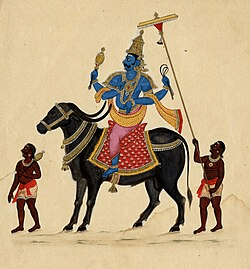
Notes:
Clearly, this verse is about hthe Om, even if the details are somewhat murky. In Hinduism, Yama is perceived as the god of death, the keeper of the karmic record, and the upholder of Divine Justice. His father is Surya, the sacred sun or Solar Logos, while his mother is Sanjan, a cloud goddess whose name means “bringing together to produce.” The name Yama means “the light of creation,” so he’s hardly the angel of death. Quite the opposite, in fact. In Vedic tradition, Yama was considered the first mortal who died and espied the way to the celestial abodes; consequently, he became the ruler of the departed (through resurrection, rather than mortal death).
Herein, he is described as the son of “the father making the thunder of universal oneness.” So, I’m pretty sure Yama represents the divine “spark” or “seed” (of the Red Ray) in all earth-bound beings. His two arms are, therefore, the everlasting arms (of God and Christ)–the God and Christ Rays, that is to say, reaching to and from Heaven via that seed or spark in all of us (as Jesus showed Sister Faustina). In Hinduism, those two rays or “arms” are personified as Indra and Varuna.
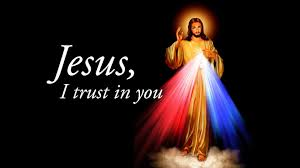
My translation of Rv 1.17:9 reads:
To sound the immortal likenesses, the two fathers, connected in true being, join together in the joy of God’s sanctuary (the holy seat in the Assembly). The True Self inspirits the divine attributes acting to illuminate the mark or sign of the upper mouth bearing the curds of the divine attributes of the body of the son, the means by which to produce the Great Feast of the True Self.
Definitions and breaks:
am-ājūr (to sound the immortal) iva (likenesses) pitroḥ (the two fathers) sacā (together) satī (in true being) samānād (join together in the joy) ā (of God’s) sadasas (sanctuary or holy seat in the assembly) tvām (the true self) iye (inspirits) bhagam (the divine attributes) kṛ-dhi (acting to illuminate) praketam (the mark or sign) upam (of the upper) āsya (mouth) bhara (bearing) daddhi (the curds) bhāgaṃ (of the divine attributes) tanvo (of that body) yena (the means by which) mā-mahaḥ (to produce the Great) bhojaṃ (Feast) tvām (of the True Self).
My Notes:
Okay, yes; some of the phrasing seems awkward, but we also find the eating of curds and honey described in the Bible and the Quran. In Isaiah 7:14-15, for example, we are told that Immanuel will “eat curds and honey when he knows enough to refuse evil and choose good.” Contrary to popular ecclesiastical teachings, the curds and honey mentioned in these sacred texts don’t represent the “staple foods” to be consumed as the earth becomes desolate; they represent the metaphoric curds produced by churning the ocean of milk and the honey-nectar of immortality “dripping” down from the Bindu chakra. We receive that honey after “giving up the world.” And that is why milk and honey are said to flow abundantly in the promised land.
We also find herein the “upper mouth”–the mouth of spirit, speaking for God in the dream. When Jesus says in Matthew 4:4 (quoting Deuteronomy 8:3), “Man does not live by bread alone; but by every word that proceedeth out of the mouth of God,” this is the mouth he means. The words proceeding from that mouth in our minds are the curds of the Great Feast (of the Atonement).
Jesus, as the Great Amen, mentions all of this in Revelation 3:20, when he famously says: “Behold, I stand at the door and knock: if any man hear my voice, and open the door, I will come in to him, and will sup with him, and he with me.” We sup with Jesus and he with us, at the Great Feast that takes place in our minds when we “open the door” into the celestial realm.
Now, in an earlier post I explained that this oft-quoted translation of Rev 3:20 is erroneous. It isn’t Jesus who stands at the door, it’s we who “knock” on the veil or curtain between the two realms, seeking a way through the door, gate, hole, or Kha — the narrow gate Jesus mentions in the Bible.
What he says about the door elsewhere in the New Testament affirms this understanding. As a manifestation of the Holy Spirit, Jesus is the Master of the House– God’s house or temple within our minds. If we knock and he doesn’t know us, we can’t come in. How does he know us? By the mark of the Beast. Without the mark, we can’t hear the Voice for God. And hearing that voice is the Alpha and the Omega of the Atonement process.
The divine attributes producing the curds for the Great Feast are the four Rays of Attribute, which appeared to various prophets in the winged forms identified as “Living Creatures,” “Living Beings,” “Throne-Bearers,” “Thrones,” Chayot, and/or Cherubim.
The occult sciences, including Theosophy and esoteric astrology, identify these four attribute “rays” as follows: Ray 4 = harmony through conflict;; ray 5 = concrete knowledge through science; Ray 6 = devotion,; and Ray 7 = ceremonial order or magic. I’m extremely skeptical about those designations, however, given that these four rays are the Living Beings supporting God’s Throne in the dream.
Because they represent “attributes of God,” I’m more inclined to believe they represent the four divine “elements” we projected outward in material form to cast off our divine composition. I might be off-base, but I suspect those four divine elements are the foundation stone of the Temple (earth), the cosmic breath (air), the Living Water, and the Sacred Fire. But I reserve the right to change my mind, as we move forward.
Let’s proceed to Rv 1.17:10, which reads.
Indra, together with Yama, invokes the oneness curds of the True Self. Indra’s pure roots grow to produce the pearls of Indra painting the picture Nara preserves, the creative thought fertilizing Indra, the shinning glory in wholeness,
My definitions and breaks:
indra (Indra) va-yaṃ (together with Yama) huv-ema (invokes the oneness) dadiṣ (curds) ṭvam (of the true self). indrā-pāṃsi (Indra’s pure roots) vājān (grow to produce) aviḍḍhīndra (the pearls of Indra) citra-yā (to paint the picture) na (nara) ūtī (preserves) kṛ-dhi (the creative thought) vṛṣann (fertilizing) indra (Indra) vasyaso (the shining glory) naḥ (in wholeness)
Notes:
A bit complicated, so let’s break it down. Indra is the Red Ray of Creation, the creative force of Agape beaming from the God Mind through the Christ Mind into us, through Yama, the divine spark. So, Indra and Yama, coming back together (in Atman-Realization), generates the curds. Indra’s pure roots (pamsi) grow (downward?) to produce Indra’s pearls — the fiery pearls on Indra’s Net. Those pearls paint the picture Nara preserves — the true picture of Divine Reality still shining underneath the dream.
In Hinduism, the fiery pearls on Indra’s Net (the Indrajala) are called agnimagni, which means “the pearl of divine fire.” We see that same flaming pearl in the possession of the dragons in Chinese mythology.
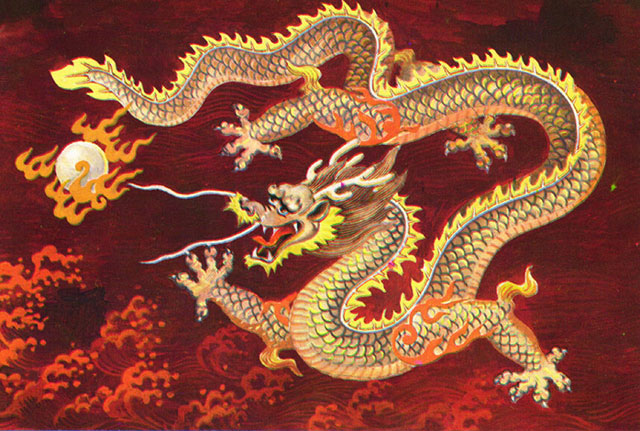
These are somewhat complicated spiritual concepts, so bear with me.
In Hinduism and Jainism, the Indrajala symbolizes (according to Google) the illusory nature of the world — the net of Maya created by Indra to conceal reality. I don’t think thats right, given that Buddhists perceive the net as representing the exact opposite. In Buddhism, the Indrajala represents the infinite interconnected web or True Picture of Divine Reality, wherein every pearl or jewel reflects all the other pearls or jewels. The Indrajala, that is to say, symbolizes the complete interdependence, interpenetration, and the holographic nature of (divine) reality, illustrating that all phenomena are interconnected and mutually reflective.
In several places in the Course, Jesus talks about what the rishis describe as the “true picture Nara preserves,” as well as the false picture the Ego would have us see instead. At one point, he says:
Nothing gives meaning where no meaning is. And truth needs no defense to make it true. Illusions have no witnesses and no effects. Who looks on them is but deceived. Forgiveness is the only function here, and serves to bring the joy this world denies to every aspect of God’s Son where sin was thought to rule. Perhaps you do not see the role forgiveness plays in ending death and all beliefs that rise from mists of guilt. Sins are beliefs that you impose between your brother and yourself. They limit you to time and place, and give a little space to you, another little space to him. This separating off is symbolized, in your perception, by a body which is clearly separate and a thing apart. Yet what this symbol represents is but your wish to BE apart and separate. (ACIM, T-26.VII.8:1-10)
Elsewhere in the Text, he says:
The ego’s picture of you is deprived, unloving and vulnerable. You cannot love this. Yet you can very easily escape from this image by leaving it behind. You are not there and that is not you. Do not see this picture in anyone, or you have accepted it as you. All illusions about the Sonship are dispelled together as they were made together. Teach no one that he is what you would not want to be. Your brother is the mirror in which you see the image of yourself as long as perception lasts. And perception will last until the Sonship knows itself as whole. You made perception and it must last as long as you want it. (ACIM, T-7.VII.3:2-11)
Based on all that Jesus says, I’m pretty sure the flaming pearls on Indra’s Net represent the miracles of forgiveness that help us “see” the true picture. Or, to again quote Course-Jesus:
Love, too, has symbols in a world of sin. The miracle forgives because it stands for what is past forgiveness and is true. How foolish and insane it is to think a miracle is bound by laws that it came solely to undo! (ACIM, T-27.VI.6:1-3)
Let’s more on to pamsi — another word with wide-ranging definitions. After many trial-and-error attempts at dividing the syllables, I ended up with p (pure) and amsi (foundations, origins, or roots). My gut tells me this is right, given that “pure roots” are referenced many times in the Bible.
In Proverbs 12:12 and Romans 11:16, for example, we learn (from St. Paul) that rooting ourselves in God’s word and love produces the fruits of righteousness. In Matthew 13:6 and Jeremiah 17:7, we are told these deep roots hold fast in hardship, while shallower roots may wither. In Ephesians 3:17, deepening these roots fosters spiritual maturity, brotherly love, and faithfulness. In Colossians 2:6-7, we are encouraged to become “rooted and built up in Him” (Christ).
The Sukta’s final verse (Rv 1.17:11) reads:
In the now of the Name, the word of God thunders to advance the three blessed singers extracting or milking Indra’s spiritual offerings from the eastern Siksa. Praising the formless mind heats the splendor cow, the vessel of abundance communicating oneness in the assembly of sacred rivers.
My definitions and breaks:
nūnaṃ (In the now of the Name) sā (the word of god) te (thunders) pra-ti (to advance the three) varaṃ (blessed) jaritre (singers) duhīyad (extracting or milking) indra (Indra’s) dakṣiṇā (spiritual offerings) maghonī (from the eastern) śikṣā (Siksa) stotṛbhyo (Praising the formless) māti (mind) dhag (heats) bha-go (the splendor cow) nole (the vessel) bṛhad (of abundance) vad-ema (communicating oneness) vidathe (in the assembly or congregation) su-rivah (of sacred rivers).
Again, lots to explain. The “now of the name” refers to standing in the present moment before the inner-altar, which means the same as “standing in the chariot” (of the Logos). We stand in the now of the name by listening to the Om until the world of time, space, and bodies falls away completely, freeing our mind to perceive the Assembly in the Resting Place, where our Soul has been all along.
The three blessed singers are found in the Bible — as the three Levites appointed by King David (the Christ Ray) to lead the hymns of praise in the (inner) Temple, “to lead praise with cymbals, harps, and lyres, with their descendants continuing these musical duties” (as per Google).
Based on my hard-rule of allegories, the names should reveal what these three singers signify spiritually. And they do, because a Levite is someone descended from Levi — a popular Hebrew name meaning “attached to,” “connected to” or “joined within” the Tabernacle (the Holy of Holies). The names of these three Levites were Asaph, Heman, and Jeduthan or, sometimes, Ethan.
Asaph means “gatherer,” “collector,” or “convenor”; Heman means “faithful,” “trusted,” or “given”; and Jeduthan means “praising,” “rejoicing,” or “giving thanks.” Ethan, meanwhile, refers to something both firmly established and ever-flowing. So, as I interpret the evidence, these three blessed “singers” represent the three aspects of our Assembly “meetings,” which are 1) calling the circle, 2) giving the alms, and 3) thanking God by sharing his will to “make earth like Heaven.”
This brings us to the rather odd phrase “praising the formless heats the splendor cow.” And yet, we do indeed find similar language in the Bible, in the two verses from Leviticus mentioning Molek, the cow-headed goddess of Mesopotamia. In Leviticus 20:3-5, we read:
By casting together the stones to be given the face of spirit, a covenant is made with the inner Self to give the seed of Molek to make clean the sanctuary piping the Holy Name of the I Am into the Land of the Living. The hidden Self seen by the Spirit gives the seed of Molek to kill nothingness. Without the presence of spirit, the tribe makes a covenant with idolatry and fornication, in faithlessness to Molek, the innermost part of the I Am.
Wrongmindedly vilified as a baby-eating demon, Molek is, in fact, the cow-headed cherubim personified in Hinduism as Kamadhenu, the miracle cow, a.k.a., the “cow of splendor.” Elsewhere in Leviticus, we are told that we “bake” the sweet cakes offered to Molek in a stove heated by God’s fire (Agni), as it burns the cast-off branches of our wrong-minded thinking. So, by praising the formless mind of Christ, we shed the branches God burns to “heat up” the miracle-cow.
Lastly, the Assembly of Sacred Rivers doesn’t refer to any confluence of rivers on earth; it’s the celestial “gathering of the waters” presided over by Indra to maintain cosmic order and strategize against Asuras. This assembly of holy powers, sometimes called Sabha, is believed to involve thirty-three deities (or thirty-three classifications) collaborating to protect Earth and uphold Dharma.
In the Bible, thirty-three is numeric representation of the Star of David or the Seal of Solomon, called Shatkona in Hinduism. It’s no accident that Jesus was 33 when he died and resurrected, or that he rose again after three days in the tomb.
And just so we’re clear, this “celestial assembly” is the SAME group referenced hundreds of times in the Bible as qahal in Hebrew and ecclesia in Greek. This Sacred Assembly or Congregation (of Souls) exists only in our minds, in the Gathering Place or Resting Place reached through meditation. Based on what the rishis say, the Assembly also is “the gathering of the waters” referenced in Genesis 1:9-10.
Knowing this should change your perception of the multitudinous Bible verses mentioning this assembly, council, congregation, or gathering; as well as those merely describing its function and purpose.
Here are some examples from the KJV Bible:
1 Peter 2:5: You yourselves like living stones are being built up as a spiritual house, to be a holy priesthood, to offer spiritual sacrifices [offerings] acceptable to God through Jesus Christ [the name we share with God].
Ephesians 4:16: From whom the whole body [the restored Assembly of Souls], joined and held together by every joint with which it is equipped, when each part is working properly, makes the body grow so that it builds itself up in love.
Hebrews 10:24-25: Not forsaking the assembling of ourselves together, as the manner of some is; but exhorting one another: and so much the more, as ye see the day approaching
Leviticus 23:3 : There are six days when you may work, but the seventh day is a day of sabbath rest, a day of sacred assembly. You are not to do any work; wherever you live, it is a sabbath to the Lord.
I didn’t retranslate the above passages, but I will do so with Deuteronomy 16:8, which closely echoes Leviticus 23:3. As printed in the KJV Bible, the passage from Deuteronomy reads:
Six days thou shalt eat unleavened bread: and on the seventh day shall be a solemn assembly to the Lord thy God: thou shalt do no work therein.
What Deuteronomy 16:8 actually communicates (and probably Leviticus 23:3 also) is closer to this:
Six Rays consume the sweetness; the Seventh Ray, the sacred assembly of Yovah-Elohim advances as ministers.
Not a word about “the sabbath,” but a major hint about which “divine attribute” the Seventh Ray might represent, which, based on this description, can’t be “ceremonial ritual or magic.” What the Seventh Ray truly represents remains to be seen.
Let’s turn now to Psalm 89:7-8, which mentions “the council of the holy ones” or, in some Bibles, “the Assembly of Saints” In the KJV Bible, the two verses read:
God is greatly to be feared in the council of the holy ones, and awesome above all who are around him.
O Lord God of hosts, who is a strong Lord like unto thee? or to thy faithfulness round about thee?
And here is how Psalm 89:7-8 actually translates:
El’s chief cause of the trembling or shaking, “sode qadosh” stands in awe round-about Yahweh-Elohim in the Gathering Place of Mighty Yah (the sacred name) in “emunah” all around.
I left in place the Hebrew words sode, qadosh, and emunah so that we might explore each word’s range of meanings.
Sode, the word typically translated as “assembly” or “council,” can also mean “counsel,” “secret,” “intimate conversation,” or “circle.”
Qadosh, the word generally translated as “holy ones” or “saints,” also can mean “holy,” “sacred,” “set apart,” or “pious.”
Emunah can mean “faith,” but more accurately refers to “trust” — the foundational characteristic of God’s Teachers, according to Course-Jesus.
Jesus says many things of great import on the subject of trust in the Course. What follows are but a few prime examples:
The teachers of God have trust in the world, because they have learned it is not governed by the laws the world made up. It is governed by a power that is IN them but not OF them. It is this power that keeps all things safe. It is through this power that the teachers of God look on a forgiven world. (ACIM, M-4.I.1:4-7)
The children of God are entitled to the perfect comfort that comes from perfect trust. Until they achieve this, they waste themselves and their true creative powers on useless attempts to make themselves more comfortable by inappropriate means. But the real means are already provided, and do not involve any effort at all on their part. The Atonement is the only gift that is worthy of being offered at the altar of God, because of the value of the altar itself. It was created perfect and is entirely worthy of receiving perfection. God and His creations are completely dependent on Each Other. He depends on them BECAUSE He created them perfect. He gave them His peace so they could not be shaken and could not be deceived. Whenever you are afraid you ARE deceived, and your mind cannot serve the Holy Spirit. This starves you by denying you your daily bread. God is lonely without His Sons, and they are lonely without Him. They must learn to look upon the world as a means of healing the separation. The Atonement is the guarantee that they will ultimately succeed. (ACIM, T-2.III.5:1-13)
Yet when we can, we will observe our trust as ministers of God, in hourly remembrance of our mission and His Love. And we will quietly sit by and wait on Him and listen to His Voice, and learn what He would have us do the hour that is yet to come; while thanking Him for all the gifts He gave us in the one gone by. (ACIM, W-153.17:1-2)
You rest within the peace of God today, and call upon your brothers from your rest to draw them to their rest, along with you. You will be faithful to your trust today, forgetting no one, bringing everyone into the boundless circle of your peace, the holy sanctuary where you rest. Open the temple doors and let them come from far across the world, and near as well; your distant brothers and your closest friends; bid them all enter here and rest with you. (ACIM, W-109.8:1-3)
We trust our ways to Him and say “Amen.” In peace we will continue in His way, and trust all things to Him. In confidence we wait His answers, as we ask His Will in everything we do. He loves God’s Son as we would love him. And He teaches us how to behold him through His eyes, and love him as He does. You do not walk alone. God’s angels hover near and all about. His Love surrounds you, and of this be sure; that I will never leave you comfortless. (ACIM, W-ep.6:1-8)
Truth is one, my brother, when interpreted rightmindedly (which few, if any, scriptural texts have been at this point in the dream of time).
Let’s now look at the whole 16th Sukta, which rightmindedly reads:
Indra and Varuna are both the I Am, the sovereign ruler in two divisions of God, blessing those in non-existence showing mercy and compassion.
In this manner, the Word of God (Indra, the Blood Ray) and the Spirit of Grace (Varuna, the water ray) exude the Greater Light, the foremost light in the illusion bestowing the Glory of God, the radiant inner-power fixing the heart-mind on the Majesty of God’s Name.
To walk and shake the sacred sap, glorify the assembled body of the Son (Christ), the circle enclosing the upper Resting Place in the celestial dominion to turn toward and not give up what was created in the beginning in strength and abundance; that which in the beginning of Brahmana, the sacred sun nourished.
Standing in the chariot, the sons of Daksha (the Lord of Creatures) — apart yet connected — advance the auspicious streams moving swiftly in unison, while distinct from each other.
To feed the Greater Light, glorify the universal abode of the red ray, the majesty without form advancing in time the water forces to progressively increase consuming the mad state of existence. The Light of God’s love shakes to expand gentle-heartedness in the darkness of material existence.
When troubled, join together in the eternal Word of God, the ancient feast extending the fortifying vital-energy underneath the mark of the name to hear the Od, the waters of the Apah (the water goddess).
To uphold Prithvi’s universal mercy, join together to prop up the divine power of the celestial realm protecting the Rasah.
The Word of God enters to make ready both arms of Yama’s father making the thunder of the universal oneness of God’s created offspring; the divine state serving the circle by which the World within, the cistern abiding in the Resting Place of meditation, sanctifies the jewel of the Greater Light in you, concealed in the sound like the roaring sea.
To sound the immortal likenesses, the two fathers, connected in true being, join together in the joy of God’s sanctuary (the holy seat in the Assembly). The True Self inspirits the divine attributes acting to illuminate the mark or sign of the upper mouth bearing the curds of the divine attributes of the body of the son, the means by which to produce the Great Feast of the True Self.
Indra, together with Yama, invokes the oneness curds of the True Self. Indra’s pure roots grow to produce the pearls of Indra painting the picture Nara preserves, the creative thought fertilizing Indra, the shinning glory in wholeness,
In the now of the Name, the word of God thunders to advance the three blessed singers extracting or milking Indra’s spiritual offerings from the eastern Siksa. Praising the formless mind heats the splendor cow, the vessel of abundance communicating oneness in the assembly of sacred rivers.
Thanks for studying with me. I hope you found these insights useful. Until next time, Om Hari Om.
 The Holy Meeting Place
Leave a comment