
Over the centuries, the illusion-manifesting Ego Mind (Brahma in Hinduism) has tangled the foundational teachings of the Great Rishis of India into such a snarled hairball of lies, it’s hard to know where to begin the “detangling” process. So, let’s start at the beginning, with the earliest and most sacred of the Hindu shruti (divinely revealed) texts: the Rigveda Samhita.
While many scholars believe the Rigveda has been passed down orally since the 2nd millennium BCE, most linguistic evidence suggests the teachings date to between 1500 and 1000 BCE, or possibly as far back as 1900 BCE. Whatever its actual age, the Rigveda is without a doubt the most ancient and sacred of the canonical Sanskrit texts of Hinduism.
Let’s begin our Vedic detangling exercises with a clarification of terms. Rigveda means not “hymns of knowledge” (as generally believed), but “the radiant knowledge of God.”
Interestingly, St. Paul used similar phrasing in 2 Corinthians 4:6, when he wrote: “For God, who commanded the light to shine out of darkness, hath shined in our hearts, to give the light of the knowledge of the glory of God in the face of Jesus Christ.”
And that is indeed what the Rigveda’s first Sukta describes when rightmindedly translated. Contrary to popular assumption, RV 1.1 is NOT a hymn to “Agni, the god of fire”; it’s a teaching about increasing the fire of God’s radiant presence burning within our spiritual hearts. And that fire is “Agni,” the everlasting flame.
In the Bible, we find Agni correctly characterized in Leviticus 6:13, Jeremiah 28:29, Luke 24:32, and Romans 12:11. In the interest of space, I won’t quote all of these verses, but I will quote the most pertinent (Leviticus 6:13), which reads: The fire shall ever be burning upon the altar; it shall never go out.
Returning to the Vedas, the term Samhita refers to the core text– a collection of ten mandalas (books) containing 1,028 sūktas, a word generally mis-defined as “hymns.” Sukta either is a compound of su (holy or sacred) and kta(s) — a rather mysterious “suffix” probably meaning “thought(s)” or “teaching(s)– or a marriage of s (shorthand for Sat or “that which is of God”) and ukta (“spoken” or “taught”). The “learned” Sanskrit linguists conjecture that adding kta at the end of a word merely shifts it from present to past tense, but that “rule” doesn’t apply to Sukta, bhokta (the deluded jiva), bhakta (a devotee of god), or nukta (a point, dot, or singularity), all of which are found in the Rigveda Samhita.
As I shall demonstrate going forward, the Rigveda is, in fact, a collection of advanced spiritual teachings explaining how the various aspects of Brahman ensure the Supreme Creator’s Will is done (in absentia) “on earth as it is in Heaven.” The first fifteen of those sacred teachings concern seven different “gods,” whose names and widely presumed functions are as follows:
Agni x 3 (the fire or fire-sacrifice deva)
Vayu (a storm or wind god)
The Asvins (twin horse-headed physicians)
Indri (the river-devi consort of Indra)
Indra x 7 (King of the Gods, vanquished by Krishna)
Vishvedevas (the whole pantheon of Hindu deities)
Rtu (the best time for “yajna” rituals)
As stated earlier, the whole Rigveda Samhita contains 1,028 Suktas, or Riks. In Book One and throughout, the “god” most often addressed is Indra, the personified Red Ray of God’s Will and Authority. King Indra may get the most mentions, but he is not the first deva acknowledged. He is, in fact, the fourth. Ahead of him are (in order) Agni, Vayu, the Ashvins, and Indri, most of whom are inconsequential in the modern Hindu pantheon. Why? Because what these deific powers represent has been significantly underrated in all the available translations of the Rigveda. Agni, for example, is NOT the god of elemental fire (as I’ve explained). His name is a compound of a (“God’s” or “of God”) and gni (“transformational fire”).
And that’s just one example.
So, let’s take a closer look at what the Rigveda really says about some of these deific forces, starting with Sukta Numero Uno. Various interpretations of this Rik are available on the internet. While they differ slightly, most are similar in character to the best-known translation below by British Indologist Ralph T. H. Griffith (1826-1906).
I Laud Agni, the chosen Priest, God, minister of sacrifice,
Worthy is Agni to be praised by living as by ancient seers.
He shall bring, hitherward the Gods.
Through Agni man obtaineth wealth, yea, plenty waxing day by day,
Most rich in heroes, glorious.
Agni, the perfect sacrifice which thou encompassest about
Verily goeth to the Gods.
May Agni, sapient-minded Priest, truthful, most gloriously great,
The God, come hither with the Gods.
Whatever blessing, Agni, thou wilt grant unto they worshipper,
That, Angiras, is indeed thy truth.
To thee, dispel of the night, O Agni, day by day with prayer
Bringing thee reverence, we come
Ruler of sacrifices, guard of Law eternal, radiant One,
Increasing in thine own abode
Be easy of approach, even as a father to his son:
Agni, be with us for our weal.
Let me curb my indignation and simply say this does NOT even remotely capture the spirit of the divinely revealed original. What follows is my spirit-guided translation of the original Sanskrit wording. And, believe you me, working this out was no easy feat — and would have been impossible without my inner-guru’s help, augmented by the many resources currently available online (especially the Wisdom Library, Google, Wikipedia, and the Website of Sri Aurobindo and The Mother). To the creators of these vast reference libraries, I offer my deepest gratitude.
As I explained way back in my posts about the realm of perception, we turned everything real upside-down when we projected part of our minds out of Heaven. Consequently, the Fire of God (the Eternal Flame of God’s Presence) became “the god of fire”; the Greater Light, Spiritual Sun, or Radiant Word of God became “the god of the sun”; and the Love of God became “the god of love.”
And this happened in many more ancient human settlements than India.
Agni is, therefore, a Vedic term meaning “Fire of God,” which was reversed (as through a mirror) by the Ego Mind into the “god of fire.”
With that in mind, let’s see what the Rigveda’s opening Sukta actually teaches about “Agni.” What follows is my word-for word and line-by-line retranslation of what is arguably the oldest sacred teaching (not hymn) communicated to humankind by the Holy Spirit:
The Fire of God’s presence in the Walled City, supports the light in the Higher Mind of the Holy One bringing forth the vibration of the cosmic order; the High Priest of Ram bestowing the treasures of wholeness.
Agnim [The Fire of God’s] ǀ īḷe [presence] ǀ puraḥ [in the Temple, Citadel, or Walled City] hitam [supports] ya-jña-sya [the light of the Higher Mind of the] ǀ devam [Holy One] | ṛtvi-jam [bringing forth the vibrations of the cosmic order] ǀ hotā-ram [the High Priest of Ram] ǀ ratnadhā-tamam [bestowing the blessings or treasures of wholeness]
That sacred fire purifies the dream of fear by sounding the Light of Love’s worshipful now-moment mindfulness from the wellspring (or sacred grass), supporting the teachers of God’s love and light extending mindfulness.
Agniḥ [That sacred fire] pū-r(e)ve-bhiḥ [purifies the dream of fear] ṛ(a)ṣ-ibhiḥ [by sounding the Light of Love’s] īḍyaḥ [worshipful] nūtana-iḥ [now-moment mindfulness] uta [the wellspring fountain, or sacred grass] saḥ [supporting] devān [the teachers] ǀ ā [of God’s] ǀ iha [love and light] ǀ vak-ṣati [extending mindfulness] |
That sacred fire of God’s abundant treasures are experienced by cherishing truly, day by day, the glorious equality (or sameness) springing from the Wholeness of Creation.
Agninā [That sacred fire of God’s] ǀ rayim [abundant treasures] ǀ aśnavat [obtained or experienced] ǀ poṣam [by cherishing] ǀ eva [truly] ǀ dive-dive [day by day] ǀ yaś-asam [the glorious equality or sameness] ǀ vīravat-tamam [springing or abounding from the wholeness of Creation]
That holy fire scatters the Light of Spiritual Rebirth in the Holy Meeting Place in all directions around the manifested world to bestow the blessings coming from all the Sons of God sounding the sacred-syllable’s pure communications.
Agne [That sacred fire] ǀ yam [scatters] ǀ yajñam [the Light of Spiritual Rebirth] ǀ adhvaram [in the Holy Meeting Place] ǀ viśvataḥ [in all directions] pari-bhūḥ [around the manifested world] ǀ asi-sah [to bestow the blessings] | it [coming from] ǀ deveṣu [all the Sons of God] ǀ ga-ccha-ti [sounding the sacred-syllable’s pure communications] |
Those sacred-fire priestly oblations empower the Will of the True Self, the Bright One with the ears to hear the wellspring in the darkness, the shining one intensifying the effects of God’s pure and unbroken communications.
Agnih [those sacred-fire] hota [priestly oblations] ǀ kavi-kratuḥ [empower the Will] ǀ satyaḥ [of the True Self] ǀ citra-śravaḥ-tamaḥ [the bright one hearing the wellspring] ǀ devaḥ [the heavenly being] ǀ dev-ebhiḥ [the shining one intensifying the effects] ǀ ā [of God’s] | gam-at or gam-ad [pure and unbroken communications]
Endeavor to sound the sacred-syllable giving the strength to the Higher Self to kindle the auspicious Miracles of Grace abundantly furnishing the spiritual purification coming from the Supreme Spirit’s true corporate body. Come together in this state of True Being to kindle, day-by-day, the darkness-illuminating lamp breathing the Holy Name sustaining the Greater Light of holiness or peace.
Yat [endeavor to] ǀ aṅ-ga [sound the sacred syllable] ǀ dā-śuṣe [giving the strength] ǀ tvam [the Higher Self] agne [kindling] ǀ bhadram [the auspicious] ǀ karis [miracles of grace] ǀ yasis [abundantly furnishing] | tava = tapas [spiritual purification or at-one-ment]ǀ it [coming from] ǀ tat [the Supreme Spirit’s] ǀ satyam [true] ǀ aṅgiraḥ [corporate or luminous body] | upa [Gather together in] ǀ tvā [this state of true being] ǀ agne [to kindle] ǀ dive-dive [day by day] ǀ doṣāvastaḥ [the darkness-illuminating] ǀ dhiyā [lamp] ǀ vayam [breathing] ǀ namaḥ [the Holy Name] ǀ bharan [nourishing] | taha [the Greater Light] ima-si [of holiness or peace] |
The fire or radiance producing that sound brings nearer the Resting Place of the guardians of the established order of the shining twin waters bestowing the spirit of one’s own Higher Self, the Atman.
Rā-jan [the fire or radiance producing] ǀ tam [that sound] | adh(a)v-arāṇām [brings nearer the shelter or resting place] ǀ gopām [of the guardians of] ǀ ṛta-sya [the established order of the] ǀ dīdi-vim [shining twin] ǀ var-dha-mānam [waters bestowing the spirit] ǀ sve [of one’s own Higher Self] ǀ dame [the Atman]
The Word of God binds together, like Father and Son, the inner fire holy offering of the Nada-mantra (the Om/Aum), the right-minded thought-force of the hidden Self abiding in the Light.
Saḥ-nah [the Word of God binds together] ǀ pitā-iva [like Father] ǀ sūnave [and son] ǀ agne [the inner fire] ǀ su-upāyanaḥ [holy offering of] ǀ bhava [the Nada-mantra or Om/Aum] ǀ sac-asva [the right-minded thought-force of] ǀ naḥ [the hidden or obstructed] ǀ sva-staye = sva-sta-ya [Higher Self abiding in light] |
Pretty illuminating, wouldn’t you say? Moreover, it communicates information that’s actually useful to sincere truth-seekers, unlike Griffith’s laughable result. Not only is Griffith’s translation absurd, it’s also deceptive. The Fire of God does not, for example, “bestow worldly wealth” upon human beings; nor does “Agni” play a role in any form of sacrifice, be it ritualized or personal.
Or, as Course-Jesus states point-blank: “Sacrifice is a notion totally unknown to God.”
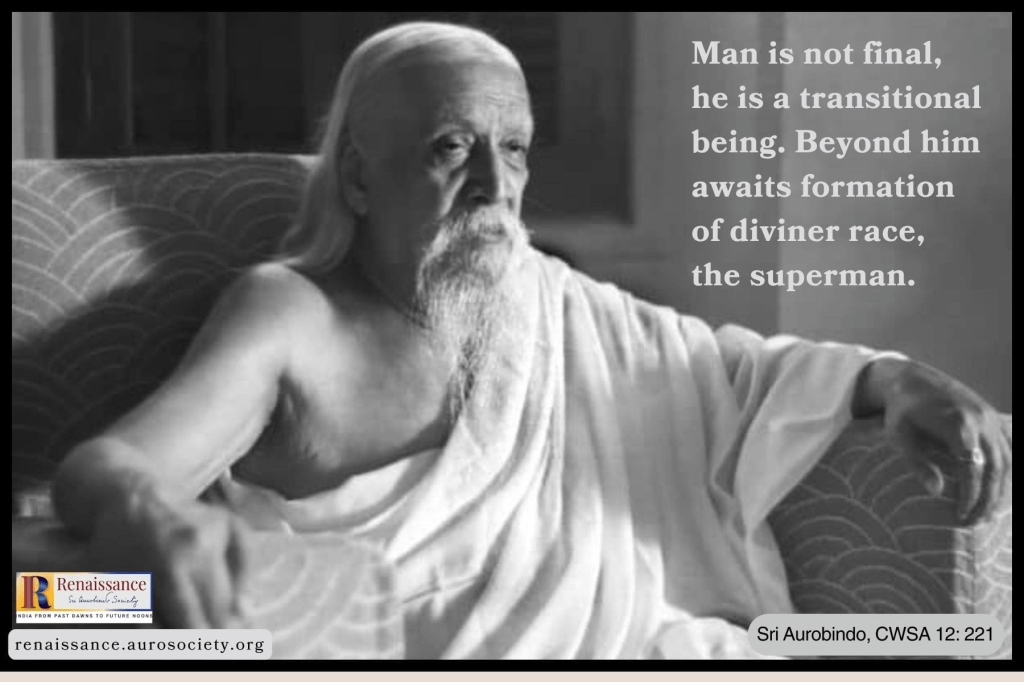
As you can imagine, this radically different translation took considerable time to work out. The labor was, however, worthwhile because, like our earlier scriptural do-overs, this new-and-improved Vedic translation demonstrates just how stealthily Brahma and his agents have distorted the canonical teachings of every world religion over the centuries. My translation, in fact, bears no resemblance whatsoever to Griffith’s — or to any others I’ve come across to date, including those by Sayana (the 14th-century scholar from whom Griffith heavily borrowed) and Sri Aurobindo.
And yet, my result bears an uncanny resemblance to the prophecies and teachings found in the Bible, the Course, and the Bhagavad Gita. Even the symbolic language is the same. The wellspring, the twin waters or streams, the Holy Resting Place, and the Word of God, are but a few examples.
This should come as no surprise, since all God-breathed teachings come from the same Source: the Holy Spirit, whose teachings are always consistent (as per Course-Jesus). There is, in other words, only ONE Great Truth. The forms in which that Truth is communicated to humankind may number in the thousands, but the message never varies. If, then, the Course, the Bhagavad Gita, the Rigveda, and the Holy Qur’an are all divinely revealed scriptural texts (as I KNOW them to be), they should NOT disagree in more than setting and cultural symbolism. If they appear to differ in substance as well as form, there can be only ONE explanation: Errors in interpretation made the SAME teachings APPEAR to be different.
Nowhere in this Sukta do the rishis actually address the Fire of God as “Agni.” Rather, they use the descriptive variations Agnim, Agnih, Agnina, and Agne. This begs a question: Who decided–and on what authority–that all of those terms were different forms of a proper name belonging to a “god”? I don’t know the answer; but I do know that Griffith and his Oxford cohorts all translated these five terms as “Agni.”
Is Agni, in fact, the name of a god? I have my doubts.
As explained, Agni refers to the Fire of God’s Presence in our heart-of-hearts–the Inner Altar within the Temple. And that is why “Agni” gets top billing in the Vedic canon. In the New Testament, he also is the αἰώνιος πῦρ–the everlasting fire referenced in Matthew 18:8 and 25:41, as well as in Jude 7. In all three of these verses, sadly, the eternal fire of God’s presence (burning in our spiritual hearts) has been fearfully misinterpreted as the everlasting hellfire of damnation. Ditto for the Qur’an, which similarly speaks of An-Nar, the Fire of God, which ego-thinkers equate with Jahannam, the Hellfire used to punish sinners and infidels.
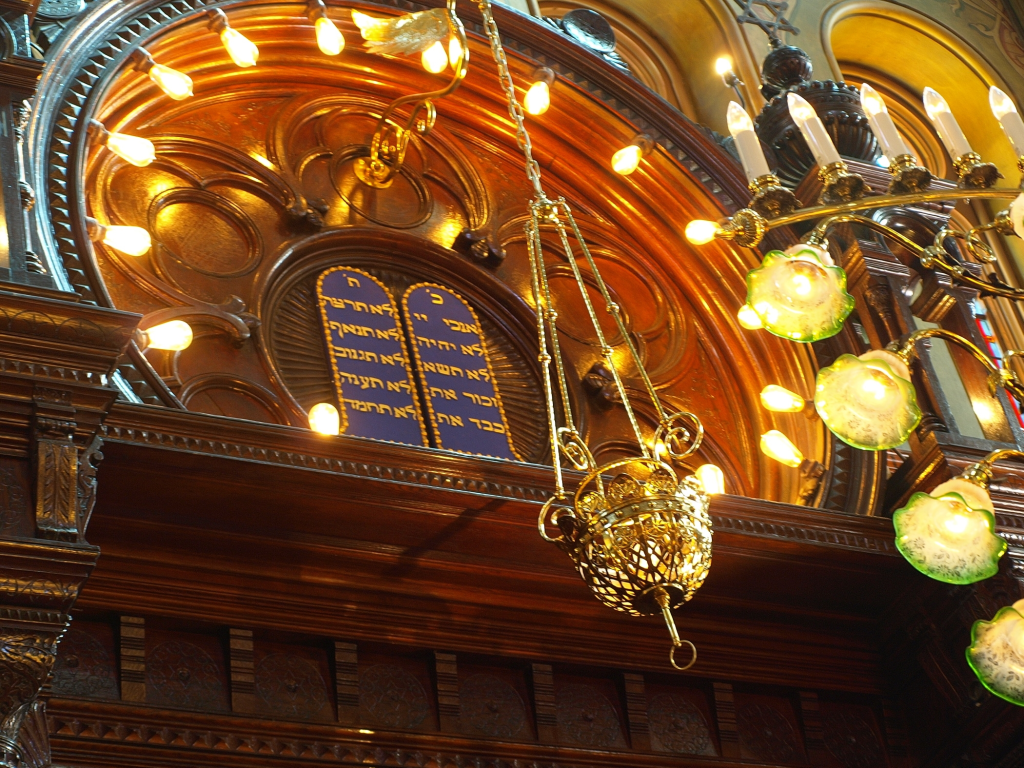
In Judaism, that fire is more rightmindedly understood to be Ner Tamid, the eternal light burning within the Temple’s Holy of Holies. From there, unfortunately, that symbol of God’s unending inner presence, has been externalized as a physical reminder of the stolen Temple Menorah, as well as the perpetual flame that once burned on the altar in the Second Temple of Jerusalem. As such, according to Google, “it represents the divine inspiration and hope that must be preserved through human effort, study, and observance.”
To be preserved, that is, through external and bodily rather than internal and spiritual effort, study, and observance.
Hindus likewise mistake Agni for an external deific power to be honored or invoked through the priest-led fire-sacrifice rituals known as yajnas.

And all of this deception, fear, and wasted effort arises from unilluminated translations of the scriptures, all of which contain the same underlying Truth.
Or, to again quote Bible-Jesus:
Beware of false prophets, which come to you in sheep’s clothing, but inwardly they are ravening wolves.
Inwardly, that is to say, these ravenous wolves prey upon the docile sheep we truly are; God’s sheep, grazing in the pastures of the Resting Place under the watchful eye of the Chief Shepherd, Elohim.
Because of these ravening wolves, Hindus today are left with but two apparent choices: Blindly accepting that sacrificial rituals are advocated by the Vedas and are, therefore, a desirable form of worship, or rejecting the Vedas as scriptural dinosaurs with no modern relevance.
Either choice is fine by Brahma, the pack leader of the false prophets, because either choice will keep God’s sheep fettered to the ever-repeating hell-loops he fashioned for them.
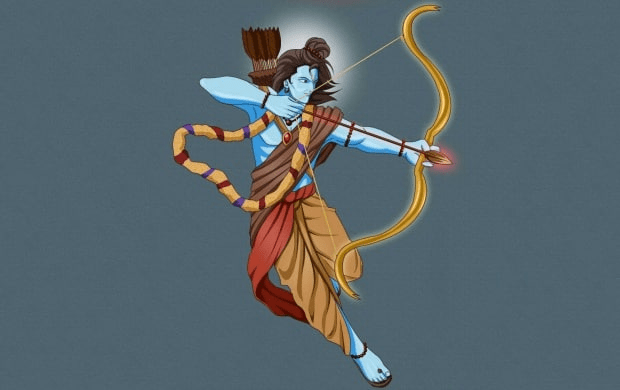
In the first of our retranslated stanzas, the rishis mention “the High Priest of Ram.” Ram is shorthand for Rama, the seventh Avatar of Vishnu, whose adventures are chronicled in the Ramayana epic. In this epic allegory, Rama is sent into exile, after which his wife, Sita (“the knowledge or memory of Sat”), is abducted by the demon-king, Ravana (“the roaring one”). After studying with a royal priest and guru named Vasistha, Rama rescues his wife and triumphs over King Ravana. Rama is worshipped throughout India and Nepal as as Maryada Purushottama–“the ideal man” (allegedly). In Vaishnavism, a major branch of Hinduism, Rama is revered as the Supreme Being.
I could say more about Rama, but I won’t (for now), because it’s his priest the rishis mention. One of the seven great sages of Hinduism and the Shankara-declared first sage of Vedanta, Vasistha is credited with authoring the seventh Mandala of the Rig Veda, as well as the Agni and Vishnu Puranas. His name is said to mean “the excellent one,” but it’s actually a three-way marriage of Va (conveying) sis (the Reminder) and tha (“the foundational fire supporting and nurturing all life on earth.”
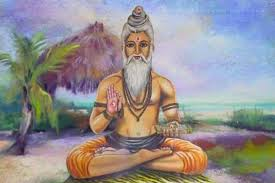
Vasistha is, therefore, a Vedic personification of the sacred-syllable, Om/Aum, rather than a human priest, rishi, scribe, guru, yogi, or author. And it is indeed (as Hindus believe) Vasistha who possesses the miracle-cow, Kamadhenu. Kamadhenu’s milk supplies the miracles that gradually turn around our ego-inverted Perception of what’s REAL and what’s false. And it is through the pranava, Living Water, or Song of God that our Souls exchange those thought-correcting miracles of grace.

Let’s now return to the Sanskrit word yajna, which appears multiple times in the Rig Veda. As explained, the word is a marriage of ya (the light) and jna (higher thought), or possibly yaj (giving alms) and na–a word with many definitions. According to the Sanskrit dictionaries, na can mean “not,” “knowledge,” “certainty,” “gift,” “a name for Shiva,” “wish or desire,” “water-house,” or “a noise like streaming water.” Adding to the confusion, na also is an oft-used Vedic shorthand designation for either “Nara” (the eternal spirit pervading the universe) or “Nada” (the Om vibration).
So, yaj-na means either “the Light of Higher Thought,” “giving the alms of Nada,” or “giving the alms of Nara,” all of which communicate the same idea.
And here’s the interesting thing about Sanskrit: however we divide the syllables, the word ends up meaning the same thing from a slightly different vantage point. Where translators go wrong is trying to force those fluid syllables into the static grammatical rules dreamed up by the Oxford Triumvirate comprised of H.H. Wilson, Ralph T. H. Griffith, and Sir Monier Monier-Williams, all of whom 1) translated the Rigveda into English, 2) held the evangelical position of Boden Professor of Sanskrit at Oxford University in the early to mid-1800s, and 3) supported the East India Company’s campaign to subjugate India under the rule of the British Raj.
Let’s go back to the alternative definition of yajna as “giving the alms” of Nada or Nara. Because that particular expression –“giving the alms” — also shows up in the Bible, the Hadiths of Islam, and the practical teachings of Buddhism. In the Old Testament, the concept of “giving alms” is addressed in Job 31:16-23, Leviticus 19:9-10, and Isaiah 1:17. In the New Testament, Jesus uses the phrase in Matthew 6:1-8, wherein he instructs his followers to give their “alms” to those in need through “secret prayer” (rather than visible or audible actions of any kind).
In the KJV New Testament, the word “alms” replaced the Greek word eleemosune, which means “compassionateness” or “beneficence,” especially as directed toward “the poor.” And by “the poor” or “those in need,” Jesus means — in the Bible AND the Course — those in need of the spiritual sustenance we give and receive, through Agni, the Light or Fire of God, in the Holy Resting Place.
So, at the risk of overstating the obvious, Jesus professes in Matthew 6:1-8 that we should give our brotherly compassion through right-minded thought-gifts (the secret prayers that manifest miracles), rather than through charitable acts, audible chanting, praying out loud in churches or study groups, or making ritualized offerings of any sort. And, when correctly translated, that’s exactly what the Rigveda’s first teaching also encourages.
And Muhammad said the same to his disciples, as we learn in the Islamic Hadith narrated by Sa’d ibn ‘Ubadah, a prominent companion of the Prophet’s. In verse 3664, he says to Muhammed, “O Messenger of Allah, my mother has died; shall I give in charity on her behalf?”
“Yes,” Muhammad cryptically replied.
“What kind of charity is best?” his companion then inquired.
“Suqya al-Ma,” was the prophet’s definitive answer.
Typically translated as “provide drinking water,” Suqya al-Ma means so much more than that. According to Google), suqya is a deeply spiritual word meaning abundance in specific reference to water or milk, whilst al-ma refers to spiritual learning or knowing. So, what Muhammed said wasn’t “provide drinking water,” but “give the alma (the abundance-water or milk) of spiritual knowing.”
I can’t stress enough how significant it is that the Rigveda uses the phrase “giving alms” to denote the oblations we are encouraged to offer through the vibration sounded by the Christ Self to reunite in wholeness its embodied fragments in the world. In future posts, you will learn that the rishis used many other presumably “Christian” or “Biblical” terms and phrases as well — some 1250 years before Jesus walked the earth!
In Sukta 1.27.10, for example, the rishis say:
Awake ones who hear the Call, enter into giving the alms of Nada [yajna] that benefit all by increasing the Light [of God] that heals the serpent-bite [ego-thinking] when the worshipper offers agreeable praise to Rudra.
Who is Rudra? The name means “the red inner-radiance.” So, do the math. The Vedic rishis also call him “the mightiest of the mighty.” So, Rudra is another name for Indra, the King of God’s, basically: the Red Ray or Anointed One of God’s Will and Power working within the Temple of our Higher Minds to defeat Vritra, the chief demon-invader.

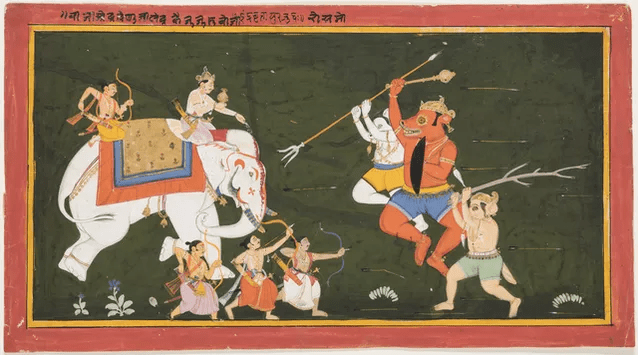
Remember that Indra rides Airavata, the Great White elephant symbolizing the fountain’s seven spouts. He also carries the thunderbolt-throwing vajra. Those thunderbolts grant “revelation”–direct knowledge of God from God Himself.
Miracles, on the other hand, are exchanged between Souls through the miracle matrix that is the Holy Spirit of the Christ Mind. And that’s what this Sukta is explaining in slightly different symbolic language.
To encapsulate:
To disappear Brahma and the unreal world he miscreated, we need only listen to the Om vibration in the silence of meditation, with the heartfelt intention of sharing its mind-healing waters with everyone equally. Because that ever-present echo is God’s Voice, speaking through the Christ Self to gently remind His ego-deluded brothers of the Truth of their Being. And that Voice, which speaks only Truth, has far more draw and power than Brahma’s lies ever could. Before we can hear and sing that dream-dissolving Song of Praise to Rudra, however, we must 1) forgive everyone for everything that only happened in a dream and 2) align our sense of “I-am-ness” with the True Self God created for His Purposes, by relinquishing our attachment to everything supporting the false self Brahma made to chase our unholy desire for “specialness.”
Or, as Jesus explains in Workbook Lesson 92 : Miracles are seen in light, and light and strength are one:
It is God’s strength in you that is the light in which you see, as it is His Mind with which you think. His strength denies your weakness. It is your weakness that sees through the body’s eyes, peering about in darkness to behold the likeness of itself; the small, the weak, the sickly and the dying, those in need, the helpless and afraid, the sad, the poor, the starving and the joyless. These are seen through eyes which cannot see and cannot bless.
Strength overlooks these things by seeing past appearances. It keeps its steady gaze upon the light that lies beyond them. It unites with light, of which it is a part. It sees itself. It brings the light in which your Self appears. In darkness you perceive a self that is not there.
Strength is the truth about you; weakness is an idol falsely worshipped, and adored that strength may be dispelled, and darkness rule where God appointed that there should be light. Strength comes from truth, and shines with light its Source has given it; weakness reflects the darkness of its maker. It is sick and looks on sickness, which is like itself.
Pretty eye-opening, right? And what he describes is, more or less, the subject of the Rigveda’s first Sukta regarding “Agni.” (the first of many).
According to the late guru Sri Aurobindo, yajna describes “any action, inner or outer, dedicated to the gods; [especially] an offering of self, being, mind, heart, will, body, or life to the Divine.” In the context of Veda,” he adds, “it is more often [an] offering of hymn, of thoughts, of word.”
Thus, as the Vedas correctly teach, yajna refers to the offering of a devotional thought-gift or, more accurately, an adhara or “traveling offering.” And that “traveling offering” is the Word of God, Song of Heaven, OM vibration, or Living Water emanating from Agni, the Fire of God presiding over the fourth or southeast quadrant of the Soul’s Circle Journey–the quadrant of Moksha (mind awake) in Hindu theology.
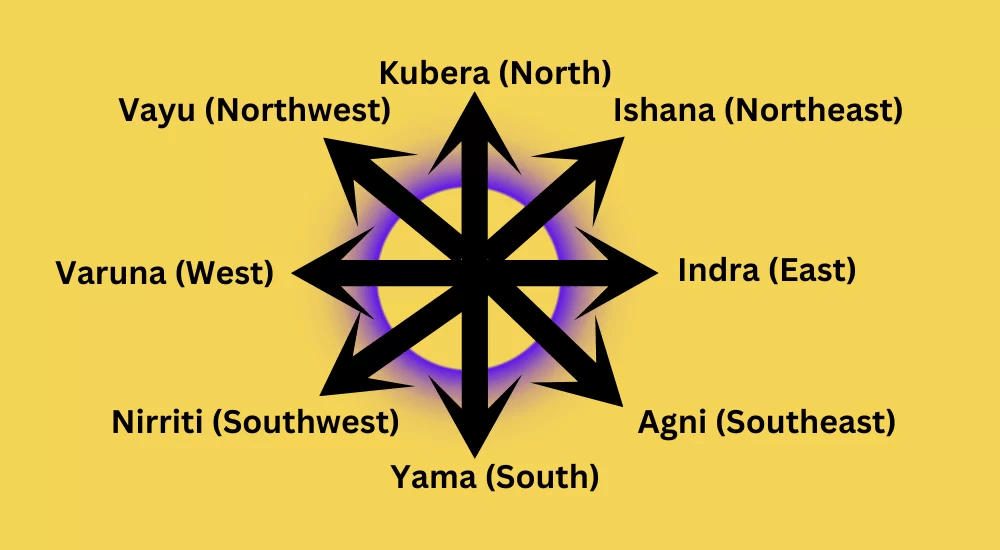
As this Rik and the Course carefully explain, we must extend that Holy Light, Fire, or “Agni” to all our “brothers in Christ” in the Holy Resting Place, by listening to the Om/Aum vibration with the right-minded intention of freely sharing it with EVERYONE.
Or, to quote the Vedic rishis:
That holy fire scatters the offerings in the Holy Meeting Place in all directions around the manifested world to bestow the blessings coming from all the Sons of God sounding the sacred-syllable’s pure communications.
Now, compare this with the following from the Course:
When a mind has only light, it knows only light. Its own radiance shines all around it, and extends out into the darkness of other minds, transforming them into majesty. The Majesty of God is there, for you to recognize and appreciate and know. Recognizing the Majesty of God as your brother is to accept your own inheritance. God gives only equally. If you recognize His gift in anyone, you have acknowledged what He has given you. Nothing is so easy to recognize as truth. This is the recognition that is immediate, clear and natural. You have trained yourself not to recognize it, and this has been very difficult for you. (ACIM, T-7.XI.5:1-9)
Make no mistake, my dreaming brother. What these verses describe is the yajna “ritual” much-discussed in the Vedas. It’s also how we practice the miracle-working that dissolves the seven veils of wrong-minded perception blocking our awareness of the Real World underneath.
I probably should stop here. But I won’t, because there’s more to explain. Lots more.
“Agni” is the eternal Flame of God’s presence illuminating the Temple of our shared Higher Mind. As Jesus explains in the Course, we projected that Holy Flame outward as elemental fire after entering the formless void. This was, in fact, the first act of outward projection of matter-weaving thought in the dream-universe. And this is likely the reason fire is so strongly associated with the HELL the dream of earthly existence actually is.

There is no other hell, brother. And it’s only going to get worse until we start to wake up in greater numbers.
Allow me to explain more fully what Jesus only alludes to in the Course: When first we “fell” into the dark void of nothingness, God (Param-Brahman) projected the Holy Light of the Christ Self (Virat Purusha, the Shining One) into our dreaming minds, so we wouldn’t forget the Truth of our Being. He threw us a line, more or less — a “safety rope” of sorts we could use to climb back up to the Heavenly Sphere of Superconsciousness when we tired of Brahma’s lies and empty promises.

To exert our coveted independence, we threw that rope away from us, by projecting our Holy Light outward in the form of elemental FIRE. Consequently, we blocked God’s direct communications. The outward projection of that “Living Water” or divine thought-vibration created ICE (in the freezing void of perception). And in that Unholy Instant of desired severance from our Source, we effectively blocked our conscious memories of God, the First Covenant, God’s Direct Communications, and the Truth of our Being. We also cut off access to the two entwined “safety ropes” that could a) bring us back to Heaven-proper and b) prevent us from falling deeper into the void of miscreated nothingness.
From that moment until the metaphoric New Moon (Rigveda “code” for the Ascension of Jesus Christ), our mad desire to be special prevented the Fire of God from crossing the veil or curtain between the Inner Altar and the sanctuary. Not until Jesus tore the curtain in two (by wholeheartedly choosing Truth over deception) could that holy inner-radiance enter the lower chambers of the Temple. But it still could only enter “in spirit” or as “inspiration” — and only by invitation (to preserve our free will). And it was that Holy Spirit of the Christ Self that brought the twin “safety ropes” back down to the lower plane of “earth.” They could not help us, however, until we exercised our free-will choice to be saved through the Holy Spirit’s guidance. Until that choice is made, the twins remain dormant in the Soul’s unconscious memory bank — the cistern or storehouse on the sixth plane.
In the Rigveda, what Christians perceive as the Holy Sprit is personified as Vayu, who, like “Agni” was downgraded over time from “the Wind of God” (God’s Breath, Voice, or Ruach) to a lowly elemental wind-god. The safety ropes themselves are the Asvins or Asvinas — the twin waters, streams, horses, or thought-forces discussed in the third Sukta. Those twins also are the two “anointing oils” Zechariah saw coming down from the two olive trees or branches flanking the Golden Lampstand.

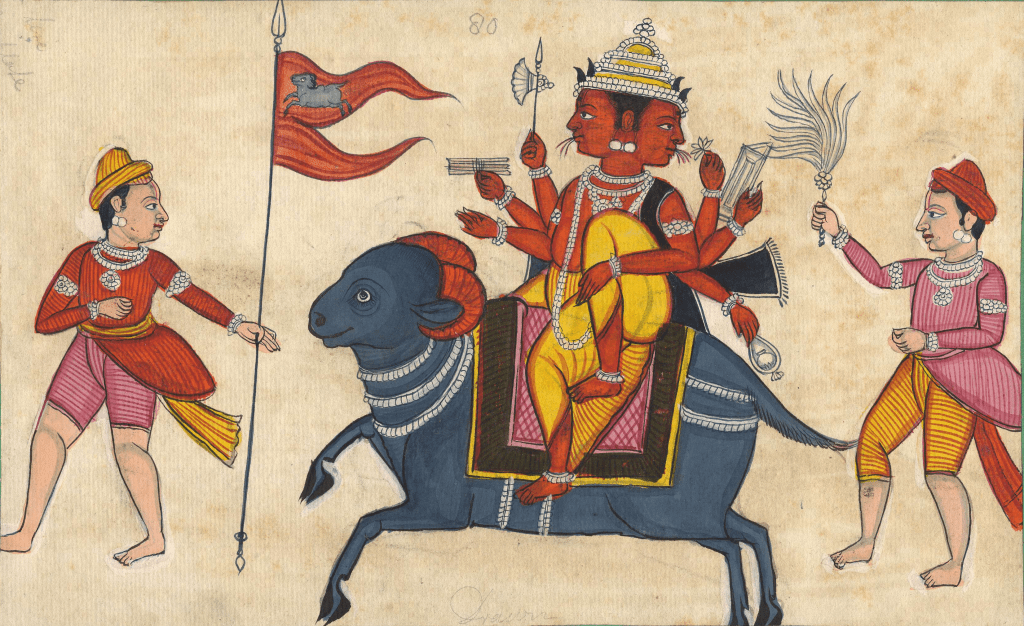
According to the Rigveda, Vayu sprang from the “breath” of Virat Purusha, the invisible Cosmic Being ensouling the creatures of the manifest universe. Vayu’s vehicle (vahana) is an antelope symbolizing the power of grace in two streams. Ergo, Vayu carries out his God-divined “mission” through the twin waters or streams.
Who or what is Virat Purusha? The Cosmic Force of God’s Will, more or less, moving the Great Plan forward underneath the illusion. So, he’s Nataraja, the Cosmic Dancer, as well as what physicists now call “dark energy.”
To introduce the Atonement principle into the dream-universe, Virat Purusha “breathed” the Holy Spirit into being to carry out God’s Will to end the dream. That principle remained inert until Jesus activated the Plan. In the compass illustration I shared above, notice that Agni and Vaya are connected across the circle diagonally.
And fire does indeed generate wind, doesn’t it?
Or, as Google aptly explains:
“Fire’s wind” refers to the powerful, often dangerous winds generated gy large fires (like firestorms, fire whirls/devils) that spread flames, preheat fuel, and carry embers, dramatically increasing fire intensity and spread; it also has spiritual meanings, symbolizing the Holy Spirit’s power in Christianity or the synergy of fire (Agni) and wind (Vayu) in Hinduism.
So Agni, God’s fire, generates Vayu, God’s Wind or Breath, which spreads and intensifies the power of God’s Will through out yajna offerings.
This might seem like semantic hair-splitting, but it’s actually of vital importance for two reasons. The first has to do with the Purusha Suktum, which describes how the universe came into being. While I haven’t yet translated anew this core cosmological teaching, I’m given to understand that it states the world and universe were created through the yajna of the gods.
Erroneously defining yajna as “sacrifice” throws a monumental monkey-wrench into the cosmic works. A universe arising from sacrifice demands sacrifice from us in return, whilst a universe arising from the selfless offerings of Holy Thoughts (alms) demands the same from us. Rightly understood, WE are the only “gods” in the dream-universe, because the Christ in us dwells eternally as it ever was inside the God-Mind Bubble.
We are, therefore, the Vishvudevas (the Holy Ones) over which Vishnu (the Holy Spirit in two streams) presides.
Course-Jesus tells us this in Workbook Lesson 253: My Self rules the universe.
It is impossible that anything should come to me unbidden by my Self. Even in this world, it is I who rule my destiny. What happens is what I desire. What does not occur is what I do not want to happen. This must I accept. For thus am I led past this world to my creations, children of my will, in Heaven where my holy Self abides with them and Him Who has created me. (ACIM, W-253.1:1-6)
Pretty heady stuff, to be sure. But absolutely true nonetheless.
Our wrong-minded desire to leave Heaven brought into being the whole dream-universe for the purpose of hiding us from God’s non-existent wrath, so we could glorify, without God’s interference, the “self-concept” we made in partnership with Satan.

These two universes overlap in different dimensions, with the visible universe on top. To perceive the invisible universe underneath, we have to will the visible one out of existence. We perform this “counter-willing” in the Holy Resting Place, by coming together in the “name” or “spirit” of the Christ Self or Mind we share with the invisible HOLY ALL the Great Deceiver (Brahma/Ego/Satan) hid from us underneath his hallucination.
The “tunnel” or “portal” connecting the two is what Course-Jesus calls “the Bridge of the Return.” And that Bridge is the Holy Spirit, as he explains below:
The ego’s perception has no counterpart in God, but the Holy Spirit remains the Bridge between perception and knowledge. By enabling you to use perception in a way that reflects knowledge, you will ultimately remember it. The ego would prefer to believe that this memory is impossible, yet it is your perception the Holy Spirit guides. Your perception will end where it began. Everything meets in God, because everything was created by Him and in Him. (ACIM, T-6.II.7:2-6)
So, the Holy Spirit inside our minds actually looks more like this:

Than like this:

If you’re imaginative, you can see the similarities. In the Holy Instant the Miracle brings forward, we temporarily enter the Real Universe, so we can perceive right-mindedly. Eventually, through our vigilance to see TRULY, we will perceive only the Real Universe. And, when the final veil of perception falls, we will wake up to the TRUTH that we never were anywhere else.
We are still as we’re ever been; still as perfect, innocent, healed, holy, and whole as the first Divine Idea God extended “in his own likeness” to bring “the Christ” into “being.”
The key to achieving this “True Perception” or “Spiritual Sight” is True Forgiveness. Why? Because we can’t counter-will in solidarity as long as we exclude, by holding grievances, any part of our own Self. Holding grievances is, in fact, proof positive that we still perceive some aspects of the UNHOLY universe as real, valuable to us, and threatening to our welfare. From the Holy Spirit’s right-minded vantage point, those grievances are GIFTS intended to mirror the perceptual errors standing in the way of our mutual escape. To see them as such in the unreal universe, we must ask our inner-guru to grant us a miracle.
Utterly false with regard to the Purusha Suktum‘s misconstrued use of yajna is all of the following: 1) The universe was made through “fire sacrifices” by assorted external deities; 2) “Fire” was the first thing God created; and 3) Making “fire” was a great achievement for humankind.
As I’ve explained (based on what Jesus says), fire was the first thing Satan created before humankind existed.
Far from a great achievement, making fire was how Satan severed the safety rope preventing us from plunging deeper into the terrifying nightmare of sickness, scarcity, sin, and death earthly existence actually is.

The second, but no less important, reason yajna can NOT mean what most Hindus and scholars think it means is that (as Jesus repeatedly explains in the Course) sacrifice is a deep-seeded and invasive “thought-weed” that must be ripped up by the roots. So, the Divine Messenger who revealed the Rigveda to the rishis would never have used such an Atman-enslaving term. And s/he didn’t, as I hope I’ve proven.
Let’s end today’s discussion there. In future posts I will translate anew the next eleven Suktas in order, and also share and compare what they teach with other scriptural texts.
Until then, Om Hari Om and Namaste.
 The Holy Meeting Place
Leave a comment