At long last, I’ve migrated all the content from my former BlogSpot blog to this newer one on WordPress, with a few guided additions. It’s now time to tackle the Rigveda’s 12th Sukta, a supposed hymn in praise of Agni, the presumed Hindu god of elemental fire. In actuality, the Sukta is not a hymn, nor is Agni the god of fire.
In transliterated Sanskrit, the 12th Rik reads thusly:
agniṃ dūtaṃ vṛṇīmahe hotāraṃ viśvavedasam asya yajñasya sukratum
agnir devānāṃ duvasyādhvaréṣu hotāram tasya dyumattámasyaḥ
kavikratuḥ satyácitras śravasyā́vān | agnir devā́ ā gáman
yád aṅgā́ dāśúṣe tvám agne bhadrám kariṣyási tavét tát satyam aṅgiraḥ
úpa tvāgne divé-dive dóṣāvastar dhiyā́ vayam namo bháranta emasi
rájantam adhvarāṇāṃ gopā́m ṛtásya dīdivim várdhamānaṃ své dáme
sá naḥ pitéva sūnávé ‘gne sūpā́yano bhava sacsvā́ naḥ svastáyé
bṛhád agné suvíryáṃ devā́vantaṃ śatóginam nṛvád vácāṃsi pātaya
ásmākaṃ makháṃ mákhāḥ pītíṃ prāśā́dhvarāṇām śṛṇvantu devā́ íṣam
prá yád ádhrīciṣu bhuvaḥ śukro devéṣu yajñíyaḥ agne vīrávattamaṃ déhi
agné śukréṇa śociṣā́ víśvābhir deváhūtibhiḥ imáṃ stómaṃ juṣasva naḥ
Let’s see what we can learn from these ancient and sacred words.
The first line reads:
Agni’s ambassadors choose joy to offer the radiant, universally known song of the mouth belonging to the almsgiving offering, the sacred act of completion.
My translations:
agniṃ (Agni’s) dūtaṃ (ambassadors) vṛṇī-mahe (choose joy) hotā-raṃ (to offer the radiant) viśva-veda-sam (universally known song) asya (of the mouth) yajñasya (belonging to the almsgiving offering) su-kr-atum (the sacred act of completion)
My Notes:
According to Google, Agni is considered “the mouth” of the Vedic almsgiving yajna. As the sacred fire, he acts as the divine medium who first consumes our thought-offerings of joy, peace, love, grace, and the like — and then shares these offerings universally through the Yoke and the Net.
Blessed by the sacred fire, our offerings to the All purify everyone and everything they touch, as well as everyone we think about, and everyone who thinks about us–when we become wholly joyful.
Or, as Course-Jesus explains:
The light that belongs to you is the light of joy. Radiance is not associated with sorrow. Joy calls forth an integrated willingness to share it, and promotes the mind’s natural impulse to respond as one. Those who attempt to heal without being wholly joyous themselves call forth different kinds of responses at the same time, and thus deprive others of the joy of responding wholeheartedly. (ACIM, T-5.in.1:4-7)
Google describes “the sacred fire” as a symbol of “transformation, purification, divine connection, and (eternal) life, acting as a spiritual conduit for prayers and intentions in rituals across many cultures, from ancient Celtic hearths and Roman Vesta worship to Indigenous ceremonies, carrying offerings via smoke to deities or the spirit world, and representing inner strength or spiritual light. It’s a central element for community, healing, and connecting with the sacred, often fueled by specific woods and used in rites like firewalking or burning bowl ceremonies.”
A good definition, albeit rather worldly in perspective. The real sacred fire burns within us as a purifying force Hindus call Agni, Jews call Shekinah, and Christians call “the Pentecostal fire.” That fire is said to compel Kundalini to rise up the spiritual body’s central channel or “spine” (the Sushumna Nadi) to open the chakras, progressively purifying our perception of reality, while also restoring the Soul’s natural state of joyfulness.
The Meriam-Webster dictionary defines Kundalini as “the yogic life force that is held to lie coiled at the base of the spine until it is aroused and sent to the head to trigger enlightenment.”
A Sanskrit word, Kundalini supposedly means “coiled,” in reference to the shakti’s inactive or resting state in the Muladhara chakra. Au contraire, mon frère, because the word Kundalini is either a marriage of kunda (the fire-pit used in yajna rituals) and lini (united), or of kun (to sound or support) and dalini (gentleness). Kundalini has a reputation for shaking things up, but she’s actually very gentle, loving, and patient.
That Agni’s ambassadors “choose joy” (the joy of God over the Ego’s pain),” corresponds with many things Course-Jesus says, including this:
My holy brother, think of this awhile: The world you see does nothing. It has no effects at all. It merely represents your thoughts. And it will change entirely as you elect to change your mind, and choose the joy of God as what you really want. Your Self is radiant in this holy joy, unchanged, unchanging and unchangeable, forever and forever. And would you deny a little corner of your mind its own inheritance, and keep it as a hospital for pain; a sickly place where living things must come at last to die? (ACIM, W-190.6:1-6)
According to Google, “The sacred act of completion is a conscious, intentional ritual of closing a chapter, project, or phase of life with gratitude rather than force. It involves honoring the lessons learned, releasing the old with trust, and creating space for new beginnings. This process allows for emotional, spiritual, and creative closure, turning endings into a ‘beauty way’ of transition”.
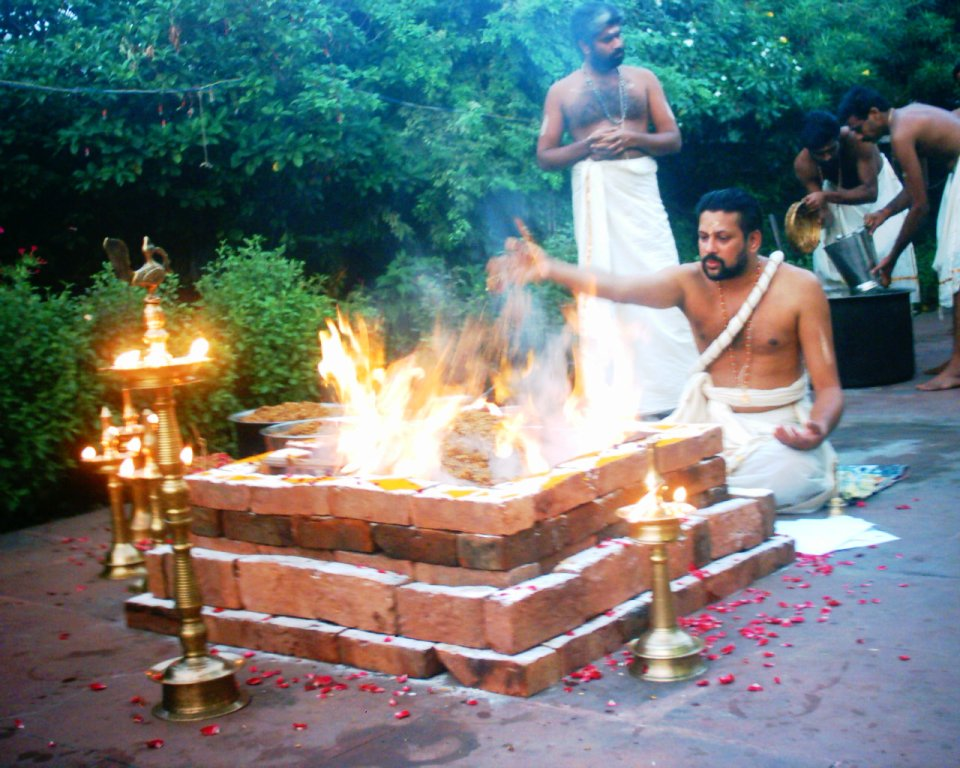
I’m more inclined to believe the almsgiving offerings themselves are the sukratum the rishis mean. Those ecumenical prayer-offerings also are the “alms” Jesus instructs us to “give in secret” in Matthew 6:3-4. The true Vedic yajna is NOT a ritual offering performed by human priests “before the fire,” as shown below. The true Vedic yajna takes place inside the inmost chamber, the holy of holies deep in our minds, where our Souls exchange the sacred fire to burn away the veils of ego-perception blocking the Spiritual Eye.
The Sukta’s second line reads:
Agni shakes the divine beings bowing down to worship at the door of Esu, to offer the radiant holy name, the shining glory in the darkness (or the gloom of illusion).
My Translations:
agn-ir (Agni shakes) dev-ānāṃ (the divine beings bowing down) duvasyā-dhvar-éṣu (to worship at the door or gate of Esu,) hotāram (to offer the radiant) | tasy-a (Name of God) dyumat-támasyaḥ (the shining glory in the darkness/gloom of illusion) ||
My Notes:
Here we learn that Agni shakes the divine beings bowing down at the gate of Esu “to offer the radiant Name, the shining glory in the darkness.” And, as it happens, Agni is associated with “shaking” in the Hindu lore, but Agni’s shaking is said to be like a horse or bull shaking its tail. This shaking is thought to symbolize the flickering and movement of flames, but I suspect it’s something more — given all the shaking mentioned in the Bible.
There is no Esu in the Hindu pantheon. We do, however, find a similar name in Genesis: Esau, the red, allegedly “hairy” hunter, who is the elder twin son born to Isaac and Rebekah, the son and daughter-in-law of Abraham. The younger twin was Jacob, the allegorical journeying Soul. Known for impulsively selling his birthright to Jacob for stew, and later being tricked out of his father’s blessing, Esau become the ancestor of the Edomites (the descendants of Adam). Esau’s birth is described in Genesis 25:25 as follows:
The yom (ray) brought forth in fullness the twins of the innermost womb. The first came out red and, concealed (se’ar = setar–not sear, hairy) in splendor or glory, proclaimed his name as Esav. Afterward came out a brother, a hand to grasp Esav’s heel, whose name was Jacob; Isaac sixty years descended when they came forth.
This suggests to me that Rebecca, the Biblical matriarch who bore the twins, was something other than human. Her name means “tying up cattle for their protection,” so she must represent the cow-pen containing our Souls. That cow-pen is the heart-cave, the enclosure, the walled city, and the Resting Place–the celestial place where our Souls dwell in green pastures. And it is from this city of peace that Rebecca brought forth the twins, Esau and Jacob.
Based on the descriptions in Genesis, Esau is the Red Ray, whose younger twin, Jacob, represents the fragmented Souls bearing the divine spark of Esav. Rightly understood, Jacob is the Judeo-Christian equivalent of Rama. By invoking Jacob or Rama (our own Soul), we eventually become aware of the radiant inner glory and joy we share with each other and God through the Red Ray.
In Hebrew, that radiant inner glory is Shekinah, the fire of God’s presence. So, Shekinah is Agni, the eternal flame causing the Kundalini energy to rise. The name Esa means “God is salvation,” so Esav or Esau can’t possibly mean “hairy” or “furry,” as commonly presumed. More likely, Esav means something along the lines of “God’s salvation connects Heaven and Earth.” And that is indeed the role Kundalini plays in the awakening process.
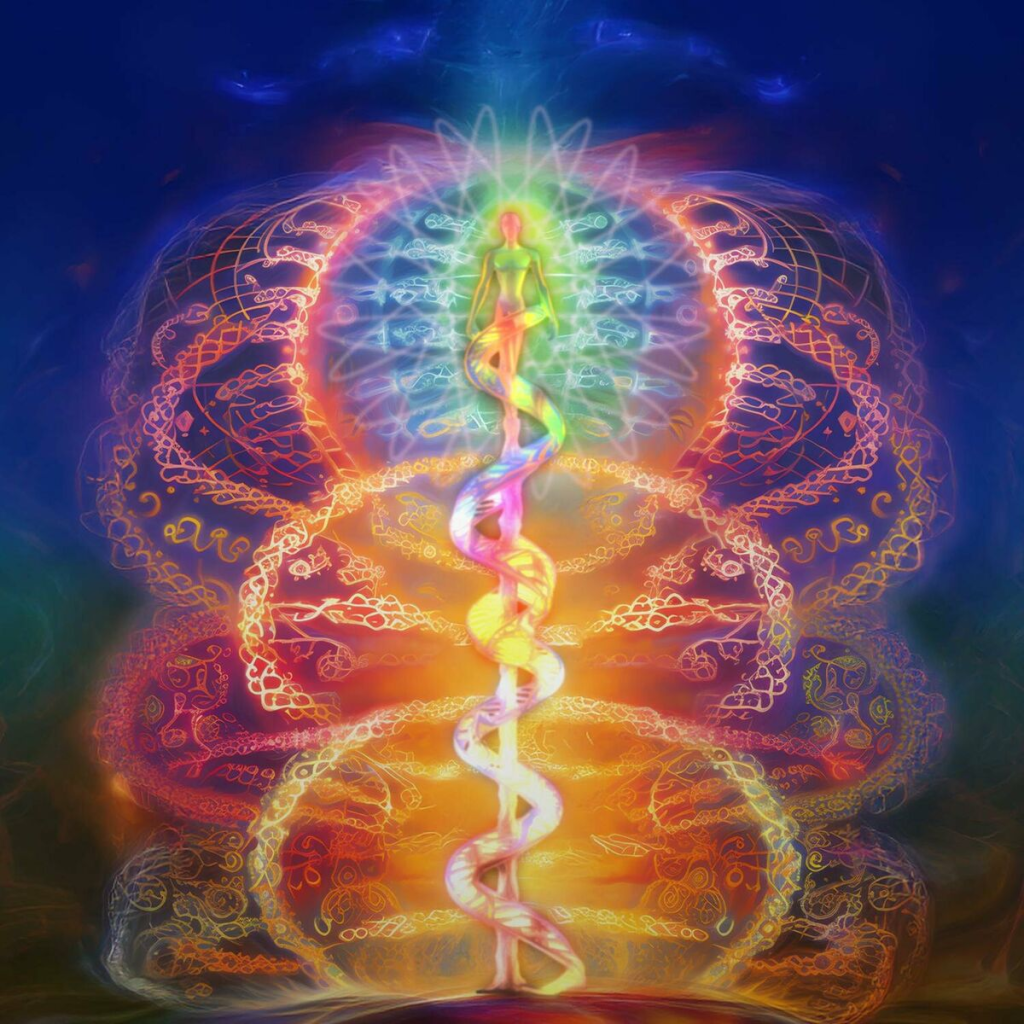
If the sacred fire shakes the Souls bowing down at the gate of Esu, and Esu is the Red Ray, then Esu’s gate is the eastern gate of the flaming sword. And that tracks with the timing of the prophesied earthquakes in Revelations, which take place after the locusts descend with their stinging tails. The shaking they mean might be what’s known as “kriya shaking” — the involuntary body movements — vibrations, trembling, or jerking — that reportedly arises during deep meditation, particularly as Kundalini energy activates. These movements are widely considered a way to release stored physical or emotional trauma to purify the nervous system and clear blockages in the spiritual energy channels (the chakras and nadis).
All of this got me wondering. Is Agni a form of the “red dragon” whose tail is Ketu, the descending node of the moon? In the Hindu lore, Ketu is said to be the severed tail of Svarbhanu, an asura whose name means “Splendor of Radiance” or “Radiant Splendor.” So, he can’t be a demon, as commonly presumed. And neither is the Red Dragon or “beast” of Revelations, whose mark is 666. That “breast” has also been characterized as a Satanic force, if not Satan himself, for too long by ego-minded Biblical interpreters.
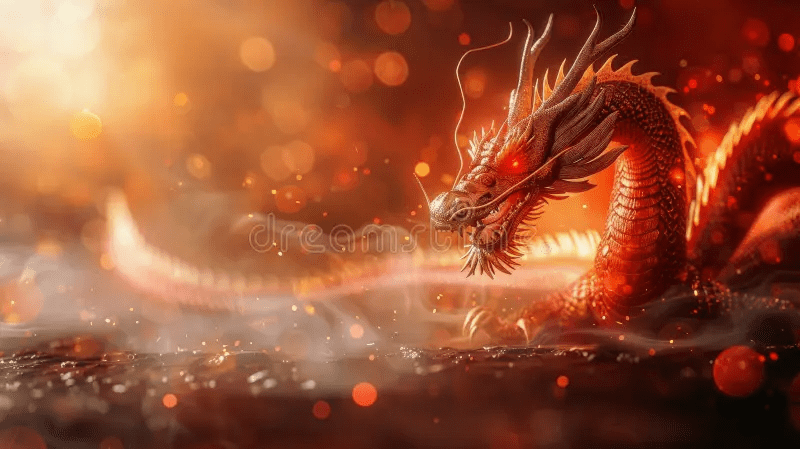
In Chinese mythology, the red dragon (Ao Quin) is sometimes called Zhuyin or Zhulong — words describing the act of illuminating or enlightening. Guo Pu, an early Chinese writer and philosopher described the red dragon as the “enlightener” of the nine yin (the nine darknesses represented as compass points on the flat disk representing the earth.)
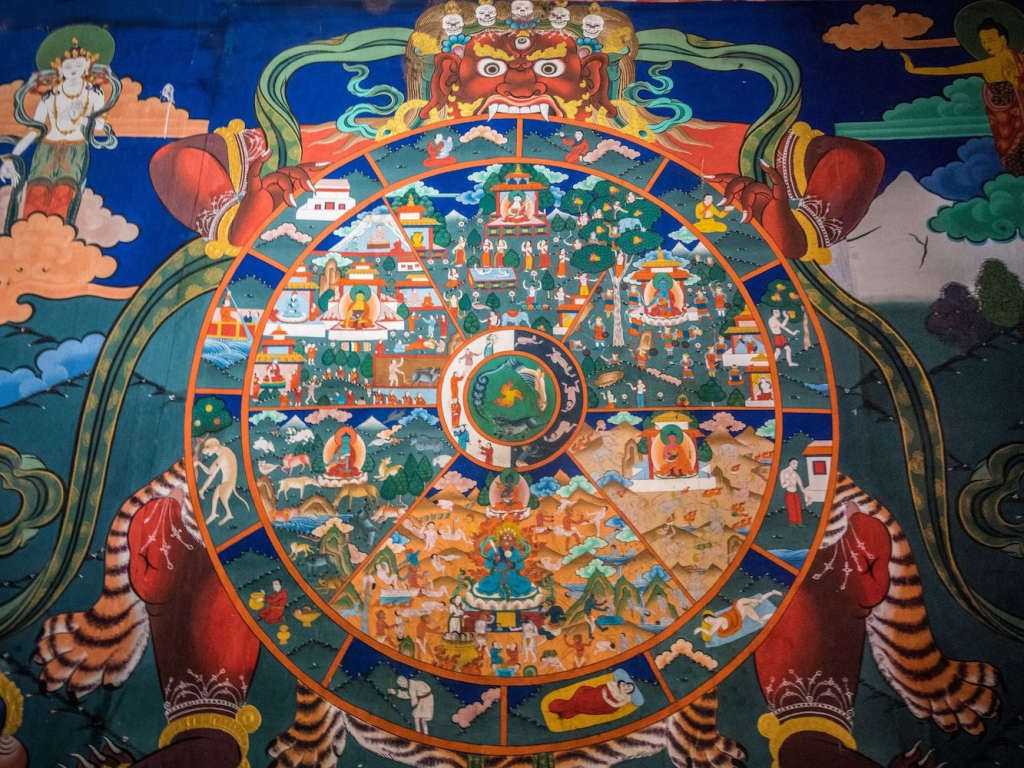
The flat disk representing the earth is the Wheel of Earthly Existence Buddhists call the Bhavachakra. So, the red dragon is probably the figure we see holding the wheel from underneath in the image below. Generally, that red “demon” is identified as Yama, the presumed Hindu god of death. Yama is, in truth, the upholder of divine justice in the dream-realm. And that makes Yama, a name meaning “the Light of Creation,” the karmic record-keeper.
Now, consider these clues in the context of what Course-Jesus says below about splendor and justice:
Justice, like its opposite, is an interpretation. It is, however, the one interpretation that leads to truth. This becomes possible because, while it is not true in itself, justice includes nothing that opposes truth. There is no inherent conflict between justice and truth; one is but the first small step in the direction of the other. The path becomes quite different as one goes along. Nor could all the magnificence, the grandeur of the scene and the enormous opening vistas that rise to meet one as the journey continues, be foretold from the outset. Yet even these, whose splendor reaches indescribable heights as one proceeds, fall short indeed of all that wait when the pathway ceases and time ends with it. But somewhere one must start. Justice is the beginning. (ACIM, M-19.2:1-9)
So, the dragon’s tail (Ketu) represents karmic justice (the start of the path), while his head (Rahu) represents the increasing splendor, magnificence and grandeur we will behold as the journey progresses into the celestial sphere and beyond.
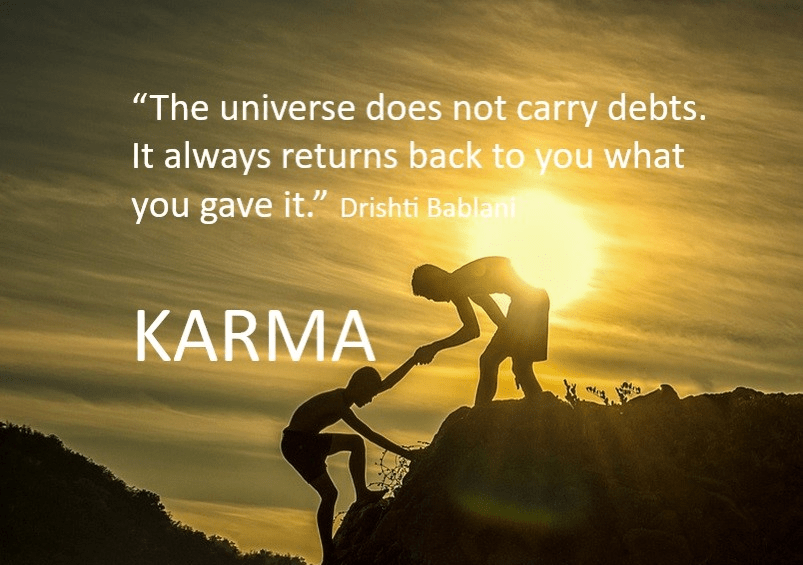
Divine justice follows the Rule of Love, which dictates that we receive what we give. This is the true meaning of karma, btw, and karma is how divine justice manifests in the world of dreams — not through punishment or retribution, but by giving back to us what we asked for under the Law of Love. We create by giving what we want for ourselves to others (in thought). Hence, judge and you will be judged; condemn, and you will be condemned; hate and you will be hated, kill and you will be killed. Or, on the flip side of the coin, “to have all, give all to all.”
Let’s move on (and back) to se’ar, the word in Genesis 25:25 usually defined as “hairy” or “furry.” Since those definitions make zero sense, I suspect se’ar is shorthand for setar, meaning “concealed” or “hidden.” And we are indeed told elsewhere in the Bible that God’s glory is intentionally concealed or hidden.
God’s glory is hidden in the Golden Womb, to be born from our Soul-fortifying almsgiving rituals.
The Sukta’s third line reads:
Perceiving the light strengthens the True Rays of Glory driving the sacred fire to shake the holy beings approaching the entry-gate.
My Translations:
kavi-kratuḥ (Perceiving the light strengthens) satyá-citras (the True Rays) śravas-yā́vān (of glory driving)| agnir (Agni to shake) devā́ (the holy beings) āgáman (approaching the entry-gate)
My Notes:
Here’s that curious shaking again. And “shaking the tree” is indeed a metaphor found many times in the Bible, most notably in Isaiah 17:6, 24:13, and 27:12, as a method used to shed dead leaves, bad fruit, and fruitless branches from the Tree of Life. But wait, because Course-Jesus says something similar:
The miracle dissolves error because the Holy Spirit identifies error as false or unreal. This is the same as saying that by perceiving light, darkness automatically disappears. (ACIM, T-1.I.39:1-2)
He also says:
The miracle worker begins by perceiving light, and translates his perception into sureness by continually extending it and accepting its acknowledgment. Its effects assure him it is there. (ACIM, T-9.V.7:8-9)
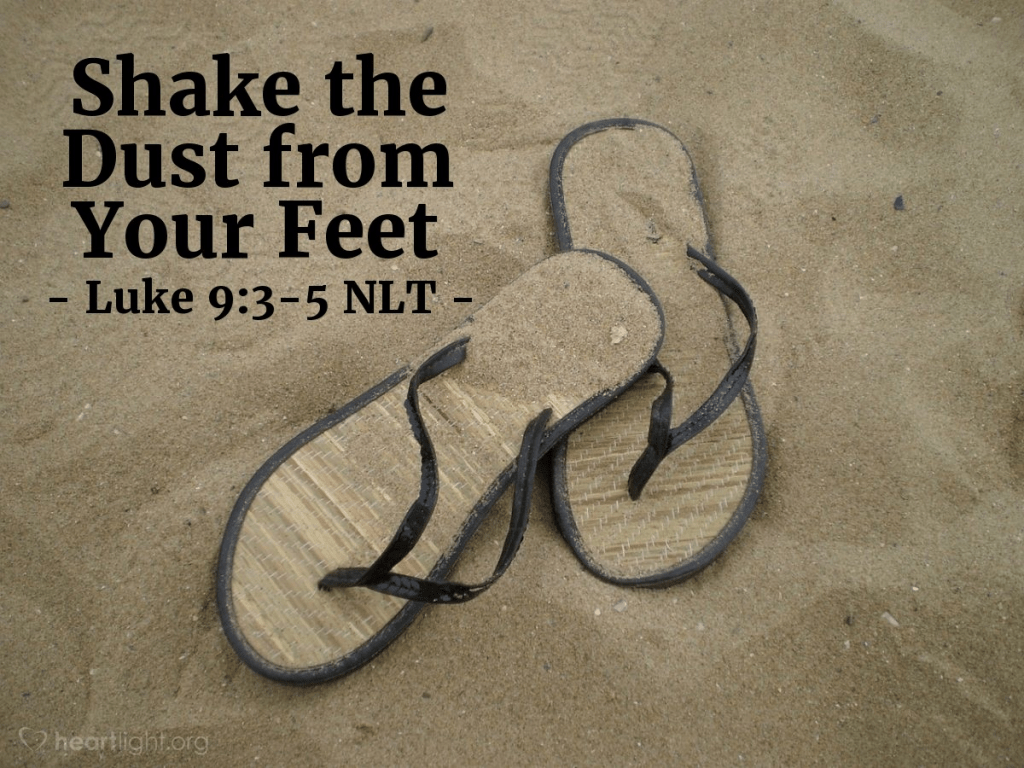
From these statements, we can presume that the shaking marks our initiation into miracle-working. And Jesus did indeed “shake” just before he miraculously raised Lazarus from the dead. He also instructed his disciples to “shake” the dust (of wrongminded judgment) off their feet.
In the Course, Jesus mentions these rays in a round-about way, while outlining the four major obstacles to peace. The fourth and final obstacle is the fear of God, the “original error” that gave birth to the perceived separation. The fear of God is synonymous with the fear of death, he says. He also says:
The fourth obstacle to be surmounted hangs like a heavy veil before the face of Christ. Yet as His face rises beyond it, shining with joy because He is in His Father’s Love, peace will lightly brush the veil aside and run to meet Him, and to join with Him at last. For this dark veil, which seems to make the face of Christ Himself like to a leper’s, and the bright Rays of His Father’s Love that light His face with glory appear as streams of blood, fades in the blazing light beyond it when the fear of death is gone. (ACIM, T-19.IV-D.2:1-3)
The Sukta’s fourth line reads:
Strive as part of the body (of Christ) to give generously to your own Self the sacred fire of the auspicious miracle of grace to bring forth all that is Real, True, and Eternal without words.
My Translations:
yád (strive) aṅgā́ (as part of the body of Christ) dāśúṣe (to give generously) tvám (to your own Soul-Self) agne (the sacred fire) bhadrám (of the auspicious) kariṣ-yási (miracle of grace) tavét (to bring forth) tát (all that is Real) satyam (True and Eternal) aṅ-giraḥ (without words).
My Notes:
Generally speaking, this teaching echoes all that Course-Jesus imparts in Workbook Lesson 126: All that I give is given to myself.
In the addedum Song of Prayer, he similarly says:
Prayer is a ladder reaching up to Heaven. At the top there is a transformation much like your own, for prayer is part of you. The things of earth are left behind, all unremembered. There is no asking, for there is no lack. Identity in Christ is fully recognized as set forever, beyond all change and incorruptible. The light no longer flickers, and will never go out. Now, without needs of any kind, and clad forever in the pure sinlessness that is the gift of God to you, His Son, prayer can again become what it was meant to be. For now it rises as a song of thanks to your Creator, sung without words, or thoughts, or vain desires, unneedful now of anything at all. So it extends, as it was meant to do. And for this giving God Himself gives thanks. (ACIM, S-1.II.7:1-10)
An-girah is commonly thought to be the name of a Divine Teacher, when it is, in fact, a compound of an (without) and girah (words).
The fifth line reads:
Approach the sacred fire of the Soul-Self day by day to illuminate the dark lamp of God’s Breath in reverence to the cow illuminating the path of cosmic consciousness.
My Translations:
úpa (Approach) tvā-agne (the sacred fire of the Soul-Self) divé-dive (day by day) dóṣāvastar (to illuminate the dark) dhiyā́ (lamp) vayam (of God’s Breath) namo (in reverence to) bhá-ranta (the cow illuminating) emasi (the path of cosmic consciousness)||
My Notes:
“The lamp of God’s breath” is the Temple Menorah or Golden Lampstand, as well as the Lamp of Day and the Lamp of Jehovah (per Proverbs 20:27). That Lamp represents God’s radiant Word, dwelling within us to light our footsteps as we walk the Path of the Flaming Sword, the Circle-Journey back to Eden. Or, as we are told in Psalm 119:105: “Your word is a lamp to my feet and a light to my path.”
The cow illuminating our footsteps is the Miracle-Cow, the cow-headed cherubim Hindus call Kamadhenu and Surabhi. In ancient Egypt, she was Hathor. And, in Mesopotamia and the Bible, she is Moket. Based on my current understanding, this miracle-producing Mother Cow inhabits the southeast quadrant of Moksha, the same quadrant Hindus assign to Agni. This joint sovereignty, as well as this Vedic verse, strongly indicates that the miracle-cow and the sacred fire play intertwined roles in the awakening process. And Agni is said “to reside on Kamadhenu’s shoulders.” So, there we are.
The sixth line reads:
Ruling the Borderland’s sacred offerings of the name, the guardian rays of the established order brighten the celestial light expanding the name in their own giving-exchanges.
My Translations:
ráj-antam (Ruling the Borderland’s) adhvarāṇāṃ (sacred offerings of the name) gopā́m (the guardian rays) ṛtásya (of the established order) dīdivim (brighten the celestial light) | várdhamā-naṃ (expanding the name) své (in their own) dá-me (giving-exchanges).
My Notes:
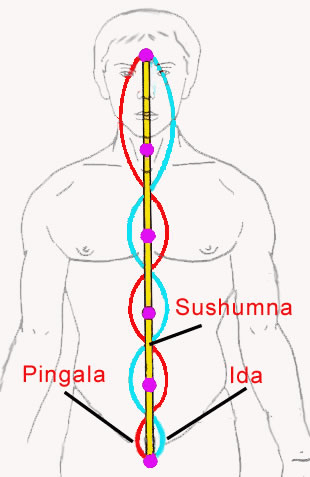
If the True Rays of Glory are, as I suspect, the Blood and Water Rays shining down from the two olive trees, then they are the energies inhabiting the Ida and Pingala nadis. The two sacred channels working in tandem to coax Kundalini to rise up the Sushumna.
If I’m reading this teaching correctly, their “giving exchange” takes place each time they meet (and cross) on their vertical journey up the Shushuma (as pictured below). I don’t think anybody really knows where or how often these two energies meet along this spiritual channel. They might for example, meet at each chakra — or they might come together in-between the chakras, as the image indicates. What we do know is that the two powers join for the last time at the Ajna Chakra, and this union constitutes “the sacred marriage” (of the Soul-Bride and the Bridegroom or True Husband).
The seventh line reads:
The Word of God in wholeness assembles the spirit of the Son. The sacred fire makes easily accessible becoming united as Souls in the wholeness rooted in one’s own True Self.
My Translations:
sá (the word of god) naḥ (in wholeness) pit-éva (assembles the spirit) sūnávé (of the Son) ‘gne (the sacred fire) sūpā́yano (makes easily accessible) bhava (becoming) sac-svā́ (united as Souls) nah (in the wholeness) sva-stáyé (rooted in one’s own True Self)
The Rik’s eighth line reads:
Mighty Agni, the holy force of divine being, emanates the true Name (Om) to deny the voice of the source veiling the light.
My Translations:
bṛhád (Mighty) agné (Agni) suvíryáṃ (the holy force) devā́vanttaṃ (of divine being emanating) śatóginam (the true Name, to be sung) nṛvád (to deny) vácāṃsi (the voice of the source) pāta-ya (veiling the light).
My Notes:
Agni, the sacred fire is the holy force (shakti) of divine being emanating the Om — the true name to be sung to deny the vacamsi — the voice of the source (of the foundational reality from which individual parts and incarnations emerge). Succinctly stated, the Voice of the Ego Mind spreading the lies veiling the light.
Or, to quote Course-Jesus:
To the ego it is kind and right and good to point out errors and “correct” them. This makes perfect sense to the ego, which is unaware of what errors are and what correction is. Errors are of the ego, and correction of errors lies in the relinquishment of the ego. When you correct a brother, you are telling him that he is wrong. He may be making no sense at the time, and it is certain that, if he is speaking from the ego, he will not be making sense. But your task is still to tell him he is right. You do not tell him this verbally, if he is speaking foolishly. He needs correction at another level, because his error is at another level. He is still right, because he is a Son of God. His ego is always wrong, no matter what it says or does. (ACIM, T-9.III.2:1-10)
The ninth line reads:
Our collective ritual-offerings produce the Khah from the joyful mental energy of divine grace invoking the radiant name to be heard in the Assembled Holy Being of Isa, the lord who is the inmost Self of the All.
My Translations:
ásmākaṃ (our collective) makháṃ (ritual-offerings) mákhāḥ (produce the Khah) pītíṃ (from the joyful mental energy) prāśā́d-hva-rāṇām (of divine grace invoking the radiant name) śṛṇvantu (to be heard in the assembled) devā́ (holy being) íṣam (of Isa, the lord who is the inmost Self of the All)
My Notes:
As explained in an earlier post, the Khah is the hole we make with our minds (in Samadhi) to pass out of Brahma’s Egg of ego consciousness and into the Celestial Sphere (the Golden Egg or Womb) of Celestial consciousness.
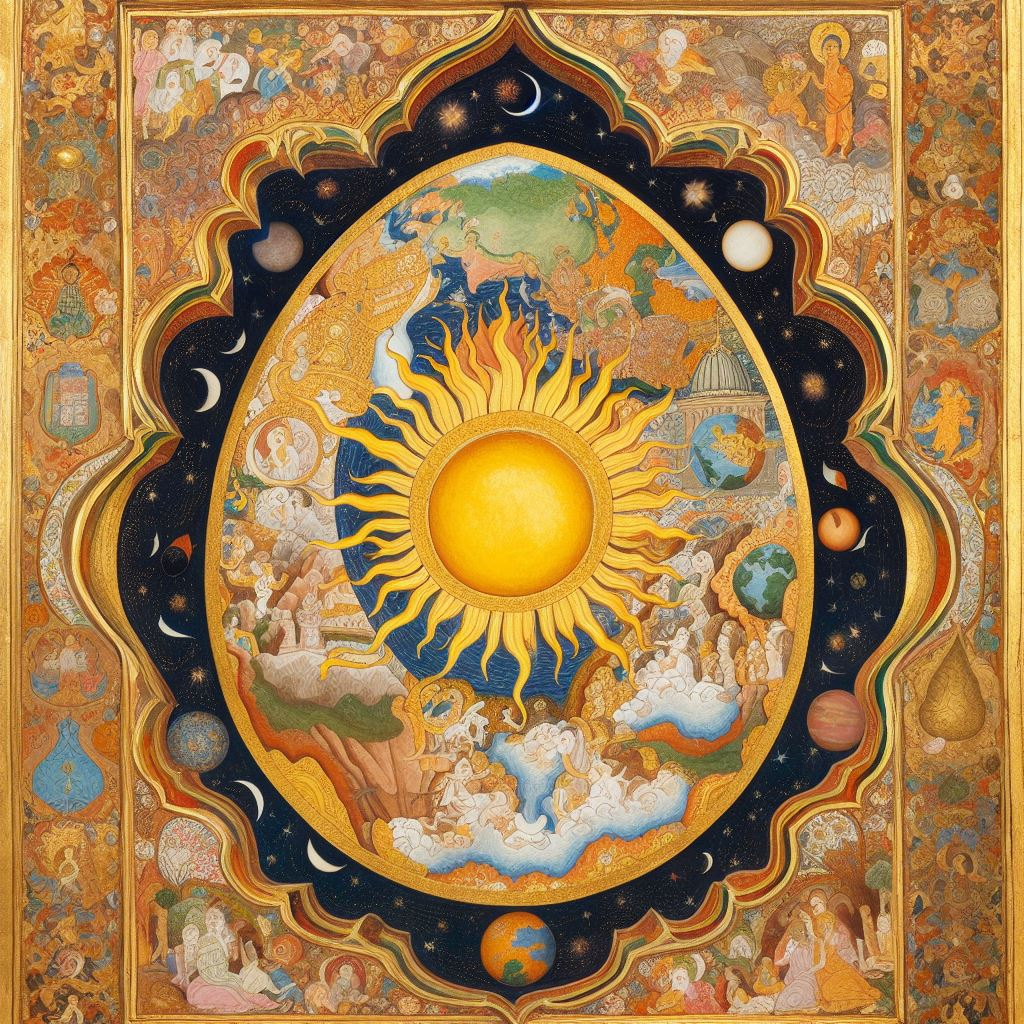
Contrary to popular belief, Samadhi doesn’t refer to the state of spiritual bliss attained through prolonged mediation; it refers to the process of “drilling” the hole through the veil imprisoning our consciousness in Brahma’s Egg. Buddhists rightly understand that Samadhi (the eighth limb of Yoga) refers to pinpointed or arrow-like focus aimed from whithin (in meditation) at the Spiritual Eye. Samadhi is, in fact, a compound of sa (the Word of God) and madi (purity) or madhi (the two front teeth)– so, the teeth of God’s Word we employ in the white robes of purity to bore a hole through the veil. Samadhi also is, therefore, the Arrow of God, mentioned in Deuteronomy 32:23 and Psalm 7:12-13, as well as Kamadeva’s lotus-tipped arrows.
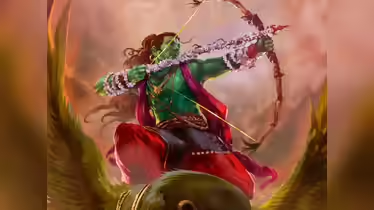
As Google explains:
“The hole in the veil” refers to the spiritual, metaphorical process of piercing the “veil of Maya” (illusion) to expand consciousness and reveal one’s true soul, as described in Eastern philosophy. It represents moments of heightened awareness, “thin places” where the barrier between the mundane and divine is broken, or a spiritual awakening.
In the original dictations of the Course, Jesus said only the Holy Spirit can pierce the Veil. At the time, I thought he meant from the top down. But now I think he also means from the bottom up. I can’t find that citation in the edited Standard Edition, but Jesus does mention the veil several times. As the Bible rightly explains, we enter the Holy of Holies — the innermost chamber housing God’s presence — only after piercing the veil.
In Hebrews 10:20, St. Paul writes: “By a new and living way, which he hath consecrated for us, through the veil, that is to say, his flesh.”
I’m not keen on the comparison of the veil and Christ’s flesh. But the metaphor has merit if we understand that only by piercing the veil do we reveal the inner-essence of God’s Glory. And that essence is the Assembled Holy Being of Isa (the Christ Self) is the Biblical Assembly, as well as the Standing Circle of Yovah, and the Circle of Standing Stones — the Golden Circle where our Souls stand upright in the dream realm. That Circle is the Real World, the Resting Place, the Walled City of Peace, the Land of the Living, Jerusalem, Medina, Zion, Mecca, and Vrindavan.
The Sukta’s tenth line reads:
Advance that unstoppable calf in the Borderland, the pure and radiant divine arrow strengthening in determination the sacred fire’s heroic and whole immortal Soul.
My Translations:
prá (Advancing) yád (that) ádhr-īciṣu (unstoppable calf) bhuvaḥ (in the Borderland) śukr-o (the pure and radiant) devéṣu (divine arrow or Esu-dev) yaj-ñíyaḥ (strengthens the determination) agne (the sacred fire’s) vīrávat-tamaṃ (heroic and whole) déhi ( immortal Soul).
My Notes:
Can’t be certain this is right, because it doesn’t track as well as I’d like. That said, I do know that Bhuvah is Bhuvah-loka, the Borderland or Real World — the place in between Earth and Heaven. I also know “the unstoppable calf” refers to Khamendenu’s calf, who is sometimes called Nandini (bringer of joy). The similarity between Nandini and Nandi, Shiva’s white-bull vahana, tells us Nandini is the smaller version of what Nandi represents. Thus, the “unstoppable calf” represents our Soul’s will to do God’s will, which brings us joy instead of pain (as per Workbook Lesson 190: I choose the joy of God instead of Pain.)
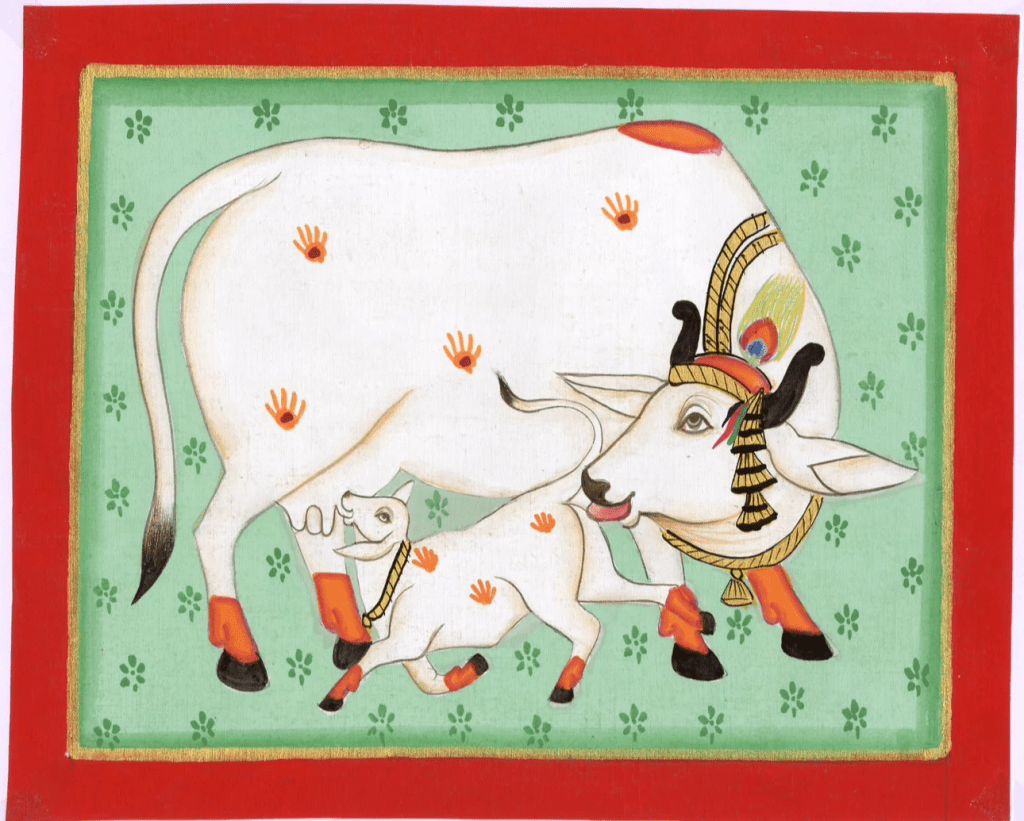
Makes sense, right?
The Rik’s eleventh and final line reads:
Agni is Holy Creation, the radiant splendor of God, the all-inclusive Red Ray, the holy being offering the grace of this collective hymn to speed the horse of wholeness.
agné (Agni is) śukréṇa (holy creation) śociṣā́ (the radiant splendor of God) víśv-ābhir (the all-inclusive Red Ray) devá-hūt-ibhiḥ (the holy being offering the grace) imáṃ (of this) stómaṃ (collective hymn) juṣ-asva (to speed the horse) naḥ (of wholeness).
My Notes:
Wow. This makes pretty clear that Agni is indeed the Red Dragon the Chinese call Zhuyin and/or Ao Qin (the abstract pounder of grain). Interestingly, we find the metaphoric “pounder of grain” in Proverbs 27:22, to demonstrate that the nature of wheat can’t be changed by worldly instruments (in this case, a mortar and pestle). The verse says: “Though thou shouldest bray a fool in a mortar among wheat with a pestle, yet will not his foolishness depart from him.”
This is another way of saying. Of our egos, we can do nothing to help others; only through God’s “abstract” millstone (the red dragon of radiant splendor) can we effect real change on earth. Jesus tells us this in the Course in no uncertain terms. I shared the quote last time, but it bears repeating.
Of your ego you can do nothing to save yourself or others, but of your spirit you can do everything for the salvation of both. Humility is a lesson for the ego, not for the spirit. Spirit is beyond humility, because it recognizes its radiance and gladly sheds its light everywhere. (ACIM, T-4.I.12:1-3)
Metaphorically, “the horse of wholeness” is probably Indra’s seven-headed white horse, Ucchaisravas — a name meaning “the exalted sound of glory.” In the Bible, this is the white horse coming out of the first seal opened by the Lamb. As we’ve discussed, the first seal represents the Sefirot (the fruit of the Lamb) of Keter (the Crown) on the Tree of Life. The rider of that horse holds a bow, wears a crown (the crown of glory), and goes out to conquer the Ego Mind imprisoning his brothers. Rightly understood, WE are the rider on that horse–the Soul reborn in Christ-Consciousness–not some mythical “anti-Christ.”
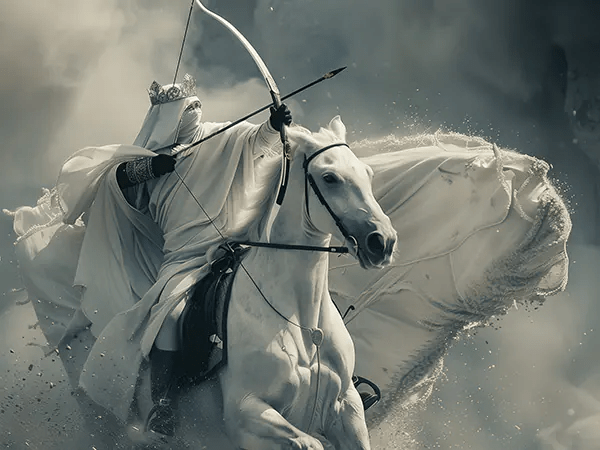
Now, compare this Vedic verse to what Course-Jesus describes below:
Now is the time of salvation, for now is the release from time. Reach out to all your brothers, and touch them with the touch of Christ. In timeless union with them is your continuity, unbroken because it is wholly shared. God’s guiltless Son is only light. There is no darkness in him anywhere, for he is whole. Call all your brothers to witness to his wholeness, as I am calling you to join with me. Each voice has a part in the song of redemption, the hymn of gladness and thanksgiving for the light to the Creator of light. The holy light that shines forth from God’s Son is the witness that his light is of his Father. (ACIM, T-13.VI.8:1-8)
Altogether, the Rigveda’s 12th Sukta reads as follows;
Agni’s ambassadors choose joy to offer the radiant, universally known song of the mouth belonging to the almsgiving offering, the sacred act of completion.
Agni shakes the divine beings bowing down to worship at the door of Esu, to invoke the radiant holy name, the shining glory in the darkness (or the gloom of illusion).
Perceiving the light strengthens the True Rays of Glory driving the sacred fire to shake the holy beings approaching the entry-gate.
Strive as part of the body (of Christ) to give generously to your own Self the sacred fire of the auspicious miracle of grace to bring forth all that is Real, True, and Eternal without words.
Approach the sacred fire of the Soul-Self day by day to illuminate the dark lamp of God’s Breath in reverence to the cow illuminating the path of cosmic consciousness.
Ruling the Borderland’s sacred offerings of the name, the guardian rays of the established order brighten the celestial light expanding the name in their own giving-exchanges.
The Word of God in wholeness assembles the spirit of the Son. The sacred fire makes easily accessible becoming united as Souls in the wholeness rooted in one’s own True Self.
Mighty Agni, the holy force of divine being, emanates the true Name (Om) to deny the voice of the source veiling the light.
Our collective ritual-offerings produce the Khah from the joyful mental energy of divine grace invoking the radiant name to be heard in the Assembled Holy Being of Isa, the lord who is the inmost Self of the All.
Advance that unstoppable calf in the Borderland, the pure and radiant divine arrow strengthening in determination the sacred fire’s heroic and whole immortal Soul.
Agni is Holy Creation, the radiant splendor of God, the all-inclusive Red Ray, the holy being offering the grace of this collective hymn to speed the horse of wholeness.
I hope I’ve done justice to these hallowed words. And I sincerely hope my work helps speed your homeward journey. Thanks for visiting. Until next time, Om Hari Om.
 The Holy Meeting Place
Leave a comment