I first drafted this post back in February 2024, after taking a few weeks off from blogging. Why the break? Mainly because I felt no compulsion to carry on. In hindsight, I can see that my lack of motivation was tied to my reluctance to continue translating the Rigveda. Who am I, after all, to take on such an ambitious project? In the ego-world’s estimation, I am utterly unqualified, having no formal training in Sanskrit, Vedic studies, or Hindu philosophy.
And yet, as Jesus often reminds me in moments of doubt, those professing expertise in these areas have led us all astray for centuries, so perhaps a different form of “expertise” is needed at this point in the mad dream of time and space.
During my hiatus from blogging, I continued my daily Golden Circle meetings and also prayed for guidance by invoking the miracle-readiness prayer from the Course: “Tell me what you would have me do, and only that do I will to do.”
The answers I requested came not in words or signs, but more subtly. Whenever I sat down at the computer to write new material or rework archival posts unrelated to the Rigveda, I struggled. My mind just spun until I finally gave up.
This went on, as I said, for several weeks, which was frustrating, to say the least. When I’m not blogging, I feel somewhat rudderless — even when I meditate several times in a 24-hour period. During my unrestful vacation from blogging, I wrestled within myself. Was the Holy Spirit compelling me, strange as it seemed, to translate the Rigveda? Was it, in fact, my “assignment” to shine new light on that ancient text?
As I prayed for clarity, I began to see that it might indeed be God’s Will that I continue this work. I also sensed that it was precisely my lack of ego-defined “expertise” that made me so right for the job. Simply stated, I have no prejudicial assumptions or cherished false beliefs to overcome where the Vedas are concerned. I am, you might say, a pure channel when it comes to Hinduism in general and the Rigveda in particular. I also seem to understand the Course’s teachings at a higher level than most others promoting the path in this phase of the dream. And that seems key in ways that aren’t easy to explain.
Despite all this, I still harbored doubts. Then, while reading the Course, I came across this “answer” in Workbook Lesson 186: Salvation of the world depends on me:
Let us not fight our function. We did not establish it. It is not our idea. The means are given us by which it will be perfectly accomplished. All that we are asked to do is to accept our part in genuine humility and not deny with self-deceiving arrogance that we are worthy. What is given us to do we have the strength to do. Our minds are suited perfectly to take the part assigned to us by One Who knows us well.
Yes, but. As on-point as this message seemed to be, I remained unconvinced. So, I sat down and meditated a good long while. And when I was deep enough, I asked again if doing this work was indeed God’s Will. The little voice that sometimes speaks to me answered thusly: “Just as the Course came into the world to correct erroneous Christian beliefs, retranslating the Rigveda will help do the same for Hinduism.”
“Yes, but,” I again replied, “I’m not Hindu.”
“Aren’t you?” my inner guru coyly inquired. “Aren’t you, in fact, everything? Aren’t you, in Truth, the Christ? And doesn’t that make you as much a Hindu, Christian, or anything else as anybody else?”
“Well, yes,” I reluctantly agreed, “when you put it that way ….”
The voice then added reassuringly, “Don’t worry about getting through the whole Samhita. Just concentrate for now on translating the first Mandala — and see how it goes.”
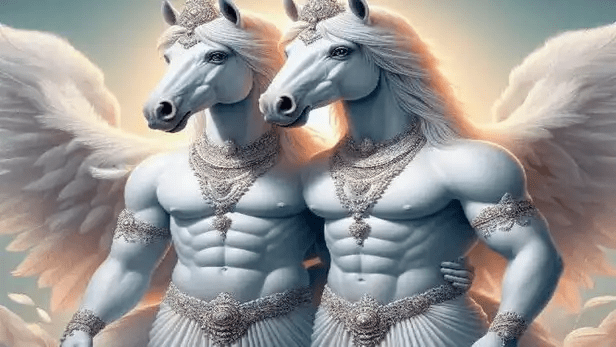
That sounded do-able — until I realized the first Mandala contains 190 Suktas! And at 65 (now almost 67), that’s a pretty tall order. So, I’d better get on with it — and see what I can learn and teach from the third Rik, which allegedly addresses the Ashvins or Ashwini Kumar, the Hindu gods taking the form of twin horse-headed physicians.
Before I walk you through my translation, let’s review (for frame-of-reference purposes) what the 19th-Century Oxford “orientalists” H. H. Wilson and Ralph T. H. Griffith came up with. We’ll start with Wilson, who offered the following meaningless interpretation:
Aśvins, cherishers of pious acts, long-armed, accept with outstretched hands the sacrificial viands
Aśvins, abounding in mighty acts, guides (of devotion), endowed with fortitude, listen with unaverted minds to our praises
Aśvins, destroyers of foes, exempt from untruth, leaders in the van of heroes, come to the mixed libations sprinkled on the lopped sacred grass.
Indra, apprehended by the understanding and appreciated by the wise, approach and accept the prayers of the priest as he offers the libation.
Fleet Indra with the tawny coursers, come hither to the prayer (of the priest), and in this libation accept our (proffered) food.
Universal Gods, protectors and supporters of men, bestowers (of rewards) come to the libation of the worshipper.
May the swift-moving universal Gods, the shedders of rain, come to the libation, as the solar rays come diligently to the days.
May the universal Gods, who are exempt from decay, omniscient, devoid of malice, and bearers of (riches), accept the sacrifice.
May Sarasvatī, the purifier, the bestower of food, the recompenser of worship with wealth, be attracted by our offered viands to our rite.
Sarasvatī, the inspirer of those who delight in truth, the instrumental uctress of the right-minded, has accepted our sacrifice.
Sarasvatī, makes manifest by her acts a mighty river, and (in her own form) enlightens all understandings.
And here’s what Griffith constructed from the same ancient verbiage:
Ye Aśvins, rich in wondrous deeds, ye heroes worthy of our praise, Accept our songs with mighty thought. Accept the sacrificial food.
Nāsatyas, wonder-workers, yours are these libations with clipt grass: Come ye whose paths are red with flame.
O Indra marvellously bright, come, these libations long for thee, Thus by fine fingers purified. Urged by the holy singer, sped by song, come, Indra, to the prayers, Of the libation-pouring priest.
Approach, O Indra, hasten thee, Lord of Bay Horses, to the prayers. In our libation take delight.
Ye Viśvedevas, who protect, reward, and cherish men, approach Your worshipper’s drink-offering.
Ye Viśvedevas, swift at work, come hither quickly to the draught, as milch-kine hasten to their stalls.
The Viśvedevas, changing shape like serpents, fearless, void of guile, Bearers, accept the sacred draught.
Wealthy in spoil, enriched with hymns, may bright Sarasvatī desire, with eager love, our sacrifice. Inciter of all pleasant songs, inspirer of all gracious thought, Sarasvatī accept our rite.
Sarasvatī, the mighty flood, —she with her light illuminates. She brightens every pious thought.
Let’s now go through the third Sukta line by line, word by word, and/or syllable by syllable, as needed. The first word is aśvinā, which both Wilson and Griffith translated as the proper name of the twin gods supposedly being addressed. But is that right? — or does aśvinā have an entirely different and much more elucidating meaning?
According to the online dictionaries consulted, aśvinā can mean “pervading,” “the distance traveled in a day by a horse,” “horseman,” “rider,” and/or “the seventh month in the lunar calendar.” So, what the rishis are really talking about here are the same horses seen and described by the Biblical prophets Zechariah and John the Elder. Those horses are, in fact, divine thought-energies (shaktis in Sanskrit) sent forth by the four Living Beings to help us overcome the false beliefs and faulty denials blinding us to God’s reflection. And it is, in fact, the chief Anti-Christ himself who transformed these four “horses of revelation” into four “apocalyptical” horsemen associated with God’s wrathful and cataclysmic destruction of our worldly home.

Like the first two Suktas, the third is an advanced spiritual teaching rather than a hymn of praise addressing a particular god. By my calculations, the opening line translates more or less as follows:
The Horses of God strengthen the giving cloud of the Holy Spirit’s swift-flowing drinking water, the holy rays of the Bridegroom, the everlasting arms delighting in the offerings of surpassing joy.
aśvin-ā (the Horses of God) yaj-varir (strengthen the giving-cloud) iṣo (the Holy Spirit) dravat-pani (swift-flowing drinking waters) subhas (the holy rays) pati (of the Lord’s) puru-bhuja (heavenly arms) canas-yatam (connecting the Nasayata–the destroying forces of God or delighting in the offerings of surpassing joy)
In Hinduism, Nasayata is presumed to be a nickname for the Asvins; If that presumption is correct, ca-nasyatam means “connecting the Nasayata (the destroying forces of God.” If that presumption is incorrect, canas-yatam might translate more light-handedly as “delighting in the offerings of surpassing joy.”
Luckily, we can check the definition against the the Bible and the Course, both of which mention the very same heavenly, celestial, or “everlasting arms” referenced herein by the rishis. In the Bible, those mystical arms are mentioned in Deuteronomy 33:27-28. In the KJV Bible, the passage reads:
The eternal God is thy refuge; and underneath are the everlasting arms: And he shall thrust out the enemy from before thee; And shall say, ‘Destroy them.’ Israel then shall dwell in safety alone: The fountain of Jacob shall be upon a land of corn and wine; Also his heavens shall drop down dew.
Sounds like the first definition, but let’s check the translation before drawing any conclusions. By my calculations, this passage of Deuteronomy should translate more like this:
In the east, Elohim shelters the everlasting arms to drive out hating or adversity, the presence speaking for destruction.
Israel (the journeying Soul) dwells securely in separation at the fountain of Jacob. In the Land of the Living, the abundant harvest of the new wine of Shamayim (the celestial sphere) drips down like dew.
According to Strong’s and Google, the Hebrew word dagan can mean “corn,” “grain,” “cereal harvest,” or “abundant harvest.” I chose “abundant harvest” rather than “corn,” because we find the phrases “abundant harvest of grapes” and “abundant harvest of new wine” repeated elsewhere in the Bible, as a symbol of divine blessing, restoration, and overflowing prosperity. More specifically, “new wine” refers to the Blood of Christ, the elixir of eternal life by which the Red Ray “seals the covenant” by transforming our thinking (via the winepress of the Bindu chakra) through the power of grace.
Ergo, symbolically:
New wine = Blood of Christ = Amrita
So, the everlasting arms are the metaphoric horses (thought-forces) by which Elohim extracts Sat-an’s impurities from our shared Holy Mind in the manner of a winepress.
And, in case you doubt my interpretation, Course-Jesus says pretty much the same thing below:
The holy relationship reflects the true relationship the Son of God has with his Father in reality. The Holy Spirit rests within it in the certainty it will endure forever. Its firm foundation is eternally upheld by truth, and love shines on it with the gentle smile and tender blessing it offers to its own. Here the unholy instant is exchanged in gladness for the holy one of safe return. Here is the way to true relationships held gently open, through which you and your brother walk together, leaving the body thankfully behind and resting in the Everlasting Arms. Love’s Arms are open to receive you, and give you peace forever. (ACIM, T-20.VI.10:1-6)
The Everlasting Arms are Love’s arms, whose embrace brings the peace and joy that surpasses (human) understanding.

Ergo, the Everlasting Arms are the twin aspects of Agape working toward our salvation. And those twin thought-forces, the Asvins in Hinduism, are the Godly attributes of Peace and Joy.
Let’s proceed to the second line of the third Sukta, which reads: aśvinā purudaṃsasā narā śavīrayā dhiyā dhiṣṇyā vanataṃ giraḥ
The Horses of God, the celestial teeth of God’s Word, the Cosmic Being’s radiant currents illuminating the loving spirit of God’s Voice.
asvina (the Horses of God) puru-damsa-sa (the celestial teeth of God’s Word) nara (the Cosmic Being’s) savi-raya (radiant currents) dhiya (illuminating) van-atam = (the loving spirit ) girah (of God’s Voice).
Purudamsa is typically defined as “rich in wonders” or “abounding in mighty deeds,” when the word actually means the celestial (puru) teeth (damasa) of God’s Word (sa). And those metaphoric “teeth” are the radiant currents of Nara (the Cosmic Being swimming in the Great Ocean underneath the illusion) reflecting the loving spirit of God’s Voice. And, that loving spirit is Narayana, the Living Water (in two Steams) Hindus call Vishnu.

The Bible also uses “the teeth of God’s Word” as a metaphor. According to Google, the metaphor presents the Bible as a “sharp threshing instrument that separates truth from error, brings repentance, and conquers obstacles.” But God’s Word isn’t the Bible … or any other form of scriptural text. God’s Word is the vibratory “voice” we hear with the inner-ears of our Souls. And it is that sound Isaiah 41:15 describes as “a new sharp threshing instrument having teeth.” And it is with the “teeth” of that sound we will “thresh the mountains and beat them small, and make the hills as chaff.”
What are those threshing instruments? The radiant currents of Peace and Joy welling up into our dreaming minds from Nara, the pure being-ness of the Cosmic Ocean of Agape underneath Brahma’s illusion of physicality.
Rightly understood, Peach + Joy = Perfect Love
Or, as Course-Jesus explains in Workbook Lesson 107: I seek but what belongs to me in truth:
…Joy and Peace are not but idle dreams. They are your right, because of what you are. They come to you from God, Who cannot fail to give you what He wills. Yet must there be a place made ready to receive His gifts. They are not welcomed gladly by a mind that has instead received the gifts it made where His belong, as substitutes for them. (ACIM, W-104.1:1-5)
Let’s move on to the Rik’s third line, which reads: dasrā yuvākavaḥ sutā nāsatyā vṛktabarhiṣaḥ ā yātaṃ rudravartanī. My research and guidance suggest those words translate thusly:
These two young lotuses of the charioteer of Nara’s Satya (the universal Light of Absolute Truth underneath the form), subdue the thoughts injuring the Supreme Self abiding in Rudra (the Red Ray).
das-ra (these two) yu-vak-a-vah (young lotuses) suta (of the charioteer) nasatya (of Nara’s Satya) vr (subdue) kta (the thoughts) barh (injuring) isah (the Supreme Self) Rudra-vartani (abiding in Rudra)
In Hinduism, a young lotus symbolizes purity, divine perfection, unfolding spiritual potential, and the Soul’s growth toward enlightenment. The charioteer of Nara’s Satya (Absolute Truth or the Light of Truth) is Aruna, another form of Indra, as is Rudra, a name literally meaning “Red Ray.” The Vedic rishis call Rudra “the Mighty One” and “the mightiest of the mighty,” invoking images of fiery power and fury, but Rudra is, in point of fact, the divine power some wisdom teachings call “the Ruby Ray of Peace.” Some of those teachings equate the Ruby Ray with the Archangel Uriel, but all evidence suggests he’s Michael, the Flaming Sword God posted at the eastern gate between Jerusalem and Eden–the eastern gate of Da’at guarded by Indra, where Elohim shelters the everlasting arms (according to Deuteronomy).
Makes sense, right?
Let’s move on to the Sukta’s fourth line, which reads: indrā yāhi citrabhāno sutā ime tvāyavaḥ aṇvībhis tanā pūtāsaḥ. By my calculations, those words translate along these lines:
Indra shelters the Bright Rays of the Charioteer, the Holy Spirit of the Higher Self in two parts restoring the Soul-Mind to Wholeness purified.
Ind-ra (Indra) yahi (shelters) citra-bhano (the Bright Rays of) suta (the charioteer) ime (of the Holy Spirit) tva-v-avah (the Higher Self in two parts restoring) anvi-bhis (the soul-mind) tana (to Wholeness) putasah [purified)
Pretty self-explantory, methinks. So let’s proceed to the Sukta’s fifth line, which reads: Indrā yāhi dhiyeṣito viprajūtaḥ sutāvataḥ upa brahmāṇi vāghataḥ. In my estimation, those words translate more or less as follows:
Indra shelters the Soul-Mind, impelled by the thoughts of the ethereal charioteer up above Brahmani to spread the forgotten sacred-syllable, Om.
Indra (Indra) yahi (shelters) dhi-yes-ito [the soul-mind) viprajutah (impelled by the thoughts of ) suta-vatah (the ethereal charioteer) upa (up above) Brahmani (the shakti of Brahma) vaghatah (to spread the forgotten sacred syllable, Om).

In Hinduism, Brahmani is the creative energy of Brahma, the Ego Mind. So, she represents the power of lower-thought to create material form. So, it is at a higher level of mind that the Rays of Indra compel the Soul to give and receive the forgotten song of the sacred-syllable (Om).
Let’s move on to the sixth line, which reads: indrā yāhi tūtujāna upa brahmāṇi harivaḥ sute dadhiṣva.
Indra shelters those striving to rise above Brahmani in the conveyance of Hari, the holiness in you granting knowledge of your own Higher Self.
Indra (Indra) vahi (shelters) tutujana (those striving) upa (to rise above) Brahmani (Brahmani) havivah (in the conveyance of Hari) sute (the holiness in you) da-dhi-sva [bestowing (da) the thoughts of (dhi) your own Higher Self or Soul (sva)]
In Hindu theology, Har is generally thought to mean “destroying power.” And now we know that that “destroying power” is, in fact, our own God-given holiness. And that holiness fuels the Miracles we receive from Christ to repair the split that caused the separation. So, Hari (Vishnu) is the destroying power of Agape split into two equal or twin streams or Rays. And those twins are Peace and Joy; whilst Hare is the destroying power of holiness coming from those two Rays. Both terms refer, therefore, to Miracles.
And, in case you’re wondering, Hara (Shiva) means the ego-destroying power of God, which is grace. And Shiva is indeed defined in Hinduism as the transformative power of Brahman.
Ergo,
Hari = Vishnu = the Holy Spirit = the ego-destroying power of God’s Love (divided into the twin streams of Peace and Joy)
Hare = Krishna = the ego-destroying power of the holiness and/or innocence we share eternally with God
Hara = Shiva = the ego-destroying power of God, which is grace.
Or, as Course-Jesus explains:
Miracles should inspire gratitude, not awe. You should thank God for what you really are. The children of God are holy and the miracle honors their holiness, which can be hidden but never lost.
I inspire all miracles, which are really intercessions. They intercede for your holiness and make your perceptions holy. By placing you beyond the physical laws they raise you into the sphere of celestial order. In this order you are perfect. (ACIM, T-1.I.32:1-4)
Galloping onward, the Sukta’s seventh line — naś canaḥ omāsaś carṣaṇīdhṛto viśve devāsa ā gata dāśvāṃso dāśuṣaḥ sutam — translates along these lines:
Uniting to sound in Wholeness the Om sanctifying the wheel at the heart of the cosmos, protects the authority of God proceeding from the white horse of Soma serving the charioteer.
Nas (Uniting) ca-nah (to sound in Wholeness) om-asas (the Om sanctifying) carsanidhrto (the wheel at the heart) visve (of the whole cosmos) de-vasa (protects the authority) a (of God) gata (proceeding from) dasvam-so (the white horse of Soma) dasusah (serving) sutam (the charioteer)
Let’s begin with the wheel at the heart of the cosmos — a concept found in scriptural texts universally. If you’d like to know more, there’s a reasonably comprehensive explanation of “the wheel” on the website for the Theosophy Memorial Trust. I can’t, of course, be sure that carsanidhrto actually translates as “the wheel at the heart,” but I’m confident I’m on the right track.
In the Course, Jesus never uses the word “wheel” — not even once, oddly enough. He does, however, mention the “circle of brightness” incorporating the Real World. And we know from our recent discussion of the Sefirot, that Tif’eret is the inner circle representing the Real World. In the following, Course-Jesus describes that “circle of brightness” in ways that definitely resonate with my translation of this Sukta:
This world of light, this circle of brightness is the real world, where guilt meets with forgiveness. Here the world outside is seen anew, without the shadow of guilt upon it. Here are you forgiven, for here you have forgiven everyone. Here is the new perception, where everything is bright and shining with innocence, washed in the waters of forgiveness, and cleansed of every evil thought you laid upon it. Here there is no attack upon the Son of God, and you are welcome. Here is your innocence, waiting to clothe you and protect you, and make you ready for the final step in the journey inward. Here are the dark and heavy garments of guilt laid by, and gently replaced by purity and love.
Yet even forgiveness is not the end. Forgiveness does make lovely, but it does not create. It is the source of healing, but it is the messenger of love and not its Source. Here you are led, that God Himself can take the final step unhindered, for here does nothing interfere with love, letting it be itself. A step beyond this holy place of forgiveness, a step still further inward but the one you cannot take, transports you to something completely different. Here is the Source of light; nothing perceived, forgiven nor transformed. But merely known.
This course will lead to knowledge, but knowledge itself is still beyond the scope of our curriculum. Nor is there any need for us to try to speak of what must forever lie beyond words. We need remember only that whoever attains the real world, beyond which learning cannot go, will go beyond it, but in a different way. Where learning ends there God begins, for learning ends before Him Who is complete where He begins, and where there IS no end. It is not for us to dwell on what cannot be attained. There is too much to learn. The readiness for knowledge still must be attained.
Love is not learned. Its meaning lies within itself. And learning ends when you have recognized all it is NOT. That is the interference; that is what needs to be undone. Love is not learned, because there never was a time in which you knew it not. Learning is useless in the Presence of your Creator, Whose acknowledgment of you and yours of Him so far transcend all learning that everything you learned is meaningless, replaced forever by the knowledge of love and its one meaning.
Your relationship with your brother has been uprooted from the world of shadows, and its unholy purpose has been safely brought through the barriers of guilt, washed with forgiveness, and set shining and firmly rooted in the world of light. From there it calls to you to follow the course it took, lifted high above the darkness and gently placed before the gates of Heaven. The holy instant in which you and your brother were united is but the messenger of love, sent from beyond forgiveness to remind you of all that lies beyond it. Yet it is through forgiveness that it will be remembered.
And when the memory of God has come to you in the holy place of forgiveness you will remember nothing else, and memory will be as useless as learning, for your only purpose will be creating. Yet this you cannot know until every perception has been cleansed and purified, and finally removed forever. Forgiveness removes only the untrue, lifting the shadows from the world and carrying it, safe and sure within its gentleness, to the bright world of new and clean perception. There is your purpose NOW. And it is there that peace awaits you.
Let’s turn now to “the white horse of Soma” — if indeed my translation of davam-so is right. It seems probable, given the earlier mentions of the Asvina. In the Holy Bible, that same SYMBOLIC horse is seen and described by both Zechariah and John the Elder, the author of the Book of Revelation. So, let’s see what each can tell us about this bright horse. Not coincidentally, the references to this horse appear in chapter SIX of both biblical books.
In Chapter 6 of the Old Testament Book Zechariah, we are told the following In the KJV Bible:
And I turned, and lifted up mine eyes, and looked, and, behold, there came four chariots out from between two mountains; and the mountains were mountains of brass.
In the first chariot, were red horses; and in the second chariot black horses; And in the third chariot white horses; and in the fourth chariot grisled and bay horses.
Then I answered and said unto the angel that talked with me, “What are these, my lord?”
And the angel answered and said unto me, “These are the four spirits of the heavens, which go forth from standing before the Lord of all the earth.”
The black horses, which are therein, go forth into the north country; and the white go forth after them; and the grisled go forth toward the south country. And the bay went forth, and sought to go that they might walk to and fro through the earth: and he said, “Get you hence, walk to and fro through the earth.” So they walked to and fro through the earth.
Then cried he upon me, and spake unto me, saying, “Behold, these [the white horses] that go toward the north country have quieted my spirit in the north country.”
From this uncorrected KJV account we learn that 1) the horses represent the “four spirits of the heavens before the throne”; 2) the white horses occupy the third chariot; 3) the white horses followed the black horses into the north country; and 4) the white horses “quieted the spirit” or “gave rest to the Souls” in the north country.
Let’s now see if the Book of Revelations can shed any more light on the mystery of the four horses. In the King James translation, the first verse of Chapter 6 reads:
And when the Lamb opened one of the seals, and I heard, as it were the noise of thunder, one of the four beasts saying, Come and see. And I saw, and beheld a white horse: and he that sat on him had a bow; and a crown was given unto him: and he went forth conquering, and to conquer.
Let’s reject that translation of John’s vision, because God’s messengers NEVER instill fear. When translated from the original Greek with more truth-sensitivity, the verse reads more like this:
And I perceived a lamb open the first seal of a signet ring, and also listened as a thunder-voice came out from among the four Living Creatures to say, “Come and look, and envision brightly, a horse, and to be the Self seated upon the same, and to have the bow and the crowning glory, and to give them to go forth and be strong and to overcome.”
Miles apart from the Anglican interpretation. So, I hope I’m making my point about foolishly investing our faith in or defending the fear-shaded interpretations of scriptural texts and symbols given to us by the false prophets Jesus warned us about. In truth, the Holy Spirit NEVER seeks to frighten us, because scaring us is antithetical to his mission.
Let’s proceed to the second verse, which reads as follows in the King James Bible:
And when he had opened the second seal, I heard the second beast say, “Come and see.” And there went out another horse that was red: and (power) was given to him that sat thereon to take peace from the earth, and that they should kill one another: and there was given unto him a great sword.
Translated from the original Greek, the verse actually reads more along these lines:
And when [the lamb] opened the second seal of the signet ring, I heard the second Living Creature say to come and to look and to go out on another horse, fire-colored, and to give to the Self to be seated thereupon to receive rest away from the earth. For the purpose of offering forgiveness (“sphazo,” in Greek) in reciprocal relationship is to give to the Self the Great Word of God (“machiara,” in Greek).
First and foremost, the Living Creature says “give to the Self seated upon the fire-colored horse to receive rest away from the earth. For the purpose of offering forgiveness in reciprocal relationship is to give to the Self the Great Word of God.”
And this is, in fact, exactly what Course-Jesus tells us in Workbook Lesson 297: Forgiveness is the only gift I give, wherein he says:
Forgiveness is the only gift I give, because it is the only gift I want. And everything I give I give myself. This is salvation’s simple formula. And I, who would be saved, would make it mine, to be the way I live within a world that needs salvation, and that will be saved as I accept Atonement for myself. (ACIM, W-297.1:1-4)
To that, let me add that the Greek word sphazo has come to mean “slay” or “slaughter” in the same way that the Sanskrit word yajna has come to mean “fire sacrifice.” Sphazo originally meant “offering forgiveness” or “offering the atonement,” but the Ego Mind twisted the word’s true meaning over time until, in Biblical times, it came to signify “slaughtering animals for the purpose of ritual blood sacrifices.” By the early 1500s, when the Anglicans translated the New Testament into English, sphazo had come to mean “slaying” or “slew.”
Thus, when John the Baptist said, in the gospel of John, that Jesus came into the world for the purpose of sphazo, he meant his cousin came to offer salvation through forgivenesss to God’s earthbound children. John did NOT mean Jesus came to be slaughtered like an animal in sacrifice for our sins. And anyone who says otherwise has missed the point entirely (as Jesus himself explains in the Course).
Similarly, machiara meant “sword” by the time the KJV team got their hands on the Book of Revelation. In earlier times, however, the word was generally understood to symbolize the Word of God.
Let’s move on to the third verse, which the KJV Bible presents thusly:
And when he had opened the third seal, I heard the third beast say, “Come and see.” And I beheld, and lo a black horse; and he that sat on him had a pair of balances in his hand. And I heard a voice in the midst of the four beasts say, “A measure of wheat for a penny, and three measures of barley for a penny; and see thou hurt not the oil and the wine.”
Translated with a more care and insight, the third verse reads:
And when he opened the third seal of the signet ring, I heard the third Living Creature say, “Come and look and behold a black horse, and the Self seated thereupon to have a yoke in hand. And I heard a voice from the midst of the four Living Creatures say, “A quart of wheat for a denarius; three quarts of barley for a denarius; and to do wrong not the least oil and wine.”
When this was written, a quart of wheat amounted to the quantity needed to make enough “daily bread” to feed one person, while a denarius was a small Roman coin equivalent to the average daily wage. Three quarts of less-costly barley, on the other hand, would feed one person for three days or three people for one day. What this means is that the ego calculates our needs at the cost of our souls, but the oil and wine of salvation — the only thing here of true value to our souls — costs us nothing.
Or, as Jesus explains in the Course:
The ego is trying to teach you how to gain the whole world and lose your own soul. The Holy Spirit teaches that you cannot lose your soul and there is no gain in the world, for of itself it profits nothing. To invest without profit is surely to impoverish yourself, and the overhead is high. Not only is there no profit in the investment, but the cost to you is enormous. For this investment costs you the world’s reality by denying yours, and gives you nothing in return. You cannot sell your soul, but you can sell your awareness of it. You cannot perceive your soul, but you will not know it while you perceive something else as more valuable. (ACIM, T-12.VI.1:1-7)
Let’s move on to the fourth verse in the KJV Bible, which reads:
And when he had opened the fourth seal, I heard the voice of the fourth beast say, “Come and see.” And I looked, and beheld a pale horse: and his name that sat on him was Death, and Hell followed with him. And power was given unto them over the fourth part of the earth, to kill with sword, and with hunger, and with death, and with the beasts of the earth.
Oh, how the Evil One delights in twisting things to terrify his servants on earth. What the verse actually imparts isn’t the least bit frightening. When more sensitively translated, the verse reads more along these lines:
And when he opened the fourth seal of the signet ring, I heard the voice of the fourth Living Creature say to come and to look and be aware and to behold a pale horse, and the Self-Identity to be seated was higher than the self separated from God, and the underworld (the world underneath) that followed after. And the authority was given unto the Self upon the fourth earth to end the association with weapons of war and judgment, of hunger and famine, and of death (both spiritual and physical), and (to end) subjugation to the wicked beast of the physical earth.
Shall I continue? — or have we wandered too far off track? I think I’ll keep going, because, as I said, I’m extremely curious about the four horses.
In the KJV Bible, the next three verses read:
And when he had opened the fifth seal, I saw under the altar the souls of them that were slain for the Word of God, and for the testimony which they held: And they cried with a loud voice, saying, How long, O Lord, holy and true, dost thou not judge and avenge our blood on them that dwell on the earth? And white robes were given unto every one of them; and it was said unto them, that they should rest yet for a little season, until their fellow servants also and their brethren, that should be killed as they were, should be fulfilled.
The original Greek account, meanwhile, reads closer to this:
And when [the lamb] opened the fifth seal of the signet ring, behold! under an altar, the Souls offering forgiveness (“sphazo,” again) on behalf of the Word or Logos of God, and for the purpose of bearing witness to this state of existence, and to call down a great voice to speak until the despot, set apart from truth, chose not to judge or avenge his blood-fellows residing on the earth. And bright flowing robes were given to each to provide all-authority and command of the Self in order to bestow blessings and give rest yet a little while until their fellow disciples (in service to God) and their fellow servants and their brothers destined to kill achieved complete realization of the Self.
I’ll stop there, because we’ve lost the thread of the horses, which appear to be the “shaktis” or “forces” of the four Living Beings — the bearers of the chariot-throne of “the Solar Logos” (Elohim-Allah-Surya) on the Seventh Plane. And this also tracks with what the Angel told and showed Zechariah.
Okay, so … let’s review what we’ve learned from Revelations about the four horses (not “horsemen,”). The first thing we’ve learned is that the horses, whose riders represent our own Higher Self, come out when the seals are broken. Those seals, I’m fairly certain, represent the Se-firot, a Hebrew word which (I’ve just figured out) translates as “fruits of the lamb,” rather than emanations. So the horses of the Living Beings come forth when we choose to “eat the fruit” (of the tree of knowledge) the Lamb provides to correct the wrong-minded choice we made to hide the ten aspects of God’s reflection in the thought-waters making up the worldly illusion.
Rightly understood, the fruits of the lamb are the Miracles that turn our inverted perception back around as our Souls journey around the Circle or Wheel.
Or, as Jesus explains in the Course:
Eating of the fruit of the tree of knowledge is a symbolic expression for usurping the ability for self-creating. This is the only sense in which God and His creations are not co-creators. The belief that they are is implicit in the “self-concept,” or the tendency of the self to make an image of itself. Images are perceived, not known. Knowledge cannot deceive, but perception can. You can perceive yourself as self-creating, but you cannot do more than believe it. You cannot make it true. And, as I said before, when you finally perceive correctly you can only be glad that you cannot. Until then, however, the belief that you can is the foundation stone in your thought system, and all your defenses are used to attack ideas that might bring it to light. You still believe you are an image of your own making. Your mind is split with the Holy Spirit on this point, and there is no resolution while you believe the one thing that is literally inconceivable. That is why you cannot create and are filled with fear about what you make. (ACIM, T-3.VII.4:1-12)
High-level stuff, to be sure. But the phrase “fruits of the lamb” (first-fruits, actually) does appear in Revelation 14:1-5, which reads (per my translation):
Then, I beheld a lamb standing upon Mount Zion; with the same were one hundred and forty-four thousand having the Father’s Name written on their foreheads, listening to the voice from Heaven, as the sound of many waters, or as the sound of great thunder, or as the sound of the holy singers with their harps. And they sang a new song in front of the Throne and in the sight of the four Living Creatures, and the Older One. None can sing but these 144,000 who redeemed (bought back) away from the earth. These were they who defiled not the bride. Because they are virgins, these follow the Lamb wherever he leads; these who redeemed away from humankind the first fruits of the Lamb, and indeed of their own mouth found no deception in what is faultless in the sight of the Throne of God.
I don’t yet know what the number 144,000 signifies, but I do know this: the Lamb is Hare (Krishna), the illusion-destroying power of the Soul’s God-given holiness and innocence.
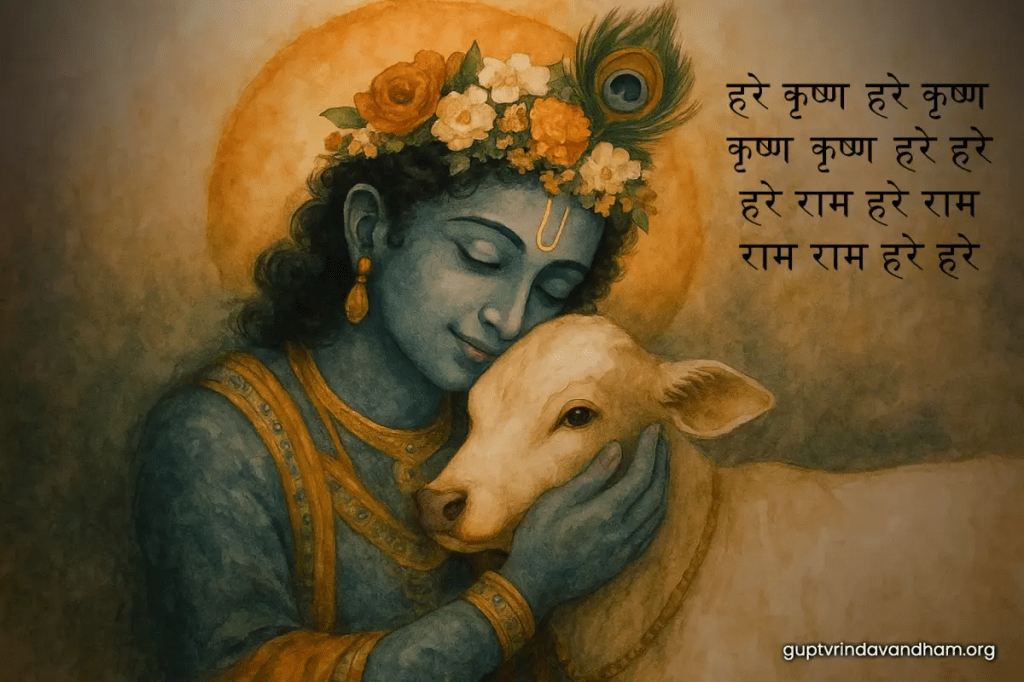
Let’s assume that the pale horse of the fourth “seal” is “the white horse of Soma” described in the Sukta under discussion. This also tracks with what Zechariah saw and was told by the Angel of the Presence; that is, that the white horse followed the black horse into the north country. My gut tells me that the black horse is Hare (hence, Krishna’s designation as “the black one” in Hinduism), while the pale horse represents the Om, (the song we begin to hear after purifying the Anahata chakra). But that’s purely conjecture at this point. To see what more we can learn about the horses, let’s look at another illustration of the Kabbalistic Tree of Life. This one, as you can see shows the colors and numbers associated with each Sefirot– the “seals” opened by the Lamb in Revelation.
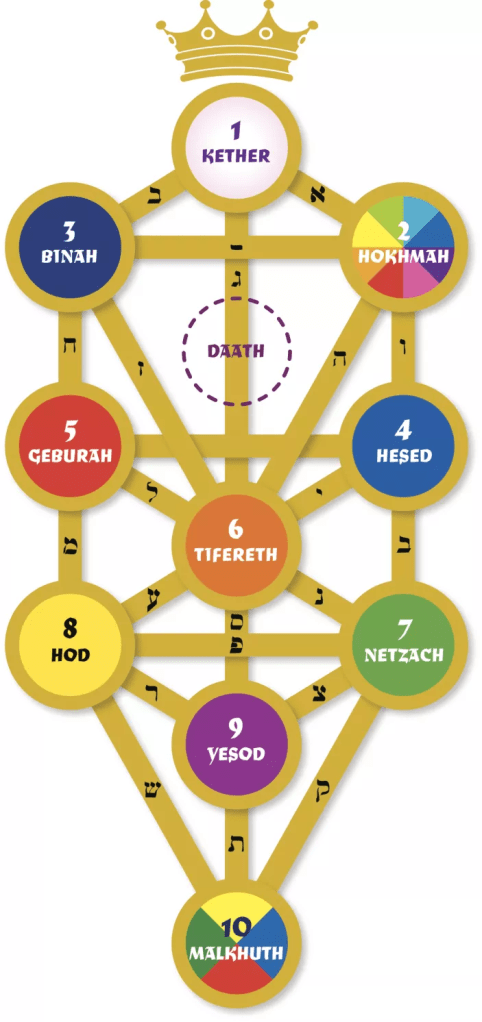
First, let me say that, because the Lamb symbolizes our holiness and innocence, it is by accepting our guiltlessness or sinlessness that we open the seals or “eat the firs-fruits of the Lamb” at each level of error.
Don’t know why the first seal is Keter, the Crown of Glory, but I’m pretty sure the rider who comes forth from that seal is Kalki, the tenth avatar of Lord Vishnu, who rides a bright horse and carries a bow, as well as a flaming sword (the radiant Word of God).
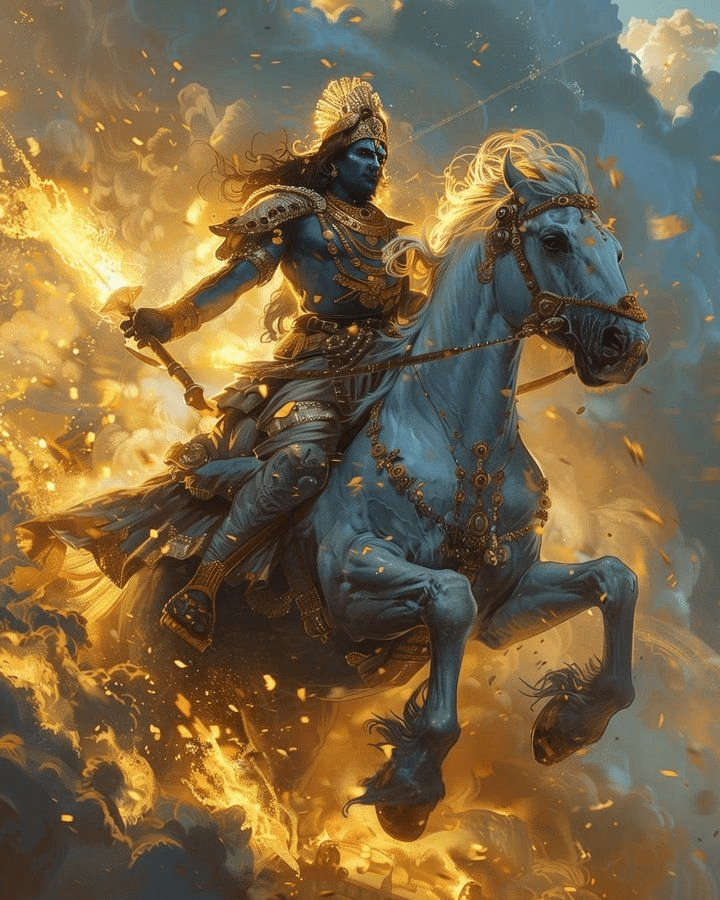
The second seal is Chokmah (wisdom), out of which comes the red horse whose rider is “to receive rest for the purpose of offering forgiveness.” The second seal is, therefore, the Om vibration, which we give and receive (away from the earth) to restore our vision of the Real World (Tif’eret). In Hinduism, the red horse is associated with three deific powers: Radha, the devoted companion of Krishna, Agni, the eternal flame of God’s Presence, and Indra, the Red Ray whose strength and power we exchange during our yajna rituals in the Resting Place. From these associations, we can glean that the red horse represents the power of Agape, which we hear in the dream as the Om vibration–the echo of God’s Name, which is LOVE.
The rider on that horse is probably, therefore, the ninth avatar of Vishnu, who is called “Buddha.” Rightly understood, Buddha is a title or designation for a person who, having received the “wisdom” of how and what we give and receive in the Resting Place, can now share that wisdom through the yajna exchange.
In Sanskrit, the word Buddha is a marriage of Bud (aware of or awake to) and dha (giving). Vishnu’s Buddha incarnation should not be confused with the person of Gautama Buddha. Vishnu’s Buddha represents what Course-Jesus terms a Teacher of God. As I read all this, we become a Buddha when we begin hearing and meditating on the Om vibration–the horse released by the second seal of chokmah— the primordial point of divine wisdom, which shines forth from the will of God.

From the third seal (Binah) comes the black horse with the yoke. In Hinduism, the black horse is called Kala Ghoda, a Hindi name said to have derived from a bronze statue in Mumbai. And yet, incongruently, the name symbolizes divine strength, protection, and transformation. In Sanskrit, Gho refers to Kamdhenu, the miracle-cow, whilst da means “giving” or “granting.” And while Kala has been assigned various meanings, including “darkness,” “time,” and “death,” the word is probably a compound of Ka (the Great Purusha) and la (receiving). So, essentially: “the Great Purusha receiving the miracles given.” And the third seal is Binah, which Kabbalists call “understanding” and I call “the Son.” In Bahir, an anonymous first-century mystical text, the third Sefirot is described as:
The quarry of the Torah, (the) treasury of wisdom, quarry of God’s spirit, hewn out by the spirit of God. This teaches that God hewed out all the letters of the Torah, engraving them with the Spirit, casting His forms within it (the Son).
An ego-distorted definition of the storehouse, cistern, or golden treasury holding (in trust) the miracles of corrected understanding we received the first time the dream played out, and now must give and receive (as before) to escape the dream’s ever-repeating loop. So, Binah is indeed the Bindu chakra, the winepress bringing forth the Amrita of Om.

And all of this affirms that the black horse is Lord Krishna (a.k.a., Hare, the black one), the Charioteer driving the Soul’s Merkabah into the north country. In the Bible, the black horse is followed by the white horse; And, in Hinduism, Kala Ghoda is indeed seen as the harbinger of Kalki, the glorified Self on the white horse. Furthermore, Krishna identifies himself in the Bhagavad Gita as Surabhi, the miracle cow also known as Kamdhenu.
So, Krishna, the eighth avatar of Vishnu, carries the Indrajala, Indra’s net of flaming pearls — the interlocking chain of miracles resulting in the Atonement.
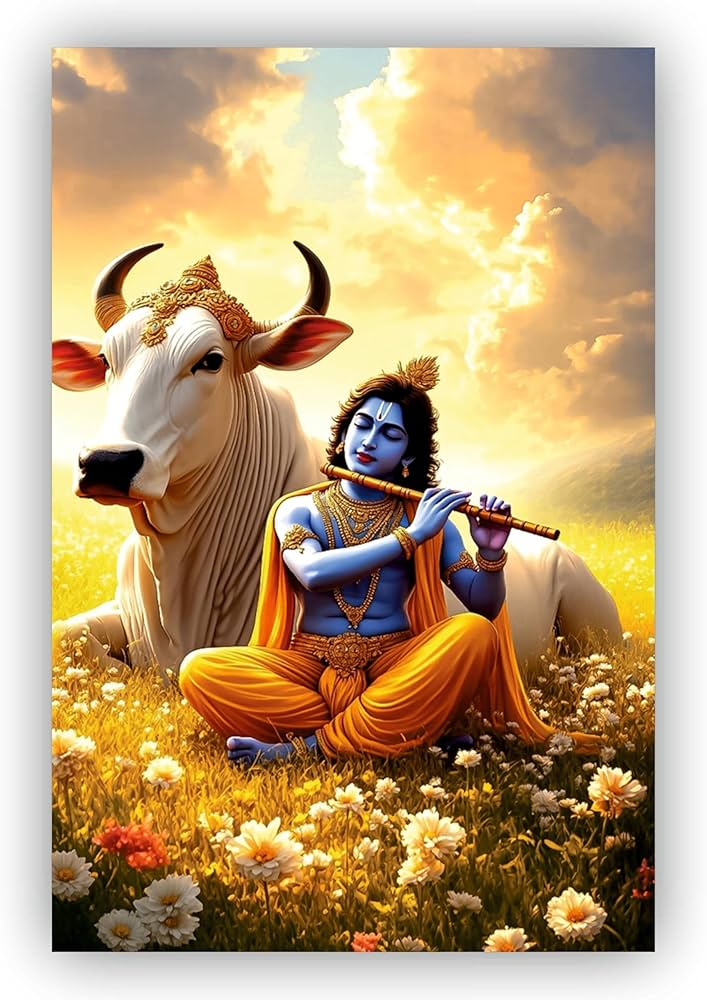
From the Fourth Seal (Chesed or Love) comes the pale horse, whose rider is higher than the ego-constructed false self and also free of judgment. So, he’s the “self” we become after the Final Judgment (of Satan, not God). If my thinking is right, the rider on this horse is Rama, Vishnu’s seventh avatar representing the journeying Soul, freed from ego-bondage. The hero of the Ramayana epic, Rama represents Maryada Purushottama, the embodiment of dharma, virtue, and selfless leadership, as he undertakes his quest to rescue Sita (the seat of God) from the demon King Ravana (the Ego Mind). Presumed to mean “the ideal man,” Mar-yada Puru-shottama more accurately translates as something along the lines of “the death that happens when Shiva’s celestial arrow hits its mark.”

So, Rama represents the death of ego judging that brings Self-realization or Soul-realization. In the Ramayana, he is an expert horseman, but chooses to walk on his quest (because the Soul’s journey is a walking journey). Rama’s horse is described as a white steed, which he releases to roam for one year during his Ashvamedha Yajna (thought clarifying offering rituals, rather than “horse sacrifices”) to establish imperial sovereignty. In the story, the horse is accompanied on its wanderings by an army led by Rama’s younger brother, Shatrughna — a name meaning “the six sounds of undoing.”

That Rama represents the unfettered Soul tracks with the Biblical account of the rider on the pale horse being given the authority “to end the association with weapons of war and judgment, of hunger and famine, and of death and subjugation to the wicked beast of the physical earth.”
From the Fifth Seal (Geburah/Strength) come the Souls (under the altar) offering forgiveness in the flowing robes signifying purity and divine authority.
Vishnu’s sixth avatar is Parashurama, meaning “Rama with an axe.” The axe is called Parashu–a gift from Lord Shiva giving Rama (the journeying Soul) the power to cut through worldly attachments, ignorance, and ego. That power is God’s strength, through which all things become possible. In the Ramayana, Parashurama shows up after hearing the loud noise made when Rama lifts up and breaks Pinaka, the divine bow of Lord Shiva. He later deduces that Rama is Vishnu, who instructed Rama to destroy the fruits of his austerities. In the Mahabharata, Parashurama performs heroic feats to end the Kurukshetra war.
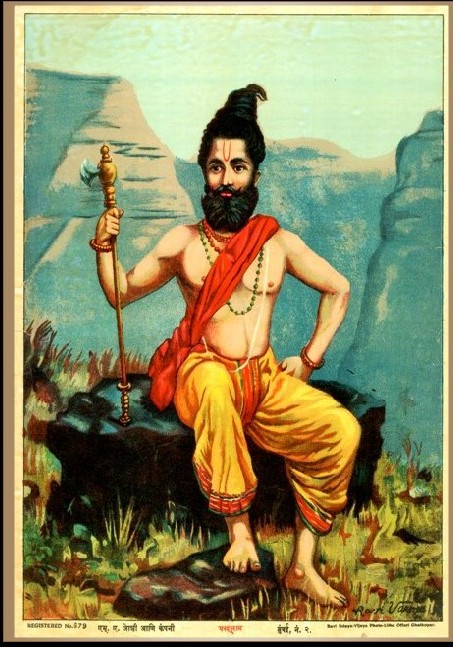
Rama’s axe represents God’s strength, which comes from the Lamp of Truth Christ brings to shine away the darkness. That Lamp shines in us when we join with Christ’s to overcome the ego, as Course-Jesus explains below:
Your mind and mine can unite in shining your ego away, releasing the strength of God to everything you think and do. Do not settle for anything less than this, and refuse to accept anything but this as your goal. Watch your mind carefully for any beliefs that hinder its accomplishment, and step away from them. Judge how well you have done this by your own feelings, for this is the one right use of judgment. Judgment, like any other defense, can be used to attack or protect; to hurt or to heal. The ego should be brought to judgment and found wanting there. Without your own allegiance, protection and love, the ego cannot exist. Let it be judged truly and you must withdraw allegiance, protection and love from it. (ACIM, T-4.IV.8:3-10)
Makes sense, right? And all of this is found in both Christian and Hindu scriptures, but is rarely synthesized rightmindedly in either.
Let’s return to the Rigveda. According to Max Muller, the Rv 1.3.8 reads: viśve-devāso apturaḥ sutam ā ganta tūrṇayaḥ usrā iva svasarāṇi. Based on my research and guidance, those words translate more or less thusly:
The universe protecting God’s Authority sends down to the charioteer God’s Grace, the courier of new purpose, in the dawning light spread out by the Breath or Voice (Vayu) of the Lesser Light (Soma, the Moon).
Visve-devaso = The universe protecting God’s authority
apturah = sends down
sutam = the charioteer
aganta = the Grace of God, Epiousion bread, or spiritual sustenance
turnayah = the courier of new purpose
usra-va = dawning light spread out
svasa-ra-ni = through the breath of the Lesser Light
The real bugger in this line was coming up with a suitable definition for ganta. The word is similar to ghanta, which means “temple bell” or “clay instrument,” but neither of those literal definitions really work here. Figuratively, they sort of work, if we allow that a temple bell (like a church bell) calls the faithful to worship. So, ghanta might be a figurative reference to the Call to Return. Seeking a better result, I tried breaking the word as ga-nta, gan-ta, and even g-anta. Still dissatisfied, I prayed for guidance. That’s when I got the idea to join ganta with the solitary a preceding the word. Because that a wasn’t working, either.
Lo and behold, aganta turned out to be a word! According to the Wisdom Library, aganta is a name for Shiva, the ego-destroying power of holiness in the form of a Hindu god. According to Wikipedia, aganta derives from agra, which means (among many other definitions) “a specific type of alms given to Brahmins.” And, as we now know, “alms” is scriptural “code” for the thought-offerings we give and receive in the Holy Meeting Place, while “Brahmin” is probably the Vedic term for the Teachers of God advanced enough to hear the Om.
Interestingly, the type of alms to which “agra” refers are called bhiksa or bhiksha — a term used in Jainism, Buddhism, and Hinduism to describe the practice undertaken by religious mendicants of “begging,” as well as the FOOD given by those being asked for “alms.”
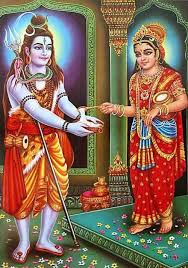
If we view all of this symbolically (as we must), it makes perfect sense. In response to prayers to Shiva for the “alms” of corrected perception (miracles, in Course terms), devotees receive the spiritual sustenance of aganta, bhiska, or grace — the Epiousion bread and/or Living Water through which we purify of “undo” our ego-thinking. That aganta is a name for Shiva makes sense, too, since we request the “alms” of God’s grace by invoking the name of Shiva or Jesus Christ.


We’ve now reached the Sukta’s ninth line, which reads (contrary to Max Muller’s presumed breaks): viśve-devāso asridha ehimāyāso adruhaḥ medhaṃ juṣanta vahnayaḥ pavaka nah. And, when correctly translated, those words tell us, in beautiful language, both what Soma is and where he dwells.
The universe protecting God’s Authority is the Resting Place of the all-pervading intelligence of Soma, the unseen force with visible results, the power of right-understanding, the wisdom of the infinite, and the vehicle for the purifying fires of Wholeness.
Visve-devaso = the universe protecting God’s authority
asri-dha = is the resting place
ehimaya-so = of the all-pervading intelligence of Soma
adruhah = the unseen force with visible results
medham = the power of right-understanding
jusa-nta = the wisdom of the infinite
vahnayah = the vehicle for the
pavaka = purifying fire
nah = of Wholeness
The Sukta’s tenth line reads: Sarasvatī vājebhir vājinīvatī yajñaṃ vaṣṭu dhiyāvasuḥ codayitrī sūnṛtānāṃ Cetantī sumatīnām yajñaṃ dadhe sarasvatī.
Sarasvati strengthens the energy of the inward-moving horses, the light of higher understanding in the dwelling place of the universal mind impelling the truth-speaking Wholeness to awaken the Holy Mind strengthening the Holy Name established in or by Sarasvati
sarasvati = Sarasvati
vaj-ebhir = strengthens (vaj) the might or energy of
vaji-nivati = the horses moving inward
ya-jnam = the light of higher understanding
vastu = in the dwelling-place of
dhiyavasuh = the universal mind
coda-yitri = impelling
sunr-tanam = the truth-speaking Wholeness
cet-anti = awakening
su-matinam = the holy mind or thoughts
yajnam =of the offerings
dadhe =established in or by
Sarasvati = Sarasvati
Okay, wow. Lots to consider in this one. Let’s start with Sarasvati, whose name is more likely a compound of sara (flow or substance) and svati (very beneficent) than of saras (pooling water) and vati (she who possesses), as commonly presumed. I believe this to be so because Svati is a character in the allegorical Hindu epics. She is, in fact, one of the wives of the Moon (Soma). Svati also is associated with Arcturus, the brightest star in the Bootes constellation of the northern hemisphere, as well as with the nakshatra or lunar mansion associated with Arcturus.

In the next verse, we learn EXACTLY what Sarasvati is and/or represents in the cosmic scheme. I won’t preempt the Big Reveal, but I will say that she is NOT the goddess of wisdom, music, and higher learning, as most Hindus have been led to believe.
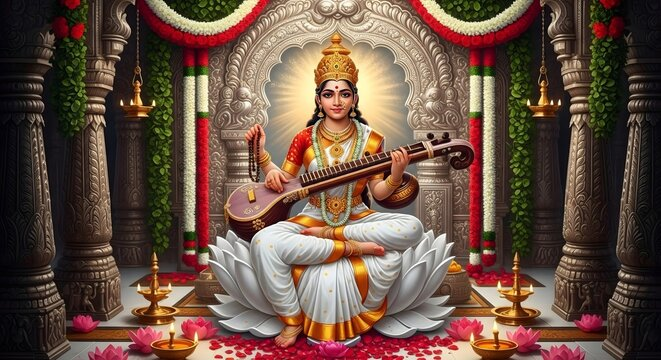
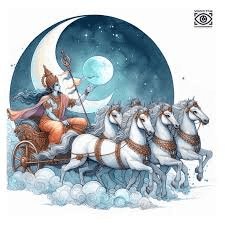
Another word we need to talk about is vajinivati, which is typically interpreted as an epithet for Sarasvati meaning “thunderbolt,” “powerful,” or “possessed of substance or food.” If you care to read Sri Aurobindo’s justification for the latter definition, you will find it here, along with his flawed translation of this Sukta. Like most other would-be translators, his Holiness divides the word as vajini and vati, which he then defines as “possessing plentitudes.” Much as it pains me to find fault with His Nibs, the word carries far more weight when divided as vaji (horse) and nivati (moving-inward or inward-moving). Vaji doesn’t just mean “horse,” however. In the Puranas, the word more specifically describes the horses yoked to the chariot of the moon — to Soma’s chariot, the merkabah of the Great I Am.
We now come to the final verse, which is typically translated as a prayer of invocation to Ma Sarasvati. This may indeed be the case, but I’m triple-checking everything to be sure I get this right. In transliterated Sanskrit, the verse reads: Maho arṇaḥ sarasvatī pra cetayati ketunā dhiyo viśvā virājati. Those powerful words translate as follows:
The Great Ocean, Sarasvati advances the protection, preservation, and nourishment of the Great Rays of Nara, the Lamps of God in the universe Viraja governs.
maho arnah = the Great Ocean, Cosmic Ocean, or Ocean of Milk
Sarasvati = Sarasvati
pra = advances
ce-tayati = the protection, preservation, and nourishment of
ketu-na = the Great Rays of Nara
dhiyo = the lamps (of God)
viswa = in the world or universe
viraja-ti = Viraja governs
We’ve discussed the Great Cosmic Ocean, but to review, the Cosmic Ocean (the Ocean of Milk in Hinduism) refers to the rippling Pool of God’s Thoughts (the Pool of Abundance), which existed long before the earth — or even the visible universe, the whole of which emerged from these “primordial waters” of God’s eternal thoughts or logoi billions of years ago.
As explained in earlier posts, water symbolizes thought or mind in scriptural texts, because thought and/or mind is all that truly exists. So, the Great Ocean these myths describe is, in actuality, the part of God’s Mind housing everything in Creation — the Perfect and Eternal Thoughts of the True Creator or Causeless Cause. Those thoughts remain as they’ve always been, but we can’t see them through the material illusion the Ego Mind projected outward to trick us into believing we were somewhere else, free to do as we please (with real effects).

The universe governed by Viraja refers to the transitional space between the formless Absolute and the form-filled universe. In Hinduism, as in the Course, it represents the boundary to be crossed to achieve ultimate liberation. So, it’s the Borderland, the Real World, and Tif’eret on the Kabbalistic Tree of Life.

In Hindu theology, Viraj is considered the second stage of creation, arising from Hiranyagarbha, the Golden Egg or Golden Womb said to be the first (ego-miscreated?) evolute of Ishvara (the Holy Spirit of the Christ Self). It is not, however, Brahma’s Egg, because Hiranyagarbha exists at a higher level of consciousness than does Viraja, the Borderland between Brahmanda and Hiranyabarbha.
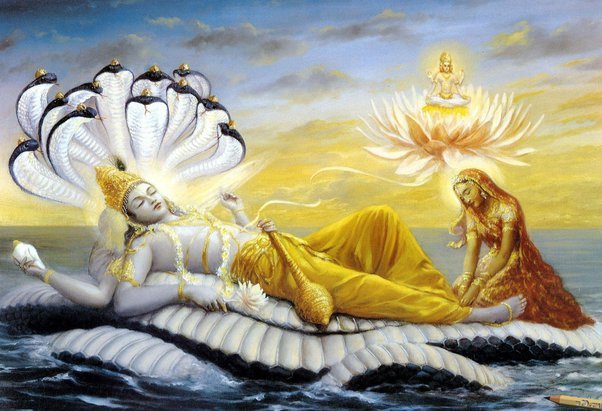
The levels are depicted in the image below from Hinduism. What we see is Vishnu floating on a raft made of snakes on the Cosmic Ocean. At his feet is Lakshmi, the personified Soul’s Treasury. In the sky, attached to Vishnu by an umbilical cord, is the dream of Brahmanda (the Cosmic Egg of Earthly Existence). The raft itself is Sheesha, a multi-headed snake representing the aspects of Shiva, the dream-destroying power of grace. The snake-raft is, therefore, Shiva-realization (non-dualism), the Borderland between the waking state of Vishnu-realization (semi-non-dualism) and the awake-state of Knowledge (pure non-dualism).
As Hinduism rightly teaches, Shiva-realization must be transcended to return to the even higher state of “absolute, non-dual, and formless consciousness of Brahman”– the uppermost, innermost state of all-knowingness deeper down.
Because Viraj represents the sum total of all physical bodies—animate and inanimate—within the universe, it represents the corporate Body of Christ to which all earthly creatures belong. It is often identified with Vaisvanara (the All of Nara), the cosmic, all-pervading divine, or “gross” aspect of the Supreme Being.
Or, as Jesus explains in the Course:
The ego may see some good, but never only good. That is why its perceptions are so variable. It does not reject goodness entirely, for that you could not accept. But it always adds something that is not real to the real, thus confusing illusion and reality. For perceptions cannot be partly true. If you believe in truth and illusion, you cannot tell which is true. To establish your personal autonomy you tried to create unlike your Father, believing that what you made is capable of being unlike Him. Yet everything true is like Him. Perceiving only the real world will lead you to the real Heaven, because it will make you capable of understanding it. (ACIM, T-11.VII.3:1-9)
Jesus also says we will still inhabit the body when we reach the Real World, but won’t keep it for long. So, our perception of the Real World is short-lived before our purely mental return to the Golden Egg of Knowledge (Da’at, the hidden realm).
We now have a much better idea of what the Rigveda’s third Sukta truly communicates, which is a far cry from what we’ve been duped into believing for centuries (if not millennia). We’ve learned a lot from this Sukta, including that the Asvina aren’t twin horse-headed healers. Rather, they’re the “horses” or right-minded thought-forces sent forth into the Temple by the four Living Beings and/or Throne-Bearers seen and described by the prophets Ezekiel, Zechariah, Mohammad, and John the Elder. And from their accounts, we can ascertain that those four Living Beings support the wheel at the heart of the universe, upon which rests the chariot-throne of the Greater Light, Spiritual Sun, or Logos. Underneath the throne-bearing wheel, the four Living Creatures stand upon gyroscopic wheels covered in eyes. And those all-seeing double-wheels, I suspect, represent the “horses,” “Asvina,” and/or “Vajinivati” mentioned herein and in both testaments of the Holy Bible.
But (despite the title assigned by the Oxford set), this Sukta isn’t really about the Asvina. More accurately, it explains how all the Atonement Powers work together to bring about our liberation from the dream of separation. We also learn that the Asvina are the thought-forces set free by the four Living Beings supporting the Chariot-throne of Elohim-Allah-Surya, the Solar Logos and/or Radiant Word of God.
Pretty cool, right?
It’s Christmas Eve, so I’ll leave you with the whole Sukta written out cleanly, without all my notes, as my gift to the world.
The Horses of God strengthen the giving cloud of the Holy Spirit’s swift-flowing drinking water, the holy rays of the Lord or Bridegroom, the everlasting arms delighting in the offerings of surpassing joy.
The Horses of God are the celestial teeth of God’s Word, Nara’s radiant currents reflecting the loving spirit of God’s Voice.
Indra shelters the Bright Rays of the Charioteer, the Holy Spirit of the Higher Self in two parts restoring the Soul-Mind to Wholeness purified.
Indra shelters the Soul-Mind, impelled by the thoughts of the ethereal charioteer up above Brahmani to spread the forgotten syllable, Om.
Indra shelters those striving to rise above Brahmani in the conveyance of Hari, the holiness in you granting knowledge of your own Higher Self.
Uniting to sound in Wholeness the Om sanctifying the wheel at the heart of the cosmos, protects the authority of God proceeding from the white horse of Soma serving the charioteer.
The universe protecting God’s Authority sends down to the charioteer God’s Grace, the courier of new purpose, in the dawning light spread out by the Breath or Voice (Vayu) of the Lesser Light (Soma, the Moon).
The universe protecting God’s Authority is the Resting Place of the all-pervading intelligence of Soma, the unseen force with visible results, the power of right-understanding, the wisdom of the infinite, and the vehicle for the purifying fires of Wholeness.
The Great Ocean, Sarasvati advances the protection, preservation, and nourishment of the Great Rays of Nara, the Lamps of God in the universe Viraja governs.
Sarasvati strengthens the energy of the inward-moving horses, the light of higher understanding in the dwelling place of the universal mind impelling the truth-speaking Wholeness to awaken the Holy Mind strengthening the Holy Name established in or by Sarasvati.
Merry Christmas and Joy to the World!!
 The Holy Meeting Place
Leave a comment