faith
-
Google tells us the Rigveda’s 13th Sukta “consists of twelve verses in Gayatri meter, focusing on inviting deities to the sacrifice through Agni, often featuring phrases like samiddho adya manuṣvad agnir (1.13.1) and narāśaṃsam iha priyam (1.13.3). The verses are dedicated to various deities associated with the ritual, including Agni, Narāśamśa, and the Barhis (the sacred grass).” If you’ve…
-

At long last, I’ve migrated all the content from my former BlogSpot blog to this newer one on WordPress, with a few guided additions. It’s now time to tackle the Rigveda’s 12th Sukta, a supposed hymn in praise of Agni, the presumed Hindu god of elemental fire. In actuality, the Sukta is not a hymn,…
-
Are you ready to unlock the secrets of the Rigveda’s 10th Sukta? Getting this far feels like a milestone — until I remember how many more Riks lay ahead. Yikes. Will I finish the job before I drop my body? Will I even get through the first Mandala? Only time will tell — and best…
-
Translating the Rigveda’s Eight Sukta was no small feat. Not only were Max Muller’s “preserved meters” way off, correct definitions for the majority of words also were exceedingly hard to come by. The first of these elusive words came at the outset. That word was endra, which is almost universally misinterpreted as another form of…
-
Let’s start our discussion of the Rigveda’s Seventh Sukta with a relevant quote from the Course — a quote so central to the process of awakening, I added it to my blogger profile to serve as a constant reminder. Because, as Jesus explains somewhere in the Text, we can not be too often reminded of…
-

Let’s continue our conversation about the Rigveda’s Sixth Sukta by reviewing the verse we ended on last time. That verse is Rv 1.6.5, rather than Rv 1.6.6, as per Max Muller, the 19th-century Oxford orientalist credited with restoring the Rigveda to its original metric form. In so doing, he divided Rv. 1.6.4 into two lines,…
-
About a year ago, my husband and I were shopping at our favorite Indian market — something we used to do once a month or so to restock the larder. While we were perusing the frozen-food cases on the final aisle, an elderly Indian gentleman stopped his cart behind us. “Do you like Indian food?”…
-

At last, we reach the Fifth Sukta of the Rigveda, the most ancient and sacred of the Hindu scriptures. This one also concerns King Indra, but it’s neither a hymn nor a metered poem. Like the first four Riks, the fifth is a spiritual teaching aimed at “Brahmins.” Contrary to popular egoic belief, Brahmin is…
-
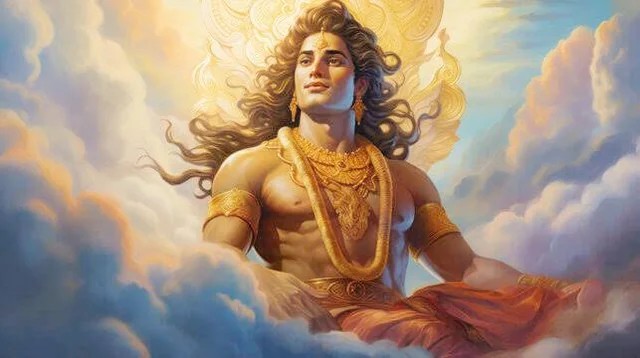
We now come to the Rig Veda’s fourth Sukta, the first of many presumably addressed to Indra, the king of the Hindu devas. As explained earlier, Indra personifies the Red Ray of the Father’s Will to make earth like Heaven. As such, Indra represents the most powerful force in the universe — the reason he…
-
Today, let’s talk about the Lord’s Prayer — the “example” Jesus gave his disciples as the “proper” way to pray. If you’re unfamiliar with this old standard, it reads thusly in the KJV Bible: Our Father, who art in Heaven, hallowed be thy name. Thy Kingdom, come; Thy Will be done; on earth as it…
 The Holy Meeting Place