-
Namaste, my brother. I humbly offer you God’s peace, joy, love, and mercy. We’ve now come to the Rigveda’s 16th Sukta–another alleged hymn to King Indra, which is, in fact, a wisdom teaching describing the relationship between Indra, the Red Ray or Blood of Christ, and Soma, the Great I Am. The scholar-baffling words somapitaye…
-

Contrary to what Google reports, the 15th Sukta of the Rigveda’s First Mandala (Rv 1.15) is not “a hymn invoking the Maruts, a group of storm gods worshipped in ancient India, to assist Agni and Indra in blessing the fire-sacrifice ritual-ceremonies called yajnas.” It is, in fact, a great deal more than a simple hymn of…
-
According to Google (quoting the Wisdom Library) “Rigveda 1.14 is a 12-verse hymn (Sukta) dedicated to Agni (the sacrificial fire) by the seer Medhātithi Kāṇva in the nicṛdgāyatrī meter. It acts as an invitation for Agni to bring various deities—including Indra, Vāyu, Mitra, and the Maruts—to the ritual to partake in the Soma drink, emphasizing Agni’s role as…
-

Google tells us the Rigveda’s 13th Sukta “consists of twelve verses in Gayatri meter, focusing on inviting deities to the sacrifice through Agni, often featuring phrases like samiddho adya manuṣvad agnir (1.13.1) and narāśaṃsam iha priyam (1.13.3). The verses are dedicated to various deities associated with the ritual, including Agni, Narāśamśa, and the Barhis (the sacred grass).” If you’ve…
-

At long last, I’ve migrated all the content from my former BlogSpot blog to this newer one on WordPress, with a few guided additions. It’s now time to tackle the Rigveda’s 12th Sukta, a supposed hymn in praise of Agni, the presumed Hindu god of elemental fire. In actuality, the Sukta is not a hymn,…
-
Going forward, we’re discarding the rules devised by the Sanskrit scholars. Why? Because those “rules” support translations that, quite frankly, make a mockery of the Rigveda’s incredibly powerful wisdom-teachings — wisdom-teachings with an undeniable divine provenance. God’s messengers don’t speak gibberish. And yet, if we follow the “rules” set forth by academic “experts” like H.…
-
Are you ready to unlock the secrets of the Rigveda’s 10th Sukta? Getting this far feels like a milestone — until I remember how many more Riks lay ahead. Yikes. Will I finish the job before I drop my body? Will I even get through the first Mandala? Only time will tell — and best…
-

We’ve now come to the Rig Veda’s Ninth Sukta — and I wish I could say the translation process is getting easier. But that wouldn’t be wholly truthful. What I can say — in complete honesty — is that I’m still learning and expanding my understanding of the labyrinthian morass that is Hindu theology. I’m…
-

Translating the Rigveda’s Eight Sukta was no small feat. Not only were Max Muller’s “preserved meters” way off, correct definitions for the majority of words also were exceedingly hard to come by. The first of these elusive words came at the outset. That word was endra, which is almost universally misinterpreted as another form of…
-
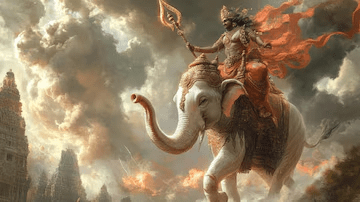
Let’s start our discussion of the Rigveda’s Seventh Sukta with a relevant quote from the Course — a quote so central to the process of awakening, I added it to my blogger profile to serve as a constant reminder. Because, as Jesus explains somewhere in the Text, we can not be too often reminded of…
-
Subscribe
Subscribed
Have a WordPress.com account? Log in now.

