Uncategorized
-
About a year ago, my husband and I were shopping at our favorite Indian market — something we used to do once a month or so to restock the larder. While we were perusing the frozen-food cases on the final aisle, an elderly Indian gentleman stopped his cart behind us. “Do you like Indian food?”…
-

At last, we reach the Fifth Sukta of the Rigveda, the most ancient and sacred of the Hindu scriptures. This one also concerns King Indra, but it’s neither a hymn nor a metered poem. Like the first four Riks, the fifth is a spiritual teaching aimed at “Brahmins.” Contrary to popular egoic belief, Brahmin is…
-
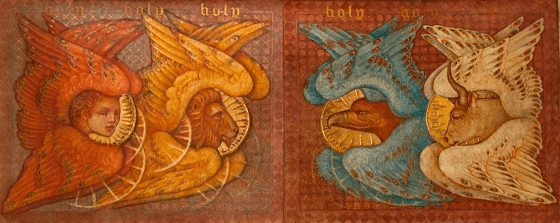
I really should get back to the Rigveda — and I will, very soon — but I was too intrigued by yesterday’s discovery of the potential meaning of “Noah” to let it go. Hoping to find our fourth Cherubim, the one with a human head, I checked to see if there was an ancient God…
-

Working out the true meaning of the three Greek letters generally mistranslated as “666” made me curious about all the other strange numbers sprinkled through the Book of Revelation. Are they also ciphers? We find, for example, the spelled-out numbers 42 and 1,260 in the following verse, wherein neither number has any useful meaning. The…
-

Today, we’re back to the seven trumpets and the three woes from the Book of Revelation, following a brief-but-productive detour into cherubim-hunting. For those not keeping track, we’ve reached Revelation 11, which describes the second “woe” foretold to occur in the final ays before the dream-world disappears. To recap: The first “woe” was the “plague…
-

After identifying Nisrok as the eagle-headed Living Being or Cherubim supporting the Throne of Elohim, I wanted to see if the names of the other three Cherubim also might be “lost in translation,” as it were, in the Holy Bible. Since Nisrok also enjoyed deific status in other ancient civilizations, I started by looking for…
-
In my last post, we explored what actually transpires after the seventh seal is opened by the Lamb of God in the Book of Revelation. We also learned that the seventh seal is Netzach, the seventh Sefirot on the Kabbalistic Tree of Life. We further learned that Netz-ach means “falcon-brother” in Hebrew, rather than “eternity”…
-
This post was supposed to address the Rigveda’s fifth Sukta, another wisdom-teaching about King Indra; but my inner-guru had other ideas. As established last time, King Indra represents the Red Ray of Peace producing the Amrita, the elixir of immorality or Blood of Christ, flowing down from the metaphoric “winepress.” That winepress, as we’ve learned,…
-
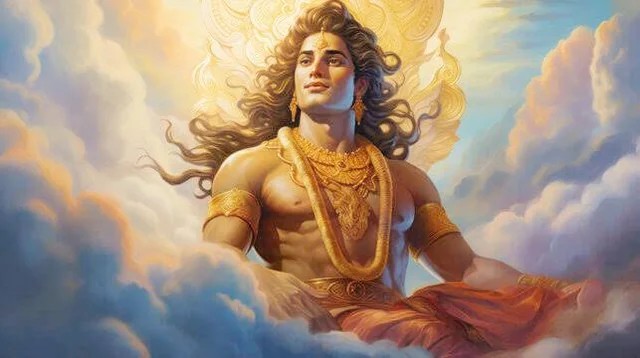
We now come to the Rig Veda’s fourth Sukta, the first of many presumably addressed to Indra, the king of the Hindu devas. As explained earlier, Indra personifies the Red Ray of the Father’s Will to make earth like Heaven. As such, Indra represents the most powerful force in the universe — the reason he…
-
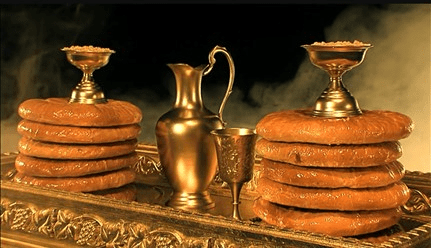
Today, let’s talk about the Lord’s Prayer — the “example” Jesus gave his disciples as the “proper” way to pray. If you’re unfamiliar with this old standard, it reads thusly in the KJV Bible: Our Father, who art in Heaven, hallowed be thy name. Thy Kingdom, come; Thy Will be done; on earth as it…
 The Holy Meeting Place