I don’t yet have all the answers, because I’m still walking and, therefore, still learning how to remember what I’ve forgotten. Had I not ventured into Hinduism and Kundalini Yoga a few years back, I would know even less than I do at present. And now, it would seem, the journey’s taking me to Egypt, Mesopotamia, Persia, and Babylon. When I asked my inner-guru about this, he said, “The Circle-Journey is a journey of walking back through what humans once understood, but forgot. And what humans once understood is nearer the truth than what they think they know now.”
Or, as Course-Jesus also says:
The Holy Spirit takes you gently by the hand, and retraces with you your mad journey outside yourself, leading you gently back to the truth and safety within. He brings all your insane projections and the wild substitutions that you have placed outside you to the truth. Thus He reverses the course of insanity and restores you to reason. (ACIM, T-18.I.8:3-5)
This simple statement makes sense. It also brings to mind what Maulana Wahiduddin Khan wrote in his introduction to the Qur’an concerning what we once knew.
The Quran explains this by saying that those born in later times were all initially born at the time of the creation of Adam and, at that time, God had directly addressed all these human souls.
Helena Blavatsky (1831-1891), the co-founder of Theosophy, wrote something similar in The Secret Doctrine — or was it in Isis Unveiled? Where she wrote it isn’t as important as what she wrote, which was that God initially gave humankind a “universal religion” or “Ageless Wisdom” preserving the essential truths of which still underlie all major faiths, philosophies, and sciences. Those essential truths, which explain the purpose of human existence, revolve around universal brotherhood, karma, and reincarnation.
Sadly, the remnant threads of those “essential truths” were hidden over time through mistranslation and misinterpretation. Consequently, more than half the world’s population refute the reality of karma and reincarnation, whilst paying little more than lip-service to the intrinsic concept of universal brotherhood. More commonly, self-righteous religious leaders and their followers attack and condemn beliefs their egos deem inferior or threatening to their distorted world-view.
If, for example, I never again hear the words “heathen,” “sinner,” or “infidel,” I will be exceedingly grateful for the blessing.
Hindus, on the other hand, advance all three of these foundational precepts, as do Buddhists, Sikhs, and some Sufis.
As implied earlier, I’ve learned a lot from Hinduism. I’ve also observed that many Hindus have lost the threads of truth along the way, but at least those shimmering threads are still there to be found, if sincerely sought.
So, let’s chase after some of those elusive fibers today and see where they lead us. We’ll start with the golden thread of dharma, a Sanskrit word meaning “that which upholds” (according to Google).
Google also says:
Dharma is a core concept in Indian religions (Hinduism, Buddhism, Jainism) referring to cosmic law, universal order, moral duty, and righteous conduct, essentially “the way things are” or the right way to live, encompassing an individual’s duties (e.g., as a soldier or parent) and the universal truths taught by the Buddha, forming the foundation for ethical life and spiritual liberation.
How much of that is right? Not much, truth be told.
Firstly, Dhar-ma means “upholding creation” or “supporting right-order.” Dharma describes, therefore, the pillar(s) upholding the established order (Rta) in the dream-realm of prakriti.
Ergo, Dharma holds up the wheel at the center of the universe.

In Hindu theology, Dharma has four pillars: Satya, Daya, Tapa, and Shaucha. And, as with everything else, Brahma has tampered with the definitions of those four terms — to make our escape from his “primordial egg” (Brahmanda) as difficult as possible. Rightly understood, the four pillars of Dharma are not (as commonly taught) Truthfulness, Compassion or Mercy, Austerity, and Cleanliness. Their true spiritual definitions of the four Sanskrit terms are more along these lines:
Shaucha = The word means “gathering the scattered grains of God’s Word,” which has nothing to do with hygiene or purity. As a practice or observance, Shaucha means bringing the Christ Self back together by following the Golden Rule — i.e., giving only the good thoughts and wishes to others we would have them give to us.
Satya = Striving to live in accord with the Truth of our Being in thought, word, and deed
Daya = Day can mean either “the Mercy of God” (day-a) or “giving the light” (da-ya). So, basically it’s about extending to all lifeforms the mercy, compassion, forgiveness, and loving kindness God extends to us.
Tapa = “Atoning” or “repenting” for our mistakes by requesting perceptual correction from the gods and forgiving ourselves and others for falling prey to Brahma’s deceptions
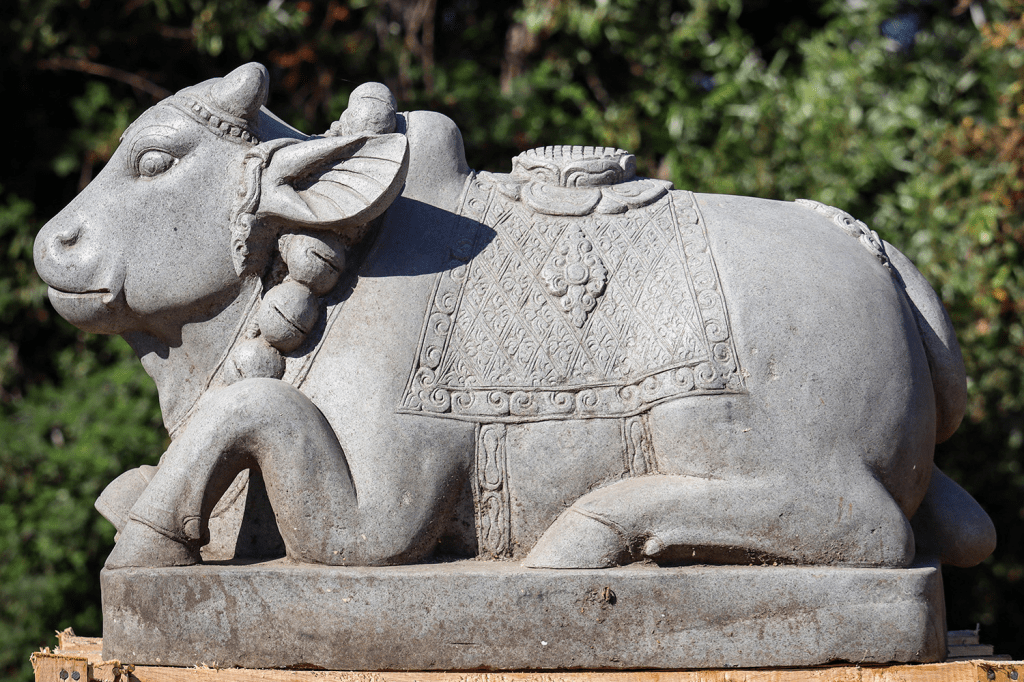
Google further regurgitates the widespread belief that the four legs of Nandi (Lord Shiva’s white-bull vahana) symbolize the pillars of dharma. “Often depicted seated with one front leg raised or tucked,” Google adds, “this posture signifies constant readiness, alertness, and unwavering devotion to Lord Shiva, rather than mere inertia or rest.”
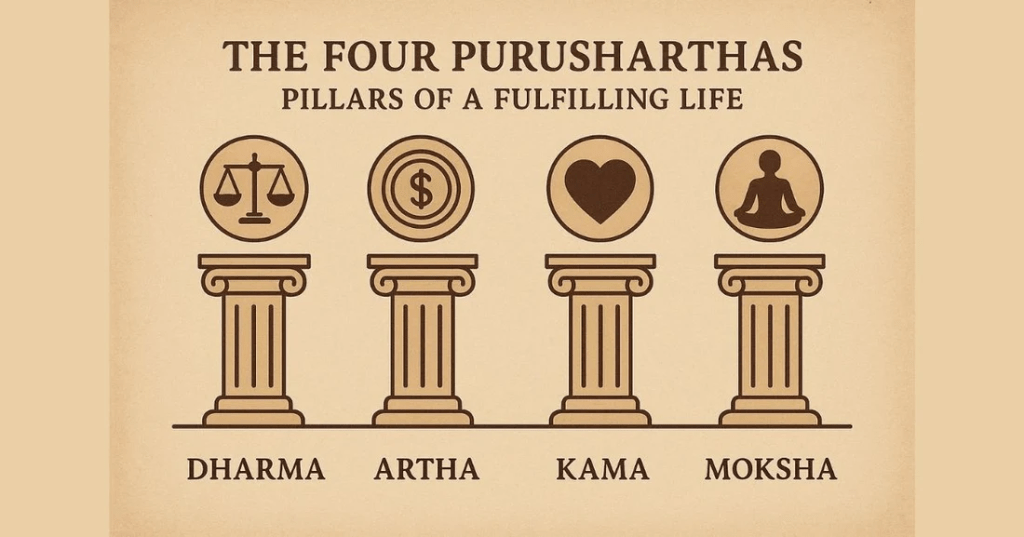
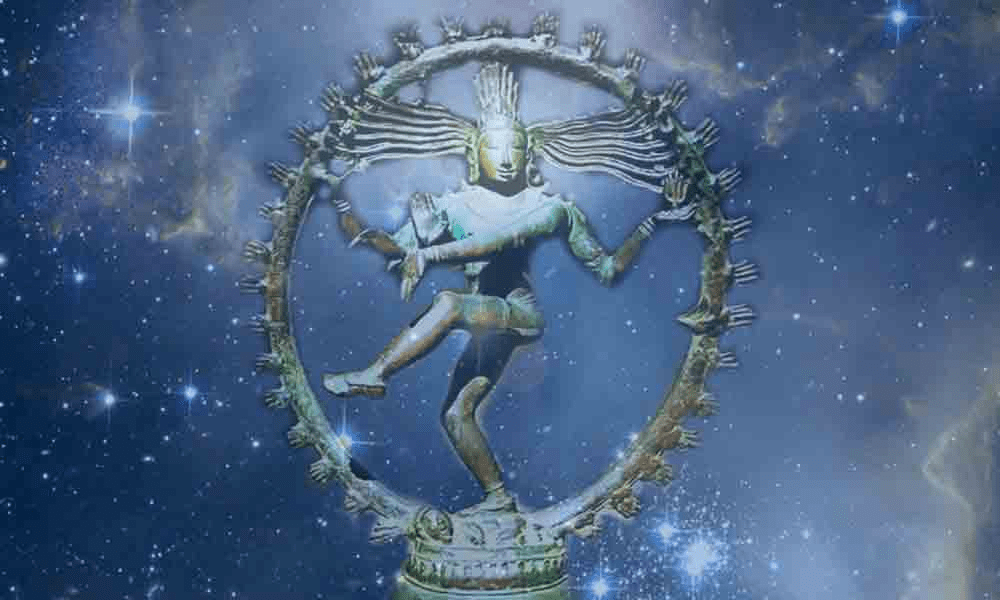
Sorry, but I call “bullshit” (pun intended). Firstly, Nandi’s legs represent not the the four “legs” of dharma, but the Four Purusharthas, the legs of the Soul’s walking journey around the Prahabha Mandala –“the radiant circle of the spiritual journey.” In his Nataraja form, Lord Shiva turns the Mandala through the cosmic dance known as Tandava — a Sanskrit word meaning “the spreading fire.”
Moreover, Nandi is usually shown lying down, with one leg poised to rise, to represent the Resting Place, where our Souls stand upright around the Circle, waiting to return to the still higher and deeper chamber of Da’at.

The Soul making the journey (to recover our heavenly memories and treasures) is Lakshmi. This is why she sits on the lotus representing the path, flanked by two white elephants showering her with the Living Waters of Grace. When I look at this image of Lakshmi, I see an illustration of St. Paul’s statement in Ephesians 2;8-9: For by grace are ye saved through faith; and that not of yourselves: it is the gift of God:
That Lakshmi makes the walking journey is surely what the icon of her feet or footprints actually signifies.


Like Rama, Lakshmi walks around the circle. Before she can walk, however, she needs to get her “spiritual legs” firmly under her. And those “spiritual legs” are the four pillars of Dharma we fortify — through rightminded living and purpose — on the first half of the circle-journey (the left-hand side of the wheel).
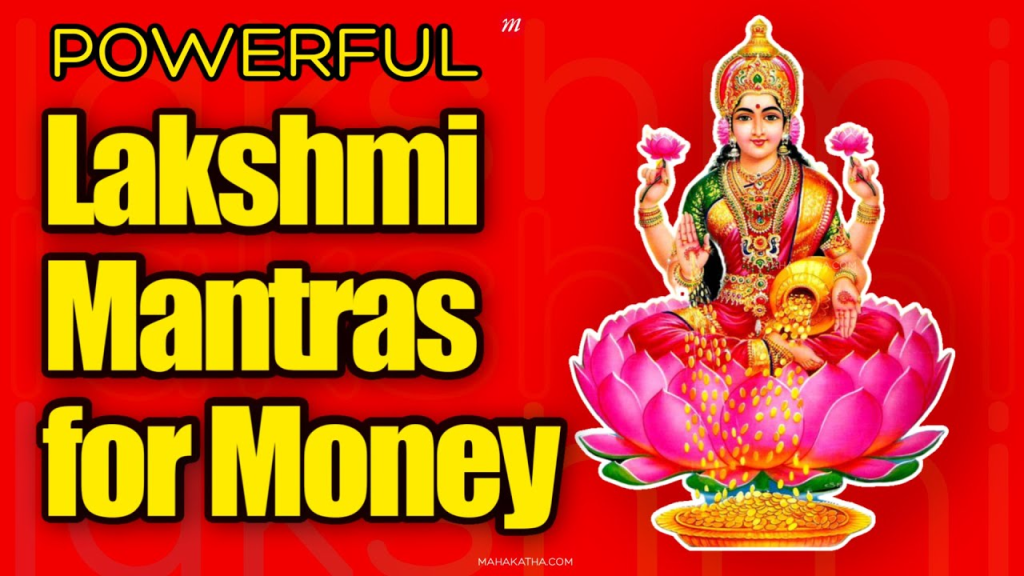
As I’ve said, the four pillars of Dharma are the legs supporting the Circle-Journey, rather than Nandi’s legs (the four Purusharthas of a well-lived life). Yes, it’s confusing, but differentiating the two sets of “legs” is important. Nandi’s legs, as I said, represent the four stages of the Soul’s journey around the “radiant circle.” In Hinduism, those four “legs” are mirrored by the four aspects of Lakshmi: Dharma (SW), Artha (NW), Kama (NE), and Moksha (SE).
In Buddhism, the four Taras, a goddess derived from Lakshmi, represent those same four “legs.” In the Judeo-Christian scriptures (unbeknownst to most Jews and Christians), the same four “legs” take the form of the “Living Beings” — the four cherubim we’ve identified as Noach, Bastet, Moket, and Nisrok.

That almost no one seems to “get” what these Living Beings signify is the fault (as usual) of poor translation and unilluminated interpretation. Because these mysterious “beings” have fascinated me for decades, I’ve read a lot of speculation about what they represent, none of which rings true.
Just recently, I read that there is now a whole discipline within Biblical scholarship devoted to studying the differences between the descriptions of these “beings” or “creatures” recorded by Ezekiel, Zechariah, and John of Patmos (in the Book of Revelation). When I read this, I didn’t know whether to laugh or cry, because there are no real differences (as I intend to demonstrate).
And yes, I did translate both accounts from the original Hebrew and Greek. Let’s start with Ezekiel 1:4-14), which reads as follows in the KJV Bible:
And I looked, and, behold, a whirlwind came out of the north, a great cloud, and a fire infolding itself, and a brightness was about it, and was out of the midst thereof as the colour of amber, out of the midst of the fire. Also out of the midst thereof came the likeness of four living creatures. And this was their appearance; they had the likeness of a man. And every one had four faces, and every one had four wings. And their feet were straight feet; and the sole of their feet was like the sole of a calf’s foot: and they sparkled like the colour of burnished brass. And they had the hands of a man under their wings on their four sides; and they four had their faces and their wings.
Their wings were joined one to another; they turned not when they went; they went every one straight forward. as for the likeness of their faces, they four had the face of a man, and the face of a lion, on the right side: and they four had the face of an ox on the left side; they four also had the face of an eagle. Thus were their faces; and their wings were stretched upward; two wings of every one were joined one to another, and two covered their bodies. and they went every one straight forward: whither the spirit was to go, they went; and they turned not when they went.
As for the likeness of the living creatures, their appearance was like burning coals of fire, and like the appearance of lamps: it went up and down among the living creatures; and the fire was bright , and out of the fire went forth lightning. And the living creatures ran and returned as the appearance of a flash of lightning.
How accurate is this translation? Not very, Surprise, surprise. When the original Hebrew is interpreted with more figurative and historical understanding, what Ezekiel actually recorded reads closer to this:
Through spiritual vision, I beheld Ruach [the Cosmic Breath or Fire-Wind of God] come from the North [the Northwest quadrant]– a mighty thunder-cloud of God’s fiery presence — to give and receive light in a circle. In the midst (of the circle), was a wellspring of pure compassion [the true meaning of the mysterious Hebrew word chashmal, which occurs nowhere else in the Bible]; amidst the fire in the center was the likeness of four living forms or apparitions (chay-mareh). They resembled Adam (the Red Ray) as one; four presences as one; four quarter-legs of the straight path; the bowing-down path; bowing down to the circle-journey — the radiant circle lightening the fetters holding the Soul quarters in four parts. Four parts in quarters; quarters to be joined as spirit-sisters to circle around and around on the journey; the journey to cross over into the presence of the face reflecting the face of God; four faces of Adam, alike in appearance.
The four faces of Adam faced a lion on the right-hand side (of the circle) and the four faces of the umbilical cord on the left. Four faces of a vulture they faced. The four faces in quarters divided upward; two faces to be joined, face to face; two to cover the lifeless body on the spiritual journey of man to the realm attended by Ruach; the journey to the circle; the journey in the likeness of the Living Apparitions to kindle the Fire of God in the form of lamps; to bring to life the fire of God’s glory; a fire bringing forth lightning alive with God’s pleasure at the return of the scattered (Souls).
Pretty different, wouldn’t you say? And much clearer in terms of what those “Living Beings” are meant to represent. Especially noteworthy is that Ezekiel sees no wings or animal heads on the beings themselves. The Hebrew word translated as “wings” by the KJV team can also mean “quarters” — and that makes much more sense contextually. Furthermore, the prophet sees them FACING a lion’s head on the right, and four vulture-heads on the left — not HAVING four heads each. And yes, I will explain what those symbols represent. First, however, let’s compare John’s account in Revelations 4:6-8. In the KJV Bible, those passages read:
And before the throne there was a sea of glass like unto crystal: and in the midst of the throne, and round about the throne, were four beasts full of eyes before and behind. And the first beast was like a lion, and the second beast like a calf, and the third beast had a face as a man, and the fourth beast was like a flying eagle. And the four beasts had each of them six wings about him; and they were full of eyes within: and they rest not day and night, saying, “Holy, holy, holy. Lord God Almighty, which was, is, and is to come.”
Before I share my translation, let me point out that these “beings” or “apparitions,” which are SPIRIT, have no actual form. They’re symbols projected into the mind of the beholder by the Holy Spirit. Ergo, they appear to different prophets “according to their intelligence.” So, even if Ezekiel did see four heads and wings on each, while John saw one head and six wings on each, it wouldn’t mean the creatures had changed in appearance. It would only mean that the two prophets needed different symbols to understand the same idea.
You get that, right?
Alrighty, then. Here’s my interpretation of John’s account, based on the original Greek.
Encircling the throne, four living beings filled the mind’s eye in the appearance of before and after (of being sequential). The first living creature was like a lion; the second living creature was like a calf ; the third being possessed the presence of the whole of humankind ; and the fourth living creature was like a flying eagle. And the four living beings possessed among them — moving up and down — six streams circling around and filling the wellspring within. And resting not day or night, they spoke the message, “Different from the world; like unto the Lord in holiness. Lord God Almighty. Whenever, indeed, any living creature assigns the glory of God’s presence, in value and gratitude, the seat upon the throne, they will experience God’s gift of life into eternity.”
Once again, John mentions no wings, because … well, instead of explaining the reason myself, let me quote the Abarim Publications’ Online Greek Dictionary:
The noun πτερυξ (pterux) means wing, but a wing in Biblical times was not the same thing as a wing now. Our noun derives from the unused noun πτερον (pteron), meaning feather or plumage, and shares its Proto-Indo-European root “pet-,” meaning to rush or fly, with the verb οταομαι (ptaomai), to fly about, and ultimately the familiar noun ποταμος (potamos), meaning stream or river. That means that to the ancient Greek, a wing was not the proverbial instrument of flight but rather the proverbial instrument of flow and ultimately that of protection.
So, the wings in both accounts were (as I said) the product of mistranslation, while the visages of lions, calves, eagles, and “Adam” were meant to symbolically communicate what the apparitions represented. And those symbolic beasts do indeed represent the four “legs” of the Soul’s journey — as I’ll explain by and by.
First, let’s return to Ezekiel’s vision, wherein we encounter the curious phrase “the four faces of the umbilical cord.” To those unfamiliar with Hindu iconography, that phrase might seem pretty bizarre. But we actually see that exact phrase symbolically illustrated in the image below, wherein the four-headed Brahma is attached to Vishnu-Narayana by an actual umbilical cord.
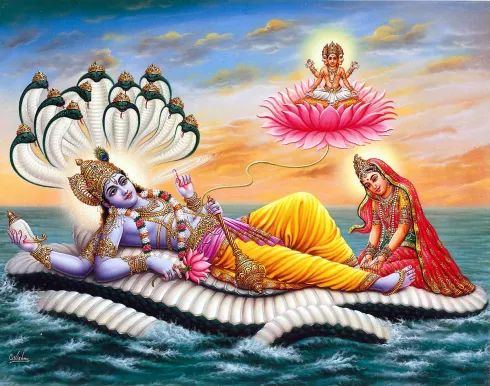
As the image above accurately depicts, Brahma’s four heads represent the four “faces” of human birth or existence — hence, “the umbilical cord.” Don’t believe for a moment that Brahma’s four heads represent the Vedas, as is erroneously stated all over the Internet. Such ignorant presumptions are as ludicrous as equating the four Living Creatures with the four canonical gospels.
As the prophets have explained all along, the four Living Beings represent the four faces of Adam, the first Red Ray of Holy Creation (not the first man!). Those four faces, John tells us, are four aspects of One Face (God’s Face in the waters of the dream, representing the “four quarter-legs of the straight path; the bowing-down path of the circle-journey — the radiant circle lightening the fetters holding the Soul quarters in four parts. Four parts in quarters; quarters to be joined as spirit-sisters to circle around and around on the journey; the journey to cross over into the presence of the face reflecting the face of God; four faces of Adam, alike in appearance.”
They are alike in appearance, like the four aspects of Lakshmi. They do not, therefore, have animal heads in Ezekiel’s vision. or in John’s, for that matter. John tells us the first is like a lion, etc. He doesn’t say it has a lion’s head or face.
As we learned from my retranslation of Genesis, the face reflecting the face of God in the waters of the dream is Ruach, the Cosmic Breath or Fire-Wind of Agni, the fire of the glory of God’s Presence. And, it is Ruach/Vayu who performs the Cosmic Dance spreading the fire turning the Wheel at the Center of the Universe; the wheel we walk around on the journey of bowing down; the wheel the four pillars of dharma support.
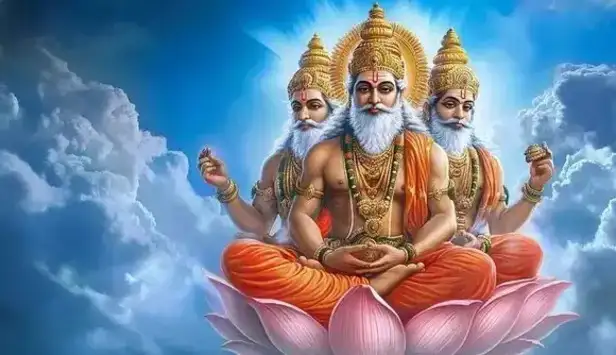
Rightly understood, Brahma’s four heads represent the four levels of ego deception binding our Souls to the Wheel of Karma — the four ego-manufactured veils or blindfolds we must remove to vanquish Apasmara. Those four blindfolds are 1) Manas (believing in and valuing the world the body’s senses perceive), 2) Chitta (clinging to the wrong-minded past-learning in the Ego’s unconscious “storehouse”), 3) Ahamkara (identifying with and seeking love, peace, and joy through the ego-authored self-concept), and 4) Buddhi (valuing worldly learning, knowledge, and judgments over spiritual wisdom and guidance).
According to the Hindu legends, Brahma had five heads until Shiva cut one of them off. Shiva cut off the fifth head because Brahma lusted after Sarasvati — the Cosmic Ocean of God’s pure communications (the “sea of glass like unto crystal” John sees surrounding the Throne of God). Brahma — the Great Deceiver of humankind — tried to pollute those communications, in other words, which Shiva (protecting the Truth) prevented.
That Ezekiel sees Brahma’s four faces as “neshers” — vultures, not eagles — should tell us they aren’t godly. Vultures (like the ego) feed on the rotting flesh of the dead.

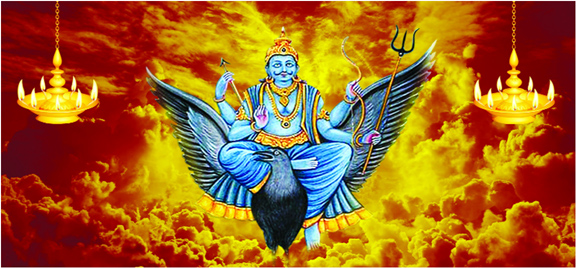
In the Hindu pantheon, the “deva” with a vulture vahana is Shani, the god of karma and justice. What little I’ve read about Shani-dev characterizes him as a helpful force facilitating “purification through suffering” and/or “justice through punishment of past misdeeds.” Both of these wrongminded “religious” concepts were devised to deceive us into erroneously (and fearfully) equating salvation with pain and suffering. What we fear, we avoid — at all costs. And that is indeed Satan’s chief aim. As long as we fear God and salvation, we won’t go anywhere near the ego-eviscerating path of bowing down.
We haven’t yet talked about Shesha, the multi-headed serpent acting as Vishnu’s water-palanquin in the image I’ve shared a few times. In the Puranas, Shesha is said to balance all the planets of the universe on his cobra-hoods, as well as to constantly sing the glories of Vishnu from all his mouths (like the Living Beings in John’s vision). His name means “remainder” or “he who remains,” because (according to the lore) even as the world is destroyed at the end of each (of four prophesied) kalpas, Shesha shall remain as he ever was.
In the allegorical Mahabharata epic, Shesha is the son of Kashyapa (“anointing to protect”) and Kadru (“the Great Purusha’s pole-star”), making the meaning of his parentage pretty obvious. The allegory says that Shesha was the first of a thousand snakes born to Kadru, the next three of which (in order) were Vasuki, Iravati, and Taksaka. Very briefly, Vasuki is the snake coiled around Shiva’s neck; Iravati is the mother of Airavata, King Indra’s vahana; and Taksaka was used by the Devas and Asuras to churn the Ocean of Milk (as illustrated below).

As the story unfolds, Shesha becomes disgusted by the cruel acts of his brothers, leaves his mother and kin, and lives austerely and devotedly until his flesh disappears (not unlike Jesus). At one point, he asks Brahma that he be allowed to keep his mind under control while he continues his austerities. Impressed with Shesha’s discipline, Brahma agrees — but asks, in return, that Shesha go “underneath” to give Bhumi stability. This Shesha does, by supporting Bhumi (the first aspect of Lakshmi, pictured below) with his cobra-hoods.
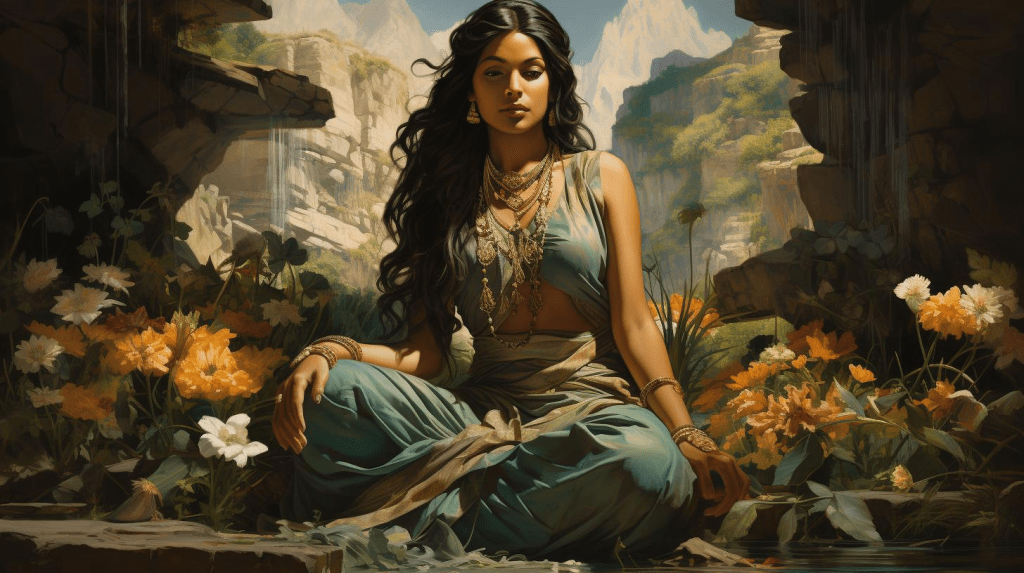
All of this is, of course, highly symbolic — and, therefore, generally misunderstood. Bhumi doesn’t represent the physical earth, as is generally presumed. She is the first “aspect” of Lakshmi — the “sister” on the first leg of the circle-journey. She’s associated with “earth” because she occupies the southwest quadrant of the Wheel — the first “leg” wherein we’re still largely earth-bound in perception. Bhumi doesn’t mean “land” or “earth,” as commonly presumed; it’s a compound of Bhu (to become) and mi (established). So, she’s the embodiment of Boaz and Jacim, the two pillars at the entrance of Solomon’s Temple.
To move to the second leg, she must churn the primordial ocean (of ego thought) to bring down the living water of Ishanna. To do this, she must awaken Taksaka, the king of the Nagas, to do the job. In Sanskrit, Taksaka can mean either “fashioner of Purusha” (taksa-ka) or mighty arrow (tak-saka), so Taksaka probably represents the Arrow of God, which might be Kundalini, the serpent-fire coiled within us at the start of the journey, or something else. Bumi awakens Taksaka by establishing the four pillars of dharma as her foundational supports.
But wait. Because taksa also is a form of ksan, which means “auspicious instant,” whilst ka (as indicated) is Sanskrit shorthand for the Great Purusha. So, Taksaka represents the Holy Instant, which makes total sense, in light of the allegorical evidence.
According to the allegories, Taksaka:
–dwells in Patala, the realm of the Purusha, underneath the illusion.
–fabricated the atonement infrastructure as “carpenter” of the gods.
–is the holy power that churns the Ocean of Milk.
All of these attributes describe the Holy Instant, which momentarily reverses our inverted perception of reality.

This makes me wonder if the Arrow of God is, in fact, the Holy Instant. Rather than pursue it, let’s move on to Lakshmi’s second “aspect” — Dhana, the supposed goddess of wealth. Rightly understood, Dhana represents Artha — the second leg of the journey undertaken in the northwest quadrant; the quadrant governed by the Cosmic Wind Ezekiel saw coming out of the North. Sadly, Artha has come to mean “the pursuit of material wealth or advantage” in present-day Hinduism. Sadder still, “the pursuit of material wealth or advantage” has become — through egoic attitudes of entitlement “one of the four aims of a fulfilling life.”
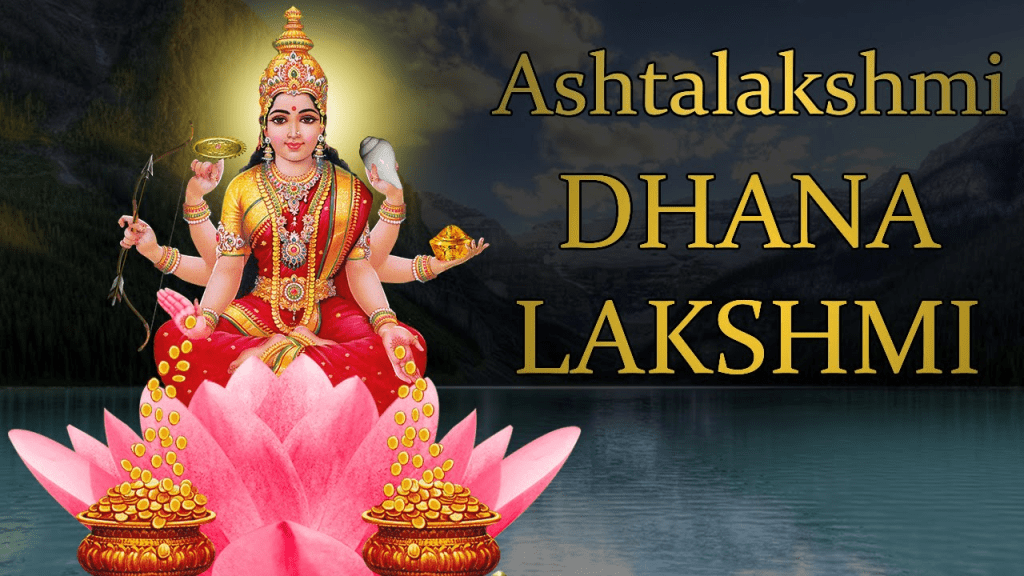
Artha does NOT mean “wealth,” as every Sanskrit dictionaries claims. A compound of arth (aim or purpose) and a (of God), the word basically means “the Holy Purpose of God.” So, essentially, Artha means the same as Metron–a holy function assigned to us by God. Artha also could be a marriage of ar (to reach or reaching for) and tha (the circle or moon) — in which case, it would mean “reaching for the Moon,” “reaching for the circle,” or reaching for the Atonement (which both the Moon and the circle symbolize).
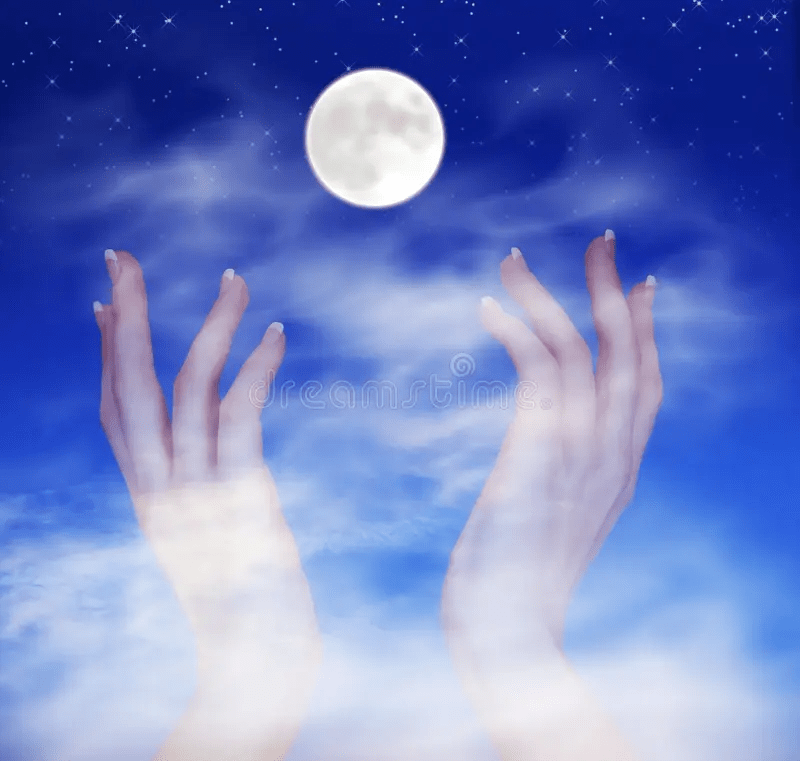
Either definition works, because it is in the second quadrant of the radiant Mandala that we begin the yajna offerings by which we achieve the purity of heart that opens “the door” to the right-hand side of the Wheel housing the third and fourth legs of the journey.
Dhana also allegedly means “wealth,” “money,” or “treasures.” Because the Ego Mind is obsessed with material gain. What Dha-na truly means is “bestowing the waters” (of Narayana). And, in the quadrant ruled By Vayu-Garuda, that is indeed the Holy Purpose assigned to us by God.
Or, as Course-Jesus says:
Only by fulfilling the function given you by God will you be happy. That is because your function is to be happy by using the means by which happiness becomes inevitable. There is no other way. Therefore, every time you choose whether or not to fulfill your function, you are really choosing whether or not to be happy. (ACIM, W-64.4:1-4)
Let me say again that pursuing worldly wealth and advantage is NOT an aim smiled upon by the gods. It is, in fact, a serious obstacle enlightenment-seekers must strive to overcome. How, then, could it be a leg on the Circle-Journey? The answer is: it can’t be and it isn’t, so don’t be deceived into believing otherwise.
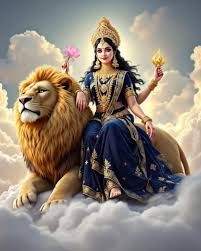
The aspect of Lakshmi representing the third leg of the journey is Dhyana, the lion-riding persona of Lakshmi-dev. Dhyana rides a lion because she has called upon the strength of God to reach the quadrant ruled by Ishanna — the northeast quadrant of Kama. She’s now in the Celestial Sphere on the right-hand side of the wheel, scattering the waters of grace and the seeds of higher knowledge from the “cistern of love” she’s accessed by forgiving the world.
Because Dhyana’s commonly depicted with baskets of seeds, she’s long been mis-associated with agriculture. Rightly understood, the seeds she possesses are the perception-shifting miracles she disperses across Indra’s Net through her ecumenical almsgiving. That her name is one of the six limbs of yoga should tell us as much. In Sanskrit, Dhyana means something like “fixed concentration” or “profound meditation.” Total mental fixation on the sound of Om, in other words. According to Patanjali, Dhyana is the “bridge” to Samadhi.

The fourth aspect of Lakshmi is Gaja — the “elephant Lakshmi” representing the quadrant of Moksha — the final quadrant on the circle-journey. She’s called “Gaja” because, having attained enlightenment, she now has the power to heal other Souls through Miracles of Grace. The Sanskrit word gaja has come to mean “elephant” in modern usage, but it’s actually a marriage of ga (the sacred-syllable or guru-word, Om) and ja (born or produced). In Course terms, the fourth quadrant is the Real World, as well as the “lawn” or “sacred grass” just outside the gates of Heaven.
Having reached the Real World, Gaja has joined the Great Crusade to free the world from the mind-imprisoning deceptions of Brahma. What exactly her role is at this point, I can’t really say. She might be a Christ-realized miracle-worker doing her part for the Great Crusade in a body (like Jesus was, at first), or she might be a bodiless Ascended Master helping out from above the illusion.
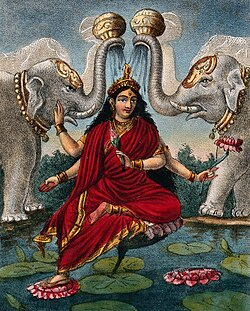
Now that we’ve met the four faces of Lakshmi, let’s return to the Mahabharata story of Shesha. When the allegory says Shesha goes “underneath,” it doesn’t mean he goes into the underworld fearful humans typically equate with hell. The illusion of earthly existence is the only hell there is. When, therefore, the story says Shesha goes “underneath” — it means he goes beneath the illusion to Patala (to borrow a Hindu term) — the “home” of the Soul located below the world perceived through the ego-body senses; that deep-down place in the mind Course-Jesus urges us to reach in meditation. In Workbook Lesson 49: God’s Voice speaks to me all through the day, he tells us how to find that deep inner “home”:
Listen in deep silence. Be very still and open your mind. Go past all the raucous shrieks and sick imaginings that cover your real thoughts and obscure your eternal link with God. Sink deep into the peace that waits for you beyond the frantic, riotous thoughts and sights and sounds of this insane world. You do not live here. We are trying to reach your real home. We are trying to reach the place where you are truly welcome. We are trying to reach God. (ACIM, W-49.4:1-8)
Let’s cut to the chase. If Shesha is Vishnu’s water-palanquin, then Shesha also is Shiva, the transcendent power of grace. And that partly explains why Shiva is often depicted with a snake coiled around his neck. As stated a few paragraphs back, the snake Shiva wears is Vasuki, a word-name said to mean “resembling a snake.”
Wrong again.
What Vasu-ki truly means is “knowing the Vasu” or “perceiving the Vasu.” So Vasuki represents the True Perception or Holy Vision restored to the Soul (Lakshmi) through Krishna, the Lamb of our innocence, who washes away the stain of guilt and sin from our Holy Mind.
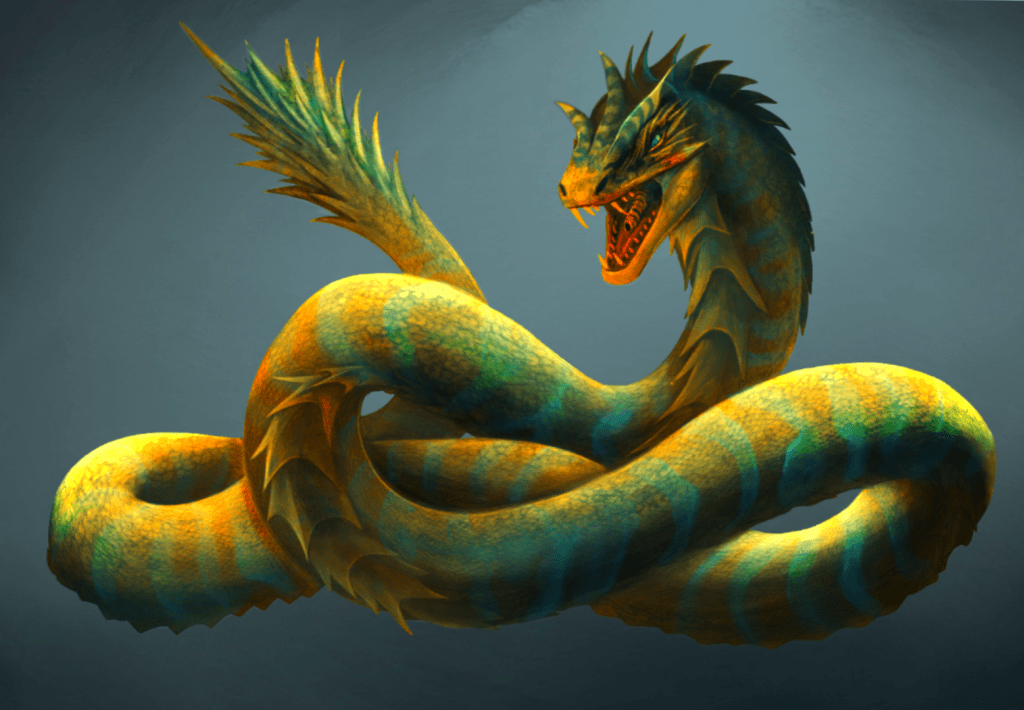
Or, as Course-Jesus affirms:
Innocence is not a partial attribute. It is not real until it is total. The partly innocent are apt to be quite foolish at times. It is not until their innocence becomes a viewpoint with universal application that it becomes wisdom. Innocent or true perception means that you never misperceive and always see truly. More simply, it means that you never see what does not exist, and always see what does. (ACIM, T-3.II.2:1-6)
According to the legends, Vasuki helped Shiva drink the poisonous Halahala or Kalakuta — the toxic fear-based thoughts (sin and guilt) that emerged when the gods used Taksaka to churn the Ocean of Milk. From this, we can ascertain that Shesha, Vasuki, Iravati, and Taksaka all symbolize the key atonement tools or powers entrusted to the Spirit of Grace (Shiva).
As we’re already worked out, Iravati is the wellspring and Taksaka is the Holy Instant. And we can now add Vasuki to the list as the blood of the Lamb.

How do I know Iravati represents the wellspring? From the allegorical and etymological evidence. A character in the Ramayana epic, Iravati is, most notably, the mother of Airavata, the vahana of King Indra. Whatever she represents should logically, therefore, be related to what Airavata represents (which the image below makes pretty clear).

In Sanskrit, “aira” means “nourishing water,” while “vata” refers to the ethers of the celestial realm. Ergo, Airavata represents the nourishing water coming down from the celestial realm ruled over (inertly) by King Indra. As King Indra’s “special atonement power,” Airavata represents the Living Water of God’s Grace the Red Ray dispenses to wash away the ego-barnacles of fear, guilt, and sin clinging to its scattered sparks.
Airavata’s mother would be, therefore, the source of those waters, which is what? The answer has to be the wellspring, fountain, or cistern, right? And this totally tracks with her name, which (when correctly translated), means “she who possesses the water.” Iravati is, in fact, a form of Sarasvati. So, Iravati represents the wellspring aspect of the Cosmic Ocean, which is indeed “the mother” of Airavata.
Makes sense, right?
Having identified the Vasu and the Cherubim, I went ahead and worked out which at-one-ment powers the Ashta-Nagas represent. Here’s my quick-and-dirty results:
Anatha, another name for Shesha = the limitlessness of Sadashiva
Vasuki = the blood of the Lamb
Taksaka = the Holy Instant
Karotaka = the Chalice of Redemption
Shankhapala = the Call to Awaken
Padma = the Lotus Path to restored rightmindedness
Mahapadma = the Lord of the Lotus Path, who is Vishnu-Krishna, the Vishwapurusha
Gulika = the “pit” of the Great Purusha, which is the wellspring or cistern (Iravati)
So, Iravati is there — but under another name.

Let’s move on, because we still need to talk about Parvati — Shiva’s “partner,” “consort,” or “wife,” whose vahana is a lion. This tells us straight-away that her “special atonement power” is the strength of God that restores Shiva’s Vision (by opening the spiritual eye). From this we can ascertain that Parvati represents the “active” force of God’s Will within the Temple, whereas Shiva (who spends most of his time meditating atop Mt. Kalash) represents the “banked” or “passive” aspects.
In her eight hands (as shown below), Parvati holds all the instruments of the Atonement, including Shiva’s Trishul. Symbolically, this signals that Parvati — the gentle strength by which the Atonement reopens our Spiritual Eye — works throughout the Temple on behalf of the Trinity Powers in the Upper World. In Ezekiel’s vision, Parvati’s energy is almost certainly the “lion’s head” the four Living Beings faced on the right-hand or eastern side of the circle — the direction from which the “lightning” of dawning enlightenment travels across the circle.
Parvati is, therefore, almost certainly another form of Ishana.

In the Hindu lore, Parvati is the mother of Ganesha, the “remover of obstacles” personifying the Om vibration. According to the legends, she made Ganesha out of ghee (clarified butter) in the form of a boy, to guard the door while she bathed. When Shiva came home, eager to see his wife, the boy refused him access. In anger, Shiva cut off his head — much to Parvati’s dismay. To make amends, Shiva replaced the boy’s missing head with the head of the first animal he came across — an elephant.
Yes, the story’s a bit silly, but it tells us that Ganesha — the Lord of the Om — was created by Parvati as an anointing fat to safeguard the undoing process of lustration, without Shiva’s initial involvement. By lopping off the boy’s human head and replacing it with an elephant’s, Shiva granted Ganesha the superior powers of Airavata. He promoted him, in other words, from being an inert protector of the Living Water to being its dispenser in the lower chambers of the Temple.
The subtext of the story is that Ganesha played no active role in the Atonement process until Jesus activated the whole mechanism by “opening the door” dividing the lower chambers of the Temple (the two western quadrants) from the upper chambers (the two eastern quadrants).
Let’s revisit Ezekiel’s vision — because that whole bit about the lightning is incredibly important. If my translations are correct, the lightning is generated by the fire of God’s “glory,” brought back to life (in our minds). And that lightning “is alive” with God’s joy at the return (to rightmindedness) of our scattered Souls. That lightning is, I believe, King Indra’s power of revelation — the power to wake us up instantly with a thunderbolt fired from his Vajra.
As I sat in meditation the other day, envisioning the Golden Circle, I also saw (very briefly) little bursts of lightening in spider-like webs (sort of like the image below).

As I witnessed these spidery flashes, I suddenly remembered something I’d read very recently about the light reaching from the east across to the west. Just now, I googled the key words, and it comes from the Bible. More specifically, it is something Jesus said in Matthew 26-28 concerning the Second Coming of Christ:
Wherefore if they shall say unto you, Behold, he [Christ] is in the desert; go not forth: behold, he is in the secret chambers; believe it not. For as the lightning cometh out of the east, and shineth even unto the west; so shall also the coming of the Son of man be. For wheresoever the carcase [the lifeless body] is, there will the eagles be gathered together.
The lightning cometh out of the east, because that is the direction guarded by King Indra. And it is Indra (in the Hindu form of the curriculum) who guards the eastern gate between Jerusalem and Eden.
This tells us that Indra’s Vajra dispenses God’s gift of Direct Revelation with the impact of a thunderbolt–at the behest of Christ, as Course-Jesus explains below:
Revelations are indirectly inspired by me because I am close to the Holy Spirit, and alert to the revelation-readiness of my brothers. I can thus bring down to them more than they can draw down to themselves. The Holy Spirit mediates higher to lower communication, keeping the direct channel from God to you open for revelation. Revelation is not reciprocal. It proceeds from God to you, but not from you to God. (ACIM, T-1.II.5:1-5)
In the citation from Matthew, notice that Jesus used the same phraseology as Ezekiel. The “carcase” or “lifeless body” is the human body, which God did not create or “give life.” Like the Hebrew word nesher, the Greek word translated as “eagles” (aetoj) can also refer to vultures. And that definition makes more sense here, given that eagles don’t usually feed on carrion in groups. That said, it’s also possible the eagles he speaks of are the enlightened Souls circling overhead (in a manner of speaking) in the circle’s fourth quadrant of Moksha.
As I see it, the lightning symbolizes the Light of Truth reaching across the Dharmachakra from Lord Indra’s Vajra in the east to light our way home. It can “zap” us in the Holy Instant and wake us up right away, or it can gently and gradually brighten as we make our way around the circle. Either way, that lightning is the symbolic thunderbolt King Indra’s Vajra discharges. It might also be the proverbial “lamp” Jesus brought into the world when he opened “the door” between the circle’s third and fourth quadrants.

Or, as he explains in the Course:
My brother, you are part of God and part of me. When you have at last looked at the ego’s foundation without shrinking you will also have looked upon ours. I come to you from our Father to offer you everything again. Do not refuse it in order to keep a dark cornerstone hidden, for its protection will not save you. I give you the lamp and I will go with you. You will not take this journey alone. I will lead you to your true Father, Who hath need of you, as I have. Will you not answer the call of love with joy? (ACIM, T-11.in.4:1-8)
Okay, so … we’ve so far established that the four Living Beings represent the four “aspects” of Lakshmi, the ascending Soul; and those “aspects,” in turn, signify the four “legs” of the Soul’s circle-journey: Dharma, Artha, Kama, and Moksha. We also know, from earlier studies of Revelations, that those four Living Beings send forth the four “horses of God” (the asvina in Hinduism) when the seals are broken. They also sing, day and night, the praises of God, because they are part of the Cosmic Choir.
I hope you found this useful. Until we meet again, Om Hari Om and Namaste.
 The Holy Meeting Place
Leave a comment