About a year ago, my husband and I were shopping at our favorite Indian market — something we used to do once a month or so to restock the larder. While we were perusing the frozen-food cases on the final aisle, an elderly Indian gentleman stopped his cart behind us. “Do you like Indian food?” he asked in a friendly, lightly accented voice. “Do you not find it too spicy?”
“I don’t like it too spicy.” I turned round to face him. “And, to be honest, my mouth likes it more than my stomach.”
He laughed through missing front teeth. “I have the same problem, now that I’m older.”
I’m not sure how the conversation steered its way from indigestion to God, but it did — and very quickly. The gentleman and I chatted for several minutes, while my saintly spouse herded other customers around us. We were well into our intense discussion before I got the feeling my new friend didn’t understand some of my references to the Vedas.
“Are you not Hindu?” I inquired, brow furrowed.
“I’m Muslim,” he sheepishly replied. “But I was raised Catholic, and I’m very open-minded.”
“Oh,” I said. “I don’t know much about Islam — and I haven’t read the Qu’ran … YET. But I do believe it was divinely revealed to Muhammed.”
“I happen to have a copy in my car — in English,” he said, brightening. “If you’d like to read it, I would be happy to go out and get it.”
“I’d like that.” I was truly interested, but also concerned about the frozen food thawing in my cart. “But maybe we ought to finish our shopping. And, if we chance to meet again before we both leave, I’ll take you up on your very kind offer.”
We did meet again — in the checkout line. He made sure of it. And he gave me not one, but two copies of the Holy Qur’an. One abridged and the other more complete. Aware our meeting was no accident, I started reading the abridged version that night. As I read the introduction by Wahiduddin Khan, one of the translators, two things stood out. The first is that (according to Mr. Khan) the Divine Reality explained in the Quran pre-exists in man at the subconscious level. And, the storage container preserving those subconscious memories in the dream-realm is what Course Jesus refers to several times as “the storehouse” and once as “the golden treasury.”
Of this storehouse, he says in one place:
Take from His storehouse, that its treasures may increase. His lilies do not leave their home when they are carried back into the world. Their roots remain. They do not leave their source, but carry its beneficence with them, and turn the world into a garden like the one they came from, and to which they go again with added fragrance. Now are they twice blessed. The messages they brought from Christ have been delivered, and returned to them. And they return them gladly unto Him. (ACIM, W-159.9:1-7)

“The message of the Quran is not, therefore, something which is alien to man,” Mr. Khan wrote. “It is in fact a verbal expression of that same Divine Reality which is in consonance with man’s own nature and with which he is already familiar. The Quran explains this by saying that those born in later times were all initially born at the time of the creation of Adam and, at that time, God had directly addressed all these human souls.”
As explained in my post on Genesis, Adam originally meant “red” in Hebrew. So, the opening chapters of the Qur’an and Bible are allegorical accounts of God implementing His Great Plan to bring the scattered sparks of the Red Ray back to their original state of “at-one-ment.”
Rightly understood, the level of Self-knowing from which we perceptually descended into material unreality still resides in the Golden Treasury housing the Soul’s memories of God and Heaven.
The second thing that stood out was this astute observation by the late Mr. Khan: “The Quran does not follow the pattern of the traditional didactic book. In fact, when the average reader picks up the Quran, it appears to him to be a collection of fragmentary statements. Apparently this feeling is not unreal. But this arrangement of the Quran is not due to any shortcoming, but is rather in conformance with the Quranic plan of retaining its original form in order to fulfill its purpose of conveying the message of truth to the reader who may, in his forays into the scriptures, read only one page, one verse or one line at a time.”
Mr. Khan was right. The repetitions ARE intentional. Rightly perceived, they are “foils” for the Ego Mind, which employs various sneaky tactics to prevent us from learning the At-one-ment curriculum. And one of those tricks is convincing us that spot-reading the theoretical teachings of our chosen spiritual path is as good as reading and studying those teachings, chapter and verse.
Reason would tell us otherwise, but the Voice of Reason and the Voice of Deception never occupy the same mental space simultaneously. The presence of one invariably keeps the other at bay.
What’s all this got to do with the Rigveda’s Sixth Sukta? You will have the answer shortly. Not a hymn addressed to King Indra and the Maruts, as long professed, the Sixth Sukta is about the storehouse, the yoke, the Circle of Forgiveness, and the Holy Relationship we restore in that Circle. The Maruts are never mentioned, although Indra and Hari are.
As usual, we’ll tackle the narrative teaching line by line, word by word, and/or syllable by syllable, as necessary.
In transliterated Sanskrit, Rv 1.6:1 reads: yuñjanti bradhnam aruṣaṃ carantam pari tasthuṣaḥ rocante rocanā divi. According to my external research and internal guidance, those words translate as follows:
Yoke together in the presence of the Holy Treasures of the Red Ray to obtain knowledge of the endless circle of True Forgiveness shining within the luminous sphere of celestial order.
My word-for-word definitions:
yunj-anti = yoke together in the presence of
bra-dhnam = the Holy Treasures
arusam = of the red ray
car-antam = to obtain knowledge of the endless
pari = circle
tasthu-sah = of True Forgiveness
rocante = shining within
rocana = the luminous sphere
divi = of celestial order
Quite the opening salvo, wouldn’t you say? And uncannily like the Course in language. “Holy Treasures,” “the endless circle,” and “the Sphere of Celestial Order” are all phrases used by Course-Jesus. Let’s start with the “endless circle” which Course-Jesus calls the Golden Circle, the Circle of Atonement, and the Real World. Twice in the Text, Jesus uses the particular phrase “endless circle” — but only once is it in reference to the circle mentioned herein. Because it sets the tone for what this Vedic teaching actually communicates, I’ve quoted his explanation below:
Beyond the body that you interposed between you and your brother, and shining in the golden light that reaches it from the bright, endless circle that extends forever, is your holy relationship, beloved of God Himself. How still it rests, in time and yet beyond, immortal yet on earth. How great the power that lies in it. Time waits upon its will, and earth will be as it would have it be. Here is no separate will, nor the desire that anything be separate. Its will has no exceptions, and what it wills is true. Every illusion brought to its forgiveness is gently overlooked and disappears. For at its center Christ has been reborn, to light His home with vision that overlooks the world. Would you not have this holy home be yours as well? No misery is here, but only joy.
All you need do to dwell in quiet here with Christ is share His vision. Quickly and gladly is His vision given anyone who is but willing to see his brother sinless. And no one can remain beyond this willingness, if you would be released entirely from all effects of sin. Would you have partial forgiveness for yourself? Can you reach Heaven while a single sin still tempts you to remain in misery? Heaven is the home of perfect purity, and God created it for you. Look on your holy brother, sinless as yourself, and let him lead you there.
Course-Jesus also uses the specific phrase “sphere of celestial order,” but only once, in the front section delineating Miracle Principles. With regard to this mysterious “sphere,” he says:
I inspire all miracles, which are really intercessions. They intercede for your holiness and make your perceptions holy. By placing you beyond the physical laws they raise you into the sphere of celestial order. In this order you ARE perfect. (ACIM, T-1.I.32:1-4)
As I understand it, the “sphere of celestial order” refers to the right-hand side of the Dharmachakra (the Wheel of Earthly Existence) rather than Heaven-proper. The Upper World governed by the Trinity powers, that two-part “sphere” houses the right-hand quadrants, the palanquin, the wellspring, the Resting Place, the storehouse of Holy Treasures, and the Throne of God.
The treasures found in the storehouse are the gifts God bestowed universally when he created the Sonship, together with the Soul’s unconscious memories of Divine Reality, as well as all that happened in the original dream of time– everything we did, learned, and forgave to awaken in the original Holy Instant. And those memories include all the “miracles” we gave and received. In the repeating dream replays we perceive as earthly life The Holy Spirit holds those memories in trust for us in the Holy Resting Place. Technically speaking, that storehouse is the Soul’s unconscious mind, which sits underneath the Ego unconscious containing our chitta. To access the storehouse, we have to clear the ego’s chitta — or bring the storehouse to the fore temporarily. And that’s the function the miracle plays, as Course-Jesus explains.
Miracles, he tells us, reverse the order of our unconscious “storehouses.” By this, he means that the miracle moves the ego’s “polluted-water chitta storehouse,” which is usually on top, to the rear, and the Soul’s “pure-water miracle storehouse,” which is usually underneath, to the fore for a few moments. This helpful little shuffle lifts us into the Celestial Sphere momentarily (in the Holy Instant), allowing us to glimpse the spiritual purpose behind what’s happening, thereby correcting the insane and upsetting way the Ego Mind would have us interpret the situation (through its pre-programmed chitta).
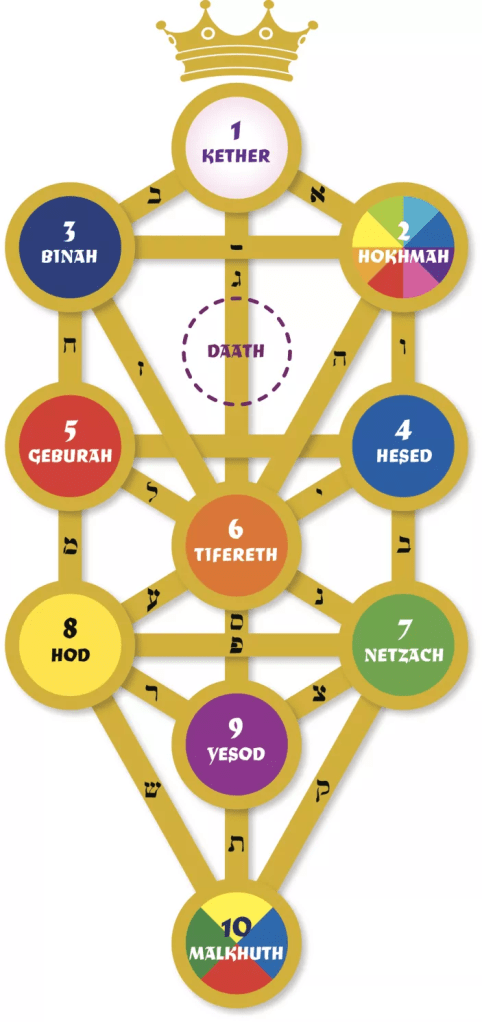
The ego’s cistern is the broken cistern referenced in Jeremiah 2:13, whereas the cistern of love feeds the wellspring watched over by Nisrok. If we look again at the Kabbalistic Tree of Life, we can pinpoint the location of these divine containers. Netzach is where we find the wellspring, while Tifereth is the storehouse. And Da’ath is the Heart of God beyond the dream.
In Chapter 14 of the Text, Jesus discusses the Circle of Atonement at length. I suggest you click through the link and give it a read, because it provides very useful information for sincere truth-seekers.
Let’s move on to the Sukta’s second line, which reads: yuñjanty asya kāmyā harī vipakṣasā rathe śoṇā dhṛṣṇū nṛvāhasā ketum. For those keeping track, the word ketum belongs here, rather than at the start of the next line (as per Max Muller). When correctly configured, the line translates as follows:
Yoke together in the ultimate resting place rendering the Hari coming from the Holy Instant — the chariot of the bay horse supporting the strength arising from the peace and joy of the Great Rays (or Lamps of God).
My word-for-word definitions and syllable breaks (for the skeptical linguists out there):
yunj-anty = yoke together in the ultimate
asya = resting place
kamya = rendering
hari = Hari
iti = arising from
vipa-ksasa = the instant of insight (the Holy Instant)
rathe = the vehicle or chariot
sona = of the bay horses
dhrsnu = supporting or maintaining the strength
iti = arising from
nrva-hasa = the peace and joy
ketum = of the Great Rays and/or lamps of God
We talked about the word-name “Hari” last time. If you missed that discussion or forgot, Hari is a title generally assigned to Lord Vishnu in modern-day Hinduism. And that’s a correct association, for the most part. Like most Sanskrit words, Hari conveys slightly different meanings depending on how we divide the syllables. Presumed to mean “remover of obstacles,” Hari actually means “the ego-destroying power of Kamadeva” when divided as Har-i. When divided as Ha-ri, it means “the sound of the Greater Light,” in reference to the tonal frequency of universal holiness the Holy Spirit (Vishnu-Krishna) transmits to dissolve the unreal thoughts and beliefs blocking our awareness of God’s indwelling presence. So, Hari is, in fact, the Om vibration, which is BOTH the remover of obstacles and the destroying power of Kamadeva.
Hence, the popular mantra Hari Om.
And, as the rishis state in Rv 1.6:2, Hari-Om arises from the Holy Instant when we yoke our minds together in the Holy Resting Place. Even more interestingly, this verse equates the Holy Instant with the (fourth) chariot of the bay and grizzled horse(s) seen by the Hebrew prophet Zechariah — the horse or horses “that go everywhere,” according to the Angel of the Presence.
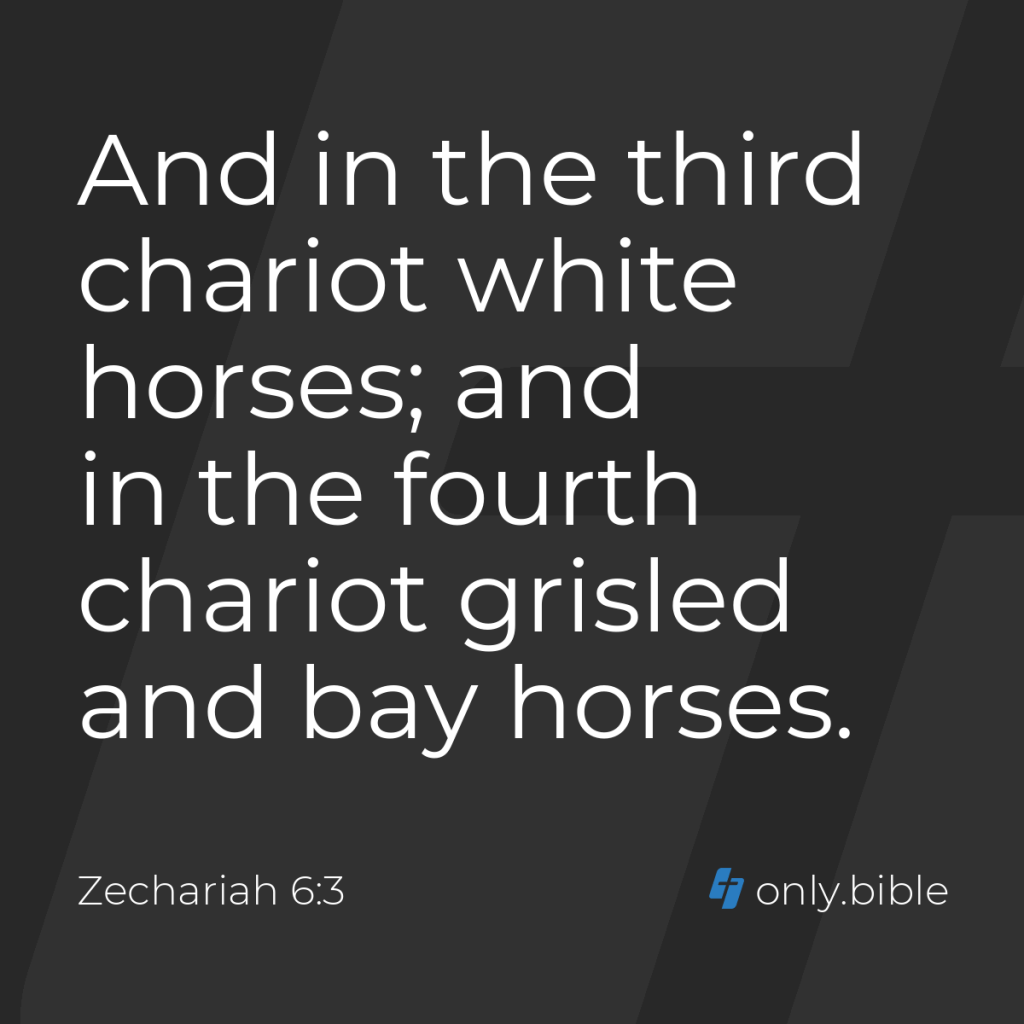
And, here again, the Rigveda helps us solve a longstanding Biblical mystery. The bay horses “that go everywhere” represent the power of holiness, which Course-Jesus speaks of often. That holiness can only be perceived through Christ’s Vision, as he tells us bbelow:
Yet while you wish to stay in hell, how could you be the savior of the Son of God? How would you know his holiness while you see him apart from yours? For holiness is seen through holy eyes that look upon the innocence within, and thus expect to see it everywhere. And so they call it forth in everyone they look upon, that he may be what they expect of him. This is the savior’s vision; that he see his innocence in all he looks upon, and see his own salvation everywhere. He holds no concept of himself between his calm and open eyes and what he sees. He brings the light to what he looks upon, that he may see it as it really is. (ACIM, T-31.VII.11:1-7)
Christ’s Vision, he says elsewhere in the Course, can only be achieved through God’s strength. The two, in fact, go hand-in-hand. And the Sanskrit word sona, like the Hebrew word amot — the word translated as “bay” in the Old Testament — can mean “of a strong reddish-brown color” or simply “strong.” And that certainly correlates with the description herein of the bay horses “supporting the strength” arising from the peace and joy of the Great Rays — the mysterious ketu mentioned many times in the Vedas.
All of this brings to mind Workbook Lesson 42: God is my strength. Vision is His gift, wherein Course-Jesus says:
The idea for today combines two very powerful thoughts, both of major importance. It also sets forth a cause-and-effect relationship that explains why you cannot fail in your efforts to achieve the goal of the course. You will see because it is the Will of God. It is His strength, not your own, that gives you power. And it is His gift, rather than your own, that offers vision to you.
God is indeed your strength, and what He gives is truly given. This means that you can receive it any time and anywhere, wherever you are, and in whatever circumstance you find yourself [like the bay horses that “go everywhere”]. Your passage through time and space is not at random. You cannot but be in the right place at the right time. Such is the strength of God. Such are His gifts.
Let’s move on to the next verse (Rv. 1.6.3), in which the rishis parrot everything Jesus just explained. The line reads: kṛṇvan aketave peśo maryā apeśase sam uṣadbhir ajāyathāḥ anu. Based on my painstaking research, the verse translates approximately as follows:
Act to extend Shiva’s Vision in the quarter belonging to Kamadeva, the formless holiness gathering together the waters delivering Anu.
My definitions:
kr-nvan = act to extend
aket-ave = Shiva’s vision = Christ’s Vision or Miraculous Perception (in Course terms)
peso (pes-sa) = in the quarter
marya = belonging to Kamadeva
apesas-e = the formless holiness
sam = gathering together
usadbhir = the waters
ajayathah = delivering
Anu = Anu
The quarter belonging to Kamadeva is the third quarter of Kama, the Northeast Quadrant governed by Ishanna. Herein we learn that Kamadeva represents the formless holiness Course-Jesus spoke about earlier. So, I’m not wrong about Kamadeva being something greater than the god of human love and lust.
In this segment, the rishis advocate the same practice Course-Jesus describes below:
Come therefore unto me, and learn of the truth in you. The mind we share is shared by all our brothers, and as we see them truly they will be healed. Let your mind shine with mine upon their minds, and by our gratitude to them make them aware of the light in them. This light will shine back upon you and on the whole Sonship, because this is your proper gift to God. He will accept it and give it to the Sonship, because it is acceptable to Him and therefore to His Sons. This is true communion with the Holy Spirit, Who sees the altar of God in everyone, and by bringing it to your appreciation, He calls upon you to love God and His creation. You can appreciate the Sonship only as one. This is part of the law of creation, and therefore governs all thought. (ACIM, T-7.V.11:1-8)
The rishis also mention “the waters delivering Anu.” And by Anu, do they mean the ancient Mesopotamian god of the same name? The answer is: Yes and no. In Rigveda 8.7, the rishis describe Anu as tri-tasya — a Sanskrit word meaning “the three-part Name of God.”
We talked about Anu in an earlier post. To refresh your memory, Anu (or An) was the Father of the Gods in ancient Mesopotamia. As such, Anu ruled the heavens (the celestial sphere) as the Divine Ambassador for Cosmic Order. Like Indra, Anu was personified as a king who delegated his power and authority to a younger deific power. In Anu’s case, the junior powers were named Enlil and Marduk. Together, Anu, Enlil and Marduk formed a divine triad, which ruled over the other deities in the celestial sphere. In Akkadian, Anu means “sky” or “heaven” (the celestial sphere), but in Sanskrit, the word is variously defined as “atom,” “molecule,” “subordinate,” “the individual soul,” and/or “spiritual union.”
In my earlier series (on the old blog) about Rv. 8.7, I speculated about the meaning of the three letters, A-N-U. I now better understand that those letters represent the “Trinity of the Name” — the three “aspect powers” of the Name of God working together in the celestial sphere to restore the Truth of our Being.
Those three “aspect” powers dwell together inside the sphere of celestial order — the firmament forming the “body” of Anu, the Holy Trinity of the Atonement or Second Covenant.
What are those three powers? I can only speculate at this point, but I suspect there’s some overlap with the presumed meaning of the letters making up AUM, the Hindu version of Om.
Anu is mentioned again in the Sukta’s next line, which reads: ād aha svadhām anu punar garbhatvam erire dadhānā nāma yajñiyam vīḻu cid ārujatnubhir guhā cid indra vahnibhiḥ avinda usriyā. Max Muller split this verse into two metered lines, when it’s actually one long stanza, broken by a semi-colon. By my calculations, Rv 1.6.4 should translate as follows:
Strive to awaken the soul-wind of Anu to return to the womb (or egg) of the Higher Self, the cistern of love bestowing the treasures of the Name sustaining the knowledge firmly fixed in the thoughts not diseased by fear; the Heart-Cave thoughts King Indra conveys in the likeness of the One full of life-giving light.
My definitions:
ad = Strive
aha = to awaken
svadham = the soul-wind of
anu = Anu
punar = to return to
garbha-tvam = the womb (or egg) of the Christ Self
eri-re = the cistern of love
dadhana = bestowing the treasures of
nama = the Name
ya-jniyam = sustaining the knowledge or wisdom
vilu = firmly fixed in
cid = the thoughts
arujatnu-bhir = not diseased by fear
guha = heart-cave
cid = thoughts
indra = King Indra
vah-nibhih = conveys in the likeness of
avin-da = the One full of life-giving
usriya = light
To reclaim our holy treasures from the aforementioned “storehouse,” we must awaken the Soul-wind of Anu. The storehouse is, therefore, also what various spiritual teachings call the golden womb, the golden egg, the cistern of love, and the Heart Cave.
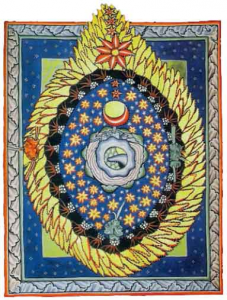
It took awhile to work out that erire means “cistern of love.” But I’m glad I made the effort, because the erire mentioned herein is the very same “cistern” mentioned in the Old Testament books of Proverbs (5:15), Jeremiah (2:13 and 36:16), and Ecclesiastes (12:6).
In Proverbs 5, we are told (in the KJV translation):
Drink water from your own cistern,
flowing water from your own well.
Should your springs be scattered abroad,
streams of water in the streets?
Let them be for yourself alone,
and not for strangers with you.
Let your fountain be blessed,
and rejoice in the wife of your youth,
a lovely deer, a graceful doe.
Let her breasts fill you at all times with delight;
be intoxicated, always in her love.
The words “wife,” “doe,” and “breasts” in this verse felt wrong to me, so I did a little back-to-the-source etymological research. Here’s what I learned: The Hebrew word translated herein as “wife” was ishshah, a compound of “ish” and “shah.” “Ish” has come to mean “man” or “husband,” but originally meant “strength,” while “shah” initially referred to seeing, beholding, mental focus, or vision. The word ishshah first appears in Genesis, in reference to Eve, who (as I’ve explained) wasn’t an actual woman or wife any more than Adam was an actual man. Eve represented the Spirit or Breath of God (the soul-wind or Breath of Life) within Adam, the spark of the Red Ray shining within human beings.
The word translated as “youth” actually means “earlier or previous state,” and the line rendered as “lovely deer, a graceful doe” is a complete Anglican botch-job. The Hebrew word changed to “lovely” was ahab, which describes not loveliness, but divine or brotherly love; the word translated as “deer” was ayeleth, which (like re’em) probably means gazelle — the “grace-full” vahana or vehicle of Vayu, the Cosmic Breath; and the words rendered as “graceful doe” more accurately translate as “the grace to ascend or spiritually profit.”
This brings us to the word translated by the Anglican priests as “breasts.” According to Strong’s, the word was dad (in transliterated Hebrew), which translates as “breast” or “bosom” in the symbolic sense of providing nourishment; or — in this case — the Soul-sustaining “milk” of Higher Knowledge. The Hebrew word for the physical female breast is shad, not dad. And, according to some speculators, the vowel-less word transliterated as dad should have been dod, meaning “love” or “beloved.” I’m inclined to agree, given how corrupted the KJV translation of these two lines proved to be.
So, the section of Proverbs 5 reading “Let your fountain be blessed, and rejoice in the wife of your youth, a lovely deer, a graceful doe; let her breasts satisfy thee at all times; and be thou ravished always with her love” (which makes no sense spiritually) should read more along these lines:
Let your fountain be blessed, and rejoice in the strength and vision of your previous state of divine brotherly love gently conveying the grace to ascend; love (each other) to slake the thirst in the season of error [our time on earth], perpetually in the covenant of love.
Let’s move on, because we still need to talk about Guha, the “Heart-Cave” or “Cave of the Heart” — a phrase unknown to me hitherto. Curious to know if Heart-Cave was “a thing,” I looked it up and was elated to learn it’s not only “a thing” — it’s a vital concept in Hindu philosophy discussed not only in the Rigveda (as we now know), but also in the Puranas, the Upanishads, and the Anu Gita. Like the better-known Bhagavad Gita (the Song of God), the lesser-known Anu Gita (the Song of Anu) is part of the Mahabharata epic.
The Wikipedia article discussing the Anu Gita erroneously defines “anu” as “subordinate to,” implying the Anu Gita is less important than the Bhagavad Gita. A quick read of the Wikipedia overview suggests that the Anu Gita is to the Bhagavad Gita what the Course’s Workbook and Manual for Teachers is to the theoretical Text. Yes, they are “secondary” or “supplemental” to the main body of the teachings, but no less important. As I understand it, the Anu Gita explains how to apply, day to day, the philosophical ideas presented by Lord Krishna in the Bhagavad Gita.
Okay, so … what exactly is the Heart-Cave or Cave of the Heart? Based on my research and experience, Guha refers to the innermost-uppermost dwelling-place of the Aja — the true, divine, and eternal “Living Being,” “Universal Soul,” or “unembodied Holy Self” facilitating remembrance of our Oneness and Sameness with God. In meditation, it is inside this Heart-Cave that we experience the radiant presence of God and Christ, eternally united in the cause-and-effect relationship King Indra — God’s regent in the dream — preserves and protects. And by the miracle-power of that all-inclusive Presence and/or “covenant,” we are guided back “home” to Heaven.
Because this concept is so incredibly important, let’s look again at what the Vedic scribes say in this verse regarding the Heart-Cave.
Endeavor to awaken the soul-wind of Anu to return to the womb (or egg) of the Christ Self, the cistern of love bestowing the treasures of the Name sustaining the knowledge firmly fixed in the thoughts not diseased by fear; Heart-Cave thoughts King Indra conveys in the likeness of the One full of life-giving light.
Stated in slightly plainer language, we must hear the Om before we can return to the Hiranyagarbha, the bridge or passageway back to the Heart-Cave. As this teaching makes clear, that spiritual “egg” or “womb” also is the symbolic “cistern” discussed in the Bible — the storage tank or wellspring of Divine Love bestowing the Holy Treasures of “the Name.” And that three-part Name (Anu) “sustains the knowledge firmly fixed in the thoughts not diseased by fear.” The pure thoughts of the God Mind, they mean, uncontaminated by the Ego Mind’s insanity. And the vehicle for those thoughts in the dream is King Indra, God’s “regent” on earth.
Before we move on, let me point out that Course-Jesus never uses the phrase “Heart-Cave” (or even the word “cave”); he does, however, use the expression “Heart of God” several times in a remarkably similar context. Below are several examples:
On this side of the bridge to timelessness you understand nothing. But as you step lightly across it, upheld BY timelessness, you are directed straight to the Heart of God. At its center, and only there, you are safe forever, because you are complete forever. There is no veil the Love of God in us together cannot lift. The way to truth is open. Follow it with me. (ACIM, T-16.IV.13:6-11)
Perhaps you think that different kinds of love are possible. Perhaps you think there is a kind of love for this, a kind for that; a way of loving one, another way of loving still another. Love is one. It has no separate parts and no degrees; no kinds nor levels, no divergencies and no distinctions. It is like itself, unchanged throughout. It never alters with a person or a circumstance. It is the Heart of God, and also of His Son. (ACIM, W-127.1:1-7)
Thanks be to you, the holy Son of God. For as you were created, you contain all things within your Self. And you are still as God created you. Nor can you dim the light of your perfection. In your heart the Heart of God is laid. He holds you dear, because you are Himself. All gratitude belongs to you, because of what you are. (ACIM, W-197.8:1-7)
We are the holy messengers of God who speak for Him, and carrying His Word to everyone whom He has sent to us, we learn that it is written on our hearts. And thus our minds are changed about the aim for which we came, and which we seek to serve. We bring glad tidings to the Son of God, who thought he suffered. Now is he redeemed. And as he sees the gate of Heaven stand open before him, he will enter in and disappear into the Heart of God. (ACIM, W-pII.14.5:1-5)
Holy are you, eternal, free and whole, at peace forever in the Heart of God. Where is the world, and where is sorrow now?
Is this your judgment on yourself, teacher of God? Do you believe that this is wholly true? No; not yet, not yet. But this is still your goal; why you are here. It is your function to prepare yourself to hear this Judgment and to recognize that it is true. One instant of complete belief in this, and you will go beyond belief to Certainty. One instant out of time can bring time’s end. Judge not, for you but judge yourself, and thus delay this Final Judgment. What is your judgment of the world, teacher of God? Have you yet learned to stand aside and hear the Voice of Judgment in yourself? Or do you still attempt to take His role from Him? Learn to be quiet, for His Voice is heard in stillness. And His Judgment comes to all who stand aside in quiet listening, and wait for Him.(ACIM, M-15.1:11–2:13)
Everything he says suggests the Heart of God is our final destination — the final “leg” on our journey back to Heaven or Knowledge. Ergo, the Heart of God is the Sefirot of Da’at–the alpha and the omega, the beginning and the end.
Before we move on to the next verse, I want to share one more excerpt from the Course. In this passage, Jesus doesn’t use the specific expression “the Heart of God,” but he does use language highly resonant with the Vedic verse under discussion:
Today we ask of God the gift He has most carefully preserved within our hearts, waiting to be acknowledged. This the gift by which God leans to us and lifts us up, taking salvation’s final step Himself. All steps but this we learn, instructed by His Voice. But finally He comes Himself, and takes us in His Arms and sweeps away the cobwebs of our sleep. His gift of grace is more than just an answer. It restores all memories the sleeping mind forgot; all certainty of what Love’s meaning is. (ACIM, W-168.3:1-6)
Let’s now proceed to Rv 1.6.5, which Max Muller designated as 1.6.6 after erroneously breaking 1.6.4 into two separate verses. In transliterated Sanskrit, the verse should read: devayanto yathāmatim acchā vidadvasuṃ giraḥ mahām anūṣata śrutam indrena. Those words translate as follows:
The journey to the divine realm of Brahman, which varies according to intellectual capacity, clears the veil of deception blocking awareness of the Vasu, the voices singing the greater truth of Anu heard in the supreme eternal song of joy.
My definitions:
devayant-o = the journey to the divine realm of Brahman
yathamatim = which varies “according to intelligence” — i.e., our perception of God
accha = clears the veil of deception blocking
vidad-vasum = awareness of or knowing the Vasu
girah = the voices singing
maham = the greater
anu-sata = Anu-truth
srutam = heard
ind-rena = in the supreme eternal song of joy
This verse communicates a veritable boatload of useful information — when insightfully translated. Unlike Muller (and most others), I combined yatha and matim into one word after being “nudged” by my inner-guide to do so. Subsequently, I learned that yathamati is indeed a philosophical concept in Hinduism. Basically, the term refers to the subjective views of the divine we humans construct for ourselves through our individual intellects, perceptions, and beliefs. The Sanskrit word yathamati literally translates as “according to their intelligence.”
In the Course, Jesus similarly explains that the journey back to Heaven is highly individualized because our capacities to understand divine ideas also is highly individualized. Presumably, that’s why thousands of forms of the Holy Spirit’s curriculum are needed to get us all back to the bridge, door, or egg.
The concept of the Vasu is murkier. As I understand it, Vasu is an umbrella term for eight holy powers, celestial beings, or “Bright Ones” working as a team to wake us up. And in this verse we learn theirs are the voices making up the Cosmic Chorus of Om, the Soul Wind of Anu. According to the legends, these eight celestial beings initially served King Indra before moving under the auspices of Lord Vishnu. And that makes sense, given that Vishnu’s Krishna incarnation took over for Indra (in the Hindu model) after Jesus activated the Atonement Plan. In the Hindu legends and texts, the specific identities of these eight powers vary widely.
So, who are the Vasu and what do they do, apart from singing the Song of Heaven?
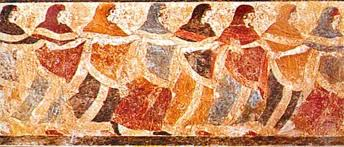
The short answer is: the Hindu equivalent of the Ogdoad, the eightfold powers worshipped by the ancient Egyptian Cult of Amen. The Ogdoad were also much discussed by Valentinus, the gnostic teacher who scribed the early Christian “Gospel of Truth.” More interesting still, “the Eight” are not only mentioned, but also praised by Jesus during his instructive performance of the Round Dance of the Cross, a worshipful ritual described in “The Acts of John”– an early 2nd-century Christian collection of Johannine narratives and traditions, long known in fragmentary form.
According to the Gnostic Society Library:
The traditional author was said to be one Leucius Charinus, a companion and disciple of John. The Acts of John is considered one of the most significant of the apocryphal apostolic Acts. It preserves strains of early oral traditions about the “beloved disciple” and sole apostolic author of a canonical gospel text.
The Acts of John describes several journeys of John, tales filled with dramatic and miraculous events, anecdotes and well-framed apostolic speeches. Many of these reveal strong docetistic tendencies in the John tradition, and at least one episode is really quite amusing (see section 60, the “tale of John and the bed bugs”).
I could devote a whole post to the Round Dance of the Cross, so let me say briefly herein that this “dance” was a ritualized re-enactment of the Circle of Forgiveness, which Jesus showed to his disciples the night before his arrest. In the narrative provided in “The Acts of John,” Jesus instructs his disciples to join hands in a circle, with him at the center. As they danced around him, he called out praises and riddles, to which his disciples replied (as instructed) “Amen.”
In the ancient Egyptian cult, Amen, Amon, or Amun was revered as the Lord of All and King of “the Eight.” Centered in the ancient city of Hermapolis, the Cult of Amen was most popular and powerful during the New Kingdom period (c. 1570 – 1069 BCE). But the cult and its temples were long gone and forgotten by the time the Holy Family settled in Hermapolis after their “flight into Egypt.” And it was there, I suspect, that Jesus 1) spent the “lost years” of his youth unaccounted for in the Bible and 2) met and wed his childhood friend, Miriam (whom he affectionately called “Magdala” — an Aramaic word meaning “tower”).

Knowing all this raises some interesting questions. Did Jesus know about Amen and “the Eight” because he grew up in Hermapolis? Did he learn about the Vasu while studying Natha Yoga in India during his 20s? Or did he know about this octet of Holy Powers because he posssesed the True Perception of a Christ-Realized Soul?

I vote for the third option — but all three are certainly possible. And there’s a fourth option as well, which is this: As a Christ-Realized Soul, trained yogi, and Jewish rabbi, Jesus had illuminated understanding of the visions described by the Hebrew prophets.
What do those visions have to do with the Vasu? We’ll get to that in a minute.
For now, let’s return to the Ogdoad, because clues to the true identities of the Vasu can perhaps be found in the ancient ruins of Hermapolis. Historians tell us the Ogdoad were arranged in four male-female pairs. The four pairs (and what they represent) are 1) Naunet and Nu (the Primordial Ocean and the Sky above the Ocean), 2) Heh and Huehet (the Vital Breath and Timelessness), 3) Kek and Kauket (Night and Day), and 4) Amun and Amunet (the Supreme Self and Everlasting Life).
In the Hindu pantheon, those same eight powers take the form of Nirriti and Varuna (the Primordial Ocean and the sky above), Vayu-Vishnu and Kubera (the Vital Breath and Timelessness), Soma and Surya (Night and Day), and Agni and Yama (the Supreme Self and Everlasting Life).
Some of these associations are debatable, but I stand by them; because what we’re looking at are the eight powers ruling the circle-journey; the four direction guardians and the four quadrant guardians, broken into adjacent pairings.
Let’s now look a little closer at the Anu of Mesopotamia. According to Digital Maps of the Ancient World — a pretty interesting website — Anu reigned supreme as the ultimate cosmic authority. “Envisioned as a majestic figure draped in shimmering robes and seated upon a celestial throne, he embodied the vastness and mystery of the heavens. Though distant from worldly concerns, Anu held the paramount position in the pantheon, fathering deities and setting the celestial machinery in motion. His enigmatic presence, a blend of regal power and unknowable secrets, left unanswered questions about his true role in the divine drama.”
This description makes Anu sound like the Mesopotamian equivalent of King Indra, wit shades of Rudra in the description — right down to “the unanswered questions about his role in the divine drama.” We’ve discussed Rudra — the “mightiest of the mighty” whose name means “Red Ray.”
As I understand it, Rudra is another form of Indra — the Hindu version of the Archangel Michael. As God’s regent in the dream-realm, Rudra-Indra-Michael watches over and directs the powers preserving the Established Order, while also carrying out God’s Will in the earthly realm. Rudra-Indra’s second in command is Shiva (Raphael), who carries out God’s Will through the gentle ego-destroying power of grace.
Subordinate to Shiva is Vishnu-Krishna (Gabriel), the spiritual messenger in the dream.
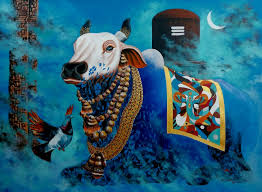
Let’s now compare the two images below. The first one depicts Rudra, looking down from Heaven, with Shiva foremost in his mind. The second depicts Lord Varuna offering “pooja” to Lord Shiva.


In both images, the “offering” being made to Lord Shiva is the Om vibration — the holy “glue” that holds Holy Creation together in Wholeness — as evidenced by the emblem on the black “lingam” before both figures. That “lingam” — known as the Shiva Lingam or Shivling — is as highly revered in Hinduism as it is misunderstood. It does not represent (as commonly espoused) male energy or the role of the phallus in creation, because “male” and “female” are ego-manufactured concepts, and the phallus — or any other body-part — plays no role whatsoever in divine creation.
Phallus-consciousness is, in fact, a serious obstacle to awakening, as any rightminded yogi will tell you.
What Shiva’s Lingam actually represents is the upward-pointing triangle of the Shaktona, the six-pointed star in Hinduism. And what that star represents, in turn, is the Purusha energy underlying and gradually seeping through to “penetrate” the Prakriti energy (the yoni) manifesting material unreality. The deeper the Purusha “phallus” penetrates our consciousness, the more the illusion fades, allowing us to see Divine Truth more and more clearly — through the Spiritual Eye facilitating Shiva’s Vision.
Shiva’s Lingam opens the Spiritual Eye, in other words. And that’s the reason 1) Shiva is so closely associated with the Spiritual Eye and 2) the Golden Triangle or Golden Pyramid representing the Shivling often has a single eye in the center.

Look again at the images above of Rudra and Varuna, taking note of the water in both — evidence that the Om vibration is indeed the Living Water that “washes away the sins of the world” — i.e., destroys wrongminded thought through “lustration” (removal of obstacles through ablution). Those symbols also suggest that the Om originates with Rudra-Varuna, and then flows downward into the Southern quadrants to empower the rising Shivling.
In case I haven’t explained this already, Varuna guards the Circle’s western direction, whilst Rudra-Indra guards the eastern point on the opposite side, across the Antimeridian line dividing the Wheel into northern and southern hemispheres.
All of this strongly suggests that Shiva is Indra’s arm in the world. That is to say, Shiva embodies the U aspect of the Trinity Name, operating inside the Temple through the power of grace. Proof of his role are the trident and bull closely associated with both Shiva and Anu. Nandi — the Bull of Heaven — represents not dharma (as commonly supposed) but God’s Will to end the dream, which we share as part of the Trinity.
That Anu holds two tridents suggests there are, in fact, two trinities (as I’ve long suspected): the Trinity of Perfect Creation (the Trinity of the first covenant in Heaven), consisting of Father, Son, and the Creative Force of Agape, and the trinity of the Atonement, the triune forces of the second covenant, consisting of the chief three atonement powers. Rightly understood, the second trinity is a mirror-image of the first and True Trinity.
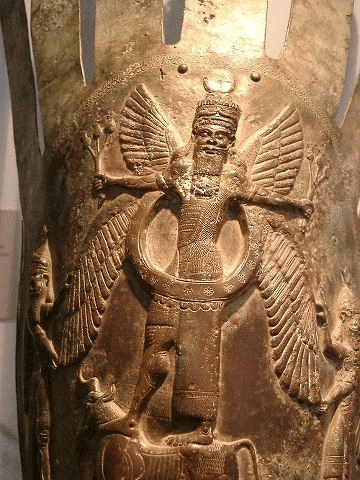
I could find nothing describing Anu’s tridents, but they appear in Mesopotamian carvings (as shown above) as being pomegranate-tipped — a symbol of the Blood of Christ, as well as resurrection into eternal life.
Comparatively, there is a great deal available about Shiva’s Trishul, only some of which agrees with what I know to be true. Typically, Shiva’s Trishul is depicted as a three-pronged, lyre-shaped trident with a two-headed, hourglass-shaped drum fastened underneath (as shown below). The drum is called Damaru, which translates as “giving or offering” (da) “in the desert or wilderness” (maru).
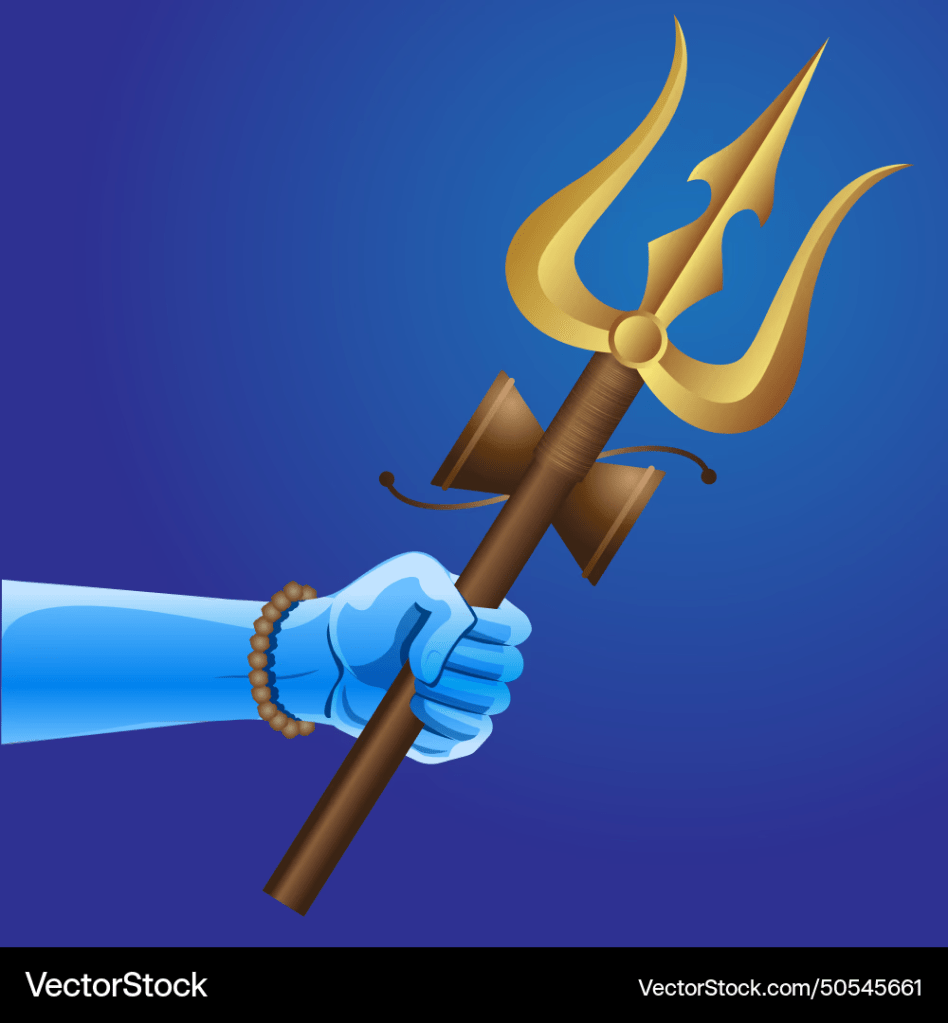
The first thing we need to get straight is that Shiva’s Trishul isn’t a “weapon”; it’s a symbol of the divine power and authority delegated to Shiva by Rudra-Indra. As the transcendent power of Brahman, Shiva personifies the ego-dissolving force Course-Jesus calls “the Atonement” and Christians call “saving grace.” As the popular Christian hymn by John Newton makes clear, Amazing Grace is a SOUND. Correspondingly, Shiva is sometimes called Aket, meaning “God’s Call.” He’s the mouth, in other words, speaking the Word of God. The Voice proceeding from that mouth is Vishnu-Krishna.
Rightly understood, Shiva is NOT the second power of the Trimuti, because there is no such “trinity.” As explained in earlier posts, Brahma (the Ego Mind) invented the Trimuti, to take God’s place as the “father-creator,” as well as to position himself above Shiva and Vishnu in the “divine hierarchy” he contrived. And just so we’re clear, Brahmanda — Brahma’s Egg — is NOT the Cosmic Egg or Golden Womb. Brahmanda is the false and fearful “void” we entered (outwardly) when we projected our split-away dream-consciousness out of the Hiranyagarbha (the Golden Egg or Cosmic Egg).
The confusion arises from the ego-induced level-confusion of the two terms “cosmic” and “primordial.” The Cosmic Ocean, which brings forth only Agape, holds the pure thoughts we share with God. The Primordial Ocean, which brings forth Material Creation and chaos, holds the thoughts we share with the Ego Mind. And the same is true for the two eggs.
To spell it out:
–Brahmanda is Brahma’s Egg, the Primordial Egg of Chaotic Material Perception (prakriti).
–Hiranyagarbha is the Golden Egg, the Cosmic Egg of the Established Order (Rta).
In a future post, we’ll explore the concept of the Cosmic Egg in greater depth, because it’s a fascinating and multi-layered subject deserving more space than I can give it here and now. Just be aware that the “embryo” inside the Golden Egg is the dream-bound Soul, preparing for metamorphosis. Our Souls never leave that egg. They only dream that they do.

Inside the Golden Egg, our Souls are thrice reborn. Their first rebirth is Soul-Realization (i.e, awakening enough to realize they are not body-inhabiting worldly beings, but egg-inhabiting spiritual beings). Their second rebirth is Christ Realization, i.e., awakening even more to realize they are not egg-inhabiting spiritual beings, but one unified “Living Being” with a shared purpose: healing the separation through psychic miracle-working and whatever else the Christ Self directs them to do. They experience the third rebirth when they fully awaken to realize the Christ Mind and the God Mind are, in truth, equal and inseparable partners in the cause-and-effect dynamic of Perfect Creation. When that third rebirth occurs, we ascend from the Golden Egg into the Heart of God.
And that’s why Rv 1.6.3 says: Endeavor to awaken the soul-wind of Anu to return to the womb (or egg) of the Christ Self, the cistern of love bestowing the treasures of the Name sustaining the knowledge firmly fixed in the thoughts not diseased by fear; the Heart-Cave thoughts King Indra conveys in the likeness of the One full of life-giving light.
Okay, phew … that was a lot to transcribe and explain — and we still have a long way to go. So let’s break here and continue our discussion of the Sixth Sukta in my next post.
 The Holy Meeting Place
Leave a comment