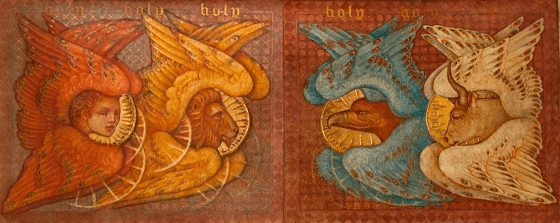
I really should get back to the Rigveda — and I will, very soon — but I was too intrigued by yesterday’s discovery of the potential meaning of “Noah” to let it go. Hoping to find our fourth Cherubim, the one with a human head, I checked to see if there was an ancient God named “No” or “Nu” in Egypt or Mesopotamia. And guess what? There was a god so named in ancient Egypt.
Not only that, but Nu or Nun represented the primordial waters of the forces of chaos; the waters from which the material universe emerged. And, as Jesus explains in the Course, the material universe operates under the Laws of Chaos established by the Ego Mind.
Being Satan (not of God), those laws aren’t real. They’re also completely insane, as Course-Jesus explains below:
No one wants madness, nor does anyone cling to his madness if he sees that this is what it is. What protects madness is the belief that it is true. It is the function of insanity to take the place of truth. It must be seen as truth to be believed. And if it is the truth, then must its opposite, which was the truth before, be madness now. Such a reversal, completely turned around, with madness sanity, illusions true, attack a kindness, hatred love, and murder benediction, is the goal the laws of chaos serve. These are the means by which the laws of God appear to be reversed. Here do the laws of sin appear to hold love captive, and let sin go free.
Nun also represented inundation (Noah’s flood), as well as the shaking or churning of the primordial waters of chaos–two allegories also found in the Hindu scriptures.

As Google explains in more detail, “Nun (or Nu) was the primordial, watery chaos—a boundless, dark abyss of infinite water from which the universe and all gods emerged, personifying the shapeless potential before creation, the source of the Nile, and the realm that would eventually reclaim all existence. He was depicted as a blue/green bearded man, sometimes with frog or snake features, and had a female counterpart, Naunet, forming part of the Ogdoad (“the Eight” headed by Amen or Amon) of Hermopolis (an ancient city and trading center in central Egypt), representing the first principles of chaos. Nun was the “father of the gods,” with the creator god Atum (Atman or Adam, the Red Ray) rising from his waters, and played a role in maintaining cosmic order and the cycle of creation and destruction.

From this description, Nun’s counterpart in Hinduism might be Brahma, the false father-creator and ruler of the Kingdom of the Dead. In Buddhism, it is Brahma Sahampati who encourages Buddha to turn the wheel to escape material enslavement by learning and teaching the four Noble Truths. In Sanskrit, Sahampati means “the arrow of the Lord,” a metaphorical reference also found in the Bible. According to Google, the arrow of God symbolizes the Father’s Will, but it might instead represent the perception-shifting miracles of grace launched from the divine bow of Shiva.
In the Bible, this force is represented as the Pillar of Fire, lighting the way to the Resting Place from behind the desert-wandering Israelites at Night (in darkness-consciousness).
In many schools of yoga, the arrow of God is Kundalini, the serpent fire that uncoils up the Sushumna nadi to penetrate and clear the chakras, with the aid of Ida and Pingala, the sun and moon energies.

In his Hindu Dikpala form, Nun is Nirriti, the guardian of the Southwest direction, the quadrant of the desert-wilderness of mortal existence that, rightly understood, IS the Kingdom of the dead. In Hinduism, this quadrant is called Dharma, because it is here we begin the earthly journey of the return to Eden and the Infinite Absolute (Da’at) just beyond the garden. It also is here, therefore, that Nirriti churns the ocean of milk to bring forth the powers of the Atonement to guide our journey “the rest of the way.”
And this explains why Brahma rides a Hamsa, a swanlike mythical creature with the miraculous ability to separate the miracle-milk of Brahman’s truth from the polluted water of Brahma’s lies.
This is probably also the “Mighty Shaking” mentioned in Revelations. That shaking signals the awakening of God’s Kundalini energy within us. Or, as Google explains, “Shaking is a common, often involuntary, symptom of Kundalini awakening, resulting from intense energy moving through the body, clearing energetic blockages, and purifying the nervous system. These movements, known as kriyas, can include trembling, jerking, or buzzing, and often occur during meditation or energy work. It is generally harmless and best allowed to pass naturally.”
Not all of that is accurate. We might feel Kundalini tremors in the physical body, but her healing energy lives and works in the spiritual body our Souls wear underneath the illusion of matter.
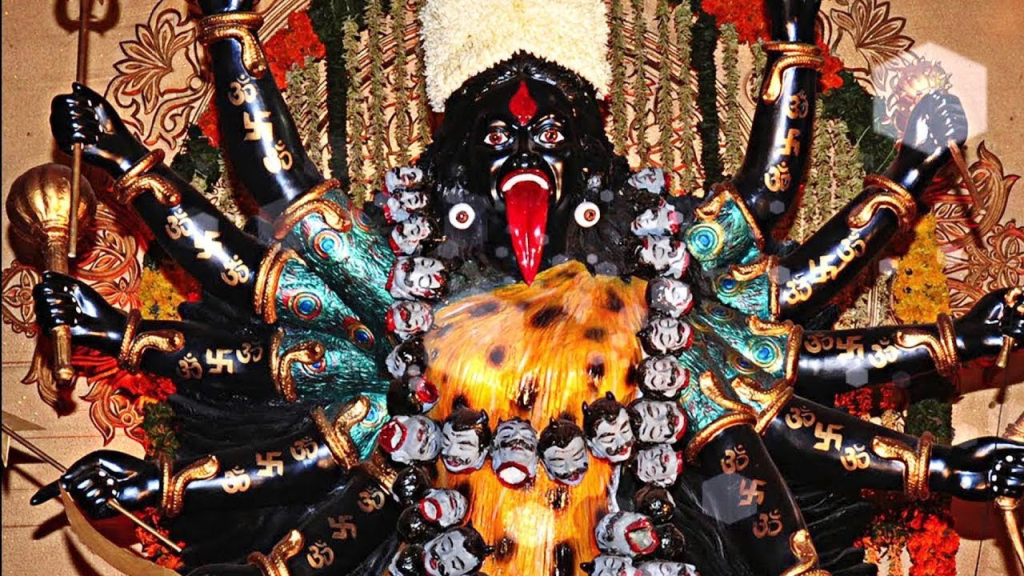
According to Google:
Nirriti is the Hindu deity of death, decay, destruction, and misfortune, representing the absence of cosmic order (Rta or Rita). Appearing in Vedic texts, she is depicted as a terrifying goddess in the southwest (land of the dead) but later evolved into a male Dikpala (guardian of direction) in Puranic traditions. She is associated with poverty, disease, and the goddess Kali.
I have wondered about Nirriti’s position on the wheel for some time, and only now does it make sense.
Google also tells us all of the following regarding Nirriti:
–In the Rigveda, Nirriti is portrayed as a goddess of destruction, misery, and calamity, requiring prayers to avert her negative influence.
–She is one of the Ashta-Dikpalakas, specifically the guardian of the southwest direction (Nairṛtya).
–She is typically described as dark, terrifying, holding a sword, or appearing with entangling snakes.
–Nirriti embodies the concept of “letting go” or dissolution (dissolving the ego), representing the necessary end of a cycle. She is sometimes associated with Alakshmi (the goddess of misfortune).
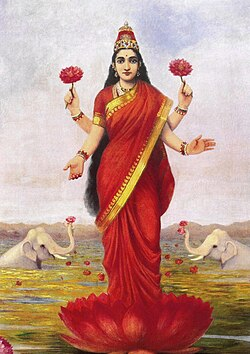
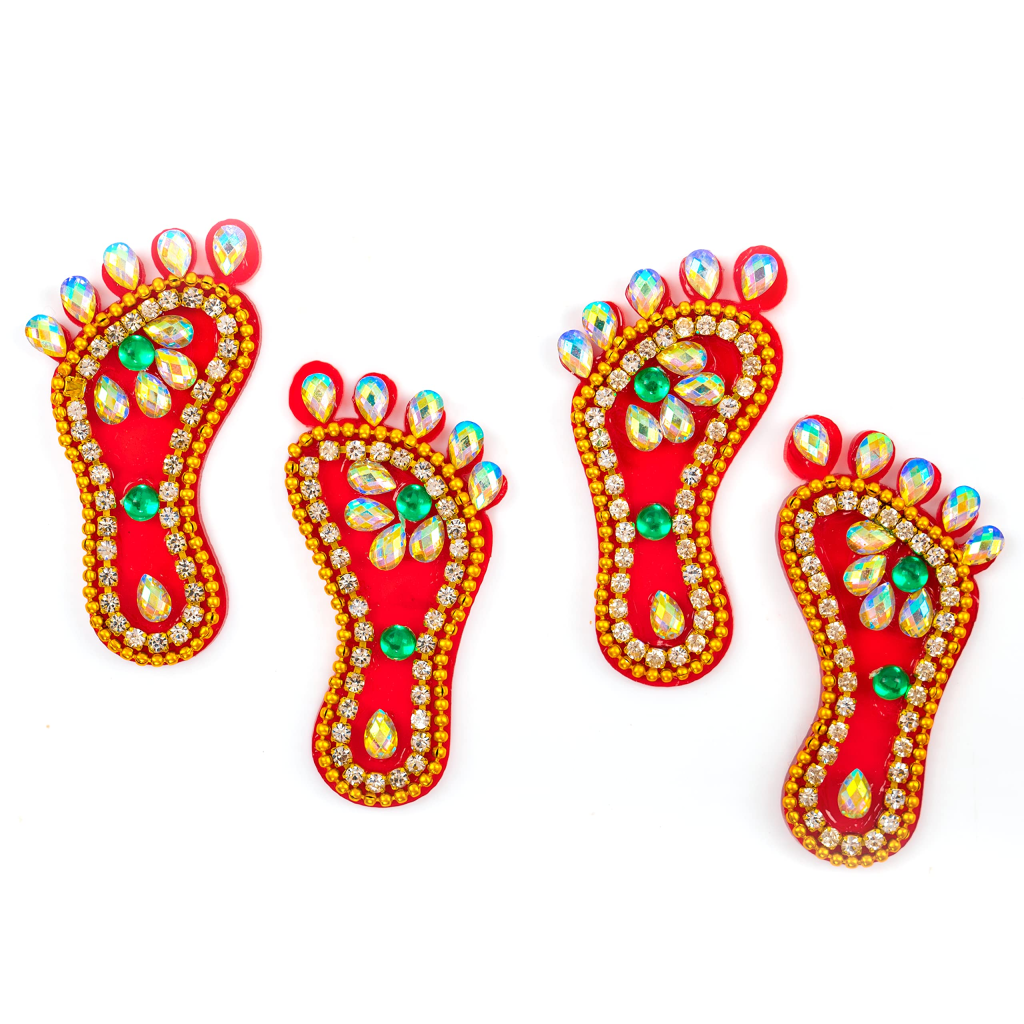
Unbeknownst to most Hindus, Lakshmi represents the Soul on the walking journey. Hence, the popular symbol of Lakshmi’s footprints in modern Hinduism. Alakshmi is, therefore, the anti-Lakshmi, meaning she represents the Soul-opposing ego-body self-concept.
–Nirriti is linked with the lunar mansion Mula (Malkuth, the tenth and lowest Sefirot?), the sage-king Prajapati, and is often depicted as having a donkey as her vahana. In male form, Nirriti typically rides a human being, suggesting his “vehicle” in this life is the human body.
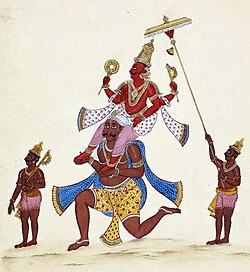
And that is probably the reason the Cherubim guarding the southwest quadrant has a human face.
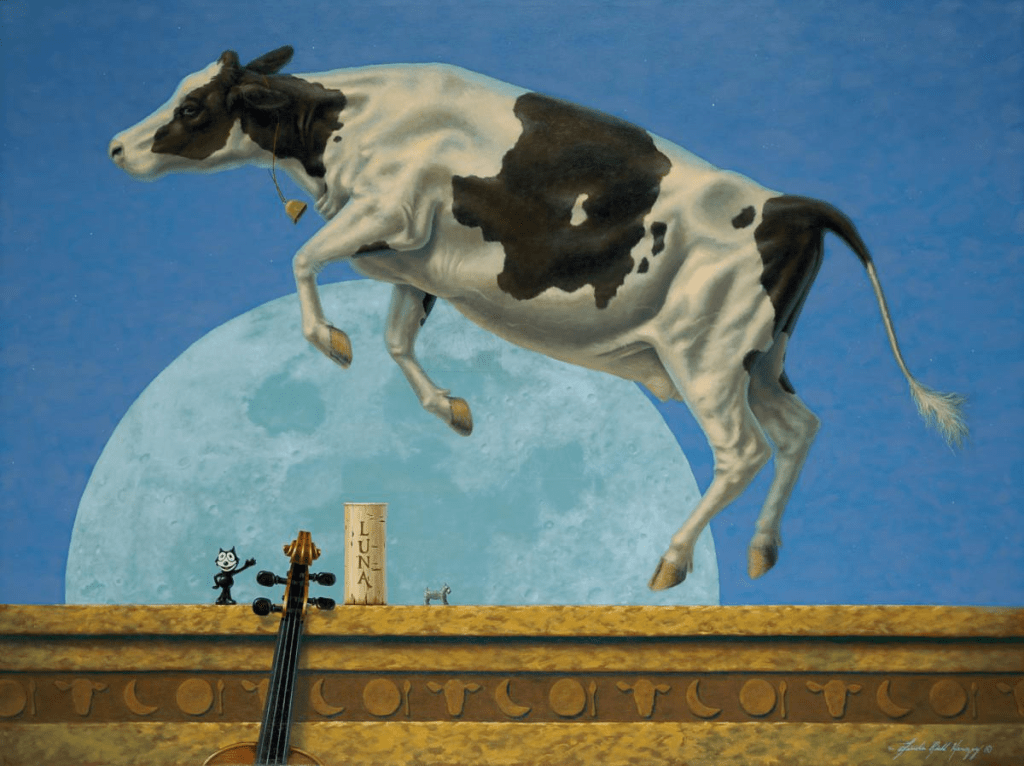
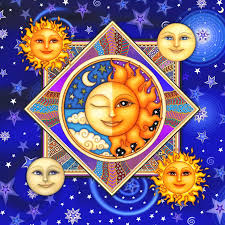
So, we have now identified our four cherubim and their locations on the wheel. Not absolutely certain about the positions of Molach and Nisrok, but given the long and universal association between cows and the moon, together with the Red Bird’s fiery appearance, I think they’re pretty solid. That said, it may well be that a sun and moon energy partner on either side of the wheel, as suggested in the illustration below. And we do find that Vayu and Garuda are related in the Hindu mythology, whilst Agni and Kamdhenu play a dual role in the miracle-offering yajna rituals.
I’m confident that Nua-ach-Nu-Nirriti — the ocean-churning brother with a human head — guards the Southwest quadrant of Dharma (seeking and finding the righteous path).
And given all the evidence, I’m now certain that the Miracle Cow is the Cherubim energy guards the southeast quadrant of Moksha (seeking and finding miraculous Perception).
Bastet or Inanna/Ishtar (Ishanna) — the lioness of God’s Word and Mouth guards the northeast quadrant of Kama (seeking and finding God’s Shining Word and Will).
Nisrok, or Garuda — the eagle-headed angel of the well guards the northwest quadrant of Artha (seeking and finding our divine purpose or Metron).
So, the Living Beings don’t represent the worldly things people generally presume, especially the four New Testament evangelists! They are, however, associated with the elements, in the sense that the quadrants represent the four elemental stages of spiritual perception (earth, air-wind, water, and fire).

The Cherubim are likewise representative mirror-images of the four cardinal directions, the four cardinal signs of the Zodiac, and the four celestial constellations, but only in a strictly spiritual-ethereal sense. Rightly understood, the planets and stars we see with our eyes (or scientific equipment, by extension) are outward projections of divine ideas we chose to forget. Any real influence the planets and constellations have is, therefore, inside our minds, not somewhere out in space.

Or, to quote Course-Jesus:
God’s Son is not a traveler through outer worlds. However holy his perception may become, no world outside himself holds his inheritance. Within himself he has no needs, for light needs nothing but to shine in peace, and from itself to let the rays extend in quiet to infinity. (ACIM, T-13.VII.13:4-7)
One more thing I want to say. The Cherubim partner across the circle. I mentioned this in my post about Agni, the fire of god, whose wind is Vayu/Ruach, the Cosmic Breath or Fire Wind ruling the quadrant linked to Agni’s diagonally. In the same way, Nirriti and Inanna work together to churn the waters of chaos to bring forth the Living Waters of Grace. Hence, their diagonal link across the circle.
I hope this makes sense, because it isn’t easy to explain all that I intuit.

And, now I know, as I’ve long suspected, the positions of the cherubim on the WHEEL of FORTUNE card aren’t right. I also now understand that the orange jackal-headed figure riding the southeast quadrant of the wheel is the Red Dragon, the ruling power of the South Sea–the eagle-eyed one commanding the Cherubim and the Archangels.

The sphinx at the top of the wheel with the sword probably represents Ao Shun, the Black Dragon of the North Sea, the rainmaker who melts the ice blocking God’s communications (with the fiery sword of God’s Word). And it is we who empower that sword to melt the ice through our almsgiving yajnas.
Now, compare all I’ve just explained to what Course-Jesus says below:
Love knows no bodies, and reaches to everything created like itself. Its total lack of limit IS its meaning. It is completely impartial in its giving, encompassing only to preserve and keep complete what it would give. In your tiny kingdom you have so little! Should it not, then, be there that you would call on love to enter? Look at the desert—dry and unproductive, scorched and joyless—that makes up your little kingdom. And realize the life and joy that love would bring to it from where it comes, and where it would return with you.
The Thought of God surrounds your little kingdom, waiting at the barrier you built to come inside and shine upon the barren ground. See how life springs up everywhere! The desert becomes a garden, green and deep and quiet, offering rest to those who lost their way and wander in the dust. Give them a place of refuge, prepared by love for them where once a desert was. And everyone you welcome will bring love with him from Heaven for you. They enter one by one into this holy place, but they will not depart as they had come, alone. The love they brought with them will stay with them, as it will stay with you. And under its beneficence your little garden will expand, and reach out to everyone who thirsts for living water, but has grown too weary to go on alone.
Pretty interesting, right? And, like I’ve said before, the seeds of higher knowledge are scattered all over the world. If we sit on the throne of judgment, casting aspersions at other religions and cultures, we’ll never find the Mandala of sacred seeds showing us the way back to God.

Makes sense, right?
Thanks for visiting. Until we meet again on this plane, Om Hari Om and Namaste.
 The Holy Meeting Place
Leave a comment