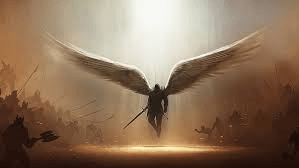
This post was supposed to address the Rigveda’s fifth Sukta, another wisdom-teaching about King Indra; but my inner-guru had other ideas. As established last time, King Indra represents the Red Ray of Peace producing the Amrita, the elixir of immorality or Blood of Christ, flowing down from the metaphoric “winepress.” That winepress, as we’ve learned, is the Bindu or Moon chakra just behind or underneath the Ajna or Third Eye Chakra.
Despite his regal status, King Indra is no longer worshipped in India. Odd as this may seem, it makes sense in the celestial scheme of things. As Jesus explains in the Course (and as I’ve similarly explained more than once) God couldn’t act directly to end the dream we manifested through fear, with the full force of His Will without waking us up abruptly. And waking us up abruptly would have had two disastrous consequences God chose to avoid. Firstly, it would have scared the bejeezus out of us and, secondly, it would have negated our creative free-will.
To circumvent those consequences, God delegated His Supreme Power and Authority (The shakti or creative energy-force of His Will) to Elohim, the Hebrew name for the Spiritual Sun or Solar Logos shining within our holy minds. Elohim then apportioned that potent “Greater Light” into rays or beams of less-potent thought-forces — the four symbolic horses seen by several prophets “going forth” from the Living Beings supporting Elohim’s chariot-throne.
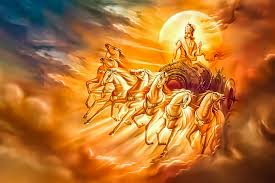
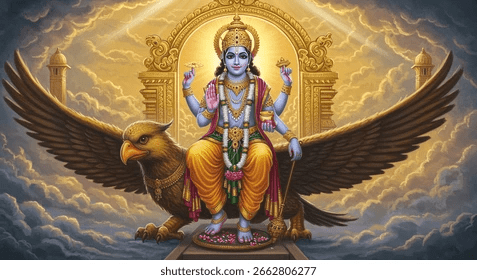
In Hinduism, Elohim is called Surya (Divine Light). And the Master Charioteer driving Surya’s chariot-throne is Aruna (the first Red Ray of Breaking Dawn), who is, I believe, another form of Indra. In the Hindu literature, Aruna has a brother called Garuda. The eagle-headed vahana of Vishnu, Garuda is a syllabic marriage of ga (the sacred-syllable, Om) and ruda (weeping or crying). So, Garuda means “the tears of Om.”
We don’t find that particular metaphor in the Judeo-Christian scriptures, but we do find Tears as a symbol of God’s empathy for human pain. We also find “Jesus wept” in John 11:35, the shortest verse in the whole New Testament, if not the whole Bible. In Catholicism and Eastern Orthodoxy, tears are as a gift from the Holy Spirit for repentance, healing, and moving from sorrow to the spiritual experience of pure joy.
Rightly understood, those tears are the droplets of Grace raining down on us from the seven “eyes” of God trumpeting the Om — the cosmic thought-vibration holding God and Creation together in oneness or wholeness.
And that brings us to the seven trumpets of God mentioned in Revelation 8 and 11 — the seven trumpets personified in Hinduism as Airavata, the vahana of King Indra. Last time, I promised to shed light on those rather bizarre Biblical passages, but didn’t get around to it. So let’s do that today. Before I forget again.
Let’s start with the KJV translation of Revelation 8, which is a bit of a whopper in terms of length, as well as content:
And when he had opened the seventh seal, there was silence in heaven about the space of half an hour.
And I saw the seven angels which stood before God; and to them were given seven trumpets.
And another angel came and stood at the altar, having a golden censer; and there was given unto him much incense, that he should offer it with the prayers of all saints upon the golden altar which was before the throne.
And the smoke of the incense, which came with the prayers of the saints, ascended up before God out of the angel’s hand.
And the angel took the censer, and filled it with fire of the altar, and cast it into the earth: and there were voices, and thunderings, and lightnings, and an earthquake.
And the seven angels which had the seven trumpets prepared themselves to sound.
The first angel sounded, and there followed hail and fire mingled with blood, and they were cast upon the earth: and the third part of trees was burnt up, and all green grass was burnt up.
And the second angel sounded, and as it were a great mountain burning with fire was cast into the sea: and the third part of the sea became blood;
And the third part of the creatures which were in the sea, and had life, died; and the third part of the ships were destroyed.
And the third angel sounded, and there fell a great star from heaven, burning as it were a lamp, and it fell upon the third part of the rivers, and upon the fountains of waters;
And the name of the star is called Wormwood: and the third part of the waters became wormwood; and many men died of the waters, because they were made bitter.
And the fourth angel sounded, and the third part of the sun was smitten, and the third part of the moon, and the third part of the stars; so as the third part of them was darkened, and the day shone not for a third part of it, and the night likewise.
And I beheld, and heard an angel flying through the midst of heaven, saying with a loud voice, Woe, woe, woe, to the inhabiters of the earth by reason of the other voices of the trumpet of the three angels, which are yet to sound!
How accurate is that translation? Let’s see, shall we? Here’s what I made of the same words:
And when he (the Lamb) opened the seventh seal of the signet; there came silence in the celestial sphere), as long as half an hour. And I also beheld seven angels who stood before a deity (Theos), and also the Higher Self (Autos) producing seven reverberations.
And another Angel came to stand before the altar, holding a golden frankincense-censer; to give the Self much incense, in order that prayers given to the holy Whole, set apart from the world, go up into the sight of God from out of the angel’s hand or power. And the angel took the frankincense-censer, and filled it from the fire-altar, and then placed it into the world, thereby bringing into being a sound like the thunder and lightning of a tempest.
Let’s stop here to reflect on what we’ve just read. We know from our previous studies that the signet is the six-pointed star, while the seventh seal is the Sefirot of Netzach, which supposedly means “eternity” or “fortitude.” When this seal is opened, John hears profound silence, and also sees seven angels before the throne of Elohim. He also beholds the Higher Self producing the seven reverberations of Om, the vibratory Whole. An eighth angel then appears holding a golden frankincense-censer. And this seems significant, because the three magi also brought gold, frankincense, and myrrh to Bethlehem when Jesus was born. Or did they, in fact, bring golden frankincense and myrrh, and no gold? Because worldly gold has no value in God’s estimation.
I wonder. Because the three magi are, in fact, symbolic representations of the Trinity Rays, the three kings shining from the eastern star.
And Frankincense is indeed golden in color. Noteworthily, those little golden pebbles we see in the image below are called “tears.”

Moreover, frankincense has been used for thousands of years both as an anointing oil and a resin-form incense to aid in physical healing, spiritual purification, and mental concentration. So, it heals the body, mind, and spirit through purification. And herein we are told that the smoke from the angel’s frankincense lifts our prayers to the Whole Christ Self up to the sight of God.
So, the smoke from the golden frankincense censer purifies our minds through our “secret” almsgiving prayers. And those prayers are the medium of miracles, as Course-Jesus explains in the excerpt below:
Prayer is the medium of miracles. It is a means of communication of the created with the Creator. Through prayer love is received, and through miracles love is expressed. (ACIM, T-1.I.11:1-3)
Let’s continue. The next part of Revelation 8 reads:
And the seven angels, those sounding the seven trumpets (the seven reverberations) to prepare their own selves to sound the first messenger-trumpet, to bring into being hail and fire to mix the blood (the atoning blood of Christ) to pour down upon the world; and the third tree was consumed by fire and all the pale green grass was consumed by fire.
And the second angel sounded a sound-vibration as long as a great mountain to kindle a fire pouring down into the sea, and a third of the sea became blood (the atoning blood of Christ).
And the third created substance–the one in the sea–held the breath of life away from death, and also was the third vessel corrupted.
To the fear-mongering Ego Mind, this sounds terrifying; but it really isn’t. What these verses describe is essentially this: The smoke from the frankincense-burner kick-starts the purification process preparing our minds to hear the first trumpet “to bring into being hail and fire to mix the blood (the atoning blood of Christ) to pour down upon the world.” To activate the winepress producing the Amrita, in other words. And it is the Amrita that sets alight the third tree and the sacred grass (where we perform our almsgiving prayers in the Resting Place).
What is the third tree? The Tree of Life formed by the ten Sefirot. The tree-like map or path we took to come down into material reality, and now must go back up. The prevailing wisdom in Christian theology identifies the third tree as “the tree of the cross,” signifying the cross upon which Jesus died to free us from sin. And symbolically speaking, that’s correct, but also tainted by egoic conceptions of death, sacrifice, and suffering. The true third tree, as I said, is the path formed by the ten Sefirot–the seals the Lamb opens in Revelations to release the ten progressive stages of restored Self-knowing the Holy Spirit facilitates through the four horses and the ego-undoing sound-bath of the trumpets. In Hinduism, those seven stages take the form of the ten avatars of Lord Vishnu.

In the Course, Jesus says we blocked God’s direct communications with the outward projection of fire and ice. So the fire and hail described herein must represent our restoration of those inner communication channels. Restoring those channels activates the winepress producing the Amrita, which, in turn, activates the Flaming Sword of the Bridegroom — the celestial weapon God placed within our minds to burn away the ego’s veils, purify our Souls, and restore to us God’s superior judgment, justice, and authority. As I’ve said before, that sword is Michael, the chief archangel standing guard at the eastern gate between Jerusalem, the city of Peace, and Eden (the witnessing spring, fountain, or eye). That sword also is the vajra used by Indra, the guardian of the east, to drive the demon, Vritra, out of Heaven.
The second trumpet blast, which lasts a long while, enables the purifying blood and fire to pour down into the “sea” (of shared thought, presumably), turning a third of its thought-waters into the blood of at-one-ment.
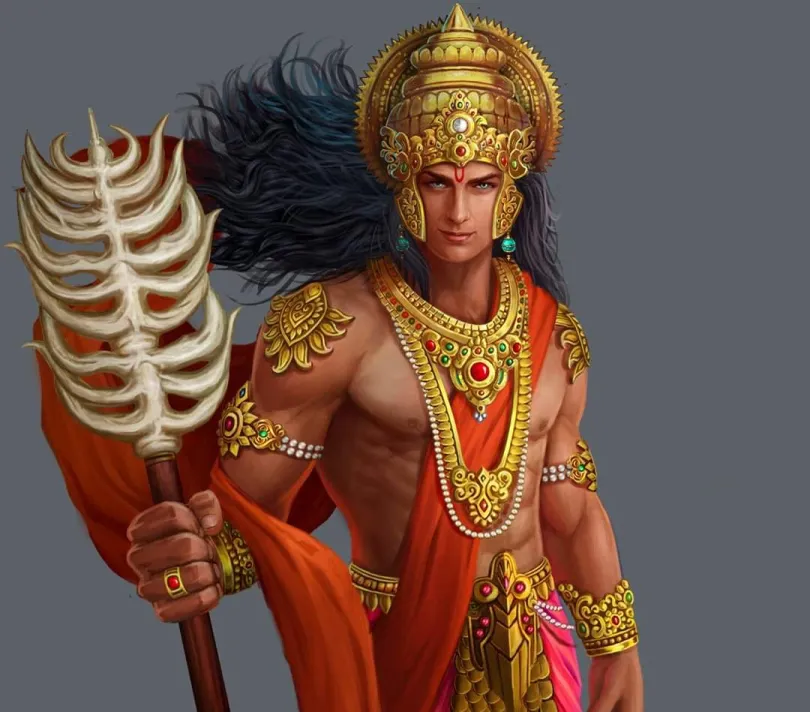
So, the smoke cleared the way for the first vibration, which activated the winepress, whilst the second blast released the blood and fire (from the winepress) into the waters of thought. And that blood, we are told, is the Breath of Life holding the Soul away from mortal death, as well as the third vessel corrupted (by inverted Ego perception).
And this jibes with what Jesus told Sister Faustina, i.e., that the Red Ray represents the Blood that is the life of Souls; and also the divine power (of grace) that restores the Soul to its true, eternal state of being.
The next verse from Revelation 8 reads thusly:
And the third angel’s trumpeting sound caused to fall a great star from out of the celestial sphere, to kindle a lamp to shine upon a third of the rivers and also a spring or fountain of waters. And the name of the Star sent forth wormwood (or absinthe), and a third of the waters became wormwood or absinthe. And many human beings perished from the waters, because they were bitter.
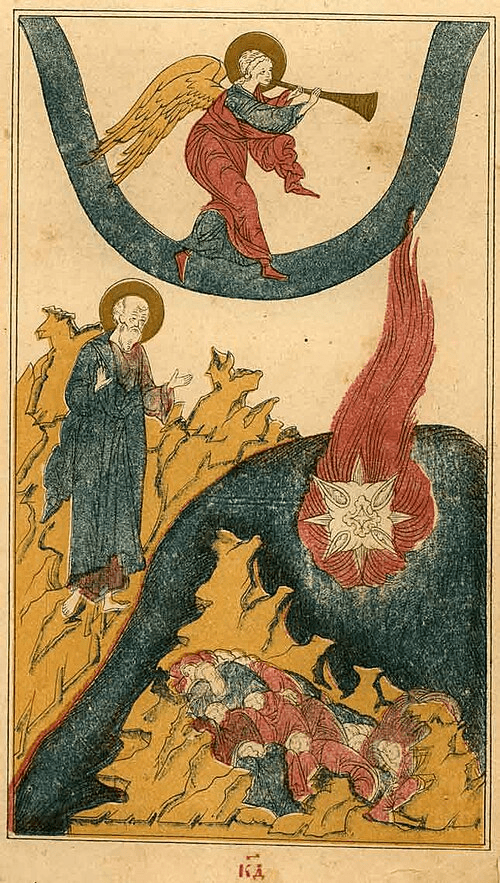
This passage is a riddle to be solved. We know from the Course that the Star is the Pure Thought of God radiating deep in our minds, but what does wormwood signify? I did a little research and learned (from Wikipedia) that the medicinal use of wormwood dates back to ancient Egypt, and is mentioned in the circa-1550 BC “Ebers Papyrus.” Wormwood extracts and wine-soaked wormwood leaves were also used by the ancient Greeks, generally in the form of a tincture produced by steeping wormwood in wine. They called the tincture absinthites oinos.

Apparently, wormwood was used most often to treat inflammation, digestive disorders, and parasitic infections like worms (hence, the name). And what is the Ego Mind but a parasitic infection in the mind of God’s Son? So, the Name of the Star sent forth the celestial absinthe-equivalent to treat the parasitic infection on earth en masse; and many people died, because “they” were bitter. The sentence structure doesn’t clarify whether “they” refers to the waters or the people who died. Because wormwood-infusions are bitter, most interpreters presume it’s the water. But I immediately thought it meant that many people died because they had bitterness in their hearts, not because they drank the wormwood-infused waters.
And that seems to be what Course-Jesus also says below:
Would you remain within your tiny kingdom, a sorry king, a bitter ruler of all that he surveys, who looks on nothing yet who would still die to defend it? This little self is not your kingdom. Arched high above it and surrounding it with love is the glorious whole, which offers all its happiness and deep content to every part. The little aspect that you think you set apart is no exception. (ACIM, T-18.VIII.7:1-8)
Simply stated, the only “cure” for the human suffering wrought by bitterness is salvation through the restored at-one-ment of Holy Creation. Refusing the cure is our choice, but that choice brings only the sickness, suffering, death, and despair forged through our complicity with the parasitic worm we adopted as our “Father-God.”
The Star mentioned herein is, I believe, the true Word of God. And, as Course-Jesus states below that Word, also God’s Name, is “the Atonement.”
Accept Atonement and you are healed. Atonement is the Word of God. Accept His Word and what remains to make sickness possible? Accept His Word and every miracle has been accomplished. To forgive is to heal. The teacher of God has taken accepting the Atonement for himself as his only function. What is there, then, he cannot heal? What miracle can be withheld from him? (ACIM, M-22.1:5-12)
Elsewhere in the Course, he says:
This world will change through you. No other means can save it, for God’s plan is simply this: The Son of God is free to save himself, given the Word of God to be his Guide, forever in his mind and at his side to lead him surely to his Father’s house by his own will, forever free as God’s. He is not led by force, but only love. He is not judged, but only sanctified. (ACIM, W-125.2:1-4)
Let’s proceed to the next set of verses, which get pretty interesting:
The fourth angel’s trumpet sounded and a third of the sun was struck and a third of the moon, and a third of the stars, so that a third of the Self obscured God’s Light. And the Day (the Greater Light) appeared not in a third of the Self, and the Night (the Lesser Light), likewise.
And I saw and heard an angel flying in the Zenith, saying in a loud voice, “Woe, woe, woe. To abide in the world away from the remaining sounding trumpets of the three angels–the ones about to sound their trumpets!”
The Zenith is the center, as well as the highest point in the celestial sphere. So, the Zenith is Da’at, the invisible infinite. Not sure what the rest of this means. But if only one-third of the waters are filled with Amrita at this point in time, then two-thirds would remain as they were before. This may be related to the Hindu gunas — the three modes of being in Hindu philosophy. If so, the waters divided into thirds would look something like the image below.

Let’s move on to the next verse, which describes the first of the three “woes” to befall humans still refusing to play ball with God. My retranslation of the prophet’s account reads as follows:
And the fifth angel’s trumpet sounded, and I beheld a star fall from the celestial sphere onto earth, and the Higher Self brought forth the key to the bottomless well, and opened the bottomless well, and climbed up the smoke that came out of the well, like the smoke of a great furnace. And the sun and air were obscured by the smoke from the well. And there came out of the smoke locusts, reaching toward the earth, and the Self gave them the power of the scorpions of the earth–the power holding the command to the Self not to harm the grass of the earth, nor any green thing, nor any tree, if a single human had not the Signet of God within their foreheads. And the Self gave–though not to kill the Self, but only to torment for five months (even the Self) with the torment of the scorpion stings whenever a man was stung.
And in that one day shall humans seeking death not find the Self, and still the desire to die, and even death, shall flee from the Self.
And the resemblance of the locusts are the same as horses prepared to enter battle. And upon the head of the Self, a crown resembling gold; and the face of the Self was like the face of a human, and had hair as long as the hair of women. And the teeth of the Self were like a lion holding a breastplate; like a breastplate of iron. And the sound the Self’s wings made was the sound of a chariot of many horses running into battle. And for five months the sound reigned over their own Self, the angel of the bottomless well; the Self whose name in Hebrew and Aramaic is Abaddon, but in Greek the sound of his name is Apollyon.
The first woe is past. Behold the coming of the two woes thereafter.
Okay, yes … at first read, this sounds pretty horrendous, but that’s because our egos interpret the symbolic phrasing through the filter of fear. The bottomless well (not pit), is the wellspring in the Resting Place. And the key that opens the well is the Atonement (the wholeness-restoring Om vibration). The smoke that comes out of the well is the smoke from the frankincense-censer, which forms the metaphoric Pillar of Cloud (or Smoke) that leads truth-seeking Souls (the Israelites) to the Resting Place. That Pillar is made from the “vapor” of God’s tears and/or the “smoke” from the Frankincense-censer lit by the eternal flame on the inner-altar.
So, it’s all good. Unless we resist or “live apart” from the vibrational sounds of the final three angels. And that’s where the locusts come in. But even they aren’t as scary as they might sound. Essentially, the locusts symbolize the humming or buzzing Word of God we hear with our inner ears. We know they’re not literal locusts because they are told not to harm any vegetation. And worldly locust swarms devour any and all vegetation in their path. The celestial locusts are told (in a round-about way) to concentrate on the humans not yet holding the Signet of God in their foreheads; those not accepting the Atonement for themselves, in other words.
Or, as Course-Jesus says:
All forms of not-right-mindedness are the result of refusal to accept the Atonement for yourself. If you do accept it, you are in a position to recognize that those who need healing are simply those who have not realized that right-mindedness is healing. (ACIM, T-2.V.4:4-5)
Until we accept the Atonement, we can’t perform our function in God’s Plan. That function is miracle-working, as Course-Jesus explains below:
The sole responsibility of the miracle worker is to accept the Atonement for himself. This means you recognize that mind is the only creative level, and that its errors are healed by the Atonement. Once you accept this, your mind can only heal. By denying your mind any destructive potential and reinstating its purely constructive powers, you place yourself in a position to undo the level confusion of others. The message you then give to them is the truth that their minds are similarly constructive, and their miscreations cannot hurt them. By affirming this you release the mind from overevaluating its own learning device, and restore the mind to its true position as the learner. (ACIM, T-2.V.5:1-6)
Ergo, those without the Signet of God on their foreheads have resisted accepting the Atonement. They can’t, therefore, hear the sound with the power to break the chains of fear and guilt binding their Holy Minds to the dream-realm.
So, the locusts will give the Word of God to those who don’t yet hear the humming. It’s not really a torment, therefore; although it might be perceived as such by those who don’t understand what they’re hearing. St. Teresa of Avila, for example, complained in her writings about “the curse” visited upon her as a “sound in the head.” Being Catholic, she didn’t understand that the sound she heard was a blessing rather than a torment; it was, in fact, no less than the Voice for God, the ever-present echo Bible-Jesus calls the Living Water.

What this section of Revelation 8 relays, makes it sound as if, toward the end of days, that vibration might be impressed upon those still refusing the cure. And the Prophet Mohammad did say that the last human resistor would “be dragged across the bridge.” Forced to bow down, in other words. We also learn in Isaiah 41:15 that God’s Word (the Om vibration, not the Bible or the Quran) will act in the world as “a new sharp threshing instrument having teeth.”
And aren’t locust swarms compared to “threshing machines” in the Book of Joel? They are indeed. Moreover, they are identified by the messenger addressing Joel as “the great army I sent among you.”
In Joel 2:24-26, we read:
The threshing floors shall be full of wheat,
And the vats shall overflow with new wine and oil.
“So I will restore to you the years that the swarming locust has eaten,
The crawling locust,
The consuming locust,
And the chewing locust,
My great army which I sent among you.
You shall eat in plenty and be satisfied,
And praise the name of the Lord your God,
Who has dealt wondrously with you;
And My people shall never be put to shame.”
Can’t swear that’s an accurate translation, but it’s good enough for now. In Revelation, we learn that the locusts are given the power of the scorpions of earth. And that power is to inflict a venomous sting or bite. So we’re talking figuratively here about the teeth of God’s Word being given the power to bite anyone who still blocks the Song of Salvation.
And is that really so terrible, when it’s our own Self we’re saving from hell?
In Revelation 8, John also tells us those still seeking death won’t die, even if they don’t benefit from the locust’s sting. Those seeking death are simply those still in bed with the devil. Those choosing the false body-identity over the true spirit-identity. Apparently, even these outliers won’t die during the time of the locusts.
And this is the first of three “woes” heralded by the angels. What are the other two? We’ll find out in my nest post. For now, I want to analyze what he says next, which is this: The locusts resemble the horses, the thought-forces of God, dressed for battle. He then describes the Higher Self he sees opening the well and also climbing the smoke coming out.
And, as I read these verses, it is that Higher Self who wears the crown, has teeth like breast-plated lions, hair like a woman’s, and wings that sound like chariot horses charging into battle. And it is He whose name is Abaddon in Hebrew and Apollyon in Greek.
Commentators down the ages have equated this mysterious figure with Satan, the Beast, and the Anti-Christ. But that’s not an accurate read of what’s written. So, let’s investigate further.
We’ll start with Abaddon, a name both Google and Wikipedia tell us (in error) belongs to the “angel of the abyss,” and means “destruction,” “ruin,” or “doom.” If, however, we divide the name as abad and don, we get a very different picture. Abad means “to serve with devotion,” whilst don (adon, actually) means “lord and master” or “owner.”
So, Abaddon, the angel of the well, devotedly serves the Master of the House, and also toils in the Vineyard for the landlord-owner. He is, therefore, discussed in several parables told by Jesus. In the parable of the Master of the House, the devoted servants remain vigilant in the master’s absence, while the lazy ones slack off. In the parable of the vineyard owner, the tenets break their agreement with the landlord to share their prophets; they also kill his son. And in the parable of the ten virgins, the five who brought enough fuel for their lamps marry the bridegroom, while the five who didn’t are spurned. All three parables convey the same message: devotedly do our part in God’s Plan for humankind’s salvation, or risk losing our reward in the end.
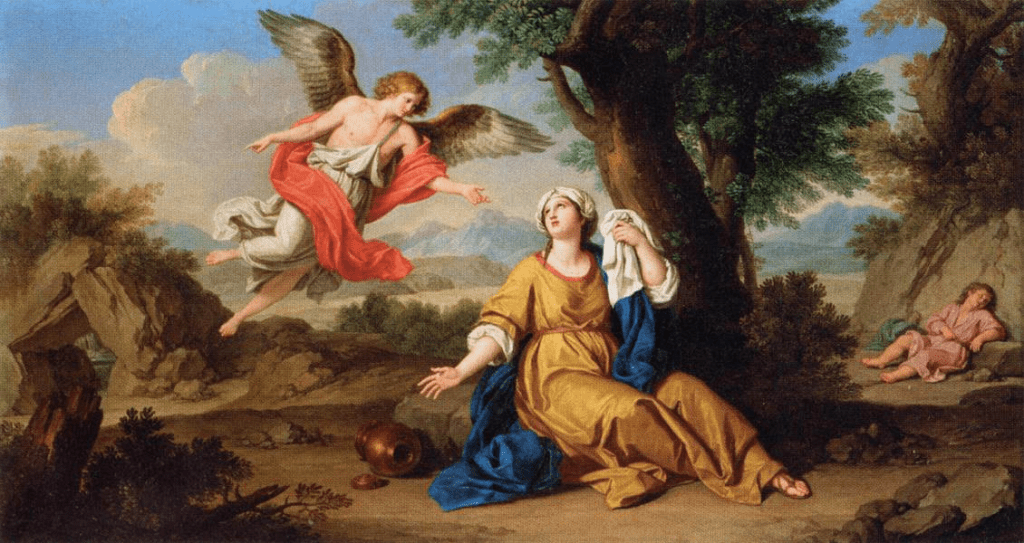
Abaddon also is, I suspect, the angel who stirs the pool of Bethesda in John 5:4, as well as the angel who meets with Hagar at the wellspring in Genesis 16:7-12.
We get a similarly ego-skewed result for Apollyon — a name that appears only once in the Bible. By all accounts, Apollyon is “the lord of the abyss” who commands a swarm of demonic locusts. Allegedly, his name means “destroyer”– the same role, meaningfully, assigned to Lord Shiva, who actually represents the transcendent power of grace. In the Hindu literature, Shiva is closely associated with purifying waters.

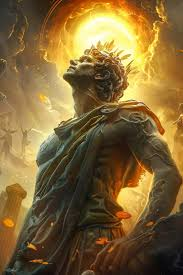
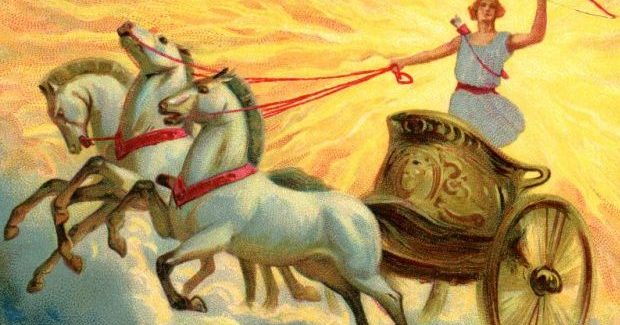
I’m guessing the name John heard was Apollon (Ἀπόλλων), the Greek name for the Olympian god of light, music, prophecy, healing, archery, and arts; the son of Zeus and the twin brother of Artemis, the goddess of the hunt, the wilderness, wild animals, the moon, and chastity. The meaning of Apollon remains a mystery to classical scholars and linguists. What they do know is 1) Apollon’s Roman counterpart is Apollo, the chariot-driving god of light with an oracle at Delphi, and 2) Apollo’s original name was Paean, a Latin word describing a “song of triumph” or “chant of praise” offered to Apollo.
Personally, I believe Apollon to be a compound of Apo and llon, meaning “from out of the lion” — a phrase used symbolically several places in the Bible to demonstrate the power of miracles to transform our perception of a situation from destructive to helpful. This is the symbolic meaning of the honey Samson finds in the lion he kills, as well as Daniel’s escape from the lion’s den.
And are not miracles granted when the angel stirs the waters in Genesis and John?
Yes, they are.
Okay, so … if we synthesize all of these clues and symbols, we find that it’s all about the miracle-working function assigned to us by God, and made possible through the Living Waters of Grace rising up through the wellspring (from the Cosmic Ocean) to rain down the mind-healing power of miracles on the world.
This is how salvation is achieved, and, therefore, our only function in the world, as Jesus explains very clearly in Workbook Lesson 99: Salvation is my only function here.
Let’s now go back to the Tree of Life, because (as I’ve just discovered) the name of the seventh seal (Netzach) doesn’t mean “eternity” or even “fortitude.” A compound of netz and ach, the word means “falcon-brother” or “raptor-brother.” So, it refers to the eagle-headed Seraphim, throne-bearer, or Living Being described in the Bible, as well as the Qur’an. He also was worshipped as a protective deity in ancient Assyria and Egypt. In Assyria, he was closely associated with the Sacred Tree (the Tree of Life?).
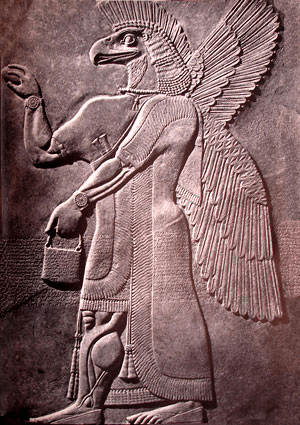
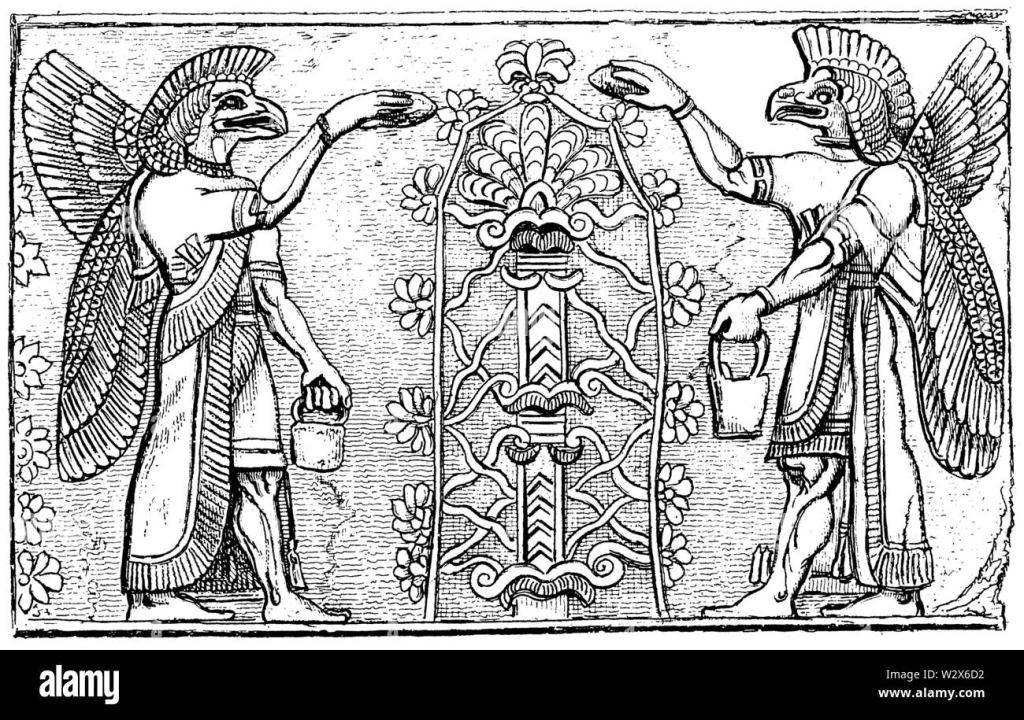
IN 2 Kings 19:37, the Assyrian deity is supposedly identified as “Nisroch” (Nisrok in transliterated Hebrew), where he is written off as a Babylonian idol whose temple was the location of an ancient patricide. This misconception stems from the gross mistranslation of 2 Kings 19:35-37, which reads as follows in the KJV Bible:
That night the angel of the Lord went out and put to death a hundred and eighty-five thousand in the Assyrian camp. When the people got up the next morning—there were all the dead bodies! So Sennacherib king of Assyria broke camp and withdrew. He returned to Nineveh and stayed there.
One day, while he was worshiping in the temple of his god Nisrok, his sons Adrammelek and Sharezer killed him with the sword, and they escaped to the land of Ararat. And Esarhaddon his son succeeded him as king.
When rightmindedly translated, what these two verses truly communicate is more in this vein:
That night, an angel of Yovah came out to strike the encampment of the purification rituals of grace (the almsgiving yajnas) with the illuminating splendor of the waters of God’s Name, answering the call of the alms-giving network of the multitudes arising at daybreak to kill the idolatrous image (the ego illusion); the angel the burning bush sent forth on the journey of departing from and returning to the seat of the Son of the Living Breath, to bow down in the house of Nisrok-Elohim, the exalted king and prince of fire the son broke into pieces; the angel delivering, from the Land of the Living, the Father of Creation’s solemn promise to see (through holy vision) the son reigning on the throne.
Pretty different, right? So, Nisrok is an aspect of Elohim, rather than some irrelevant Babylonian god. The name Nisrok translates, weirdly in the New Testament. Specifically, he mixes his spit with dirt to help a blind man see and a deaf man to hear –by opening their spiritual eyes and ears, of course.
So, strange as it may seem, Nisrok, the eagle-headed cherubim supporting the throne, is the miracle-saliva of Elohim. Is he also the angel the burning bush sent forth as a flame? Perhaps. And, if he is, he’s the archangel Uriel, the keeper of the flaming pearl — the agnimagni found on Indra’s Net.
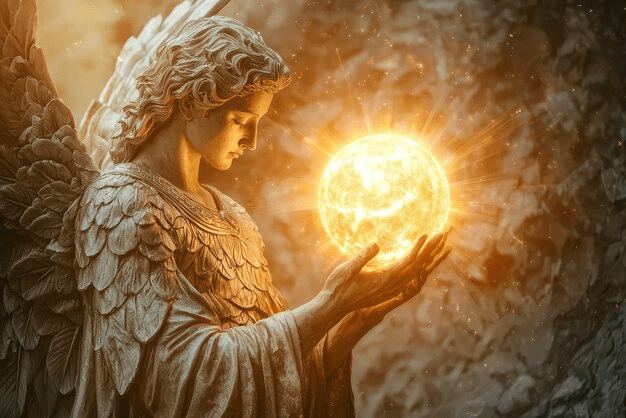
We see the same flaming pearl in the grip of one of the four dragons in Chinese imagery. And, in Genesis (my translation), the four dragons are indeed called “brothers.” So the falcon-brother’s sefirot or seal probably is the domain of Nisrok, the eagle-headed cherubim.

In ancient Egypt, we find two similarly falcon-headed gods called Ra and Horus. Like Apollo, Ra was the god of the sun, divine order, kings, and the like. In the older Cult of Amen, he was the top power under Amen. Their names were later conflated as Amen-Ra. Later, as Horus, he was the son of Isis, the chief goddess. Egyptologists believe the hieroglyphic name Horus means either “falcon,” “son of Isis,” or “the one who is above.” In ancient depictions, Horus wore a red and white double-crown, had wings and an all-seeing eye, and was the rightful king of Egypt. Intriguingly, Horus’ right eye was said to represent the Sun, while his left was the Moon (like the Tree of Life and the two rays beaming from the heart of Jesus in the Divine Mercy image). More generally, Horus represented kingship, the sky (the celestial sphere), protection, and the triumph of established order over chaos.
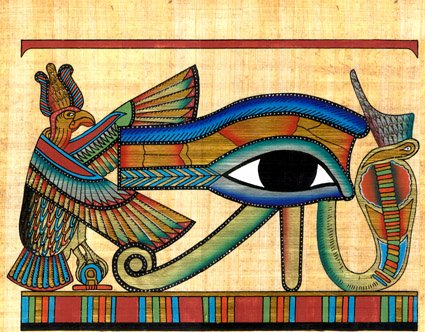
Now, compare the two representations below of Horus (top) and Garuda (bottom), the bird-headed vahana of Vishnu.

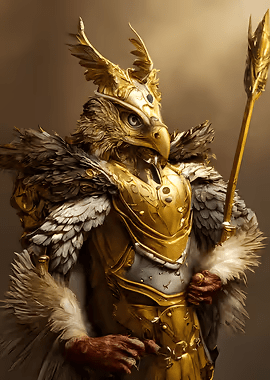
Pretty uncanny, right?
So, the seventh seal is where the miracle-saliva (Living Water) comes forth from the wellspring, the dwelling place Nisrok, the the angel of the well, who stirs the waters to rain down miracles of grace on his ego-enslaved brothers. Through our almsgiving or miracle-working, we fill the cloud, so it can fill us with grace in return.
This is how we “give the miracles we receive” or “cast our bread upon the waters” as King Solomon advises in Ecclesiastes 11.
In the same chapter, Solomon says:
If the clouds be full of rain, they empty themselves upon the earth: and if the tree (of life) fall toward the south or toward the north, in the place where the tree falleth, there it shall be.
He that observeth the wind shall not sow; and he that regardeth the clouds shall not reap.
As thou knowest not what is the way of the spirit, nor how the bones do grow in the womb of her that is with child: even so thou knowest not the works of God who maketh all.
How many more mystical secrets might be hidden in the accepted mistranslations of the Bible? As many as are hidden in the Rigveda, I’ll wager. Next time, we’ll explore the other two “woes” to be visited upon salvation-resistant humans near the end of the world. And, after that, I’ll get back to retranslating the Rigveda.
Until then, Om Hari Om and Namaste.
 The Holy Meeting Place
Leave a comment