Instead of rushing ahead to the Rigveda’s third Sukta, I want to spend more time on the ten risha (female rishis) referenced in the second Rik. In my last post, I equated those “shining handmaids” with the Mahedivyas or “great wisdom” goddesses of Hinduism, the Sefirot of Jewish mysticism, the lampstands in the Temple of Solomon, and the brides from the parable shared by Jesus in Matthew 25–all of which are said to be ten in number.
After reviewing the scriptural references, I’m not so sure the ten “virgins” represent those shining maidens, but even more certain the ten golden lampstands in Solomon’s Temple are indeed symbols of the Sefirot. Those ten lampstands are allegedly described three times in the Bible: in 1 Kings 7:48-49, Exodus 25:31-40; and in 2 Chronicles 4:7.
If indeed they are ten in number, these menorahs aren’t “relics” of this world, because, Solomon’s Temple never stood in the physical locality ego-perceivers calls “Israel.” Let’s see what more we can learn about those lampstands by retranslating the scriptures in which they are mentioned.
We’ll start with 1 Kings 7:48-49, which reads as follows in the King James Bible:
And Solomon made all the vessels that pertained unto the house of the Lord: the altar of gold, and the table of gold, whereupon the shewbread was,
And the candlesticks of pure gold, five on the right side, and five on the left, before the oracle, with the flowers, and the lamps, and the tongs of gold,
How accurate is this translation? Not very, because the original Hebrew translates more along these line:
Solomon made an instrument or vessel within (himself) to the Holy Name, an altar of gold for offering (in fellowship) golden sustenance; a lampstand of pure gold with five right-hand and five left-hand faces (or presences) of the Word of God blooming lights or lamps of angelic gates or thresholds, angelic bowls for sprinkling the water of golden protection and giving and receiving the song of the vessel to remove and purify or deliver the golden opening or entrance; the Golden Door into the inner temple, the sanctuary door within the Temple.
To restore wholeness, King Solomon furnished the Temple with the Holy Name which Solomon brought forth in David (the Christ Ray), the Father’s most sacred gift, the silver and gold of the innermost being to be given from the storehouse in the Temple of the Holy Name.
Okay, so … firstly, these verses from Kings don’t describe ten golden lampstands, nor any golden table, bowl, flowers, censers, or tongs; They tell us that Solomon, the Holy Spirit, built a golden vessel — an altar in the form of a lampstand with ten lamps; five of which were on the right-hand side and five of which were on the left. And those lamps represent ten luminous facets of the Word of God (the Logos). They are described herein as both angelic thresholds and bowls for sprinkling the water of “the Golden Protection and for giving and receiving the Song of the vessel” (the Song of Solomon, the Lord of Om) to purify the Golden Door.
The Golden Protection is God’s Strength, which we do indeed give and receive in the Temple to undo the illusions blocking the Golden Door, a metaphoric scriptural phrase Google explains as follows:
The “Golden Door” in scripture primarily refers to the Eastern Gate of Jerusalem, also called the Beautiful Gate, significant in Ezekiel’s visions of a future temple (Ezekiel 40-48), and for Christian prophecy as the spot where the Messiah will enter, though it’s sealed today; it also symbolizes spiritual access, representing the path to God’s presence or salvation in Christian thought, linking to events at the Beautiful Gate in Acts and the New Jerusalem’s gates in Revelation.
The Golden Door is, therefore, the eastern gate guarded by King Indra, the Red Ray, who also is Michael, the chief Archangel and Flaming Sword. And it is that Flaming Sword God placed at the entrance to Eden, not to keep us out, but to prevent Satan and his demons of ego-thought from coming back in.

So, the Golden Door is the final “gate” or “door” between Jerusalem, the city of peace on the Sixth Plane, and the Garden of Eden on the Seventh.
This verses from Kings also mention “the Father’s most sacred gift, the silver and gold of the innermost being to be given from the storehouse in the Temple of the Holy Name.” The silver gift is the Miracle, whilst the gold refers to the “golden aspects of reality” we see through Christ’s vision. And all of that is kept safe for us inside the storehouse on the sixth plane of consciousness.
Let’s move on to Exodus 25:31-40, which reads thusly in the KJV Bible:
And thou shalt make a candlestick of pure gold: of beaten work shall the candlestick be made: his shaft, and his branches, his bowls, his knops, and his flowers, shall be of the same.
And six branches shall come out of the sides of it; three branches of the candlestick out of the one side, and three branches of the candlestick out of the other side:
Three bowls made like unto almonds, with a knop and a flower in one branch; and three bowls made like almonds in the other branch, with a knop and a flower: so in the six branches that come out of the candlestick.
And in the candlesticks shall be four bowls made like unto almonds, with their knops and their flowers.
And there shall be a knop under two branches of the same, and a knop under two branches of the same, and a knop under two branches of the same, according to the six branches that proceed out of the candlestick.
Their knops and their branches shall be of the same: all it shall be one beaten work of pure gold.
And thou shalt make the seven lamps thereof: and they shall light the lamps thereof, that they may give light over against it.
And the tongs thereof, and the snuff-dishes thereof, shall be of pure gold.
Of a talent of pure gold shall he make it, with all these vessels.
And look that thou make them after their pattern, which was shewed thee in the mount.
Very specific, isn’t it? And nothing like my translation of 1 Kings 7. So, let’s see what it really says.
Make a menorah of pure gold. In one piece is the menorah made, side branches, pots, pillars, and sprouting buds; six branches are to come out from the sides; with three branches on one side; and three branches on the other. Three cups, shaped like almond knops sprout from each branch; three cups shaped like almond knops on each of the six branches of the Menorah. The lampstand’s (other) four cups, are to be shaped like almond knops, flowering knops on two branches alike, coming out of the lampstand. Knops on two branches alike of the six coming out of the lampstand; the knops and the branches in one whole piece of pure gold. Make seven lamps–offering lamps to illuminate the quarter beyond–the tongs and censers of pure gold in a Circle of pure gold made to yoke together perception in a form resembling that seen on the Mount.
I struggled with this, because it’s very confusing. Three cups with almond-shaped knops on all six branches, with another four on two of the six? I can’t quite envision what the narrator describes, but it can’t be the same Menorah described in Kings, because this one has six branches and seven lamps, rather than ten. Those seven lamps are “offering lamps” — a concept found in many religious traditions. In India, butter or ghee is offered; in Islam and Judaism, oil is offered; and in Christianity, prayers are offered. What we’re actually offering is the inner Light of God we share with our fellow creatures, as Jesus explains in Matthew 5:14:
Ye are the light of the world. A city that is set on an hill cannot be hid.
The tongs and censers also are, of course symbolic. As we learn in Isaiah, they are the tools used by the Seraphim to purify the Inner Altar.
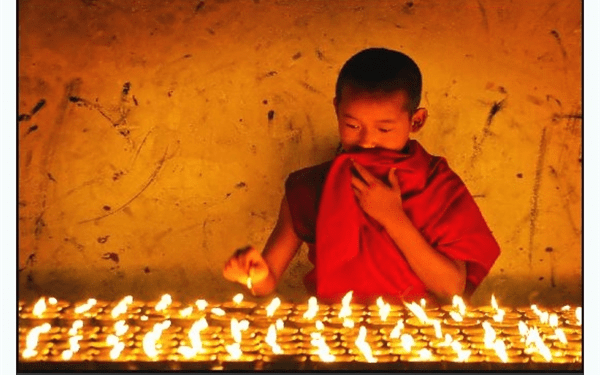
This verse also mentions the quarters of the Circle Journey, the Yoke, the Golden Circle, and the Mount (Zion in Judaism, Meru or Sumeru in Hinduism and Buddhism, and Jabal an-Nūr in Islam).
Let’s now see what we find in 2 Chronicles 4:7. Let’s back up to include 4:6, because it contains an interesting mistranslation:
He made also ten lavers, and put five on the right hand, and five on the left, to wash in them: such things as they offered for the burnt offering they washed in them; but the sea was for the priests to wash in. And he made ten candlesticks of gold according to their form, and set them in the temple, five on the right hand, and five on the left.
The “he” referenced is Solomon, the Holy Spirit. And the word (kiyyor) translated as “lavers,” actually means “circles.” So, here’s what those two verses actually communicate:
Solomon made ten circles, five on the right-hand side and five on the left, to bathe the Self of the presiding priest of the Whole furnishing the ten lamps of the Golden Judgment placed within the Temple, five on the right and five on the left; the ten offering tables within the Tabernacle, five on the right side and five on the left, to bestow the water of God’s (me’ah) golden mizraq.
Firstly, a mizraq isn’t any old bowl or basin; its a bowl-shaped vessel whose principal purpose in Jewish temples is to give and receive the blood of a sacrificial offering, or to hold the wine or oil augmenting the sacred offering. Because it mediated matters of atonement and fellowship between God and His people, the mizraq is consistently presented as a sanctified article, set apart for use at the altar and never for common purposes.
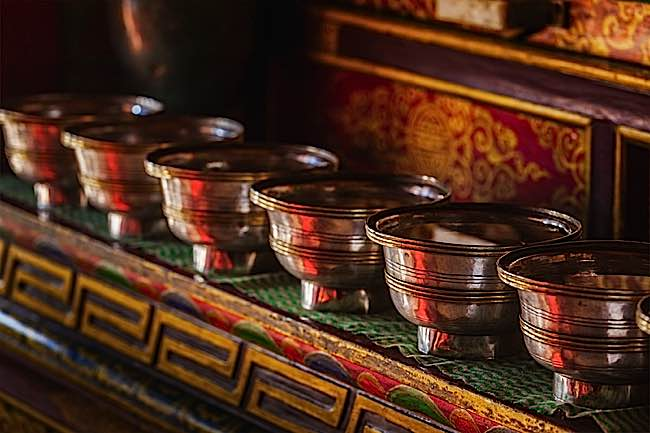
So, the Golden Mizraq mentioned in Chronicles is the vessel through which we give and receive the Living Water of God’s grace inside the ten Circles of the Sefirot, the ten lamps on the Menorah. And those ten circles also represent the offering Tables holding the Golden Vessels through which we give and receive the purifying waters of grace.
The Golden Judgment is the Golden Rule, the Law of Love mandating that we receive whatever we give. According to Course-Jesus, it was by reversing the Golden Rule that we brought the material world into existence. To make it disappear, we have to correct that illusion-manifesting error. We have to stop judging what we don’t understand, in other words.
Or as Jesus says in Matthew 7:
Judge not, that ye be not judged.
For with what judgment ye judge, ye shall be judged: and with what measure ye mete, it shall be measured to you again.
And why beholdest thou the mote that is in thy brother’s eye, but considerest not the beam that is in thine own eye?
He doesn’t mean we will be judged by God; he means the judgments we lay on others is a request for their reciprocation, under God’s Law of Love.
Not sure I shed any new light on the Sefirot, so let’s take a look at the various teachings about them.
Wikipedia tells us:
As revelations of the creator’s will (רצון, rāṣon), the sefirot should not be understood as ten gods, but rather as ten different channels through which the one God reveals His will. In later Jewish literature, the ten sefirot refer either to the ten manifestations of God; the ten powers or faculties of the soul; or the ten structural forces of nature.
The word “Sefirot” is derived from the Hebrew root ס-פ-ר, which forms the basis for the words book (ספר), story (סיפור), number (מספר) and sapphire (ספיר). Gershom Scholem writes that “as early as the Sefer ha-Bahir it is related to the Hebrew sappir (“sapphire”), for it is the radiance of God which is like that of the sapphire.” Some have suggested that the root could derive from the Akkadian word šiprum (meaning message or report); while others have argued that the use of term ‘sefirah’ was influenced by the Greek word for “sphere”. Both positions are disputed.
Gershom Scholem writes “That many themes are united, or sometimes simply commingled, in this concept is demonstrated by the profusion of terms used to describe it.” Scholem states that Kabbalists “employed a wealth of synonyms” and that the Sefirot are “also called ma’amarot and dibburim (“sayings”), shemot (“names”), orot (“lights”), kohot (“powers”), and ketarim (“crowns”; since they are “the celestial crowns of the Holy King”), middot in the sense of qualities, madregot (“stages”), levushim (“garments”), marot (“mirrors”), neti’ot (“shoots”), mekorot (“sources”), yamim elyonim or yemei kedem (“supernal or primordial rays”), sitrin (“aspects,” found mainly in the Zohar), ha-panim ha-penimiyyot (“the inner faces of God”)”. Scholem adds that “A long list of other designations for the Sefirot can be found in Herrera, Sha’ar ha-Shamayim, 7:4.
The Kabbalah is an advanced form of the Atonement curriculum, but it needn’t be as complicated as many make it out to be. So, let’s break it down into digestible chunks, starting with identifying the five Sefirot on each side of the Inner-Altar of God (Da’at). Rightly understood, each of the Sefirot represent the two choices available to us at each stage of the journey.
On the right-hand side, we have:
Keter (the crown = the choice between glorification of the True Self in Heaven or of the false self on earth)
Chokmah (wisdom = the choice between spiritual knowing and earthly learning)
Chesed (love = the choice between loving thoughts and fearful thoughts)
Netzach (eternity = the choice between living in the present moment and living for the past and future)
Tif’eret (glory) identified by Kabbalist scholars as the sixth Sefirot, it’s actually the Real World directly underneath Da’at)
On the left, are these five:
Bin-ah (Son = the choice between the son God fathered and the son the ego fathered, i.e., Son of God vs. Son of Man)
Guvurah (strength = the choice between God’s strength and worldly strength)
Hod (majesty = the choice between the spiritual grandeur achieved through grace and the ego’s outward trappings of grandiosity)
Yesod (foundation =trust in God’s plan and communications over the ego’s God-blocking counterparts)
Malkuth (kingdom = the gate into the Temple, accessed by choosing the Kingdom of God over the Kingdom of Darkness)

Yes, my definitions differ somewhat from what many Kabbalists explain, because I used the Course to frame the teachings. And Jesus does specifically mention all the choices delineated. Moreover, the Kabalistic Tree of Life isn’t made up of vertical pillars or trunks, as many profess; it’s made up of eight smaller circles within a larger circle, with two more circles within. Those two innermost circles are Da’at and Tif’eret. Da’at means the same as the Greek word gnosis and the Sanskrit word Moksha, which is “experiential knowledge of God.”
Tif’eret is more troublesome. Supposedly, the word means “splendor,” “beauty,” or even “miracles,” but I have my doubts. Why? Because ‘eret means “land” in Hebrew, suggesting that Tif’eret means “land of Tif”. Land of Beauty? Land of Splendor? Land of Miracles? Maybe, but I’m more inclined to believe Tif is an abbreviated form of Tiphsah, a significant city mentioned twice in the Bible; first as the northern boundary of Solomon’s empire on the Euphrates River (1 Kings 4:24) and later as the target of a military attack by King Menaham of Israel when his subjects refused him entry (2 Kings 15:16). In Hebrew, menaham means “comforter”– a moniker assigned to the Holy Spirit.
When factored together, these clues suggest that the inner-circle land of Tif is, in truth, what Course-Jesus terms “the Borderland.” And his description of this metaphoric land aligns perfectly with the position of Tif’eret on the Tree of Life:
There is a borderland of thought that stands between this world and Heaven. It is not a place, and when you reach it is apart from time. Here is the meeting place where thoughts are brought together; where conflicting values meet and all illusions are laid down beside the truth, where they are judged to be untrue. This borderland is just beyond the gate of Heaven. Here is every thought made pure and wholly simple. Here is sin denied, and everything that is received instead.
This is the journey’s end. We have referred to it as the real world. And yet there is a contradiction here, in that the words imply a limited reality, a partial truth, a segment of the universe made true. This is because knowledge makes no attack upon perception. They are brought together, and only one continues past the gate where Oneness is. Salvation is a borderland where place and time and choice have meaning still, and yet it can be seen that they are temporary, out of place, and every choice has been already made.
From what he says, we can ascertain that Tif’eret is indeed “the Borderland” beyond the Holy Spirit’s Temple. And that Borderland also is the Meeting Place, “the lawn outside the gate of heaven,” and the Real World. The gate itself is Da’at, the Golden Door leading back into Paradise.
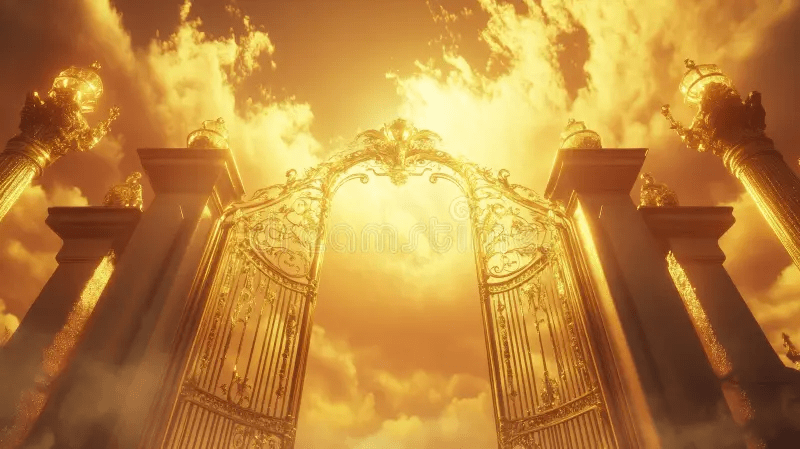
All of this affirms what I already knew: the Kabbalistic Tree of Life maps the the Soul’s Journey — the Circular Path of the Flaming Sword we started at the gate of the Garden of Eden and now must retravel (i.e., retrace our steps) to return to that starting gate — the Golden Door guarded by the Flaming Sword.
What the Tree of Life further represents is the Mirror of God. Look at the figure. Does it not resemble a hand-mirror? The base of the handle is Malkhut (the overlapping kingdoms or worlds) proceeding to Yesod (the overlapping foundations of thought [fear-based or love-based], only one of which is true). So, what the Sefirot primarily represent are the broken pieces of the Mirror of God we have to piece back together again before we can “see God’s reflection” in everything.
Or, as Course-Jesus explains:
Could you but realize for a single instant the power of healing that the reflection of God, shining in you, can bring to all the world, you could not wait to make the mirror of your mind clean to receive the image of the holiness that heals the world. The image of holiness that shines in your mind is not obscure, and will not change. Its meaning to those who look upon it is not obscure, for everyone perceives it as the same. All bring their different problems to its healing light, and all their problems find but healing there. (ACIM, T-14.IX.7:1-4)
With regard to the mirror, he also says:
You are a mirror of truth, in which God Himself shines in perfect light. To the ego’s dark glass you need but say, “I will not look there because I know these images are not true.” Then let the Holy One shine on you in peace, knowing that this and only this must be. His Mind shone on you in your creation and brought your mind into being. His Mind still shines on you and must shine through you. Your ego cannot prevent Him from shining on you, but it can prevent you from letting Him shine through you. (ACIM, T-4.IV.9:1-6)
He further states:
In this world you can become a spotless mirror, in which the Holiness of your Creator shines forth from you to all around you. You can reflect Heaven here. Yet no reflections of the images of other gods must dim the mirror that would hold God’s reflection in it. Earth can reflect Heaven or hell; God or the ego. You need but leave the mirror clean and clear of all the images of hidden darkness you have drawn upon it. God will shine upon it of Himself. Only the clear reflection of Himself can be perceived upon it.
Reflections are seen in light. In darkness they are obscure, and their meaning seems to lie only in shifting interpretations, rather than in themselves. The reflection of God needs no interpretation. It is clear. Clean but the mirror, and the message that shines forth from what the mirror holds out for everyone to see, no one can fail to understand. It is the message that the Holy Spirit is holding to the mirror that is in him. He recognizes it because he has been taught his need for it, but knows not where to look to find it. Let him, then, see it in you and share it with you.
So, the Tree of Life and/or Path of the Flaming Sword mapped out by the Sefirot is that inner-mirror of God’s Reflection. And the Sefirot represent the wrong-minded choices we made to darken that mirror and now must make again rightmindedly, to see the Face of God.
Makes sense, right?
The pillars aren’t actual pillars; they’re the two Great Rays, the Greater and Lesser Lights showing us the way back to the Golden Door. Those two rays are:

–The Moon Ray of divine grace, the strength of God emanating from the Great I Am (Boaz in Judaism, Soma or Chandra in Hinduism, Ida in Yoga, and Al-Qamar in Islam).
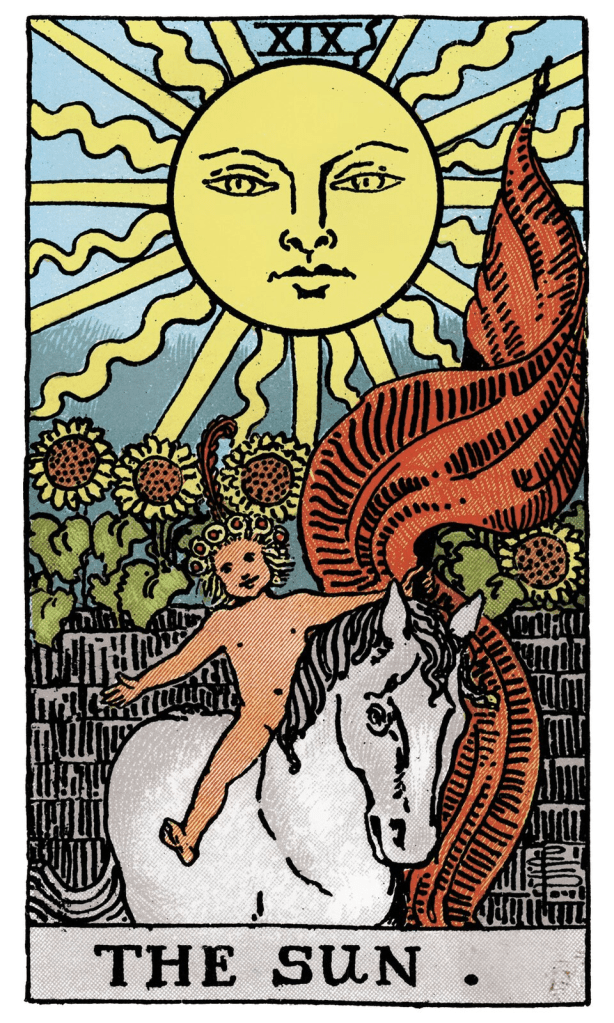
–The Sun Ray of divine glory shining from the Solar Logos (Jacim in Judaism, Surya in Hinduism, Pingala in Yoga, and Al-Sham in Islam).
And those two rays are, I believe the anointing oils Zechariah saw spilling into a golden offering-bowl from two golden pipes. Those two oils fuel the lamps of the Golden Menorah–the offering lamps within us fueled by the two olive trees, (the Christ presence and the God presence).
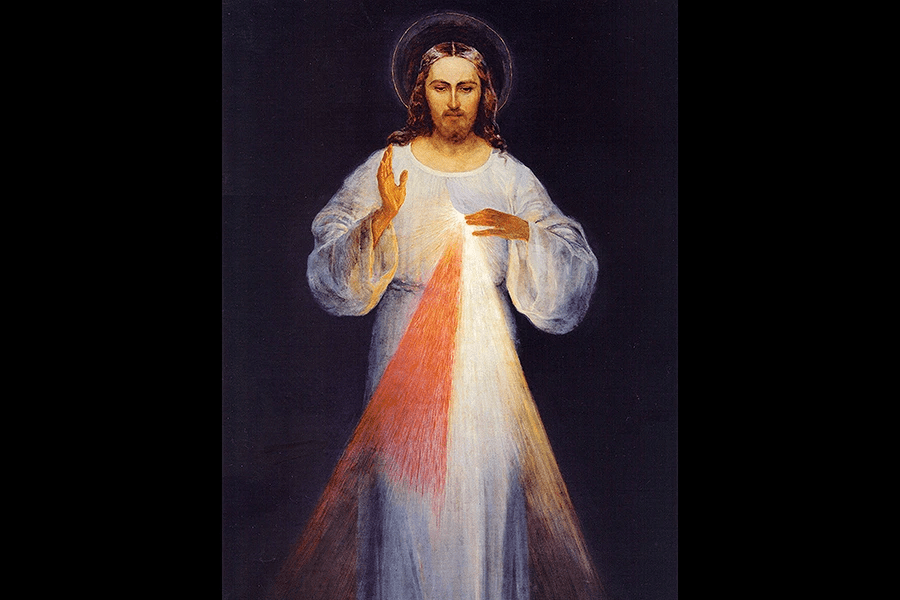
Which shines on which side of the Menorah? As Jesus showed Sister Faustina, the Red Ray shines on the left-hand side (underneath or behind the illusion), whilst the pale ray shines on the right (ahead or of above the illusion, leading the way).
Let’s now bring the Mahadivyas into the picture, the ten wise goddesses of Hinduism mentioned in the Rigveda’s second Sukta. Pictured below, they are (top row, from left) Kali, Tara, Tripura-Sundari, Bhuvaneshvari, Bhairabi (bottom row, from left) Chinamasta, Dhumavari, Bagalamukhi, Matanga, and Kamala.
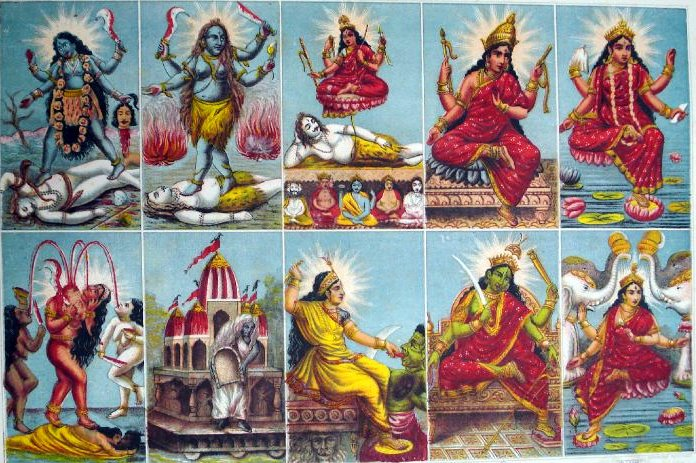
Do these these ten devis match up with the Sefirot? And, if so, which is which? Not sure I can pull this off, but I’ll give it a try. If they are named and pictured in order, then Kali, Tara, Tripura-Sundari, Bhuvaneshvari, Bhairabi are the left-hand Sefirots of the Red Ray; making Chinamasta, Dhumavari, Bagalamukhi, Matanga, and Kamala, the right-hand powers of the Pale Ray.
When we understand that these ten wisdoms represent the faces of God, as well as the choices presented to us on the road back to Heaven, their rather violent depictions in Hinduism make much more sense.
This all begs a key question: are there seven lamps on the inner Menorah or ten? The answer has to be that there are, in fact, two menorahs. The one Solomon placed in his own Temple has ten lamps (the Sefirot), whilst the one the Great I Am commanded Moses to make in one piece to “purify the Golden Circle of God’s Whole Creation” has only seven lamps.
In Hebrew, the name Moses means “drawn out of the water.” And in the Biblical allegory, Moses is placed in the Nile River by his mother, and later rescued by Pharoah’s daughter, who raises him as the Prince of Egypt. After he’s grown, Moses frees the Judeans enslaved by Pharaoh, parts the Red Sea, follows the Pillar of Cloud, raises the serpent in the desert, and eventually ends up at the Resting Place of the Wellspring. All of this is, of course, allegorical. And the same illuminating allegory is found in Quran 28:5-13, but told in slightly different words.

Let’s now harken back to my retranslation of Genesis. In case you missed it, the first verse reads:
The Chief Shepherd, Elohim produces the waters of salvation within the Land of the Living God — the Land of the Living God existing in the desert of unreality obscuring the presence of the Primordial Ocean the Breath of Elohim hovers over nurturingly as God’s Face in the water.
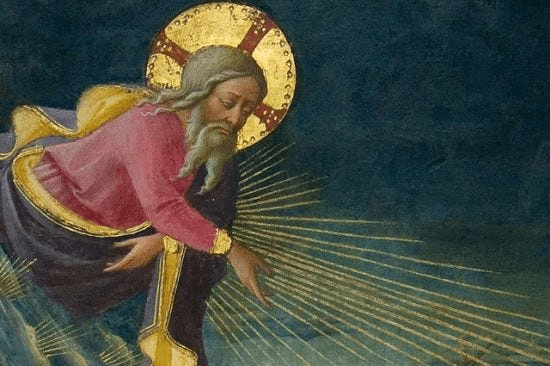
The breath of Elohim is Ruach/Vayu, the reflection of God’s Face in the waters underneath the illusion. This tells us that Ruach/Vayu, the Cosmic Breath, IS the reflection of God in the world.
Course-Jesus also tells us the Holy Spirit holds the mirror of God inside him. So, Ruach/Vayu is the Holy Spirit, as is Solomon, who placed the ten-lamp menorah within his own Temple. And the Rig Veda’s second Sukta also says Mitram, the friend of Rama (Vayu) summons the pure-minded Varunam (the waters of Unam — meaning the Waters of Oneness and/or the Waters of Shiva’s Name) working through the ten female sages of consciousness, the shining handmaids of disciplined spiritual practice.
Ergo, the ten handmaids are the powers of the Holy Spirit reflecting God’s Face in the Cosmic Ocean underneath the illusion of solid matter.
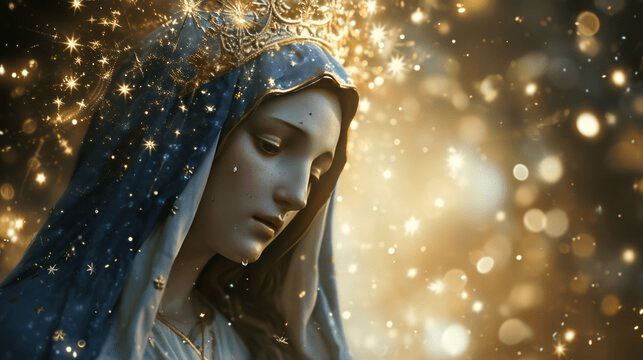
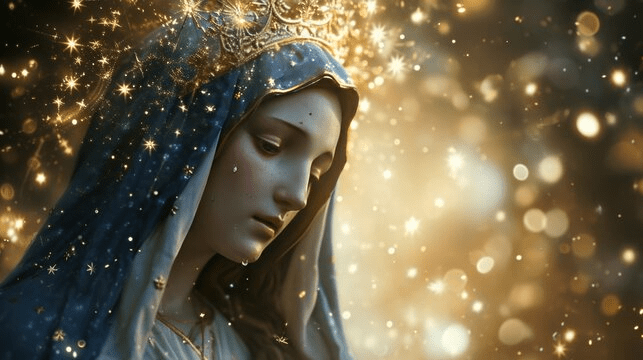
In Catholicism, the ten shining handmaids are represented as the ten virtues of the Blessed Virgin, which are Humility, Faithfulness, Obedience, Prayer, Self-denial, Purity, Charity, Patience, Sweetness, and Wisdom. I won’t attempt to match them to the Sefirot, but I will compare them to the ten characteristics of God’s Teachers identified by Course-Jesus in the Manuel for Teachers. Those ten characteristics are Trust (the foundation), Honesty, Tolerance, Gentleness, Joy, Defenselessness, Generosity, Patience, Faithfulness, and Open-mindedness.
What more can I say? Except that the same golden threads of truth run through all the scriptures, but must be untangled and polished to be recognized in their original gleaming forms.
 The Holy Meeting Place
Leave a comment