
It’s finally time to talk about Yoga. And by Yoga, I mean True Yoga, the eight-limbed spiritual discipline through which we yoke our minds to the sound of God’s Voice, “the Reminder” we spoke of last time. So, put away your mats, blocks, straps, and any other “props” you’ve been deceived into buying, because Yoga is a Sanskrit word meaning “to yoke” or “to join”– making Yoga synonymous with Qarana–the word from which Qur’an probably derives.
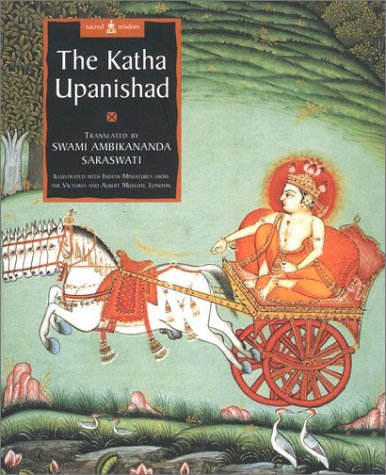
As a spiritual discipline, Yoga was first mentioned in the Katha Upanishad, a sacred Hindu text dating to somewhere between the 5th and 3rd centuries BCE.
According to Google,
This ancient text emphasizes yoga not as a physical practice but as a state of mind and union with the Higher Self (the Atman), a process of redirecting the mind inward to gain liberation from suffering and death. It presents yoga as the means to achieve a unitive state and immortality through inner discipline, not through external rituals or physical poses.
Additionally, the Katha Upanishad presents Yoga as a means toward achieving all of the following:
–stillness of the lower mind and intellect
–the highest state of spiritual Self-Knowing
–oneness with the True Self or Atman
–liberation of the Soul from the cycle of rebirth
To illustrate the process, the Upanishad uses the same chariot analogy found in many scriptural texts. In that analogy, the reasoning part of the intellect (the Buddhi or Witness) is the charioteer, the two minds (lower and higher) are the reins, and our thoughts are the horses. To reach the destination (Moksha or Enlightenment), the charioteer (higher reason) must have firm control of the reins (the two minds we choose between in every moment) to guide the horses (our thinking) along the right path.
And this is precisely what Bible-Jesus refers to in Matthew 11:28-30, when he says:
Come to me [the Christ Self or Mind], all you who are weary and burdened [by the lower mind], and I will give you rest [in the Resting Place}. Take my yoke {the Holy Spirit or Reminder] upon you and learn from me, for I am gentle and humble in heart, and you will find rest for your Souls. For my yoke is easy and my burden is light.
In the Course, he further clarifies the meaning of this statement as follows:
Remember that “yoke” means “join together,” and “burden” means message. Let us reconsider the biblical statement “my yoke is easy and my burden light” in this way. Let us join together, for my message is Light.
According to Dictionary.com, the word “burden” can indeed mean “the main point, message, or idea.” Thus, what Jesus explains in Matthew and the Course is this: To extend the healing power of the radiant Christ Self, we must “yoke” our minds together in the Greater Whole we broke into pieces when we reversed the Golden Rule.
This is, as Course-Jesus repeatedly explains, the ONLY way to save ourselves and the world. Trying to change anything at the external level of form is, therefore, a complete waste of time. How could it be otherwise when everything we perceive as “outside us” or made of solid matter is a materialized projection of our thoughts? guilty thoughts, in most cases, we’ve flung outward to “pin” them on somebody else. Kind of like the old party game with the donkey; only, in Sat-an’s version, we play “pin the blame on the sinner.”

What we fail to realize is that the “sinner” we’ve targeted is, in truth, a broken-off piece of the Mirror of God’s Wholeness, reflecting back to us a wrong-minded judgment. And that judgment imprisons us in our own self-constructed Hell Loop, (to borrow a term from the Netflix series “Lucifer”) The Hell Loop idea was, as it happens, one of the few things the show’s writers got right in terms of how things work in the dream-realm.
We’re getting a bit off-track, but this idea is worth exploring. So, kindly indulge me.
According to the Lucifer Wiki,
Hell is basically a labyrinth of a billion doors, and behind each door, every condemned soul gets their own personalized eternal torment. This torment is colloquially referred to as a Hell Loop, as the torture the condemned soul experiences plays in a constant, repetitive loop, regardless of the length of time in each loop. Each Hell Loop and the person being tortured inside is accessed through a specific door.
A Hell Loop is made from the memories of the person trapped inside and it causes them to live through their worst experiences and nightmares over and over again. With the exception of the tortured soul, every person in the loop is played by a demon.
All true, actually — even the demon part. Because, technically speaking, the individual personas the Ego Mind “scripts” for us are indeed “demonic” — or, more accurately, daemonic, the Latin term from which the English word “demonic” derives. Originally, daemon — “demon” in English — described a lesser deific power that promoted division. The word “demon” didn’t take on evil connotations in the English-speaking world until around 1200 CE.
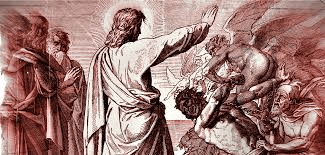
The Bible mentions Jesus casting out evil spirits or “devils” fifty-five times, though only a few instances are described in detail. Were the people he healed truly “demon-possessed,” as the scriptures seem to imply?
Yes and no. The Greek word translated as “devil” or “demon” in the KJV Bible was daimon or daimonian, the equivalent of daemon. And, in the 2nd Century CE, when the canonical gospels were chosen, the Greek word daimon still carried its original meaning of lesser spirit or lower thought. So he did cast out “daemons” or lower-minded thinking to heal lepers and cripples, but not the kind of “demons” featured in Netflix’s “Lucifer.”
And this is why etymological investigation is imperative when interpreting the scriptures.
While we’re on the subject of demons, I want to share something Jesus showed me several years ago. At the time, I was teaching the Course to a couple of students I didn’t like very much. Each of them showed up for their weekly lessons at least thirty minutes late. Sometimes they kept me waiting over an hour, always without calling or texting.
I considered this rude and disrespectful of me and my time, but I also knew it was a lesson of some sort. Plus, whenever I complained, they would turn it back on me as an “ego” problem I needed to correct.
And maybe it was. But letting these two women continue to disrespect me and waste my time didn’t feel right, either. So, I asked Jesus to show me what I needed to learn from the situation. In response to my request, he showed me an Iron Maiden like those pictured below.
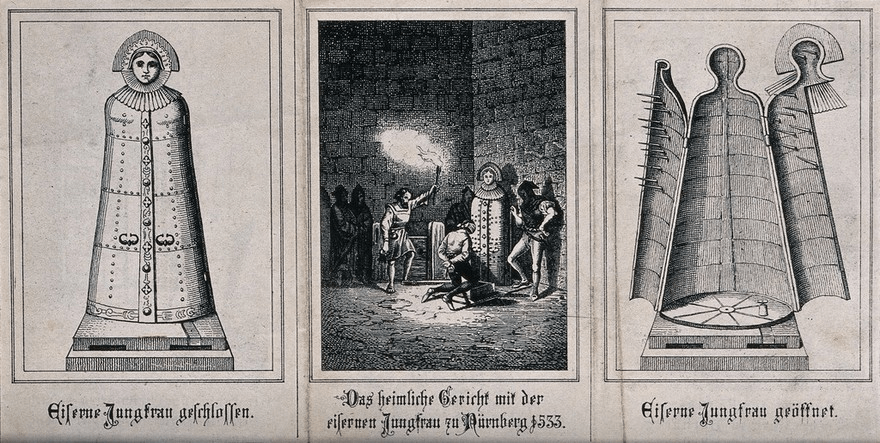
And, as usual, I inherently knew what the image meant. The torture device represented the ego-persona encasing the Soul. And it was my job, as a Teacher of God, to love and help NOT the Iron Maiden on the exterior, but the Soul trapped inside. And that can’t really be done at the level of bodies (as I’ve since learned), unless the person is receptive to correction. And these two women only pretended to be interested in learning the Course, as evidenced by their chronic tardiness and lame excuses week after week for failing to do the assigned Workbook lessons.
Though conflicted, I continued to teach them. They still came late or not at all, without any notice. Then, one of them got sick and couldn’t come to my house anymore, but asked me to carry on teaching her over the phone. I didn’t like the idea, but allowed her to talk me into it. The other one showed up later and later, and then stood me up. When I complained, she offered a preposterous solution: She would call beforehand only if she was coming. Despite my objection to being left in the lurch at her whim, she neither called the next week nor showed up.
At this point, I’d had enough. So, I consulted Jesus again, expecting him to advise me to forgive them and strive to live in the present- – or something else along those amorphous lines.
Instead, he asked me a simple, straightforward question: “Who has all the power in these relationships?”
“I do,” I replied, seeing only then that without my willing participation there was no relationship.
I can’t recall exactly what Jesus said in response, but it was something about taking back the power I’d given away to these “egos” or “demons.” And this was definitely a lesson I’d received many times in the past. I’ve always found it difficult to set healthy boundaries with people who take advantage of my generous nature, and then use shame and guilt to keep the upper hand when I try to stand up for myself. Generally, I suffer in silence until I go ballistic, terminate the relationship, or both. And I’d already reached the breaking point with these two students.
So, after an anguishing night of reflection, I texted them both to say I’d decided to stop teaching. I didn’t make it personal or offer justifications. I simply resigned, thereby severing our ego-body ties. When one of them tried to guilt-trip me, I blocked her. Then, I blocked the other as an offensive tactic.
I blocked their Iron Maidens, but not their Souls, which I continued to bless on a regular basis with love and light in the Golden Circle of Forgiveness.
Long story short, what I learned from this experience is that when Jesus tells us, in John 13:34, “Love one another as I have loved you,” he means to love our brothers as HE sees them — i.e., as the reflections of God they really are underneath or inside Sat-an’s Iron Maiden encasement.
This is, I believe, the true meaning of the adage, “Hate the sin. Love the sinner.” Which should be modified to “Deny the sin’s reality and love the innocent Soul underneath.”
Let’s return to the subject of Yoga. Since the word first appeared in the Katha Upanishad, many different schools and philosophies of Yoga have sprung up all over the world. And, as with all forms of the universal course, Sat-an did his best to strip-mine the original teachings until, in many parts of the world, only the asana component remains — the one aspect of True Yoga involving the body. And from there, the practice further devolved into Hot Yoga, Bikram Yoga, and (God help us) Goat Yoga.

These bizarre methods may be “therapeutic” as the world defines “therapy,” but they have nothing to do with yoking our minds to the God Mind. Neither do they honor the Eight Limbs described in the seminal early texts delineating the theories and practices of True Yoga.
As stated at the start of this post, the earliest of those texts is the Katha Upanishad. One of the mukhya, primary, or first twelve Upanishads of Hinduism, the Katha presents its wisdom-teachings as a dialog or conversation between the son of a sage (Nachiketa) and the Hindu deity, Yama.
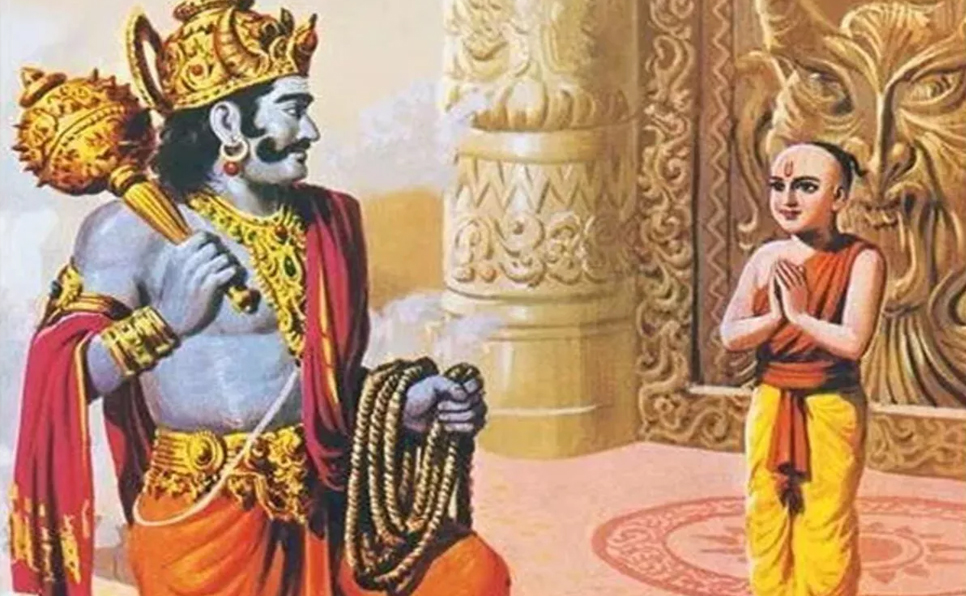
As stated earlier, Yama is NOT the god of death, as generally presumed. Rather, he represents the “seed” (of the True Vine) and/or the “Divine Spark” (of the Eternal Fire of God’s Presence). From inside the Muladhara chakra, he guards the first or southern gate of the Temple. That gate leads into the first quadrant of the Circle-Journey, the quadrant Hindus call “Dharma.”
Although Dharma has no clear definition, the word generally refers to the process of “seeking and finding the right-minded way to live in the world.” And that is indeed our Soul’s mission in the first quadrant of the Wheel.
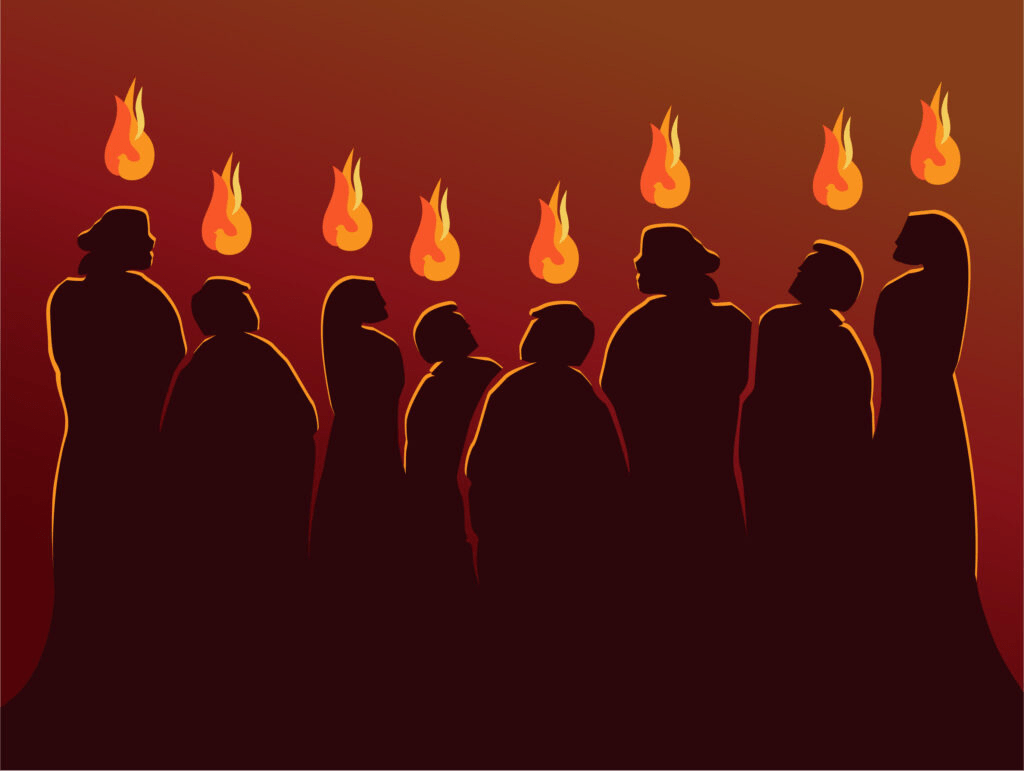
In Chinese mythology, Yama is the Cinnabar or Vermillion Dragon, Ao Qin. In the Abrahamic faiths of Judaism, Christianity, and Islam, he is the Archangel Auriel, Uriel, and Azrael, respectively; the “angel of salvation” whose name means “Light of God” or “Flame of God.” In most iconographic depictions of Uriel, he is shown holding a sword (representing a Divine Thought attribute) and a tongue of flame or flaming pearl (representing the presence of the Holy Spirit within our minds).

That flaming pearl also is 1) the fiery pearl seen in ancient Chinese depictions of the four Great Dragons 2) the agni-magni or “pearl of divine fire” mentioned more than once in the Rig Veda, and 3) the tongues of fire described in Acts 2:3.
In some Hindu teachings, Yama is said to be the Keeper of the Karmic Record who decides where our Souls “go” after death. He keeps track, in other words, of both our karmic debts and our progress in the universal “course” of debt-forgiveness. He is, in effect, the “game-marker” tracking our progress, position, score, and/or status on the Circle-Journey. At the end of each lifetime, he weighs these factors together to determine where on the Wheel to place each journeying Soul at the start of its next incarnation. We might, for example, move ahead to the next quadrant, remain where we are, or even go backward. We might also be assigned to another planet in a different universe.

In the Katha Upanishad, the conversation between Nachiketa and Yama evolves into a discussion of the nature of man, knowledge, Atman (Higher Self), and Moksha (enlightenment or Mind Awake). One of the most widely studied Hindu texts, the Katha Upanishad asserts not only that “Atman exists,” but also that seeking knowledge of the Atman is both the intended purpose of mortal existence and the path to “Highest Bliss.”
And the Course asserts very much the same thing.
These assertions appear to contradict Buddhism’s contention that “Soul, Self does not exist” and one should seek “Emptiness (Śūnyatā), which is Highest Bliss.” The apparent contradiction arises from the erroneous translation of Sunyata as “emptiness.” A marriage of su (holy or divine) and nyata (reality), Sunyata actually means “Divine Reality” or “Holy Truth.” And, in that sense, seeking Sunyata does indeed lead to “Highest Bliss.”

The second-oldest text advocating the practice of Yoga is the Bhagavad Gita or “Song of God.” Like the Katha Upanishad, the Gita takes the form of a conversation — in this case, a chin-wag between Lord Krishna, and his chariot-passenger, Prince Arjuna.
Dating to around 500 BCE, the Gita is part of the Mahabharata, a long and complex epic poem that appears to tell the story of the Kurukshetra War between two branches of the Kuru family, the Pandavas and the Kauravas. I say “appears to tell the story” because the Mahabharata is, in fact, allegorical rather than historical.
As are all true scriptural texts.
The Mahabharata, and the Gita by inclusion, is what’s known as Smriti — one of two primary categories of sacred texts in the Hindu tradition. Meaning “that which is remembered,” Smriti allegedly refers to texts generated through human memory and tradition. More likely, Smriti refers to “that which is remembered” through the Holy Spirit’s agency. The mythic Puranas are Smriti, for example, as is the Ramayana — another great epic of the sacred Hindu literature.
The other, more exalted category of sacred texts is called Shruti, which means “that which is heard.” Shruti texts are those believed to have been divinely revealed or dictated to human scribes. The Vedas are Shruti, for example, as are the Upanishads. And among the four Vedas, the Rig Veda is rightly revered as the oldest and holiest. The Rig Veda is, therefore, the “king of kings” among the sacred texts in Hinduism.
Keep that in mind, because we’ll be spending quality time with the Rig Veda in future posts.

Let’s return to the Bhavagad Gita, which (as explained) takes the form of a conversation between Prince Arjuna and Lord Krishna on the edge of a battlefield. The battle taking place is a “righteous” war between the Pandavas and Kauravas – the two families discussed in the Mahabharata. A Pandava, Prince Arjuna has arrived at the scene in a chariot driven by Krishna.
As the narrative opens, Arjuna is conflicted about joining the battle. On the one hand, he feels obligated to help his family; on the other, he despairs over the violence and death he might cause, witness, and/or experience. Immobilized by indecision, the Prince seeks the counsel of Krishna. In Course terms, Arjuna stands at “the branch in the road,” unsure which way to go. In the ensuing verses, Krishna advises the Prince on a broad range of topics related to the theory and practice of Yoga.
The battlefield setting – together with his role as charioteer – casts Krishna as the “Voice of Higher Reason” in the epic. More specifically, Krishna plays what yogis call the “Buddhi” or “the Witness.” In the Course, Jesus regularly refers to this part of the mind simply as “reason.” Below is one example of how he uses the term in this way:
Be certain God did not entrust His Son to the unworthy. Nothing but what is part of Him is worthy of being joined. Nor is it possible that anything not part of Him CAN join. Communication must have been restored to those who join, for this they could not do through bodies. What, then, has joined them? Reason will tell you that they must have seen each other through a vision not of the body, and communicated in a language the body does not speak. Nor could it be a fearful sight or sound that drew them gently into one. Rather, in each the other saw a perfect shelter where his Self could be reborn in safety and in peace. Such did his reason tell him; such he believed because it was the truth. (ACIM, T-22.I.9:1-9)
In the Gita, Krishna tells Arjuna that meditation, which trains the mind to overcome the enemies of mita (limitation) and chitta (wrongminded or worldly learning and conditioning), is a spiritual warrior’s most powerful weapon.

Krishna also says asceticism does nothing to bulwark the Higher Mind against attack from the lower mind. These ideas agree with the Course, which also advocates “going within” to undo the limitations imposed by the Ego Mind’s thought-system and sub-conscious conditioning.
Like Krishna, Course-Jesus also says asceticism – a lifestyle equating the egoic concepts of deprivation, sacrifice, and suffering with spiritual purification – is a waste of time. Training the mind to silence Sat-an’s endless chattering is, both Gurus agree, a far more productive spiritual discipline.
Krishna then explains yoga sādhanā – the spiritual methods for reuniting the mind with God’s. A sādhak or yogi, he tells Arjuna, should strive to keep the mind as steady in meditation as a flame or lamp in a windless place. This is, in fact, a great and useful metaphor, which I refer to often while meditating. Thusly restraining the mind is difficult, Krishna acknowledges, but not impossible with dedicated practice. Whenever the mind wanders, he tells the prince, he should simply bring it back to the object of meditation: thereby “yoking” his mind with God’s. Through this practice, says Krishna, the mind gradually becomes purified enough to enable transcendence.
What he’s talking about is, of course, “joining” our mind with the Song of God — the vibratory tone of Creation’s Wholeness being sounded from the Throne of God by the Logos: Elohim in Judaism, Jesus in Christianity, Allah in Islam, and Surya (the sun god) in Hinduism.

When Arjuna asks what happens to those who fail to steady their minds in this way, Krishna assures him that anyone who strives to commune with God will eventually achieve the goal. Course Jesus says virtually the same thing in Workbook Lesson 131: No one can fail who seeks to reach the truth, among other places in the Course.
Krishna next explains that God keeps track of our spiritual progress in each life, affirming what I just explained about Yama/Uriel. With each new incarnation, he says, we start out where we left off in the last one. Like grade-levels in school, we advance with each subsequent “term” (lifetime) until we finally graduate. In The Disappearance of the Universe, Gary Renard’s Ascended Masters confirm that this is indeed how the at-one-ment set-up works.
Chapter Six of the Gita ends with Krishna telling Arjuna that a yogi (one who strives to unite with God in meditation) is superior to the ascetic (tapasvī), the scriptural scholar (jñānī), and the ritual-focused worshiper (karmī). The highest among all the yogis, he then adds, is the one who engages in loving devotion to God (bhakti) and fulfills his duty to uphold right order (dharma or rita) through “selfless action.”
What Krishna means by “selfless action” is activity motivated by spiritual guidance rather than by the false or ego self. Christ-directed action is, in fact, the ONLY kind that does NOT generate karma. As Hindu theology correctly espouses, karma – both good and bad – binds us to the Wheel of Rebirth. To get off the Wheel, we must expunge the Karmic Record allegedly kept by Yama. We must, in other words, owe or be owed nothing in Yama’s Ledger of Accounts. And yes, the Course says pretty much the same thing, in less direct language.
How do we expunge our karmic debts? The short answer is: by perceiving ourselves and all other lifeforms ONLY as the Pure, Holy, and Innocent reflections of God we truly are.
Or, as Jesus scripts us to repeat in Workbook Lesson 304: Let not my world obscure the sight of Christ:
I can obscure my holy sight, if I intrude my world upon it. Nor can I behold the holy sights Christ looks upon, unless it is His vision that I use. Perception is a mirror, not a fact. And what I look on is my state of mind, reflected outward. I would bless the world by looking on it through the eyes of Christ. And I will look upon the certain signs that all my sins have been forgiven me. (ACIM, W-304.1:1-6)
Here’s the longer answer: We erase our karmic debts through the joint practices of True Forgiveness and Non-Action or Yoga-Nidra. True Forgiveness erases our old debts, while Yoga-Nidra prevents the accumulation of new debts and/or credits.
In a nutshell, Yoga-Nidra is the practice of doing NOTHING in the world of form without direct spiritual impetus. And yes, Jesus does indeed advocate this practice when he urges us repeatedly — in the Bible and the Course — to “give up the world.” See, for example, Workbook Lesson 128: The world I see holds nothing that I want.

In many other chapters of the Gita, Krishna discusses the three gunas — the “modes of perception” shown in the image above. Notice that they’re positioned on a wheel — and where they’re positioned. Now, imagine that the Wheel is a compass, with Due North at the top and Due South at the bottom. Now, picture the wheel divided into quarters along the North-South and East-West axes, like the image below.

What we see is a super-simple diagram of the four quadrants of the Soul’s Journey. The right and left sides of the wheel represent our divided mind in the dream. The right-hand side (Jacim) represents right-minded thinking with the Holy Spirit, whilst the left-hand side (Boaz) represents wrong-minded thinking with the Ego. Each, as we see, is divided in half again, giving us the two levels of right and wrong thinking. The lower-lower mind is Tamas (immune to correction), the upper-lower mind is Rajas (seeking correction), the lower-higher mind is Sattva (corrected, but still dreaming), and the higher-higher mind is Moksha (awake in the Real World).
Does that make sense?
If not, it might make more sense once you know the definitions of these four words.
Tamas means “darkness,” “nothingness,” or “total ignorance” (mind asleep)
Rajas means “Royal,” as in the Royal Path to liberation (striving to awaken)
Sattva means “True Self” or True Perception (awake in the dream)
Moksha means Transcendence, Liberation, or Enlightenment (awake in reality)
Starting at the southernmost compass point, the journey begins in the first or southwest quadrant, where we sleep in Tamas, until we choose to awaken Yama by invoking the Holy Spirit. Only then do we really begin the journey, which starts in the quadrant of “Dharma” — seeking the rightminded way of living in the dream-world. The journey continues around through the subsequent quadrants of Artha (True Purpose) and Kama (Divine Love) before reaching Moksha, the final destination of Transcendence, Liberation, or Mind Awake. The journey ends where it began, at the southernmost point of the Circle — the gate or door by which Yama, the fully grown True Vine returns to the Greater Light from which he was born.
Now, having said all that, let me say this: The positions of the gunas shown on the image with Krishna aren’t right. And here’s the reason: Tamas is the lowest and darkest “mode of perception.” It would not, therefore, dominate the second quadrant of True Purpose. As I envision the set-up, Tamas is the “way of perceiving” we experience before we make the right choice to answer God’s Call to Awaken.
Or, to quote Course-Jesus:
Rest does not come from sleeping but from waking. The Holy Spirit is the Call to awaken and be glad. The world is very tired, because it is the idea of weariness. Our task is the joyous one of waking it to the Call for God. Everyone will answer the Call of the Holy Spirit, or the Sonship cannot be as one. (ACIM, T-5.II.10:4-8)
In Hindu philosophy, the gunas are woven into and color everything in “Brahmanda” — the “egg of perception” made by Brahma, the Ego Mind. In Brahmanda, these gunas supposedly drive and influence each person’s personality, emotions, thoughts, world view, and actions.
From my perspective, the gunas correspond with the Trilokas, the three primary realms of existence wherein we experience and “send out” the guna energy through our thought-offerings to the shared Higher Self.
In the Upper World, we generate Sattva thoughts; in the Middle World, we generate Rajas thoughts; and in the Lower World, we generate Tamas thoughts. And those thoughts effect more than our own ability to see the Light of Truth (Satya) through Satan’s “dark glass” of illusion.
Or, as Jesus explains in Workbook Lesson 54 (a review of earlier lessons): I am not alone in experiencing the effects of my seeing:
If [you] have no private thoughts, [you] cannot see a private world. Even the mad idea of separation had to be shared before it could form the basis of the world [you] see. Yet that sharing was a sharing of nothing. [You] can also call upon [your] real thoughts, which share everything with everyone. As [your] thoughts of separation call to the separation thoughts of others, so [your] real thoughts awaken the real thoughts in them. And the world [your] real thoughts show [you] will dawn on their sight as well as yours. (ACIM, W-54.3:2-7)
In Hindu philosophy, Souls move upward through the Gunas by breaking the Granthi barring their entry into the next higher World. In Sanskrit, Granthi refers to a difficult to break “knot,” “bond,” or “fetter.” These fetters “bar the door” into the next quadrant; so we’re stuck, more or less, until we “undo” the next Granthi. Meaningfully, these three “difficult knots” are associated with different chakras.
The first “knot” is called the Brahma Granthi. Linked with the Muladhara or Root Chakra, where Yama sleeps until awakened by our invitation to the Holy Spirit (Vishnu), the Brahma Granthi represents the dug-in mindset of spiritual denial. Ergo, breaking the chain of spiritual denial allows us to enter through the first gate guarded by Yama.
The second knot is the Vishnu Granthi, which is located between the Manipura and Anahata chakras. The Vishnu Granthi represents our worldly and emotional attachments. Undoing this knot entails, therefore, giving up the world, including breaking free of our emotional attachments to ego-body or “special” relationships.
The third knot is the Rudra Granthi, located between the Vishuddha and Ajna chakras. Associated with our ego-manufactured prejudices, opinions, and judgments, this knot is broken by the “Final Judgment,” which is made by us, NOT God, as Course-Jesus explains below:
Nothing the Son of God believes can be destroyed. But what is truth to him must be brought to the last comparison that he will ever make; the last evaluation that will be possible, the final judgment upon this world. It is the judgment of the truth upon illusion, of knowledge on perception: “It has no meaning, and does not exist.” This is not your decision. It is but a simple statement of a simple fact. But in this world there are no simple facts, because what is the same and what is different remain unclear. The one essential thing to make a choice at all is this distinction. And herein lies the difference between the worlds. In this one, choice is made impossible. In the real world is choosing simplified. (ACIM, T-26.III.4:1-10)
According to Google, “Untying this knot involves using discernment to distinguish between the ephemeral and the eternal, ultimately leading to a realization of oneness beyond individual consciousness.”
Breaking the Rudra Granthi, in other words, opens the Spiritual Eye, thereby catapulting our consciousness into the Sattva perception of Christ’s Vision.
That’s more than you probably need to know at this point, but keep it in mind for the future. And also be aware that all of this dovetails rather beautifully, when we better understand the dynamics of the at-one-ment process.
We’ve covered a lot of ground, so let’s leave it there for today. Next time, we’ll discuss the eight limbs outlined in The Yoga Sutras of Patanjali.

Until then, Om Hari Om and Namaste.
 The Holy Meeting Place
Leave a comment