December 2025
-

This post was supposed to address the Rigveda’s fifth Sukta, another wisdom-teaching about King Indra; but my inner-guru had other ideas. As established last time, King Indra represents the Red Ray of Peace producing the Amrita, the elixir of immorality or Blood of Christ, flowing down from the metaphoric “winepress.” That winepress, as we’ve learned,…
-
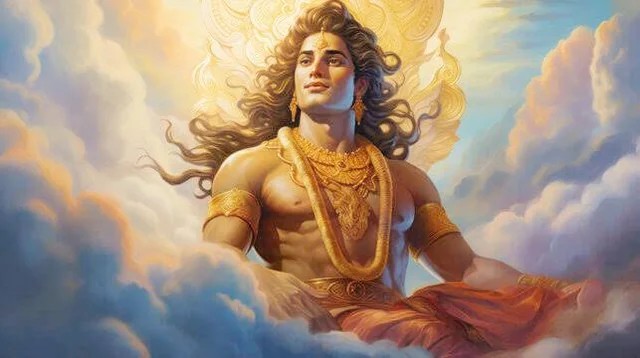
We now come to the Rig Veda’s fourth Sukta, the first of many presumably addressed to Indra, the king of the Hindu devas. As explained earlier, Indra personifies the Red Ray of the Father’s Will to make earth like Heaven. As such, Indra represents the most powerful force in the universe — the reason he…
-
Today, let’s talk about the Lord’s Prayer — the “example” Jesus gave his disciples as the “proper” way to pray. If you’re unfamiliar with this old standard, it reads thusly in the KJV Bible: Our Father, who art in Heaven, hallowed be thy name. Thy Kingdom, come; Thy Will be done; on earth as it…
-
I first drafted this post back in February 2024, after taking a few weeks off from blogging. Why the break? Mainly because I felt no compulsion to carry on. In hindsight, I can see that my lack of motivation was tied to my reluctance to continue translating the Rigveda. Who am I, after all, to…
-

Instead of rushing ahead to the Rigveda’s third Sukta, I want to spend more time on the ten risha (female rishis) referenced in the second Rik. In my last post, I equated those “shining handmaids” with the Mahedivyas or “great wisdom” goddesses of Hinduism, the Sefirot of Jewish mysticism, the lampstands in the Temple of…
-

Now that we’ve established that the divine force the Vedic rishis call “Agni” actually represents the Transformational Fire of God in our heart-of-hearts (the Inner Altar within the Temple of the Holy Spirit), let’s proceed to the Rigveda’s second Sukta. Long presumed to be a “hymn” extolling the virtues of “Vayu,” the alleged “god of…
-

Over the centuries, the illusion-manifesting Ego Mind (Brahma in Hinduism) has tangled the foundational teachings of the Great Rishis of India into such a snarled hairball of lies, it’s hard to know where to begin the “detangling” process. So, let’s start at the beginning, with the earliest and most sacred of the Hindu shruti (divinely…
-

Before we get started, let me state for the record that in no way do I consider myself an expert on Hinduism — not insofar as the world defines “expertise,” anyways. And, let me also just say that the deeper I wade into the Makara-infested waters of Hinduism’s multi-headed dog-ma, the more I wish I’d stayed…
-

Today, let’s continue our discussion of “The Fundamentals of True Yoga,” by turning to another highly revered text in the Hindu literature: The Yoga Sutras of Patanjali. Although published later than the Gita, The Yoga Sutras were reportedly compiled over many centuries. either by various sages using a common pseudonym (Patanjali) or by an Avatar…
-

It’s finally time to talk about Yoga. And by Yoga, I mean True Yoga, the eight-limbed spiritual discipline through which we yoke our minds to the sound of God’s Voice, “the Reminder” we spoke of last time. So, put away your mats, blocks, straps, and any other “props” you’ve been deceived into buying, because Yoga…
 The Holy Meeting Place