
Today, we’re going to explore and compare the seven “heavens,” “realms,” or “worlds” found in the scriptural texts of Judaism, Hinduism, and Islam. Are these seven “realms” the same seven ‘churches” or “assemblies” addressed by the Great Amen in the New Testament Book of Revelation? Let’s find out, shall we?
Today’s post is rather long, with numerous scriptural citations and retranslations, so kindly set your dial to studious mode and “tuck in” (as the Brits say).
Last time, we learned that the seven “churches” are what many eastern religions call chakras, a Sanskrit word meaning “circle” or “wheel,” The assemblies named in Revelation are, therefore, the seven “circles of spiritual purification” our Souls must pass through to remember the Truth of their Being.
Rightly perceived, those seven circles form an interlocking chain that pulls our Souls upward, step by step, through the “funnel” of the ego-undoing process. This might well be “the interlocking chain of forgiveness” Course-Jesus mentions early in the Text. He also says, 1) “Atonement works all the time and in all the dimensions of time,” 2) “time is a trick, a sleight of hand”, 3) time moves in a spiral rather than a straight line, and 4) he is in charge of time (and the Atonement). The interlocking chain of circles he describes probably looks like this, therefore:

Rather than this:

Are those seven circles or “churches” also the seven “heavens” identified in the Jewish Talmud as “distinct layers of the Celestial Realm,” as well as those referenced in the Holy Qur’an?
In Qur’an 17:44, we read:
The seven heavens and the earth and all who dwell therein glorify Him. There is not a single thing but glorifies Him with His praise, but you do not understand their glorification. Truly, He is forbearing and most forgiving.
It would seem so. But are they also the seven higher worlds or Lokas found in Hindu philosophy? Let’s explore that question. The lowest of those Lokas is said to be “earth,” above which can be found six “places of increasing wonder and delight where those who’ve accumulated good karma go after they die.”
The seventh Loka is, of course, the pinnacle.
According to Google, the seven Lokas of Hinduism are indeed associated with the seven chakras, “with each chakra corresponding to a particular world or level of existence. The human body’s seven chakras, which are energy centers, are seen as the microcosm that reflects the macrocosm of the seven higher worlds, or lokas.”
Apart from the location and description of the chakras, which are NOT in the physical body, the above explanation is probably fairly accurate; Assuming the chakras are, in fact, “energy centers.” In a manner of speaking, they definitely are — but not perhaps in the same sense most schools of yoga describe.
The concept of seven “heavens” also can be found in sacred texts as ancient as the Mesopotamian Epic of Gilgamesh, as well as in Babylonian astronomy and Jewish cosmogony. Sefer HaRazim, for example, a mystical “Book of Secrets” written in the fourth century AD, actually describes these seven spheres and the angels residing therein (the same “angels” addressed by the Great Amen in Revelation?).
My last post provided a brief overview of the chakras (based on my understanding of what they represent), and also shared what Revelation tells us about the churches in the KJV Bible. I did not, however, take the trouble to retranslate or interpret the messages given by the Great Amen to deliver to the aforementioned angels. In this post, we’ll revisit those passages (by and by) to learn what the Great Amen really said to and about each of the purely symbolic “churches.” We’ll also explore the teachings of Islam, Hinduism, and Judaism on the subject — to determine if we can’t all (finally and blessedly) get on the same page about what these seven “circles,” “churches,” or “heavenly spheres” actually represent.

Interestingly, the concept of the seven “churches” or “heavens” doesn’t factor into Christian theology, insofar as I’m aware. The seven levels named in the Talmud do, however, reportedly find their way into the Old Testament. Let’s start there. The seven levels, together with the verses in which each is supposedly mentioned, are as follows:
Level One (the lowest realm) is called Vilon (וילון), which is reportedly named in Isaiah 40:22. In the KJV Bible. That verse reads:
It is he that sitteth upon the circle of the earth, and the inhabitants thereof are as grasshoppers; that stretcheth out the heavens as a curtain, and spreadeth them out as a tent to dwell in:
Not only is the above an erroneous translation in which the word Vilon does NOT, in fact, appear, it also conveys an incomplete thought, which finishes in Isaiah 40:23. When merged together and correctly translated, the two verses read thusly:
To dwell in the circle of the Land of the Living, the home of the locusts stretching out Shamayin (the celestial sphere) like a fine veil to expand the Tabernacle (God’s Inner Altar), give the command making judgment (or punishment) in the Land of the Living empty, formless or unreal; and to plant and scatter seeds (miracles) whose stocks uproot, by the Land of the Living’s wind or breath blowing upon them, their withered and tempestuous chaff to make them commensurate with the Living Water of the Holy Ones.
So, the Circle mentioned herein is, in fact, the Circle of Forgiveness in the Land of the Living, wherein we gather to extend Christ’s miracles of forgiveness into the world, thereby expanding the Tabernacle or Inner-Altar of True or Miraculous Perception.
The locusts mentioned herein are, btw, a metaphor for the Cosmic Chorus we hear in our minds as a soft, multi-toned humming sound. Interestingly, locusts and/or grasshoppers (same word translated differently) are mentioned more than fifty times in the Bible–each time (I’ll wager) in reference to the Cosmic Chorus — and NOT to any plague or divine judgment (as fear-mongering Sat-an and his agents would have us believe).
The second “heaven” is identified in the Talmud as Raki’a (רקיע), a word we do find in Genesis 1:17–as raqiya‘, the word translated in the KJV Bible as “firmament” (meaning “realm”). By my calculations, the whole line should read as follows:
Elohim gave raqiya-Shamayin (the celestial realm of Shamayim) to give light in the Land of the Living, the domain of the Yowm (the Lamp of Christ) in the darkness of separation; the darkness obscuring the breaking dawn of Elohim’s sight or vision of (only) goodness (i.e., no “evil,” “sin” or ego-manufactured opposites) … in the twilight of the breaking dawn of the Fourth Yowm or Ray.
Okay, wait. Because the wording of that last bit reads like it’s meant to be the intro to the next section, making the intro to this section the end of the previous section. Ergo, the stuff in Genesis about the sun, moon, and stars happened “in the twilight of the breaking dawn of the Third Yom …”
Rather than belabor what Genesis actually says, let’s move on to the third “heaven,” which the Talmud identifies as Shehaqim (שחקים), a word said to appear in Psalm 78:23.
But does it?
Yes and no. The Hebrew word shachaq appears, but is translated as “clouds.” As it turns out, 78:23 is the second part of 78:22. Together the two lines should read:
To support Elohim, trust in Yeshuwah (the real name of Jesus, which means “salvation” or “deliverance”) to command the clouds above to open the door to Shamayim (the Arch above the Throne).
I kid you not. That is what it really says.
Oddly enough, I seem to be demonstrating that the Talmud designations for the seven heavens don’t hold water, which wasn’t my intent at the outset. But so it goes, right? We’re seeking the Truth here, not to prove Satan’s lies are true.
According to the Talmud, Zebul (זבול) is the name for the fourth heaven, as supposedly suggested in Isaiah 63:15 and 1 Kings 8:13. Do either of those verses actually mention Zebul? Let’s see, shall we?
Zebul is indeed mentioned in both Isaiah 63:15 and 1:Kings 8:13. In both instances, however, it translates as “indwelling,” rather than as the name of a “celestial realm”. The KJV translations of both these verses is, in fact, so totally botched, I don’t know whether to laugh or cry.
As Strong’s presents the original wording, Isaiah 63:15 should read:
To behold Shamayim, perceive the indwelling (Zebul) holiness, glory, and zealous strength sounding inwardly the mercy or compassion to restrain the father of Abraham (the Ego Mind), not Israel (the ascending Soul) recognized by Yovah. Yovah is the Father’s redeeming name eternally.
When rightmindedly translated, this verse not only refutes the Talmud’s designation of Zebul as a heavenly realm; it also (more importantly) clarifies the meaning of “Before Abraham was I Am” (as Jesus states in John 8:58). According to what’s truly written in this part of Isaiah, the Biblical figure of Abraham represents the flesh-embodied false “self” we made in partnership with Sat-an; the ego-body “I-am-ness” living and acting in the dream-world of form; whilst Israel represents the awakening Soul whose father is the True God. As rightly reported, Yovah ONLY recognizes Israel, the awakening Soul. And ONLY Israel can hear Yovah‘s call, song, or ever-present echo.
I’m just saying, as Bible-Jesus also does many times: Let those who have ears to hear, hear; let those who have eyes to see, see; and let those who have the mind to understand, understand.
Should I bother with the verse from Kings? I will, only because I’ve already done the work. So, the second verse mentioning Zebul translates as follows:
To build a house in the indwelling (Zebul) established place still in eternity.
Granted, it doesn’t make much sense out of context. So here’s what we get when we add it to the the previous line in 1 Kings 8:
The Living Water of Solomon, Yovah is the Living Water inhabiting the Darkness to build a house in the indwelling established place still in eternity.
We’re zero for five so far. Should we continue? If you’re still “in,” the fifth heaven is supposed to be Ma’on (מעון), which we allegedly find in Deuteronomy 26:15 and Psalm 42:9.
Rightly translated, the cited passage from Deuteronomy reads:
Gaze down from the sacred refuge (ma’on) of Shamayim to bless the I Am of Israel in Adamah (the human kingdom). In fulfillment of the oath to the Father, the Land of the Living discharges the flow of milk and honey.
Whereas, Psalm 42:9, which doesn’t appear to include ma’on, reads:
The Living Water of El is my fortress to forget departing into the dark oppression of enmity.
Herein we find “El” rather than the full name of Elohim. Why? In my view, El represents only the Aleph and Lamed Rays, the two chief powers of the Logos.
The sixth heaven, supposedly called Machon (מכון), should appear in 1 Kings 8:39, and Deuteronomy 28:12. Let’s see what we find.
We’ll start with Kings, which does contain the word machon. When correctly translated, 1 Kings 8:39 reads:
To hear Shamayim and dwell in the established place (machon), forgive the spirit on the journey, path, or way, and give the understanding to know the heart-mind of the Son of Adam, by revering the Ray (yom) living in Adamah (the kingdom of human souls), given by the Father.
In this verse, machon refers to “the established place”–the enclosure established by Elohim to protect the Holy Truth in the dream-realm. So, machon may be yet another name for the sixth circle, which is indeed “the enclosure.”
The cited verse in Deuteronomy, which excludes the word machon, should translate roughly as follows;
Yovah draws from the holy treasury or storehouse of Shamayim to bestow the rains or mothers (matar) of the Land of the Living in the appointed time to bless the spiritual service to unleash the Great Holy Instant (goy), within which Yovah gives the beginning and the end, the above and below. The hearers bring down the communications of Yovah-Elohim instructing the Rays to persevere in advancing the eschewed Word of God, the ruling Ray of Rays (Yom of Yoms) on the right-hand side going to the left to spread out, from one to another, Elohim’s worshipful service.
Yom of Yoms? I could find no reference to Light of Lights, Lamp of Lamps, or even Day of Days anywhere in the Bible. The phrase “Ray of rays” is, however, used in various sacred teachings, according to Google. The Ray of Rays has to be the Red or Blood Ray, the First Ray or Anointed One of the Father’s Will enflaming the easternmost lamp on the Golden Lampstand. In Jewish temples, that Lamp is called the Ner Tamid — “the eternal flame of God’s presence.” It is, therefore, never allowed to go out.
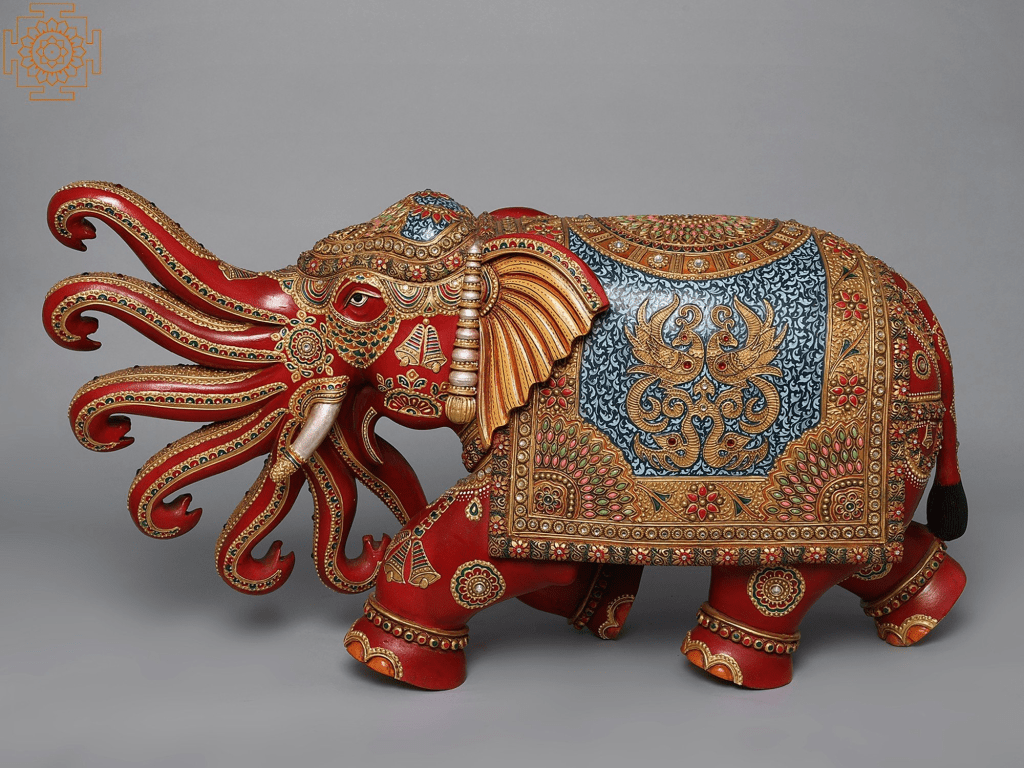
In Hinduism, the Red Ray is personified as Indra, the king of the gods, whose “vahana” (vehicle) is a white elephant with three heads and seven trunks. Named Airavata, the celestial elephant represents the Word of God, whose seven spouts shower our Souls with the Living Water of grace. In Sanskrit, the name Airavata translates as “belonging to Iravati (“she who possesses the water”) Associated with Sarasvati, Iravati is, in fact, the devi representing the wellspring or fountain drawing from the Cosmic Ocean of God’s Holy Thoughts.
So, for now, I stand by my revised definition of Yom as Ray, rather than Day.
In 1 Kings 8:39, we do find machon, again in reference to the sixth circle. The relevant verses read as follows:
To hear Shamayim and dwell in the established place (machon), forgive and act to give to the spirit on the journey, path, or way the understanding to know the heart-mind of the Son, Adam, the revered Ray living in Adamah (the kingdom of human souls) to yield unto the Father.
Again, the established place is the enclosure east of Eden, which Elohim established to protect the Soul’s treasured memories of Heaven in the dream-realm. So, we’re still talking about the Resting Place, where we gather in the Circle of Forgiveness to pump Living Water into the world below.
This brings us to Araboth (ערבות), which appears in the Bible as well as the mystical Kabbalah. In the Kabbalah, it is believed to be the name given to the seventh Heaven, wherein the Ophanim, Seraphim, and Hayyoth dwell with Elohim. In the Bible, the word is universally misinterpreted, generally as “desert,” “plain,” or “wilderness.” The word is sometimes rendered as Avaboth and occasionally, as Araboth of Mohab (from the Father).
According to Strong’s:
Araboth is mentioned in the context of the heavenly realms in the Old Testament. It is notably referenced in Psalm 68:4, where it is often translated as “deserts” or “wilderness” in various Bible versions. The Berean Standard Bible translates this verse as: “Sing to God! Sing praises to His name. Exalt Him who rides on the clouds—His name is the LORD—and rejoice before Him.”
Since Araboth can’t be both a heavenly realm and rightly mean “deserts” or “wilderness,” let’s see what Psalm 68:4 truly communicates, if anything, pertaining to this mysterious place-name.
Rightmindedly retranslated, the Psalm in question reads thusly;
To sing unto Elohim, make the music of his Name; to rise up, mount and ride Aravah, the name of Yah (God) exulting the presence of the Father. The fatherless judgment desolates Elohim’s holy habitation.
Okay, wait, because Aravah and Aravat or Aravata are remarkably similar words. Might they also have similar meanings? Let’s examine the evidence. In this psalm, we find Aravah, rather than Araboth. And Aravah has different meanings, depending on how we divide the syllables. As Arav-ah, for example, it means something akin to “the branch of God.” As Ar-avah, on the other hand, it means Land or World of Avah–a word with multiple meanings. According to Google, Avah can mean “desire” or “longing,” but also “life,” “living one,” “voice,” “water” or “source of life,” all of which refer to the Sixth Circle or Land of the Living, where the fountain or wellspring exists.
The alternative spelling, Arab-oth appears to means something akin to “the desert-dwelling token” (of the name of God). The Soul, in other words. And it is indeed the Soul, which hears and sings the music of the Holy Name or Word, as Course-Jesus explains below:
The part that is listening to the Voice for God is calm, always at rest and wholly certain. It is really the only part there is. The other part is a wild illusion, frantic and distraught, but without reality of any kind. Try today not to listen to it. Try to identify with the part of your mind where stillness and peace reign forever. Try to hear God’s Voice call to you lovingly, reminding you that your Creator has not forgotten His Son. (ACIM, W-49.2:1-6).
Not being well-schooled in Jewish mysticism, I asked Google what the Kabbalah says on the subject of Araboth. Here’s the answer I received:
In Kabbalistic and general Jewish lore, Araboth (Hebrew: עֲרָבוֹת) is the seventh and highest of the seven heavens. It is considered the holiest realm and the dwelling place of God.
Key concepts associated with Araboth in Jewish mysticism and traditional texts include:
- The Divine Abode: Araboth is where the Divine Presence (Shekinah) and God’s Throne of Glory are located.
- Abode of Souls: It houses the souls of the righteous and the spirits of all human souls yet to be born.
- Divine Attributes: The Talmudic text Chagigah 12b states that Araboth contains “Right and Judgment and Righteousness,” and the “treasures of life”. These attributes are seen as the foundations of God’s throne.
- Angelic Host: It is the home of the highest orders of angels, including the Seraphim, Cherubim, and the Hayyoth (living creatures), who attend the Divine Presence.
- Spiritual Sweetness: The Hebrew word aravot is related to the word araiv, meaning “sweet” or “pleasant”. In a metaphorical sense, the term relates to a high level of spiritual service to God that is pure and unadulterated, providing a profound, inner “sweetness” beyond simple satisfaction.
- A Place Beyond Suffering: Some interpretations view Araboth as a place of ultimate peace, a “secret place in the hearts of all men and women which is beyond suffering”.
Only some of this can be true, given that most of the above-listed attributes describe the Land of the Living on the Sixth Plane of Christ Consciousness, rather than the Seventh Plane, where Elohim-Allah sits on his throne. Unsubstantiated is whether or not the Land of the Living also serves as the Throne Room. As I understand things, the four Living Creatures (the Seraphim, Hayyoth and/or throne-bearers) stand underneath the Throne of Elohim-Allah, as supporting pillars. They wouldn’t be, therefore, on the same plane as the throne itself.
So, for the sake of argument, let’s say the Land of the Living is on the sixth plane supporting the Throne of God up above or underneath on the uppermost, innermost Seventh Plane. And that is indeed the picture painted by the prophet Ezekiel (as illustrated below).
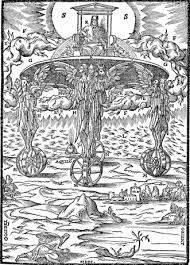
The weird, eye-covered wheels on which the throne-bearers balance are, btw, the Ophanim or “chariot wheels.” That they are commonly depicted as gyroscopic in appearance (as seen above) is a later invention of the human imagination, given that no such devices existed at the time Ezekiel recorded his prophecies. What the prophet described were double wheels that enabled the winged Beings to move in two directions at once, in straight lines.
Notice that, in the image above, the Living Beings don’t shoulder the throne itself; rather, they shoulder a large plate-like platform supporting the throne. That disk represents, I believe, what Hindus call the Dharmachakra — the circle or wheel around which the Soul “walks” on the earthly journey. When accurately depicted, the Dharmachakra is indeed a wheel within a wheel. Note (in the image below) that the center wheel forms an eight-petalled flower or lotus representing the “limbs’ or “circles” of the Circle-Journey (two limbs or petals per quadrant, basically).

Or, to again quote Google,
The eight-petalled lotus is a symbol in both Buddhism and Hinduism, representing concepts like cosmic harmony, spiritual enlightenment, and the Noble Eightfold Path. In Hinduism, it symbolizes divine purity and spiritual enlightenment, and is used in rituals and meditation to represent the eight Aishvaryas (divine excellences) associated with the divine. In Buddhism, the eight petals of a white lotus often correspond to the Noble Eightfold Path, a fundamental teaching of the Buddha, and it is seen in mandalas as a symbol of cosmic harmony.
Because the Ophanim are covered in eyes, we can safely presume they are mechanisms for restoring our spiritual sight. Are they also the “eyes of the Lord” mentioned in Zechariah 3:9 and 4:10, as well as in Revelation 5:6?In the latter, John of Patmos describes seeing a Lamb with seven horns and seven eyes representing “the seven Spirits of God sent forth into all the earth.” Seven horn-like beams, in other words. And, as we now know, those seven horn-like beams are the Seven Rays — the Aspects and Attributes of divinity we still share with God, but must “wash clean” as we progress through the seven circles or chakras. By clearing the chakras of the Ego’s truth-obscuring “veils,” we enable the Lamp or Ray governing each circle or sphere to shine through our minds into the world. And, in so doing, we again become “the Light of the World.”

As Course-Jesus affirms:
Forgive me your illusions, and release me from punishment for what I have not done. So will you learn the freedom that I taught by teaching freedom to your brother, and so releasing me. I am within your holy relationship, yet you would imprison me behind the obstacles you raise to freedom, and bar my way to you. Yet it is not possible to keep away One Who is there already. And in Him it IS possible that our communion, where we are joined already, will be the focus of the new perception that will bring light to all the world, contained in you. (ACIM, T-19.IV-B.8:1-5)

I believe the Lamb of God seen by John of Patmos was meant to represent the Golden Menorah or Lampstand — the inner-instrument that restores to its original brilliance our radiant divine holiness and innocence. The lamb’s seven eyes signify the Lamps or Spirits running across the top. The heavenly horn-shaped light of those lamps gradually turns around our inverted perception of reality through the Living Water of the sacred rivers, whose healing waters (of grace) flow down the branches from the Lamps on top to the chakras on the central stem of the Lampstand. The lower chakras also are, therefore, the four solid-gold almond flowers the Great I Am instructed Moses to forge on the Menorah’s stem in the Book of Exodus.

Symbolically, the Menorah’s central stem takes all of the following forms: the Ganges River, the Su-shumna nadi, the rod and the staff of the Holy Spirit (Aaron, Yovah, David, and Elohim) and the “spine” of the spiritual body, where the chakras actually sit.
Like every person in the Bible, Aaron (the righteous elder brother of Moses) is an allegorical figure whose name means “exalted,” “mountain of strength,” “light-bringer,” or “teacher” in Hebrew.
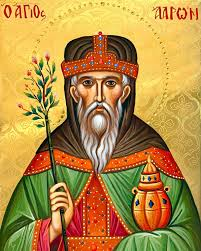
Makes sense, right?
Let’s now return to the “seven heavens,” which the Talmud erroneously identifies as Vilon (“curtain or veil”), Raki’a (“realm” or “firmament”), Shehaquim (“clouds”), Zebul (“indwelling”) ma’on (“refuge” or “shelter”), Machon (“the established place”) and Arab-oth (“the Land of the Living Water”). As I’ve demonstrated, most of these terms refer to the enclosure East of Eden, which we find on the Sixth Plane housing the Ajna chakra, circle, or lotus.

But wait. There’s more, because we still need to talk about the Islamic Jannahs and the Hindu Lokas. Are the “seven heavens” of these two religions as sripturally unsupported as those in the Talmud?
Let’s see, shall we?.
Jannah is the Arabic word for “heaven,” “paradise” or “garden.” So, the seven heavens described in the Holy Qur’an also are the seven Jannah’s about which slightly more is articulated in Islamic philosophy. According to Google, Jannah “is described as a place of unimaginable beauty and peace, where believers will be rewarded with eternal bliss for their faith and good deeds. Jannah is depicted as a garden where rivers flow beneath trees and all desires are fulfilled without any hardship or sorrow.”
According to the prevailing wisdom, the key aspects of Jannah are these:
–Angels will greet those entering Jannah with peace and welcome them to the eternal residence.
— Jannah is the ultimate reward from Allah for those who believe in Him, perform good deeds, and seek forgiveness for their sins.
–The Qur’an describes Jannah as a place of everlasting peace and happiness, free from pain, sorrow, or weariness.
—Jannah is described as a garden of unimaginable beauty, with features like rivers of milk, honey, and wine, and palaces made of gold and silver.
–To enter Jannah, a person must believe in the oneness of God and His messengers, do good deeds, and strive to live a righteous life, abstaining from sins.
–Jannah has seven levels, the highest being Jannat al-Ardan (the Garden of Eden). The next highest, located directly under Allah’s Throne, is Jannat al-Firdaus. Firdaus derives from an old Persian word meaning “walled garden” or “enclosed garden,” so Jannat al-Firdaus is the Islamic designation for the “enclosure” Allah/Elohim established after the Exodus from Eden.
I kid you not.
Ergo, Janat al-Ardan is the Islamic name for the seventh plane of True Paradise (the Garden of Eden, where God originally put our Souls), whilst Jannat al-Firdaus is the walled garden or enclosure established east of Eden by Elohim-Allah, to bring our Souls back to Paradise.
The other five levels and what they are said to represent are:
- Jannat-ul-Mawa: A place of refuge and dwelling for the righteous.
- Jannat-an-Naim: The garden of bliss, a prosperous and peaceful life.
- Dar al-maqama: A place of eternal dwelling or a safe place to live forever.
- Dar al-salam: The abode of peace.
- Dar al-Akhirah: The abode of the hereafter, the final destination
I’m no expert on Islam or the Arabic language, but I can recognize when Sat-an has tampered with the sacred truths gifted to us by God’s messengers. And I see his dirty fingerprints all over these definitions, because Jannat literally translates as “paradise” or “garden,” whilst dar can mean “house of,” “dwelling place of,” or especially “city of.”
Ergo, Dar al-salam means “the city of peace” (the exact same meaning as “Jerusalem” in Hebrew), whereas Dar al-Akhirah means “the city of the Ultimate”–a place ideologically linked in Islam with the Final Judgment and spiritual resurrection. To reach this level, everyone (not just Muslims) must, give up or “rise above” the judgments we lay on the world and all our fellow beings, by recognizing that our negative ego judgments are always WRONG, as Course-Jesus affirms below:
The ego is always wrong, no matter what it says or does. (ACIM, T-9.III.2:10)
As Jesus further explains in the Course, the scriptural term “Final Judgment,” (which the Ego Mind twisted into a frightening concept) refers to our suspension of wrongminded judging, rather than God’s Final Verdict for our sinful Souls. Souls don’t sin and God doesn’t judge–and neither should we, if we endeavor to think as He does again. Dar al-Akhirah probably refers, therefore, to the Fifth Circle of Soul-Realization or Vishuddha Consciousness, which we obtain after silencing the Ego Mind and it’s wrongminded judgments. Rightly understood, the fifth plane or circle is governed by the Third Ray of Aspect. This transition marks, therefore, our resurrection into Upper World or Higher Mind perception.
Jannat-al-Ma’wa literally means “the Garden of Joy”, whilst Jannat al-Naim more specifically translates as “the Garden of Comfort.” So, both garden-names echo what we are told in Isaiah 51:3:
For the LORD shall comfort Zion: he will comfort all her wasted places; and he will make her wilderness like Eden, and her desert like the garden of the LORD; joy and gladness shall be found therein, and the sound of singing.”
From this, we can ascertain that the Garden of Comfort and the Garden of Joy, both refer to the fifth plane of Soul-Consciousness, the garden of the Holy Spirit (the Comforter), wherein we hear the sound of the Cosmic Chorus.
On a similar note, Dar al-Maqama doesn’t mean “eternal dwelling place.” In Arabic, maqama means “Assembly.” So Dar al-Maqama literally translates as “the city of the Assembly.” The word also has musical connotations, as in “an assembly of musical tones.” In the Bible, “the city of the Assembly” is sometimes identified as Jerusalem, but I suspect it’s Bethlehem, the “city of bread” where our Souls give and receive the Hidden Manna that nourishes and fortifies the Christ-child within us. So, Dar al-Maqama (the City of the Assembly) and Dar al-salam (the City of Peace) may, in fact, be two interchangeable terms used in the Qur’an for the Fifth Plane or Realm, rather than two different levels of Jannah.
What this tells us is that the terms identified in the Holy Qur’an, the Bible, and the Talmud as “seven heavens” are actually interchangeable terms for the three higher circles or realms of consciousness: the Gathering Place on the Fifth Plane (Bethlehem), the Resting Place or Walled City on the Sixth Plane (Jerusalem or Zio), and the Throne Room or Garden of Eden on the Seventh Plane.
Let’s now see if the Hindu teachings about the Lokas can shed any more light on the subject. A Sanskrit term said to mean “planet,” “universe,” “plane,” or “realm of existence,” Loka actually describes a state of mind or state of being.
Christmas is, for example, a state of mind rather than a time of year, according to Course-Jesus.

In Hinduism, the most common designation of Loka is Trailokya, a term meaning “three worlds,” “three realms” or “three spheres.” Like the Jewish concept of Shemayim, those three spheres are identified as the Lower World (Patala or “the underworld”), the Middle World (Bhuloka or “earth”) and the Upper World (Svarga or “Heaven”). Also like Shemayim, those designations have been muddled by ego interference. Rightly interpreted, the lower world isn’t “hell”; it’s the Real or Forgiven World of the Holy Instant underneath the fabric of material existence–the Dark Veil Sat-an wove from the heavy threads of fear, guilt, and sin.
Patala is, therefore, the Cosmic Ocean of God’s Loving Thoughts churning underneath the illusion to supply the fountain of Living Water.
To prove my point, let’s examine the etymology. The Sanskrit word Patala is a compound of pa (to drink or to shine forth) and tala (a nourishing drink, musical meter, or the palm of a hand). So, Patala literally describes the hand of God protectively cradling our sleeping Souls from underneath the dream; or, alternatively, the nourishing music (Living Water) we drink from the fountain of God’s Word to dissolve the illusion.

Similarly revealing, Bhuloka, the Middle World, means “to become” (bhu) “the entirety of the universe” (loka). The Middle Loka represents, therefore, the states of mind we move through on the western or left-hand side of the Wheel, in the first two quadrants housing chakras one to four; while the Upper World of Svar-ga (the Heavenly Music of Om) encapsulates the Lokas on the eastern or right-hand side of the wheel: the third and fourth quadrants housing chakras 5 to 7.
In most Indian religions, the Lokas are said to house Divine Beings, which guide and protect the Souls born into those spheres in accordance with the Karmic Record. And this definitely parallels the later Theosophical and other esoteric teachings suggesting the Seven Rays parent and guide all the Souls born into our solar system.
Many Masters tell us we begin each life at the level we reached by the end of the last one. A class of angelic beings called “the record-keepers” keep track of our progress and also factor our accumulated and forgiven karmic debts into our future level-placement options.
This also is, I suspect, the deeper meaning of the “immaculate conception” of Jesus Christ. To spell it out, his elevated Soul was produced by the “seed” of the Holy Spirit–the Third Ray of active Divine Intelligence. His physical body was produced, as usual, by two humans; in this case, Mary and her fiancé, Joseph. To believe otherwise is “level confusion.” Only his Soul — the only part that’s real — was fathered by the Holy Spirit.

In the Narada Purana, Bhuloka is presumably identified as planet Earth, the world of human beings. As is eretz, the Land of the Living, in the Hebrew Bible. Bhuloka (the dream-realm) is further described as divided into seven regions, referred to as dvipas (meaning “two waters” or “two streams”). The Narada Purana identifies these seven regions as Jambudvipa, Plakshadvipa, Shalmaladvipa, Kushadvipa, Kraunchadvipa, Shakadvipa, and Pushkaradvipa.
Note that all of these names end with dvipa, suggesting to me that all these “regions” are influenced by the two streams of divine energy coming down from the First and Second Rays or Lamps–the two olive trees in Zechariah’s vision of the Lampstand of Redemption; they also are, I suspect, the two rays beaming from the Sacred Heart of Jesus in the image below.
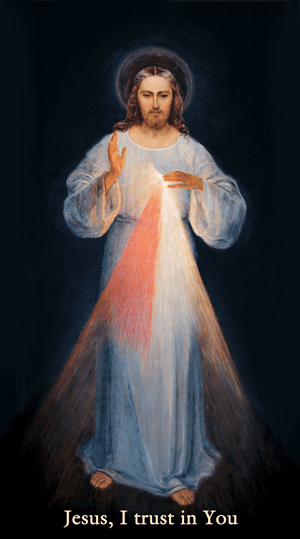
So let’s see what else we can learn from these names.
Jambudvipa means the jambu of two streams. In the Indian lore, Jambu is the name of an apple-bearing tree that grows only on Mount Meru or Sumeru, the Hindu and Bhuddist counterpart of Zion, the highest mountain of the Higher Mind accessible in the dream-realm. The Jambu tree probably represents, therefore, the Tree of Life or Higher Knowledge we forsook in the Garden of Eden (when we chose the hellish dream of concupiscence over the Paradise of Divine Reality).
Plakshadvipa means “the fig tree of the two streams.” The same symbolic “fig tree” repeatedly mentioned in the Bible. That fig tree represents the Soul bearing the fruits of forgiveness, which grow from the miracle seeds the Holy Spirit scatters, with out help. And that is why Jesus destroys the barren fig tree after entering Jerusalem in the gospels of Mark and Matthew. This is also what he means in John 15;2 and Matthew 7:29, when he says that every branch that does not bear good fruit “is cut off and thrown into the fire.”

Shalmaladvipa means “the silk-cotton tree of the two streams” or “the peace of God in two streams.” In the Hindu lore, the Shalmala tree has sizeable thorns–and, like the crown of thorns in the crucifixion narrative, those barbs symbolize the unforgiving thoughts we place on the head of the Christ Self each time we harbor uncharitable thoughts about our brothers. So, the realm of Shalmaladvipa represents the Circle of Forgiveness, wherein we choose to bestow upon Christ (our own True Self) either the thorns of condemnation or the lilies of forgiveness.
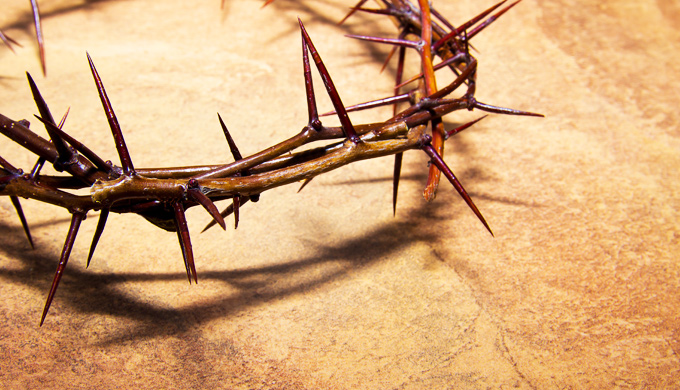
We begin this process on the Fourth Plane of the Heart Chakra– “the Bridge” between the three lower and three upper levels of consciousness. To cross the Bridge, we have to help the Christ Mind scatter the seeds that produce the green pastures in the Land of the Living.
Shalmaladvipa is, therefore “the Bridge” (As-Sirat in Islam) over which every Soul must pass on the Day of Resurrection to enter Jannat al-Firdaus–the Land of the Living Water. Described in the Hadith (rather than the Qur’an) As-Sirāt is said to be “thinner than a strand of hair and as sharp as the sharpest knife or sword. Below this straight-and-narrow path are the fires of Hell, which burn sinners to make them fall (back into the living hell of sin-consciousness). Those who perform acts of goodness in their lives are transported across the path at speeds according to their deeds (Karma) leading them to the Hawd al-Kawthar— the Pond of Abundance, wellspring, or fountain on the Sixth Plane.”
When asked by his disciples to describe the bridge, the Prophet Mohammad said, “It is a slippery (bridge) on which there are clamps and a thorny seed that is wide at one side and narrow at the other and has thorns with bent ends. Such a thorny seed is found in Najd (the higher plateau) and is called As-Sa’dan (As-Samdan, “the candelabrum” or “the Lampstand”). Some of the believers will cross the bridge as quickly as the wink of an eye (in the Holy Instant of release), some others as quick as lightning (through Revelation), a strong wind (via the Cosmic Breath), fast horses (the divine thoughts sent forth by the Living Beings) or she-camels (miracles). So some will be safe without any harm; some will be safe after receiving some scratches, and some will fall down, going into Hell (the dream-world). The last person will cross by being dragged over the bridge.”
So, the mysterious As-Sa’dan of Islam isn’t a plant; it’s the Lampstand on the higher plateau. Are you starting to see the synchronicities? I hope so, because that is the point of this rather ambitious exercise.
Kushadvipa means the “sacred-grass of the two streams,” so this realm represents the lawns just outside the gates of Heaven (the gate back into Eden or Paradise). And it is in those green pastures that we find the fountain spouting the Living Water of the two trees into Bhuloka from the primal ocean underneath (in Patala).
Krauncha has a wide variety of meanings, according to the Sanskrit dictionaries. Sometimes, it’s a crane or heron, sometimes it’s a mountain, and sometimes it’s a military formation. And that generally indicates that nobody knows what the heck Krauncha really means.
I believe Krauncha to be a compound of Kra (glory or glorious) and uncha (the gathering of grains), making Kraunchadvipa the miracle-working circle wherein we remember the power and glory we share with God. We remember that shared power and glory by reaping the rewards our willingness to heal and be healed scattered all over the world like seeds. In remembering our ONENESS with Them (God and Christ) we reclaim the “crown of glory” or “crown of (eternal) life” that restores us to our rightful throne, the ancient Throne of Elohim, the Logos, on the Seventh Plane.
Or, to quote Course-Jesus:
It is Their Presence which has lifted holiness again to take its ancient place upon an ancient throne. Because of Them have miracles sprung up as grass and flowers on the barren ground that hate had scorched and rendered desolate. What hate has wrought have They undone. And now you stand on ground so holy Heaven leans to join with it, and make it like itself. The shadow of an ancient hate has gone, and all the blight and withering have passed forever from the land where They have come. (ACIM, T-26.IX.3:4-8)
Shakadvipa means “to know or embrace God in two streams.” The two streams are the Rays, sacred rivers, or anointing oils feeding into the Menorah from the two olive trees Zechariah saw flanking the Golden Lampstand. Those trees, as explained, represnt the God and Christ presences in the dream-realm. And these two inseparable Holy Powers are indeed the aformentioned “El” as well as the “They” Jesus mentions above. When “They have come,” he tells us, the Holy Spirit’s work is done. We are healed of separation-sickness. Shakadvipa is, therefore, the Hindu name for what Course-Jesus calls the Holy Meeting Place (of God and Christ).
Regarding this “Holy Meeting Place,” he says:
No altar stands to God without His Son. And nothing brought there that is not equally worthy of Both, but will be replaced by gifts wholly acceptable to Father and to Son. Can you offer guilt to God? You cannot, then, offer it to His Son. For They are not apart, and gifts to One are offered to the Other. You know not God because you know not this. And yet you do know God and also this. All this is safe within you, where the Holy Spirit shines. He shines not in division, but in the meeting place where God, united with His Son, speaks to His Son through Him. Communication between what cannot be divided cannot cease. The holy meeting place of the unseparated Father and His Son lies in the Holy Spirit and in you. All interference in the communication that God Himself wills with His Son is quite impossible here. Unbroken and uninterrupted love flows constantly between the Father and the Son, as Both would have it be. And so it is. (ACIM, T-14.VIII.2:3-16)
In Hinduism, the seventh Loka is Pushkara-dvipa, a Sanskrit word meaning “the lotus of the two streams,” “the invisible world of the two streams,” or “the inner reality of things in two streams.” So, for all intents and purposes, Pushkaradvipa is what Hindus call the Real or Forgiven World–the state of mind (pure grace-consciousness) from which God “air-lifts” our purified Soul or Higher Mind out of the dream. In more traditional terms, Pushkara-dvipa is the Garden of Eden– the seventh plane of consciousness, from which we descended into the dream of matter.
Or, as Jesus explains in the Course:
To establish your personal autonomy you tried to create unlike your Father, believing that what you made is capable of being unlike Him. Yet everything true IS like Him. Perceiving only the Real World will lead you to the real Heaven, because it will make you capable of understanding it.
The perception of goodness is not knowledge, but the denial of the opposite of goodness enables you to recognize a condition in which opposites do not exist. And this IS the condition of knowledge. Without this awareness you have not met its conditions, and until you do you will not know it is yours already. You have made many ideas that you have placed between yourself and your Creator, and these beliefs are the world as you perceive it. Truth is not absent here, but it is obscure. You do not know the difference between what you have made and what God created, and so you do not know the difference between what you have made and what YOU have created. To believe that you can perceive the real world is to believe that you can know yourself. You can know God because it is His Will to be known. The real world is all that the Holy Spirit has saved for you out of what you have made, and to perceive only this is salvation, because it is the recognition that reality is only what is true. (ACIM, T-11.VII.3:7–4:9)
Bhuloka also has seven oceans (sacred rivers?) called Lavana, Ikshu, Sura, Sarpih, Dadhi, Dughdha, and Jala. But we’ll save those for another time.
For now, let’s swing back to the Bible, to see if we can work out what the Great Amen actually said to the churches in the Book of Revelation. Let’s start with Revelation 3:1-6, in which the Great Amen addresses the Assembly in Sardis in the following manner:
To the messenger/angel of the Assembly of Sardis, it is written thusly: to possess the seven spirits or winds of God, the seven stars beholding thy works, is to possess the Name, Identity, or Self that gives life, even to the dead; To awaken, make strong what remains (of the True or Christ Self) in what is ready to die (the body-self). For it is not your deeds that make complete the Face of God. Remember, then, how to receive and listen, to have the change of mind to awaken. Consequently, if you are not vigilant, you are a thief I do not know and will never come to know in the moment the journey ends. To have the lesser identity, even in Sardis, stains and defiles the outer garment of those walking around with me in the whiteness of the worthy. To conquer the same, put on the white robe to erase his (Satan’s) name from the Book of Life, and acknowledge the Self in the likeness of my Father, and the likeness of the messengers possessing the ear to hear what the Spirit sayeth to the Assembly.
This was a tough one to translate, despite Greek being a living language. Firstly, this corrects any confusion about the seven spirits and the seven stars being one thing or two. They are the same. The Great Amen also tells us, yet again, that our good deeds play no part in our redemption.
How many times must this be said before we actually take it in? Many more, apparently, given that most religions still promote the big, fat LIE that good works are the way to win entry into Paradise. It’s not the way, brother. Listening to the Om in meditation, which changes our screwed-up thinking, is the only way we come to know the God and Christ presences within our own heart-minds. The Great Amen also says that any ego thinking stains and defiles the white robes of the Holy Ones, even those who’ve risen as high as Sardis, the seventh circle. We must, therefore, be ever-vigilant in correcting any unholy or unforgiving thinking.
Let’s move on to the next verse. wherein the Great Amen says this to the Assembly of Philadelphia;
Speak the Holy Truth to have the key of David to open what no one can shut, and to shut what no one can open. For to have the least miracle protects my Word and denies not my Name. Seek to give those away from the Assembly–the adversaries calling themselves Judeans, but who are, on the contrary, false sighted–the imperative to make the Higher Self (in them) come forth to worship in the presence of the foot (bowing down to the footstool in submission); to come to know and love the Self that has safeguarded the Word or Logos, the Great Amen remaining underneath to protect the Self from the trials that shall come to tempt the inhabitants of the earth. Seek to come quickly, to be strong, and to take hold of that from which nothing can take its crown — the Self that will prevail in rebuilding the Pillar of the Temple of God, the authority of the polis (the walled city of like-minded citizens) of God, New Jerusalem; and go no more down and out of Heaven and away from God in a new name or identity. To have the ear, listen to what the spirit says to the Assembly.
Pretty interesting, right? And also exceedingly evocative of the Course’s teachings (or visa-versa). This also appears to affirm my suggestion that it is in Philadelphia — the fourth circle of brotherly love forming “the bridge” — that we open the door into the Upper World. The key that opens that door is, we are told herein, the key of David. We find that key similarly described in Isaiah 22:22, which reads:
I will place on his shoulder the key to the house of David; what he opens no one can shut, and what he shuts no one can open.
What is the key of David? FORGIVENESS, as Course-Jesus reveals in Workbook Lesson 121: Forgiveness is the key to happiness. Click through and read that lesson when you have a moment, as it is one of the most beautiful and important in the Course.
And here’s what the Great Amen says to the Laodiceans (those in the third circle of Manipura consciousness) in the next section:
By speaking Truly (i.e., sharing the Living Water), the faithful truly witness to the beginning of the Holy Creation of God. I Perceive your work to be neither cold nor hot; would that it were cold or hot; but, it is because you are tepid, and neither cold nor hot, in (your) intention or sense of purpose in ejecting the True Self out of my mouth, that you say, “I am wealthy, and being rich, I have need of nothing”; but (you) perceive not that you are miserable, pitiable, beggarly, blind, and naked. Deliberate together to redeem my gold to enflame the fire (of God) in order that you be rich, and brighten the raiment surrounding and clothing the guilt of your nakedness made visible. Anoint your eyes with eye-salve, so that you can see how much love exposes and corrects. Desire earnestly, therefore, to change your mind and purpose (repent). Seek to stand at the door and knock; anyone who hears my voice and opens the door to enter into the True Self and to dine with the True Self and, alongside me, the True Self will prevail in granting the appointed seat with me on my Throne; and like me, will prevail and sit down with my Father on His Throne. To have the ear, listen to what the Spirit says unto the Assembly.
This should make sense to anyone who’s read my posts from the beginning (which I highly recommend). And it is indeed in the third circle (the Manipura center of self-willing) that we must choose to dedicate our lives to God’s assigned purpose for our time on earth, rather than the Great Deceiver’s seemingly endless options. Speaking from experience, it was only after dedicating myself wholly to waking up from the dream that I started hearing the Holy Spirit’s voice again.
Or, as Course-Jesus also explains:
Before you make any decisions for yourself, remember that you have decided against your function in Heaven, and then consider carefully whether you want to make decisions here. Your function here is only to decide against deciding what you want, in recognition that you do not know. How, then, can you decide what you should do? Leave all decisions to the One Who speaks for God, and for your function as He knows it. So will He teach you to remove the awful burden you have laid upon yourself by loving not the Son of God, and trying to teach him guilt instead of love. Give up this frantic and insane attempt that cheats you of the joy of living with your God and Father, and of waking gladly to His Love and Holiness that join together as the truth in you, making you one with Him. (ACIM, T-14.IV.5:1-6)
In the next section of Revelation, John describes going through the door and seeing the Throne, the seven lamps, and the four Living Beings, among other fascinating apparitions. But let’s skip all that for now and go back to what he says to the Assemblies of Ephesus, Pergamum, and Smyrna.
To the Ephesians, he says:
Give out to keep the seven stars of the Self of the right-hand side walking around in the midst of the seven golden lampstands. Be aware that your deeds and the laborious toils in which you persist to have the power to carry away evil, as well as temptation, to become Apostles, are actions of the lower self of the Liar. Taking up and enduring toils for my name’s sake only makes you weary in sickness. But to have in accordance with the True Self you sent away, your chief love, is to remember from whence you fell. Repent (change your mind and purpose) and band together in purpose to do the chief work (of the Holy Spirit); or else accompany the false self readily and also move the Lampstand away from its place. Until you repent, this thing you still possess, because to hate the deeds of the Nicolaitans, which I also hate, is to have the ear to hear what the Spirit says to the Assembly.
Here again, he states that favor with God can’t be earned through good deeds. Only in the stillness of non-doing, can we hear the Holy Spirit’s Voice speaking to us through the Lampstand. This is how we give our “alms” — not by giving to the financially destitute or by performing charitable works in the world, as Nicholas of Myra and his adherents deceptively encourage. As stated earlier, those who follow St. Nick’s example of giving are indeed the despised Nicolaitans mentioned herein. Not until we see the spiritual futility of the forms of “giving” the Ego Mind prizes, and turn within to find the Lampstand, do we hear the Holy Spirit’s Voice.
To the Assembly of Smyrna, he offers similar warnings:
Be aware that your work, tribulations and beggary (despite your spiritual wealth), and even the blasphemy of those claiming to be Judeans, but are not, in the synagogues or assemblies of Satan (the Ego’s religions) are nothing more than fear’s witnesses to suffering. Perceive these as attempts to cast you into prison; as deceptions to tempt you to have tribulations. Ten days will it take to build trust unto death; and to give you the crown of life. To have the ear to hear what the Spirit says to the Assembly, subdue wrongdoing and unjust actions by means of the second death.
Firstly, he’s addressing those of us still misperceiving the world and its “sins” as not only real, but also wicked and fearful. Secondly, the second death is NOT eternal damnation, as many misguided theologians loudly profess. It is a scriptural term for the death of the false ego-self, which opens the door to spiritual rebirth in the True Self. So, what he’s saying is: don’t be tempted to imprison yourself by fearing and judging what only appears to be real; instead, submit to the Atonement process. The process starts with “building trust unto death,” after which we receive the Crown of Life — a symbolic reference also found in .James 1:12, which reads:
Blessed is the man that endureth temptation: for when he is tried, he shall receive the crown of life, which the Lord hath promised to them that love him.
As I understand it, receiving the Crown of Life marks our entrance into the Land of the Living. Ergo, wearing that crown makes us one of the “Living.”
Let’s move on to the Assembly of Pergamum, which the Great Amen addresses thusly:
To have and to keep the swift sword with two edges, perceive your works and where you dwell as Satan’s seats, and be strong in my Name, and deny not my faith. Even in the days when (Herod) Antipas, my faithful witness, put to death what is beyond normal where Satan dwells.
Conversely, to possess the lesser self holds you there to strengthen the teachings of Balaam, who taught Balak to cast the snare before the Son of Israel to eat what is sacrificed unto idols and to commit fornication. To possess the lesser self also strengthens the doctrine of the Nicolaitans, which I hate. Change your mind and your purpose (repent), or else go into the lesser self quickly moving you to make war against the True Self with the sword of my mouth bearing the ear to hear what the Spirit says to the Assembly. To overcome, give the food of the hidden manna of the True Self, the white pebble (the verdict of innocence) inscribed with the Name demonstrating that no one comes to know, except by receiving.
This is pretty awesome, actually. The swift-sword with two edges is, of course, the Word of God, which he later also calls “the sword of my mouth.” That same metaphoric sword is mentioned in Hebrews 4;12, which reads:
For the Word of God is quick, and powerful, and sharper than any two-edged sword, piercing even to the dividing asunder of soul and spirit, and of the joints and marrow, and is a discerner of the thoughts and intents of the heart.
By “Antipas,” he certainly means Herod Antipas, the Roman governor of Judea, who executed both Jesus Christ and John the Baptist. He does NOT mean some unknown martyr from a non-existent place in Asia called Pergamos. To mention some unknown martyr would be meaningless symbolically, and what true prophets report is NEVER symbolically meaningless.
Why did Antipas put to death what was “beyond normal” in Satan’s world? Because he executed the Messiah, presumably.
This brings us to Balaam and Balak, whose dealings are described in the Book of Numbers. The former was a non-Israelite prophet hired by the latter (the King of Moab) to curse the Israelites (our awakening Souls). He wasn’t able to, however, as Elohim would only allow him to bless them. Although Balaam delivered a blessing, he later led the Israelites into sin by allegedly advising Moabite and Midianite women to tempt them into adultery and idol worship. Balaam also is criticized in the New Testament for loving “gain from wrongdoing.”
Read between the lines for the deeper meaning. That Balaam reportedly involved Moabite and Midianite women (the spirits of the Resting Place, probably) in his chicanery is undoubtedly a misinterpretation.
And now we come to our final “church,” “assembly,” or “circle, Thyatira to which the Great I Am — the Great Being, actually — says:
The Son of God has the True Self’s “eye” or “vision,” in the form of the flames of God’s fire; and the True Self’s feet, which resemble the brilliance of burnished bronze.
Observing the lower self’s service, charity, and faithfulness is your constant work and of the uttermost and greatest importance. On the other hand, hold few things against the lower self because the same suffers that woman, Jezebel, who calls herself a prophetess to teach and lead astray my servants to commit fornication and to eat things sacrificed to idols; and give the Higher Self time to repent from out of the same’s fornication and non-repentance. See me casting the Higher Self or Soul into a bed to commit adultery, and other Souls into great affliction until they repent by way of the True Self’s efforts; and even to kill the offspring of the Soul in death. And every assembly will come to know that being the examiner of the innermost mind and heart will I give to every one of you, according to your labors. Moreover, to you, the remnants (of Christ) in Thyatira I say: How many have not this doctrine? And which have not known the depths of Satan’s utterances? Throw down no other burdens (messages), but those which hold the strength within to prevail and safeguard my own works until the end. The True Self gives the power to the races, and acts as a shepherd. The True Self with a rod of iron, in the form of vessels of clay broken into pieces. As long as I receive from my Father, will I give to the same the Morning Star possessing the ears to hear what the spirit says to the assemblies.
So, he’s basically saying herein the same things Jesus says in John 8:7 and Matthew 7:3-5, which are 1) to focus wholeheartedly on our own at-one-ment, without 2) passing judgment on those still making mistakes through upside-down perception.

He also asks us to accept that he is bringing these things about to help these Souls find the right way to live. So we shouldn’t judge what must occur in God’s Great Plan to facilitate our Awakening, the ways of which lie beyond human comprehension. Instead of cursing or judging the mistakes we observe others making, we should bless their Souls (and ours) with our Living Water oblations.
This is, in fact, very similar to what Jesus advises throughout the Course, but especially in Workbook Lesson 243: Today I will judge nothing that occurs.
I will be honest with myself today. I will not think that I already know what must remain beyond my present grasp. I will not think I understand the whole from bits of my perception, which are all that I can see. Today I recognize that this is so. And so I am relieved of judgments that I cannot make. Thus do I free myself and what I look upon, to be in peace as God created us. (ACIM, W-243.1:1-6)
This post has gotten untenably long, but before I sign off, I want to list some of the symbolic objects the Great Amen mentions in these messages to the assemblies, most of which are found elsewhere in the Judeo-Christian scriptures. We’re talked about the key, the crown, the lampstand, the sword, and the crown; the others are:
The Book of Life = the Akashic Record or Karmic Record of our “debts” to be repaid or forgiven on the Circle-Journey
The Morning Star = the Divine Spark of the True Self within all lifeforms.
The Hidden Manna = the spiritual bread with which the Holy Spirit strengthens our Souls enough to break Satan’s shackles and rise to the higher circles of consciousness.
The New Jerusalem = the Resting Place on the Sixth Plane
The Throne of God = the Chariot-Throne of the Logos on the Seventh Plane
Okay, phew. That was a lot. Hope you’re still with me and that you learned something useful along the way.
Before I close, let me take a stab at consolidating everything we talked about into groups.
Philadelphia, the Fourth Plane “circle” or “assembly” is the Anahata or Heart Chakra in Yoga; the Bridge of the return and the Circle of Atonement in the Course; the Circle of Standing Stones, the Gathering Place, the city of the Assembly, the Assembly of the Firstborn, the city of bread (the hidden manna) symbolized by Bethlehem, the birthplace of Jesus; Shalmaladvipa in Hinduism; and both Dar al-Maqama and As-Sirat in Islam.
Thyatira, the fifth “circle” or “assembly” is the Vishuddha or throat chakra in Yoga; the place across the bridge or across the gap in the Course; Plakshadvipa in Hinduism; and dar al Akhirah in Islam.
Pergamos, the fifth “circle” or “assembly” is the dwelling place of David/Lamed, the Good Shepherd; it is, therefore, the House of David, the green pasture, the Resting Place, the “enclosure,” the walled city, the Tabernacle, the Land of the Living, and New or Heavenly Jerusalem in the Bible; the lawns of Heaven, the Golden Circle, the seat of the Spiritual Eye enabling Christ’s Vision, as well as the golden treasury and storehouse in the Course and Bible; the sacred grass or Kusha in the Rig Veda; Kushadvipa in Hinduism; the Ajna or brow chakra in Yoga; and Janat al-Firdous in Islam.
Sardis, the Seventh “circle” or “assembly” is the Sahasrara or crown chakra in Yoga; the Real World in the Course; the Garden of Eden and the Throne Room of Elohim-Allah in the Bible and Qur’an; Pushkaradvipa in Hinduism; and Janat al-Ardon in Islam.
Because I’m still learning, I reserve the right to modify my assessments as my understanding of these teachings expands.
Thanks for visiting the Holy Meeting Place. Until you return, Om Hari Om and Namaste.
 The Holy Meeting Place
Leave a comment