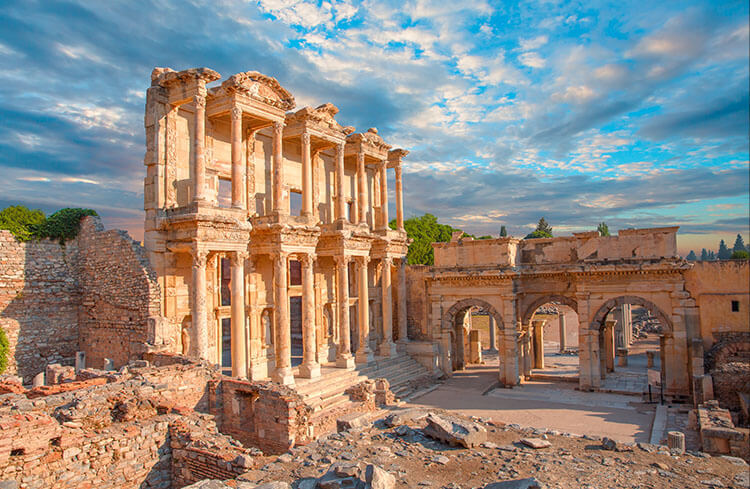
The seven churches referenced several times in the New Testament Book of Revelation are NOT literal churches existing in Asia Minor at the time that John the Elder (not John, the Apostle!) recorded his William S. Burroughs-esque visions of the “end of days.” Biblical scholars and historians have racked their brains for centuries trying to work out where those churches once stood in the ancient world. They’ll never solve the mystery because those seven metaphorical churches never existed on the physical plain. Like the Temples of Jerusalem, they are purely symbolic.
Let’s begin our exploration of what those churches symbolize by reviewing what the Christian prophet reported about the churches, based on his highly symbolic vision of the Great Amen. In Revelation 1:11, the Great Amen says to John, “I am Alpha and Omega, the first and the last: and, What thou seest, write in a book, and send it unto the seven churches which are in Asia; unto Ephesus, and unto Smyrna, and unto Pergamos, and unto Thyatira, and unto Sardis, and unto Philadelphia, and unto Laodicea.”
Course-Jesus explains his meaning in the following from the Text:
Right perception is necessary before God can communicate directly to His altars, which He established in His Sons. There He can communicate His certainty, and His knowledge will bring peace without question. God is not a stranger to His Sons, and His Sons are not strangers to each other. Knowledge preceded both perception and time, and will ultimately replace them. That is the real meaning of “Alpha and Omega, the beginning and the end,” and “Before Abraham was I am.” Perception can and must be stabilized, but knowledge IS stable. “Fear God and keep His commandments” becomes “Know God and accept His certainty.” (ACIM, T-3.III.6:1-7)
Just like the place names in the Book of Kings, the names assigned to these seven metaphoric “churches” mean something in ancient Greek — something that reveals what they’re intended to represent.
Before I reveal those meanings, let me point out that the Greek word deciphered as “churches” by the KJV translators was ekklesiais–a word describing an assembly of citizens gathered inside a citadel, stronghold, or fortress for a shared worshipful purpose.
I kid you not.
And that makes the “churches” referenced by the Great Amen akin to the “gatherings,” assemblies” or “circle-meetings” taking place inside the “enclosure” and/or “walled city” much-discussed in the Old Testament, as well as the Rig Veda (as we’ll soon learn).
Knowing this, those figurative “churches” can NOT be actual churches or religions established long ago in the worldly continent we now call “Asia.”
And they weren’t, because the Greek word “Asia” (Ἀσία), used as early as 440 B.C. to refer to Anatolia or the Persian Empire, derives from the Hittite word, Assuwa, which means “east” or “breaking dawn.”
Wink, wink. Nudge, nudge.
And, as we learned last time, Hittite means “descending from Heta,” the Hebrew word for “enclosure”–meaning, of course, the enclosure or garden Elohim established “east of Eden” (as per Genesis 3).
And who descends from the enclosure or stronghold of breaking dawn (the Pur-usha in Sanskrit)? The answer is: The three wisemen, kings, or magi we meet in the nativity story. Rightly interpreted, those three kings or “magi” represent the Trinity Rays sweeping from the eastern side of the wheel to the western side, through the agency of “the peacemakers.” That their names were Melchior, Balthsar, and Caspar is, btw, a complete ego-invention, as the kings are nowhere named in the Bible.
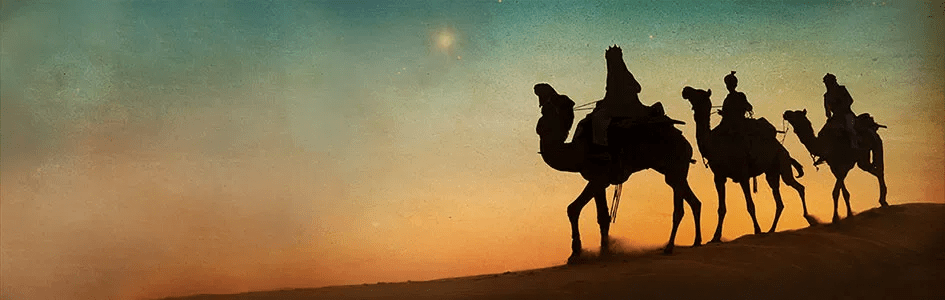
The Greek word for Asia might also have been a sound-alike substitution for the Akkadian/Old Aramaic word Asu, just as Jesus was a sound-alike substitution for Yeshua or Joshua. Asu means “to go out” or “rise up” — yet another reference to sunrise or breaking dawn. Moving closer to the Greater Light of God, in other words, by “rising up” perceptually. And we “rise up” perceptually via the Great River– the central nadi, lifeline, or spine of the Spiritual Body. Yogis call that Great River or nadi “Su-sumna” (meaning “Holy Grace” in Sanskrit). Thus, the seven “churches” represent the seven levels or “grades” of grace-consciousness all reincarnating Souls must recover on the non-optional return journey to remembering their membership in the Wholeness of Holy Creation. And those “levels” are marked by the chakras (a Sanskrit word meaning “wheels,” “circles,” or “cycles”).

The “churches” also are, I suspect, the “mansions” referenced by Jesus in the Gospel of John, as well as the “lunar mansions” much discussed in the Vedas and Vedic astrology, as well as in the illuminated writings of St. Teresa of Avila. I strongly suspect, moreover, that they are the “ashrams” (the teaching centers of the Lords of the Seven Rays) described in Alice A. Bailey’s many books about the Seven Rays of Life.

Let’s return to Revelation 1:11, wherein the Great Amen names those seven “churches.” He also sends messages to the “members” or disciples belonging to each.
As I see it, the seven “churches,” “ashrams,” or “mansions” represent the seven divisions of the larger Church of Christ or Body of Christ — the pomegranate containing the “seeds” our Souls represent. They are, therefore, the teaching-learning “centers” or “circles” overseen by the angels or lords of the seven Rays. In sacred geometry, these intersecting circles form the Seed of Life. This seven-part mandala or “flower” is said to represent the cycles of Creation, the interconnectedness of all things, the patterns of creation found in the Cosmos, and spiritual growth.
According to Google: “The symbol is used in meditation and as an adornment to promote spiritual growth, healing, harmony, and a deeper connection to the universe.”


Pretty interesting, right?
Bearing all these insights in mind, let’s see what we can learn from the definitions of the names mentioned by the Great Amen. To save you scrolling back, those names are Sardis, Pergamum, Thyatira, Philadelphia, Laodicea, Ephesus, and Smyrna.
SARDIS means “those escaping,” so this is the seventh circle Hindus and yogis identify as the Sahasrara or Brahmarandhra Chakra (circle) or Padma (lotus), the door, gate, or “spiritual eye” through which the purified Soul perceives the Real World (the Holy Spirit’s version of the dream opposing Sat-an). In Sanskrit, Sahasrara is said to mean either “thousand-petaled lotus” or “Great Sound.” It might also mean the Word of God (sa) helping those ignorant (hasra) of that which is radiant within (ra).
Bramarandhra, on the other hand, is probably a three-way marriage of Bram (the ultimate reality), aran (fortress, wall, or stronghold) and dra (sleep). So, “the ultimate reality’s fortress in the dream-realm,” essentially.

PERGAMUM, which means “married” or “citadel,” represents the sixth circle of Jerusalem, the walled city or resting place where the fountain of Living Water is found. This is also the level wherein we “marry” the Bridegroom (i.e., achieve Christ Consciousness or Christ’s Vision). We enter this circle through the Ajna Chakra (the fully open Spiritual Eye). In this “circle,” we learn to harness the power of the Great Rays to perform Christ-directed miracles for the benefit of our embodied fellow Souls (as Jesus did).

THYATIRA, which means “giving” or “charity,” most likely represents the fifth ashram of Soul-Realization, whose door or ego-curtained “eye” is the Vishuddha Chakra. At this level, we learn to perceive the Light of God in everyyhing through the collective impersonal miracles we exchange in our Circle meetings. In Sanskrit, Vish-uddha means “to enter or come into the higher mind.”

PHILADELPHIA, which means “brotherly love,” represents the fourth ashram or Anahata Circle — the portal or passageway transporting the Soul from ego-authored body-self “I-am-ness” (Manipura awareness) to God-authored Soul “I-am-ness” (Vishuddha awareness).

LAODICEA, which means “people-ruling, judging, and justice,” represents the third ashram or Manipura Circle. In this learning center, we learn to trust in the true strength of the Higher Self and Plan God authored, loves, and protects over the Ego Mind’s inferior substitutions. In Sanskrit, mani-pur-a means “the pearl or gem of the fortress of God.”

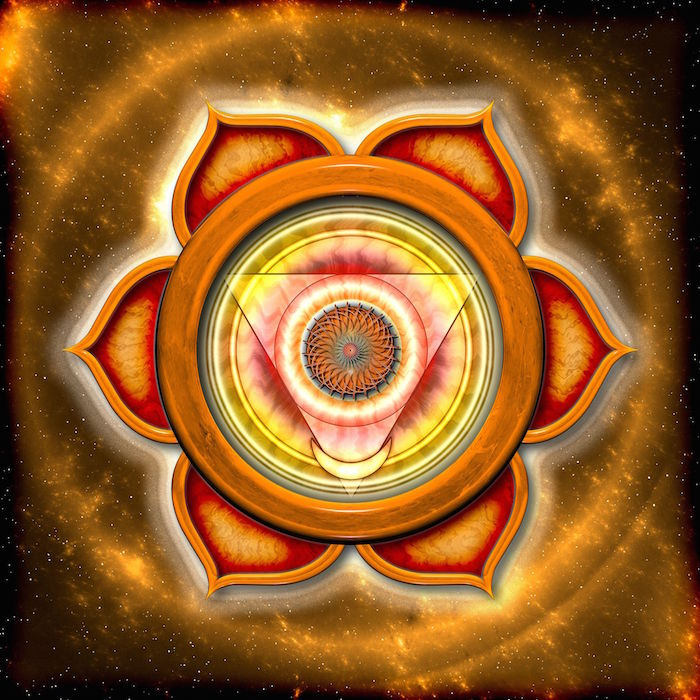
EPHESUS, which means “desirable,” represents the second ashram of creative desire, whose entry point is the “eye” or “circle” Hindus call Svadhishthana. It is in this second circle that we awaken the Buddhi — the reasoning part of the split-mind capable of both hearing the Om and learning its language. In Sanskrit, Svadhishthana means either “the self of the Standing Place (sva-dhish-thana) or the self-mind of Sh(i)thana” (sva-dhi-sh(i)thana) According to the Hindu Classical Dictionary, Sh(i)thana was “an ancient city, the capital of the kings of the Lunar Race situated on the eastern side of the confluence of the Ganges and Yamuna rivers.”
Rightmindedly understood, the eastern side of those rivers is the larger Wheel’s right-hand side, the celestial sphere presided over by Joachim, the pillar of God’s established order. The “kings” of that sphere are the lunar or female counterparts of the Atonement Trinity–the sisters or sacred rivers working to purify our minds on the right-hand side of the Wheel. Ganges represents the Great River, central channel or Su-shumna nadi, whilst Yamuna is the sacred tributary “feeding this circle” on the Ganges.
The holiest of rivers in India, the Ganges is personified as a goddess. The name is a marriage of “ga,” meaning sacred-syllable or guru-word in Sanskrit and “gnes” a Tibetan word meaning “certainty.” So, the Om of Certainty, more or less.

In the Hindu lore, Yamuna is described as the “twin sister” of Yama, the “seed of God” — NOT the god of death, in the mortal sense. Strictly speaking, Yama represents the Divine Spark making possible our resurrection from Ego Consciousness (i.e., ego death). Being his twin sister, Yamuna probably represents the sacred river flowing to Yama through the nadi, channel or branch connecting the easternmost Lamp to the first chakra on the Temple Menorah described in Exodus. That channel is probably, therefore, the Pingala nadi. If I’m right about this, Yamuna is the divine elixir, anointing oil and/or sacred river (of Living Water) carried by that nadi from the Father Ray to the Soul.
And I believe this assumption is correct, based on what Wikipedia reports below;
…the Yamuna is highly venerated in Hinduism and worshipped as the goddess Yamuna. In Hinduism, she is believed to be the daughter of the sun god, Surya, and the sister of Yama, the god of death, and so she is also known as Yami. According to popular Hindu legends, bathing in Yamuna’s sacred waters frees one from the torments of death.
All pretty accurate, apart from misidentifying Yama as the god of death — a common misnomer in the annals of Hinduism. Yama is, as stated earlier, the “seed of God” representing the Divine Spark, Soul, or “miracle of Holy Creation” present in all living creatures, but asleep in the Muladhara Chakra until we consciously choose to begin the Atonement process.
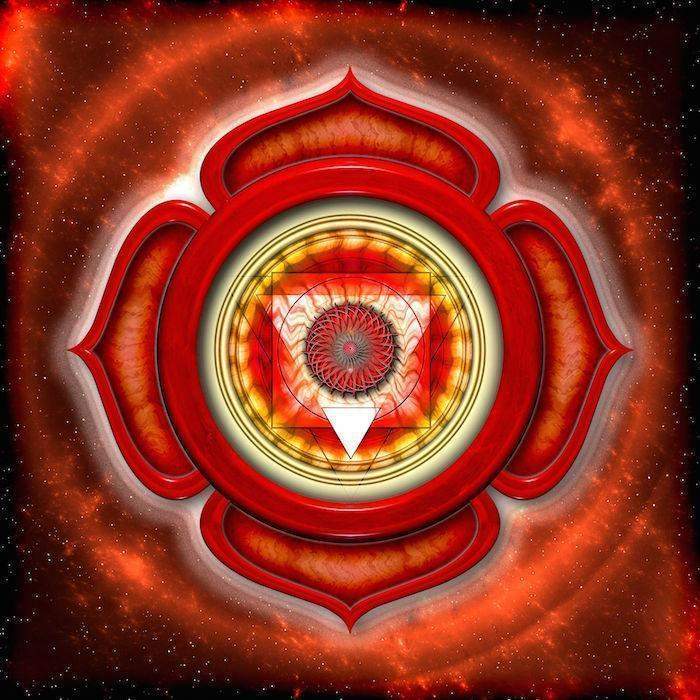
SMYRNA, which means “myrrh” (the anointing oil of death brought to Bethlehem by the magi), represents the first ashram of earthly, external, or ego-mindedness. The Soul enters this “ashram” (the Muladhara Chakra) when it begins reincarnating on the physical plane, but remains inactive or asleep in this “waiting room” or “womb” until the pre-determined moment it agreed to begin the awakening process when the original dream played out in the Holy Instant. Once the appointed moment arrives, the Soul enters the first quadrant of the Circle-Journey, to begin the journey of “rebirth” through the seven circles of self-knowledge.
Pretty interesting, right? And all of this intersecting wisdom is lost on those who stubbornly refuse to question their cherished beliefs, faulty reasoning, and/or prejudicial judgments about the superiority of their religion over any other.
To test my theory about the churches being the chakras, let’s now review the messages the Great Amen asks John to deliver to the angels presiding over each church or circle.
In Revelation 3:1-6, he says:
Unto the angel of the church in SARDIS (the seventh church) write; These things saith he that hath the seven Spirits of God, and the seven stars; I know thy works, that thou hast a name that thou livest, and art dead.
Be watchful, and strengthen the things which remain, that are ready to die: for I have not found thy works perfect before God.
Remember therefore how thou hast received and heard, and hold fast, and repent. If therefore thou shalt not watch, I will come on thee as a thief, and thou shalt not know what hour I will come upon thee.
Thou hast a few names even in Sardis which have not defiled their garments; and they shall walk with me in white: for they are worthy.
He that overcometh, the same shall be clothed in white raiment; and I will not blot out his name out of the book of life, but I will confess his name before my Father, and before his angels.
He that hath an ear, let him hear what the Spirit saith unto the churches.
Probably not an accurate interpretation of what John the Elder recorded. But let’s nevertheless move on to the message the Great Amen sends to the angel of Pergamos (the Sixth Circle of the Resting Place). In Rev. 2:12-17, he says this:
And to the angel of the church in Pergamos write; These things saith he which hath the sharp sword with two edges;
I know thy works, and where thou dwellest, even where Satan’s seat is: and thou holdest fast my name, and hast not denied my faith, even in those days wherein Antipas was my faithful martyr, who was slain among you, where Satan dwelleth.
But I have a few things against thee, because thou hast there them that hold the doctrine of Balaam, who taught Balac to cast a stumblingblock before the children of Israel, to eat things sacrificed unto idols, and to commit fornication.
So hast thou also them that hold the doctrine of the Nicolaitanes, which thing I hate.
Repent; or else I will come unto thee quickly, and will fight against them with the sword of my mouth.
He that hath an ear, let him hear what the Spirit saith unto the churches; To him that overcometh will I give to eat of the hidden manna, and will give him a white stone, and in the stone a new name written, which no man knoweth saving he that receiveth it.
Firstly, this isn’t quite how this passage should read, but my attempt at retranslating proved too trying and tedious to continue. Secondly, the Biblical story of Balaam is too long for this post. But, if you’re interested, you can read a summary here. What the speaker means by “the deeds of the Nicholaitanes” will be addressed shortly. For now, let’s move on to what he says to the angel of Thayatira in Rev. 2:18-29:
And unto the angel of the church in Thyatira write; These things saith the Son of God, who hath his eyes like unto a flame of fire, and his feet are like fine brass;
I know thy works, and charity, and service, and faith, and thy patience, and thy works; and the last to be more than the first.
Notwithstanding I have a few things against thee, because thou sufferest that woman Jezebel, which calleth herself a prophetess, to teach and to seduce my servants to commit fornication, and to eat things sacrificed unto idols.
And I gave her space to repent of her fornication; and she repented not.
Behold, I will cast her into a bed, and them that commit adultery with her into great tribulation, except they repent of their deeds.
And I will kill her children with death; and all the churches shall know that I am he which searcheth the reins and hearts: and I will give unto every one of you according to your works.
But unto you I say, and unto the rest in Thyatira, as many as have not this doctrine, and which have not known the depths of Satan, as they speak; I will put upon you none other burden.
But that which ye have already hold fast till I come.
And he that overcometh, and keepeth my works unto the end, to him will I give power over the nations:
And he shall rule them with a rod of iron; as the vessels of a potter shall they be broken to shivers: even as I received of my Father.
And I will give him the morning star (of breaking dawn).
He that hath an ear, let him hear what the Spirit saith unto the churches.
Again, I question the accuracy of this translation, but can’t muster the energy at present to correct it. To the angel of Philadelphia, the fourth circle of brotherly love, he dictates the following message in Rev. 3:7-13:
And to the angel of the church in Philadelphia write; These things saith he that is holy, he that is true, he that hath the key of David, he that openeth, and no man shutteth; and shutteth, and no man openeth;
I know thy works: behold, I have set before thee an open door, and no man can shut it: for thou hast a little strength, and hast kept my word, and hast not denied my name.
Behold, I will make them of the synagogue of Satan, which say they are Jews, and are not, but do lie; behold, I will make them to come and worship before thy feet, and to know that I have loved thee.
Because thou hast kept the word of my patience, I also will keep thee from the hour of temptation, which shall come upon all the world, to try them that dwell upon the earth.
Behold, I come quickly: hold that fast which thou hast, that no man take thy crown.
Him that overcometh will I make a pillar in the temple of my God, and he shall go no more out: and I will write upon him the name of my God, and the name of the city of my God, which is new Jerusalem, which cometh down out of heaven from my God: and I will write upon him my new name.
He that hath an ear, let him hear what the Spirit saith unto the churches.
To the angel of Laodicea, the third circle, he says in Rev. 3: 11-22:
And unto the angel of the church of the Laodiceans write; These things saith the Amen, the faithful and true witness, the beginning of the creation of God;
I know thy works, that thou art neither cold nor hot: I would thou wert cold or hot.
So then because thou art lukewarm, and neither cold nor hot, I will spue thee out of my mouth.
Because thou sayest, I am rich, and increased with goods, and have need of nothing; and knowest not that thou art wretched, and miserable, and poor, and blind, and naked:
I counsel thee to buy of me gold tried in the fire, that thou mayest be rich; and white raiment, that thou mayest be clothed, and that the shame of thy nakedness do not appear; and anoint thine eyes with eyesalve, that thou mayest see.
As many as I love, I rebuke and chasten: be zealous therefore, and repent.
Behold, I stand at the door, and knock: if any man hear my voice, and open the door, I will come in to him, and will sup with him, and he with me.
To him that overcometh will I grant to sit with me in my throne, even as I also overcame, and am set down with my Father in his throne.
He that hath an ear, let him hear what the Spirit saith unto the churches.
To the angel of Epheseus, the second circle, he dispatches this message in Rev. 2:1-11:
Unto the angel of the church of Ephesus write; These things saith he that holdeth the seven stars in his right hand, who walketh in the midst of the seven golden candlesticks;
I know thy works, and thy labour, and thy patience, and how thou canst not bear them which are evil: and thou hast tried them which say they are apostles, and are not, and hast found them liars:
And hast borne, and hast patience, and for my name’s sake hast laboured, and hast not fainted.
Nevertheless I have somewhat against thee, because thou hast left thy first love.
Remember therefore from whence thou art fallen, and repent, and do the first works; or else I will come unto thee quickly, and will remove thy candlestick out of his place, except thou repent.
But this thou hast, that thou hatest the deeds of the Nicolaites, which I also hate.
He that hath an ear, let him hear what the Spirit saith unto the churches; To him that overcometh will I give to eat of the tree of life, which is in the midst of the paradise of God.
And, finally, unto the angel of the church in Smyrna he says, in Rev. 2:12-17:
These things saith the first and the last, which was dead, and is alive;
I know thy works, and tribulation, and poverty, (but thou art rich) and I know the blasphemy of them which say they are Jews, and are not, but are the synagogue of Satan.
Fear none of those things which thou shalt suffer: behold, the devil shall cast some of you into prison, that ye may be tried; and ye shall have tribulation ten days: be thou faithful unto death, and I will give thee a crown of life.
He that hath an ear, let him hear what the Spirit saith unto the churches; He that overcometh shall not be hurt of the second death.
This message makes perfect sense when we apprehend that this is, in effect, the Soul’s “welcome to the Temple” greeting from the Great I Am or Great Amen. It also helps to know that the Greek word translated as “Jews” in the second paragraph was loudaios, which more accurately means “Judean” or “of Judea.” As you might recall from my post on “Restoring the Temple of Solomon,” Judea is Biblical “code” for the road back to Heaven. So, in Bible-speak, a Judean or loudaios is any person or religion claiming to promote the truth, when they are, in fact, promoting the lies of Sat-an. This also is, I suspect, what the Great Amen means by “the deeds of the Nicolaites” (the adherents of Nicholas?) in his message to the Ephesians.
In this message, the Great Amen is, in essence, warning those entering the Temple against putting their faith in “the ego’s religion.” As Jesus explains in the Course, “the ego’s religion” describes any organization or hierarchical institution attempting to formalize, standardize, and/or externalize the process of salvation.
There is a lot of speculation in Christendom about what the Great Amen means by Nicolaitanesas, but I suspect he means either the adherents of Nicholas of Myra, the sainted Turkish Bishop we now call Santa Claus, or the adherents of the Doctrine of Nicaea, referring to the Christians who accept as Truth the “creed” formulated at the First Council of Nicaea in 325 AD; those, in other words, who believe in the divinity of Jesus Christ as stated in the Creed: “God from God, Light from Light, true God from true God,” who was “begotten, not made, of one substance with the Father.” These “adherents” include the vast majority of modern Christian denominations, all of which erroneously revere Jesus as higher, more divine, and more beloved than the rest of God’s creations–a belief that precludes seeking the holiness he demonstrated in life within our own persons.
Or to quote the Savior himself:
You are a perfect creation, and should experience awe only in the Presence of the Creator of perfection. The miracle is therefore a sign of love among equals. Equals should not be in awe of one another because awe implies inequality. It is therefore an inappropriate reaction to me. An elder brother is entitled to respect for his greater experience, and obedience for his greater wisdom. He is also entitled to love because he is a brother, and to devotion if he is devoted. It is only my devotion that entitles me to yours. There is nothing about me that you cannot attain. I have nothing that does not come from God. The difference between us now is that I have nothing else. This leaves me in a state which is only potential in you. (ACIM, T-1.II.3:3-13)
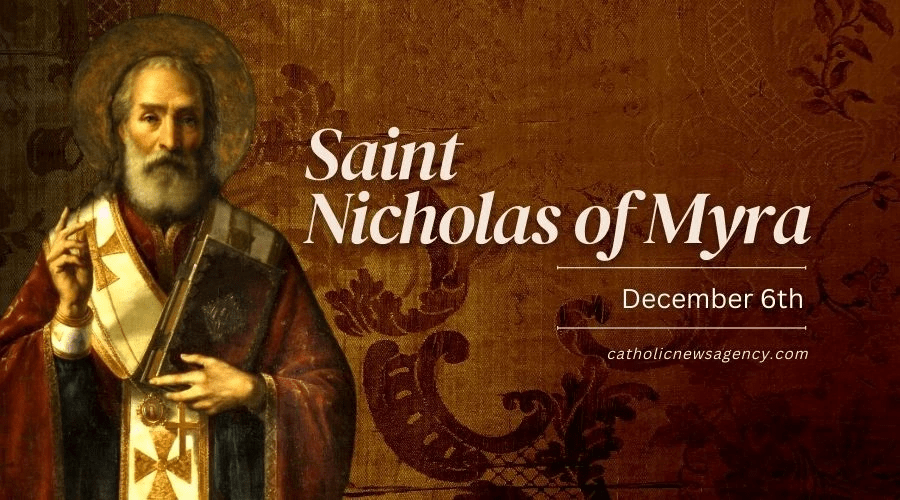
If, conversely, the Great Amen means the followers of Nicholas (as generally supposed), his message is basically the same. When spelled out, Nicholas of Myra means “the victory of the people of myrrh” — the anointing oil of the dead. According to Google, St. Nicholas’s life and actions “influenced the development of Christian faith and practice, particularly in the Eastern Orthodox and Roman Catholic traditions. He was a significant figure in defending the traditional Christian belief in Jesus’ (singular) divinity at the First Council of Nicaea and is revered for his charity and compassion, which became a model for other bishops and a source of his lasting fame.”
This may all sound good and noble to a traditional Christian, but it is anything but, according to the Great Amen. Or, as Jesus similarly explains in the Course’s addendum on psychotherapy:
The attempt to formalize religion is so obviously an ego attempt to reconcile the irreconcilable that it hardly requires elaboration here. Religion is experience; psychotherapy is experience. At the highest levels they become one. Neither is truth itself, but both can lead to truth. What can be necessary to find truth, which remains perfectly obvious, but to remove the seeming obstacles to true awareness? (ACIM, P-2.II.2:1-7)
And the first Council of Nicaea was definitely an organized attempt to formalize and standardize the Christian creed. As Wikipedia explains:
The First Council of Nicaea (Sýnodos tês Níkaias in Greek) was a council of Christian bishops convened in the Bithynian city of Nicaea (now İznik, Turkey) by the Roman Emperor Constantine I. The Council of Nicaea met from May until the end of July 325.
This ecumenical council was the first of many efforts to attain consensus in the church through an assembly representing all Christendom. Hosius of Corduba may have presided over its deliberations. Attended by at least 200 bishops, its main accomplishments were the settlement of the Christological issue of the divine nature of God the Son and his relationship to God the Father, the construction of the first part of the Nicene Creed, the mandating of uniform observance of the date of Easter, and the promulgation of early canon law.
And, as Encyclopedia Britannica further points out:
The Nicene Creed is significant for its role in formally establishing core Christian doctrines, particularly the divinity of Jesus Christ and the nature of the Trinity, by settling early theological disputes like Arianism. It serves as a unifying statement of faith, regularly recited by many Christian denominations, and provides a foundational and authoritative summary of Christian belief that has remained relevant for over 1,600 years
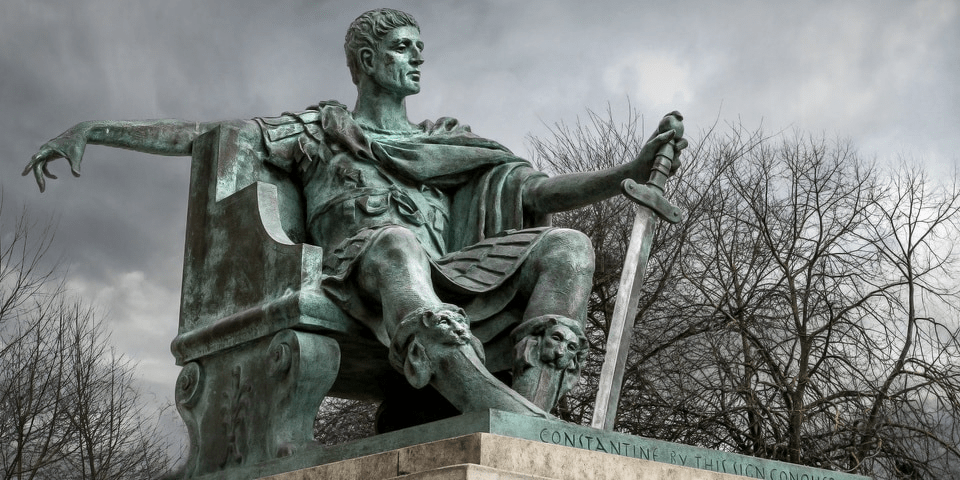
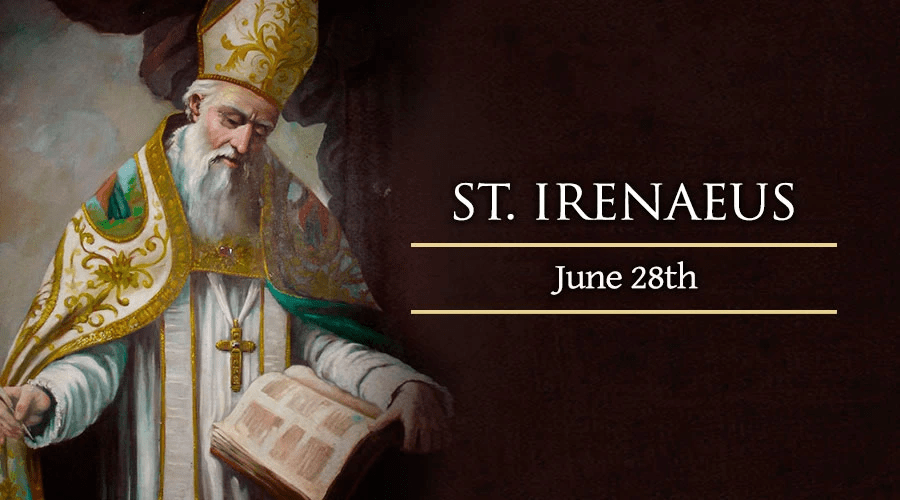
Chief among the “adherents of Nicholas” was the Roman Emperor Constantine himself, who presided over the proceedings at Nicaea (which Nicholas also attended). Constantine the Great, as he was known, was the first Roman emperor to convert to Christianity. According to Wikipedia, he also played a pivotal role in elevating the status of Christianity in Rome, in passing the Edict of Milan (the 313 A.D. agreement to treat Christians benevolently within the Roman Empire), decriminalizing Christian practice, and in ceasing Christian persecution–a turning point in the Christianization of the Roman Empire. As noble as all these “deeds” might sound from Sat-an’s inverted perspective, Constantine also embraced the earlier efforts by Irenaeus of Lyon, a vitriolic condemner of “Gnosticism,” an early Christian sect promoting the right-minded idea that knowledge of God can only be found within, and not through the standardized religious beliefs and observances promoted by Irenaeus, Constantine, and Nicholas.
And on that resounding note, let’s call it a day. Thanks for visiting. I hope you learned something of value to your immortal Soul. Until we meet again, Om Hari Om and Namaste.
 The Holy Meeting Place
Leave a comment