
“Holy Stream of Sound” is the phrase used by the historical Jesus to describe the ever-present echo of God’s Voice we hear with our inner ears. We know this from a teaching attributed to Jesus in the Essene Gospel of Peace, a largely unknown 3rd-century text discovered in the Secret Library of the Vatican in the late 1920s. And yet — conspicuous by its absence — the phrase appears nowhere in the New Testament canon.
The Holy Stream of Sound’s existence may not be “professedly declared” in the New Testament; but, like Mr. Willoughby’s love for Marianne Dashwood in Sense and Sensibility, “it is everyday implied” — witnessing to the buoyancy of the spiritual truths Beelzebub endeavors to hide beneath his dark veils of deceptions.
We come closest to outright declaration in John 7:38-39, wherein Jesus mentions “streams of living water.” I’ve revised the KJV translation as follows, providing inline parenthetical explanations for the metaphors used:
On the last day of the Great Festival, Jesus stood and cried out, saying, “If anyone thirsts (earnestly desires) to come with me and to drink (receive into the Soul that which nourishes it unto life eternal), to have faith in my purpose, just as scripture commands, from out of his belly (innermost being) shall flow streams of enlivening water.” Now this he said concerning the pneuma, who to have faith in is to be ready to receive, for indeed the holy pneuma was not yet, because Jesus was not yet esteemed glorious (valued for who he really was).
I retained pneuma because, like Ruach, the Greek word means “that which is breathed or blown” — although not in reference to the sort of breathing or blowing generated by the body’s lungs. Metaphorically, pneuma refers to “the vital spirit, soul, or creative force of a person” (as per the Oxford English Dictionary), as well as the Holy Spirit specifically (as per Merriam-Webster).
We find not the name but a good description of the Holy Stream of Sound in Revelations 19:6. That sound, we are told, came from the Throne of God. It was, in other words, generated by Elohim, the Chief Shepherd known in different faiths as “Christ,” “Allah,” and “Waheguru.”
And I heard in the manner of the sound of a great multitude, and in the manner of the sound of many waters, and in the manner of the sound of mighty thunder, a voice saying, “Alleluia: for the Lord God almighty reigns as king.”
Note the prophet’s use of the words “multitude,” “waters,” and “thunder,” because all three terms are used in scriptural texts worldwide to describe the sound of God’s Voice.
In Isaiah 29:6, for example, we are told (when the symbols are correctly translated):
To attend the Name of God, wait upon the thunder quaking of the Great Voice, the strong wind scattering the flames of the Consuming Fire (of God’s Presence).
In Job 37:2, we are similarly instructed to:
Hear and make heard the thunder-voice, the rumbling coming out of the mouth of righteousness, the song of Shamayim, the Lamp of Day spanning the Land of the Living God.
In Psalm 29, which I’ve modified to reflect the true meaning of YHWH as the Name of God, we are similarly told:
Give the Name of God and His Son; give the Holy Name in glory and strength. Give the Holy Name, the glorious name; bow down to the Name of majesty and holiness. The voice of the Name streams Elohim’s thunder, the Holy Name’s Great Waters. The voice of the Name is powerful; the voice of the Name is magnificent. The voice of the Name breaks into pieces the cedars; yea, the Name breaks into pieces the Cedars of Lebanon to make them skip about the circle.
In this psalm, King David specifically states that the Voice of the Name streams Elohim’s thunder, which is the Holy Name’s Great Waters. So, the Voice for God, the Name of God, and the Great Waters are all compared to “thunder” in these Bible verses. And there are plenty more that do likewise.
This psalm also mentions the “Cedars of Lebanon” — a prominent symbol in the Hebrew Bible. According to Google, “The cedars were highly prized for their wood, which was used in the construction of Solomon’s Temple and other important buildings.”
Strong’s “Exhaustive Concordance” similarly says:
The cedar tree, אֶרֶז, holds significant symbolic and practical importance in the biblical narrative. It is frequently mentioned in the context of construction and craftsmanship due to its desirable qualities. The wood of the cedar was used in the building of Solomon’s Temple and his palace, as described in 1 Kings 6:9-10: “So he built the house and finished it, and he covered the house with beams and planks of cedar.” The cedar’s strength and longevity made it an ideal material for such grand structures.
In addition to its practical uses, the cedar tree is often used metaphorically in the Bible to represent strength, beauty, and the righteous. For instance, in Psalm 92:12, it is written, “The righteous will flourish like a palm tree, and grow like a cedar in Lebanon.” This imagery highlights the cedar’s towering presence and enduring nature, symbolizing the prosperity and stability of the righteous.
Does it indeed? Because I call “bullshit” for numerous reasons.
Firstly, Solomon’s Temple never existed on earth. So the trees allegedly used in its construction can’t be visible trees — and neither, for that matter, were the Tree of Life and the Tree of Knowledge reportedly growing in Eden.
It’s all symbolic, my dear brother, as I keep saying.
Interestingly, the metaphorical “Trees of Lebanon” also showed up some 1300 years earlier in the ancient Sumerian Epic of Gilgamesh, as well as in several of the clay tablets excavated from the ancient ruins of a Sumerian palace in the mid-1970s. The Epic of Gilgamesh pre-dates the Hebrew Bible by an estimated 1300 years, while the tablets date to the Middle Bronze Age, making them at least 800 years older than the Torah.
So, what are these ancient trees meant to represent? To find the answer, we need to be cognizant of a few illuminating facts missed by the vast majority of Bible scholars and interpreters.
Our first FACT is that neither the country of Lebanon nor Mount Lebanon bore the name “Lebanon” at the time these ancient texts were written. Lebanon, the country, was established in 1920. And Mount Lebanon wasn’t known by that name before the Roman occupation of Phoenicia, which lasted from 64 BCE to 7 CE.
Phoenicia was an ancient name for modern-day Lebanon, a word of Semitic origin presumed to mean “white,” “whiteness,” or “purification.” If the prevailing wisdom has merit, which I doubt, the Romans adopted the Hebrew term “Lebanon” to describe the mountain’s snowy peaks.
Our second myth-busting FACT piggybacks on the first. If Mount Lebanon wasn’t named until 64 BC at the earliest, trees from Mount Lebanon could NOT have been used to build Solomon’s Temple in 950 BCE. Not that Solomon’s Temple was ever actually built, because Solomon’s Temple is purely metaphorical. But you get the idea.
Our third myth-busting FACT is that, having been named no earlier than 64 BCE, Mount Lebanon can NOT be mentioned, as generally presumed, more than a hundred times in a scriptural text compiled between 1200 BCE and 100 BCE.
Our fourth evidentiary FACT is that there were no “cedars” in the world in the days these ancient texts were written — or, rather, no trees called “cedars.” Because the botanical designation “cedar” (cedrus in Latin) wasn’t assigned until 1755. So, the trees growing on the mountain the Romans called “Lebanon” couldn’t have been the Cedrus Ibani (Cedars of Lebanon) so named by a French botanist who lived between 1794 and 1852.
And, if that’s not proof enough of Satan’s truth-blocking treachery, let me now offer the pièce de résistance of evidentiary support: Lebanon doesn’t mean “whiteness,” as long professed, because Lebanon is a three-way marriage of leb or lev (the Hebrew word for “heart”), ano (meaning “upward” or “heavenward” — the dwelling place of God), and nun, a letter designating a son or heir. Or, more specifically, a crown-wearing son or heir.

So, “Lebanon” actually means “heart of the Son of God” or “heart of Christ” — a reference to the “crowned” or “enthroned” Logos or Word on the seventh plane — the Innermost Chamber, Heart of Hearts, or Inner-Altar of Solomon’s Temple. And, as we know, the “crowned heir” occupying that “heart of hearts” or Throne of God in our Holy Minds is Elohim, the Chief Shepherd of the Atonement Plan, who manifested through Jesus Christ on earth to show us the path of return.

Okay, wow. This is BIG, because “Lebanon” is synonymous with the “Sacred Heart of Jesus” — the flaming symbol of God’s Love Elohim’s “Jesus face” gave the world through Margaret Mary Alacoque, a humble Catholic nun of the Order of the Visitation of Our Lady in Haute-Savoie, France.
Sister Margaret Mary (now a canonized saint) described in her autobiography the visceral experiences and intuited instructions received during a series of “prophetic visions” between 1673 and 1675. The first of these took place on the Feast of St. John the Evangelist (December 27).
On that day, while praying before the Blessed Sacrament, the young French nun felt herself “wholly penetrated with that Divine Presence, but to such a degree that I lost all thought of myself and of the place where I was, and abandoned myself to this Divine Spirit, yielding up my heart to the power of His Love.”
After “making her” repose for some time upon “His Sacred Breast,” he spoke the following words within her mind:
My Divine Heart is so inflamed with love for men, and for you in particular that, being unable any longer to contain within Itself the flames of Its burning Charity, It must needs spread them abroad by your means, and manifest Itself to them (mankind) in order to enrich them with the precious graces of sanctification and salvation necessary to withdraw them from the abyss of perdition. I have chosen you as an abyss of unworthiness and ignorance for the accomplishment of this great design, in order that everything may be done by Me.
The narratives that follow sound to me like the usual ego-twisted Catholic obsession with suffering and blood, so they were either colored by her own Catholic guilt or altered to support the Vatican’s “spin” on Jesus as a sacrificial lamb who paid for our sins in the most heinous ways imaginable.

Rightly understood, “Lebanon” — the Sacred Heart of Christ — represents the Inner-Altar, across which God “wrote” His Most Holy Word. For our purposes, that word is “Elohim,” as Jesus showed Helen Schucman in her vision of the Inner-Altar.
God’s Name or Laws being “written on the heart” is a central theme found in many Bible verses, including Jeremiah 31:33, Ezekiel 36:26, Hebrews 8:10, and 2 Corinthians 3:3. If I’m right about the true meaning of “Lebanon,” that theme is found in many more verses than previously acknowledged. More than two hundred, in fact, if we tally all the mistranslated references to Mount Lebanon (103), the Cedars of Lebanon (70), and plain old “cedar” (76).
Course-Jesus sheds more light on the meaning of “the Word written on our hearts” in the following excerpt from the Workbook for Students:
We are the holy messengers of God who speak for Him, and carrying His Word to everyone whom He has sent to us, we learn that it is written on our hearts. And thus our minds are changed about the aim for which we came, and which we seek to serve. We bring glad tidings to the Son of God, who thought he suffered. Now is he redeemed. And as he sees the gate of Heaven stand open before him, he will enter in and disappear into the Heart of God. (ACIM, W-pII.14.5:1-5)
Pretty powerful and synchronistic, right? As well as a lesson in not accepting as true everything the so-called experts, be they scholars or clerics, profess to know about scriptural truth.
Now that we’ve sorted out what “Lebanon” actually means, let’s take a closer look at the “cedars.” The word mistranslated as “cedars” throughout the Hebrew Bible is ‘erez. If we look up erez, we find “cedars” as the only established definition. If we look up eres, another form of erez, we generally find “land” or “earth” — the same wrong definition assigned to eretz, the word whose right definition is “Land of the Living God.” Eres also is sometimes defined as “bed” or “couch.” So, eres could mean “resting place,” making ‘erez lebanon “the resting place of the heart of God’s Son and heir.”
That definition works for me, but isn’t great in the context of Psalm 29. Whatever ‘erez lebanon may mean, it has to be something the Voice of the Name breaks into pieces to make “skip about the circle.”
So, I’m going to go out on another limb here by suggesting that the apostrophe in ‘erez represents a missing “d.” If I’m right, ‘erez is actually derez — a word meaning “path,” “way,” or “road.” So, ‘erez lebanon or derez lebanon would translate as “the path of the Heart of Christ,” rather than “Cedars of Lebanon.”
And, as Google confirms, the commonly used phrases “Path of the Heart of Christ” or “Way of the Heart” do indeed describe the inward journey toward becoming more like Jesus Christ in character and action, through a combination of studying his teachings, following his example, and seeking God’s guidance in all aspects of life.”
Jesus urges us to choose that path every time he says “follow me” in the New Testament. And he makes that request at least twenty times in the four canonical gospels.
In John 12:26, for example, he says:
If anyone serves me, he must follow me; and where I am, there will my servant be also. If anyone serves me, the Father will honor him.
In John 10:27, he briefly explains what it means to follow him, when he says, “My sheep hear my voice, and I know them, and they follow me.”
Translation: His sheep hear the Holy Stream of Sound emanating from the Throne of Elohim, which guides them along the Path of the Heart of Christ.
It’s a travesty that the Romans left out all his teachings about what “hearing my voice” actually means. Fortunately, the Course does not. The Course is, in fact, a detailed training manual for those choosing to walk the Path of the Heart of Christ. It’s teachings aren’t different from the Bible in principle; they simply provide a more complete and less adulterated set of instructions for “becoming more like Christ.”
(I wanted to share another poem by Rumi here, because he wrote profoundly about the Way of the Heart. But, I couldn’t find the poem from which the quote below is taken, so we’ll have to settle for a meme.)

I can, however, quote what Course-Jesus says about becoming like him:
If you want to be like me I will help you, knowing that we are alike. If you want to be different, I will wait until you change your mind. I can teach you, but only you can choose to listen to my teaching. How else can it be, if God’s Kingdom is freedom? Freedom cannot be learned by tyranny of any kind, and the perfect equality of all God’s Sons cannot be recognized through the dominion of one mind over another. God’s Sons are equal in will, all being the Will of their Father. This is the only lesson I came to teach. (ACIM, T-8.IV.6:3-9)

Let’s now leave the trees and head back into the thunder — or, rather, the Holy Stream of Sound, because I haven’t yet shared what Jesus told the Essenes. So let me do that now.
And when the sun is high in the heavens, then shall you seek the Holy Stream of Sound. In the heat of noontide, all creatures are still and seek the shade; the angels of the Earthly Mother are silent for a space. Then it is that you shall let into your ears the Holy Stream of Sound; for it can only be heard in the silence. Think on the streams that are born in the desert after a sudden storm, and the roaring sound of the waters as they rush past. Truly, this is the Voice of God, if you did not know it. For as it is written, in the beginning was the Sound, and the Sound was with God, and the Sound was God. I tell you truly, when we are born, we enter the world with the sound of God in our ears, even the singing of the vast chorus of the sky, and the holy chant of the stars in their fixed rounds; it is the Holy Stream of Sound that traverses the vault of stars and crosses the endless kingdom of the Heavenly Father. It is ever in our ears, so do we hear it not. Listen for it, then, in the silence of noontide, bathe in it, and let the rhythms of the music of God beat until you are one with the Holy Stream of Sound.
Does that not uncannily echo what Isaiah, Job, and King David say about God’s thunder-voice? The answer is a resounding YES. And, as this excerpt demonstrates, Jesus DID preach about the sound during his earthly ministry, just as he does in the Course. Those teachings were, however, deliberately excluded by the early “catholic” authorities who condemned as heresy the concept of “gnosis” — a Greek word describing the inner-knowing restored to us through the Living Water vibration.

So, let me restore to you, here and now, the golden lampstand stolen by the “Romans” in 70 CE, by sharing the entirety of Workbook Lesson 49: God’s Voice speaks to me all through the day.
It is quite possible to listen to God’s Voice all through the day without interrupting your regular activities in any way. The part of your mind in which truth abides is in constant communication with God, whether you are aware of it or not. It is the other part of your mind that functions in the world and obeys the world’s laws. It is this part that is constantly distracted, disorganized and highly uncertain.
The part that is listening to the Voice for God is calm, always at rest and wholly certain. It is really the only part there is. The other part is a wild illusion, frantic and distraught, but without reality of any kind. Try today not to listen to it. Try to identify with the part of your mind where stillness and peace reign forever. Try to hear God’s Voice call to you lovingly, reminding you that your Creator has not forgotten His Son.
We will need at least four five-minute practice periods today, and more if possible. We will try actually to hear God’s Voice reminding you of Him and of your Self. We will approach this happiest and holiest of thoughts with confidence, knowing that in doing so we are joining our will with the Will of God. He wants you to hear His Voice. He gave It to you to be heard.
Listen in deep silence. Be very still and open your mind. Go past all the raucous shrieks and sick imaginings that cover your real thoughts and obscure your eternal link with God. Sink deep into the peace that waits for you beyond the frantic, riotous thoughts and sights and sounds of this insane world. You do not live here. We are trying to reach your real home. We are trying to reach the place where you are truly welcome. We are trying to reach God.
Do not forget to repeat today’s idea very frequently. Do so with your eyes open when necessary, but closed when possible. And be sure to sit quietly and repeat the idea for today whenever you can, closing your eyes on the world, and realizing that you are inviting God’s Voice to speak to you.
Let me now state for the record that the Holy Stream of Sound is all of the following: The Name of God, the Word of God, the Voice for God, the Holy Spirit, the Song of God, the Temple Song, the ancient melody, the forgotten melody, the Song of Solomon, the Bhagavad Gita, Yowah, the Call to Awaken, the Call to Joy, the Call to Atonement, the Thunder-Voice, the Om, the Aum, and The Thunder, Perfect Mind — if indeed the latter is an accurate translation of the Coptic words ⲧⲉⲃⲣⲟⲛⲧⲏ: ⲛⲟⲩⲥ ⲛ̄ⲧⲉⲗⲉⲓⲟⲥ.
I have my doubts, but I’ve done more than enough retranslating for one day.
The Thunder, Perfect Mind is the title of one of the ancient codices found in the Nag Hammadi desert in 1945. The text was found at the base of a cliff in a large storage jar along with many other manuscripts and gospels banned and ordered destroyed by the Catholic authorities sometime between 336 and 1000 CE — the time period when the nine Pachomian monasteries operated in Upper Egypt. Presumably, someone or several someones from one of those monasteries took it upon themselves to bury rather than burn the condemned codices making up what’s known today as the Nag Hammadi Library.
According to Wikipedia, the poetic text “has received scholarly attention for its gnomic style and unclear subject. It speaks about the divine in paradoxical terms, as both honored and cursed, as life and death, and as both the cause of peace and war. The poem also emphasizes the idea that the divine exists both inside and outside of oneself, and that one’s judgment and salvation are dependent on their relationship to the divine. It offers a unique perspective on the nature of the divine and the individual’s relationship to it, and it highlights the idea of duality and the interconnectedness of opposing forces.”
Some of that is undoubtedly true. But a quick read of The Thunder, Perfect Mind (as translated by the late New Testament scholar George W. MacRae) suggests the poem’s narrator is none other than the Holy Spirit. If you’re interested, you can read the whole thing on the website of the Gnostic Society Library. Below, I’ve shared only the opening lines. But those few lines, IMHO, clearly identify the speaker as the Holy Spirit.
I was sent forth from the power,
and I have come to those who reflect upon me,
and I have been found among those who seek after me.
Look upon me, you who reflect upon me,
and you hearers, hear me.
Let’s now return to the Course, wherein Jesus mentions the Song of Heaven repeatedly. At one point in the Text, he says:
Where sin once was perceived will rise a world that will become an altar to the truth, and you will join the lights of Heaven there, and sing their song of gratitude and praise. And as they come to you to be complete, so will you go with them. For no one hears the song of Heaven and remains without a voice that adds its power to the song, and makes it sweeter still. And each one joins the singing at the altar that was raised within the tiny spot that sin proclaimed to be its own. And what was tiny then has soared into a magnitude of song in which the universe has joined with but a single voice.
This tiny spot of sin that stands between you and your brother still is holding back the happy opening of Heaven’s gate. How little is the hindrance that withholds the wealth of Heaven from you. And how great will be the joy in Heaven when you join the mighty chorus to the Love of God!
A few chapters later, he says:
Forgiving dreams have little need to last. They are not made to separate the mind from what it thinks. They do not seek to prove the dream is being dreamed by someone else. And in these dreams a melody is heard that everyone remembers, though he has not heard it since before all time began. Forgiveness, once complete, brings timelessness so close the song of Heaven can be heard, not with the ears, but with the holiness that never left the altar that abides forever deep within the Son of God. And when he hears this song again, he knows he never heard it not. And where is time, when dreams of judgment have been put away? (ACIM, T-29.IX.8:1-7)
The Song of Heaven surfaces again in Workbook Lesson 164: Now are we one with He who is our source.
What time but now can truth be recognized? The present is the only time there is. And so today, this instant, now, we come to look upon what is forever there; not in our sight, but in the eyes of Christ. He looks past time, and sees eternity as represented there. He hears the sounds the senseless, busy world engenders, yet He hears them faintly. For beyond them all He hears the song of Heaven, and the Voice for God more clear, more meaningful, more near.
The world fades easily away before His sight. Its sounds grow dim. A melody from far beyond the world increasingly is more and more distinct; an ancient call to which He gives an ancient answer. You will recognize them both, for they are but your answer to your Father’s Call to you. Christ answers for you, echoing your Self, using your voice to give His glad consent; accepting your deliverance for you.
In Workbook Lesson 198: Only my condemnation injures me, he says:
Forgiveness is the only road that leads out of disaster, past all suffering, and finally away from death. How could there be another way, when this one is the plan of God Himself? And why would you oppose it, quarrel with it, seek to find a thousand ways in which it must be wrong; a thousand other possibilities?
Is it not wiser to be glad you hold the answer to your problems in your hand? Is it not more intelligent to thank the One Who gives salvation, and accept His gift with gratitude? And is it not a kindness to yourself to hear His Voice and learn the simple lessons He would teach, instead of trying to dismiss His words, and substitute your own in place of His?
His words will work. His words will save. His words contain all hope, all blessing and all joy that ever can be found upon this earth. His words are born in God, and come to you with Heaven’s love upon them. Those who hear His words have heard the song of Heaven. For these are the words in which all merge as one at last. And as this one will fade away, the Word of God will come to take its place, for it will be remembered then and loved.
Finally, in the Manual for Teachers, he says:
All living hearts are tranquil with a stir of deep anticipation, for the time of everlasting things is now at hand. There is no death. The Son of God is free. And in his freedom is the end of fear. No hidden places now remain on earth to shelter sick illusions, dreams of fear and misperceptions of the universe. All things are seen in light, and in the light their purpose is transformed and understood. And we, God’s children, rise up from the dust and look upon our perfect sinlessness. The song of Heaven sounds around the world, as it is lifted up and brought to truth.
Now there are no distinctions. Differences have disappeared and Love looks on Itself. What further sight is needed? What remains that vision could accomplish? We have seen the face of Christ, His sinlessness, His Love behind all forms, beyond all purposes. Holy are we because His Holiness has set us free indeed! And we accept His Holiness as ours; as it is. As God created us so will we be forever and forever, and we wish for nothing but His Will to be our own. Illusions of another will are lost, for unity of purpose has been found.
These things await us all, but we are not prepared as yet to welcome them with joy. As long as any mind remains possessed of evil dreams, the thought of hell is real. God’s teachers have the goal of wakening the minds of those asleep, and seeing there the vision of Christ’s face to take the place of what they dream. The thought of murder is replaced with blessing. Judgment is laid by, and given Him Whose function judgment is. And in His Final Judgment is restored the truth about the holy Son of God. He is redeemed, for he has heard God’s Word and understood its meaning. He is free because he let God’s Voice proclaim the truth. And all he sought before to crucify are resurrected with him, by his side, as he prepares with them to meet his God.
From these descriptions, we can infer that the Song of Heaven is 1) an ever-present sound we only hear in the silence; 2) a melody from beyond the world that grows louder as we focus on it; 3) heard not with the body’s ears, but with the inner ears of our Higher Minds; 4) heard by our Souls in Heaven, but forgotten when they enter the dream-world in bodies; 5) the Higher Call to our embodied Souls to remember the Truth of their Being; and 6) the sound we all must hear to end the dream of earthly existence.
Sounds incredible, right? But what exactly is the Song of Heaven? And why, if it’s so central to our salvation, are so few people aware this sound is within them, yearning to be heard?
The short answer is that Satan delights in telling us all the teachings about the sound are either heresy, blasphemy, or heathenism. And we stupidly believe him, at the cost of our own salvation.

Let’s turn back to the Holy Stream of Sound. What does it actually sound like?
If you’ve ever held a conch shell to your ear and heard the haunting echo within, you’ve got the general idea. I hear the Holy Spirit’s “song” as a soft, undulating ringing whisper, which at times sounds almost like crickets chirping—crickets wearing tiny, high-pitched bells on their legs.
As Jesus told the Essenes, we hear the sound as children, then forget it once our innocence is lost. That was certainly my experience. I heard the sound as a child as an almost imperceptible humming underneath the silence. I somehow knew it was God whispering to me in the stillness of the night, and wondered if other people heard it, too.
At some point — I don’t remember when — I stopped hearing the hum and forgot all about it. Only when I started hearing it again — in 2020, the year of the COVID quarantine — did I remember my childhood experiences.
How did I start hearing it again? Not by doing the Course, oddly enough. I started hearing the sound again while taking the nine-month correspondence course offered by Self-Realization Fellowship, the organization founded by Paramahansa Yogananda in 1920.
Now, I hear the sound all the time, not only in meditation. I hear it right now, in fact, trilling away on the left-hand side of my mind. When I focus for an extended period, the sound amplifies until it becomes all-consuming.
In the passage quoted earlier from The Essene Gospel of Peace, Jesus rather lyrically advises us to “think on the streams that are born in the desert after a sudden storm, and the roaring sound of the waters as they rush past. Truly, this is the Voice of God, if you did not know it.”
In the Upanishads, a set of sacred Hindu treatises written in Sanskrit between 800 and 200 BCE, the sound is described as “continuous, like smooth-flowing oil; like the long peal of a gong. He who knows that ever-new, ever-inspiring, unutterable sound knows Veda, or all truth to be known.”

In the Yoga Sutras, the avatar-sage Patanjali describes Om (AUM) as Pranava, the verbal expression of Ishvara — the Vishwapurusha or Holy Spirit many Hindus call Vishnu. Like Yogananda, he emphasizes that silently repeating Om with reflection on its meaning is a path to Samadhi — the realization of our oneness with the All in All. In Sutra 1.27, Patanjali says, “Tasya vachakah pranavah,” which means “The Holy Name is Pranava.” In Sutra 1.28, he says, “Tajjapas tadartha-bhavanam,” meaning “Repeating the Name and meditating on its meaning is an aid.”
During his earthly ministry, Jesus taught this, too. He restores that lost teaching to us in Workbook Lesson 183: I call upon God’s Name and on my own, wherein he says:
God’s Name can not be heard without response, nor said without an echo in the mind that calls you to remember. Say His Name, and you invite the angels to surround the ground on which you stand, and sing to you as they spread out their wings to keep you safe, and shelter you from every worldly thought that would intrude upon your holiness.
Repeat God’s Name, and all the world responds by laying down illusions. Every dream the world holds dear has suddenly gone by, and where it seemed to stand you find a star; a miracle of grace. The sick arise, healed of their sickly thoughts. The blind can see; the deaf can hear. The sorrowful cast off their mourning, and the tears of pain are dried as happy laughter comes to bless the world.
Repeat the Name of God, and little names have lost their meaning. No temptation but becomes a nameless and unwanted thing before God’s Name. Repeat His Name, and see how easily you will forget the names of all the gods you valued. They have lost the name of god you gave them. They become anonymous and valueless to you, although before you let the Name of God replace their little names, you stood before them worshipfully, naming them as gods.
Repeat the Name of God, and call upon your Self, Whose Name is His. Repeat His Name, and all the tiny, nameless things on earth slip into right perspective. Those who call upon the Name of God can not mistake the nameless for the Name, nor sin for grace, nor bodies for the holy Son of God. And should you join a brother as you sit with him in silence, and repeat God’s Name along with him within your quiet mind, you have established there an altar which reaches to God Himself and to His Son.
Earlier, in the Text, he says:
Your ancient Name belongs to everyone, as theirs to you. Call on your brother’s name and God will answer, for on Him you call. Could He refuse to answer when He has already answered all who call on Him? A miracle can make no change at all. But it can make what always has been true be recognized by those who know it not; and by this little gift of truth but let to be itself, the Son of God allowed to be himself, and all creation freed to call upon the Name of God as one. (ACIM, T-26.VII.20:1-5)
In an article on Om in the “Yoga Journal,” author and yoga teacher Richard Rosen writes:
Om is frequently called the pranava, literally “humming,” a word that derives from pranu, “to reverberate,” and ultimately from the root nu, “to praise or command” but also “to sound or shout.” It is the audible expression of the transcendental, attributeless ground of reality.
Om is the “primordial seed” of the universe—this whole world, says one ancient text, “is nothing but om.” It is also considered to be the root mantra from which all other mantras emerge and to encapsulate the essence of the many thousands of verses of Hinduism’s holiest texts, the Vedas. According to the Katha Upanishad (2.15), om is the “word which all the Vedas rehearse.”
As such, om is the meditative seed par excellence. Patanjali, who wrote the Yoga Sutra and is considered to be the father of classical yoga, taught that when we chant this sacred syllable and simultaneously contemplate the meaning of it, our consciousness becomes “one-pointed: and prepared for meditation. In a commentary on the Yoga Sutra, the ancient sage Vyasa noted that through chanting om, “the supreme soul is revealed.” In a similar vein, Tibetan scholar Lama Govinda wrote that om expresses and leads to the “experience of the infinite within us.” Thus, chanting om may be the easiest way to touch the Divine within your very self.
In the Self-Realization Fellowship’s “Lesson on Aum,” Yogananda describes the Cosmic Sound as the lullaby of creation, continuously oozing from the pores of space.
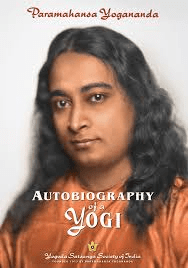
In Autobiography of a Yogi, Yogananda further says:
Many people who do not understand the inward meaning of the scriptures think that by softly or loudly chanting Aum they can reach the superconsciousness. The Hindu scriptures, however, point out that one whose mind is identified with the kaya or body cannot possibly perceive the true Aum sound.
I can only speak from experience. And, in my experience, he’s right, as are all the True Masters, including Jesus. I did not start hearing the Cosmic Echo again until I came to see sex for the altar-defiling anti-Christ it truly is.
Does Course-Jesus say we must be celibate before hearing the Om? Not in so many words. And not at all in the Standard Edition, because ALL his teachings about sex — teachings he deemed critical to miracle-workers — were cut from the text prior to the Course’s initial publication in 1974.
I kid you not.
In the purer URText version of the Course, Jesus states very clearly that ego-inspired sexual impulses block the Soul’s natural miracle impulses.
More specifically, he says:
The confusion of miracle impulse with sexual impulse is a major source of perceptual distortion, because it INDUCES rather than straightening out the basic level-confusion which underlies all those who seek happiness with the instruments of the world. A desert is a desert is a desert. You can do anything you want in it, but you CANNOT change it from what it IS. It still lacks water, which is why it IS a desert The thing to do with a desert is to LEAVE.
Sexual impulses, in other words, block our access to the Miracle Matrix through which we connect as Souls to exchange Miracles of Grace. And the Voice for God, Holy Spirit, Living Water, and/or Om vibration IS that Soul-connecting Matrix or Net.
So, yes. Course-Jesus does say that desiring to join at the level of bodies prevents our Souls from joining through the Holy Spirit’s Miracle Matrix. And Bible-Jesus says pretty much the same thing in John 2:15-16, which reads:
For all that is in the world, the lust of the flesh, and the lust of the eyes, and the pride of life, is not of the Father, but is of the world
We can’t, in other words, desire the pleasures of the body and still know God through the sound of His Voice.
Or, as Jesus states in the Course:
I hear only the Holy Spirit in you, Who speaks to me through you. (ACIM, T-9.II.7:4)
Until we hear the Om, in other words, we can’t know God or Christ, nor can they know us.
In the URText, Jesus also says:
Miracles arise from a miraculous state of mind. By being One, this state of mind goes out to ANYONE, even without the awareness of the miracle worker himself. The impersonal nature of miracles is because Atonement itself is one, uniting all creations with their Creator.
Miracles arise from “miracle-mindedness” — his term for being able to hear the Cosmic Echo of the Holy Spirit binding Creation together as a Whole. Merely hearing that echo transmits miracle-pulses across the Matrix to everyone — hence “this state of mind goes out to ANYONE, even without the awareness of the miracle worker himself.”
We need do nothing, in other words, except follow the Path of the Heart of Christ until we hear the Om, and thereafter choose to listen with the intention of healing or forgiving the world at large.
Yogananda says we begin to hear the Om when we open the Heart Chakra — the window or inward-seeing “eye” yogis call Anahata — a Sanskrit word meaning “unstruck sound.” And that, too, has been my experience. About the same time I started hearing the Om again, I began to feel the radiant presence of Christ in the middle of my chest.

In his book, The Second Coming of Christ, Yogananda writes:
One filled with the Holy Ghost — one who can hear, feel, and spread his consciousness in Aum — can understand and communicate in the diverse tongues of inspirations of men, animals, and atoms. He truly communes with Nature; not as an experience of the senses, but as one united with the Voice of God through which the Creator guides the symbiosis of His beings in an underlying harmony.
All human beings are born of the Creative Vibration of the Holy Ghost; but they are prodigal sons who have left the home of their parental Divine Consciousness and have identified themselves with the finitely limited territory of the human body. The soul feels confinement in the physical, astral, and ideational bodies. At the onset of spiritual awakening, that Self begins to assert its connate desire for freedom from delusion’s constraints. The conscious mind should then be taught how to detach the soul consciousness from identification with these three bodies to reclaim its origin in the omnipresent Spirit.
Course-Jesus offers specific instructions for hearing the sound in numerous Workbook lessons. I won’t quote them all, but I will quote the top three.
In Lesson 49: God’s Voice speaks to me all through the day, he says:
Listen in deep silence. Be very still and open your mind. Go past all the raucous shrieks and sick imaginings that cover your real thoughts and obscure your eternal link with God. Sink deep into the peace that waits for you beyond the frantic, riotous thoughts and sights and sounds of this insane world. You do not live here. We are trying to reach your real home. We are trying to reach the place where you are truly welcome. We are trying to reach God.
In Lesson 125: In quiet I receive God’s Word today, he says:
Only be quiet. You will need no rule but this, to let your practicing today lift you above the thinking of the world, and free your vision from the body’s eyes. Only be still and listen. You will hear the Word in which the Will of God the Son joins in his Father’s Will, at one with it, with no illusions interposed between the wholly indivisible and true. As every hour passes by today, be still a moment and remind yourself you have a special purpose for this day; in quiet to receive the Word of God.
In Lesson 183: I call upon God’s Name and on my own, he says:
Practice but this today; repeat God’s Name slowly again and still again. Become oblivious to every name but His. Hear nothing else. Let all your thoughts become anchored on this. No other word we use except at the beginning, when we say today’s idea but once. And then God’s Name becomes our only thought, our only word, the only thing that occupies our minds, the only wish we have, the only sound with any meaning, and the only Name of everything that we desire to see; of everything that we would call our own.
Thus do we give an invitation which can never be refused. And God will come, and answer it Himself. Think not He hears the little prayers of those who call on Him with names of idols cherished by the world. ⁴They cannot reach Him thus. He cannot hear requests that He be not Himself, or that His Son receive another name than His.
Repeat God’s Name, and you acknowledge Him as sole Creator of reality. And you acknowledge also that His Son is part of Him, creating in His Name. ³Sit silently, and let His Name become the all-encompassing idea that holds your mind completely. Let all thoughts be still except this one. And to all other thoughts respond with this, and see God’s Name replace the thousand little names you gave your thoughts, not realizing that there is one Name for all there is, and all that there will be.
Today you can achieve a state in which you will experience the gift of grace. You can escape all bondage of the world, and give the world the same release you found. You can remember what the world forgot, and offer it your own remembering. You can accept today the part you play in its salvation, and your own as well. And both can be accomplished perfectly.
Turn to the Name of God for your release, and it is given you. No prayer but this is necessary, for it holds them all within it. Words are insignificant, and all requests unneeded when God’s Son calls on his Father’s Name. His Father’s Thoughts become his own. He makes his claim to all his Father gave, is giving still, and will forever give. He calls on Him to let all things he thought he made be nameless now, and in their place the holy Name of God becomes his judgment of their worthlessness.
All little things are silent. Little sounds are soundless now. The little things of earth have disappeared. The universe consists of nothing but the Son of God, who calls upon his Father. And his Father’s Voice gives answer in his Father’s holy Name. In this eternal, still relationship, in which communication far transcends all words, and yet exceeds in depth and height whatever words could possibly convey, is peace eternal. In our Father’s Name, we would experience this peace today. And in His Name, it shall be given us.
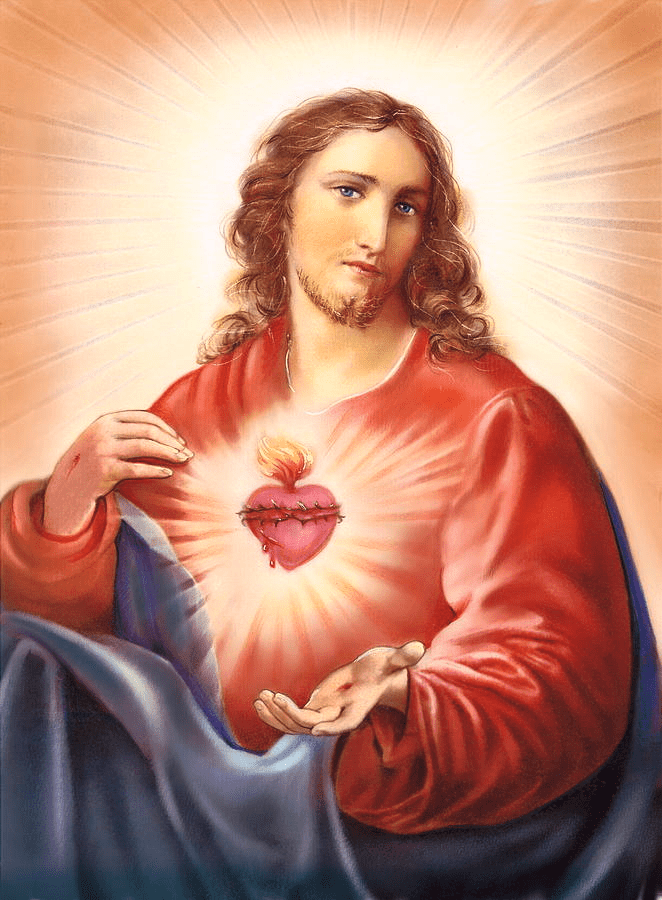
Look at this picture. Really study it, and FEEL what it communicates visually. Jesus is pointing to his heart — the Sacred Heart of Christ, which is the Anahata Chakra. He’s also holding out his hand, beckoning us to “follow him” through the example and teachings he provided to show us the way to the Bridge.
Or, as Jesus explains in the Course:
Evolution is a process in which you seem to proceed from one degree to the next. You correct your previous missteps by stepping forward. This process is actually incomprehensible in temporal terms, because you return as you go forward. The Atonement is the device by which you can free yourself from the past as you go ahead. It undoes your past errors, thus making it unnecessary for you to keep retracing your steps without advancing to your return. In this sense the Atonement saves time, but like the miracle it serves, does not abolish it. As long as there is need for Atonement, there is need for time. But the Atonement as a completed plan has a unique relationship to time. Until the Atonement is complete, its various phases will proceed in time, but the whole Atonement stands at time’s end. At that point the bridge of return has been built.
The Atonement is a total commitment. You may still think this is associated with loss, a mistake all the separated Sons of God make in one way or another. It is hard to believe a defense that cannot attack is the best defense. This is what is meant by “the meek shall inherit the earth.” They will literally take it over because of their strength. A two-way defense is inherently weak precisely because it has two edges, and can be turned against you very unexpectedly. This possibility cannot be controlled except by miracles. The miracle turns the defense of Atonement to your real protection, and as you become more and more secure you assume your natural talent of protecting others, knowing yourself as both a brother and a Son.
The SRF “Lesson on Aum” recommends blocking the ears when trying to hear the inner echo. SRF sells a rather odd armrest device specially designed for this purpose. Dubious about their apparatus, I simply use noise-cancelling headphones. Earplugs or cotton in the ears will also do the job.
Once the ears are plugged, simply repeat the Holy Name. In the dream, that Name takes many forms, some of which are Om/Aum, Jesus Christ, Allah Hoo, Elohim, Jehovah, Amen, So’ham, and Waheguru. “Om Hari Om,” “Om Shanti Shanti,” and “Om Namah Shivaya” are also powerful options.
The right mantra will resonate at the Soul level. You will, that is to say, feel its power in your chakras almost immediately.

You can use a japa-mala to keep track of your repetitions, but I personally find using a mala keeps me focused on counting the beads rather than immersing in the sound or feeling the presence within me. So, I own several but rarely use them.
I also wear a blindfold when meditating, even in the middle of the night. Why? Because it turns my focus inward immediately.
Start with fifteen-minute sessions, morning and night. Find an internal focal point (either the heart or between the brows) and repeat your chosen japa to focus the mind. Then, just listen. Easier said than done, I know. But whenever your mind wanders — as it WILL — don’t beat yourself up. Just bring your attention back to your focal point.
I’ve said enough for today. So I will leave you now with two statements from the Course to keep ever in mind.
He [God] wants you to hear His Voice. He gave It to you to be heard. (ACIM, W-49.3:4-5)
and
If you cannot hear the Voice for God, it is because you do not choose to listen. (ACIM, T-4.IV.1:1)
 The Holy Meeting Place
Leave a comment